Rules on Hunting From a Vehicle
One of the most frustrating things for any hunter in Alberta, especially if you're new to the province or coming from somewhere with different regulations, is trying to figure out the exact rules around hunting from a vehicle. It seems straightforward on the surface, but the nuances and interpretations can leave you scratching your head, worried you might inadvertently break the law. This guide is here to untangle those complexities, providing a clear understanding of what’s allowed, what’s strictly forbidden, and why these rules are so important for safe and ethical hunting in our beautiful province.
The Basics of Alberta's "No Hunting From a Vehicle" Rule
Alberta's hunting regulations are designed to promote fair chase, ensure public safety, and maintain the integrity of our wildlife resources. The rules around vehicles are a cornerstone of this approach, aiming to prevent unethical practices and ensure all hunters have a fair opportunity.
What Exactly Does "From a Vehicle" Mean?
Let's be clear: when Alberta's regulations talk about hunting "from a vehicle," they're not just referring to shooting out of a moving truck window. The definition is much broader and encompasses a range of scenarios that often catch unsuspecting hunters off guard. Essentially, a "vehicle" includes anything capable of being moved or drawn on land or water by any means, including an all-terrain vehicle (ATV), snowmobile, boat, aircraft, or any other conveyance. This means that if you're perched on your quad, even if it's stationary, or sitting in your parked truck with a loaded firearm, you're likely running afoul of the regulations if your intent is to hunt.
The spirit of the rule is about preventing hunters from gaining an unfair advantage over game animals or jeopardizing public safety. It’s about being disassociated from the vehicle when you’re actively engaging in hunting activities. This typically means having both feet on the ground, away from the immediate vicinity of your vehicle, before you bring your weapon to bear on an animal. This distinction is crucial, and it’s where many hunters, especially those used to other jurisdictions, find themselves confused. It's not just about pulling the trigger; it's about the entire act of hunting.
Why These Rules Are in Place
These regulations aren't arbitrary; they're rooted in decades of wildlife management and hunter safety. First and foremost, public safety is a huge factor. Discharging a firearm or bow from a vehicle, especially one that might be moving or quickly stopped, is inherently less controlled and more dangerous than shooting from a stable, deliberate position. Think about the potential for ricochets, accidental discharges, or simply not having a clear, safe backdrop for your shot. The risk to other hunters, landowners, and the general public increases dramatically.
Secondly, these rules uphold the principle of fair chase. Hunting from a vehicle, in many cases, would give an unfair advantage to the hunter. Animals wouldn't stand a chance if you could simply drive up, stop, and shoot. It removes the challenge, the skill, and the effort that are central to ethical hunting. It also prevents the "road hunting" mentality, where individuals cruise roads looking for easy targets, which can lead to overharvesting in easily accessible areas and can be highly disturbing to both wildlife and other recreational users of public land. Finally, it's about conservation. By making hunting a more active, on-foot pursuit, it helps manage game populations by making animals less vulnerable, particularly in areas near roads and trails. These rules encourage hunters to truly immerse themselves in the landscape, fostering a deeper respect for the environment and the animals they pursue.
Common Misconceptions and Grey Areas
Despite the clear intent, there are still plenty of common misconceptions that trip up hunters. One major one involves road allowances. Many hunters mistakenly believe that if they are on a public road allowance, they are "off" their vehicle for the purpose of hunting. This isn't necessarily true. While you might be off the travelled portion of the road, the question remains whether you are sufficiently disassociated from your vehicle. Standing right beside your truck on the shoulder of a road with a loaded firearm, looking for game, is still likely to be considered hunting from a vehicle. The key is to create clear separation.
Another grey area often involves ATVs or off-highway vehicles (OHVs). While using an ATV to access remote areas is common and often necessary in Alberta's vast landscapes, the moment you decide to hunt, that machine needs to be parked, and you need to be off of it, taking a deliberate walk away from it before you consider taking a shot. Some hunters believe that simply turning off the engine is enough, but officers often look for a clear, deliberate act of leaving the vehicle behind. If you're using a tool like GoHunt to scout and plan your routes, ensure you're also planning your approach to the game once you've spotted it from a distance. Knowing the nuances of Quad and Side-by-Side Rules on Crown Land can help prevent these kinds of issues.
Understanding the Specific Legalities and Exceptions
Navigating the specifics of Alberta's vehicle hunting rules requires a careful look at the regulations themselves. It's not just about intent; it's about measurable actions and distances.
Discharge of Firearms and Bows from Vehicles
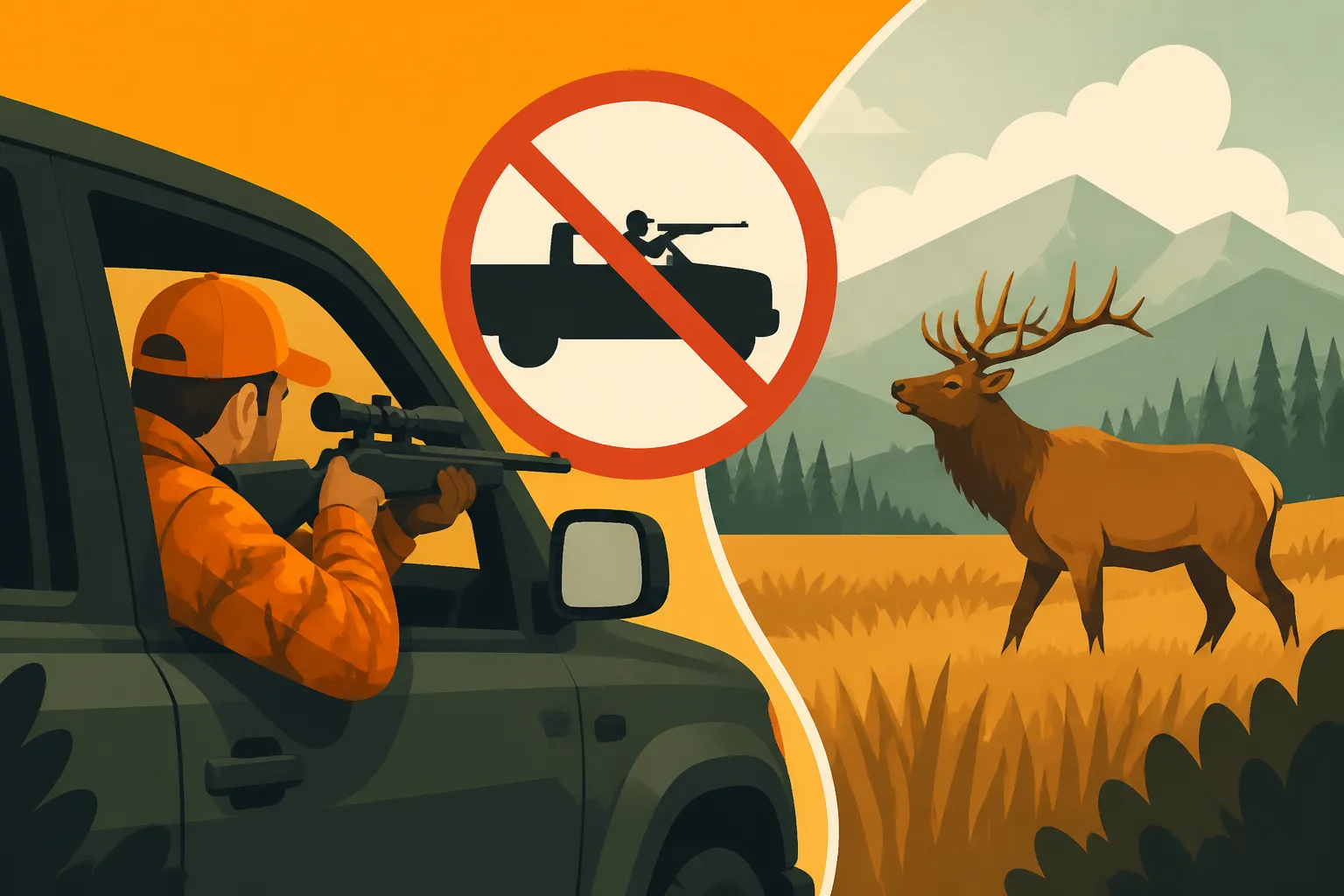
The Alberta Wildlife Act explicitly states that a person shall not discharge a firearm or bow from a vehicle. This means no shooting from inside a vehicle, from the roof, from the hood, or even while you're still mounted on an ATV. The "from a vehicle" clause is quite broad. A critical component of this rule also involves loaded firearms. You cannot have a loaded firearm in or on a vehicle (this includes ATVs and snowmobiles). The only exception generally recognized is when transporting a loaded firearm directly to or from a hunting area if it is unloaded immediately upon stopping or prior to loading into the vehicle, and is not being used for hunting purposes during transit. For bows, the rule against discharging from a vehicle applies equally, even though a bow doesn't carry the same "loaded" connotation as a firearm.
To be compliant, you must exit the vehicle, unload your firearm (if it was loaded for transport), and then reload it only when you are in a safe, legal position to hunt, with both feet firmly on the ground, away from the vehicle itself. The general guideline often unofficially cited by enforcement is a "reasonable distance," which usually implies walking away from the vehicle to actively stalk or ambush game. This ensures that you are truly hunting on foot, rather than using the vehicle as a mobile hunting blind or shooting platform. Understanding Legal Firearms and Bows for Big Game is an important part of ensuring you are compliant with all aspects of the regulations.
Vehicle Use on Public vs. Private Land
The distinction between public (Crown) land and private land also plays a significant role in how these rules are applied. On Crown land, the rules about hunting from a vehicle and having loaded firearms in vehicles are strictly enforced. These areas are for public use, and the regulations are in place to manage safety and fair chase for everyone. The use of OHVs on Crown land is also regulated by specific Public Land Use Zones (PLUZ) and trail designations, which dictate where and when you can operate these vehicles. For example, some areas may be open to OHVs for access but restrict their use for actual hunting activity.
On private land, the foundational rules about hunting from a vehicle still apply, as they are part of the provincial Wildlife Act. However, landowners may have additional rules or grants of permission that affect vehicle use on their property. For instance, a landowner might grant you permission to drive a certain pasture to retrieve a downed animal, but this doesn't supersede the provincial regulations against hunting from the vehicle in the first place. You must always have permission to be on private land for hunting, and it's always best to clarify any specific vehicle use rules directly with the landowner. Remember, even with permission, you're still bound by the core principles of the Wildlife Act. Understanding the process of Getting Private Land Permission in Alberta is just as vital as knowing the vehicle rules.
Special Circumstances and Permits
While the rules are generally strict, there can be very specific, limited exceptions, primarily for hunters with disabilities. Alberta Fish and Wildlife may issue permits for disabled hunters that allow certain accommodations, which could include some allowances for vehicle use, although these are typically very stringent and conditional. These permits are not granted lightly and are designed to ensure accessibility for those who truly need it, without undermining the spirit of the fair chase principles.
It's absolutely critical to understand that these special circumstances are not general exemptions. You cannot assume you are exempt from these rules without an explicit, official permit from Alberta Fish and Wildlife. If you believe you may qualify for such an accommodation, you should contact the provincial authorities well in advance of your hunt to understand the application process and requirements. For the vast majority of hunters, the general rules regarding hunting from a vehicle, loaded firearms, and being disassociated from your mode of transport are the ones to live by. This is something that would likely be covered in an Alberta Hunter Education and Conservation Course.
Here's a quick reference table to help clarify the core rules:
| Action | Legality Status (General Rule) | Key Consideration |
|---|---|---|
| Discharging firearm/bow from vehicle | ILLEGAL | Applies to any vehicle (truck, ATV, snowmobile, etc.), whether moving or stationary. Must be disassociated from vehicle (e.g., feet on ground, away from vehicle) before discharging. |
| Having loaded firearm in or on vehicle | ILLEGAL | Firearm must be unloaded (chamber empty, magazine removed or empty for detachable, plug out for tubular) when in/on a vehicle. Exceptions usually only for direct transport, not active hunting. |
| Using vehicle to access hunting area | LEGAL | Vehicles are acceptable for travel to and from hunting areas. However, active hunting (scouting, spotting, engaging game) from the vehicle is illegal. |
| Retrieving downed game with vehicle | POTENTIALLY LEGAL | Often permitted to retrieve game with a vehicle after the animal has been legally dispatched. Check specific WMU/PLUZ rules; some areas have restrictions on OHV use even for retrieval. |
| Spotting game from a vehicle | LEGAL (with caution) | You can use a vehicle to travel and observe game. The illegality arises when you transition from observation to hunting without disassociating from the vehicle. |
Practical Implications for Hunters in Alberta
Understanding the letter of the law is one thing, but applying it ethically and practically in the field is where the rubber meets the road. Alberta's landscape is vast, and vehicles are often essential for covering ground, but they need to be used responsibly.
Scouting and Accessing Hunting Areas
Vehicles, whether it's your truck, an ATV, or a side-by-side, are absolutely invaluable for Scouting With Satellite Imagery in Alberta and then getting to promising hunting areas. Alberta has immense tracts of Crown land and countless miles of forestry roads, cutlines, and seismic lines. Utilizing these to get deep into the backcountry, or to cover large swaths of agricultural land quickly, is smart hunting. Tools like GoHunt can be incredibly useful here, allowing you to plot your routes, identify access points, and understand land designations before you even leave home. This helps you determine where you can drive and where you'll need to leave your vehicle behind and proceed on foot.
However, the line between "accessing" and "hunting" from a vehicle can blur, especially when you spot game while driving. It's perfectly legal to drive down a road or trail, spot a magnificent mule deer buck in a coulee bottom, or a moose crossing a cutline, and stop to observe it. The critical step is what happens next. You must park your vehicle in a safe spot, unload your firearm, exit the vehicle, and then begin your stalk on foot. This physical separation and deliberate action are key to staying on the right side of the law. Remember, the vehicle is a tool for transport, not a hunting blind or a mobile shooting platform. Using resources like Reading an Alberta WMU Map Before You Go will show you which areas have specific vehicle restrictions.
Retrieving Game and Quad/OHV Use
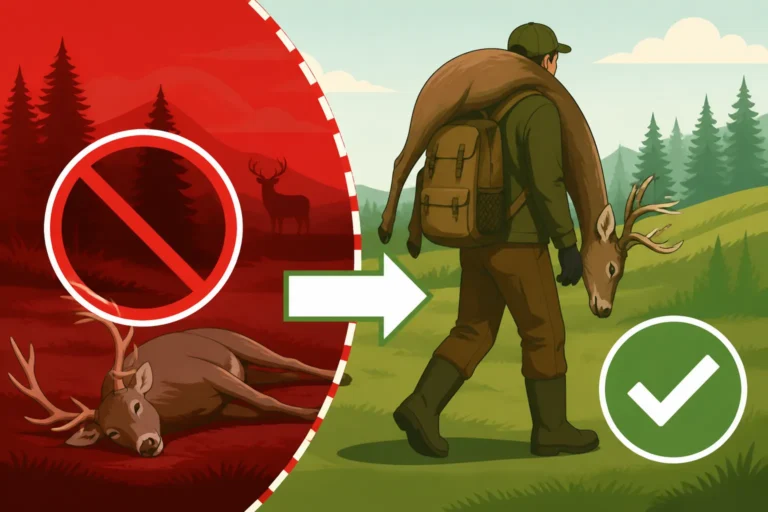
Once you've successfully harvested an animal, the challenge shifts to retrieval, especially for large game like moose or elk in rough terrain. This is where OHVs often become indispensable. Generally, after an animal has been legally shot and dispatched, you are permitted to use a vehicle to retrieve it. This is a practical concession to ensure game meat can be properly cared for and brought out of the field efficiently. You wouldn't want to waste good meat just because you couldn't get it out.
However, even for retrieval, there are rules. On Crown land, you must still adhere to any existing OHV restrictions for the specific Public Land Use Zone (PLUZ) you're in. Some areas might allow OHV use on designated trails but prohibit off-trail travel, even for game retrieval. Always confirm the specific rules for your WMU and PLUZ. For instance, the Ghost PLUZ near Cochrane has specific rules for OHV use. On private land, always confirm with the landowner if driving off established trails for retrieval is acceptable. It's also worth noting that if you have to track a wounded animal, the rule about not hunting from a vehicle still applies. You must track on foot until the animal is located and legally dispatched, at which point retrieval protocols apply. Knowing What to Do If You Get Stuck in the Bush is also good practice, as retrieval often takes you into challenging terrain.
Staying Compliant and Avoiding Costly Mistakes
The best way to avoid costly mistakes is proactive education and preparation. Before every hunting season, make it a habit to review the most current Alberta hunting regulations. They can change annually, and what was legal last year might not be this year. Understanding the core principles of Alberta Blaze Orange and Safety Rules goes hand-in-hand with safe vehicle practices.
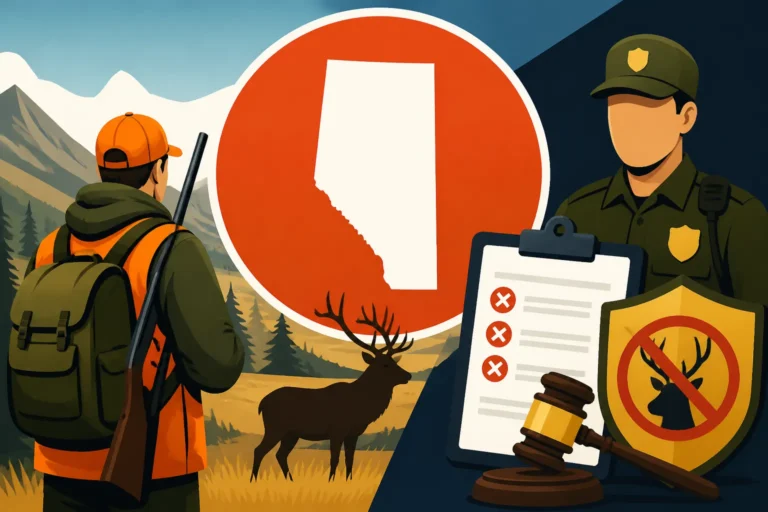
Beyond the official regulations, use mapping tools like GoHunt to understand the specific land designations and OHV restrictions for your chosen Wildlife Management Unit (WMU) or Public Land Use Zone. These tools often have layers that show Crown land boundaries, private land, and designated trails, which are invaluable for staying legal. When in doubt, err on the side of caution. If you're unsure if an action constitutes "hunting from a vehicle," step away from the vehicle. Unload your firearm, secure your bow, and proceed on foot. Game wardens take these rules very seriously, and ignorance is not an excuse. Violations can lead to hefty fines, confiscation of equipment, and even loss of hunting privileges, which nobody wants. Always check Alberta Penalties for Hunting Violations to understand the gravity of non-compliance. If you ever witness someone actively hunting from a vehicle illegally, remember you can always contact Alberta's Report a Poacher Line.
These rules are in place for the long-term health of Alberta's wildlife and the safety of all its outdoor enthusiasts. By adhering to them diligently, we ensure that hunting remains a respected and sustainable tradition for generations to come.
Disclaimer
The information provided in this guide is for general informational purposes only and does not constitute legal advice. Hunting regulations in Alberta are subject to change, and specific interpretations may vary. It is the responsibility of every hunter to consult the official Alberta Hunting Regulations (available from Alberta Environment and Protected Areas) and relevant legislation before participating in any hunting activities. Always prioritize safety and ethical practices in the field.