Where Alberta’s Biggest Mule Deer Live
For many hunters, the thought of an Alberta mule deer buck conjures images of heavy antlers, wide frames, and the challenge of pursuing a truly magnificent animal. It's a dream for a reason – these aren't easy deer to find, let alone harvest. You might feel like the biggest bucks are pure luck, or hidden away in secret spots only known to a select few. The truth is, while there's always an element of chance, consistent success in finding those top-tier mule deer comes down to understanding their habitat, their behaviour, and focusing your efforts on the specific landscapes that consistently produce them. This guide aims to pull back the curtain on where Alberta's biggest mule deer tend to live, and why.
Understanding What Makes a Mule Deer Big
It's easy to just say "good genetics," but there's a whole lot more that goes into a mule deer buck reaching that truly impressive size we all dream about. It's a complex interplay of several factors, all working together over years. If even one piece of that puzzle is missing, a buck might grow respectable antlers, but not necessarily the kind that make your jaw drop.
The Role of Nutrition and Forage Quality
Imagine trying to build a house with sub-par materials; it just won't be as strong or as grand as one built with the best. The same principle applies to antler growth in mule deer. Consistent access to high-quality forage throughout their lives is absolutely paramount. We're talking about areas with nutrient-rich soils that support a diverse array of plants, from tender forbs in spring and summer to woody browse that can sustain them through the harsh Alberta winters. If a buck spends its formative years in an area with poor feed, it’s unlikely to ever hit its full potential, even if it moves to a better area later on.
These prime feeding grounds often exist in specific microclimates or geological formations. For instance, areas with river bottom ecosystems can provide lush vegetation year-round, while certain agricultural zones, particularly those with specific crop rotations or dedicated forage fields, can offer an abundance of protein and minerals. A buck that consistently has enough to eat doesn't just survive; it thrives, putting energy into body growth, fat reserves, and, yes, antler development. This isn't about just any field, but fields that border ideal cover, creating a perfect balance of food and security.
Age Class and Avoiding Hunting Pressure
Even with the best nutrition, a mule deer buck needs time to grow. Most truly giant bucks aren't just one or two years old; they are often mature animals, usually in the 4.5 to 7.5-year-old range, sometimes even older. To reach this age, a buck must be adept at avoiding predators, including human hunters. This means the best areas for big mule deer are often those where hunting pressure is relatively low, or where the terrain offers ample sanctuary. This doesn't necessarily mean remote wilderness, though that certainly helps. It can also mean pockets of private land with limited access, or public lands with difficult access that most hunters bypass.
Consider a deep, intricate coulee system that's a nightmare to traverse on foot, or a vast tract of rough forested land crisscrossed by old, impassable logging roads. These are the kinds of places where a wise old buck can escape the daily grind of human activity, bed down undisturbed, and survive year after year. Hunters who are willing to put in the extra effort, hike the extra miles, or navigate complex access scenarios are often the ones who find these older age-class animals that have simply outsmarted everyone else. This is where tools like GoHunt, with its detailed mapping and public/private land overlays, can really shine in identifying those overlooked corners.
Genetics and Regional Hotbeds
While nutrition and age are crucial, you can't discount the genetic component. Just like humans, some deer families simply have the genes for larger body sizes and more impressive antler growth. These genetic traits tend to be concentrated in certain regions, often within specific Wildlife Management Units (WMUs). Over generations, if an area consistently produces big bucks, it's likely a combination of excellent habitat and a strong genetic pool. These are the "hotbeds" that become legendary among hunters.
However, genetics aren't static. Herd health, disease prevalence (like CWD in certain areas which requires submission of deer heads in some WMUs), and even severe winter kills can impact the genetic makeup over time. That said, certain regions in Alberta have a long-standing reputation for producing exceptional mule deer, suggesting a robust genetic foundation. When you start researching where to go, you'll hear the same WMU numbers or general areas mentioned repeatedly by those who have found success. This isn't just hearsay; it often points to a consistent combination of all these factors.
Key Regions and Terrain for Alberta's Biggest Mule Deer
When we talk about where Alberta's biggest mule deer live, we're really looking at specific types of terrain and habitat that offer everything a mature buck needs: security, excellent nutrition, and a chance to reach old age. These aren't necessarily easy places to hunt, but they are often the most rewarding.
The Southern Prairie and Badlands
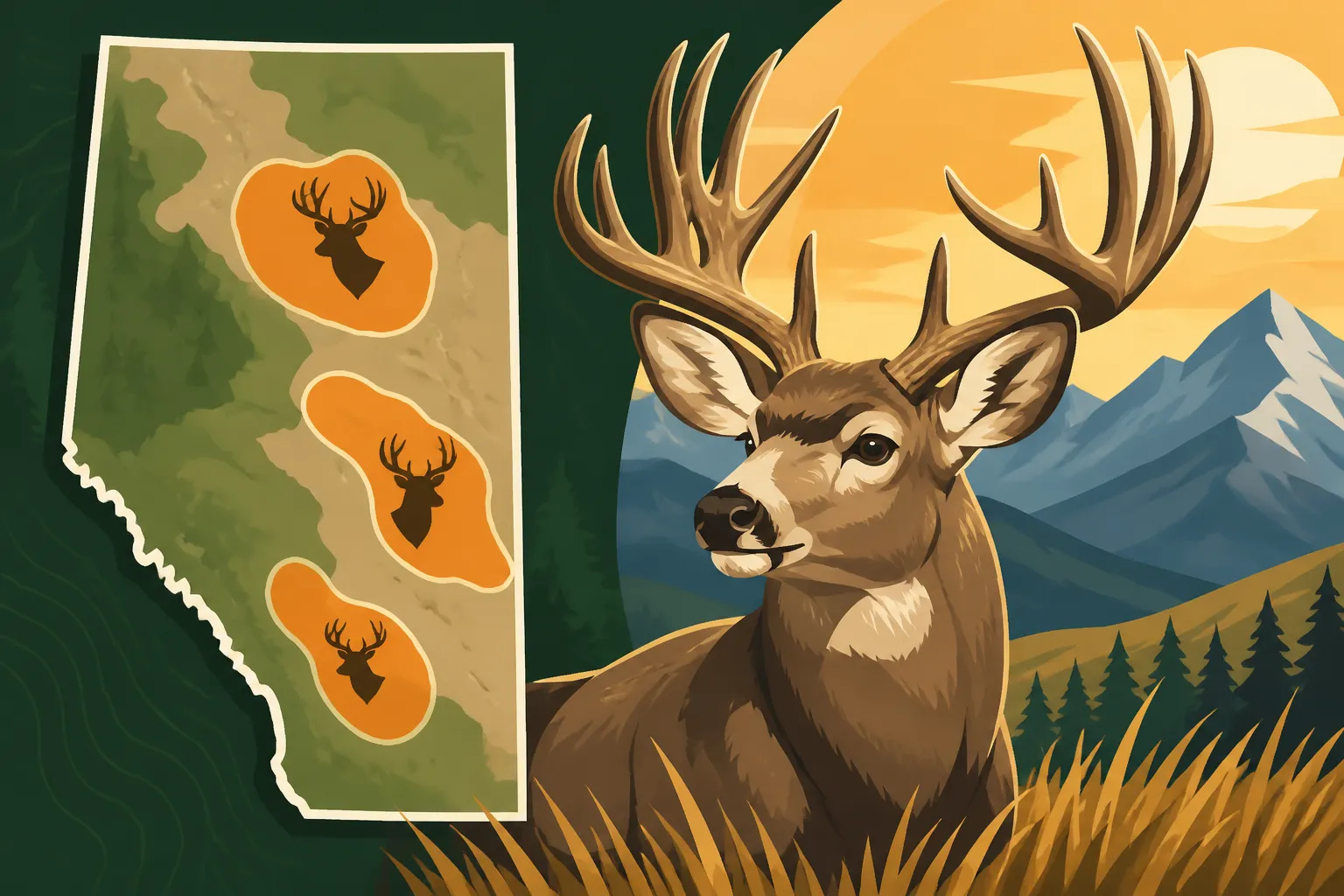
This is perhaps the most iconic region for big Alberta mule deer, particularly the southeastern corner of the province. The rolling native grasslands, broken by deep, intricate coulee systems and river breaks, provide an ideal environment. Here, the biggest bucks often spend their days in the bottom of a steep coulee, using the rugged terrain and brush for cover, only emerging at dawn and dusk to feed in the surrounding grain fields or open prairie.
The Red Deer River Badlands and areas around the Milk River Ridge are classic examples. The deeply eroded landscape creates countless hidden pockets, cut by the wind and water over millennia. These areas offer extreme thermal cover in winter, protecting deer from the relentless prairie winds and cold. During the summer, the sparse trees and thick brush along the coulee bottoms provide shade and a diverse food source. Hunting a Prairie Coulee Bottom or Stalking Mule Deer in Badlands Breaks requires patience, keen glassing skills, and a willingness to put on some serious boot leather to cover ground and peer into every nook and cranny. Many local hunters will tell you that the biggest bucks here become masters of disappearing, sometimes just a few hundred yards from a busy road, using the landscape to their advantage.
Foothills Fringe and Aspen Parkland
While the prairie holds the historical giants, don't overlook the transition zones where the prairie meets the forest – the foothills fringe and the aspen parkland. These areas offer a blend of habitat types that can be incredibly appealing to mule deer. Here, you'll find a mix of timbered draws, aspen bluffs, rolling hills, and scattered agricultural fields. This diversity provides both excellent cover and a rich food supply.
In these regions, mule deer often utilize the treed areas for bedding and security, particularly the dense stands of aspen and willow. They then filter out into the adjacent farmlands, especially during the low light hours, to feed on crops like canola, peas, or wheat. The biggest bucks here tend to be the most reclusive, often holding tight in cover during the day and only moving significant distances under the cloak of darkness. You might find them in unexpected places, like a small, isolated bluff of trees in the middle of a quarter section that looks otherwise devoid of cover. Learning to read whitetail sign in Alberta aspen bluffs can also apply to mule deer, as they often share these transitional zones. Understanding the nuances of Hunting Alberta's Aspen Parkland Bluffs is key to unlocking the potential here.
The Interplay of Private and Public Lands
It's a reality in Alberta that many of the most productive areas for big mule deer involve a mix of private and public land. Often, private agricultural lands offer superior forage, while adjacent public lands, or inaccessible portions of private land, provide the crucial security cover. The biggest bucks often inhabit these boundary zones, moving between the two depending on pressure and food availability.
Securing access to private land can be a challenge, but it's often worth the effort. Landowners often have valuable insights into deer movements and patterns on their property. However, many exceptional bucks are also found on public lands that are simply harder to access or require more effort to hunt. This is where tools like the Alberta Recreational Access Mapping Tool and detailed satellite imagery (perhaps using a service like GoHunt's mapping features) become indispensable for identifying those overlooked pieces of Crown land, or figuring out how to gain permission for a key quarter section that provides a sanctuary for a mature buck.
| Region Type | Typical Terrain Features | Mule Deer Habits | Hunting Challenges | Potential for Big Bucks |
|---|---|---|---|---|
| Southern Prairie/Badlands | Deep coulees, river breaks, sparse trees, open native grass, crop fields | Bed in coulees, feed in fields/grasslands; utilize rugged cover | Extensive glassing, long stalks, difficult terrain traversal | High |
| Foothills Fringe | Rolling hills, aspen bluffs, willow draws, mixed forests, agriculture | Bed in timbered draws/bluffs, feed in fields; utilize transitional zones | Reading cover, patience, navigating mixed landscapes | Moderate to High |
| Parkland Country | Scattered bluffs, slough edges, cultivated land, small woodlots | Utilize small pockets of cover, feed heavily on agriculture | Finding hidden pockets, dealing with human activity | Moderate |
Tactics for Hunting Big Mule Deer in These Areas
Once you've identified potential areas where Alberta's biggest mule deer might live, the next step is developing a sound hunting strategy that respects the unique challenges and opportunities of these landscapes. This isn't about running and gunning; it's about thoughtful preparation, meticulous execution, and adapting to the deer's behaviour.
Glassing and Spot-and-Stalk
In open country, whether it's the vast prairie or the more broken badlands, your optics are your most valuable tool. High-quality binoculars and a spotting scope are non-negotiable. Spend hours, not minutes, glassing known mule deer habitat from vantage points. This means picking apart every shadow, every clump of brush, and every contour of a coulee. Don't just scan; grid search systematically. Many big bucks are first spotted as a flicker of an ear or a tine peeking over a rise that you would otherwise miss.
Once a buck is spotted, the real game begins: the spot-and-stalk. This is where your skills in fieldcraft truly come into play. You need to assess the wind, terrain, and available cover to plan an approach that keeps you out of sight and scent. Often, this involves long, circuitous routes that take hours. Understanding how to Stalking Mule Deer in Badlands Breaks means using every fold in the ground, every bush, and every moment of the deer's inattention to close the distance. Patience is paramount; a hurried stalk is almost always a blown stalk.
Understanding the Rut and Seasonal Movements
The mule deer rut is a magical time when those reclusive big bucks become more visible and vulnerable. While they are still wary, their focus shifts to breeding, making them more active during daylight hours and often less cautious than usual. In Alberta, the rut for mule deer typically peaks in mid-November, coinciding with the later general seasons. This is when you might see a truly massive buck moving across open country in search of does, or chasing off smaller rivals.
Knowing when to hunt the rut in early November can significantly increase your odds. During this period, focus your efforts on areas where does congregate, such as prime feeding areas or sheltered bedding grounds. The bucks will eventually show up. However, don't expect them to be easy; even rutting bucks are still wild animals. They might be distracted, but their senses are still sharp. Cold, clear mornings after a fresh snowfall can be particularly productive, as deer stand out against the white backdrop and their tracks are easy to follow. Knowing how Mule Deer Use Coulees in Winter can also be key during this time.
Harnessing Scouting and Technology
Modern hunting tools and techniques can give you a significant edge when targeting trophy mule deer. Pre-season scouting, both physically in the field and digitally from home, is crucial. Satellite imagery, topographical maps, and public land overlays (like those found on platforms such as GoHunt) allow you to identify potential bedding areas, travel corridors, and feeding zones before you even step foot in the woods. Look for isolated pockets of cover, fingers of timber extending into fields, or the confluence of several coulees – places that offer natural security and escape routes.
Once you're in the field, trail cameras can provide invaluable intelligence on buck movement patterns, helping you understand their routines without directly pressuring them. Pay attention to Reading an Alberta WMU Map Before You Go, and don't be afraid to put in the legwork to verify what you see on the map. Deer often use the same trails year after year, and identifying these highways can put you in a prime position. This blend of traditional woodsmanship and modern technology creates a powerful strategy for consistently finding those elusive, mature bucks.
Challenges and Considerations for Trophy Mule Deer Hunting
While the pursuit of a giant Alberta mule deer is exhilarating, it's also fraught with challenges. Being realistic about these hurdles, and preparing for them, is part of being a successful and responsible hunter.
Dealing with Hunting Pressure and Access
Alberta's reputation for big deer means that many prime areas, especially those with good access, can see significant hunting pressure. This pressure can push mature bucks into even more secluded and difficult-to-reach areas, or turn them almost entirely nocturnal. Hunters need to be prepared to go where others aren't willing to go – whether that means hiking further, navigating dense bush, or securing hard-to-get private land permission. This is where finding access on Alberta Crown Land or asking a grazing leaseholder for access can become critical.
Furthermore, access itself can be a major hurdle. Some of the best mule deer country lies within private land or grazing leases, requiring permission from landowners or leaseholders. Even on public land, vehicle restrictions in Public Land Use Zones or specific WMUs might mean you need to be prepared for extensive foot travel or even horseback to reach remote pockets where mature bucks feel safe. The competition for these top-tier animals means you need to be both persistent and strategic in your approach to access.
Weather and Environmental Factors
Alberta's weather can be notoriously unpredictable, especially during the fall hunting seasons. Blistering cold, heavy snowfalls, or sudden thaws can all impact mule deer movement and make hunting challenging. Early season hunts might be hot and dry, making deer move less and requiring more patience. Later in the season, deep snow can concentrate deer, but also make travel for hunters incredibly difficult and tracking exhausting. A sudden blizzard can shut down roads and access entirely.
Beyond immediate weather, broader environmental factors like drought or harsh winters can affect the herd. Drought conditions impact forage quality and quantity, potentially limiting antler growth. Severe winters, characterized by deep snow and prolonged cold, can lead to winter kill, especially among fawns and older bucks, impacting future herd potential. Understanding these cycles, and how a Hard Alberta Winter Culls Game, is part of being a well-informed hunter. While you can't control the weather, you can certainly prepare for it with appropriate gear, contingency plans, and a willingness to adapt your hunting strategy.
Ethical Considerations and Conservation
As hunters, we have a responsibility to not only pursue game but also to ensure the sustainability of the resource. This means understanding and adhering to all regulations, including Alberta's Three-Point Mule Deer Rules in certain WMUs. It also means making ethical decisions in the field, such as knowing your limits for a clean shot, and being prepared to track and recover an animal, even if it leads you into difficult terrain or after dark.
Conservation efforts, such as those supported by the Alberta Conservation Association, play a vital role in maintaining healthy mule deer populations and preserving their habitat. Participating in CWD testing, particularly in Alberta's Mandatory CWD Submission WMUs, is also important for monitoring herd health. When we talk about finding "the biggest mule deer," it's about appreciating the animal and the landscape it inhabits, and ensuring that future generations of hunters have the same opportunities we do. The pursuit of a trophy animal should always be balanced with a deep respect for wildlife and the land.
Disclaimer
This article is for general informational purposes only and does not constitute professional advice. Laws, prices and regulations vary by location and change over time. Consult a qualified professional for guidance on your specific situation.