How Big a Mountain Goat Gets
The majestic mountain goat, an iconic symbol of Alberta's rugged high country, often leaves hunters and outdoor enthusiasts alike in awe of their sheer resilience and impressive stature. It's only natural to wonder just how big these incredible animals truly get, especially when you're dreaming of a hunt in the alpine or just curious about the wildlife that thrives in such extreme environments. This guide is here to shed light on the physical dimensions of Alberta's mountain goats, helping you understand their typical size, the factors that influence it, and what to expect when you encounter these remarkable creatures.
Understanding Mountain Goat Physical Dimensions
When we talk about how big a mountain goat gets, we're looking at a combination of factors: their weight, height, and the size of their distinct black horns. These animals are built like furry tanks, perfectly adapted to navigate treacherous, rocky terrain with incredible agility. They might not be as heavy as a moose or an elk, but their compact, powerful build makes them appear much larger than their actual weight might suggest when you see them clinging to a cliff face.
Average Weight and Height
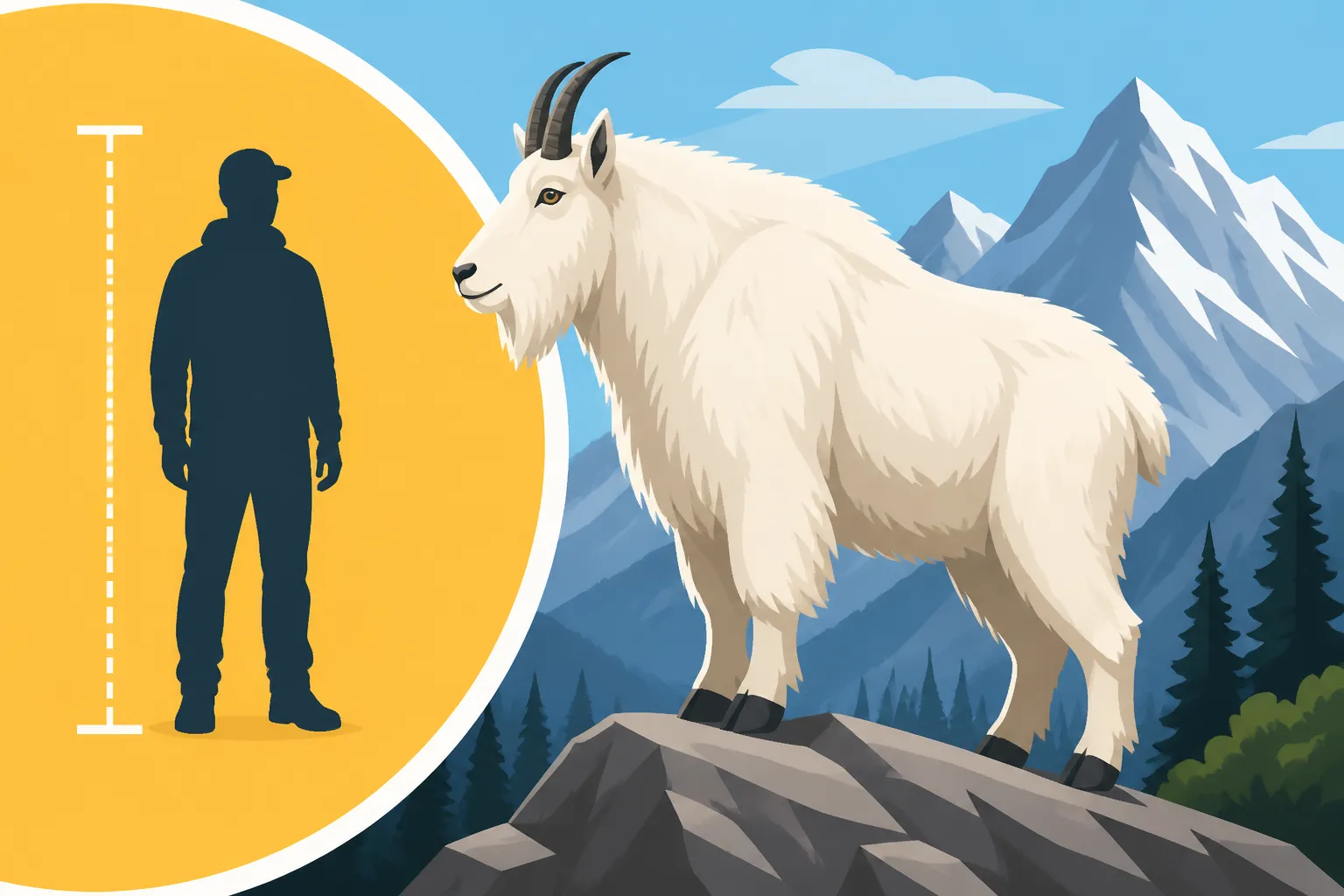
Adult mountain goats are sturdy animals, with mature billies (males) generally outweighing nannies (females) by a significant margin. A mature billy can tip the scales anywhere from 150 to 300 pounds, with some exceptional individuals pushing closer to the 300-pound mark. Nannies, while still robust, typically range from 100 to 180 pounds. It's a considerable difference that often helps hunters distinguish between sexes in the field.
In terms of height, a mountain goat stands about 3 to 3.5 feet tall at the shoulder. They have a relatively short, stocky body, which contributes to their incredible balance and low center of gravity—essential traits for navigating the precarious ledges and steep slopes they call home. When you combine this height with their shaggy white coat, especially in winter, they can appear quite bulky and larger than life against a backdrop of snow and rock.
Horn Length and Basal Circumference
The horns are often the defining characteristic for hunters, especially those pursuing a trophy. Both male and female mountain goats have black, slightly curved horns that grow annually. However, there are distinct differences that become apparent with age and sex. A mature billy's horns are typically thicker at the base and have less curve, often measuring between 8 to 10 inches in length, with some truly impressive specimens reaching up to 12 inches or more. The basal circumference—the measurement around the base of the horn—is a key indicator of age and maturity, often being much thicker on older males.
Nannies, on the other hand, usually have thinner, more gracefully curved horns that might be similar in length to a younger billy, but rarely have the same mass at the base. Their horns are also often more slender and pointed. Learning to discern these subtle differences is crucial for a hunter hoping to target a mature billy. It's a skill that takes time, patience, and a keen eye, especially when you're Hunting Mountain Goat in Steep Rock where every detail counts.
Factors Influencing Mountain Goat Size
Like all wildlife, the size and development of an individual mountain goat are not purely random. A complex interplay of genetics, habitat quality, age, and diet all contribute to how big a mountain goat eventually gets. Understanding these factors can give you a deeper appreciation for the animals and the challenges they face in their harsh environment.
Genetics and Regional Variations
Just as with humans, genetics play a significant role in determining an individual mountain goat's potential for growth. Some populations, or even specific family lines within a population, might have a genetic predisposition for larger body size or longer, thicker horns. While mountain goats are relatively widespread throughout Alberta's mountain ranges, there can be subtle regional differences in average size, often linked to local environmental conditions and the genetic diversity of the herds.
Beyond raw size, genetics also influence horn shape and mass. A billy with superior genetics might grow horns that are not only longer but also thicker at the base, making for a truly magnificent trophy. These genetic traits are passed down through generations, contributing to the overall health and vigor of a localized population.
Habitat Quality and Food Availability
Mountain goats are browsers and grazers, and their diet consists of a variety of alpine grasses, forbs, lichens, mosses, and shrubby vegetation. The quality and abundance of these food sources directly impact a goat's ability to grow and maintain its body mass. Areas with richer alpine meadows and more diverse plant life tend to support healthier, larger animals. This is particularly crucial during the summer months when goats are actively feeding to build up fat reserves for the long, lean winter.
A poor-quality habitat, perhaps due to overgrazing, drought, or limited mineral licks, can result in stunted growth and smaller overall body size. Conversely, a prime habitat with consistent access to nutritious forage allows goats to reach their full genetic potential. Their ability to thrive in such extreme environments is a testament to their adaptability, but even they are constrained by the resources available in their unforgiving home range.
Age and Maturity
Age is, without a doubt, one of the most significant factors in how big a mountain goat gets. Young goats, or "kids," are born small and grow rapidly in their first year. As they mature, their growth rate slows, but they continue to fill out and develop horn mass for several years. Billies typically reach their full body size around 5-7 years of age, but their horns can continue to add mass and length well into their prime, often peaking between 8-12 years old.
Older animals, both billies and nannies, will display the signs of a lifetime in the high country. Their bodies will be fully developed, and their horns will show the wear and tear of years. Field judging age is a critical skill for ethical hunting and involves looking at body characteristics, horn structure, and even facial features. A wise hunter knows that targeting a mature animal ensures a quality hunt and helps maintain a healthy population structure. Remember, when you're Judging a Full-Curl Bighorn Ram, similar principles apply for assessing age and maturity, even though they're different species.
Estimating Size in the Field
For hunters, the challenge isn't just knowing how big a mountain goat can get, but how to accurately estimate its size and age in the field, often at great distances in difficult terrain. This is where experience, good optics, and a deep understanding of goat anatomy become indispensable.
Body Characteristics for Judging Billies vs. Nannies
Distinguishing a billy from a nanny is often the first and most crucial step in mountain goat hunting, especially in Alberta where specific draw rules might apply. Besides the obvious size difference, look for several key body characteristics:
- Overall Stature: Billies tend to be much bulkier, with a more massive chest and shoulders. They often appear "blockier" than nannies.
- Musculature: Mature billies have well-defined muscles, particularly in their front shoulders and neck, which can make their heads appear more proportionate to their body, even with substantial horns.
- Head Shape: Billies often have a thicker neck and a more robust head.
- Urination Posture: This is a classic identifier. Billies will typically urinate forward between their front legs, while nannies will squat and urinate backward. This can be hard to spot at a distance but is a definitive sign if observed.
- Behavior: Billies are often more solitary or found in smaller bachelor groups, especially outside the rut. Nannies are usually seen with their kids or in larger nursery groups.
| Characteristic | Mature Billy (Male) | Mature Nanny (Female) |
|---|---|---|
| Average Weight | 150 – 300 lbs (up to 300+ lbs) | 100 – 180 lbs |
| Height at Shoulder | 3 – 3.5 feet | 3 – 3.5 feet (typically appear less bulky) |
| Body Build | Robust, blockier, massive chest/shoulders | More slender, often appears longer-bodied |
| Horn Base | Thicker, more substantial basal circumference | Thinner, less mass at the base |
| Horn Curve | Less pronounced curve, often straighter | More distinct, graceful curve |
| Horn Length | 8 – 12+ inches (can be similar to nanny, but thicker) | 8 – 10 inches (can be similar to billy, but thinner) |
| Facial Profile | Thicker neck, robust head | More refined neck and head |
| Urination | Forward, between front legs | Squats, backward |
| Social Structure | Often solitary or small bachelor groups | Typically with kids or in larger nursery groups |
Horn Characteristics for Aging and Scoring
Beyond sexing the animal, accurate horn judging is key to determining age and trophy potential.
- Mass is Key: For billies, focus on the mass or thickness of the horn at the base. Older billies will have horns that maintain their thickness well up the horn, often showing a noticeable "bloom" or thickening compared to younger animals. Nanny horns, while sometimes long, will typically taper quickly from the base.
- Growth Rings: Like trees, goat horns have annuli or growth rings. While hard to see without a spotting scope and clear conditions, counting these rings can help estimate age. Each prominent ring typically represents a year of growth.
- Wear and Tear: Older goats, especially billies, will often have horns that show more wear, chipping, or blunting at the tips from fighting, rubbing, and general use in their rugged environment. This isn't always a negative; it can add character and tell a story of a truly wild, mature animal.
- Comparison: If you're lucky enough to see two or more goats together, compare their horns. A mature billy will often stand out with its superior mass and sometimes more consistent length compared to younger males or nannies.
Using high-quality optics, especially a good spotting scope, is non-negotiable for accurate field judging. Taking your time and observing the animal from different angles will greatly improve your ability to assess its size and age.
Alberta's Mountain Goats: Where They Live and Thrive
Alberta is home to a robust population of mountain goats, primarily found in the province's western mountain ranges. These areas provide the specific, rugged habitat they require, characterized by steep, rocky cliffs, alpine meadows, and broken country. Understanding where these animals live helps put their size into context and highlights the challenges of hunting them.
Prime Mountain Goat Habitat in Alberta
In Alberta, mountain goats are largely concentrated in the Rocky Mountains and foothills regions, particularly in the WMUs that fall into the Mountain Zone. Areas around the Crowsnest Pass, the Livingstone Range, the Ghost Wilderness, and the Bighorn Backcountry are known strongholds for these animals. These regions offer the perfect blend of escape terrain—precipitous slopes and cliffs where predators struggle to follow—and alpine feeding grounds.
During the summer months, goats can be found higher up in the alpine and subalpine zones, grazing on lush vegetation. As winter approaches, they often move to south-facing slopes, where snow melts faster, exposing critical forage, and thermal cover is available in the timbered benches below the peaks. This vertical migration is a key aspect of their survival strategy and influences where hunters might find them at different times of the year. Getting into these remote areas often requires significant physical exertion, sometimes even a horseback pack-in if you're venturing into places like Hunting Willmore Wilderness Park Requires.
Conservation and Management Efforts
Alberta's mountain goat populations are carefully managed to ensure their long-term health and sustainability. Hunting opportunities are typically very limited, often requiring a special license draw with high priority points due to the species' vulnerability and the inherent challenges of their habitat. Conservation efforts focus on habitat protection, minimizing human disturbance, and population monitoring.
The robust nature of Alberta's mountain goats, including their impressive size, is a testament to these thoughtful management strategies and the dedication of wildlife biologists and conservationists. For hunters, respecting these regulations and understanding the animal's biology is paramount. It ensures that future generations will continue to marvel at these magnificent creatures scaling the seemingly impossible heights of our mountains. If you're considering a mountain goat hunt, it's vital to familiarize yourself with Alberta's Special Licence Draws and the specific requirements for such a coveted tag.
In conclusion, mountain goats are impressive animals, perfectly designed for their demanding environment. A mature billy can indeed get quite large, reaching up to 300 pounds with horns over 10 inches long, but it's their compact power and extreme adaptations that truly make them stand out. Whether you're an aspiring hunter or simply an admirer of wild places, understanding the nuances of their size and the factors influencing it only deepens our appreciation for these incredible creatures of the high peaks.
Disclaimer
This article is for general informational purposes only and does not constitute professional advice. Laws, prices and regulations vary by location and change over time. Consult a qualified professional for guidance on your specific situation.