Alberta Pronghorn Draw Odds by WMU
Trying to draw that coveted pronghorn tag in Alberta can feel like playing the lottery, year after year. The frustration of diligently applying, watching your priority points climb, and still seeing "unsuccessful" pop up on your screen is all too real for many dedicated hunters. This guide is here to pull back the curtain on the Alberta pronghorn draw, demystifying the odds by Wildlife Management Unit (WMU) and helping you craft a more informed application strategy.
Understanding Alberta's Pronghorn Special Licence Draw System
Hunting pronghorn, often called "speed goats," in Alberta is a unique and highly sought-after experience. Unlike some general big game licences that you can simply purchase over the counter, a pronghorn tag is exclusively allocated through a special licence draw system. This isn't just a quirk of the system; it's a critical component of wildlife management designed to carefully control harvest levels for a species with specific habitat requirements and population dynamics. The open prairie country they call home, primarily in southern Alberta, means their movements are often visible, and without strict controls, populations could be quickly impacted.
The draw system essentially creates a fair opportunity for all eligible residents to hunt these magnificent animals, while simultaneously ensuring that the number of tags issued aligns with sustainable population goals in each designated WMU. Every spring, keen hunters submit their applications, hoping to be one of the fortunate few to draw a tag for the upcoming season. It’s a nerve-wracking waiting game, knowing that your success hinges on not just luck, but also the historical demand and the specific allocation for the WMU you’ve chosen. This competitive nature is precisely why understanding the nuances of the draw odds by WMU is so crucial. Without this insight, you're essentially throwing darts in the dark, and after accumulating valuable Alberta's Draw Priority Point System over years, no one wants to squander their chances. The system is designed to reward patience, but intelligent application is just as vital.
For many, the anticipation of applying is as much a part of the hunt as the chase itself. We spend hours poring over maps, reminiscing about past scouting trips, and strategizing with hunting buddies, all fueled by the dream of chasing a pronghorn across the vast expanses of Alberta's southern prairie. The thought of earning that tag, knowing the effort and patience it took to get there, adds an extra layer of satisfaction to the hunt.
Key Factors Influencing Your Pronghorn Draw Odds
Drawing a pronghorn tag isn't just about having a high number of priority points, though that certainly helps. Several dynamic factors converge each year to determine the odds for any given Wildlife Management Unit (WMU). Understanding these elements is paramount for making an informed application and maximizing your chances of success. It’s a dance between biology, hunter pressure, and mathematical probability, and nailing your application requires you to be familiar with all the steps.
Firstly, WMU popularity plays an enormous role. Some WMUs consistently have better success rates for hunters, perhaps due to higher pronghorn densities, more accessible hunting land, or a reputation for producing larger bucks. Naturally, these WMUs attract a significantly higher number of applicants. Think of WMU 102 or 104, for instance, which are often prime locations for Pronghorn on Alberta's Southern Prairie. Everyone wants to hunt where the hunting is good, and this collective desire drives up competition. Conversely, some WMUs might have lower harvest rates or more challenging access, leading to fewer applicants and potentially better odds, even if the overall hunting experience might require more effort. This is where your personal scouting and research into specific WMU characteristics really pay off.
Secondly, quota allocation is the most direct influence. Each year, Alberta Fish and Wildlife biologists conduct surveys to assess pronghorn populations across the various Alberta's 219 Wildlife Management Units. Based on these assessments, they determine how many special licences can be issued in each WMU without negatively impacting the herd. This quota can fluctuate annually due to factors like harsh winters, disease outbreaks, or habitat changes. For example, a severe winter can lead to Alberta's Pronghorn Herd and Winter Kill, resulting in fewer tags the following season. A WMU that had 20 tags last year might only have 10 this year, drastically reducing the odds for every applicant. Staying informed about these population trends, often discussed in hunting forums or found in provincial reports, can give you a subtle edge.
Thirdly, the total number of applicants for a specific WMU directly impacts your chances. This number isn't static; it can be influenced by changes in season dates, media coverage of successful hunts, or even the perception of trophy potential in a given year. If a few record-book bucks come out of a particular WMU, you can bet that interest will surge the following season. This is where tools that track historical applicant numbers become invaluable. Many hunters use platforms to analyze these trends, helping them make more strategic choices for their Alberta's Special Licence Draws.
Finally, priority points are the currency of the draw system. For every year you apply for a special licence and are unsuccessful, you accrue a priority point for that species. The more points you have, the higher your chances of being drawn in theory. However, it's crucial to understand that priority points increase your odds but do not guarantee a tag. The system operates on a lottery basis within priority groups. For example, all applicants with 10 points are essentially pooled together, and a certain percentage of tags are drawn from that pool. Only when that pool is exhausted do tags drop to the 9-point group, and so on. This is why you might hear stories of someone with fewer points drawing a tag before someone with more, particularly in highly competitive WMUs. When you do draw, your priority points for that species reset to zero, as explained in How Priority Points Build and Reset. It's a system designed to give everyone a chance over time, but it requires patience and smart planning.
Navigating the Draw: Strategies and Realities
Understanding the factors that influence draw odds is one thing; successfully navigating the draw system is another. It requires a blend of research, strategic thinking, and a healthy dose of realistic expectation. You can't control the number of applicants or the quota, but you can control your application strategy.
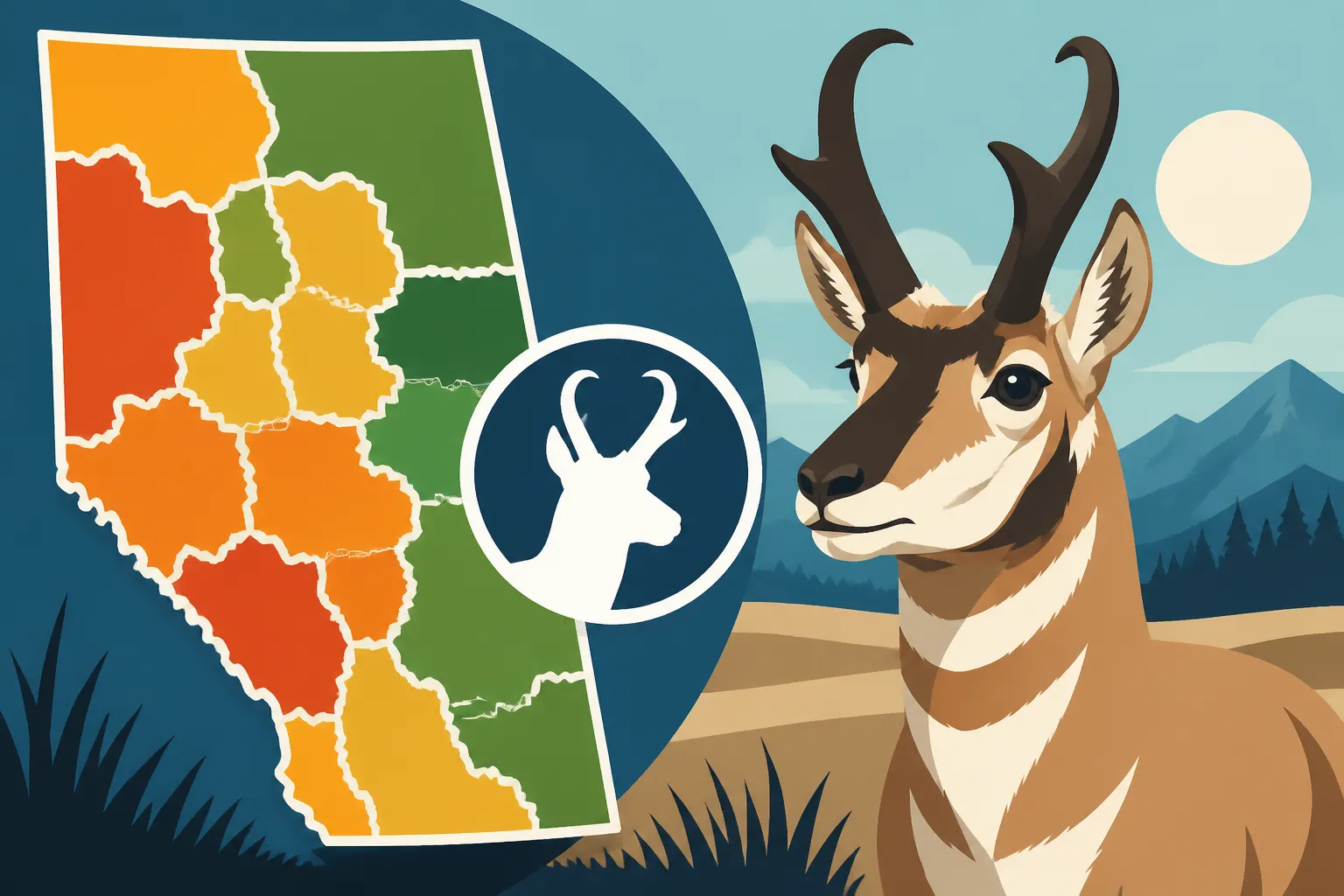
The first step is thorough research into WMU history. Alberta Fish and Wildlife publishes draw results and statistics annually, showing how many applicants applied for each WMU, how many tags were issued, and the priority points of the lowest successful applicant. This data is gold. It allows you to see which WMUs are consistently drawing out at high priority point levels and which ones might be more accessible with fewer points. For instance, you might notice that some prime WMUs regularly require 8-10+ points, while others occasionally issue tags to hunters with 4-6 points. This insight is essential for determining a realistic application for your current priority point level. Many hunters find that resources like GoHunt provide excellent tools for compiling and analyzing this complex historical draw data, helping to visualize trends and make more informed predictions.
When it comes to the actual application, consider your risk tolerance. Are you willing to "burn" a high number of priority points on a very popular WMU with slim odds, hoping for a trophy-class buck? Or would you prefer to apply for a WMU with slightly lower demand, increasing your chances of drawing a tag sooner, even if the trophy potential might be slightly less? This is a personal decision that often evolves over years of applying. For those eager to get a tag in hand, focusing on WMUs that have historically drawn out at or slightly below your current priority point level is a sound strategy. Remember, the cost of applying for a draw is minimal, as detailed in What an Alberta Draw Application Costs, but the real cost is the time invested in building those points.
Another strategy to consider is applying as a party. In Alberta, if you apply as a party, the system uses the average priority points of all members in the party. While this can be beneficial if you have a mix of high and low point holders, it can also dilute the chances of a hunter with very high points. For pronghorn, where tags are so limited and competition is fierce, applying individually might often yield better odds for hunters with high individual priority points. However, if hunting with a specific buddy is paramount, averaging your points could be a worthwhile trade-off. Just remember that once you apply, you cannot cancel a special licence draw application.
It's also crucial to set realistic expectations. Even with meticulous research and a seemingly perfect strategy, there's always an element of chance. The draw is, at its core, a lottery. You might have 10 priority points for a WMU that historically draws out at 8, and still not get a tag. This is part of the hunting experience in Alberta. Don't let a series of unsuccessful draws deter you. Instead, view each year as an opportunity to gain another priority point for next time. While you're waiting for that coveted pronghorn tag, there are many other fantastic hunting opportunities in Alberta, from Whitetail Hunting in Alberta to pursuing upland birds.
Finally, remember to make a note of Alberta's Draw Application Deadline each year. Missing this crucial date means losing out on a chance to gain a priority point or, worse, missing out on a tag if you were due. Consistency is key in this long game.
Here’s a simplified hypothetical table to illustrate how draw odds might look for various WMUs, though actual numbers vary significantly year to year. For precise, up-to-date data, always consult the official Alberta Fish and Wildlife draw results:
| WMU | Total Tags Allocated (Approx.) | Total Applicants (Approx.) | Lowest Priority Points Drawn (Approx.) | Estimated Odds (Your Points vs. Lowest Drawn) |
|---|---|---|---|---|
| 102 | 30 | 1200 | 10 | Very tough; high points needed |
| 104 | 25 | 1000 | 9 | Challenging; high points recommended |
| 106 | 40 | 800 | 7 | Moderate; increasing points helps |
| 108 | 15 | 600 | 6 | Fair; some luck needed with fewer points |
| 110 | 20 | 400 | 5 | Better odds; consistent application pays off |
Note: This table uses illustrative numbers for demonstration purposes only. Actual draw statistics should always be referenced from Alberta Environment and Parks (AEP) official sources, or platforms like GoHunt that aggregate this data.
Ultimately, drawing a pronghorn tag is a journey of patience and strategy. By thoroughly researching your chosen WMUs, understanding the dynamics of priority points, and making informed decisions, you can significantly improve your chances and eventually experience the thrill of hunting these incredible animals on Alberta’s vast southern plains. Even as you plot your next move for pronghorn, consider other exciting pursuits like Coyote Hunting Alberta Farm Country or Field Hunting Geese in Alberta Stubble to keep your skills sharp and your passion alive while you await your draw success.
Disclaimer
The information provided in this guide is for general informational purposes only and is not intended as legal or professional advice. Hunting regulations, draw odds, and specific WMU details in Alberta are subject to change. Always consult the official Alberta Hunting Regulations and the Alberta Environment and Parks (AEP) website for the most current and accurate information before planning any hunting activity.