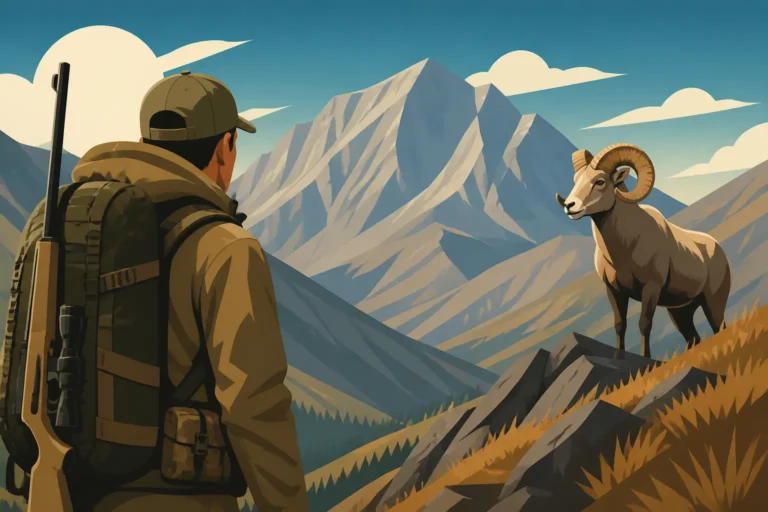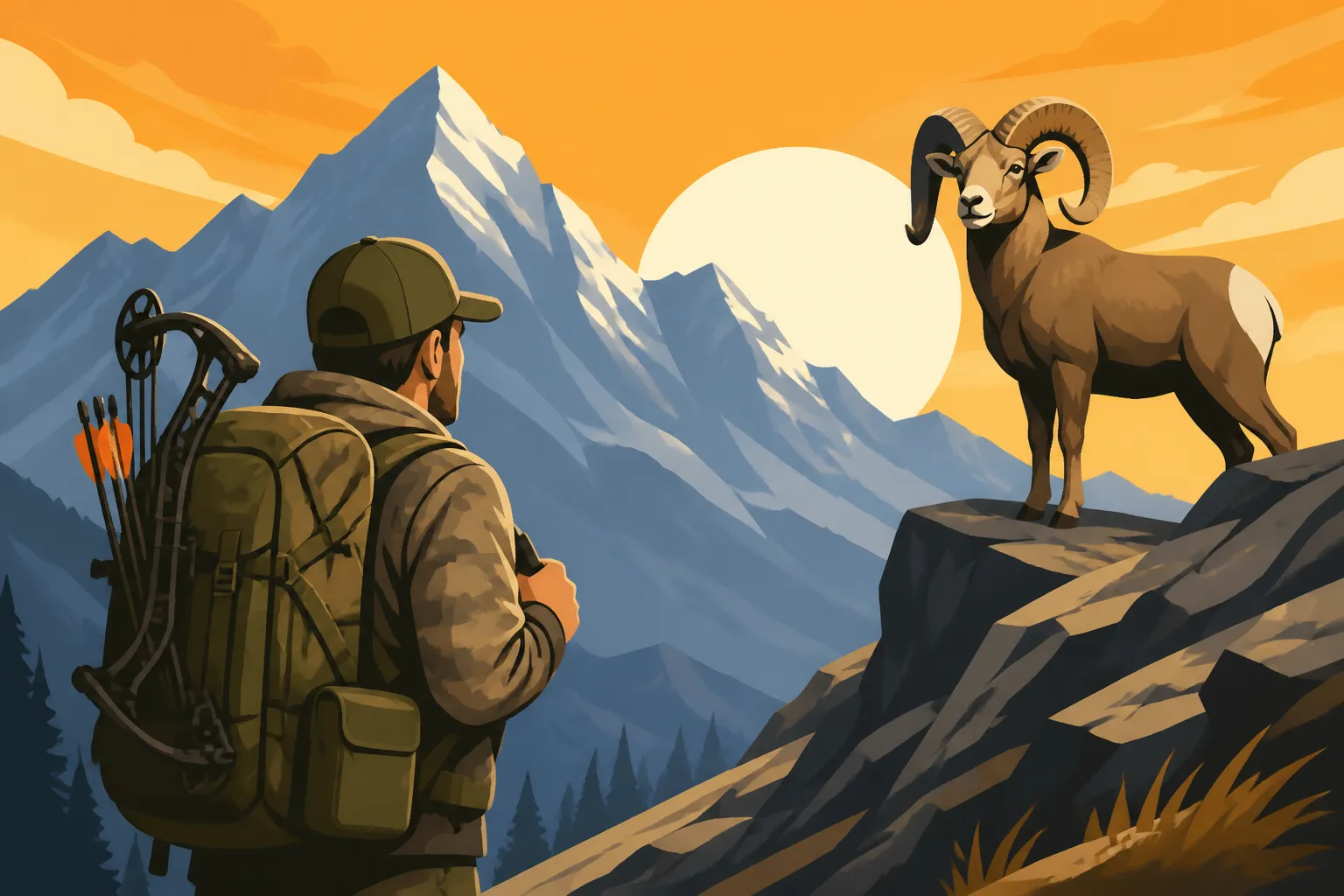
Backpack Hunting Alberta’s Bighorn Country
Alberta's bighorn country is a truly awe-inspiring, yet incredibly challenging, landscape to hunt. Many hunters dream of the majestic bighorn ram, but the sheer verticality, unpredictable weather, and the physical demands often deter even seasoned adventurers. This guide is designed to peel back the layers of mystique around backpack hunting for bighorns in Alberta, offering a realistic, in-depth look at what it truly takes to chase these iconic mountain monarchs.
Understanding Alberta's Bighorn Habitat
When you set your sights on a bighorn ram in Alberta, you're signing up for an experience in some of the most unforgiving, yet breathtaking, terrain on the planet. These aren't creatures of the gentle valleys or rolling hills; they thrive where the air is thin and the ground is almost always vertical.
The Rugged Realm of the Rockies
Alberta's bighorn sheep primarily inhabit the province's western mountain ranges – the Canadian Rockies and their eastern foothills. This is a land of towering peaks, jagged ridges, deep coulees, and expansive alpine basins. Think glacial-carved valleys, scree slopes that shift underfoot, and vast expanses above the treeline where only the hardiest of life forms survive. The sheer scale of the landscape is often the first thing that overwhelms hunters unfamiliar with the region, making it difficult to even begin to comprehend how to effectively scout or hunt it.
The geology itself plays a huge role in how sheep live and where they can be found. Limestone cliffs provide critical escape terrain from predators like wolves and cougars, offering vertical sanctuaries where sheep can scale impossible heights. These rocky outcrops also provide south-facing slopes that melt out earlier in spring, offering crucial early forage, and thermal sinks that provide warmth during cold snaps. Understanding these micro-environments is crucial for anyone hoping to be successful.
Moreover, the vastness means that roads are often few and far between, requiring significant investment in time and physical effort just to get into the prime hunting zones. This is why "backpack hunting" isn't just a style choice here; it's often the only way to effectively pursue these animals. This commitment to hiking deep into the backcountry is part of the allure, but it also demands a level of self-sufficiency that many other hunting styles don't.
Key Terrain Features and Sheep Movement
Bighorn sheep are masters of their mountainous domain, and their movements are dictated by a combination of food, water, security, and breeding. You’ll find them utilizing specific features that provide these necessities. Forage, primarily various grasses and forbs, is often found on high alpine meadows and south-facing slopes. Water sources can be anything from glacial melt ponds to small streams trickling down rock faces. Security is paramount, so they often stay relatively close to steep escape terrain.
Rams, particularly mature rams, tend to inhabit higher, more rugged country than ewes and lambs for much of the year. They prefer the solitude of the high peaks, often only dropping lower during the rut in late fall or to access mineral licks. Look for benches and small pockets of timber or scattered stunted trees that offer some respite from the wind and elements, but always with a keen eye on the escape routes above and below them. Identifying these key features on a map or through advanced scouting platforms like GoHunt can save you days of aimless wandering in the field.
Understanding how to read the landscape for sheep sign is also critical. While you might spot a ram from miles away, finding their tracks, droppings, and rub marks can confirm their presence in a specific area and indicate travel corridors. These signs are often concentrated around natural funnels, saddles between peaks, or along game trails that connect different feeding or bedding areas. Pay close attention to these indicators when Glassing Alpine Basins for Bighorn Sheep, as they can lead you directly to where rams are spending their time.
Seasonal Migrations and Alpine Behavior
Bighorn sheep, like many mountain dwellers, exhibit seasonal movement patterns. In late spring and summer, after lambing, ewes and lambs will often be found at lower elevations, particularly in green valleys or along river bottoms where forage is lush. Rams, however, will typically stay high in the alpine, enjoying the rich summer feed and growing their impressive headgear. This is the time for solo rams or bachelor groups to pack on weight and gain strength before the demanding rut.
As fall progresses and temperatures drop, sheep may begin to move to lower elevations, especially if heavy snow pushes them down from the highest peaks. The rut, typically in November, sees rams become more active and less wary as they search for ewes. This is a period of intense competition, with rams often engaging in dramatic head-butting clashes that echo through the valleys. While it can be an exciting time to hunt, it also coincides with challenging weather conditions, making the hunt even more arduous.
Winter forces sheep into sheltered areas, often on south-facing slopes that catch the most sun and offer minimal snow accumulation. These crucial winter ranges are often very specific and limited, making sheep vulnerable if disturbed. Recognizing these seasonal shifts and understanding how they influence sheep behavior is paramount to developing an effective hunting strategy and knowing when and where to focus your efforts. This knowledge is essential for successful Backpacking Into Alberta Sheep Country.
Essential Gear for Bighorn Backpacking
Hunting bighorns in Alberta's backcountry is not a casual day trip; it’s an expedition. Your gear isn't just about comfort; it's about survival, efficiency, and ultimately, success. Every ounce counts, but so does reliability.
The Right Pack and Shelter System
Your backpack is arguably the most critical piece of equipment for a bighorn hunt. It's your mobile base camp, carrying everything you need to live comfortably and safely above the treeline for days on end. Look for a robust, internal frame pack in the 65-80 liter range (or larger if you plan for longer trips or need to carry out meat and a head). Brands like Mystery Ranch, Kifaru, or Stone Glacier are popular among serious mountain hunters for their durability, comfort under heavy loads, and well-thought-out features for carrying rifles and meat. Ensure it fits properly and is broken in well before your hunt; a poorly fitting pack will quickly become your worst enemy.
Your shelter system needs to be lightweight but capable of withstanding fierce alpine winds, driving rain, and even early season snow. A lightweight, 3-season or 4-season tent is generally recommended. For solo hunters, a quality bivy sack or a small, single-person shelter can cut down on weight. Paired with a compact sleeping bag rated for below-freezing temperatures (even in early fall, high in the mountains), and an insulated sleeping pad to prevent heat loss to the ground, you'll have a critical sanctuary. Remember, hypothermia is a real danger in the mountains, so don't skimp on insulation for your sleeping system.
Beyond the main pack, consider a smaller, compressible day pack or a lid from your main pack that detaches to serve as one. This allows you to set up a spike camp and then take a lighter load for the final stalk, making you more agile and less likely to spook game. The ability to transition from a full pack for the approach to a lighter setup for the actual hunting is a game-changer.
Optics: Your Eyes in the Mountains
In sheep hunting, your optics are your primary hunting tool. You’ll spend far more time looking through glass than you will hiking or shooting. A high-quality spotting scope (20-60x or 20-70x) with a sturdy, lightweight tripod is non-negotiable. This allows you to pick apart distant mountainsides, identify sheep, and more importantly, age rams to determine if they are legal (a full curl or 8 years old, depending on the WMU). Brands like Swarovski, Zeiss, or Kowa are top-tier choices and worth the investment.
Binoculars are also crucial. A 10×42 or 12×50 pair is excellent for general glassing, scanning closer terrain, and identifying animals quickly. Some hunters even prefer a higher magnification binocular like 15×56 or 18×56 mounted on a tripod for longer glassing sessions, which can reduce eye strain. Don't forget a rangefinder; knowing the exact distance is critical for making an ethical shot in unpredictable mountain conditions.
The key to effective glassing is patience and a methodical approach. Use the terrain to your advantage, finding high vantage points where you can see into multiple basins and along ridgelines. Spend time thoroughly sweeping areas, breaking them down into grids, and allowing your eyes to rest before resuming. It's amazing what you'll pick out once your eyes adjust to the vastness. Investing in good optics, and knowing how to use them effectively, is arguably the most important skill for a sheep hunter. Many successful hunts start days before a shot is ever fired, simply by spotting sheep from miles away.
Clothing and Layering for Extreme Conditions
Mountain weather is famously fickle. You can experience all four seasons in a single day, from freezing rain and biting winds to intense sun and sudden snow squalls. Layering is not just a suggestion; it's a critical strategy for survival and comfort. Start with a moisture-wicking base layer (merino wool or synthetic) to pull sweat away from your skin. Next, a mid-layer for insulation, such as a fleece jacket or a lightweight puffy. Your outer layer should consist of a waterproof and windproof shell jacket and pants to protect against the elements.
Crucially, always pack an extra heavy insulation layer, like a down or synthetic puffy jacket, that can be thrown on quickly during extended glassing sessions or when temperatures plummet. This "kill kit" insulation can be a lifesaver. Good quality hiking boots, broken in well, are essential. They need to provide excellent ankle support, grip on wet and loose terrain, and be waterproof. Many mountain hunters prefer sturdy leather boots with a stiff sole.
Don't forget accessories: a warm hat, gloves (a thin pair for dexterity and a heavy pair for warmth), and gaiters to keep scree, snow, and moisture out of your boots. The goal is to be able to add or remove layers quickly to regulate your body temperature, staying dry and comfortable whether you're climbing a steep incline or sitting motionless in a cold wind. It’s better to carry a bit of extra weight in versatile layers than to be caught unprepared.
Navigation and Communication Tools
Getting lost in Alberta's vast bighorn country can be a life-threatening situation. Reliable navigation is non-negotiable. While a traditional map and compass are fundamental backups, modern GPS devices (like a Garmin inReach or a dedicated GPS unit) and smartphone apps with downloaded offline maps (such as Gaia GPS or the mapping features provided by GoHunt) are invaluable. These tools allow you to pinpoint your location, track your movements, mark waypoints for spike camps or sheep sightings, and navigate safely in low visibility.
A satellite communication device (like an inReach or Zoleo) is essential for emergency communication when out of cell service, which will be 99% of the time in the mountains. This allows you to send and receive text messages, share your location with loved ones, and, most importantly, send an SOS in a dire emergency. Never go into the backcountry without a reliable way to call for help.
Finally, a headlamp with extra batteries is crucial for navigating in the dark, whether you're hiking to a glassing point before dawn or packing out meat after sunset. A small emergency whistle, fire starter, and a basic first-aid kit should also be permanent fixtures in your pack. Thinking about safety and emergency preparedness seriously is part of the responsible hunter's creed. You want to be able to safely navigate and communicate, especially when Packing Out of Alberta's Mountain WMUs.
Physical and Mental Preparation
Bighorn sheep hunting in Alberta is often described as the most physically demanding big game hunt available. It will push your body and mind to their absolute limits. You can have the best gear and knowledge, but if you're not physically and mentally ready, your chances of success and enjoyment will plummet.
Training for Altitude and Steep Terrain
The mountains are relentless. You'll be gaining and losing thousands of feet of elevation daily, often with a heavy pack on your back, over unstable terrain. Your training regimen needs to reflect this. Focus on exercises that build cardiovascular endurance, leg strength, and core stability. Hiking with a weighted pack (gradually increasing weight) on steep inclines or stairs is one of the best ways to simulate actual hunting conditions. Try to find local hills or even a stair climber at the gym to mimic long, arduous climbs.
Incorporate strength training, focusing on compound movements like squats, lunges, and deadlifts, which target the large muscle groups used in hiking and climbing. Don't neglect your core; a strong core helps maintain balance and reduces strain on your back when carrying heavy loads. If possible, consider training at higher altitudes if you live near mountains, or spend a few days acclimatizing in Alberta before your hunt begins, especially if you’re coming from sea level. Altitude sickness can severely debilitate a hunter and jeopardize a hunt.
Consistency is key. Start your training months, not weeks, before your hunt. Build up gradually to avoid injury and ensure your body is truly conditioned for the sustained effort required. This isn't just about being able to hike a long distance; it's about being able to do it day after day, often in tough conditions, while still having the energy and focus to make critical hunting decisions. This type of preparation is exactly what we advocate for in Fitness for an Alberta Sheep Hunt.
Developing Mountain Stamina
Mountain stamina isn't just about being able to hike up a hill; it's about the ability to recover quickly, to maintain focus when fatigued, and to push through discomfort hour after hour, day after day. It's the mental fortitude that allows you to keep glassing when your eyes are tired, or to take those extra steps when your legs are screaming. Integrate longer, slower endurance workouts into your routine – think multi-hour hikes or bike rides – to build this foundational stamina.
Proper nutrition and hydration during your training, and especially during the hunt, are vital. Eating enough calories, particularly complex carbohydrates and proteins, will fuel your body for sustained effort. Staying well-hydrated is critical, as dehydration can quickly lead to fatigue, headaches, and impaired judgment, especially at higher altitudes. Practice eating and drinking on the go during your training hikes to find what works best for your body.
Remember, sheep hunting is often a grind. You might hike for days without seeing a legal ram, or you might spot one only to have it disappear over a ridge. The ability to keep going, to maintain a positive attitude, and to stay disciplined in your approach is what separates the successful hunters from those who give up. Building this resilience during your training will pay dividends when you're deep in the backcountry.
Mental Fortitude: Overcoming the Grind
Beyond the physical, the mental aspect of backpack hunting for bighorns is profound. It's the psychological battle against doubt, fatigue, and the sheer scale of the challenge. You will face discomfort, setbacks, and moments where you question your sanity. Learning to embrace the suck, to find motivation in adversity, and to maintain a positive mindset are just as important as strong legs.
Visualization can be a powerful tool. Picture yourself successfully navigating difficult terrain, making a perfect stalk, or enduring a cold, rainy night in your tent. This mental rehearsal can build confidence and prepare you for the realities of the hunt. Develop coping mechanisms for frustration, whether it's taking a few deep breaths, focusing on the beauty of the landscape, or reminding yourself of the privilege of being there.
Ultimately, mental fortitude comes from experience and preparation. Knowing you've trained hard, that your gear is dialed in, and that you've thought through potential scenarios will give you a baseline of confidence. When you're bone-tired and staring at another formidable climb, it’s that inner grit that will compel you to take the next step. Sheep hunting is as much a mental game as it is a physical one, demanding resilience and an unwavering spirit.
Scouting and Strategy for Bighorns
A successful bighorn hunt doesn't start when you hit the trailhead; it starts months, sometimes even years, before with meticulous scouting and strategic planning. You can't just wander into the mountains and expect to find rams.
Pre-Season Digital Scouting
In today's age, digital scouting is an indispensable tool for any serious mountain hunter. Before you ever lace up your boots, you should be spending hours poring over maps, satellite imagery, and topographic data. Platforms like GoHunt offer incredible tools to analyze terrain, identify potential sheep habitat, mark key features like water sources, escape terrain, and potential bedding areas. You can virtually walk ridgelines, identify access points, and plan your routes in minute detail, looking for areas that offer both good visibility and challenging access to keep pressure low.
Pay close attention to historical wildfire data, as burns can create new forage and open up areas for better visibility. Look for subtle changes in vegetation that might indicate mineral licks or preferred feeding grounds. Identify potential spike camp locations – flat spots near water, with some protection from the wind. Use the contour lines to understand the steepness of slopes and identify travel corridors that sheep are likely to use. GoHunt can also provide valuable information on draw odds and harvest data, helping you choose the right WMU for your application for Alberta's Special Licence Draws.
Digital scouting isn't just about finding sheep; it's about eliminating unproductive terrain and maximizing your time in the most promising areas. By doing your homework, you can arrive in the field with a solid plan, rather than spending valuable hunting days simply trying to figure out the lay of the land. This meticulous pre-season work sets the stage for a more efficient and effective hunt once you're on the ground.
On-the-Ground Reconnaissance
While digital scouting is powerful, nothing replaces boots on the ground. If at all possible, try to scout your chosen WMU before the season opens. This allows you to verify what you saw on the maps, find hidden obstacles, assess snow lines, and look for fresh sign. A pre-season trip helps you understand the scale of the country in person and test out your planned routes and spike camp locations. It also allows you to find those nuanced features – the small benches, the specific patches of preferred forage, or the subtle game trails – that digital tools might miss.
During your actual hunt, consider the first day or two as active reconnaissance. Don't rush into a stalk. Instead, focus on reaching high vantage points and glassing extensively. Spend hours patiently picking apart the mountainsides. This initial phase is crucial for locating sheep, understanding their current patterns, and identifying legal rams. Remember, rams often blend into their surroundings incredibly well, and it takes a trained eye and a lot of patience to spot them.
Always be aware of the wind, especially in the mountains where it can swirl unpredictably. Sheep have an incredible sense of smell, and a misplaced gust of wind can ruin a stalk. Plan your approaches accordingly, always trying to keep the wind in your favor. On-the-ground reconnaissance is about confirming your assumptions from digital scouting and adapting your plan to the dynamic realities of the mountain environment.
Approaching Rams: Stalking and Wind Management
Once you've located a legal ram, the real challenge begins: the stalk. This is where patience, stealth, and a deep understanding of terrain and wind become critical. A bighorn stalk can take hours, even a full day, covering significant distances and often requiring you to navigate extremely difficult country. The first step is to carefully assess the ram's location, its behavior (feeding, bedding, moving), and the terrain between you and it. Look for natural cover, ravines, ridges, or timber pockets that can shield your approach.
Wind management is paramount. Mountain winds are notoriously fickle, often swirling unpredictably in valleys and around peaks. Always err on the side of caution and try to approach with the wind in your face or quartering. Use a wind checker frequently to confirm the wind direction, as even a slight shift can carry your scent to wary rams. If the wind isn't right, or if the terrain offers no viable cover, it's often better to wait, back off, and try again later, or even the next day, rather than push a bad hand.
Move slowly and deliberately, taking advantage of every piece of cover. Avoid skylining yourself on ridgelines. If you need to cross open areas, do so when the ram is looking away or its head is down. Be prepared for multiple setbacks. Rams might move, or another group of sheep might appear, blowing your cover. Flexibility and persistence are key. Hunting Mountain Goat in Steep Rock offers similar challenges in terms of navigating extreme terrain for a stalk, and many lessons translate directly to bighorn hunting.
Executing the Hunt: From Spike Camp to Harvest
The execution phase of a bighorn hunt is where all your preparation, gear, and scouting converge. It’s a series of strategic decisions, physical exertions, and mental tests, often culminating in one fleeting moment of truth.
Establishing and Managing a Spike Camp
A spike camp is your temporary home away from your main base camp, typically established deep in the backcountry closer to prime hunting areas. The goal is to minimize daily travel and maximize effective hunting time. When choosing a spike camp location, prioritize safety, water access, and concealment. Look for flat, sheltered spots that are out of sight from potential game and protected from the worst of the wind. Access to a reliable water source, or the ability to melt snow, is critical for hydration and cooking.
Your spike camp should be minimalist but functional. Beyond your tent and sleeping system, you’ll need a compact stove for cooking and boiling water, dehydrated meals, a water filter, and enough fuel for your stay. Keep your gear organized and tidy; a messy camp can lead to lost items or wasted time. A small repair kit, headlamp, and emergency supplies are also essential. Remember that everything you pack in, you must pack out, including all your garbage.
Spike camps allow for early morning starts and late evening glassing, maximizing your time during the prime hours when sheep are most active. They also provide a much-needed sanctuary from the elements and a place to regroup and strategize. Mastering the art of setting up and breaking down a spike camp efficiently will make your backcountry experience far more enjoyable and productive.
The Art of the Spot-and-Stalk
The quintessential method for hunting bighorn sheep is the spot-and-stalk. This involves using your high-quality optics from a distant vantage point to locate sheep, identify a legal ram (often referred to as Judging a Full-Curl Bighorn Ram), and then meticulously planning and executing an approach to get within ethical shooting range. It's a game of observation, patience, and precise movement.
Once a ram is spotted and deemed legal, the real work begins. Study its behavior: Is it feeding, bedding, or moving? Does it have a clear escape route? Are there other sheep nearby that could spot you? Then, analyze the terrain between you and the ram, identifying cover, wind patterns, and the most logical route of approach. This can involve climbing over ridges, traversing steep scree slopes, or crawling through sparse vegetation. Every step must be calculated, quiet, and deliberate.
The final phase of the stalk is often the most intense. As you get closer, your senses must be heightened. Move agonizingly slowly, using every rock, bush, or fold in the terrain for cover. Check the wind constantly. When you finally reach a shooting position, take your time to calm your nerves, control your breathing, and make a precise, ethical shot. There's no room for rushing in this unforgiving environment.
Field Care and Extraction in Steep Country
Once you've harvested a bighorn ram, the work is far from over. In fact, for many, the extraction is the most grueling part of the entire hunt. Proper field care is paramount to preserving the meat and the trophy. Start by capeing the ram, taking care to make clean cuts for a taxidermy mount. Then, quarter the animal, removing all edible meat. In the high country, temperatures are often cool enough to allow for proper cooling, but keep the meat clean and air circulating around it.
Packing out a bighorn ram, especially a large one with a full cape and skull, often requires multiple trips or the assistance of a hunting partner. Expect to carry extremely heavy loads over incredibly difficult terrain. This is where your physical conditioning and pack system truly shine. Utilize game bags to protect the meat from flies and dirt, and secure everything tightly in your pack. The weight distribution in your pack will be critical to prevent injury and make the haul more manageable. This is exactly why we emphasize Packing Out of Alberta's Mountain WMUs as a key skill.
If you're hunting solo, you might have to make several trips back and forth, caching meat in a cool, shaded spot (or even in a stream if available and safe) while you retrieve the rest. Be mindful of wildlife and potential predators in the area. The extraction phase can be dangerous, exhausting, and take far longer than the hunt itself. It's a true test of grit and determination, but ultimately a rewarding conclusion to an epic adventure.
Permits, Regulations, and Ethical Considerations
Hunting bighorn sheep in Alberta isn't just about physical prowess and hunting skill; it also demands a deep understanding of the province's regulations and a commitment to ethical hunting practices. These magnificent animals are a highly prized resource, and their management is taken very seriously.
Understanding Alberta's Draw System and Sheep Tags
Unlike general season tags for species like whitetails, bighorn sheep licences are more tightly managed in Alberta. Alberta residents are not required to enter a draw for class 1 (trophy) sheep licences and can buy them, though draws exist for resident class 2 (non-trophy) sheep, for five resident WMU-special class 1 draws, and for non-resident Canadians hunting class 1 sheep. Draw odds can be low for the special WMU draws. Hunters can accumulate priority points in some of those special WMU draws, which increase their chances in subsequent years. Understanding How Alberta's Draw Priority Point System works is crucial for planning your sheep hunting journey.
The draw application period typically occurs in the late spring, with results posted in early summer. It’s essential to be aware of these deadlines and to ensure your WIN card and wildlife certificate are current before applying. Researching past draw odds for different Wildlife Management Units (WMUs) can help you make an informed decision on where to apply, balancing the desire for a high-quality hunt with the realistic chances of drawing a tag.
Once you draw a special bighorn licence, it's a non-transferable and non-refundable special license. This means you've committed to hunting that specific WMU for that season. The draw and licensing system is designed to manage harvest pressure and ensure the long-term health of the sheep populations, making every sheep licence a truly special opportunity that should be cherished and utilized with the utmost respect.
Bighorn Sheep Draw Rules and Limits
Alberta's regulations for bighorn sheep are strict and specific, primarily focused on harvesting mature rams to protect the breeding population. The most critical rule is the full-curl or 8-year rule. This means a ram is only legal to harvest if its horn curls beyond its eye (a full curl), or if it's proven to be at least 8 years old by growth rings. Judging this accurately in the field can be incredibly challenging, and misidentification can lead to severe penalties. This is why good optics and a thorough understanding of Judging a Full-Curl Bighorn Ram are so important.
Hunting season dates for bighorns are also specific to each WMU and typically run from September through October, with some WMUs extending into November. These dates are published annually in the Alberta Hunting Regulations, which you must review thoroughly before your hunt. There are also specific rules regarding legal firearms and bows for big game, ensuring ethical and humane harvests. Knowing the Bighorn Sheep Draw Rules and Limits is not just about compliance, it's about safeguarding the future of the resource.
Finally, like all big game in Alberta, harvested bighorn sheep must be tagged immediately, and the harvest must be reported to the province. Carcasses cannot be wasted, and proof of sex and species must be maintained for transport. Understanding and adhering to every aspect of the regulations is your responsibility as a hunter.
Respecting the Resource and Other Users
Ethical hunting goes beyond legal compliance; it's about a deep respect for the animal, the land, and other users of the backcountry. When hunting bighorns, this means making every effort for a clean, ethical harvest. Practice your shooting skills extensively before the hunt, especially at varying distances and angles that mimic mountain shots. Be prepared to pass on a shot if it's not ideal or if there's any doubt about legality or ethical harvest.
Given the popularity of Alberta's mountain regions, you may encounter other hunters, hikers, or even horseback riders. Always be courteous and respectful. If you spot other hunters, give them plenty of space and avoid interfering with their hunt. Share information if appropriate, but never jeopardize another's opportunity or safety. Pack out all your garbage, leave no trace, and strive to leave the backcountry better than you found it.
Part of respecting the resource is contributing to its conservation. Organizations like the Wild Sheep Foundation Alberta play a vital role in funding research, habitat enhancement, and advocating for sheep populations. Supporting these efforts is a tangible way to give back to the animals and the landscapes that provide such incredible hunting opportunities. A true bighorn hunter understands that the privilege of pursuing these magnificent animals comes with a profound responsibility to protect them for future generations.
| Gear Category | Key Items & Considerations | Why It Matters in Bighorn Country |
|---|---|---|
| Backpack & Shelter | – 65-80L+ internal frame pack (e.g., Kifaru, Stone Glacier) – Lightweight 3 or 4-season tent/bivy – Sub-zero sleeping bag – Insulated sleeping pad |
Your mobile base camp; needs to comfortably carry heavy loads (meat, gear) for days over rugged terrain. Shelter must withstand extreme alpine weather (wind, cold, snow). |
| Optics | – High-quality spotting scope (20-60x) with lightweight tripod – 10×42 or 12×50 binoculars (or higher magnification for tripod use) – Rangefinder |
Sheep are often miles away; optics are your primary scouting tool for locating, identifying, and judging legal rams (full curl). Essential for safe and ethical shot placement. |
| Clothing System | – Moisture-wicking base layers (merino/synthetic) – Insulating mid-layers (fleece, lightweight puffy) – Waterproof/windproof shell jacket & pants – Heavy puffy insulation (down/synthetic) for static periods – Durable, waterproof hiking boots with ankle support |
Layering is critical for adapting to rapidly changing mountain weather (sun, rain, snow, extreme cold, high winds). Good boots provide grip and support on steep, unstable terrain, preventing injury. |
| Navigation & Safety | – GPS device/smartphone with offline maps (e.g., Gaia GPS, GoHunt) – Map & compass – Satellite communicator (e.g., inReach) – Headlamp with extra batteries – First-aid kit, fire starter |
Essential for safely navigating vast, often unmarked terrain. Communication is vital for emergencies in areas without cell service. Self-reliance and preparedness are non-negotiable in remote backcountry. |
| Cooking & Hydration | – Compact stove & fuel – Lightweight pot & eating utensils – Dehydrated meals – Water filter/purifier – Water bottles/reservoir |
Efficiently provides hot meals and ensures proper hydration, critical for maintaining energy and preventing altitude sickness and hypothermia in cold, remote conditions. |
| Hunting Specific | – Rifle/bow (legal caliber/draw weight) – Ammunition/arrows – Game bags – Knife & sharpening tool – Wind checker |
Ensures humane harvest. Game bags protect meat and trophy. Wind checker is crucial for scent management during a stalk. |
Disclaimer
The information provided in this article is for general guidance and informational purposes only. Hunting regulations, seasons, and access rules in Alberta can change frequently. It is the hunter's responsibility to consult the most current Alberta Hunting Regulations, available through Alberta Fish and Wildlife, and to confirm all rules and requirements before planning or embarking on any hunting trip. Always prioritize safety, ethical hunting practices, and respect for wildlife and the environment.