Elk Hunting Alberta’s Foothills
The call of an elk bugle echoing through the crisp mountain air in Alberta's Foothills is something truly special, but the reality of pursuing these magnificent animals in such rugged terrain can be incredibly daunting. Many hunters feel overwhelmed by the vastness of the landscape, the unpredictable weather, and the sheer physical demand of an elk hunt. This guide is here to break down the complexities, share hard-won wisdom, and equip you with the knowledge needed to confidently chase elk in Alberta's challenging, yet immensely rewarding, foothills.
Understanding Alberta's Foothills Elk Habitat
Hunting elk in Alberta's Foothills isn't like hunting them anywhere else; it's a unique blend of timber, open country, and undulating terrain that demands a specific understanding of the landscape and the animals that call it home. Before you even think about packing your gear, you need to immerse yourself in the lay of the land and how elk interact with it.
The Unique Landscape of the Foothills
Imagine rolling hills and sharp ridges, covered in a mosaic of dense evergreen forests – primarily lodgepole pine and spruce – interspersed with pockets of golden aspen bluffs, particularly at lower elevations or in areas recovering from disturbance. This isn't the impenetrable, flat boreal forest, nor is it the stark, wide-open prairie. The foothills are a transition zone, offering elk a smorgasbord of cover, feed, and refuge, but also presenting hunters with a dynamic and often physically taxing environment.
The elevation changes are constant here, creating a labyrinth of draws, creek bottoms, and benches. These benches, often hidden halfway up a slope, are critical. They act as natural highways for elk, allowing them to travel laterally without expending too much energy climbing up or down. River valleys, carving their way through the foothills, provide critical water sources and often act as natural travel corridors, especially when snow starts to pile up at higher elevations. Old clearcuts, sometimes several years old, become vibrant feeding grounds as new growth sprouts, attracting elk like a magnet. However, these cuts can also be incredibly thick and challenging to navigate, making silently stalking an art form. Understanding the nuances of these micro-habitats – where elk will feed, bed, and travel based on time of day, weather, and hunting pressure – is your first step towards success.
Elk Movement and Seasonal Patterns
Elk are creatures of habit, but their habits are deeply influenced by the seasons and the specific pressures they face. In the foothills, this means their movements can shift dramatically from early archery season right through to the late rifle hunts.
During the warmer months, after calving season, elk often spread out across their summer ranges, frequently higher up in elevation where feed is abundant and insects are less bothersome. As September rolls around, and especially with the When Alberta's Archery Season Opens upon us, the bulls start to get vocal. This is the rut, and it's a magical time. Bulls become less cautious, focused entirely on gathering cows and fending off rivals. They'll often be found in the timbered benches and draws, near wallows, where they can stage their displays and scent-mark their territory. This is when your calling skills, as we’ll discuss later, can be most effective.
Once the rut winds down and rifle seasons open, elk behavior shifts. They become much warier, often forming larger herds and retreating into thicker cover during daylight hours. They'll still move to feeding areas, especially during low light, but they'll often prioritize security. As winter approaches and snow depths increase, elk begin their migration to traditional wintering grounds, typically at lower elevations, often in river valleys or on south-facing slopes that receive more sun exposure, melting snow and revealing forage. This can concentrate them in certain areas, but it also means hunters must adapt their strategies from early season bugling to late season glassing and still-hunting in dense timber. Being able to predict these shifts, even on a micro-scale within a single WMU, is a huge advantage.
Essential Scouting Strategies for Foothills Elk
You wouldn't attempt a challenging recipe without reading it first, and elk hunting in the foothills is no different. Proper scouting, both from your couch and on the ground, is absolutely non-negotiable for success. Skimp here, and you're essentially just wandering around hoping for a stroke of luck.
Pre-Season Digital Reconnaissance
Before you even think about lacing up your boots, modern technology offers an incredible advantage. Digital mapping tools, like those provided by GoHunt or other similar platforms, are your best friend for initial reconnaissance. Start by pulling up your chosen WMU (or several, if you're still deciding). Look for features that scream "elk habitat." This includes north-facing slopes, which tend to hold snow longer and offer cooler bedding in warmer weather, or conversely, south-facing slopes that melt out faster in winter, providing earlier access to forage.
Focus on identifying old burns – fire is nature's way of resetting the table, and after a few years, these areas can be elk magnets due to fresh, nutritious growth. Clearcuts, especially those 3-10 years old, offer similar benefits. Trace river valleys and major creek drainages, noting pinch points, saddles between ridges, and isolated timber pockets that could serve as bedding areas. Pay close attention to transition zones – where open areas meet dense timber, or where a steep slope levels out into a bench. These are natural travel routes and feeding locations. Mark potential access points, glassing knobs, and areas of dense cover as waypoints. The goal here isn't to find the exact tree an elk is under, but to narrow down hundreds of square miles into a handful of high-probability areas that warrant a closer look on the ground. When Reading an Alberta WMU Map Before You Go, don't just look at boundaries; scrutinize the topography.
Boots-on-the-Ground Scouting
No amount of satellite imagery can replace actually walking the ground. Once you've identified promising areas digitally, it's time for some serious legwork. The purpose of ground scouting is to confirm your digital findings and, more importantly, to find fresh, relevant sign. Look for large tracks in mud or soft earth, especially those indicating a herd. Droppings will tell you how recently elk have been in an area and what they’re eating. Wallows, particularly during the rut, are unmistakable – muddy depressions where bulls have rolled, often with broken saplings nearby. Fresh rubs on small trees or bushes are a clear sign a bull has been working the area.
Focus your efforts on those benches you identified digitally. Walk them, looking for trails, bedding areas (often slightly elevated with good visibility), and places where elk have been feeding. Creek bottoms are often overlooked but can be excellent travel corridors, especially during hot weather or when hunting pressure pushes elk into tighter drainages. As you move, pay meticulous attention to wind patterns. In mountainous and hilly terrain, thermals play a huge role: cool air sinks down valleys in the morning, and warm air rises up in the afternoon. Understanding these shifts is crucial for planning your approach during the actual hunt. If you find a promising area but no fresh sign, don't dwell on it. Move on to the next promising spot. The goal is to find active elk, not just pretty country.
Gear and Preparation for Foothills Elk Hunts
Hunting elk in Alberta's Foothills is an expedition, not just a day trip. The right gear, and the preparation to use it effectively, can mean the difference between a successful hunt and a miserable, potentially dangerous, experience. Don't skimp on quality or preparation here.
Backpacking Essentials and Camp Setup
Unless you're lucky enough to draw a tag near an easily accessible road, chances are you'll be spending some time deep in the backcountry. This means a solid backpacking setup is paramount. Your backpack itself should be robust, comfortable, and capable of hauling heavy loads – remember, you'll be packing out hundreds of pounds of meat if you're successful.
Inside that pack, consider every item for its weight and multi-functionality. Your shelter could be a lightweight tent, a tarp, or a bivy sack, depending on your comfort level and expected weather. A good sleep system (sleeping bag and pad) is crucial for recovering after long days of hiking. Water is heavy, so a reliable water filtration system (like a Sawyer Squeeze or Katadyn BeFree) is a must, along with a bladder or bottles. For cooking, a lightweight stove and fuel, along with dehydrated meals, will keep you fueled. Navigation is key: a GPS device (like a Garmin inReach, which also offers satellite communication for emergencies) paired with digital maps, plus a physical map and compass as backup. Don't forget a first-aid kit, headlamp, fire starter, and repair kit for your gear. When setting up camp, choose a spot that offers some protection from the elements, is flat enough for comfortable sleeping, and has easy access to water. Also, consider bear safety – keep food and scented items away from your sleeping area, ideally in a bear-resistant container or hung from a tree.
Optics, Weapons, and Clothing Considerations
The foothills offer a mix of terrain, from thick timber to more open benches and valleys, so your optics need to be versatile. High-quality binoculars (10×42 or 10×50 are popular choices) are essential for spotting elk at a distance, particularly at first and last light. A good spotting scope (20-60x or similar) can be invaluable for Judging a Mule Deer Buck at Distance and, in our case, elk, helping you determine sex and antler size before making a move. A reliable rangefinder is non-negotiable for accurate shots.
For weapons, a flat-shooting rifle in a suitable caliber for elk (think .30-06, .300 Win Mag, 7mm Rem Mag, or similar) is ideal. Practice shooting from various positions – standing, kneeling, prone – as you won't always have a bench rest in the backcountry. If you're an archery hunter, ensure your bow is perfectly tuned, and you're proficient out to your maximum ethical range. The terrain can present awkward shot opportunities, so practice accordingly.
Clothing is about layering. Alberta's foothills weather can swing wildly, from warm, sunny afternoons to freezing rain or snow, often within the same day. Start with a moisture-wicking base layer, add insulating layers (fleece or synthetic down), and top it with a waterproof, breathable outer shell. Quiet fabrics are essential for stalking. Don't forget a good hat, gloves, and sturdy, broken-in hiking boots with excellent ankle support. And, of course, remember Alberta's Alberta Blaze Orange Requirements during rifle season – usually a vest or outer garment that is a minimum of 400 square inches above the waistline, visible from all sides.
| Gear Category | Essential Items | Foothills Specific Considerations |
|---|---|---|
| Navigation | GPS device, physical map, compass, GoHunt app | Redundancy is key; satellite messenger for remote areas; understand topography for thermals. |
| Shelter & Sleep | Lightweight tent/tarp, sleeping bag, sleeping pad | Durable, waterproof shelter; warmth rating appropriate for potential freezing temps. |
| Cooking | Lightweight stove, fuel, dehydrated meals | High-efficiency stove for varied conditions; bear-resistant food storage a must. |
| Optics | 10×42/10×50 binoculars, spotting scope, rangefinder | Spotting scope aids in evaluating animals from afar across varied terrain; high-quality glass for low light. |
| Weapon | Rifle (.30-06+), bow (50lb+), appropriate ammo/arrows | Practice shooting steep angles; reliable, accurate setup is paramount; bring enough ammo. |
| Clothing | Layering system, waterproof shell, sturdy boots | Quiet, durable fabrics; excellent ankle support; synthetic layers for warmth even when wet; blaze orange for rifle season. |
| Safety | First-aid kit, bear spray, headlamp, fire starter | Know bear safety protocols; emergency whistle; water purification. |
| Game Recovery | Game bags, sharp knife, cordage | Heavy-duty game bags to protect meat; strong cordage for hanging quarters; bone saw optional but helpful. |
Hunting Tactics and Calling Strategies
Elk hunting in the foothills is a game of chess, not checkers. It demands patience, keen observation, and the ability to adapt your tactics to the situation at hand. A static approach will rarely cut it here; you need to be dynamic and responsive.
Spot-and-Stalk in Open and Timbered Areas
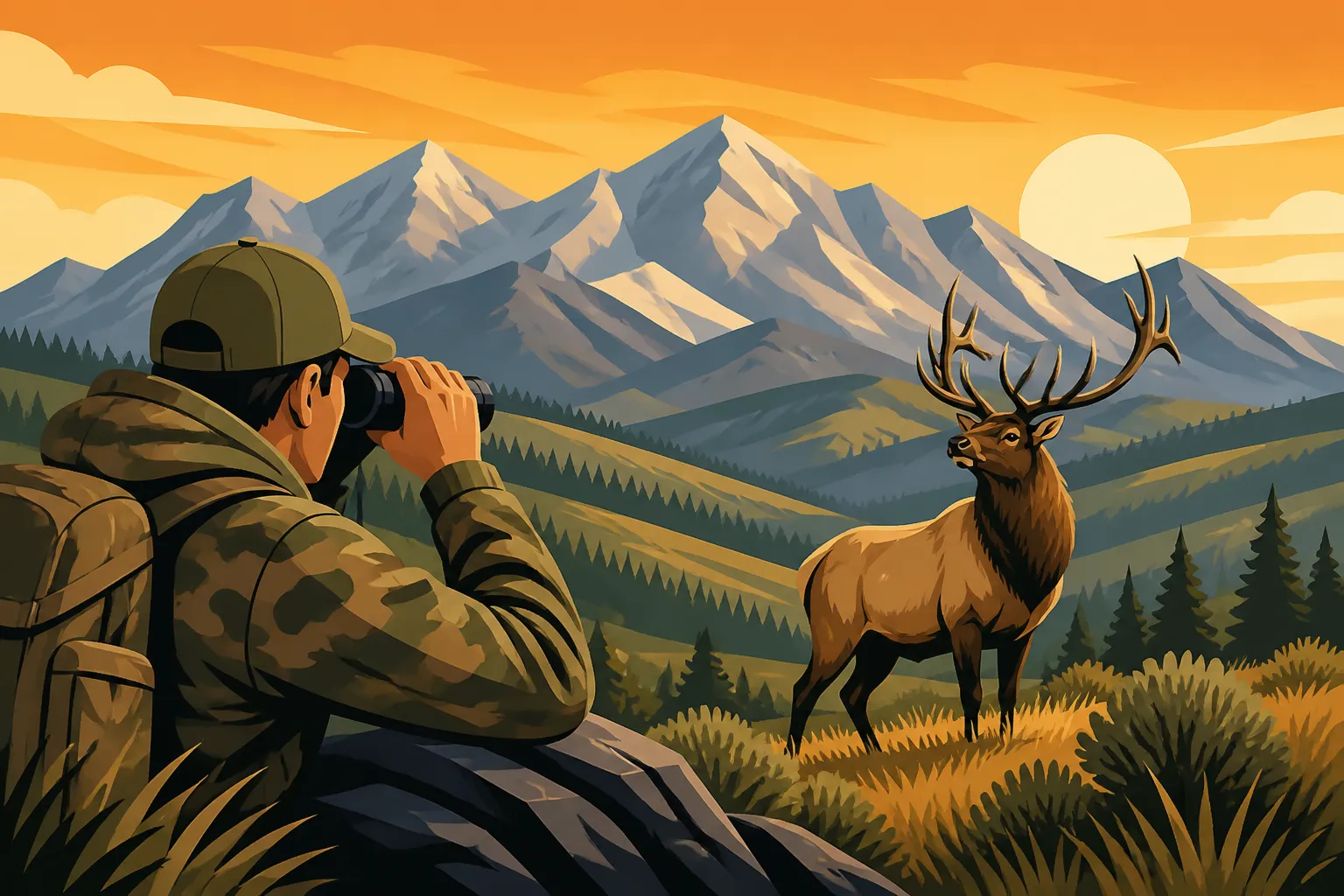
Spot-and-stalk is arguably the most effective method for harvesting elk in the foothills, especially outside of the peak rut. It requires patience and a good set of optics. Start your day by getting to a high vantage point before first light. Use your binoculars and spotting scope to systematically glass every open patch, clearcut, and timber edge. Look for movement, differences in color or texture, or the tell-tale horizontal line of an elk's back against a vertical tree line. Pay particular attention to those benches and saddles – elk love to travel them. Using mapping tools like GoHunt can help you identify optimal glassing points and potential elk travel corridors.
Once you spot an animal or a herd, the real work begins. Plan your stalk carefully. Consider the wind direction above all else – elk have an incredible sense of smell. Thermals can be tricky in the foothills; remember that in the mornings, cold air drains down the slopes, while in the afternoons, warm air rises. You'll need to approach from below or across the wind. Use the terrain to your advantage: draws, ridges, and dense timber can conceal your approach. Move slowly, deliberately, and quietly. One wrong step on a crunchy leaf or a broken branch can undo hours of effort. When you get close, be prepared to wait. Elk can appear and disappear as if by magic. This is especially true when Hunting Elk in a Foothills Clearcut, where pockets of timber can provide unexpected cover.
Bugling, Cow Calling, and Decoying
During the September rut, calling can be a powerful tool, drawing bulls right into your lap. But it's not as simple as just blowing a bugle. The key is understanding when and how to call, and what response to expect.
- Bugling: A bull bugle is essentially a challenge or an advertisement. An aggressive, challenging bugle can draw in a rival bull, but it can also intimidate smaller bulls or make a dominant bull circle downwind to scent-check you. A locator bugle, a single, softer bugle, can help you pinpoint elk without immediately putting them on high alert. If you hear a distant bugle, a light, inquisitive bugle back might be all it takes to spark his interest. When Bugling Elk in Alberta's Foothills, listen carefully to his responses to gauge his mood.
- Cow Calling: Cow calls (meows, mews, chirps) are generally less intimidating and often more effective, especially when bulls are slightly hung up or during the post-rut when they're less vocal. A series of soft cow calls can convince a bull that there are receptive cows nearby, drawing him in. You can also use desperate-sounding cow calls to mimic a lost calf or a cow in heat, which can elicit a protective or curious response from a bull.
- Decoying: Decoys, particularly cow decoys or even full-sized bull decoys, can be incredibly effective, especially when paired with calling. They give the elk something visual to focus on, drawing their attention away from you and potentially creating an ethical shot opportunity. Always set up your decoy downwind and slightly ahead of your shooting lane, so an approaching bull is focused on the decoy and not your position. When hunting with a partner, one hunter can call and manage the decoy, while the other positions for the shot. Remember, however, that decoys require careful consideration for safety, especially if other hunters are in the area.
No matter the call or tactic, always be ready to shoot. Elk can cover ground incredibly fast and appear silently. Have your rifle or bow ready, understand your shooting lanes, and know your effective range.
Navigating Access and Regulations
Alberta's vast landscape offers incredible hunting opportunities, but it comes with a responsibility to understand and adhere to its complex network of regulations and land access rules. Misunderstanding these can quickly turn a dream hunt into a nightmare.
Understanding WMUs and Public Land Use Zones
Alberta is divided into distinct Wildlife Management Units (WMUs), each with its own specific season dates, species availability, and regulations. For elk hunting in the foothills, you'll generally be looking at WMUs that fall within the "Foothills" designation. It's absolutely crucial to consult the current Alberta Hunting Regulations, specifically the Alberta Big Game Season Dates section, for the exact WMU you plan to hunt. Season dates, antler point restrictions (e.g., 3-point or better), and draw requirements can vary significantly from one WMU to the next.
Much of Alberta's foothills country falls within Crown Land, and a significant portion of that is designated as Public Land Use Zones (PLUZs). These zones, like the Ghost PLUZ or the Livingstone-Porcupine Hills PLUZ, are established to manage recreational use, including hunting, camping, and Off-Highway Vehicle (OHV) use. Within PLUZs, there can be specific rules regarding where you can camp (random camping is generally allowed but might have restrictions), where and when you can use OHVs (some trails are designated, others are closed), and even fire restrictions. It is your responsibility to know these rules for the specific PLUZ you're hunting. Using Alberta's Recreational Access Mapping Tool (RAMP) or a premium mapping service like GoHunt can help you identify these zones and their associated rules. While the foothills offer tremendous Public Hunting Land in Alberta, don't assume universal access or rules. Always verify.
Specific Regulations and Licence Requirements
Beyond WMUs and PLUZs, there are overarching regulations you must be aware of. First, every hunter in Alberta, resident or non-resident, needs a Wildlife Identification Number (WIN) card and an annual Wildlife Certificate. Non-residents of Canada will also need to engage a licensed outfitter or be accompanied by an eligible Alberta Hunter Host Rule.
For elk, most foothill WMUs require a Special Licence, obtained through Alberta's Draw system. This means you need to apply well in advance, understanding the How Alberta's Draw Application Works and the Alberta Draw Priority Point System. General Elk licences are much less common in the foothills and are usually very restrictive (e.g., antlerless in specific WMUs or late-season). Ensure you have the correct licence for the specific animal (antlered/antlerless) and WMU you intend to hunt. Check the Alberta Relm website for detailed licence information and application deadlines. It's a system that takes some getting used to, but it's vital for legal hunting. Also, be aware of specific rules on baiting big game, shooting hours, and carcass transport, especially in areas monitoring Chronic Wasting Disease (CWD).
Post-Harvest: Processing and Packing Out
Congratulations, you've connected on an elk! But the hunt isn't over. In fact, for many, the real work has just begun. An elk in the backcountry of Alberta's Foothills can be a monumental task to get out, but proper processing and packing are crucial for preserving your hard-won meat.
Field Dressing and Quartering in the Backcountry
The moment your elk hits the ground, the clock starts ticking, especially if temperatures are warm. The goal is to cool the meat down as quickly as possible. First, ensure the animal is indeed expired and safe to approach. Then, begin with standard field dressing to remove the entrails. This allows the body cavity to cool.
Next comes quartering. In the backcountry, boning out the meat is often the most efficient strategy for reducing weight and making it easier to pack. Start by removing the front quarters, then the hind quarters, often by cutting through the hip joint or simply separating the muscle groups. Remove the backstraps (loins) and tenderloins. Many hunters also take the neck meat, ribs, and any other usable meat, ensuring no part of the animal is wasted. Separate the hide from the meat as quickly as possible, as it traps heat. Place all meat in breathable game bags, keeping them clean and off the ground. If you're several days into your hunt, or if temperatures are above freezing, consider hanging the quarters in a shady, breezy spot to allow air circulation and further cooling. This is where a good, sharp knife or two, a small bone saw (optional, but helpful), and knowledge of anatomy truly shine. Proper meat care is not just ethical; it ensures you get the best possible table fare from your harvest.
Efficient Packing Out Strategies
Getting an entire elk out of the foothills can test your physical and mental limits. An average adult elk can weigh 600-800 pounds (or more for a large bull), and even boned-out, you're looking at hundreds of pounds of meat.
- Backpack Frames: A sturdy external frame backpack is usually the preferred method. You'll likely need multiple trips, especially if you're hunting alone. Divide the meat into manageable loads – typically 50-80 pounds per trip, depending on your fitness level and the terrain. Remember to account for the head and antlers if you're taking them.
- Buddy System: Hunting with partners is a huge advantage here. More hands mean lighter loads and fewer trips. You can alternate carrying the heaviest packs, providing encouragement and assistance when fatigue sets in.
- Game Carts and OHVs: If you're fortunate enough to harvest an elk close to a trail or old logging road where OHV access is permitted (always verify PLUZ or Crown Land rules!), a game cart or quad can be a lifesaver. However, most prime foothills elk country requires packing on your back. Be realistic about whether you'll be able to use a Getting a Moose Out With a Quad or cart before relying on one.
- Horseback Outfitters: For the most remote areas, or if you prefer to minimize the physical strain of packing, an outfitter with packhorses can be an excellent option. While an added expense, it ensures your meat and trophy are transported out efficiently and safely. This is often necessary for some of the deeper backcountry hunts.
The key is methodical planning. Once the elk is down, assess your route back to your vehicle or camp. Identify the easiest path, even if it's not the shortest. Stay hydrated, take breaks, and listen to your body. Packing out an elk is a truly humbling experience, but the sense of accomplishment, and the freezer full of wild game, make every ounce of effort worthwhile.
Safety and Ethical Considerations
Hunting in Alberta's Foothills offers incredible adventure, but it also comes with inherent risks. Being prepared for emergencies and always adhering to ethical hunting practices are paramount.
Staying Safe in Remote Backcountry
The foothills can be rugged, remote, and unforgiving. Personal safety should always be your top priority.
- Bear Awareness: Both black bears and grizzly bears inhabit the foothills. Always carry bear spray and know how to use it. Make noise while hiking, especially in dense brush, to avoid surprising a bear. Store food properly and keep a clean camp. If you encounter a grizzly, know the difference between a defensive and non-defensive encounter. The safety advice when What Happens If You See a Grizzly is essential reading.
- Navigation: While digital tools are great, they can fail. Always carry a physical map and compass and know how to use them. Share your hunting plan (where you're going, when you expect to return) with someone reliable who isn't on the hunt. A satellite messenger like a Garmin inReach or Zoleo is highly recommended for remote areas without cell service, allowing for emergency communication.
- Weather Extremes: Alberta weather can change in an instant, especially in the mountains. Be prepared for sudden temperature drops, heavy rain, or even early season snow. Pack extra layers, emergency shelter, and fire-starting materials. Hypothermia is a real risk.
- First Aid: Carry a comprehensive first-aid kit and know how to use its contents for common hunting injuries like cuts, sprains, or blisters. Consider taking a wilderness first-aid course before heading into the backcountry.
- Physical Fitness: Elk hunting is demanding. Be honest about your fitness level and train accordingly. Long hikes with heavy packs, often at elevation, require cardiovascular endurance and strength.
Ethical Hunting and Conservation
Beyond safety, ethical conduct is the cornerstone of responsible hunting.
- Shot Placement: Strive for clean, humane kills. This means knowing your firearm or bow's capabilities, practicing regularly, and only taking shots within your ethical range. Never take a risky shot that could wound an animal.
- Minimizing Suffering: If an animal is wounded, your absolute priority is to track and recover it. This might mean long hours of tracking in difficult terrain. Every effort must be made to ensure a quick and humane end.
- Meat Care: As discussed, proper field dressing and meat care are essential. Wasting game meat is not only illegal in Alberta but also deeply unethical. Every pound of meat should be cared for and utilized.
- Leave No Trace: Pack out everything you pack in. This includes all garbage, spent casings, and any non-biodegradable items. Respect the land, other users, and the wildlife.
- Respect for Wildlife: Understand the species you are hunting, their biology, and their role in the ecosystem. Hunting is a privilege, and ethical hunters are conservationists at heart, contributing to wildlife management and habitat preservation. Understanding the local herd dynamics and respecting quota limits, such as those for Alberta's Elk Herds and Their Range, contributes to the health of the species.
Disclaimer
Hunting is an inherently risky activity. The information provided in this guide is for informational purposes only and should not replace proper hunter education, professional guidance, or adherence to official regulations. Always consult the most current Alberta hunting regulations and exercise extreme caution and sound judgment in the field. The author and publisher are not responsible for any accidents, injuries, or legal issues that may arise from the use of this information.