What Happens If You See a Grizzly
Encountering a grizzly bear in Alberta's vast wilderness, especially when you're out hunting, can be one of the most heart-stopping moments a person experiences. The sudden rush of adrenaline, the fear for your safety, and the sheer power of these magnificent animals can be overwhelming. This guide is here to equip you with realistic, practical advice on how to prevent encounters, what to do if one occurs, and how to stay safe in Alberta's grizzly country.
Understanding Grizzlies in Alberta's Wilds
Alberta is prime grizzly bear habitat, particularly in the western and northern regions. Knowing where these bears live and how they behave is your first line of defense against an unexpected encounter. It's not about being afraid, but about being informed and respectful of their domain.
Identifying Grizzly Territory and Behaviors
Grizzly bears, unlike their black bear cousins, often prefer more open, high-elevation areas, but they are incredibly adaptable and can be found in a variety of landscapes from dense forests to wide-open prairies adjacent to mountains. They are particularly drawn to areas with good food sources, which can change throughout the season. In spring, they might be found on green-up slopes or near avalanche chutes, while in summer and fall, berry patches, roots, and areas where ungulates (like deer, moose, and elk) are abundant become key. These animals are powerful, driven by instinct, and always looking for sustenance. Understanding their seasonal movements and preferred diets can give you an edge in predicting where you might encounter one. For a deeper dive into their presence in the province, check out Grizzly Bears in Alberta Today.
Consider the kind of terrain you're entering. Are you in thick bush alongside a creek bottom, or are you glassing open mountain slopes? Each environment presents different risks and requires a different level of vigilance. For instance, hunting an old logging road in the foothills might put you in close proximity to berry bushes and dense cover, making a surprise encounter more likely than if you were actively glassing a wide-open basin. Recognizing these subtle cues from the landscape itself is a learned skill that comes with experience and careful observation.
Grizzlies are generally solitary animals, but a sow with cubs is one of the most dangerous situations you can encounter. They are fiercely protective, and their defensive instincts are heightened. Bear cubs are irresistibly cute, but seeing them almost always means mom is nearby, and she will perceive you as a threat. Always give a wide berth to any bear, but especially a sow with cubs, and never, ever get between them.
Spotting the Warning Signs of a Nearby Bear
Before you even see a grizzly, there are often clues that one has been in the area recently. Learning to recognize these signs can help you alter your route or increase your vigilance. Tracks are one of the most obvious indicators; grizzly tracks are typically wider and have more splayed toes than black bear tracks, with claws that usually don't register in the print (unlike black bears, whose claws often show). Understanding the size of the track can give you an idea of the bear's size. Fresh tracks are a significant warning. If you see tracks, especially moving in your direction, it's time to re-evaluate your plan. To help you differentiate between the species, a good read is Telling a Black Bear From a Grizzly.
Scat, or droppings, is another key indicator. Grizzly scat can vary wildly depending on their diet, but often contains undigested berries, seeds, or hair. Large, fresh scat is a clear sign. Look for disturbed earth where bears have been digging for roots or rodents, or overturned rocks. Tree rubs, where bears scratch or bite trees, are also signs of their presence, often accompanied by hair left behind. These marks can tell you a lot about the size and activity of bears in the area. When you're in the backcountry, especially when doing something like Backpacking Into Alberta Sheep Country, keeping an eye out for these subtle signs can literally be a lifesaver.
Beyond physical signs, listen. The wilderness isn't always silent. Are birds suddenly agitated? Is there an unusual stillness? These can sometimes indicate the presence of a large predator. If you come across a carcass, especially a freshly killed one, that's a huge red flag. Grizzlies are very possessive of their kills and will aggressively defend them. You never want to stumble upon a bear's dinner, as that almost guarantees a defensive encounter. Your senses are your best scouting tools when it comes to bear safety.
Proactive Strategies to Prevent Grizzly Encounters
The best bear encounter is the one that never happens. Being proactive and taking preventative measures significantly reduces your risk in grizzly country. This isn't just about carrying bear spray; it's about altering your behavior and respecting the environment you're in.
Making Your Presence Known and Staying Alert
One of the primary causes of grizzly attacks is a surprise encounter. You stumble upon a bear, it feels threatened, and it reacts defensively. To avoid this, make noise as you travel, especially in dense cover, along creek bottoms, or when visibility is poor. Talk loudly, sing, or regularly yell "Hey bear!" This gives bears a chance to hear you coming and move away before you get too close. Don't rely solely on bear bells, as their sound might not carry far enough or be distinct enough to alert a bear. Consistent, human vocalizations are much more effective. This is particularly crucial when you're hunting in areas like the Boreal WMU Access in Wet Years, where thick vegetation can limit visibility.
Always be aware of your surroundings. Keep your head up, look ahead, and scan for movement. Avoid wearing headphones that block out ambient sounds. Pay attention to wind direction, as bears have an incredible sense of smell. If you're walking into the wind, a bear might not smell you until you're very close. When you're moving through an area, consider if your approach could conceal you from a bear, such as coming around a blind corner or topping a rise. Tools like satellite imagery, which many hunters use for Scouting With Satellite Imagery in Alberta, can help you identify dense corridors or potential bedding areas before you even get there, allowing you to plan a safer route.
Travel in groups if possible. A group of people makes more noise and presents a larger, more intimidating presence than a lone individual. If you're hunting alone, your vigilance needs to be doubled. Hunters, especially, tend to be quiet and focused on their quarry, which is exactly the opposite of what you want to be when trying to avoid a grizzly. It's a challenging balance to strike, but your safety is paramount.
Secure Food and Scent Management
Grizzlies are incredibly intelligent and have an exceptional sense of smell, sometimes detecting scents from several miles away. Improper food storage is a major attractant and a leading cause of habituation, where bears become accustomed to human food and lose their natural fear. This often leads to bears being relocated or, tragically, euthanized. Always store food, garbage, and anything with a strong scent (like toiletries, cooking oils, and even scented bug sprays) in bear-resistant containers, hung from a tree at least 10-12 feet off the ground and 4 feet from the trunk, or in designated bear lockers if available. For backpackers, a bear canister is invaluable.
Avoid cooking and eating in your sleeping area. Set up a "kitchen" and "food storage" area at least 100 meters (about 330 feet) downwind from your tent. Clean up immediately after meals, packing out all garbage, even tiny scraps. Don't bury food waste; bears will dig it up. Even the clothes you cook in can carry tempting scents, so it's a good idea to change out of them before going to bed and store them with your food. Hunters also need to be mindful of gut piles. While inevitable, dragging a gut pile away from your camp or trail, and out of sight, can help reduce the chances of a bear stumbling upon it too easily.
Personal hygiene might seem secondary in the backcountry, but scented items can draw bears. Use unscented toiletries or minimize their use. If you're on a multi-day hunt, remember that even the scent of dried blood on your clothing or gear can be an attractant. While you can't completely eliminate all scents, being meticulous about management goes a long way. Platforms like GoHunt, with their mapping features, can help you plan remote camp locations away from prime bear corridors, adding another layer of security to your scent management strategy.
Equipping Yourself: Bear Spray and Firearms
Carrying bear spray is non-negotiable in grizzly country. It's a highly effective deterrent when used correctly, and statistically, it's often more effective than firearms in deterring bear attacks. Make sure your bear spray is readily accessible – not in your pack, but on a hip holster or chest harness, so you can grab it instantly. Practice deploying it (with an inert canister if possible) so you know how it feels and how to remove the safety clip under pressure. Understand its range and spray pattern. It's designed to create a cloud that irritates the bear's eyes and respiratory system, giving you time to retreat. For comprehensive advice, refer to Wildlife Safety in Alberta Bear Country.
While bear spray is an excellent deterrent, some hunters also choose to carry a firearm for bear defense. This is a personal decision and comes with significant responsibility. A firearm is a last resort, meant for situations where a bear is actively attacking and all other deterrents have failed. It's crucial to be proficient with your chosen firearm under stress and understand that even a well-placed shot might not stop a charging grizzly instantly. Always follow all applicable firearm regulations, including those concerning calibre and handling. Remember, the goal is always avoidance and deterrence, not confrontation.
It's vital to have realistic expectations for both bear spray and firearms. Bear spray needs to be used at the right distance, with the wind in mind, and aimed properly. Firearms require quick, accurate shooting under extreme duress. Both tools are part of a larger safety strategy that emphasizes prevention and situational awareness above all else. Attending an Alberta Hunter Education Course Requirements or a dedicated bear safety course can provide invaluable training on these topics.
Navigating a Grizzly Encounter: What to Do When It Happens
Despite your best efforts, an encounter might still occur. How you react in those terrifying moments can determine the outcome. It's crucial to understand the different types of encounters and respond accordingly.
Recognizing the Type of Encounter: Defensive vs. Non-Defensive
Not all bear encounters are equal. The bear's behavior will dictate your response.
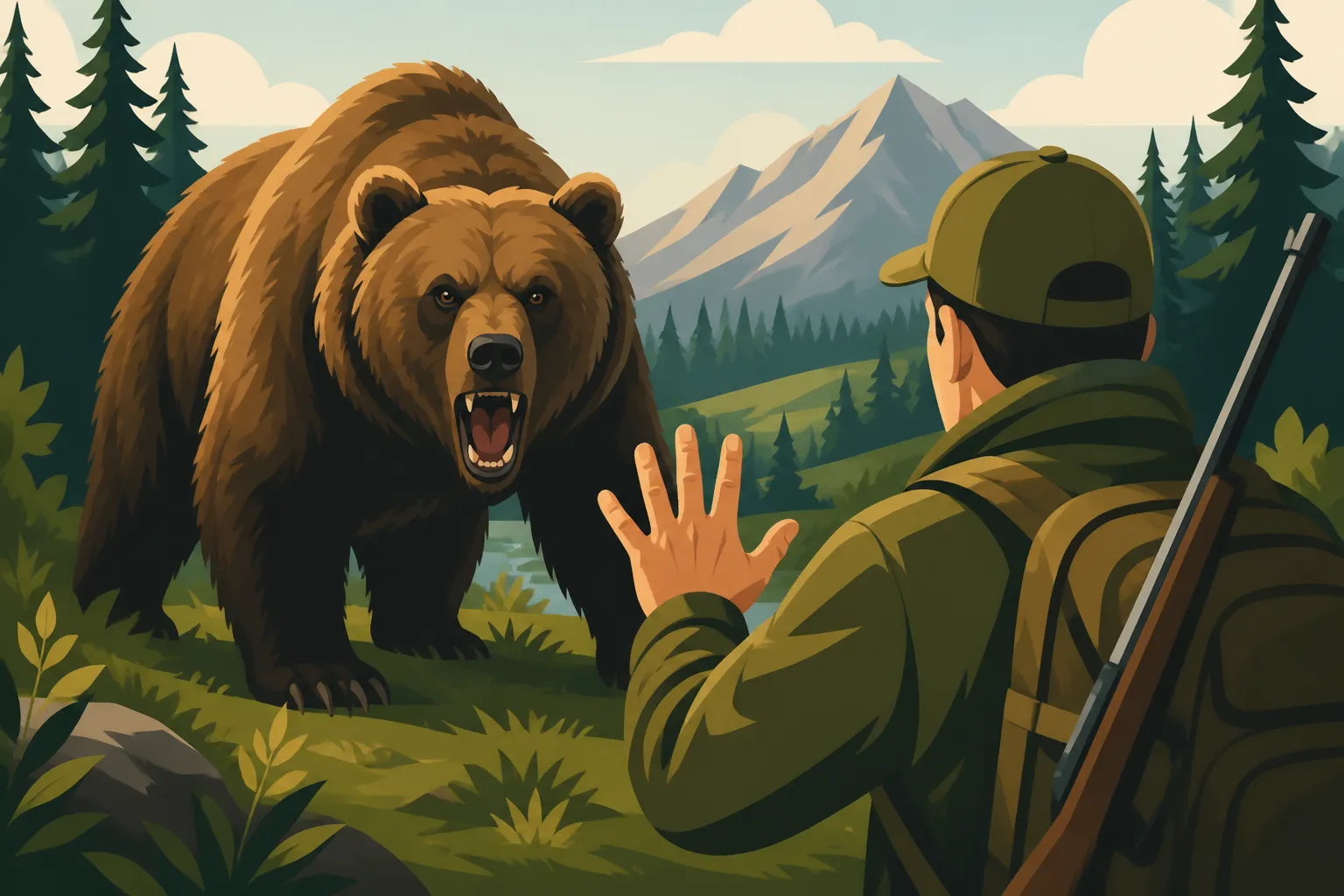
Non-Defensive Encounter: If a bear sees you, but doesn't seem agitated, aggressive, or particularly interested in you, this is a non-defensive encounter. The bear might be curious, or simply be going about its business.
- Your Action: Remain calm. Do NOT run. Running can trigger a chase response. Speak in a calm, firm voice to let the bear know you're human. Slowly wave your arms above your head to appear larger. Back away slowly, diagonally, never turning your back on the bear. Avoid direct eye contact, as this can be perceived as a challenge. Give the bear plenty of space to leave. If the bear is far off, you might have time to grab your bear spray and prepare for it to approach. Always ensure a clear escape route for yourself, and for the bear. Consider that the bear might just be passing through an area you're hunting, such as an Hunting an Old Logging Road in the Foothills, and might simply continue on its way if you give it space.
Defensive Encounter: This is a much more serious situation. A defensive encounter typically happens suddenly and often involves a sow with cubs, a bear protecting a food cache (like a gut pile or carcass), or a bear that feels surprised and cornered. The bear will exhibit signs of agitation: huffing, jaw popping, pawing the ground, or a "bluff charge" where it runs at you then stops short.
- Your Action: This is when you stand your ground. Do not run. Have your bear spray ready. Continue speaking in a firm voice. If the bear charges and makes contact, play dead. Lie on your stomach, clasp your hands behind your neck, and spread your legs to prevent the bear from rolling you over. Remain still until you are absolutely certain the bear has left the area. Playing dead is a specific response for defensive attacks, as the bear is trying to neutralize a perceived threat. Once it thinks the threat is gone, it often leaves. This is a terrifying action, but it's often the safest course when a grizzly is physically engaging you defensively. Platforms like GoHunt, which sometimes have community features, often see discussions about these intense encounters, reinforcing the reality of these situations.
A crucial distinction is that if a bear shows prolonged interest, stalking, or seems to be treating you as a food source, this is a rare but extremely dangerous predatory encounter. In such a case, you must fight back with everything you have, aiming for the face and eyes. However, the vast majority of grizzly attacks are defensive.
Deploying Bear Spray Effectively
When a defensive bear charges, the moment of truth arrives. You need to deploy your bear spray.
- Accessibility: As mentioned, it must be instantly accessible.
- Aim: Aim for the bear's face, specifically its eyes and nose.
- Timing: Deploy the spray when the bear is within 10-20 feet. You want to create a cloud that the charging bear runs into. Don't wait until it's on top of you, but don't waste precious spray by firing too early from too far away, especially with limited canister capacity.
- Technique: Spray in a continuous stream or short bursts, aiming slightly down if the bear is close, to account for its charge trajectory. Be mindful of wind, as a strong headwind can blow the spray back at you, or a crosswind can dissipate it too quickly.
- Escape: As soon as the bear reacts to the spray (it might cough, rub its face, or shake its head), immediately back away and create distance. Do not relax until you are completely out of the area.
Bear spray is a powerful tool, but it's not a magic shield. It requires quick thinking, calm nerves, and proper technique. Familiarizing yourself with its operation before you're in a high-stress situation is paramount.
Last Resort: Defensive Firearm Use
Using a firearm against a grizzly is an absolute last resort, only to be considered if your life is in immediate, unavoidable danger and bear spray has failed or is not an option. Alberta's regulations permit carrying a firearm for bear defense, but it comes with immense responsibility and legal implications.
The decision to use a firearm in a charge is complex and split-second. The goal is to stop the charge and neutralize the threat. This typically means aiming for the central nervous system (brain or spine) or vital organs. However, a charging grizzly is a fast-moving, powerful target, and hitting these critical areas under extreme stress is incredibly difficult. Even a hit might not stop the bear instantly, meaning you may still need to endure a physical encounter or continue firing. The most common scenario for a successful defensive shooting is a very close-range shot, often when the bear is already in contact.
It is strongly advised that if you carry a firearm for bear defense, you are highly proficient with it, practice regularly under simulated stress, and understand its limitations. Ideally, your firearm should be chambered in a powerful enough calibre to humanely dispatch a large animal. This is not a situation for light calibres. Always prioritize bear spray as your primary deterrent, as it is often safer and more effective for both you and the bear. Remember, the legal and ethical bar for shooting a grizzly bear is incredibly high.
Post-Encounter: Safety, Reporting, and Learning
Surviving a grizzly encounter is a profound experience, but your actions immediately afterward are just as important for your safety and for wildlife management.
Immediate Actions After a Grizzly Encounter
Once the immediate threat has passed, and you've created distance from the bear, don't just breathe a sigh of relief and carry on.
- Assess Yourself and Your Group: Check for injuries. Even if there was no physical contact, the psychological impact can be immense. Are you or anyone in your group disoriented, injured, or in shock?
- Assess Your Surroundings: Remain vigilant. The bear might still be in the area, or another one could be attracted to the scene. Don't let your guard down. Move away from the area cautiously, backtracking if possible, and take a route that avoids dense cover or blind spots.
- Secure Your Bear Spray/Firearm: Ensure your bear spray is re-holstered safely, or your firearm is made safe and secure.
- Stay Calm (as much as possible): The adrenaline rush can be debilitating. Take deep breaths. If you are with a group, talk through what happened to help everyone process the event.
- Do NOT Go Back For Gear: If you dropped anything, resist the urge to retrieve it, especially if the bear is still nearby or was interested in the area. Your safety is paramount.
When you're out hunting, and especially if you're alone, having a robust emergency plan is critical. This could include a satellite messenger or an emergency locator beacon. For more on preparing for the unexpected, read Emergency Plans in Alberta's Backcountry.
The Importance of Reporting and Resources
Every grizzly encounter, whether aggressive or passive, should be reported to Alberta Environment and Parks (AEP) Fish and Wildlife officers. This isn't just about documenting your experience; it's vital information for wildlife management.
- Why Report? Your report helps wildlife officials track bear movements, identify potential conflict areas, and understand bear behavior. If a bear is exhibiting unusual aggression or has become food-conditioned, it's crucial for wildlife managers to know so they can intervene, potentially saving human lives and the bear itself.
- What to Report: Provide as much detail as possible: the date, time, and precise location (GPS coordinates are best if you have them, which a platform like GoHunt can provide). Describe the bear (size, colour, unique markings), its behavior, your actions, and the outcome. Mention if cubs were present or if there was a food source involved.
- Who to Contact: You can contact your local Fish and Wildlife office or the Report A Poacher line (which also handles wildlife emergencies). They can provide guidance on specific situations and take your report.
Reporting helps contribute to a broader understanding of grizzly populations and ensures that future hunting seasons and recreational activities can be managed safely. It's an important part of being a responsible outdoor enthusiast in Alberta. Remember that these encounters, while frightening, are also opportunities to learn and refine your safety protocols for future trips into Alberta's magnificent, wild places.
| Encounter Type | Bear Behavior | Your Best Response | Key Considerations |
|---|---|---|---|
| Non-Defensive/Curious | Bear sees you, seems aware but not agitated, might observe you. | Remain calm. Speak softly. Slowly wave arms to appear larger. Back away slowly, diagonally, without eye contact. Give space. | Do NOT run. Avoid sudden movements. Have bear spray ready. Give bear an escape route. |
| Defensive (Surprise) | Bear is surprised, agitated (huffing, jaw popping), possibly bluff charges. | STAND YOUR GROUND. Have bear spray ready. Speak firmly. If attacked, play dead (on stomach, hands behind neck, spread legs). | Often involves sow with cubs or food cache. Play dead only if physically attacked. Remain still until bear leaves. |
| Predatory (Rare) | Bear shows prolonged interest, stalks, treats you as prey. | FIGHT BACK. Aim for face/eyes. Use any available weapon (knife, rocks, sticks, firearm). | Extremely rare for grizzlies, more common with black bears. This is a fight for your life; do not play dead. |
| Bear Spray Use | Bear is charging, within 10-20 feet. | Aim for face (eyes/nose). Spray in continuous stream or short bursts. Use wind to your advantage. | Practice deployment. Ensure quick accessibility. Creates a deterrent cloud; does not necessarily stop a bear instantly, but gives you time to escape. |
| Firearm Use | Bear is actively attacking, life is in immediate danger, other options failed. | Aim for critical areas (brain/spine/vitals). Shoot to stop the threat. | Absolute last resort. High proficiency required. Ethical and legal implications. Stopping power can be limited, even with large calibres, under extreme stress. |
Disclaimer
This article is for general informational purposes only and does not constitute professional advice. Laws, prices and regulations vary by location and change over time. Consult a qualified professional for guidance on your specific situation.