Hunting an Old Logging Road in the Foothills
Stepping onto an old logging road in Alberta's foothills can feel like walking a tightrope between opportunity and disappointment. You see the clear path, the promise of easier travel into otherwise impenetrable bush, but often, the game sign feels sparse, or the elk and deer are just never there when you are. It’s a common frustration for many of us, navigating these human-made arteries through the wilderness. This guide will help you decode the secrets of these often-overlooked hunting grounds, turning those seemingly barren stretches into productive pathways to success.
Understanding the Allure of Old Logging Roads
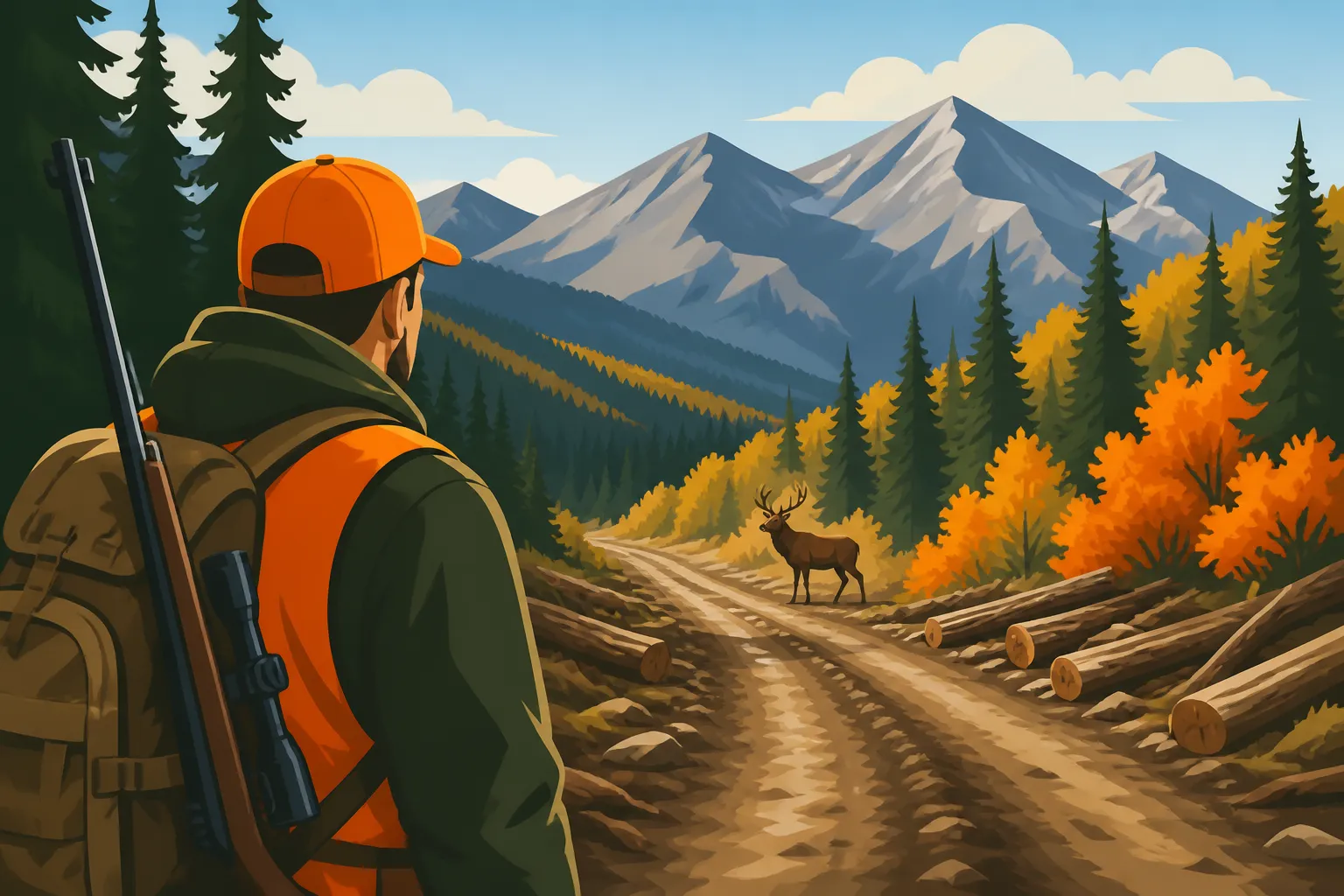
Old logging roads, especially those that have been decommissioned or seen minimal use for years, hold a unique draw for both wildlife and hunters in Alberta's foothills. They aren't just pathways; they're dynamic features in the landscape that significantly influence animal movement and behavior. While a well-used gravel road might seem like a barrier, a forgotten two-track or a reclaimed haul road can be a game magnet.
Why Game Animals Use Them
Animals, especially larger game like deer, elk, and moose, are creatures of efficiency. A relatively clear, stable path through thick timber or dense undergrowth is an inviting proposition. Old logging roads create corridors of travel, offering easier movement between feeding areas, bedding sites, and water sources. Think about a mature whitetail buck or a massive bull elk; crashing through dense lodgepole pine or tangled alders requires immense energy. A slightly overgrown road, even if it's just a faint trail, provides a highway. Furthermore, these roads often feature edges – where the cut meets the undisturbed forest – which are prime habitat for browse and new growth after the canopy opens up. These edges can be especially attractive for species like moose, who thrive on young willow and aspen shoots, and elk, who will often browse the tender vegetation that emerges in these disturbed areas. It’s a subtle dance between human disturbance and natural regeneration that creates these hotspots.
Hunter Access Versus Animal Sanctuaries
This is where the balancing act begins. For hunters, logging roads represent crucial access points into country that would otherwise be impenetrable. They allow us to cover more ground, pack in gear, and extract game more efficiently. However, heavily used or easily accessible roads can also mean heavy human pressure, pushing game deeper into cover or making them nocturnal. The trick is to identify those roads that offer you good access without necessarily being a major thoroughfare for other hunters. These are often the older, more overgrown roads, sometimes marked by a simple gate or a "road closed" sign that deters the casual adventurer. These less-traveled paths can become de facto sanctuaries for animals, allowing them to use the easier travel lanes while still feeling secure from constant disturbance. The key is to distinguish between a road that’s too easy to access and one that provides just enough challenge to thin out the crowds, creating a more relaxed environment for game.
Scouting and Interpreting Sign on Foothills Logging Roads
Effective hunting on old logging roads starts long before opening day. It’s a continuous process of observation and deduction, both from the comfort of your home with digital tools and boots on the ground. The foothills can be deceptive, offering dense cover that hides valuable clues. Knowing what to look for and how to interpret it is paramount to success.
Reading the Terrain and Road Features
Before you even load your pack, spend time with a good mapping system. Digital tools, like those found on platforms like GoHunt, allow you to pour over topographic maps, satellite imagery, and public land overlays. Look for roads that run along saddles, connect two drainages, or provide access to secluded benches. Pay attention to how the road interacts with different terrain features: does it follow a creek bottom? Skirt a steep ridge? Cross a low-lying boggy area? These intersections are often travel corridors. Identify areas where the road itself might offer natural bottlenecks or advantageous overlooks. A bend in the road with a small rise, a section that parallels a steep drop-off, or where a dense timber stand meets a more open area can be fantastic ambush points. Consider how prevailing winds might interact with the terrain around the road; animals will often use these corridors to travel with the wind in their face, scenting danger ahead. Understanding how to use these tools for Scouting With Satellite Imagery in Alberta can significantly cut down on wasted time in the field.
Deciphering Fresh and Old Game Sign
Once you’re on the ground, your eyes become your most important tool. Old logging roads, with their relatively soft and exposed surfaces, are excellent places to find and read game sign. Don't just look for tracks in mud; expand your search to rubs on saplings, droppings along the path, and even subtle disturbances in the duff on the edges of the road. Fresh sign is obviously best: clear, crisp tracks, shiny droppings, and recently shredded bark on rub trees. However, don't dismiss older sign. A concentration of old tracks, even if they're a bit weathered, still tells you that animals use this route regularly. Look for patterns: where do the tracks enter and exit the road? Are there specific crossings? Are there areas where animals seem to pause to browse? This helps you piece together their daily routines. Keep an eye out for wallows, especially during the rut, or fresh excavations where elk might have pawed for roots and tubers.
Here’s a quick guide to what to look for:
| Type of Sign | What to Look For | What it Tells You |
|---|---|---|
| Tracks | Fresh, clear hoof prints in soft earth, dust, or snow. | Recent animal presence, direction of travel, size of animal. |
| Droppings | Piles of scat; check for moisture and color for freshness. | Species present, recent activity, often near feeding/bedding. |
| Rubs & Scrapes | Polished tree trunks, torn ground with overhanging branch. | Active buck/bull territory, recent rutting activity (seasonal). |
| Browsing/Grazing | Clipped twigs, bitten off leaves, grazed grass. | Current feeding areas, species preference (e.g., elk vs. deer). |
| Beds | Depressions in leaves, grass, or snow, often sheltered. | Where animals rest, indicates preferred bedding cover. |
| Wallows | Muddy depressions, often with disturbed vegetation. | Elk/moose activity, especially during rut or warm weather. |
Remember that tracks can sometimes be faint, especially if the ground is hard. In these situations, you might need to get down on your hands and knees to really see the outline. Pay particular attention to the intersections of old roads with game trails—these are super high-traffic zones.
Effective Hunting Strategies for Logging Roads
Once you've done your homework and found a promising logging road, it's time to think about how you'll actually hunt it. These roads require a blend of stealth, patience, and strategic thinking. They're not just avenues to walk down; they're dynamic habitats that demand a nuanced approach.
Still-Hunting and Ambush Tactics
One of the most effective ways to hunt old logging roads is through still-hunting. This isn't about covering ground quickly; it's about moving deliberately, taking a few steps, and then pausing to scan, listen, and glass the surrounding cover. Think like an animal: they're not rushing through the forest, so why should you? Use the road as your path, but hunt the edges. Animals often parallel these roads just inside the timber, using the dense cover for security while still benefiting from the easier travel. Look for subtle movements, horizontal lines that don't belong, or flashes of hide. Pay close attention to any small openings or clearings adjacent to the road where animals might step out to browse.
Ambush tactics also shine here. Identify a section of road where sign is consistently heavy, especially if it's a natural choke point or leads to a known feeding or bedding area. Set up well before first light or in the late afternoon. Position yourself in a way that gives you a clear shooting lane down the road but also covers the edges where animals might slip out. A portable ground blind or a strategically placed tree stand can be incredibly effective. Consider the wind direction; you always want the wind in your favor, carrying your scent away from where you expect the animals to appear. This approach works particularly well when combined with a good understanding of Hunting a Cutline Intersection for Whitetails, as the principles of intercepting game movement are very similar.
Calling and Decoying Near Roads
Calling can be a powerful tool when hunting logging roads, especially for elk and moose during the rut, or even for whitetails during the peak of their breeding season. A bull bugle echoing through the foothills timber along a logging road can often get a response, especially if you’re trying to locate animals. For elk, a cow call or a soft bugle can sometimes draw a curious bull closer to the road's edge. Similarly, for moose, imitating a cow's moan or raking brush (if legal in your area) can entice a bull out of the dense cover. Just be mindful of Alberta's rules on baiting and calling.
Decoys can also play a role, particularly for deer. A well-placed deer decoy, even a simple silhouette, can draw the attention of a curious buck or a doe passing by. Position it far enough off the road so it's visible but not directly on the road, adding to the realism. Always be aware of your backdrop and shooting lanes when using a decoy. For both calling and decoying, stealth is key; try to minimize your human presence and set up in a way that allows you to remain hidden while still having a clear view of the road. For elk, specifically, learning the nuances of Bugling Elk in Alberta's Foothills can greatly enhance your success.
Timing Your Hunt
The time of day and the prevailing weather conditions are hugely influential when hunting logging roads. Early mornings and late evenings are almost always prime time. Animals are most active during these low-light periods, moving between feeding and bedding areas. A logging road provides a natural pathway for these movements. Set up before first light to catch animals still moving from their nocturnal feeding to their daytime bedding. In the evening, be patient and stay until legal shooting light fades, as animals will often hold just inside the timber before stepping out onto the road.
Weather can also be your friend. A light rain can muffle your footsteps, making still-hunting incredibly effective. Fresh snow is a game-changer, revealing fresh tracks and making animals more visible against the white backdrop. Conversely, high winds can make it difficult to hear approaching game, but they also make it harder for animals to hear you, and they often cause animals to seek shelter in thicker timber, which may be accessed via these roads. Always be prepared for Hunting Alberta Winter Weather Safely, as conditions can change rapidly in the foothills. The middle of the day, especially if it's warm, is typically slower, but animals will still move, particularly during the rut or if they're pressured.
Navigating Access and Regulations for Foothills Logging Roads
Hunting Alberta's foothills requires not only a good understanding of animal behavior and tactics but also a solid grasp of the rules and regulations, especially concerning public land access. Old logging roads often traverse a mix of land statuses, and respecting these boundaries is critical for a responsible hunt.
Understanding PLUZ and FTR Rules
The foothills region of Alberta often falls within Public Land Use Zones (PLUZs), particularly along the popular Forestry Trunk Road (FTR) corridor. These areas have specific regulations regarding vehicle use, camping, and even hunting activities. While many old logging roads are indeed on Crown land, not all of them allow unrestricted vehicle access. It's common for older roads, or those within specific PLUZs, to be designated for non-motorized use only, or to have seasonal closures. Always consult the official Alberta hunting regulations and relevant PLUZ maps before heading out. Using tools like Alberta's Recreational Access Mapping Tool can be invaluable for understanding these complex land designations and access rules. This will show you where you can drive a truck, or where a quad or side-by-side is permitted, keeping you on the right side of the law. Remember, some of these roads may require a fair walk, but that often translates to less competition and more undisturbed game.
Respecting Gates and Seasonal Closures
You'll inevitably encounter gates or signage indicating restricted access on many logging roads. These gates are there for a reason, whether it's for public safety, wildfire prevention, or to protect wildlife habitat during sensitive times of the year. Respect them. Driving around a closed gate or violating a seasonal closure can result in hefty fines and the loss of hunting privileges. Even if a road appears passable, if there's a gate or sign, assume it's closed to motorized traffic. Often, these restrictions only apply to vehicles, meaning you can still access the area on foot, by mountain bike, or horseback. This is where the old logging road truly transforms into an advantage: it offers easy walking access into remote areas without the noise and intrusion of motorized vehicles. Familiarize yourself with Alberta Forestry Road Access and Gates to ensure you are compliant and avoid any unintended issues. This commitment to ethical and legal hunting practices is not just about avoiding trouble; it’s about preserving access for all of us in the long run.
Ultimately, hunting an old logging road in the foothills is about patience, observation, and respect for the land and its rules. By combining diligent scouting with intelligent hunting strategies and a deep understanding of local regulations, you can unlock the full potential of these often-underestimated hunting grounds.
Disclaimer
The information provided in this guide is for general informational purposes only and does not constitute legal advice or an exhaustive list of all regulations. Hunting regulations in Alberta are subject to change, and it is the hunter's responsibility to consult the most current official Alberta Hunting Regulations before engaging in any hunting activities. Always prioritize safety, ethical hunting practices, and respect for wildlife and private property.