Calling Wolves in Winter Bush
The stark silence of Alberta's winter bush can be deceiving. Many hunters feel like they’re shouting into a void when trying to call wolves, convinced that these cunning predators are too smart, too elusive, especially when the snow is deep and temperatures plummet. But with the right strategy and a keen understanding of their winter patterns, you can absolutely bring these intelligent animals into range. This guide will help you decode their behavior, master calling techniques, and set up effectively for success in Alberta's frosty forests and vast boreal landscapes.
Understanding Winter Wolf Behavior and Their Territory
Winter in Alberta changes everything for wildlife, and wolves are no exception. Their movements, feeding habits, and even their vocalizations shift dramatically, making it a unique and often rewarding time to pursue them. Forget what you know about warm-weather calling; winter demands a different approach.
Why Winter is Prime Time for Wolf Calling
During the depths of an Alberta winter, wolves are constantly on the move, driven by the need to find food and patrol their sprawling territories. Deep snow, while challenging for humans, often funnels ungulates like deer, moose, and elk into more predictable areas, such as lower elevations, river bottoms, or sheltered bush pockets. This concentration of prey means wolves are often consolidated into larger, more active packs, making them potentially more responsive to calls that signal a territorial intrusion or an easy meal. The bare trees and frozen ground also offer better visibility compared to the dense foliage of summer, giving you a slight edge in spotting them, even if only for a fleeting moment. A severe cold snap, for instance, might push deer into a specific valley for shelter, and you can bet the wolves will be close behind, creating a perfect opportunity for a well-placed call.
The sheer difficulty of travel for prey animals in heavy snow can make a wounded animal or distress call particularly enticing. Wolves are opportunistic hunters, and anything that suggests a weakened, vulnerable meal will pique their interest. Their metabolism is working overtime to stay warm, so the drive to feed is intense. You might notice distinct changes in the landscape after a fresh snowfall, with trails leading to sheltered areas or crossings over frozen waterways. These are all clues that point to potential wolf activity, and they become prime locations for setting up a call. Understanding these motivations is the first step in successful winter wolf hunting.
Reading the Winter Landscape for Wolf Sign
Finding fresh wolf sign in the snow is like striking gold. Tracks are your most reliable indicator of recent activity. Look for large, purposeful paw prints, often in a straight line, indicating an animal on the move rather than just milling about. These tracks often converge in natural travel corridors – think frozen creek beds, old logging roads, or even the subtle pathways of well-used seismic lines. These corridors act as highways for wolves, allowing them to conserve energy while covering vast distances. Marking these on a mapping app like GoHunt can provide invaluable data for future hunts.
Beyond tracks, keep an eye out for scat and, most importantly, kill sites. A fresh kill, particularly if it's still warm or hasn't been completely scavenged, tells you that wolves are very likely still in the immediate vicinity or will return within a day or two. This is a high-percentage area for setting up a call. Similarly, finding older kill sites can indicate a preferred hunting ground or a place where a pack frequently brings down prey. Pay attention to how the snow around these sites is disturbed and any lingering scents. While you're observing, also listen. Knowing where Wolf Pack Size in the Boreal have been heard howling previously can be a huge advantage, as you can then target those general areas. The more intel you gather from the landscape, the better your chances.
Essential Calls and Calling Strategies for the Bush
Once you understand where wolves are likely to be, the next challenge is how to communicate with them. Calling wolves in Alberta's winter bush isn't just about making noise; it's about speaking their language, whether you're using a sophisticated electronic device or the raw power of your own lungs.
Choosing Your Call Type: Electronic vs. Mouth Calls
When it comes to wolf calling, you essentially have two main arsenals: electronic callers and mouth calls. Each has its strengths and weaknesses, and often, the most successful hunters employ a combination of both. Electronic callers, such as those made by FoxPro or Lucky Duck, offer incredible volume and a vast library of realistic sounds, from rabbit distress to pup barks and various howls. They allow for hands-free operation, meaning you can stay ready to shoot while the call is playing, and you can control them remotely, placing the sound source away from your immediate position. However, they are an investment, and batteries can suffer in Alberta's bitter cold, so always carry spares.
Mouth calls, on the other hand, require more skill and practice, but they offer unparalleled versatility and a primal connection to the hunt. A good open-reed call can mimic a variety of distress sounds, and a specialized wolf howler allows you to challenge or locate distant packs. While mouth calls typically don't have the sheer volume of an electronic unit, their nuanced, natural sounds can be incredibly effective, especially for finishing off a wary wolf that's closing in. For more subtle interactions or responding to natural howls, mouth calls shine. Many hunters will use an electronic call to draw wolves from a distance, then switch to a mouth call for a more realistic, convincing finish as they approach.
Here's a quick comparison of call types:
| Call Type | Pros | Cons | Best For |
|---|---|---|---|
| Electronic Caller | High volume, diverse realistic sounds, remote operation, hands-free | Expensive, battery sensitive in cold, less adaptable on the fly | Long-range attracting, luring from dense cover, consistent sounds |
| Open Reed Mouth Call | Versatile, portable, subtle control, no batteries | Requires practice and skill, lower volume, can be physically taxing | Finishing calls, close-range deception, mimicking multiple prey |
| Wolf Howler | Authentic howls, direct interaction, simple to use | Practice needed for realism, limited sound variety | Locating packs, challenging intruders, pack communication |
Deciphering the Wolf Howl and When to Use It
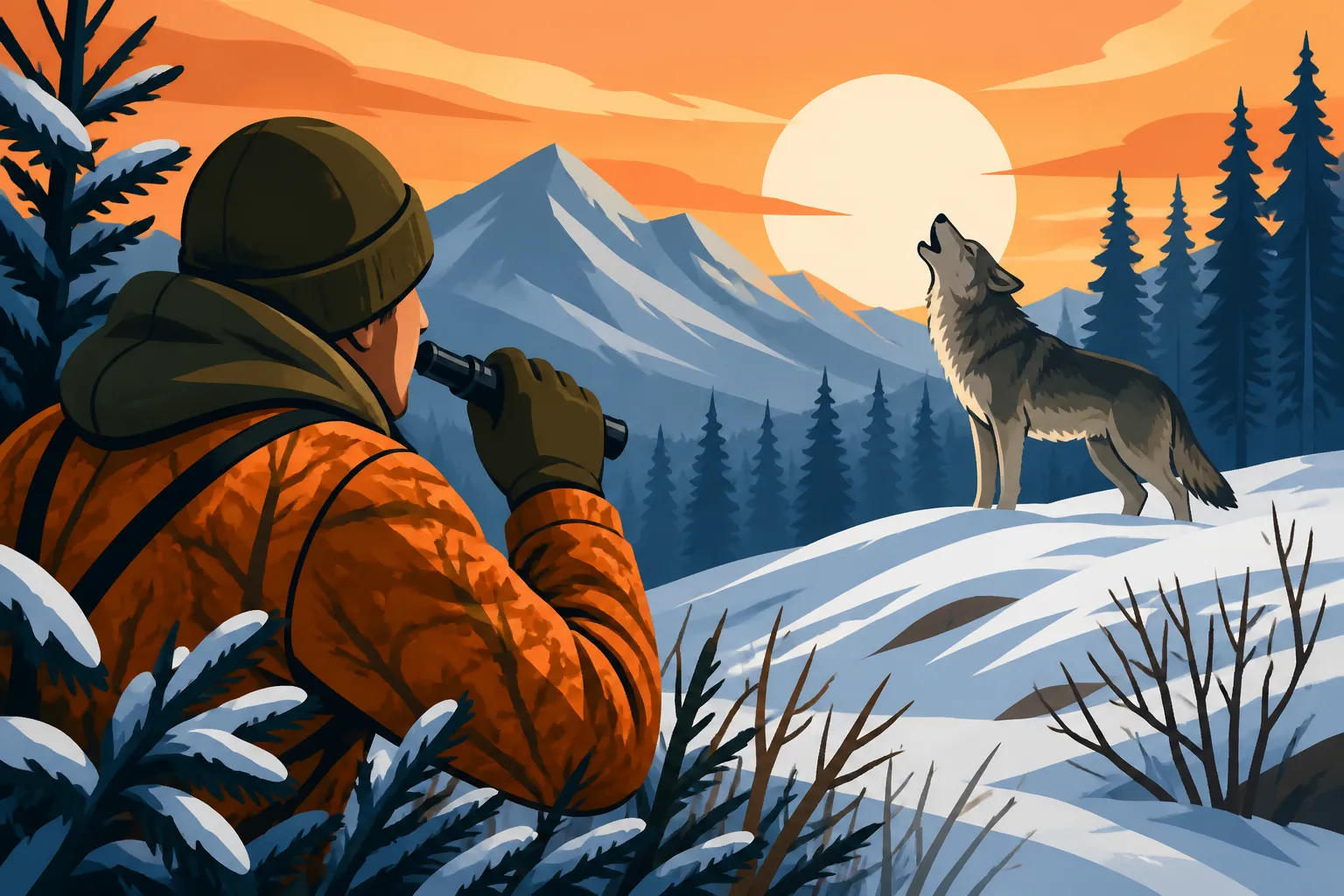
The wolf howl is an iconic sound of the northern wilderness, and understanding its nuances is key to effective calling. Howls serve multiple purposes: locating pack members, defining territory, signaling a kill, or even just expressing social cohesion. When you're in the bush, knowing when to howl and what type of howl to use can make all the difference. A long, drawn-out lone howl can serve as a locator, prompting distant wolves to respond, giving away their position. This is particularly useful in vast, quiet wilderness areas where sound travels far in the crisp winter air.
A challenge howl, often shorter, more aggressive, and sometimes ending in barks or growls, is used to simulate an intruder in a pack's territory. This can be very effective in eliciting a response from dominant wolves eager to defend their turf. Pack howls, mimicking multiple wolves, can also draw in curious or territorial animals. The key is to listen to any natural howls you hear and try to mimic their cadence and intensity, rather than just blasting a generic sound. Sometimes, a subtle, inquisitive howl is more effective than an aggressive challenge. Practice makes perfect, and learning to read their responses, or lack thereof, will refine your technique over time. It's a true conversation with the wild, and patience is your most important tool.
Mastering Distress Calls for Drawing Them In
While howls are great for locating and engaging wolves, distress calls are often what seal the deal, especially in winter. The sound of an injured animal triggers a primal, opportunistic response in any predator: the chance for an easy meal without a strenuous chase. This is particularly appealing when wolves are expending extra energy navigating deep snow and hunting strong, healthy prey. Popular distress calls include a dying rabbit, a fawn in distress, or even a wounded elk calf. The trick is to match your call to the prey animals prevalent in your specific hunting area. If you’re hunting where moose and elk are common, a wounded calf call might be more effective than a rabbit.
When using distress calls, start softly, as if the animal is just beginning its struggle, then gradually increase the volume and intensity. Introduce pauses, mimicking the natural ebb and flow of a dying animal. A common mistake is to call too loudly and too continuously. Wolves are incredibly intelligent and wary; an unnatural, non-stop sound can alert them to a trap. Blend different cries, add whimpers, and create a realistic scenario. Think about what a Calling a Bull Moose in the Rut or Rattling and Calling Whitetails in Farm Country would involve in terms of mimicking, and apply those principles here. The goal is to make the wolf believe there’s an easy meal struggling in the bush nearby, too vulnerable to escape.
Optimal Setup and Safety in Alberta's Winter Bush
Calling wolves in the winter bush requires more than just good calls; it demands a strategic setup and an unwavering commitment to safety. Alberta's winter can be brutal, and being prepared is not just about comfort, but survival.
Selecting Your Ambush Location in Deep Snow
Your setup is paramount when calling wolves. First and foremost, always consider the wind. Wolves have an incredible sense of smell, and if they catch your scent, the hunt is over. Position yourself so the wind is blowing from the direction you expect the wolves to approach, directly into your face, or at least a strong crosswind. This means you'll need to circle around their likely travel routes. Look for natural cover that breaks up your silhouette, such as thick stands of spruce, the edge of a frozen creek bank, or even the remnants of an old beaver dam. You want enough cover to hide, but also clear shooting lanes in the direction of your call. Using an app like GoHunt to scout the terrain for natural funnels, ridges, and dense timber pockets can give you a significant advantage. These tools often show topography and vegetation types, making it easier to visualize potential wolf approach routes.
Think about how wolves will move through the landscape, especially where deep snow dictates their path. Frozen creek beds, clear-cut edges, and old logging roads become highways. Setting up along these corridors, where wolves can travel efficiently, increases your chances. A great location might be where a Hunting a Frozen Muskeg Trail meets a dense timber pocket, or a junction where a seismic line crosses a creek. Make sure you have a clear view downwind and crosswind, as wolves will often try to circle and get your scent before committing. An escape route for yourself, should an agitated wolf approach too closely, is also a wise consideration.
Winter Camouflage and Scent Control
In a stark winter landscape, your visibility is drastically increased. This means proper camouflage is not just recommended, it's absolutely critical. Investing in good quality white or snow-patterned camouflage can make you virtually disappear against a backdrop of snow-covered spruce and aspen. Break up your outline with natural elements like fallen logs or snowdrifts. Any dark shapes will stand out like a sore thumb against the white canvas. Remember, wolves are constantly scanning their environment, and the slightest unnatural shape will be noticed.
While camouflage handles the visual, scent control tackles the olfactory. Wolves possess an incredibly acute sense of smell, far surpassing that of a domestic dog. Playing the wind is your primary scent control strategy – nothing else matters as much. However, minimizing your human scent through scent-eliminating sprays, washing clothes in scent-free detergent, and avoiding strong-smelling foods or fuels in your immediate setup area can offer a marginal advantage. Be mindful of scent from your vehicle, too; parking downwind of your approach is always a good idea. For more tips on navigating the cold, consider reading about Hunting Alberta Winter Weather Safely.
Staying Prepared and Safe in Cold Conditions
Alberta's winter can turn dangerous quickly. Proper preparation is non-negotiable. Layered clothing is key, allowing you to adjust to fluctuating temperatures and activity levels. Start with a moisture-wicking base layer, add insulating layers like fleece or down, and top it off with a waterproof, windproof outer shell. Insulated boots with good traction are essential for warmth and navigating icy or snowy terrain. Don't forget hand and foot warmers, and always carry a thermos of hot coffee or tea. Dehydration is a risk even in cold weather, so remember to drink water.
Your emergency kit should be robust: a reliable fire starter, extra high-energy food, a headlamp, and a first-aid kit. Since cell service is often non-existent in Alberta's remote bush, a satellite messenger (like an inReach or Zoleo) is a lifesaver for communication in an emergency. Ensure your firearm, whether it's for Legal Firearms and Bows for Big Game or predators, is rated for extreme cold and that you’ve practiced shooting it in full winter gear. Always know your target and what lies beyond, especially with the high visibility in winter. For additional safety considerations on the road, remember to pack a comprehensive Winter Truck Kit for an Alberta Hunt. Check Wolf Season Dates and Limits before heading out to ensure you are compliant with all regulations.
Execution and Common Pitfalls
Even with the best gear and knowledge, the execution of your calling sequence and your ability to adapt to a wolf's unpredictable nature will determine your success. It’s a game of patience and quick decisions.
The Calling Sequence and Patience Game
Once you’ve identified your perfect ambush spot in the Hunting Alberta's Boreal Forest Country, your entry and initial setup must be as quiet and subtle as possible. Minimize any crunching snow or snapping branches. Once in position, sit still for 10-15 minutes, allowing the woods to settle and any lingering sounds of your approach to dissipate. Then, begin your calling sequence. Start with a soft, inquisitive howl or a very quiet distress call, gradually increasing the volume and intensity over several minutes. The goal is to make it sound natural, like a real animal in the wild.
Vary your calls, mixing howls with distress sounds if you're using an electronic caller, or alternating between different mouth calls. The most crucial part of any calling sequence is patience, especially the silent periods. Wolves are rarely in a hurry. They will often approach cautiously, circling downwind, or stopping frequently to listen and observe. Don't feel compelled to call constantly. Long periods of silence (5-10 minutes, sometimes more) are often when wolves will commit and make their move. A common mistake is leaving a stand too early; give it at least 30-60 minutes, especially if you’re in a promising area or have heard a distant response. This patience is often the difference between success and a frustrating trip. If you're exploring unfamiliar territory, an app like GoHunt can help you plot out different calling stands and manage your time effectively within a Hunting an Old Logging Road in the Foothills network.
What to Do When a Wolf Responds or Approaches
The moment a wolf responds or, even better, appears, is when your heart will really start to pound. Wolves are masters of silent approach; they can materialize out of the bush without a sound. This is why constant scanning, not just staring in one direction, is essential. Use your binoculars to scan treelines, shadowed areas, and dense pockets of timber. Their natural camouflage is excellent, and they can be incredibly difficult to spot until they move.
If a wolf responds with a howl, resist the urge to immediately blast back with full volume. Often, a more subtle, inquisitive response will keep them coming. If you see a wolf approaching, particularly if it's wary and circling, keep your movements minimal. Use subtle head turns, not your whole body. Don't call too much once they are close; let curiosity and the initial call draw them in. Sometimes, the softest whimpers or quietest distress sounds are the most effective in the final stages. Know your shooting lanes ahead of time, and be prepared to take an ethical shot quickly when the opportunity presents itself.
Ethical Considerations and Respect for the Animal
Hunting wolves in Alberta comes with a great deal of responsibility. Always be thoroughly familiar with the current Alberta Hunting Licences and What They Cost and specific regulations, including bag limits and reporting requirements for wolves in your WMU. These can change, so always consult the most recent Alberta Guide to Hunting Regulations. While wolves are often managed as a predator species, they are also highly intelligent and ecologically significant animals. Avoid excessive or continuous calling that serves only to harass them without a genuine intent to harvest.
The ethical hunter ensures a quick, humane harvest and, even if not primarily for meat, properly disposes of the carcass if it's not being utilized. If you're successful, ensure you attach your tag immediately and report your harvest as required. Remember that Alberta’s wilderness is a shared resource, and our actions reflect on all hunters. Respect for the animal, the land, and the regulations ensures that opportunities to hunt these magnificent creatures will continue for generations to come. Sometimes, What happens if weather ruins the hunt can be a concern, but proper planning and respect for the environment are paramount.
Disclaimer
Please note that hunting regulations, seasons, and access rules in Alberta can change. It is your responsibility to consult the current Alberta Guide to Hunting Regulations and any local advisories before planning or undertaking any hunting activity. Always prioritize safety and ethical hunting practices.