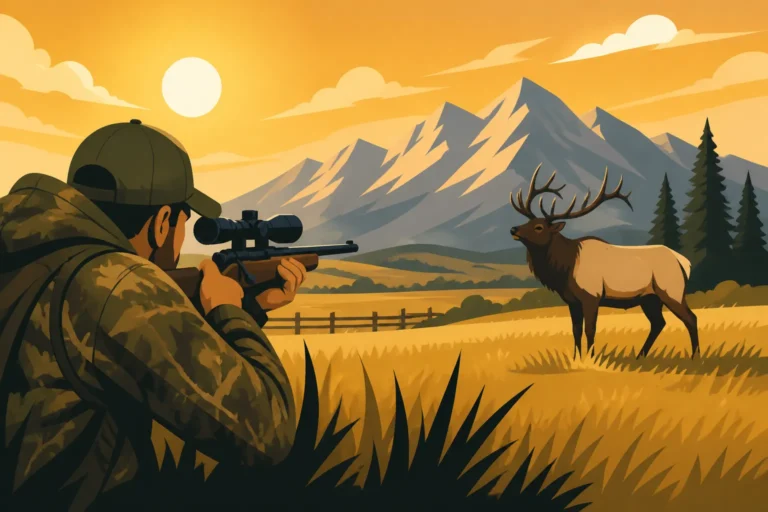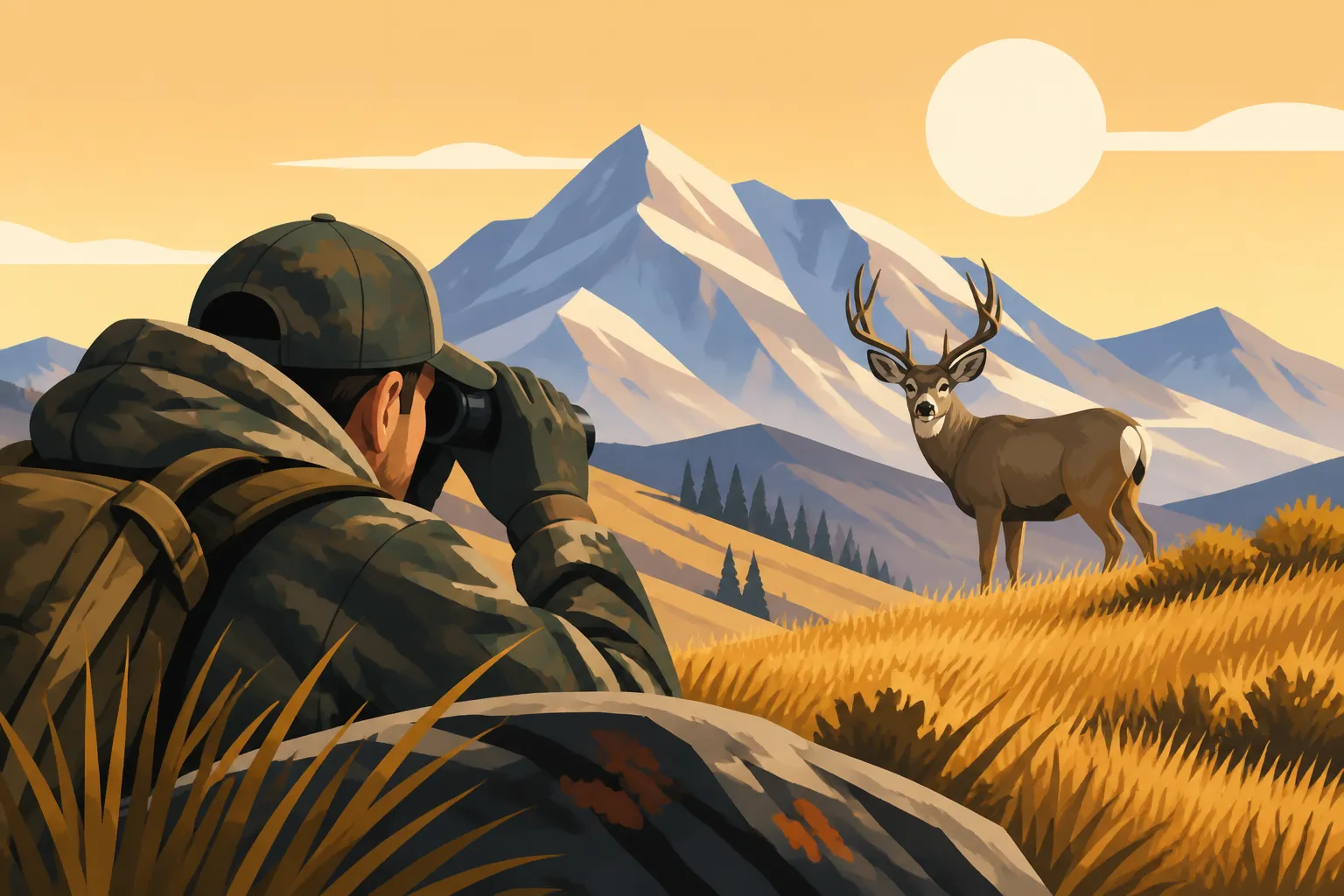
Spot-and-Stalk Mule Deer in Alberta
There's nothing quite like the sight of a mature mule deer buck, his basket rack standing proud against the Alberta skyline. But for many hunters, the dream of bagging one of these incredible animals through the classic spot-and-stalk method often feels out of reach. Alberta's landscape is vast and unforgiving, and these intelligent deer are masters of camouflage and evasion. It's frustrating to spend hours glassing, only to feel like you're staring at an empty canvas. This comprehensive guide is here to demystify the art of spot-and-stalk hunting for mule deer in Alberta, breaking down the strategies and nuances that will help you turn those long glassing sessions into successful stalks.
Understanding Alberta's Mule Deer Habitat
Before you can spot-and-stalk a mule deer, you've got to know where they live. Alberta's mule deer are incredibly adaptable, inhabiting a diverse range of landscapes from the rolling prairie to the rugged foothills. Each habitat presents its own unique challenges and opportunities for the spot-and-stalk hunter. Knowing what kind of terrain you're in and how deer typically use it is your first step toward success.
Prairie Coulees and Badlands
This is the quintessential mule deer country in Alberta, especially in the southern and eastern regions. The deep, broken coulees, eroded badlands, and river breaks offer mule deer everything they need: cover from predators and weather, food sources, and travel corridors. These areas are characterized by steep banks, sparse trees or brush (like chokecherry and buffalo berry), and often rocky, exposed terrain. The deer here are masters of using every dip, rise, and patch of brush for concealment.
When you're hunting in these areas, think vertical. Deer will often bed on north-facing slopes to escape the heat of the sun, or on south-facing slopes to catch warmth on a cold day. They'll also use benches and ledges that offer a good vantage point while keeping them hidden from below. The sheer vastness can be overwhelming, but understanding their preference for broken ground, especially near a water source or productive feed, helps narrow your focus. This is where the term "glassing an Alberta coulee for mule deer" truly comes into its own.
Parkland Bluffs and Edges
Moving northward and westward from the deep prairie, you'll encounter Alberta's parkland belt. This transitional zone is a mosaic of agricultural fields, aspen bluffs, and willow bottoms. While whitetails dominate many of these areas, mule deer absolutely thrive on the edges, using the shelter of the bluffs and the rich forage of the surrounding farmlands. These deer often demonstrate a fascinating blend of open-country wariness and timber-edge stealth.
Here, mule deer will often bed in the dense aspen bluffs during the day, especially if they have good visibility of the surrounding fields. They'll use the bush edges to travel between bedding and feeding areas, often moving out into fields to feed in the early mornings and late evenings. The challenge in parkland is that the deer aren't always in wide-open country. You might find them tucked into a small draw or a dense stand of poplars, making long-range spotting more difficult and requiring closer, more deliberate scouting. You might find yourself Hunting an Aspen Bluff on Farm Ground more often than you expect.
Foothills and River Valleys
As you push into the foothills and beyond, the landscape becomes more rugged, forested, and mountainous. While not the first image that comes to mind for classic spot-and-stalk mule deer, these areas hold some incredible bucks, particularly in the river valleys and lower benches. The steep, timbered slopes and river breaks provide excellent cover, and the varied vegetation offers a consistent food supply.
In these environments, mule deer will often be found along the sun-drenched slopes, especially in south-facing aspects where forage grows earlier in the spring and stays available longer into the fall. They'll utilize the cover of the timber for bedding but will frequently move to open clearings, old burns, or river flats to feed. The spot-and-stalk here can be much more challenging due to the denser cover and unpredictable thermals. You'll need to focus on openings, natural benches, and areas where timber transitions to more open ground. The river valleys themselves act as natural travel corridors and provide critical winter range.
Essential Gear and Optics for Spotting
You can't effectively spot-and-stalk mule deer without the right tools, and when it comes to glassing, quality really does matter. Investing in good optics isn't just a luxury; it's a necessity that can mean the difference between seeing a deer and seeing nothing but brush.
High-Quality Binoculars and Spotting Scopes
Your binoculars are your primary scouting tool. Forget the cheap ones; you need something that can perform in low light, offer crisp resolution, and hold up to the rigors of backcountry hunting. Magnification in the 10x to 12x range is ideal for handheld use, allowing you to scan vast areas without too much shake. Brands like Swarovski, Zeiss, Leica, and Vortex offer exceptional clarity and light transmission, which is crucial during those dawn and dusk hours when deer are most active. For detailed examination of distant animals, a spotting scope is indispensable. A 60-80mm objective lens with 20-60x magnification will allow you to pick apart distant hillsides, identify key features of a buck, and confirm legal antler requirements without having to move.
It’s often said that you should spend as much as you can afford on your optics, and for good reason. The ability to distinguish a deer from a rock at 1,000 yards, or to count points accurately at half that distance, is paramount. When you're Judging a Mule Deer Buck at Distance, you need confidence in what you're seeing. Don't compromise here; it's your window into their world.
Tripods and Glassing Platforms
Even the steadiest hands can't hold binoculars perfectly still for extended periods, especially at higher magnifications. A sturdy tripod is an absolute game-changer for serious glassing. It eliminates shake, reduces eye strain, and allows you to methodically pick apart terrain for hours on end. Look for a lightweight yet stable carbon fiber tripod that's easy to deploy and adjust. Couple this with a good fluid head, and you'll be able to pan smoothly across the landscape, minimizing missed details.
In addition to a tripod, consider a comfortable seat or pad. Sitting on a cold, hard rock for hours is not only uncomfortable but also distracting. A small, inflatable seat or even a foam pad will make those long glassing sessions much more tolerable, allowing you to focus completely on the task at hand. Some hunters even bring a small, foldable stool for ultimate comfort, especially when setting up in a prime glassing spot they've scouted out beforehand.
Clothing and Footwear
While optics are crucial for seeing the deer, your clothing and footwear are critical for getting to the deer unnoticed. Noise is your enemy during a stalk. Choose quiet fabrics like fleece or soft shell materials that won't rustle as you move. Layering is key in Alberta's unpredictable weather; you'll want to be able to shed or add clothing to regulate your temperature, especially during a strenuous uphill stalk or a long wait in the cold. Camouflage patterns that blend with the local vegetation are effective, but more important is breaking up your silhouette.
For footwear, stability and stealth are paramount. Good hiking boots with stiff soles offer support and traction on uneven terrain, but they can be noisy. Some hunters prefer lighter, more flexible stalking boots or even moccasins for the final approach, carrying them in their pack until needed. Regardless, ensure your boots are broken in, waterproof, and offer good ankle support for navigating rough coulees and rocky slopes. Nothing ruins a stalk faster than a twisted ankle or the crunch of noisy boots on a quiet hillside.
Strategic Glassing Techniques
Spotting a mule deer in Alberta's vast landscapes isn't about aimlessly staring at hillsides. It's a methodical, disciplined process that, when done correctly, significantly increases your odds of success. Think of it as painting a mental picture of the terrain, piece by piece, until the deer reveals itself.
Divide and Conquer: Systematic Scanning
The biggest mistake hunters make is scanning too quickly or too broadly. Instead, adopt a "grid" approach. Pick a section of hillside, typically about the size of a football field, and begin at one edge. Slowly move your binoculars or spotting scope across that section, from top to bottom, then move over slightly and scan back up. Repeat this pattern, meticulously covering every inch of that section before moving to the next. Look for anything out of place: an antler tine, a horizontal line in a vertical world, a patch of hide that doesn't quite match the surroundings.
This systematic approach forces your brain to analyze details rather than just generally observing. Don't just look for an entire deer; look for parts of a deer. An ear twitch, the flick of a tail, the subtle curve of an antler. Often, you'll spot a bedded buck by just a small patch of his back, or the glint of an antler tip in the sun. This method, while time-consuming, pays off immensely when you're Glassing an Alberta Coulee for Mule Deer.
Reading the Terrain for Deer Sign
While you're systematically scanning, you should also be actively "reading" the terrain. Mule deer leave clues. Look for natural travel corridors like game trails along ridge lines or through saddles. Pay attention to areas with fresh tracks, scat, or rubbed bushes – especially if they're recent. These signs indicate that deer are actively using the area. Focus extra attention on dense pockets of cover, shaded areas on hot days, or sunny slopes on cold days, as these are prime bedding locations.
Consider the time of day and the prevailing weather. In the morning, deer are often moving from feeding areas to bedding. In the evening, they're reversing that pattern. On a windy day, they might seek shelter in a protected draw. After a fresh snowfall, they might move to areas with less snow cover for easier travel and foraging. Use these insights to prioritize your glassing locations, giving you a strong starting point for finding your target. Understanding Wind in Open Prairie Country is paramount here, as it dictates not just your stalk but where deer might be.
Optimal Times and Conditions for Glassing
Mule deer are most active during the low-light hours of dawn and dusk. This is when they move between bedding and feeding areas, making them more visible. Set up your glassing position well before first light, giving your eyes time to adjust to the dimness, and stay until legal shooting light is almost gone. However, don't dismiss mid-day glassing, especially in broken, open country. Bucks will often re-bed or shift positions, and sometimes the sun hitting just right can illuminate a bedded deer that was previously obscured.
Overcast days with flat light can sometimes be ideal for spotting, as shadows are minimized, and deer don't blend into stark contrasts. Conversely, a bright sunny day can create harsh shadows, making it harder to distinguish deer. A slight breeze can be your friend, as it can keep insects down and provide a consistent wind direction for your eventual stalk. Be prepared to adapt your strategy based on the conditions; mule deer don't read the hunting regulations, and they certainly don't care about your preferred glassing schedule.
| Condition | Optimal Glassing Strategy | Notes |
|---|---|---|
| Early Morning | Focus on feeding areas, open slopes, and transition zones. | Deer moving from night feeding to day bedding. |
| Late Evening | Concentrate on feeding areas, water sources, and travel corridors. | Deer moving from day bedding to night feeding. |
| Mid-Day (Sunny) | Scrutinize shaded, north-facing slopes, dense cover for bedding. | Harsh shadows make spotting difficult; deer are often bedded tight. |
| Mid-Day (Overcast) | Methodical grid search across all terrain, less glare. | Flat light can reveal deer in open areas; still check bedding cover. |
| Windy | Look in sheltered draws, leeward slopes, timber edges. | Deer seek refuge from wind; can make stalking difficult due to swirling. |
| Post-Snowfall | Focus on south-facing slopes, open ridges, areas with less snow. | Deer move to easier travel and foraging; tracks are highly visible. |
Executing the Stalk
Spotting a mule deer is only half the battle; the real test of skill comes in the stalk. This is where patience, planning, and an intimate understanding of the terrain converge. A perfect stalk often takes longer than the glassing session itself, and it must be executed flawlessly to get within an ethical shooting range.
Wind, Sun, and Topography: Using Natural Elements to Your Advantage
The wind is your absolute master during a stalk. Mule deer have an incredible sense of smell, and even a slight change in wind direction can alert them to your presence. Always approach from downwind. If the wind is swirling or unpredictable, especially in broken terrain or foothills, you might have to wait for it to stabilize or choose an entirely different approach. Use wind-checking powder or a small feather constantly to monitor its direction.
The sun can also be a powerful ally or a formidable foe. Strive to keep the sun at your back, forcing the deer to look into the glare if it lifts its head. This can mask your movements and make it harder for the deer to see you clearly. Conversely, never stalk with the sun directly in your eyes, as it will blind you and cast a long, obvious shadow ahead of you.
Topography is your best friend for concealment. Use every ridge, coulee bottom, and rise to stay out of sight. Plan your route to maximize cover, even if it means taking a longer, more circuitous path. This might involve Stalking Mule Deer in Badlands Breaks by utilizing the eroded channels and cuts. Always stay below the skyline, and if you must crest a ridge, do so slowly, on your belly, and just enough to peek over. Never stand on the skyline; you'll immediately silhouette yourself against the sky.
Patience and Pace: Slow and Steady Wins the Race
This cannot be stressed enough: slow down. Most stalks are blown because hunters rush. A spot-and-stalk should be measured in hours, not minutes. Take one step, pause, observe. Take another step, pause, observe. Constantly check the deer, the surroundings, and your path. Even if the deer seems calm and unaware, assume it's about to jump up at any second.
Your pace should match the terrain and the deer's behavior. If the deer is feeding, it might tolerate slower, more deliberate movement. If it's bedded and alert, you'll need to be incredibly deliberate and still. Remember that mule deer will often look in a direction, then look away. Use those moments when its head is down or turned to make your move. A good rule of thumb is to take twice as long as you think you need for the stalk.
Dealing with Obstacles and Other Animals
The wild is rarely a pristine, clear path. You'll encounter obstacles: thorny brush, rattlesnakes in the prairie, loose rocks, or even other animals. Plan for these. If you have to move through thick brush, do so slowly and methodically to avoid making noise. If you encounter a rattlesnake, give it a wide berth. If you accidentally kick a loose rock, freeze immediately and wait for the deer to calm down.
Other animals are often the biggest wild card. Coyotes, whitetails, or even a flock of magpies can blow your stalk. If you see other deer or animals between you and your target, assess the risk. Can you bypass them? Are they likely to alert your target? Sometimes, it's better to abort the stalk and try another approach or wait until the other animals move on. This is where having a plan B (and C and D) comes into play. You might be Hunting Mule Deer on a Prairie Ridge and encounter a herd of antelope, which can be surprisingly good at alerting every animal in the vicinity.
Common Mistakes and How to Avoid Them
Even seasoned hunters make mistakes, especially when the adrenaline kicks in. Recognizing common pitfalls and actively working to avoid them is a crucial part of becoming a successful spot-and-stalk hunter.
Rushing the Stalk: The Biggest Blunder
As mentioned, impatience is the nemesis of the stalker. The excitement of seeing a big buck can make your heart pound and your mind race, urging you to close the distance quickly. Resist this urge with every fiber of your being. Rushing leads to noise, blown wind, and being spotted. It’s far better to take too long and get into a good position than to rush and send the deer bounding away. Practice mindfulness and controlled breathing to keep your heart rate down and your focus sharp. If you feel yourself getting too excited, take a moment to sit down, re-evaluate, and compose yourself.
Ignoring the Wind: A Fatal Error
Many stalks are ruined because the hunter either didn't check the wind enough or underestimated its subtle shifts. Wind currents can be tricky, especially in broken coulees or hilly terrain where thermals play a significant role. Even if the wind is at your face at the start of the stalk, it can easily swirl as you move through different topography or as the day warms up or cools down. This is where a little wind checker bottle comes in handy; use it frequently, every 50-100 yards, or whenever the terrain changes. Remember, a mule deer's nose is its best defense, and even the faintest whiff of human scent will send them scattering.
Underestimating Mule Deer Senses: Their Keen Abilities
Mule deer have exceptional eyesight, hearing, and smell. They're built for survival in wide-open country. Their large ears can pick up the slightest rustle, and their eyes are constantly scanning for movement. They are particularly adept at spotting unnatural shapes or movements. This means you need to move slowly, deliberately, and always take advantage of cover. Break up your outline, stay low, and never expose yourself against the skyline. Pay attention to how they hold their heads and ears; if their ears are swiveling, they're listening. If their heads are up and they're staring intently in a direction, they're looking. Any sudden, quick movement will immediately draw their attention.
Not Having a Plan B: Adaptability is Crucial
Hunting is rarely straightforward. Your initial stalk plan might be perfect on paper, but conditions change. The wind shifts, another deer pops up, the deer you're stalking moves, or an unexpected fence blocks your path. A rigid plan is a recipe for failure. Always have a backup plan, and be ready to adapt. This means scouting the terrain thoroughly and understanding multiple approach angles. What if the buck stands up and moves over the next ridge? Can you circle around? What if the wind shifts? Is there a different approach that keeps you downwind? Being flexible and thinking several steps ahead will save many stalks from being blown. This is where pre-scouting a WMU and understanding Reading an Alberta WMU Map Before You Go can really pay off, allowing you to visualize multiple approaches. Apps like GoHunt can be invaluable here, allowing you to layer maps with terrain features, access points, and potential escape routes for deer, helping you formulate those critical Plan B and C options.
Post-Shot Considerations
Successfully executing a spot-and-stalk is a huge achievement, but the hunt isn't over until the animal is recovered and the meat is cared for. These final steps are just as critical as the stalk itself.
Tracking and Recovery in Varied Terrain
Even a perfectly placed shot doesn't always result in an immediate drop. Mule deer can cover significant distance, especially when adrenaline-fueled. After the shot, observe where the deer runs, noting any landmarks. If it's a good shot, give the deer at least 20-30 minutes, or longer if it's a gut shot, to lie down and expire. Resist the urge to rush in; pushing a wounded deer can make recovery much harder.
Begin tracking slowly and meticulously, looking for blood, broken branches, or disturbed earth. Mark the last spot you saw the deer and the point of impact. If blood is sparse, look for other signs like bent grass or tracks. In broken coulees or dense brush, tracking can be incredibly challenging. If you lose the trail, expand your search in concentric circles from the last known sign. If you're Hunting Mule Deer After a Snowfall, tracking can be significantly easier, but in dry conditions, it's a true test of skill and patience.
Field Dressing and Meat Care
Once the deer is down, the clock starts ticking, especially in warmer weather. Field dressing quickly and efficiently is paramount to preserving the meat. Remove the entrails, cutting around the anus and windpipe. Elevate the deer to drain blood, or position it on a slope. Ensure all body heat escapes by propping the cavity open. If you're alone, quartering the animal might be necessary to get it out of rough terrain. Remember that a mature Alberta mule deer buck can weigh upwards of 250-300 pounds, so plan for extraction. Knowing What a Mature Alberta Mule Deer Weighs helps in preparing for the pack out.
In Alberta, regulations regarding the transport of game meat, particularly concerning chronic wasting disease (CWD), are important. In designated CWD zones, you may need to submit the head for testing. Always consult the current Alberta hunting regulations for specific requirements on carcass transport and CWD testing. Good meat care ensures that your hard-earned trophy provides delicious, ethical table fare for your family.
Disclaimer
Hunting involves inherent risks, including injury and death. This guide provides general information for educational purposes only and is not a substitute for professional instruction, proper training, or adherence to all local, provincial, and federal hunting regulations. Always prioritize safety, respect wildlife, and obtain all necessary licenses and permits before hunting. The author and publisher are not responsible for any accidents, injuries, or legal issues that may arise from the use of this information.