Wind in Open Prairie Country
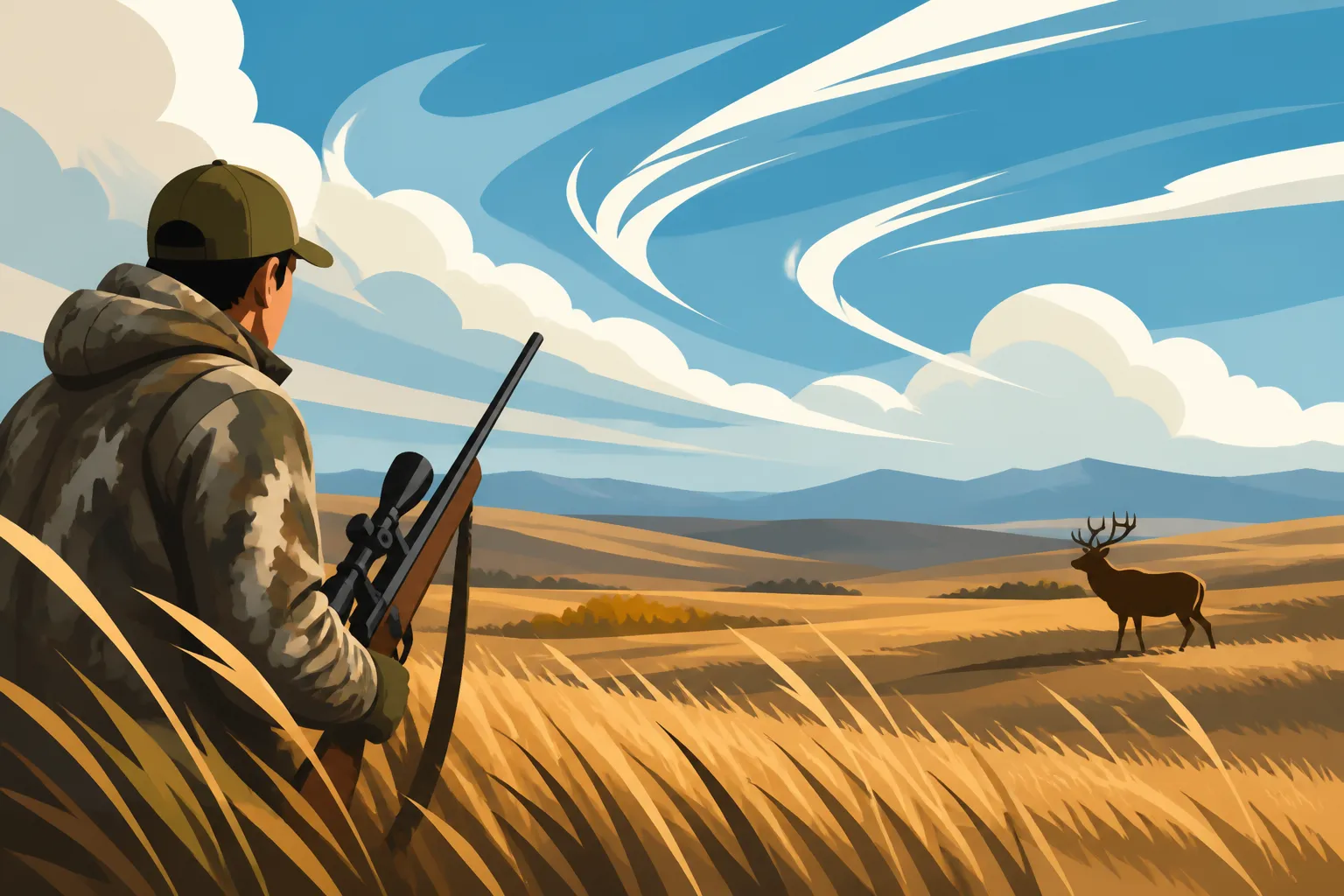
Anyone who has spent time hunting the vast, breathtaking expanses of Alberta's open prairie country knows one thing for certain: the wind is a relentless, ever-present force. It can transform a promising morning into a freezing grind, mask animal sounds, and turn your carefully planned approach into a scent-disaster. Understanding how to manage and even leverage the wind is absolutely critical to success when chasing prairie whitetails, mule deer, or pronghorn in this challenging environment. This guide will walk you through reading the prairie wind, adapting your tactics, and preparing for the conditions to help you punch that tag.
Understanding the Relentless Nature of Prairie Wind
The wind across Alberta's prairie isn't just a gentle breeze; it's often a dominant feature of the landscape, shaping everything from the vegetation to the wildlife's behavior, and certainly, your hunting strategy. It’s not uncommon for winds to consistently blow upwards of 20-30 km/h, often gusting much higher. This isn't just an inconvenience; it's a fundamental element you must account for in every step of your hunt.
Why Alberta's Prairie is So Windy
Our wide-open prairie landscape, particularly in the southern and eastern parts of Alberta, is essentially a flat highway for air currents. There are very few natural barriers like mountains or dense forests to break up the flow. This means that when a weather system pushes across the province, its full force is felt directly on the plains. We also experience what's known as "Chinooks" – warm, dry winds that blow down the eastern slopes of the Rocky Mountains, often bringing drastic temperature changes and strong, persistent gusts that can whip across the prairie for days. Furthermore, high-pressure systems often bring clear skies but also stronger winds as air masses move to fill lower pressure zones. These aren't isolated incidents; they are the norm, and any seasoned hunter knows to expect them. If you're planning on Hunting Alberta Winter Weather Safely, the wind chill factor becomes a life-or-death consideration, not just a discomfort.
How Wind Impacts Your Hunt Negatively and Positively
The immediate negative impact of strong prairie winds is obvious: cold. The wind chill can cut through even the best layers, turning a mild day into a frigid test of endurance. But beyond comfort, the wind profoundly affects sound, scent, and visibility.
First, sound: The constant roar of the wind muffles sounds. This can be a double-edged sword. While it makes it harder for you to hear game approaching, it also makes it much harder for game to hear you. Your footsteps are quieter, your gear rustles less audibly to an animal, and the creak of a treestand might go unnoticed. This can be a huge advantage for a hunter who knows how to use it.
Second, scent: This is where wind is typically seen as the hunter's nemesis. Your scent cone is stretched and swirled, making it incredibly difficult to predict. A deer downwind might still catch your scent if the wind eddies around a rise or through a draw. Conversely, a crosswind can carry your scent far away from your target. The key is to never assume the wind is blowing in a straight line, especially near any topographical feature.
Third, visibility: While it doesn't directly obscure your vision in clear conditions, sustained wind can make holding binoculars steady a real challenge, making it harder to spot distant game. It can also cause mirages and shimmer on the open plains, distorting your view. On the flip side, animals often seek shelter from the wind, which can sometimes funnel them into predictable areas, making them easier to locate if you know where to look.
Reading the Wind and Using Terrain to Your Advantage
Learning to read the wind isn't just about sticking a wind checker into the air; it's about understanding how it interacts with the specific prairie environment you're hunting. Even in seemingly flat country, subtle changes in elevation or man-made structures can create micro-thermals and localized eddies that change the game.
Decoding Micro-Thermals and Wind Eddies
On the vast prairie, the wind rarely blows in a consistent direction for long, despite what your weather app might say. As air flows over slight rises, into coulees, or past shelterbelts, it creates swirls and pockets of dead air or even counter-currents. Imagine the wind as a river; it flows fastest in the open, but slows down, eddies, and forms calm pockets around obstacles.
Take a knoll or a gentle rise: as the wind hits the upward slope, it can be deflected upwards, creating a calmer zone directly behind the crest on the leeward side. Conversely, as it goes down into a coulee, it can swirl and gather, creating unpredictable currents. You might think you're perfectly safe with the wind in your face, only for a subtle shift or eddy to carry your scent directly into the bedding area from an unexpected angle. Using a simple powder wind checker frequently and observing how it behaves at different elevations and near cover is crucial. This helps you understand the localized wind patterns that can make or break your approach.
Leveraging Coulees, Shelterbelts, and Other Features
These natural and man-made features are your best friends when dealing with prairie wind. They offer both cover from the wind itself and predictable pathways for game.
- Coulees and River Bottoms: These are prime examples of terrain features that profoundly affect wind. When the wind blows across the prairie, it often funnels down a coulee, creating a strong, steady current within the draw. However, the leeward side of the coulee's rim can offer significant shelter, and deer will often travel along these sheltered edges. Learning to hunt Hunting a Coulee Above a River means you're often dealing with these complex wind dynamics. Sometimes, the wind will swirl erratically within the deepest parts of the coulee, but become more predictable higher up on the banks or just over the crest.
- Shelterbelts and Tree Lines: Planted around farmyards or along field edges, shelterbelts (rows of trees or shrubs) are absolute magnets for game seeking refuge from the wind. They create a "wind shadow" on their leeward side, offering a calm corridor where deer and other animals can travel, feed, and bed down without battling the elements. Approaching a Hunting a Shelterbelt Between Two Fields requires careful consideration of which side offers the most wind protection for the animals, and which side keeps your scent out of that zone.
- Cuts and Berms: Even subtle land cuts or man-made berms, like those found along pipelines or irrigation canals, can offer a significant break from the wind. Animals will use these low-lying areas or the protected side of a berm to travel unmolested.
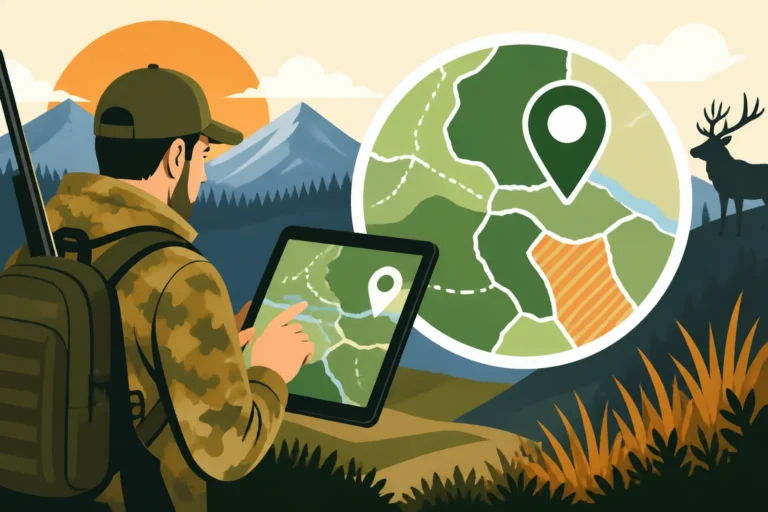
When using a mapping tool like GoHunt, pay close attention to topographical lines. Even a few meters of elevation change can be enough to create a distinct windbreak or funnel. You can often see these subtle features on detailed satellite imagery, allowing you to plan your approach routes that use the wind to your advantage, or at least minimize its negative impact on your scent. For instance, if you're Stalking Pronghorn Across Open Ground, knowing where a small dip or swale offers a momentary break from the direct wind can be invaluable for gaining precious yards.
Tactical Adjustments for Hunting in Windy Conditions
The wind doesn't just dictate where the animals are; it changes how you hunt them. From stalking to calling, every tactic needs modification when the prairie wind is howling.
Stalking and Approaches
Wind is both a blessing and a curse for the stalker. The noise it creates can be your best friend, masking your footsteps and the rustle of your clothing. But it can also make a clean shot incredibly difficult and betray your scent.
- Using Noise as Cover: When the wind is really ripping, you can often get surprisingly close to animals, especially whitetails and mule deer, by using the ambient noise to cover your approach. Move when the wind gusts, and pause when it lulls. This is particularly effective when working through crunchy stubble fields or dry grass. For a successful Spot-and-Stalk Mule Deer in Alberta hunt, a strong wind can be the difference between getting within range and blowing the stalk.
- The Scent Challenge: This is the trickiest part. Always, always try to approach from downwind, but be hyper-aware of eddies. If you're going to use an app like GoHunt, ensure you're using its real-time wind feature to predict how your scent might drift. Sometimes, a long, wide arc to get a truly consistent wind advantage is better than a direct, risky approach. Pay attention to how the terrain might funnel your scent. For example, if you're walking along the top of a coulee, your scent might be carried down into the coulee even if the prevailing wind is seemingly in your face.
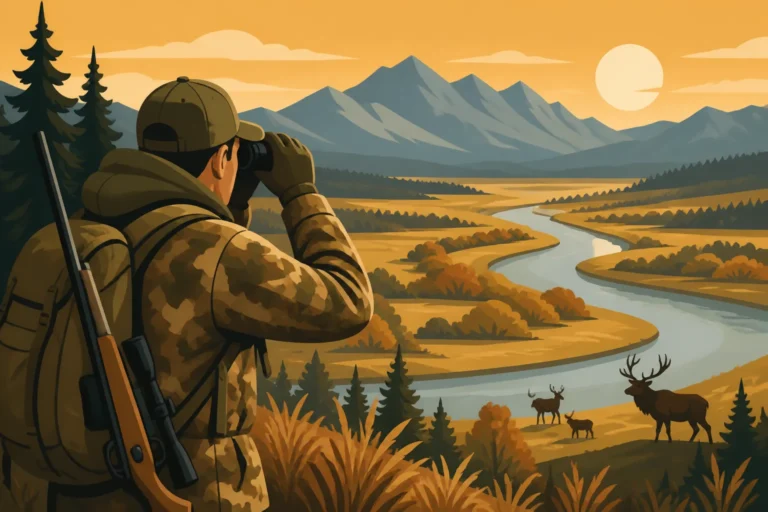
- Slow Down and Observe: Wind makes animals nervous. They're constantly scanning, trying to make up for what they can't smell or hear. This means you need to slow down your movements even more than usual. Take extra long pauses, using your binoculars to thoroughly pick apart the landscape ahead of you before moving. Animals will often be bedded down in thick cover, facing into the wind, but constantly looking back over their shoulder.
Calling and Decoy Strategies
Calling for species like coyotes, whitetails, or even deer during the rut takes a different approach in windy conditions. The sound propagation changes dramatically, and the effectiveness of visual decoys can also be affected.
- Adjusting Call Volume and Direction: If you're out Rattling Volume in Open Parkland for whitetails, a strong wind will carry your calls much further downwind but significantly reduce their range upwind and across the wind. You'll need to increase your volume, especially if you're trying to reach animals that are quartering away from the wind. Consider using a louder, more aggressive call sequence to cut through the wind's roar. For Coyote Hunting Alberta Farm Country, the same principle applies; your calls might not carry as far as you think, necessitating more frequent or louder calls, or repositioning to ensure your call carries into likely coyote hangouts.
- Decoy Placement: Decoys are effective, but wind can make them look unnatural. A strong gust might cause a deer decoy to spin wildly or a turkey fan to wobble erratically. Ensure your decoys are securely staked and positioned to appear natural in the wind. A slight movement from a decoy can be attractive, but too much erratic movement can be a red flag for wary animals. Consider placing decoys in more sheltered locations, such as behind a small rise or within a slight depression, where the wind's effect is mitigated.
Stand and Blind Placement
Whether you're in a ground blind or a treestand, wind is a primary factor in choosing your setup location.
- Scent Control is Paramount: Even with the best wind, your scent can swirl. For treestands, always try to pick a location that accounts for the most likely wind direction during your hunt. Think about common travel corridors and feeding areas, and then choose a spot where your scent stream will blow away from those areas for the majority of the time. While hunting on the edge of an aspen bluff, remember that even a stiff breeze can create unpredictable thermal currents along the forest edge, potentially swirling your scent.
- Wind Breaks and Comfort: For ground blinds, finding a spot that offers some natural windbreak is invaluable, both for keeping your blind stable and for your personal comfort. A blind tucked against a thick shelterbelt or the high bank of a coulee will be much more pleasant (and therefore, you'll be more patient) than one fully exposed. Consider brush blinds built into natural features for maximum concealment and wind protection.
- Noise and Movement: The wind's noise can mask your movements inside a blind or stand, allowing you to shift or grab your bow/rifle more freely. However, if your blind is flapping violently in the wind, it might draw unwanted attention or make it impossible to hold steady for a shot.
Essential Gear and Mindset for Windy Conditions
Hunting in windy, open prairie country demands specific gear choices and, perhaps even more importantly, a resilient mindset. If you're not prepared, the wind will break you long before it breaks the game.
Clothing and Personal Protection
Staying warm and comfortable is non-negotiable. The relentless cold can quickly sap your focus and resolve.
- Layering for the Cold and Wind: Forget cotton. Synthetic or wool base layers are essential to wick moisture. Mid-layers should provide insulation, and your outer layer absolutely must be windproof. A high-quality GORE-TEX or similar wind-blocking shell is worth every penny. For extended waits in a blind, consider insulated bibs and a parka designed for extreme cold. Think about the Winter Truck Kit for an Alberta Hunt – much of that preparedness applies directly to your personal attire too. A good balaclava or neck gaiter and a warm hat that covers your ears are also critical.
- Hand and Foot Warmth: Your extremities are the first to suffer. Invest in high-quality insulated gloves or mittens, and consider hand warmer packets. For your feet, insulated, waterproof boots are crucial. If you're stalking, you might want lighter, more agile boots, but if you're sitting, a heavier, warmer option like those for Boots for a Foothills Hunt might be better. Bring extra socks, especially if you're doing any walking.
- Eye and Lip Protection: The wind can cause your eyes to water and your lips to chap severely. Sunglasses or clear shooting glasses can help reduce wind irritation on your eyes, and a good lip balm is a small but mighty addition to your pack.
Optics and Stability
Spotting game at distance in windy conditions presents its own challenges.
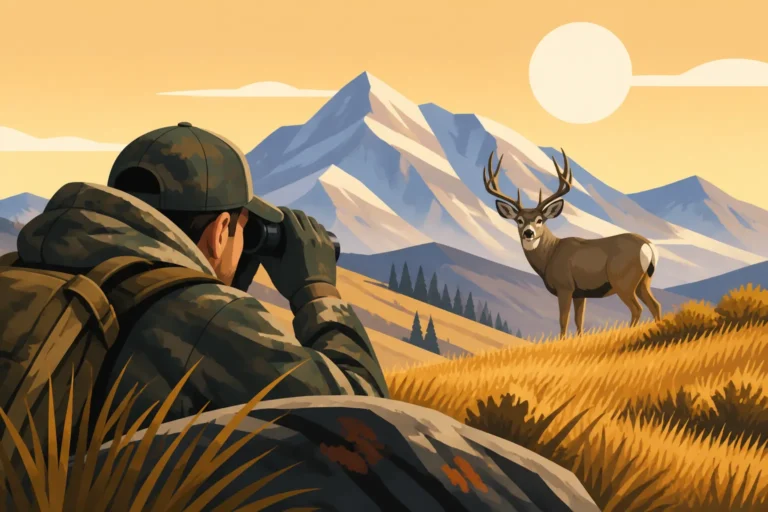
- Binoculars and Spotting Scopes: Wind can make it nearly impossible to hold binoculars steady enough to glass effectively, especially at higher magnifications. Consider using a tripod for your binoculars or spotting scope whenever possible. Even a small, lightweight tripod can make a huge difference in reducing shake and allowing you to pick out subtle movements or details that would otherwise be missed. This is where high-quality optics truly shine, as they can gather more light and offer clearer images even when there's some slight movement.
- Rangefinders: Ranging accurately in high winds can sometimes be a bit trickier if you're getting blown around, but it's essential for ethical shots. Practice holding steady in gusty conditions before you head out.
The Indomitable Mindset
Perhaps the most important "gear" for hunting in Alberta's open prairie country is your mental fortitude.
- Patience and Persistence: The wind is not going to quit, so you can't either. It will test your patience, push your comfort limits, and make every yard feel like a mile. Embrace the grind. Recognize that the animals are dealing with the same conditions, and those that adapt best, whether hunter or hunted, will succeed.
- Adaptability: Don't be afraid to change your plan. If the wind shifts unexpectedly, or a planned approach simply isn't working, be willing to adjust your route, your stand location, or even the area you're hunting. Sometimes, the best move in a screaming wind is to find the thickest, most sheltered cover and still-hunt it slowly, knowing the animals will likely be there too.
- Safety First: High winds, especially when combined with cold, can be dangerous. Be aware of your exposure, watch for signs of hypothermia, and ensure your vehicle is well-maintained and stocked with emergency supplies. Always tell someone where you are going and when you expect to return. In a challenging environment, safety should always be your top priority. Using digital tools like the GoHunt app for detailed mapping and weather overlays can help you make safer, more informed decisions about where and when to hunt, particularly when conditions are marginal.
By understanding the unique dynamics of prairie wind, adapting your tactics, and preparing with the right gear and mindset, you can turn this formidable element into a valuable ally on your Alberta hunting adventures.
Disclaimer
Hunting is an inherently dangerous activity. This guide is for informational purposes only and does not substitute for proper training, adherence to all local regulations, and personal responsibility. Always prioritize safety, respect wildlife, and obtain appropriate licenses and permissions before hunting. Wildlife regulations and conditions can change rapidly, so always consult the most current Alberta hunting regulations.