Ruffed Grouse Hunting Alberta’s Bush Trails
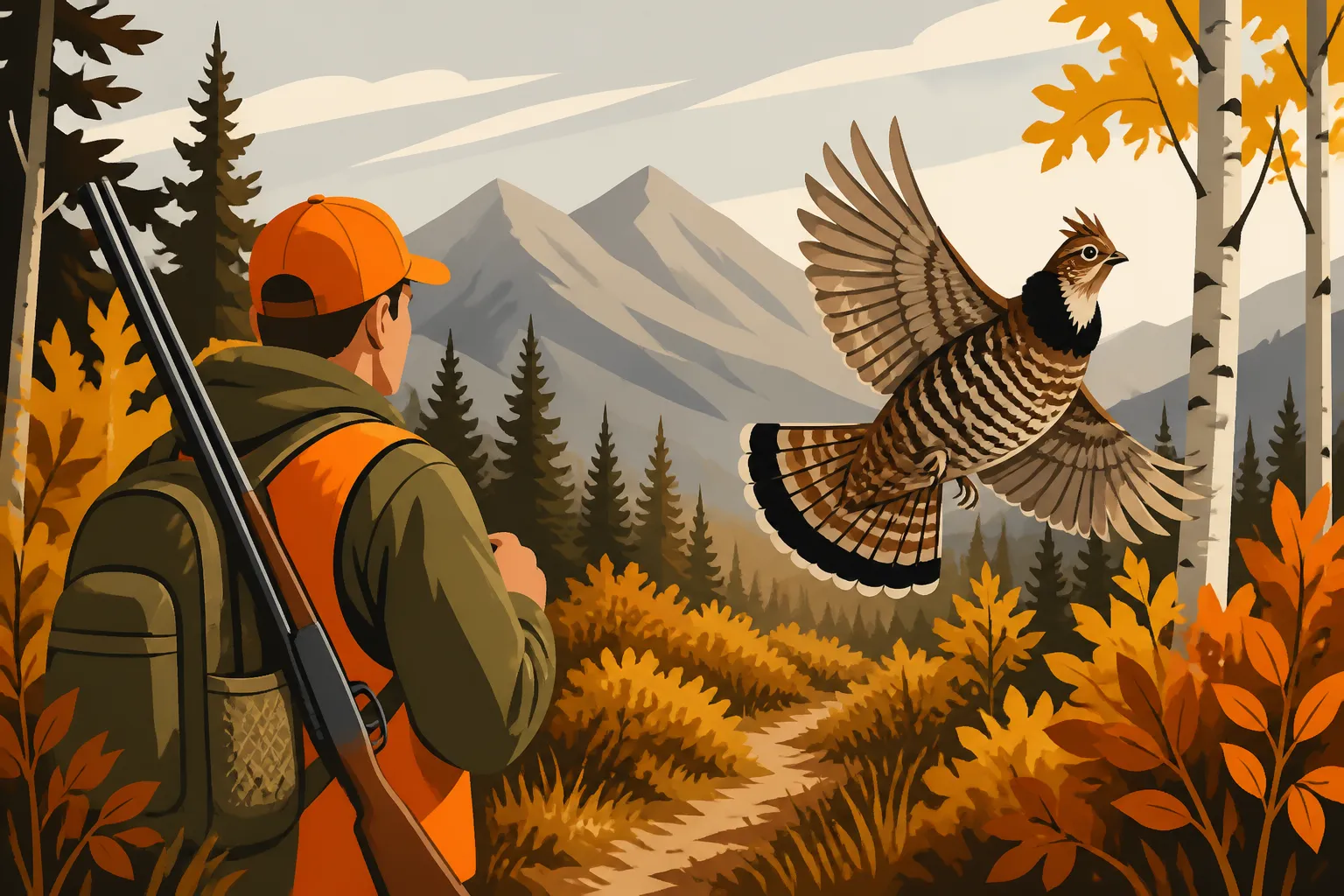
There’s a unique joy that comes with walking Alberta’s winding bush trails, listening for that tell-tale thump-thump-thump of a ruffed grouse drumming. But let's be honest, often those trails seem quiet, and finding these elusive woodland birds can feel like a game of hide-and-seek where you’re always a step behind. This comprehensive guide is here to change that, breaking down exactly how to navigate Alberta's dense aspen and willow thickets to consistently find and harvest ruffed grouse.
Understanding Ruffed Grouse Behavior in Alberta
Ruffed grouse, often affectionately called "partridge" by many old-timers, are a staple of the Alberta hunting experience. But to truly hunt them effectively, you need to get inside their heads a little, understanding their daily rhythms and how they interact with their environment. These aren't birds you often see out in wide-open fields; they are creatures of the dense undergrowth and the edges of timber.
Their Daily Routine and Preferred Cover
Ruffed grouse are early risers and late afternoon foragers. They tend to be most active during the cooler parts of the day, particularly at dawn and dusk. During these times, they'll be on the move, searching for food like buds, catkins, berries, and insects. In between these active periods, especially during the brighter, warmer parts of the day, they prefer to hunker down in dense cover. Think thick willow bottoms, the tangled understory of aspen stands, or even dense spruce thickets. This cover provides them safety from aerial predators like hawks and owls, and ground predators such as coyotes and foxes.
A common frustration for many hunters is walking through seemingly perfect cover only to find nothing. The trick is understanding which dense cover they prefer. Look for areas with a mix of mature trees offering overhead protection, combined with thick, young growth at ground level. This layered habitat provides both concealment and escape routes. They often won't hold tight for long if they hear you coming, preferring to flush and quickly put distance and more cover between themselves and the perceived threat.
Drumming and Breeding Habits
One of the most distinctive sounds of the Alberta bush in spring and early summer is the drumming of a male ruffed grouse. This isn't just for show; it's a vital part of their breeding ritual, primarily used to attract hens and establish territory. The drumming sound is created by the male rapidly beating his wings against the air, building from a slow beat to a rapid blur, much like a miniature, muffled drumroll. They typically do this from a "drumming log" – an elevated, fallen tree trunk in a relatively open spot within dense cover. This spot offers a good vantage point to see approaching dangers while still being concealed.
While you won't be hunting during the drumming season, understanding this behavior gives you insight into their preferred habitat. If you find old drumming logs, especially ones showing signs of repeated use like worn bark or droppings, you've found a classic ruffed grouse hotspot. These logs indicate good, stable grouse habitat that's likely used year after year. As the season progresses into fall, the young birds will disperse, and adults will settle into their winter territories, often returning to these same types of dense, protective cover.
Flight Patterns and Evasive Maneuvers
When a ruffed grouse flushes, it's often an explosive, startling event designed to disorient a predator. They burst upwards with a loud whirring of wings, flying low and fast, typically through the thickest part of the bush. They are experts at putting branches and trunks between themselves and a hunter, making for incredibly challenging shots. Their flight path is rarely a straight line; instead, it's a series of zig-zags and quick turns, almost always aiming for the densest cover available.
Knowing this, you need to be ready. A grouse flush demands quick reflexes and the ability to find a shooting lane in an instant. This is where practicing your quick mounts and swinging through imaginary targets can pay off. Often, you'll only get a fleeting glimpse, sometimes just a flash of movement or the sound itself. It's why many hunters, myself included, often refer to them as the "king of the quick flush." Sometimes, particularly if they're caught off guard or if you approach from an unexpected direction, they might freeze, holding tight until you're nearly on top of them before exploding into flight. This can be a real heart-stopper!
Prime Habitats: Where to Find Them on Bush Trails
Ruffed grouse are habitat specialists, thriving in certain conditions that offer both food and protection. Understanding these prime spots along Alberta's bush trails will significantly increase your odds of success. They rarely stray far from their preferred cover, making these locations consistent producers year after year. When you're Reading an Alberta WMU Map Before You Go, pay close attention to areas that fit these descriptions.
Aspen and Willow Thickets
The classic ruffed grouse habitat in Alberta is a mosaic of aspen and willow thickets. These areas provide everything a grouse needs. Aspen buds are a crucial winter food source, and the dense vertical structure of young aspens offers fantastic escape cover. Willow thickets, especially those growing along creek beds or in low-lying areas, are also magnets for grouse. The dense, interwoven branches provide an impenetrable fortress against predators and offer a bounty of catkins and buds.
When hunting these areas, don't just walk the obvious trail. Skirt the edges of the densest thickets. Walk slowly, pausing frequently. Grouse often let you walk past them before flushing, so those momentary pauses might make them nervous enough to break cover. Focus on where different types of cover meet – an aspen stand transitioning into a willow draw, or where a dense patch of regenerating forest meets an older, more open stand. These "edge habitats" are like highways for grouse, offering easy access to different food sources and escape routes.
Old Logging Roads and Cutlines
Alberta's vast forested areas are crisscrossed with old logging roads, seismic lines, and cutlines. These linear clearings, especially those that are overgrown with young aspen, willow, and various berry bushes, are absolute goldmines for ruffed grouse. The disturbed ground encourages the growth of pioneer species, providing both food and dense cover right along the edges. Grouse often use these edges for foraging, dust baths, and easy travel.
Walking these old roads and cutlines is one of the most effective strategies for Ruffed Grouse Hunting Alberta's Bush Trails. The key is to walk slowly and systematically, paying close attention to both sides of the trail. Often, you'll hear the characteristic flush from the thick stuff just off the trail, or they might dart across the trail in front of you. Sometimes, you'll even catch them sunning themselves on the roadbed. These linear features also provide relatively easy walking, allowing you to cover more ground efficiently. Be mindful of areas where these lines intersect with denser timber or water sources – those are often prime spots.
Dense Bush Edges and Transition Zones
Grouse are creatures of the edge. They love the transition zones where different habitat types meet. This could be where a mature conifer forest meets a young aspen stand, where a bush line meets agricultural fields (especially if there's good cover in the fence row), or where a treed area meets a marshy wetland. These edges provide a buffet of food sources and varied cover types, allowing grouse to move between different microhabitats depending on their needs throughout the day.
When you're approaching these edges, slow down and be prepared. A good hunting dog can be invaluable here, working the dense cover and forcing birds to flush. If you don't have a dog, "still-hunting" – moving very slowly, taking a few steps then pausing, scanning for movement – is incredibly effective. Sometimes, you’ll hear the faint cackle of a grouse or a subtle rustle in the leaves before they flush. It’s all about being observant and ready for that explosive takeoff. These transition zones are not just good for grouse; they're often fantastic for Upland Bird Hunting in Alberta in general, attracting a variety of species.
Gear and Tactics for Alberta Ruffed Grouse
Successful ruffed grouse hunting in Alberta isn't just about finding the birds; it's about being prepared with the right gear and employing smart tactics to overcome their evasive nature in dense cover. It’s a hunt that demands readiness and a good understanding of your equipment.
Shotguns and Ammunition Choices
For ruffed grouse, a fast-handling shotgun is paramount. Most hunters prefer a lightweight 20-gauge or 12-gauge shotgun, typically with improved cylinder or skeet chokes for a wider pattern in the thick bush. The shots are often close-range, quick, and challenging, so a wider pattern increases your chances. Some even opt for a .410 or 28-gauge for the sheer challenge and lighter weight, but the margin for error is smaller. Over/under, side-by-side, or semi-automatic shotguns are all popular choices, with semi-autos offering a quick follow-up shot if needed.
Ammunition-wise, lead shot is still permissible for upland birds in Alberta, unlike migratory birds where non-toxic shot is mandatory. #6 or #7.5 shot is standard. #6 provides a bit more knockdown power for birds flushing at the maximum range you’d typically encounter in the bush, while #7.5 offers a denser pattern, which can be advantageous for close-range flushes. Carrying a mix isn't a bad idea, perhaps #7.5 as your first shot and #6 for a second if the bird breaks clear. Brands like Federal, Winchester, and Remington all make excellent upland loads that perform reliably.
Hunting with Dogs vs. Still-Hunting
The debate between hunting with dogs and still-hunting is ongoing, but both methods are incredibly effective for ruffed grouse. Using a Flushing Dog in Thick Cover significantly increases your success rate. A well-trained flushing dog, like a Springer Spaniel or Labrador Retriever, will work the dense cover tirelessly, pushing birds out that you would likely walk right past. The dog's nose and persistence can locate grouse that are holding incredibly tight, often presenting a shot that a human hunter might never get. Plus, a dog helps with retrieving downed birds in thick cover, preventing lost game.
If you're still-hunting, it's a slower, more deliberate process. Walk a few paces, then stop completely for 10-20 seconds. This sudden stillness often spooks a bird that thought it was safely concealed, prompting it to flush. During these pauses, scan every branch, every clump of leaves, every shadow. Look for movement, a subtle shape, or even just the flick of a tail. This method requires patience and a keen eye but can be incredibly rewarding. It allows you to appreciate the sounds and sights of the Alberta bush in a way that a faster-paced hunt might not.
Navigating the Bush: Footwear and Clothing
Alberta's bush trails can be wet, uneven, and covered in tangled undergrowth. Good quality, waterproof footwear is non-negotiable. Sturdy hiking boots with ankle support are ideal to prevent twists and turns on unseen obstacles. If you're hunting particularly marshy or wet areas, knee-high rubber boots can be a lifesaver, keeping your feet dry and comfortable all day. Look for brands known for durability and comfort in rugged terrain.
Clothing should be layered, allowing you to adjust to changing temperatures and exertion levels. The Alberta fall can bring surprising warmth or sudden cold snaps, sometimes within the same day. Durable, briar-resistant pants are a godsend against thorns and heavy brush. A comfortable, breathable shirt, topped with a fleece or vest, and then a waterproof/windproof outer shell, will cover most conditions. Crucially, don't forget your blaze orange. Alberta Blaze Orange Requirements are there for a reason, ensuring you're visible to other hunters, especially when sharing public land. A good vest or jacket, combined with an orange hat, is standard.
Timing Your Hunt: Seasons and Weather
Timing is everything in grouse hunting. The behavior of ruffed grouse changes significantly from the early season opener to the late fall, and understanding these shifts, along with the impact of weather, can be the difference between a full game vest and an empty one. Check the Ruffed Grouse Season Dates and Limits for your specific WMU to ensure you're compliant.
Early Season Opportunities
Alberta's ruffed grouse season typically opens in early September, often coinciding with the vibrant shift of the leaves. The early season is a fantastic time to hunt for several reasons. The young birds of the year are often less wary and still grouped up with their broods. This means that if you flush one, there's a good chance there are several more nearby. They're often found in dense pockets of berries – Saskatoons, cranberries, and rosehips are major food sources at this time. Focus your efforts on these natural food plots within the bush.
However, the early season also brings its challenges. The foliage is still very dense, making visibility extremely limited. Shots are often glimpses through a screen of leaves. Mosquitoes and other biting insects can still be abundant, so bug spray is essential. Despite this, the mild weather and often predictable bird locations make it a very enjoyable time to be in the woods. The biggest advantage is the concentration of birds – find one family group, and you've found several.
Fall Color and Late Season Hunting
As October rolls around and the leaves begin to drop, ruffed grouse hunting truly shines. The diminishing foliage dramatically improves visibility, allowing for clearer shots and better spotting of birds on the ground or in trees. The "scatter" is often in full swing, meaning young birds have dispersed from their broods and are establishing their own territories, making them more widely distributed but still often found in good habitat. As winter approaches, food sources become more critical, and birds will concentrate in areas with abundant aspen buds and catkins.
Late season, especially into November, can be incredibly productive. Birds are often more concentrated in mature aspen stands where food is readily available, and they've become masters of holding tight, relying on their camouflage. When you're Hunting Alberta Winter Weather Safely, grouse can sometimes be found roosting in evergreen trees or tucked into snow burrows for warmth. The downside of late season can be cold weather, snow, and ice, which can make footing treacherous. However, a light dusting of snow can actually make tracks easier to spot and silence your approach, leading to more surprise flushes.
Impact of Weather on Grouse Activity
Weather significantly influences ruffed grouse behavior. On warm, sunny days, especially in the early season, birds might be more active early and late, seeking dense shade during midday. They often take dust baths in sunny, dry spots along trails. On cool, overcast days, they might be active for longer periods.
Rainy or windy days can be particularly challenging. Grouse tend to hunker down during heavy rain, often becoming less active and harder to flush. High winds make it difficult for birds to hear approaching predators (or hunters), but also make it harder for you to hear them flush. The rustling leaves and creaking branches can mask the sound of a wing beat, giving them the advantage. After a heavy rain, however, when the forest floor is damp and quiet, grouse can be easier to approach. Snowfall, especially a fresh one, can make for excellent hunting conditions, as mentioned, by muffling sounds and making fresh tracks visible, providing clues to their whereabouts.
Essential Safety and Regulations
Hunting ruffed grouse in Alberta, like any outdoor pursuit, comes with important responsibilities regarding safety and adherence to regulations. Knowing these rules isn't just about avoiding fines; it's about ethical hunting and ensuring a safe experience for everyone enjoying Alberta's wild spaces. Always consult the most current Alberta Hunting Regulations, available through the Alberta government's website or apps like GoHunt, before you head out.
Alberta's Blaze Orange Rules
Safety is paramount, especially when hunting in dense cover where visibility can be limited. Alberta has clear Alberta Blaze Orange Requirements for big game hunting, but for upland birds, while not always legally mandated in the same way, it's highly recommended and a matter of common sense. Wearing a blaze orange vest or hat ensures that you are clearly visible to other hunters, reducing the risk of accidental shootings. Even if you're hunting alone, it's a good practice, as you never know who else might be in the woods.
Think about it: when you're swinging a shotgun at a fast-moving bird, often a mere glimpse, you want to be absolutely certain of your target and what's beyond it. Wearing blaze orange reduces the chance of another hunter mistaking you for game. It's a simple, inexpensive safety measure that no responsible hunter should overlook. Encourage everyone in your hunting party to wear it.
Understanding Bag Limits and Possession
Each game bird species in Alberta has specific daily bag limits and possession limits, and ruffed grouse are no exception. The daily bag limit specifies how many birds you can harvest in a single day, while the possession limit dictates the maximum number of birds you can have in your possession at any given time, including those at home. These limits are in place to ensure sustainable populations and fair distribution of the harvest. You can find these details in the Alberta Game Bird Seasons and Limits section of the regulations.
It's your responsibility to know these limits for the specific Wildlife Management Unit (WMU) you are hunting in. These can sometimes vary by region. Exceeding bag or possession limits can result in significant fines and loss of hunting privileges. Keep track of your harvest as you go, and if you're hunting with friends, ensure everyone understands the rules. It's always a good idea to refresh your knowledge of Alberta's WIN Card and Wildlife Certificate requirements as well, as these are foundational for any hunting activity in the province.
Respecting Land and Other Users
Hunting in Alberta means sharing the land with a variety of other users – hikers, bird watchers, photographers, and other hunters. Showing respect for public and private land, as well as fellow outdoor enthusiasts, is fundamental to being a responsible hunter. This includes staying on designated trails or respecting posted private property. If you encounter other people, a friendly greeting and a brief chat can go a long way in fostering positive relationships between hunters and non-hunters.
Furthermore, always obtain permission before hunting on private land. This is not just courteous; it's the law under Alberta Landowner Permission Law. Leaving gates as you found them, not disturbing livestock, and packing out all your trash are all part of ethical conduct. Remember, we are guests in these wild spaces, and our actions reflect on the entire hunting community. Being a good steward of the land and a respectful ambassador for hunting ensures these opportunities remain open for future generations.
Field Dressing and Game Care
You’ve successfully navigated the bush, made a challenging shot, and now you have a beautiful ruffed grouse in hand. The work isn't over yet! Proper field dressing and game care are crucial to ensuring your harvest tastes as good as it looks. Neglecting these steps can lead to spoiled meat, a frustrating end to a successful hunt. This is especially true when considering Meat Care in Alberta's Cold and Warm Swings.
Quick Field Dressing Techniques
Ruffed grouse are relatively small, and field dressing them is quick and easy. Many hunters simply "breast out" the bird, meaning they remove only the breast meat, discarding the rest of the carcass in the field. To do this, lay the bird on its back. Pluck a small area of feathers from the breast to expose the skin. Make a shallow cut through the skin from the top of the breastbone down to the abdomen. Then, use your fingers to pull the skin and feathers away from the breast meat on both sides. Once the breast is exposed, grasp the breast meat with one hand and the body with the other, twisting and pulling to separate the breast from the rest of the carcass. The breast meat will come off in one clean piece.
Alternatively, you can gut the bird entirely if you prefer to keep the whole bird for roasting. Make a shallow cut around the vent, then another from the vent up to the bottom of the breastbone. Reach inside and pull out the entrails, taking care to remove everything. Wipe the cavity clean with a leaf or a small handful of grass. For either method, do it as soon as possible after the shot to allow the meat to cool down, especially on warmer days. This minimizes bacterial growth and ensures better-tasting meat.
Transporting Your Harvest
Once field dressed, getting your grouse home cleanly and safely is the next step. If you've breasted them out, the individual breasts can be placed in a Ziploc bag or a game bag to keep them clean. If you've kept the whole bird, make sure the cavity is clean and dry. On cooler days, you can simply place the birds in a game bag and carry them out. However, on warmer days, it's crucial to cool them down quickly.
Bringing a small cooler with ice packs to your vehicle is always a good idea. Even a slight chill can make a big difference in meat quality. Avoid piling birds on top of each other in a closed container, as this can trap heat. Allow air circulation if possible. If you're going to be out for a long day, consider individual game bags that allow for airflow and protect the meat from dirt and flies. Apps like GoHunt can sometimes provide local weather forecasts, helping you plan your cooling strategy.
Cooking Your Grouse: From Field to Table
Ruffed grouse meat is lean, delicate, and has a mild, slightly earthy flavor. It’s absolutely delicious when prepared correctly. Because it's so lean, it can dry out quickly, so cooking methods that preserve moisture are best. Popular techniques include pan-frying, roasting, or grilling. Many hunters simply pan-fry the breasts quickly in butter with a little salt and pepper – it’s a classic for a reason!
For a more elaborate dish, you can wrap the breasts in bacon before roasting to add moisture and flavor, or stuff them with wild rice and herbs. Grouse also make an excellent addition to stews, pot pies, or even a classic hunter's casserole. Given the effort involved in harvesting these birds, taking the time to cook them well is a rewarding part of the experience. There’s nothing quite like sharing a meal of freshly harvested grouse with friends and family, recounting the day's adventures on Alberta's bush trails.
Disclaimer
Please be aware that hunting regulations, seasons, and access rules in Alberta can change. This guide provides general information and recommendations. It is the responsibility of every hunter to consult the most current Alberta Hunting Regulations and local land access rules before heading into the field. Ensure you have all required licenses and tags, and always prioritize safety and ethical hunting practices.