Meat Care in Alberta’s Cold and Warm Swings
There’s nothing quite like the thrill of a successful hunt in Alberta. You’ve put in the time, faced the elements, and finally, you’re standing over your hard-earned game. But that triumphant feeling can quickly turn to stress when you look at the thermometer, especially in Alberta’s notoriously fickle weather where a warm autumn morning can suddenly plunge into a deep freeze or swing back to shirt-sleeve temperatures by afternoon. Proper meat care isn't just about hygiene; it's about respecting the animal and ensuring that delicious wild game makes it to your table in prime condition, regardless of what Mother Nature throws at you. This guide will walk you through the essential steps to protect your harvest from spoilage and contamination, offering practical strategies for navigating Alberta's unpredictable cold and warm temperature swings.
Initial Field Dressing Challenges in Alberta's Variable Weather
The very first steps you take after an animal is down are the most critical for meat quality. Field dressing is about rapidly removing heat and preventing bacterial growth, and Alberta's mercurial weather patterns can make this a nuanced affair. What works perfectly in a -20°C deep freeze can be disastrous on a +10°C sunny day.
Rapid Heat Removal in Unpredictable Conditions
On a warm day, the internal temperature of a downed animal can quickly become a breeding ground for bacteria. The animal's body retains a lot of heat, especially around the large muscle groups and organs. Your primary goal is to get that heat out as fast as possible. This means opening up the body cavity and removing all internal organs without delay. Don't waste time admiring your trophy if the mercury is climbing. Get to work. The faster you can expose the internal surfaces to cooler air, the better. Consider bringing gloves that are easy to clean or disposable, as contact with warm gut contents can introduce bacteria to the meat surfaces.
Conversely, in truly frigid conditions, while spoilage isn't an immediate concern, rapid freezing can be. If the meat freezes too quickly on the surface, it can "crust over," trapping residual heat inside the deeper muscle tissue. This creates an insulating layer, leading to anaerobic bacterial growth within the core of the meat. It's a tricky balance; you want to cool it down, but not freeze it solid too fast. In sub-zero temperatures, ensure the body cavity is thoroughly cleaned and all blood clots are removed. You might even consider propping the cavity open with sticks to allow for maximum air circulation, even if it feels counterintuitive when it's freezing outside.
Thorough Bleeding and Cleaning
Bleeding the animal properly is vital for good meat quality. While the shot itself often causes significant blood loss, if possible, enhance this by cutting the throat or severing major arteries immediately after the animal is down and safe to approach. This removes blood that can spoil and gives the meat a cleaner, less gamey flavor. For larger animals like moose or elk, especially if you're Quartering a Moose Alone in the Bush, ensure you bleed them out before moving on to gutting. This is even more crucial in warmer weather where stagnant blood can quickly become a problem.
Once the organs are out, a thorough cleaning of the cavity is next. Remove any visible debris, hair, dirt, or blood clots. Many hunters carry a small spray bottle of water or even a few wipes for this purpose. In cold weather, you might not need water, but ensure you wipe down any soiled surfaces. In warmer weather, a light rinse (if you have potable water available and can dry it quickly) can help, but avoid saturating the meat, as moisture promotes bacterial growth. The key is clean and dry. Pay particular attention to the diaphragm and rib cage area, as blood can often pool there.
Cooling Strategies for Different Temperature Swings
Alberta's temperature fluctuations mean you need a flexible approach to cooling your game. What works on a crisp September morning might not cut it during an unseasonably warm November afternoon. Having a plan for both scenarios is paramount.
Air Cooling in Ideal Conditions
When temperatures are consistently cool, ideally between 0°C and 4°C (32°F and 40°F), air cooling is your best friend. This is often the case during Alberta's late fall and early winter seasons. Once field dressed, hang the carcass in a cool, shaded, and well-ventilated area. A sturdy tree limb, a meat pole at camp, or even a swing set in the backyard (if you're on private land) can work. The goal is to allow air to circulate completely around the entire carcass, helping to dissipate heat evenly.
The hide acts as a great insulator, so if you're experiencing borderline warm temperatures, consider skinning the animal promptly after cooling for a few hours. However, if it's consistently cool and dry, leaving the hide on can protect the meat from drying out and from insects for a day or two. Just ensure the air can get to the body cavity. During early season hunts, especially during Alberta's September Archery Opener, you might find yourself needing to skin immediately to facilitate quicker cooling, even if it means more work up front.
Active Cooling for Warm Spells
This is where the real challenge often lies in Alberta. If the temperature is above 4°C (40°F), you need to be proactive. Waiting for the ambient air to cool your animal might not be enough, and bacteria will start to proliferate. Skinning the animal as soon as possible after field dressing is critical in these situations. The hide holds a tremendous amount of heat. Once skinned, quarter the animal and get the meat into game bags immediately. High-quality, breathable game bags are a must, as they protect the meat from dirt, insects, and drying while still allowing air circulation.
Once quartered and bagged, your next step is to find an active cooling solution. If you're fortunate enough to have ice available, pack it around the meat in coolers, ensuring the drainage is open so the meat isn't sitting in bloody water. Large plastic tubs or even clean garbage cans can work as temporary chill tanks if filled with ice. Submerging quarters in a clean, cold mountain stream for a few hours can also work in a pinch, but ensure the meat is bagged to prevent contamination. When using a tool like GoHunt to scout your hunting area, identify potential cooling spots like shaded ravines or even abandoned farm buildings that might offer a cooler microclimate. Always keep an eye on the forecast when Scouting an Alberta WMU Before Season to anticipate these challenges.
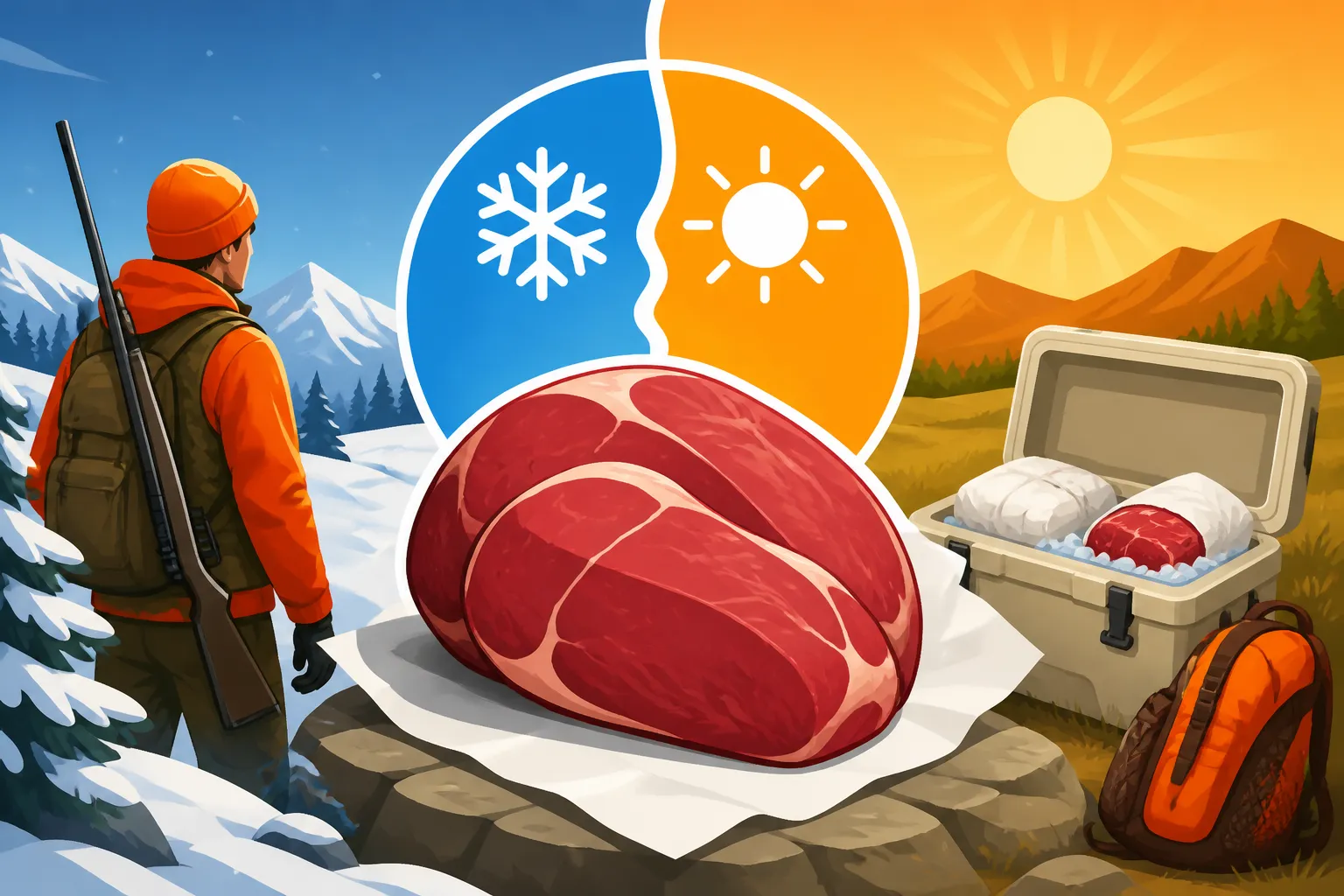
Here's a quick guide to cooling methods based on ambient temperature:
| Ambient Temperature Range | Initial Action After Field Dressing | Cooling Method Recommendation | Notes |
|---|---|---|---|
| Below -5°C (23°F) | Ensure cavity is clean and propped open | Hang in shade, protect from immediate freezing | Avoid rapid surface freezing; allows internal heat to dissipate slowly. Monitor for freeze-thaw cycles. |
| -5°C to 4°C (23°F to 40°F) | Clean cavity, allow air circulation | Hang in cool, shaded, well-ventilated area (hide on or off depending on time frame) | Ideal conditions. Hide can protect from drying and minor contamination. Skin if hanging for more than 24-48 hours. |
| 4°C to 15°C (40°F to 59°F) | Skin immediately, quarter, bag | Active cooling with ice in coolers, chill tanks, or clean running water (bagged meat) | Critical to get hide off and reduce mass. Monitor internal temperature closely. Replenish ice as needed. |
| Above 15°C (59°F) | Skin, quarter, debone, pack in ice ASAP | Aggressive active cooling with maximum ice, seek commercial refrigeration or cooler | High risk of spoilage. Deboning reduces mass further. Get to a processor or walk-in cooler immediately. Consider pre-planning for this scenario. |
Protecting Your Meat from Contaminants and Predators
Beyond temperature control, shielding your hard-won meat from external threats is a constant battle. This is especially true when you're hunting in remote parts of Alberta where wildlife is abundant and facilities are scarce.
Insect and Scavenger Deterrence
Insects, particularly flies, are your primary enemy in warmer weather. Flies lay eggs that quickly hatch into maggots, rendering meat unpalatable and unsafe. High-quality game bags are your first line of defense. Look for breathable, synthetic bags designed for meat that prevent insects from making contact. Avoid cheesecloth or thin cotton, as flies can often penetrate these. If you're hanging meat, ensure it's not touching anything that could provide a bridge for insects.
Beyond flies, you need to consider larger scavengers. Coyotes, foxes, and even bears (especially in their active seasons) will be drawn to a carcass. Hanging meat high in a tree, far from branches that a bear could climb, is often the best strategy in bear country. For smaller animals, placing them in a secure vehicle or cooler can work. In remote areas of Alberta, particularly in the foothills or boreal forest where predators are common, you might need to leave a radio playing or even sleep near your hanging meat to deter scavengers, especially overnight. Using a tracking app like GoHunt might help you locate suitable hanging trees that are high enough off the ground and away from game trails.
Environmental Contaminants and Dirt
The field is a dirty place, and dirt, dust, leaves, and other debris can easily contaminate your meat. When field dressing, try to work on a clean tarp or a patch of fresh snow to minimize contact with the ground. As mentioned, game bags are essential not just for insects but for keeping the meat clean. When quartering, use a clean knife and keep your hands as clean as possible. Avoid dragging the carcass directly on the ground; use a sled, game cart, or drag bag to keep it off the dirt.
If you’re out in the bush and get into an unexpected rain shower, keeping the meat dry becomes another challenge. Moisture on the meat surface, combined with dirt, creates a perfect breeding ground for bacteria. If rain is a possibility, use a large tarp to shelter your hanging meat. Once back at camp or your vehicle, transfer the meat to clean coolers or containers. Remember that even seemingly minor contamination can lead to off-flavors or spoilage, especially if the meat isn't immediately chilled.
Transporting and Temporary Storage Solutions
Getting your animal from the field back to home or a processor often involves a journey, and during that time, meat care remains paramount. Alberta's vast landscapes mean this can be a significant undertaking, whether you’re coming out of the mountains or a remote bush block.
Securely Packing for the Journey
Once your animal is quartered and bagged, it’s time to pack it for transport. High-quality coolers are indispensable. Pack meat tightly in coolers, filling any empty spaces with ice. As discussed earlier, keeping the drain plug open is often recommended to prevent meat from soaking in water, which can hasten spoilage. However, if you're transporting for a very short duration or in extremely cold conditions, you might keep the plug closed to maintain temperature consistency. Ensure your coolers are clean before you load them, and consider lining them with clean garbage bags to make cleanup easier and prevent cross-contamination.
For larger animals, especially in situations like Getting a Moose Out With a Quad, you might be limited by space. Stack quarters carefully, ensuring they're still in breathable game bags. Protect them from direct sunlight by covering them with tarps or blankets. If using a vehicle, ensure the meat is not exposed to exhaust fumes, which can taint the flavor. Remember that Transporting Game Meat and Proof of Sex are legal requirements in Alberta, so always have the necessary tags and identification with the appropriate quarters.
Temporary Storage at Camp or Home
Once you’ve reached your camp or home base, the cooling process continues. If you have access to a walk-in cooler or a large commercial fridge, that's ideal. Many meat processors offer this service. If not, you'll need to continue managing your coolers. Regularly check the ice and drain any meltwater. Keep the coolers in the coolest possible place—a shaded spot, a cool garage, or even a basement.
For short-term storage (1-3 days, depending on temperature), you can re-hang quarters in a garage or shed if the ambient temperature is consistently cool. Again, ensure good airflow and protection from insects and scavengers. If you anticipate a warm spell, move the meat back into ice-filled coolers or, if available, consider an emergency trip to Finding a Butcher Near Camp who can offer professional cold storage. The goal is to keep the internal temperature of the meat between 0°C and 4°C (32°F and 40°F) until it can be processed. This is where a robust plan and reliable gear like durable coolers become non-negotiable for Alberta hunters.
Long-Term Preservation and Processing Options
After all the hard work in the field and during transport, the final stage is getting your meat safely processed for long-term storage. You’ve earned this, so don’t let it go to waste at the last hurdle.
Butcher or DIY Processing
You generally have two main choices for processing: hiring a professional butcher or doing it yourself. A good butcher understands wild game, knows how to handle it hygienically, and can custom cut and wrap your meat to your specifications. This is often the best option for hunters with limited experience, time, or equipment, especially after a successful hunt where you've put in long hours. When considering a butcher, ask about their experience with wild game, their cutting preferences, and their turnaround time. Some butchers in Alberta specialize in game, understanding the unique characteristics of different wild meats. For large animals like moose or elk, a butcher can be a lifesaver.
If you choose to do it yourself, ensure you have a clean workspace, sharp knives, and appropriate wrapping materials (freezer paper, vacuum sealer, bags). This can be a rewarding process, allowing you to control every aspect of your meat. However, it’s a significant time commitment, especially for larger animals. Plan your cuts, trim excess fat and connective tissue, and package everything tightly to prevent freezer burn. Consider investing in a good quality vacuum sealer; it makes a huge difference in the longevity and quality of frozen meat.
Freezing and Other Preservation Methods
Freezing is the most common method for long-term preservation of game meat. Properly wrapped and frozen meat can last anywhere from 9 to 18 months, depending on the cut and how well it was sealed. Always label your packages with the type of meat and the date it was packaged. This helps with inventory management and ensures you use older meat first. An organized freezer is a happy freezer!
Beyond freezing, other methods can add variety to your wild game culinary repertoire. Curing and smoking can produce delicious jerky, sausage, or smoked cuts. Dehydrating can also make jerky. Canning is another option for creating shelf-stable meals. These methods require specific recipes and equipment but offer fantastic ways to enjoy your harvest for even longer. Always research and follow reputable guidelines for any preservation method to ensure food safety. Don't forget, if you harvested a deer in certain WMUs, CWD Testing on an Outfitted Alberta Hunt might be a requirement, so be sure to check the regulations and submit the sample before processing.
Common Mistakes and How to Avoid Them
Even experienced hunters can make mistakes when it comes to meat care, especially when facing Alberta’s unpredictable conditions. Being aware of these pitfalls can help you ensure every ounce of your hard-earned game is utilized.
Overlooking the Weather Forecast
One of the biggest blunders is not paying enough attention to the weather forecast. Alberta's weather can shift dramatically within hours. You might start your day with a crisp, cool morning, perfect for field dressing, only to have a warm Chinook wind blow in by noon, elevating temperatures to dangerous levels. Always check the long-range and short-range forecasts before you head out, and continue to monitor them while in the field. This proactive approach allows you to anticipate challenges and adapt your meat care strategy. If a warm spell is coming, prioritize quick skinning, quartering, and active cooling. If a deep freeze is on the horizon, consider how to prevent rapid surface freezing. A good hunting app can help you keep track of these changes, allowing you to make real-time decisions.
Underestimating the impact of unexpected warmth can lead to serious regret. Many a hunter has seen their hard-won meat spoil because they assumed the "cool fall air" would be sufficient, only to find the core of the carcass still warm hours later. When planning a hunt, factor in the expected weather for the duration, and always have a contingency plan for both warmer-than-expected and colder-than-expected conditions. This readiness is a hallmark of a responsible hunter.
Insufficient Cooling or Contamination
Another common pitfall is insufficient cooling. This can happen in a few ways: not field dressing quickly enough, not getting the hide off fast enough in warm weather, or not providing enough ice or ventilation. The goal is to drop the internal temperature of the meat as quickly and steadily as possible. Leaving the gut pile too close to the carcass can also attract flies and scavengers, increasing the risk of contamination.
Equally damaging is contamination from dirt, hair, or gut contents. Even small amounts can introduce bacteria. Always carry a sharp, clean knife for field dressing, and if possible, a separate knife for caping or specific cuts. Work methodically and cleanly. If you accidentally get hair or dirt on the meat, trim it off immediately. Don't rinse the meat with water unless you can completely dry it afterward, as moisture provides a medium for bacterial growth. Always use clean game bags and ensure they are free of holes. Remember, a clean kill deserves clean meat.
Poor Transport and Storage Decisions
The journey home can be a critical point of failure. Loading un-chilled meat directly into the trunk of a warm vehicle is a recipe for disaster. Failing to replenish ice in coolers, especially on long drives, is another common mistake. Even if the outside air feels cool, the inside of a vehicle or a cooler without sufficient ice can warm up quickly. Always prioritize keeping the meat cold throughout the transport. This might mean making extra stops for ice or using multiple coolers.
For hunters venturing into remote areas, such as when Hunting Moose Along Cutlines and Seismic Lines or Backpack Hunting Alberta's Bighorn Country, planning your extraction route and ensuring you have the means to get meat out quickly is essential. This often involves ATVs or even horses for mountain terrain. Consider the distance and time, and pack accordingly. Never assume "it'll be fine." When you're driving long distances home from a successful hunt, especially in unpredictable Alberta weather, those coolers are your last line of defense. Knowing What to Do If You Get Stuck in the Bush also applies to protecting your meat; having emergency supplies to keep it cool can save your harvest. Your investment in quality game bags, coolers, and an understanding of how to use them properly will pay dividends in the quality of your final product.
Disclaimer
Please note: This guide provides general information and recommendations for meat care. Hunting regulations and best practices can change, and it is the individual hunter's responsibility to know and follow all current provincial and federal laws. Always refer to the most recent Alberta hunting regulations and consult with experienced professionals for specific advice.