Using a Flushing Dog in Thick Cover
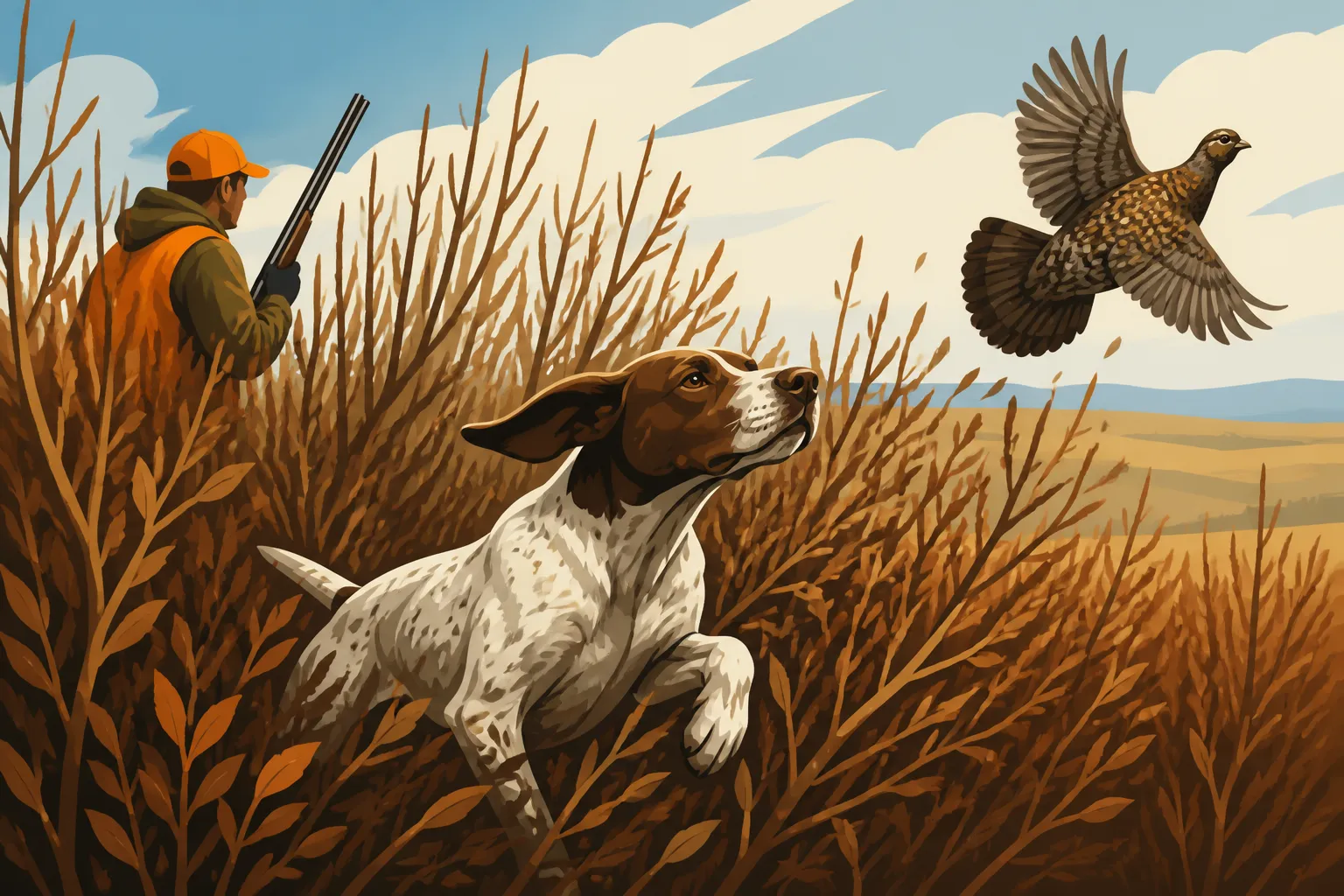
It's a familiar scenario for any upland bird hunter in Alberta: you’ve walked miles through prime habitat, your boots crunching on fallen leaves or pushing through tangled brush, only to hear the sudden roar of wings from a bird you never even saw. That fleeting glimpse of a ruffed grouse or a covey of Huns disappearing into the next thicket can be soul-crushing. Dense cover, be it an aspen bluff or a willow-choked creek bottom, can be incredibly frustrating, turning what should be a productive hunt into a series of missed opportunities and lost birds. This guide is here to help you turn those frustrations around by leveraging the incredible instincts and tireless energy of a flushing dog, ensuring more birds in the bag and a more rewarding day in the field.
Why a Flushing Dog is Indispensable in Alberta's Thick Cover
Hunting upland birds in Alberta's varied and often challenging terrain presents a unique set of obstacles. From the vast aspen parkland bluffs to the tangled creek bottoms and dense willow runs, birds like ruffed grouse, spruce grouse, and even Hungarian partridge can vanish in the blink of an eye. Without a reliable partner to get them airborne, many birds are simply never seen, let alone shot. This is precisely where a well-trained flushing dog becomes not just an asset, but a true necessity.
Overcoming the Challenges of Dense Habitat
Imagine walking into a thick stand of alder or a dense patch of saskatoon bushes, areas where visibility is almost nil. A bird, like a clever ruffed grouse, might be holding tight just feet away, relying on its camouflage and the sheer density of the vegetation to avoid detection. For a human hunter, pushing through this cover silently enough to get a shot is nearly impossible. We’re too loud, too slow, and lack the sensory input to pinpoint a hidden bird.
A flushing dog, however, is built for this environment. With their superior nose, they can wind a bird from a distance, even through thick undergrowth. Their natural instinct is to push ahead, zig-zagging through the cover, quartering back and forth in front of the hunter, systematically covering ground that would be impossible for a human to manage. When they locate a bird, their drive is to get it moving, often with an excited flurry of tail wags and a sudden burst of speed. This sudden flush is often exactly what’s needed to get that bird airborne and into the open, providing a fleeting but crucial shooting opportunity. It transforms a guessing game into a directed effort, dramatically increasing your chances of success where birds are holding tight. This is especially true when you are Hunting a Cutline That Ends in Timber or trying to clear out a particularly nasty willow patch.
Maximizing Retrieval and Minimizing Lost Birds
Perhaps one of the most disheartening experiences for a hunter is making a clean shot on a bird, only to watch it fall into a seemingly impenetrable tangle of brush or high grass. The fear of a lost bird is real, and it’s a waste of both the animal and your efforts. This is another area where a flushing dog shines, often surpassing even the best pointing breeds in sheer retrieval capability in dense situations.
After the shot, a well-trained flushing dog will instantly transition from flushing mode to retrieve mode. Their powerful noses, coupled with their tenacious drive, enable them to systematically search the fall zone. They're not just looking; they're sniffing out the exact location of the downed bird, often bringing it back directly to hand. This ability not only ensures that fewer birds are wasted but also significantly speeds up the process, allowing you to quickly get back to hunting. In environments where thick cover and tall grasses are the norm, like many areas of the Alberta Foothills or the boreal forest, this retrieval capability is invaluable. It’s a testament to their breeding and training, turning what could be a frustrating loss into a satisfying retrieve. Even when you're Hunting an Aspen Bluff on Farm Ground where cover can be surprisingly thick, a good retriever makes all the difference.
Choosing the Right Flushing Breed for Alberta's Bush
When it comes to selecting a flushing dog for Alberta's diverse hunting landscape, you're looking for a partner with specific attributes. The ideal candidate needs to be tough enough to handle the varied terrain and often harsh weather, possess an exceptional nose, and have the drive to push through dense cover, all while maintaining a cooperative demeanor in the field.
Popular Flushing Breeds and Their Strengths
Several breeds have earned their reputation as outstanding flushing dogs, each bringing their own set of characteristics to the field. Understanding these can help you choose the best fit for your hunting style and the specific challenges of Alberta's bush.
- Springer Spaniels (English Springer Spaniel, Welsh Springer Spaniel): These energetic dogs are arguably the quintessential flushing breed. They are known for their tireless work ethic, compact size which allows them to penetrate thick cover with ease, and their innate desire to quarter in front of the hunter. Their soft mouths make them excellent retrievers. They are robust dogs, well-suited to the demands of a full day Upland Bird Hunting in Alberta, and their intelligence makes them highly trainable.
- Cocker Spaniels (English Cocker Spaniel): Often overlooked in favor of their larger Springer cousins, English Cockers are tenacious hunters packed into a smaller frame. They possess an incredibly keen nose and an intense desire to flush birds. Their smaller size allows them to navigate even the tightest cover with incredible agility. While smaller, they are hardy and can handle challenging conditions, making them fantastic for chasing grouse in dense willow thickets or underbrush.
- Labrador Retrievers: While primarily known as waterfowl retrievers, Labs are surprisingly effective as flushing dogs, especially in heavier cover or water-rich environments. Their larger size, strength, and dense coats make them incredibly durable. They have an excellent nose and an unwavering retrieve drive. A well-trained Lab will diligently work cover, flushing birds and delivering them back to hand. They might not quarter with the same finesse as a spaniel, but their sheer power and retrieving prowess are hard to beat, particularly if you're also interested in Pothole Hunting Ducks on Small Water or geese.
Factors to Consider for Alberta Conditions
Alberta's hunting conditions can range from warm early season days to frigid late-season hunts, often involving thick undergrowth, sharp branches, and water. When choosing a flushing dog, consider these factors:
- Coat Type and Durability: Look for a dog with a dense, protective coat that can withstand thorns, burrs, and cold temperatures. Springer Spaniels and Labs generally have excellent coats for this. Regular grooming, especially for spaniels, is essential to prevent matting and burr accumulation. A dog that is constantly bothered by burrs will quickly lose enthusiasm for working thick cover.
- Size and Agility: A dog that is too large might struggle to navigate dense, low-lying brush, while a dog that is too small might tire quickly or struggle to retrieve larger game birds effectively. Springer and Cocker Spaniels hit a sweet spot for agility in tight spaces, while a Lab's power can be an advantage in truly heavy or muddy terrain.
- Trainability and Temperament: A biddable dog that is eager to please will make the training process much smoother. All the listed breeds are generally intelligent and cooperative, but individual personalities vary. Look for a pup from proven hunting lines with a stable temperament. You want a dog that’s driven in the field but can also be a calm companion at home. Many hunters consult resources like GoHunt to research breed characteristics and reputable breeders that align with their specific hunting needs and local conditions.
| Breed | Primary Strengths in Thick Cover | Best Suited For | Considerations for Alberta |
|---|---|---|---|
| English Springer | Tireless quartering, compact size, keen nose, excellent retriever | Ruffed grouse, sharp-tailed grouse, pheasants, partridge | Good coat for cold/burrs; high energy requires regular exercise |
| English Cocker | Agility in tight cover, intense flush, fantastic nose, smaller size | Grouse in very dense thickets, brushy creek bottoms | Smaller size might limit retrieve of larger birds; protective coat is good |
| Labrador Retriever | Power, durability, strong nose, exceptional retriever, water affinity | Pheasants, larger grouse, also excellent for waterfowl | Larger size can be less agile in very tight brush; robust for cold |
Training Your Flushing Dog for Dense Habitat
Getting your flushing dog ready for the rigors of Alberta's thick cover requires consistent, patient training that builds upon basic obedience and hones their natural instincts. It’s about teaching them how to hunt with you, not just for you.
Foundation Training and Obedience
Before you even think about putting your dog in dense cover, they need a rock-solid foundation in obedience. This is non-negotiable for safety and effectiveness in the field.
- Recall (Come): This is paramount. In thick cover, you can easily lose sight of your dog. A reliable recall ensures you can always bring them back to you, preventing them from running out of range, getting into trouble with wildlife, or trespassing. Practice this frequently with increasing distractions.
- Stop/Whoa: The ability to stop your dog on command, even mid-stride, is crucial. It allows you to control the flush, ensuring the bird is pushed towards you for a shot, or to prevent them from flushing a bird out of range. Use a whistle for this command, as it carries farther in dense vegetation than your voice.
- Heel (Off-Leash): While you won't want your flusher at your heel when actively hunting, teaching a solid off-leash heel for navigating trails, crossing roads, or waiting patiently at the edge of cover is vital. It teaches discipline and control.
- Retrieving: Begin with force fetch or enthusiastic retrieve games at home, gradually introducing different textures and environments. Ensure your dog has a soft mouth and understands to deliver the bird gently to hand. This is critical for minimizing wasted game.
Regular training sessions, even short ones, reinforce these commands. Remember, these aren’t just tricks; they’re safety measures and fundamental tools for a successful hunting partnership. Many hunters find resources on platforms like GoHunt useful for planning their training regimens, especially when adapting to specific types of terrain or game birds.
Developing the Flush and Quartering Pattern
Once your dog has a strong obedience foundation, you can start building on their natural flushing instincts and teaching them to work effectively in cover.
- Quartering: This is the hallmark of a good flushing dog. They should work in a systematic zig-zag pattern in front of you, covering the ground from side to side, ensuring no birds are missed. Start in open fields with light cover, encouraging them to run out, then change direction with a whistle command or hand signal. Gradually increase the distance they quarter and introduce more complex terrain. The goal is to have them quarter within gun range, typically 20-40 yards in front of you, always working into the wind when possible. This systematic approach is key to successfully finding and flushing birds, whether you’re Walking Up Sharp-Tailed Grouse in Alberta on the prairie or pursuing ruffed grouse in the bush.
- Steady to Flush and Shot: This is perhaps the most challenging aspect of flushing dog training. Ideally, a flushing dog should flush the bird, then "honor the shot" by either sitting or staying momentarily as the bird takes flight and the shot is taken, then wait for the retrieve command. This prevents them from chasing the bird wildly, potentially flushing other birds out of range, or interfering with your shot. Begin with controlled flushes using training birds (pigeons, quail) or launchers. As the dog flushes, command "whoa" or "sit." Gradually introduce live flushes in the field, always reinforcing the stay.
- Handling Dense Cover: Dogs need to be accustomed to pushing through thickets. Don't shy away from it in training. Start with short bursts into light brush, then progress to denser patches. Encourage them with praise and make it a fun game. Introduce them to different types of cover found in Alberta, such as dense willow runs, standing deadfall, and thorny bushes. Make sure their protective gear (e.g., a sturdy vest) fits well to prevent injuries. Remember, the dog's job is to put the birds up for you, so trust their nose and let them work. If you're planning a hunt, checking a platform like GoHunt for detailed topo maps can help you identify areas with specific types of dense cover for training.
Hunting Strategies with a Flushing Dog in Thick Cover
Now that your flushing dog is trained and ready, it's time to put those skills to work in Alberta's diverse landscapes. Integrating your dog seamlessly into your hunting strategy will significantly improve your success rates.
Working Different Cover Types
Alberta offers a wide array of cover types, and understanding how to effectively hunt each with your flushing dog is key.
- Aspen Bluffs and Poplar Stands: These are prime habitats for ruffed grouse and often host sharp-tailed grouse on their edges. Your dog should be encouraged to work quickly and thoroughly through these woods, especially around the fallen logs, deadfall, and thick underbrush where grouse love to hide. Walk slowly, allowing your dog time to penetrate the thickest parts of the bluff. Be ready, as grouse can hold incredibly tight. Many hunters find success by having their dog work windrows or the dense edges where bluffs meet fields. If you're specifically Hunting Alberta's Aspen Parkland Bluffs, your flusher will be invaluable for rooting out those tight-holding birds.
- Willow Thickets and Creek Bottoms: These areas, often found along river valleys or in low-lying pastures, are magnets for Hungarian partridge and provide excellent cover for grouse. The dense, interwoven nature of willows can be challenging for both hunter and dog. Here, your dog's ability to push through impenetrable tangles is invaluable. Focus on the edges and openings first, then systematically work through the densest parts. Be prepared for explosive flushes in these areas, as birds often try to escape quickly. Your dog's nose will be tested here, as the varied scents can be confusing.
- Thick Undergrowth and Regenerating Cutblocks: In the boreal forest or foothills, you'll encounter areas of dense regenerating timber or thick berry bushes. These are often favorite haunts for spruce grouse and ruffed grouse. Encourage your dog to penetrate deep into these areas. Your role is to walk parallel to your dog, trying to stay in a position where you have a clear shot when a bird is flushed. Your GoHunt app can be a real asset here, allowing you to mark bird locations, track your dog, and navigate tricky terrain where visibility is limited. Remember, patience is key, as your dog methodically works through these tough spots. This can be especially effective when Ruffed Grouse Hunting Alberta's Bush Trails, where birds often move just off the main path into the dense stuff.
Reading Your Dog and Positioning for the Shot
A successful hunt with a flushing dog is a constant dance between hunter and canine. You need to learn to read your dog’s body language and anticipate the flush.
- Interpreting Dog Behavior: Pay close attention to subtle changes in your dog's behavior. A sudden increase in tail wagging, a frantic sniffing pattern, a change in their quartering pace, or a head snap in a particular direction are all indicators that they've winded a bird. This is your cue to slow down, get your gun ready, and prepare for the flush. Sometimes they will "pin" a bird, briefly holding tight as the scent overwhelms them, before making their final rush.
- Anticipating the Flush: Once you see those signs, try to position yourself strategically. If your dog is working towards a thick patch of cover, try to position yourself to the side or slightly ahead, allowing for a clearer shot when the bird erupts. Remember, birds generally try to fly into denser cover or away from the perceived threat (your dog). Understanding the likely escape route can give you a precious half-second advantage.
- Shot Placement in Cover: Shooting in thick cover means you often have very little time and a limited window. Practice quick, instinctive shooting. Use open chokes and larger shot sizes (like #6 or #7.5) to compensate for the close-range, fast-flushing shots. Always be aware of your surroundings, your dog's position, and potential hazards like trees or rocks. Safety is paramount. It’s a completely different challenge than Spot-and-Stalk Mule Deer in Alberta, requiring rapid reflexes and tight pattern control.
It's truly a partnership, one where your dog's instincts and your keen observation come together to make for a rewarding day in Alberta's beautiful, albeit challenging, upland bird country. For specific dates and limits, always consult the official Alberta Game Bird Seasons and Limits before heading out.
Disclaimer
Hunting is an inherently dangerous activity. This article is for informational purposes only and does not supersede official hunting regulations or safety guidelines. Always consult the latest Alberta hunting regulations and possess all required licenses and permits before hunting. Ensure you have proper firearms safety training and adhere to all local, provincial, and federal laws. The author and publisher are not responsible for any accidents, injuries, or legal issues that may arise from hunting activities.