Glassing Alberta Prairie for Pronghorn
There's nothing quite like the boundless expanse of Alberta's prairie, but for many hunters, that wide-open country can feel less like an opportunity and more like an impossible challenge when you're trying to find a pronghorn. Their ability to seemingly vanish into the landscape, combined with their incredible eyesight, makes spotting them a true test of patience and skill. This guide will walk you through the nuances of effectively glassing Alberta's prairie for pronghorn, transforming endless horizons into discernible hunting zones.
Understanding Pronghorn Behavior and Habitat on the Prairie
Before you even lift your binos, having a solid grasp of how pronghorn live on the prairie is your first, best advantage. They aren't just randomly scattered across the plains; their movements and locations are dictated by survival, food, and water. Knowing these patterns helps you predict where to focus your efforts.
Pronghorn Preferred Terrain and Cover
Pronghorn are creatures of the open, preferring vast, unobstructed views that allow them to spot predators from miles away. When you're glassing, don't expect to find them tucked into thick brush like a whitetail. Instead, focus on the gently rolling hills, shortgrass prairie, and even freshly cut stubble fields. They'll often be on slight elevations, using the contours of the land to their advantage for observation. Look for subtle draws, shallow coulees, and the edges of vast fields where they might bed down or feed. While they love the open, they do utilize low-lying topography for shelter from harsh winds or to momentarily disappear during a stalk. In areas like the southeastern corner of Alberta, around Manyberries or the Milk River Ridge, these topographical features become key. Remember, they are uniquely adapted to this environment, blending almost seamlessly with the golden hues of the prairie.
Daily Movement Patterns and Feeding Habits
Pronghorn are primarily grazers and browsers, constantly on the move to find their next meal. Their day often begins with feeding during the cooler morning hours, moving across vast stretches of prairie, nibbling on grasses, forbs, and sometimes even sagebrush. As the sun climbs higher, they might seek slight depressions or the shady side of a small rise for bedding, especially during the heat of late summer or early fall. Later in the afternoon, they'll often resume feeding before settling down for the night. This means that dawn and dusk are often prime times to spot them actively moving and feeding. You're looking for groups of animals, as pronghorn are social and tend to herd together. Pay close attention to agricultural fields that are either stubble or swathed, as these can be major food sources, especially in the Hunting an Irrigation Canal Corridor regions.
The Impact of Water Sources and Weather
Water is a critical factor for all wildlife, and pronghorn are no exception, especially in the often arid conditions of the Alberta prairie. While they can derive some moisture from their diet, they will regularly visit water sources, particularly during dry spells. Stock ponds, dugouts, small creeks, and even irrigation canals become magnets. When you're scouting with tools like GoHunt, mark potential water sources on your map and make them priority areas for glassing. The closer to a reliable water source, the more likely you are to find animals, especially mid-day. Wind, temperature, and precipitation also play a huge role. On a calm, warm day, they might be sprawled out on open ground. If a strong wind is blowing, they'll often tuck into the lee side of a coulee or hill to escape the brunt of it. Understanding Wind in Open Prairie Country is crucial for both spotting and stalking. A sudden cold snap or light snowfall can also change their patterns, pushing them towards more sheltered areas or specific food sources.
Essential Glassing Techniques for Alberta Pronghorn
Effective glassing isn't just about staring through binoculars; it's a systematic approach that allows you to cover vast amounts of ground efficiently and reliably identify game. It's a skill that improves with practice, but understanding the methodology is the first step.
Systematic Grid Searching and Segmenting the Landscape
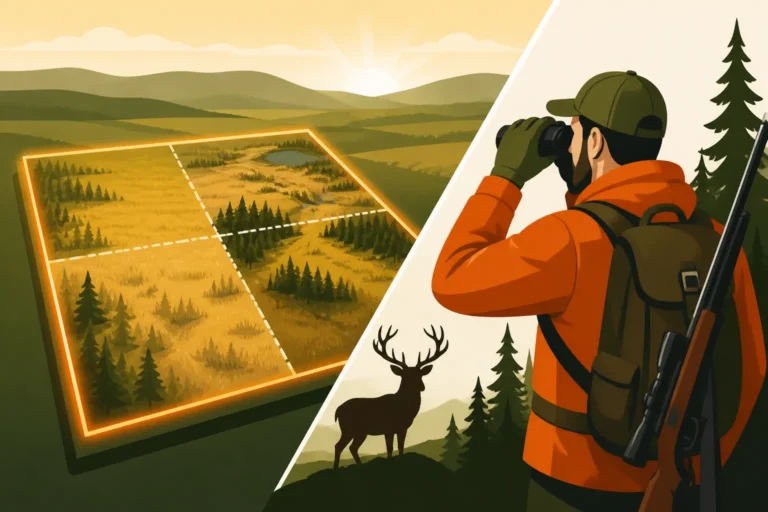
The sheer scale of the prairie can be paralyzing. The trick is to break it down. Start by picking a reference point in the distance—a far-off fence line, a lone tree, a distinctive hill. Then, using your binoculars or spotting scope, begin at one edge of your chosen segment and sweep slowly, horizontally, in a methodical "grid" pattern. Move the optics a tiny bit at a time, allowing your eyes to adjust and process what they're seeing. It's like reading a book, line by line. Don't jump around randomly. Once you've completed a horizontal sweep, drop your view down slightly and make another horizontal sweep back in the opposite direction. Continue this until you've covered your segment. When you're satisfied with that section, pick a new reference point and repeat. This systematic approach, especially when paired with a good mapping tool like GoHunt, ensures you don't miss anything and that you're not just scanning the same obvious spots over and over. Remember, you're not just looking for a whole animal, but pieces of it—a flash of white, a dark horn, an ear flick.
Utilizing Quality Optics Effectively
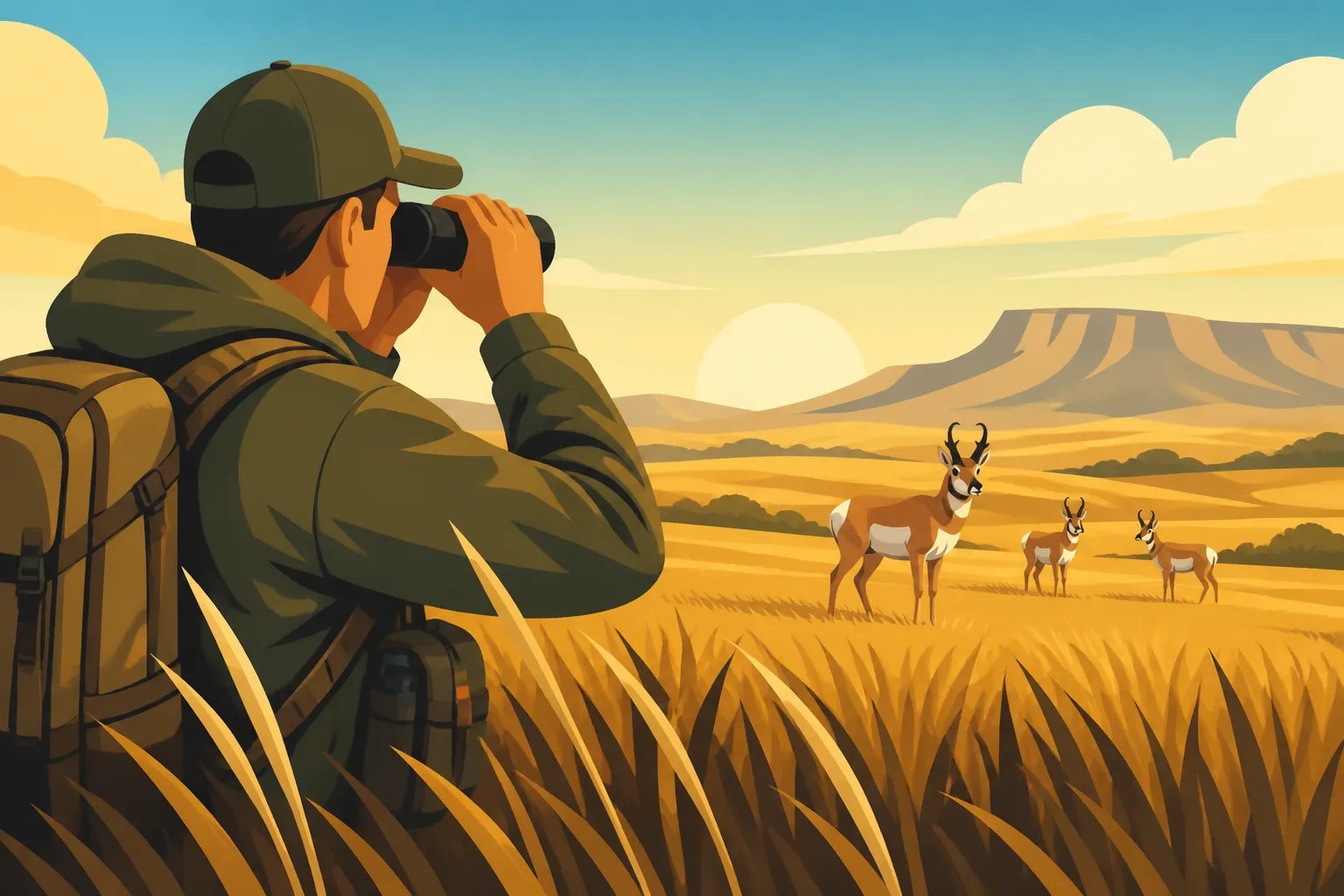
The quality of your optics makes a tangible difference when glassing for pronghorn. You need crisp, clear glass that performs well in varying light conditions. For initial wide-area scanning, a good pair of 10×42 or 12×50 binoculars are excellent. They offer a wide field of view and sufficient magnification to pick out distant shapes. However, for identifying details and confirming a target at extreme ranges, a high-quality spotting scope is indispensable. Look for something in the 20-60x range, ideally with an angled eyepiece for comfort during long sessions. When using your optics, don't just glance. Immerse yourself in the image. Let your eyes relax and search for anomalies. Pronghorn have incredible camouflage, and their natural stillness can make them incredibly hard to pick out. Sometimes, it's not the animal itself you see first, but the faint shimmer of heat coming off its body, or a slight shift in color that doesn't quite match the surrounding vegetation. Practice holding your binoculars steady, or better yet, always use a tripod.
Interpreting Movement and Shapes on the Horizon
One of the hardest parts of glassing is distinguishing a rock from a buck, or a fence post from a pronghorn's head. It's a skill developed through experience, but there are clues. Pronghorn have a very distinct posture and shape. Their bodies are streamlined, their necks long, and their horns unique. Look for horizontal lines (a back) or vertical lines (legs, neck, horns) that don't quite fit the natural flow of the prairie. Pay particular attention to any movement, however slight. An ear twitch, a flick of a tail, or a sudden stand-up can give them away instantly. Sometimes, the first thing you'll see is the bright white patch of their rump or belly, which contrasts sharply with the brown and gold prairie. Don't immediately dismiss something just because it looks like a stump. Spend a few extra seconds on anything that seems "off." The best time to catch them moving is often during the golden hours of dawn and dusk, or if you can catch them feeding. This is where patience is key; sometimes you need to watch a suspicious spot for five or ten minutes before an animal gives itself away.
Optimizing Your Gear and Setup for Prairie Glassing
The right tools and a smart setup can significantly increase your success rate and make those long hours of glassing much more comfortable and productive. It’s not just about having powerful optics, but using them effectively and comfortably.
Selecting the Right Binoculars and Spotting Scopes
Choosing the right optics for glassing Alberta prairie for pronghorn is paramount. For broad scanning, a pair of 10x or 12x binoculars is generally sufficient. Brands like Vortex, Swarovski, or Kowa offer excellent clarity and light transmission, which is crucial in low-light conditions. I personally favor 12x binoculars for the prairie—they offer that little extra reach without becoming too shaky to hand-hold for brief scans. However, for serious, all-day glassing, a high-quality spotting scope is non-negotiable. A 65mm or 80mm objective lens with variable magnification (e.g., 20-60x) will be your best friend. An angled eyepiece often proves more comfortable for extended sessions, especially when paired with a tall tripod, as you can often sit and glass rather than having to stand or stoop awkwardly. When considering your setup, think about the weight versus performance. You want something rugged enough for the field, but not so heavy it discourages you from carrying it to the best vantage points. Check out Pronghorn on Alberta's Southern Prairie for more on the specific challenges of the terrain.
Tripods and Stable Platforms for Extended Glassing
This is perhaps the most overlooked piece of the glassing puzzle. Trying to hold binoculars steady for hours, or even a spotting scope for more than a few minutes, is exhausting and ineffective. A sturdy, lightweight tripod is an absolute game-changer. Carbon fiber tripods are popular for their balance of stability and portability. Make sure your tripod extends to a comfortable height, allowing you to glass from a standing or seated position without craning your neck. You’ll also need a reliable adapter to mount your binoculars to the tripod. For spotting scopes, ensure the tripod head can handle the weight and provide smooth, precise adjustments. A good fluid head or a pan head with fine-tuning capabilities will save you immense frustration when trying to follow a distant animal or lock onto a tiny speck. Having a solid, stable platform means you can truly pick apart the landscape without the distracting wobble that comes from hand-holding. This stability is critical for discerning subtle details, like the unique shape of a pronghorn's horn, which might help you judge What a Pronghorn Buck Weighs.
| Glassing Gear Category | Recommended Features | Why It Matters for Pronghorn |
|---|---|---|
| Binoculars | 10x-12x magnification, 42mm-50mm objective lens, ED glass | Wide field of view for scanning, good light gathering for dawn/dusk, sharp image for identification |
| Spotting Scope | 65mm-85mm objective lens, 20-60x magnification, angled eyepiece | High magnification for long-range detail, comfortable for extended use, crucial for judging trophy quality |
| Tripod | Carbon fiber for lightness, sturdy construction, extendable to eye-level | Essential for stability, reduces fatigue, allows for precise scanning of vast prairie |
| Binocular Adapter | Quick-release, secure fit, durable material | Fast setup, maintains stability when mounting binoculars to tripod |
| Mapping App | Satellite imagery, public/private land layers, waypoint marking (e.g., GoHunt) | Helps identify potential habitat, track movements, mark water sources and access routes |
| Rangefinder | Long-range capability (1000+ yards), angle compensation | Crucial for accurate shot placement on open prairie, helps confirm distances for stalking |
Essential Accessories for a Successful Glassing Session
Beyond the core optics and tripod, a few key accessories can significantly enhance your glassing efforts. First, a comfortable chair or stool for sitting is invaluable. Hours spent standing or crouching will wear you out quickly. A small, lightweight camp chair or a shooting stick with a seat can make a huge difference. Sun protection is another must: a wide-brimmed hat, sunglasses, and sunscreen will protect you from the relentless prairie sun. The glare can also be a major hindrance to your vision, so polarization in your sunglasses is a wise choice. A windproof layer and gloves are also important, as even a mild breeze on the open prairie can feel much colder after an hour of sitting still. Don't forget a good laser rangefinder, capable of ranging out to 1,000 yards or more. This isn't just for shooting; it helps you understand the scale of the landscape and accurately mark distances to potential animals. Finally, a reliable mapping application like GoHunt on your phone or a dedicated GPS unit is essential. It allows you to mark potential pronghorn sightings, water sources, and plan your approach routes, especially when Scouting an Alberta WMU Before Season or trying to determine Hunting a Shelterbelt Between Two Fields.
Strategies for Approaching Spotted Pronghorn
So, you've put in the time behind the glass, patiently dissecting the vast Alberta prairie, and finally, there it is—a good buck. This is where the real game begins. What you do next can make or break your hunt. Approaching these incredibly sharp-eyed animals requires meticulous planning and execution.
Assessing the Situation After a Spot
Once you’ve spotted a pronghorn, especially a buck you’re interested in, the first thing is not to rush. Stay calm, and keep your eyes glued to the animal through your spotting scope. This is the time for critical assessment. How many animals are in the group? Are there any does or fawns that might spot you easily? What is the terrain between you and the pronghorn? Are there any dips, rises, or coulees that could offer cover for an approach? What direction is the wind blowing? Pronghorn have an unparalleled sense of sight, but their sense of smell is also excellent. You need to know their exact location, their direction of travel (if any), and any obstacles. Take mental notes, or better yet, use your GoHunt app to mark their position and potential approach routes. Identifying if they're feeding, bedding, or moving will inform your strategy. A bedded animal might allow for a slower, more deliberate stalk, while a moving group requires anticipating their path.
Planning Your Stalk with Wind and Terrain
This is where the art of the stalk comes into play. Given the open nature of the prairie, you're constantly fighting for cover. Your primary objective is to stay out of sight and downwind. Begin by meticulously planning your route using the terrain to your advantage. Look for any folds in the land, dry creek beds, tall grass, or even fence lines that can obscure your approach. Think three-dimensionally. Often, you'll need to make significant detours to keep the wind in your favor and to utilize whatever natural cover is available. Sometimes, the best approach might mean walking a mile or two in the opposite direction from the pronghorn just to get on the right side of a hill or into a deep coulee before circling back. This requires a lot of patience and trust in your initial glassing. Be prepared to crawl, often for long distances, especially during the final stages of the stalk. Understanding Stalking Pronghorn Across Open Ground is paramount here. The prairie doesn't offer much, so you need to squeeze every ounce of advantage from what little cover there is.
The Importance of Patience and Re-evaluation
A pronghorn stalk is rarely a straight line. You'll move, reposition, and then re-evaluate. It’s a constant dance. After moving a significant distance, stop, get comfortable, and re-glass the area where you last saw the pronghorn. Have they moved? Are they still feeding? Is a new obstacle in your path? Don't assume they'll stay put. Their curious nature can sometimes be a help, but it's more often a hindrance, as they'll often observe anything out of the ordinary from a distance. If you're spotted, don't panic. Sometimes, if you freeze immediately, they might not identify you as a threat and simply resume feeding, giving you a second chance. Other times, they'll bolt, and you'll have to either give up or make a new plan. Patience isn't just about moving slowly; it's about having the mental fortitude to sit tight and wait for the perfect moment or to completely change your strategy if conditions demand it. Remember, these animals can cover ground incredibly fast, so a successful stalk requires both stealth and efficiency. For more insights on the species, consider exploring Pronghorn on Alberta's Southern Prairie.
Disclaimer
Hunting is a regulated activity. Always consult the most current Alberta hunting regulations provided by Alberta Fish and Wildlife before planning any hunt. This guide is for informational purposes only and does not supersede official regulations or legal requirements. Ensure you have all necessary licenses, tags, and permissions for any hunting activity.