Backpacking Into Alberta Sheep Country
The dream of chasing bighorn sheep in Alberta's vast, unforgiving mountains is one that tugs at the heart of many hunters, but the immense physical and logistical challenges often make it seem like an impossible feat. The reality is, a successful backpack hunt for mountain sheep demands an extraordinary level of preparation, resilience, and sheer grit. This guide is here to demystify the process, offering a realistic look at what it truly takes to venture deep into Alberta's alpine and come out successful, focusing on the self-reliant hunter.
The Allure and Challenge of Alberta Sheep Hunting
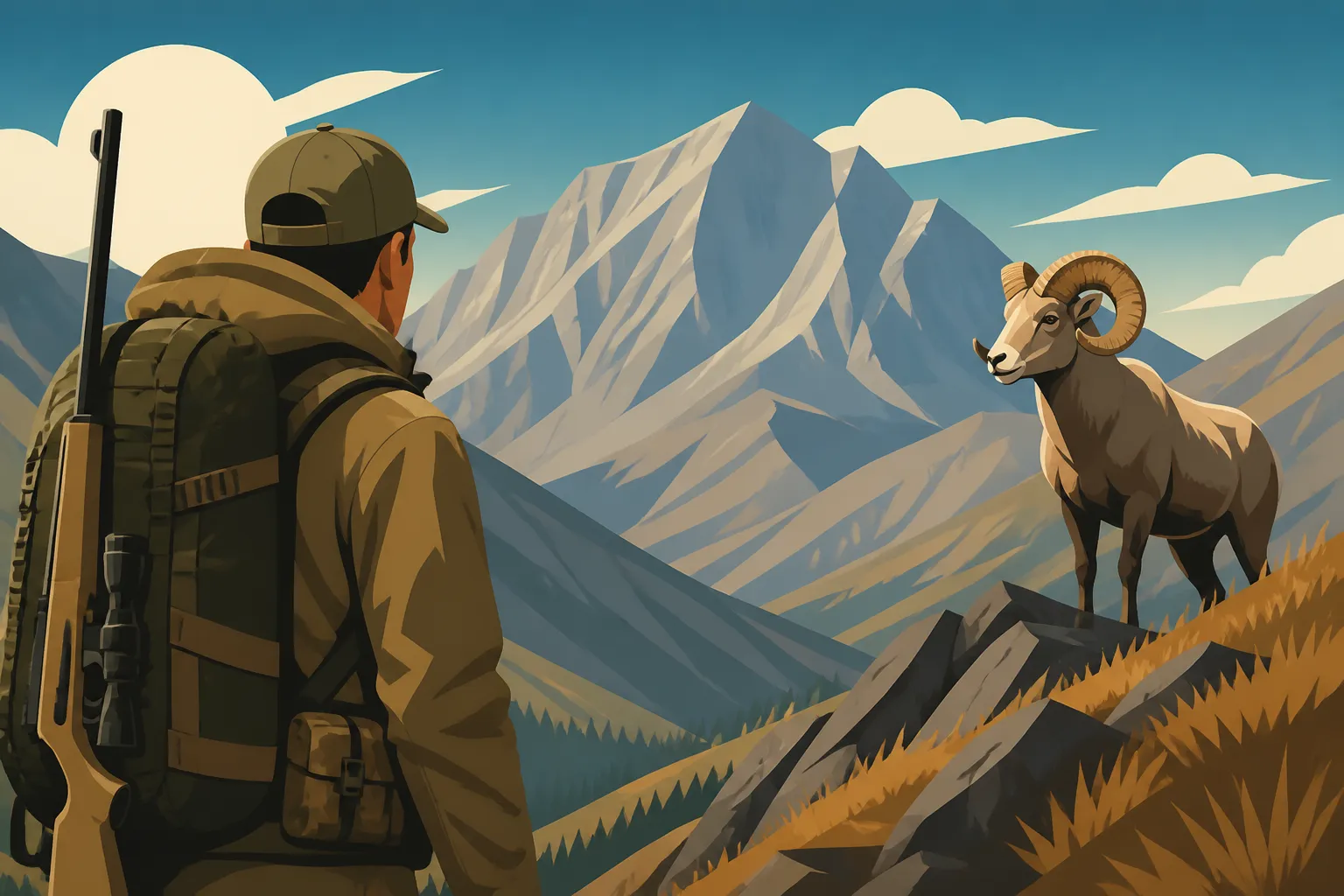
There's something profoundly primal about pursuing a bighorn ram in its natural, rugged habitat. It's not just a hunt; it's an expedition, a test of will, and a journey into some of the most breathtaking, yet demanding, landscapes Alberta has to offer. The very idea of earning a ram by carrying everything you need on your back, miles from any road, is what draws so many to this ultimate challenge. But let's be honest, it's incredibly tough, and understanding why is the first step.
Why Backpacking is Essential for Mountain Sheep
Unlike deer or elk in more accessible areas, bighorn sheep thrive in steep, craggy terrain, well above the tree line. These animals are masters of their environment, relying on their keen eyesight, incredible agility, and the sheer inaccessibility of their preferred habitat to evade predators, including hunters. Most of the prime sheep country, especially where mature rams frequent, is so remote that vehicles simply cannot reach it.
This means that if you want a real shot at a trophy ram, you're going to have to walk, and you're going to have to carry your camp with you. Backpacking isn't just a choice; it's a necessity. It allows you to penetrate deep into areas that receive minimal pressure, to set up spike camps where sheep live, and to be present during those crucial early morning and late evening hours when rams are most active. You become part of the mountain, experiencing the rhythms of the alpine in a way no day-hunter ever could. It’s an immersive experience that redefines what hunting truly means, pushing you to your physical and mental limits. You'll understand why Bighorn Sheep in Alberta's Mountains are considered one of the pinnacle hunting experiences.
The Mental and Physical Demands
Let's not sugarcoat it: a backpack sheep hunt is brutal. You'll be climbing thousands of feet in elevation, often over loose scree, treacherous rockslides, and through thick, energy-sapping bush, all while carrying a pack that can weigh upwards of 60 pounds or more. The air is thin, the weather is unpredictable – one moment you're sweating in the sun, the next you're hunkered down against a driving snowstorm or chilling rain. These aren't just minor inconveniences; they can be critical safety hazards.
Beyond the physical grind, the mental game is equally, if not more, challenging. There will be days of relentless glassing with no sheep to be found, moments of despair when you question your sanity, and the constant pressure of knowing that one wrong step could mean a serious injury, miles from help. Solitude is a double-edged sword: it offers profound peace but also amplifies every doubt. You must be prepared to endure long periods of discomfort, to make critical decisions under duress, and to push through when every fiber of your being screams to quit. It’s a true test of self-reliance, where your preparedness and mental toughness are your greatest assets. Many hunters fail not because they can't find sheep, but because they can't endure the journey.
Planning Your Backpack Sheep Hunt
Success in sheep hunting is often said to be 90% preparation and 10% execution. Nowhere is this more true than when you're planning to backpack into Alberta's high country. From understanding the specific challenges of Alberta's Mountain WMUs and Their Access to meticulously planning your gear, every detail matters. This isn't a spur-of-the-moment trip; it's a strategic operation.
Scouting and Research for Remote Basins
Before you ever set foot on the mountain, countless hours should be spent poring over maps, satellite imagery, and online resources. Identifying potential sheep habitat – high alpine basins, steep rocky slopes, and adjacent timberline areas where they might seek shelter – is paramount. Look for pinch points, historical travel corridors, and south-facing slopes that might hold sheep in early season. Tools like GoHunt's mapping layers can be invaluable here, allowing you to virtually scout vast areas, mark potential glassing knobs, and plan your routes long before you pack your bag. Online forums and discussions about Where Alberta's Big Rams Live can offer clues, but remember that specific, reliable information is hard-earned and rarely freely shared.
You'll need to research specific Wildlife Management Units (WMUs) that have sheep populations and understand the draw process. Resident class 1 (trophy) sheep licences are purchased rather than drawn, but the resident class 2 draw (draw 29) and the WMU-special class 1 draws can be competitive, and priority points matter only in some of those special draws. For more on this, check out Alberta's Draw Priority Point System. Understanding historical draw odds for specific WMUs can help you make informed decisions on where to apply. Pay close attention to current regulations, season dates, and any specific access restrictions for the areas you're targeting. Some regions, like parts of the Willmore Wilderness Park, have unique regulations or require specific permits or modes of travel.
Gear Essentials for the Alberta Alpine
Your gear is your lifeline in the backcountry. Every item must be carefully chosen for its weight, durability, and functionality. There's no room for excess or failure. Here’s a breakdown of the critical items:
| Category | Essential Gear | Why It's Critical |
|---|---|---|
| Shelter | Lightweight tent (3-season minimum), sleeping bag (0°C to -10°C rated), sleeping pad | Protection from harsh alpine weather, crucial for recovery and warmth. |
| Navigation | GPS device, satellite messenger (Garmin InReach, Zoleo), map, compass, power bank | Absolute necessity for staying found, emergency communication, and battery life. |
| Optics | Quality spotting scope (60-80x), tripod, binoculars (10x-15x) | Essential for Glassing Alpine Basins for Bighorn Sheep and identifying rams at distance. |
| Clothing | Layering system (base, mid, outer shell), rain gear, warm hat, gloves | Adapt to rapid weather changes, stay dry and warm in cold, wet, or windy conditions. |
| Firearm/Bow | Rifle (.270, .30-06, 7mm Rem Mag), ammunition, cleaning kit, or suitable bow/arrows | Ethical harvest and protection. Ensure legal requirements are met. |
| Cooking | Lightweight stove, fuel, dehydrated meals, water filter/purifier | Sustenance and hydration, especially important for energy and recovery. |
| Safety/First Aid | Comprehensive first-aid kit, bear spray, signaling mirror, headlamp, repair kit | Handle injuries, deter wildlife, navigate in darkness, fix minor gear issues. |
| Pack | Durable, comfortable backpack (60-80L) with external frame option for meat | Carry all essentials, crucial for comfort and capability when packing out meat. |
When it comes to gear, invest in the best you can afford. This isn't the place to cut corners. Lightweight, durable, and reliable equipment can literally mean the difference between a successful hunt and a dangerous situation. Think about every ounce and every cubic inch.
Physical Conditioning and Mental Fortitude
You can have the best gear and the most detailed plan, but if your body and mind aren't ready, your sheep hunt will likely end in frustration, if not failure. The terrain is unforgiving, and the effort required is immense. This isn't just about being able to walk; it's about being able to climb with a heavy pack, day after day, often at high altitudes, and still having enough energy to execute a stalk.
Start your physical training months in advance. Focus on cardiovascular endurance (hiking, running, cycling), strength training (especially legs and core), and, crucially, hiking with a weighted pack on steep terrain. Mimic the conditions you expect to encounter. If possible, hike local hills with your fully loaded pack. Test your boots and ensure they're broken in. Beyond the physical, cultivate mental toughness. Practice pushing through discomfort, visualizing difficult scenarios, and maintaining a positive attitude. A lot of sheep hunting is just putting one foot in front of the other, even when you're exhausted, cold, and hungry. Your mental grit will carry you when your legs feel like jelly.
On the Mountain: Strategy and Execution
Once you've drawn that coveted tag and completed your meticulous preparations, the real work begins. Stepping into Alberta's majestic mountain ranges is an experience unlike any other, demanding constant vigilance, keen observation, and the ability to adapt to ever-changing conditions. This is where your planning meets the reality of the wild.
Glassing Techniques for Bighorn Sheep
Effective glassing is the cornerstone of sheep hunting. Bighorns, especially rams, blend incredibly well into their rocky surroundings, often appearing as nothing more than a grey smudge on a distant slope. You can spend days in prime country and see nothing if you don't know how to glass effectively. Position yourself on a high vantage point that offers expansive views of multiple basins, ridges, and potential escape routes. Utilize your quality spotting scope, mounted on a sturdy tripod, to systematically grid every piece of visible terrain.
Start wide with your binoculars to cover large areas, then zoom in with your spotting scope to meticulously pick apart every rock, shadow, and patch of scrub. Look for anything out of place: a horizontal line in a vertical world, a patch of white rump hair, or the distinctive curl of a ram's horn. Pay particular attention to areas where sheep might feed in the mornings and evenings, and bedding areas during the heat of the day. Patience is paramount; it's not uncommon to spend hours, even days, behind the glass before a ram reveals itself. Once you spot potential sheep, dedicate time to observing their patterns and, most critically, to Judging a Full-Curl Bighorn Ram to ensure it's a legal animal. Understanding movement patterns and feeding habits will be vital to a successful stalk.
Stalking and Approaching Wary Rams
Once you've identified a legal ram, the stalk begins, and this is often the most challenging part of the hunt. Bighorn sheep have incredible eyesight and are acutely aware of their surroundings. The terrain itself often conspires against you, offering little cover in the exposed alpine. Your primary goal is to close the distance without being detected, using terrain features, shadows, and wind to your advantage. Always check the wind direction; sheep have a surprisingly good sense of smell.
A good sheep stalk can take hours, or even an entire day, requiring extreme stealth, slow movement, and often, an indirect approach. You might have to climb up, down, and around multiple ridges to get into a shooting position. This is where your physical conditioning and mental resolve are truly tested. There will be moments where you have to crawl on hands and knees over sharp rocks, or lie motionless for extended periods, waiting for the sheep to move or for a cloud to provide cover. Always have a clear escape route in mind and ensure you know exactly where the ram is before making your final move. A missed shot or a spooked ram often means the hunt is over, leaving you to wonder if you’ll ever get another chance. Keep in mind the principles of Hunting a High Ridge Above Timberline when planning your approach.
Post-Harvest Logistics in the Backcountry
Congratulations, you've harvested a ram! Now the real work begins. Getting a bighorn ram, often weighing 200-300 pounds live, out of extreme backcountry requires an immense effort. This is where your heavy-duty pack and physical preparation pay dividends. You'll need to field dress the animal quickly and efficiently to preserve the meat, especially if temperatures are mild. Removing the hide, head, and all edible meat, quartering the animal, and preparing it for transport are all critical steps. Remember that antlers and proof of sex must remain naturally attached to the skull plate until processed.
Expect to make multiple trips if you're hunting alone or with only one partner. A ram can easily yield 80-100 pounds of boned-out meat, plus the cape and skull for a trophy. Your pack will be heavy, and the terrain will feel even steeper and more unforgiving with that kind of load. This is a time when the risk of injury is high due to fatigue and heavy loads. Plan your extraction route carefully, focusing on safety and efficiency. Consider bringing game bags, a lightweight saw, and a sharp knife. For more detailed advice on handling your harvest in tough terrain, refer to Packing Out of Alberta's Mountain WMUs. It's a grueling endeavor, but the satisfaction of seeing your hard-earned ram descend from the mountains is a feeling you'll never forget.
Overcoming Common Hurdles
Even the most meticulous plans can go awry in the backcountry. Mountain hunting is inherently unpredictable, and being prepared to adapt and overcome challenges is crucial for both success and safety. The mountains don't care about your plans, and they will test you.
Dealing with Weather and Terrain
Alberta's mountain weather can change in an instant. A sunny, calm morning can quickly give way to a furious blizzard, torrential rain, or powerful winds that can make travel hazardous and visibility zero. Being caught unprepared can lead to hypothermia, frostbite, or getting lost. Always pack for worst-case scenarios, even if the forecast looks clear. Your layering system, waterproof outer shells, and a robust shelter are non-negotiable. If a severe storm rolls in, don't try to push through it; set up camp, hunker down, and wait it out. Your safety is paramount.
The terrain itself presents constant challenges. Loose scree can lead to falls, steep cliffs can be impassable, and sudden changes in elevation are constant. Always know your limits and don't take unnecessary risks. A simple sprained ankle miles from the nearest road can become a life-threatening emergency. Utilize a walking stick or trekking poles for stability, especially on descents. Continuously assess the route ahead, looking for stable footing and avoiding areas of high risk. Understanding how to navigate safely in these conditions, perhaps even in deep snow as discussed in Hunting Alberta Winter Weather Safely, is part of the essential skillset.
Managing Solitude and Safety
Backpacking into remote sheep country means you'll likely be alone, or with a very small group, far from any immediate assistance. This solitude can be both a blessing and a curse. While it offers unparalleled immersion in nature, it also amplifies the risks. A satellite messenger (like a Garmin InReach or Zoleo) is an absolute must-have for emergency communication. It allows you to send and receive messages, track your location, and, critically, send an SOS signal if something goes seriously wrong.
Inform someone reliable of your exact hunting plan, including your route, expected return date, and emergency contacts. Check in with them regularly if your device allows. Carry a comprehensive first-aid kit and know how to use it. Be aware of local wildlife, especially grizzly bears, and carry bear spray. While rare, a run-in with a wounded animal or a charging bear requires immediate, decisive action. The mental aspect of solitude can also take its toll; be prepared for long stretches of quiet reflection and keep your spirits up, even when things get tough. Every sheep hunt is a journey of self-discovery, and part of that is learning to be truly self-reliant in the vastness of the mountains, perhaps even when exploring a Hunting a Sheep Lick Basin.
Disclaimer
Always consult the most current Alberta hunting regulations before planning any hunt. Hunting regulations, season dates, and access rules can change frequently. This guide is for informational purposes only and does not supersede official government regulations.