Hunting a Milk River Ridge Coulee
Hunting the vast, often unforgiving landscape of Alberta’s southern prairie can feel like searching for a needle in a haystack, especially when you’re staring down an endless expanse of rolling grass and sparse cover. But tucked within this impressive vista are the intricate, often hidden worlds of coulees, particularly along the Milk River Ridge. These topographical features are absolute game magnets, offering shelter and sustenance in an otherwise exposed environment, and cracking the code to effectively hunt them is exactly what we're going to dive into today.
Understanding the Milk River Ridge Coulees
The Milk River Ridge isn't just another stretch of prairie; it's a dynamic, ancient landscape shaped by millennia of wind and water. This area, particularly the coulees, presents a unique challenge and opportunity for hunters. It's a place where the subtle nuances of terrain and wind become paramount to your success.
The Unique Landscape and Habitat
Imagine miles of arid, mixed-grass prairie, then suddenly, the earth plunges into a network of deep, sinuous coulees. These aren't just ditches; they are significant geographical features, often hundreds of feet deep and miles long, carved by glacial meltwaters and ongoing erosion. Within these valleys, you'll find a surprising diversity of habitat, from sparse short-grass prairie on the upper slopes to denser brush, chokecherry thickets, and even small pockets of aspen and willow in the bottoms, especially where springs or seeps provide consistent moisture. The Milk River itself, winding through its own valley further south, heavily influences the wildlife movements and vegetation patterns on the ridge, creating crucial corridors and water sources.
These coulees are microclimates. What might be a howling gale on the ridge top could be a calm, sheltered haven just a hundred feet down. This thermal buffering is a huge draw for wildlife. You'll typically find mule deer, with their keen eyesight and preference for broken country, using the coulees for bedding and escape routes. Whitetails, though less common than in the parkland, also utilize the thicker brush in the deeper draws, particularly where there's denser cover. Pronghorn often skirt the edges or cross the shallower coulees, while coyotes are ever-present, patrolling these natural travel lanes. The challenge here is less about finding game, and more about navigating the terrain effectively without spooking them. Using a robust mapping app like GoHunt to analyze the elevation changes, draw lines, and potential pinch points before you even step foot on the ground is an absolute game-changer in this country.
Why Animals Choose These Coulees
Animals don't just wander into these coulees by chance; they actively seek them out for very specific reasons. First and foremost, the coulees offer vital shelter. The relentless prairie winds can be brutal, and a deep coulee provides an immediate refuge from the elements, whether it's a bitter northerly gale in November or the scorching mid-day sun in September. Deer will bed down on slopes that offer maximum sun exposure in winter or deep shade in summer, always with an eye on the prevailing wind to catch any approaching scent.
Beyond shelter, coulees are critical food and water sources. While the surrounding prairie might offer grazing, the coulee bottoms often host a wider variety of browse. Willows, saskatoon, and chokecherry bushes provide essential forage, especially as the season progresses and other vegetation dies back. Small springs and seeps, often unseen from the ridge top, can provide reliable water, drawing thirsty animals, particularly during dry spells. These areas become focal points of activity, places where deer can eat, drink, and bed down without exposing themselves to the open prairie. Understanding these preferences is key to hunting a Milk River Ridge coulee, as it helps you predict where game will be at different times of the day and under varying weather conditions. Knowing where these critical resources are concentrated on your maps, perhaps with the help of satellite imagery from tools like GoHunt, will significantly increase your odds.
Scouting and Planning Your Hunt
Hunting coulees, especially in an area as distinct as the Milk River Ridge, demands a calculated approach. You can't just show up and expect success. The animals here are acutely aware of their exposed environment, making them incredibly wary. Proper scouting and planning are paramount.
Pre-Season Reconnaissance and Map Work
Before you even think about lacing up your boots, your hunt for a Milk River Ridge coulee begins long before the season opens, right from your kitchen table with a good map. Satellite imagery is your best friend in this country. Tools like GoHunt's mapping system allow you to pore over every contour, every faint game trail, and every patch of brush from the comfort of your home. You're looking for patterns: where do the coulees widen or narrow? Where are the steepest banks that might offer secure bedding? Are there any discernible water sources—a green stripe of vegetation indicating a seep, or a noticeable bend in the Milk River that might force animals to cross in predictable spots?
Identifying key features like pinch points, crossings, and areas with denser cover is crucial. A "pinch point" might be where a coulee dramatically narrows, funneling deer through a tight corridor, or where two smaller draws converge. Crossings are particularly important; look for areas where the coulee banks are less steep, showing signs of heavy use. Consider how game might move from bedding areas deeper in the coulees to feeding areas on the prairie above, or to water. Furthermore, it's vital to understand land ownership in this area. Much of the Milk River Ridge is private land, interspersed with blocks of Crown Land. You'll need to meticulously identify access points and secure permission for private parcels. Using resources like Alberta's Recreational Access Mapping Tool can help you identify public land boundaries and even contact information for some grazing leaseholders, which is absolutely essential if you want to avoid a trespass charge. Don't underestimate the time it takes to do this map work; it will save you countless hours of unproductive walking later.
On-the-Ground Scouting and Sign Reading
Once you've narrowed down some promising areas on your maps, it's time to hit the ground. On-the-ground scouting confirms or refutes your map-based theories and provides invaluable real-time information. You're looking for tangible evidence of animal activity: tracks, scat, rubs, scrapes, and browse lines. Tracks in dusty coulee bottoms, particularly fresh ones, tell you not only what species is present but also how recently they were there and in what direction they were moving. Scat can indicate diet and freshness. Rubs on bushes and small trees, especially from mule deer, show where bucks have been marking their territory. Browse lines—where vegetation has been consistently nibbled at a certain height—reveal popular feeding spots.
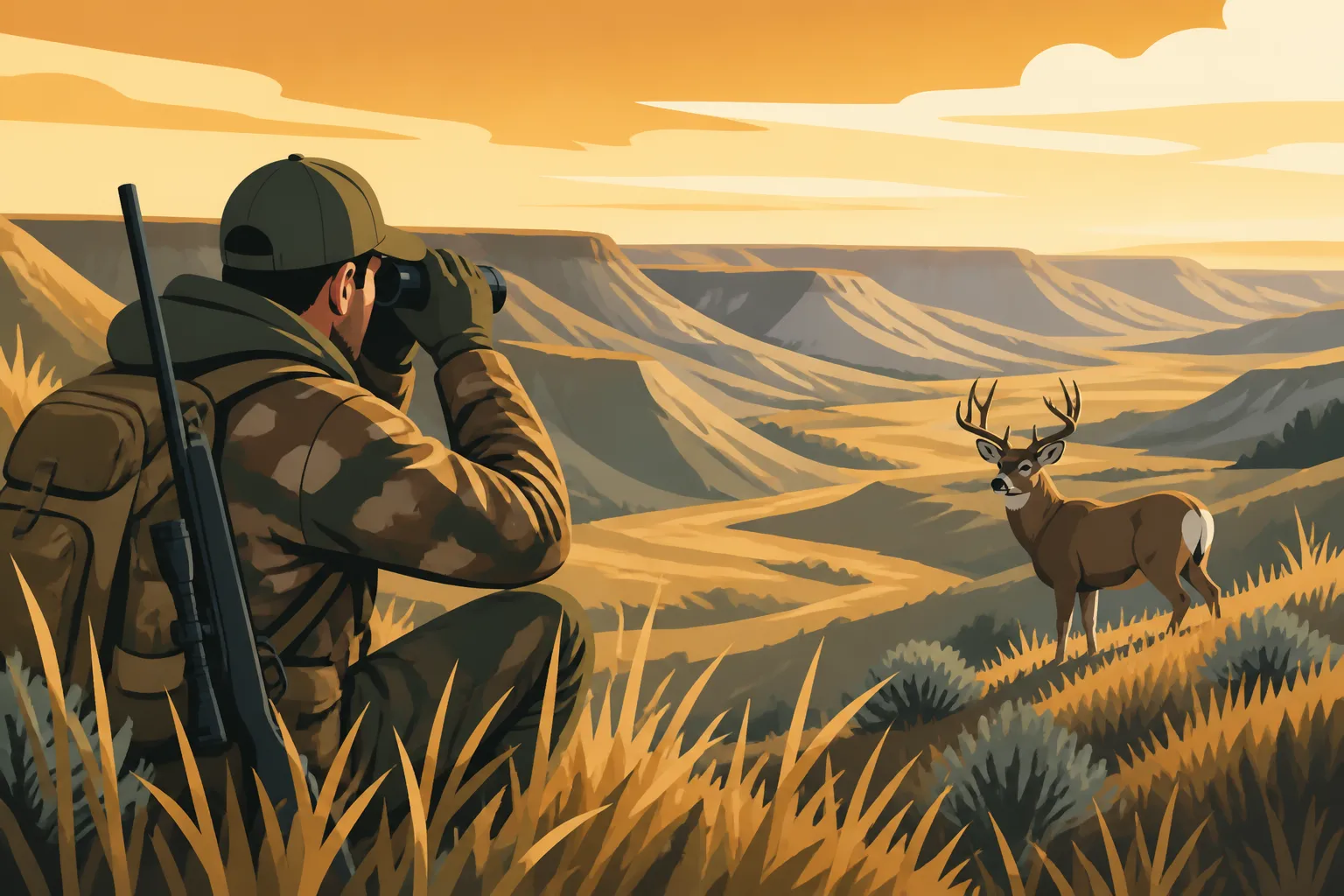
Timing your scouting is also important. Late summer and early fall, before the season opens, are ideal. The vegetation is similar to what it will be during the early part of the season, and game patterns are often well established. Pay close attention to wind patterns. The way the wind swirls and eddies in these coulees can be incredibly complex. A light breeze on the ridge top might create unpredictable thermals in the bottom. Spend time observing. Find high vantage points that offer expansive views into the coulees and glass for hours. Patience is key. Look for flicker of an ear, the horizontal line of a back against a vertical hillside, or the tell-tale gleam of antlers. Quality optics are non-negotiable here; a good pair of 10x binoculars and a spotting scope will be your most valuable tools for Glassing an Alberta Coulee for Mule Deer. Remember, these animals are masters of concealment, and they expect danger from above. Your goal is to spot them before they spot you.
Effective Hunting Strategies for Coulees
Hunting the coulees of the Milk River Ridge requires a blend of patience, stealth, and a deep understanding of animal behavior. This isn't a place for casual strolling; it's a chess match where every move counts. The strategies you employ will largely depend on the species you're pursuing and the conditions of the day.
Spot-and-Stalk Tactics
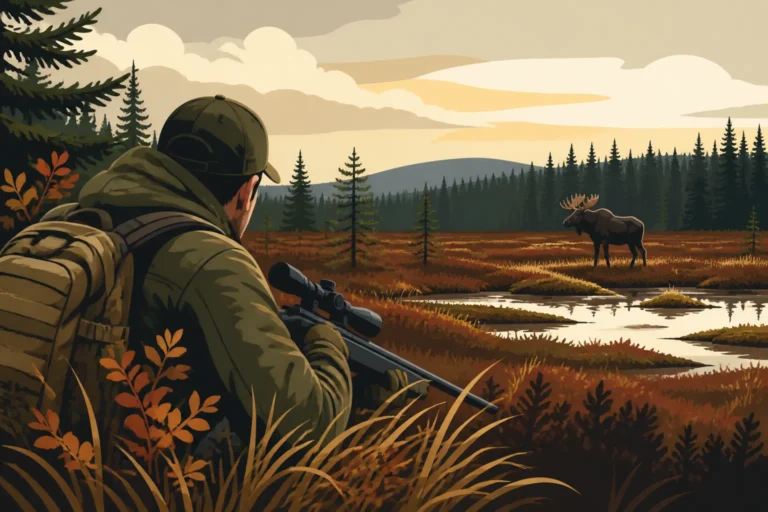
For mule deer in this broken prairie country, spot-and-stalk is often the most effective method, and frankly, it's one of the most exciting. These deer are built for this terrain, using every fold and dip to their advantage. Your approach needs to be slow, deliberate, and calculated. Begin by glassing from a high vantage point, preferably with the sun at your back and a crosswind or headwinds that won't carry your scent directly into the coulee. Once you spot a deer, the real work begins. Plan your stalk meticulously, using the terrain for concealment. This might mean crawling on your belly for hundreds of yards, making wide detours, or backtracking to find a less exposed route.
The biggest challenge in a coulee stalk is often the wind and thermals. Wind in Open Prairie Country can be deceptively tricky. What might feel like a steady breeze on the ridge top can become swirling currents in the coulee bottom. Always assume the wind will betray you and plan accordingly, often aiming to approach from below or perpendicular to the prevailing wind. Patience is paramount; if the deer is bedded, wait them out. They will eventually stand to stretch or feed, offering a better shot opportunity. Carrying a rangefinder is crucial, as the undulating terrain can make judging distances incredibly difficult. Remember, the goal is to get within comfortable shooting range without being seen, heard, or smelled. This method is exceptionally effective for Spot-and-Stalk Mule Deer in Alberta, especially for a mature buck that knows every trick in the book.
Still Hunting and Ambush Points
While spot-and-stalk dominates for mule deer, still hunting can be highly productive for whitetails that inhabit the denser brush within the coulees, or even for mule deer when visibility is poor, like during a light snowfall or foggy conditions. Still hunting involves moving incredibly slowly, taking a few steps, then pausing for several minutes to observe and listen. You're trying to blend into the environment, becoming part of the natural rhythm of the coulee. Focus your attention on the transition zones—where the open grassland meets the brushy slopes, or where a dry creek bed enters a more heavily vegetated area. These are natural funnels where deer will often travel.
Identifying natural ambush points is also critical. These could be narrow sections of the coulee, points overlooking a water source, or trails leading from dense bedding cover to an open feeding area. Position yourself downwind, ideally before first light or in the late afternoon, and remain absolutely still. Whitetails, in particular, often use the protection of the coulees to travel at dawn and dusk. Setting up a ground blind, especially a subtle one that blends into the natural surroundings, can also be a very effective tactic. The key is to minimize your presence and maximize your observation time. Remember to check out comprehensive resources like Mule Deer in Alberta's Open Country and White-Tailed Deer, Alberta's Most Hunted Big Game to better understand the behaviors of these animals in this specific habitat.
Driving or Pushing Small Pockets
While not always a solo hunter's primary tactic, for a small group (two or three hunters), driving or pushing small, isolated pockets of cover within a coulee can be an option, particularly for whitetails or even a mule deer buck that has seemingly vanished. This involves one or two hunters acting as "blockers" positioned at the downwind end of a brushy draw or a small timber patch, while another hunter slowly "pushes" through the cover, attempting to move the game towards the blockers.
This method requires extreme caution and clear communication. Safety is paramount: know exactly where everyone is at all times, define clear zones of fire, and only take shots at safe, identified targets. It's often best reserved for very specific, smaller pockets that you know hold game but are too dense to effectively still hunt or spot. It’s important to understand the direction game will want to escape, usually into the wind or along the easiest escape route. This tactic should be used sparingly and always with the utmost ethical considerations for fair chase and hunter safety. For a deeper dive into hunting specific coulee types, you might find insight from articles like Hunting Mule Deer in the Badlands Coulees, which shares similar terrain challenges.
Essential Gear and Safety for Coulee Hunting
Hunting the Milk River Ridge coulees can be physically demanding and potentially remote. Having the right gear and being prepared for anything is not just smart, it's critical for your safety and success.
Optics, Footwear, and Clothing
Let's talk optics first: they are your eyes in this vast country. You need high-quality binoculars (10×42 or 10×50 are excellent general-purpose choices) and a good spotting scope (20-60x or 15-45x) with a sturdy tripod. Don't skimp here; your ability to find game often depends entirely on your glass. You’ll be spending hours peering into dark shadows and across vast distances, and cheap optics will lead to eyestrain and missed opportunities.
Next up, footwear. You’ll be doing a lot of walking, climbing up and down steep banks, and traversing uneven terrain. Sturdy, comfortable hiking boots with excellent ankle support are non-negotiable. Look for boots that are waterproof but breathable. Break them in well before your hunt to avoid blisters. For clothing, layering is key. The prairie can experience huge temperature swings in a single day, from frosty mornings to warm afternoons, and then back to frigid evenings. Start with a moisture-wicking base layer, add insulating layers (fleece or synthetic down), and top it off with a windproof and waterproof outer shell. Blaze orange is a legal requirement in Alberta during certain seasons for big game rifle hunting, so ensure you have enough visible coverage to be safe and compliant.
Navigation and Emergency Preparedness
Even if you know the area well, getting turned around in a maze of similar-looking coulees is easier than you think. A reliable GPS unit or a smartphone with robust mapping capabilities (and downloaded offline maps!) is essential. GoHunt mapping, for instance, allows you to mark waypoints, track your path, and understand your elevation, which is invaluable when planning a stalk or trying to find your way back to your vehicle in the dark. Don’t rely solely on cell service; it’s often non-existent in these remote areas.
Beyond navigation, always carry a comprehensive first-aid kit. You should have enough water for the day, plus some extra, and high-energy snacks. A fire starter, headlamp with extra batteries, and a multi-tool are also vital. Consider carrying a satellite messenger or a two-way satellite communication device like an inReach or Zoleo, especially if you’re hunting alone or in truly remote areas. These devices can literally be lifesavers for summoning help in an emergency. Being prepared for unexpected weather changes is crucial, as conditions can shift rapidly; read up on tips for Hunting Alberta Winter Weather Safely if you're hitting the late season. Finally, think about how you’ll get game out and care for the meat. This country can be warm, even in early fall, so having a plan for Meat Care in Alberta's Cold and Warm Swings is incredibly important.
Milk River Ridge Coulee Hunting Comparison
To help visualize the best approach for different game animals you might encounter in the Milk River Ridge coulees, here's a quick comparison of key considerations:
| Feature/Consideration | Mule Deer Hunt | Whitetail Deer Hunt | Pronghorn Hunt (Coulee Edges) | Coyote Hunt |
|---|---|---|---|---|
| Primary Tactic | Spot-and-Stalk | Still Hunting / Ambush | Spot-and-Stalk / Decoy | Calling / Ambush |
| Key Coulee Use | Bedding, escape, travel | Cover, food, travel | Crossing, brief shelter | Hunting game, travel |
| Optics Importance | High (Spotting Scope & Binos) | Moderate (Binos) | High (Binos for spotting, ranging) | Moderate (Binos) |
| Wind Consideration | Extremely critical (swirling) | Critical (scent control) | Moderate (approach) | Critical (scent/sound) |
| Movement Speed | Slow, deliberate, patient | Very slow, frequent pauses | Moderate (covering ground) | Fast (to setup calling) |
| Best Time of Day | Mid-day (bedding), early/late | Dawn, Dusk, Mid-day (thick cover) | Early, Late | Anytime (responsive to calls) |
| Typical Challenge | Closing distance undetected | Finding movement in thick cover | Long shots, open approach | Educated coyotes, wind |
| Recommended Map Use | Detailed topo, satellite (GoHunt) | Detailed topo, satellite (GoHunt) | Wide-area topo, satellite (GoHunt) | Wide-area topo, satellite (GoHunt) |
Disclaimer
Please be aware that hunting regulations and access rules in Alberta can change. Always consult the most current Alberta Hunting Regulations Guide and relevant land access resources before planning any hunt. This information is for general guidance only and should not replace official government publications or professional advice. Respect all land access rules, whether Crown or private, and prioritize safety above all else.