Hunting a Pipeline Right-of-Way
Finding new hunting spots in Alberta that aren't pounded by other hunters can feel like a never-ending quest, especially when you're trying to figure out where the game is moving and how to access it effectively. Many hunters overlook the potential of pipeline rights-of-way, seeing them as merely industrial corridors rather than the dynamic wildlife highways they often become. This guide will walk you through exactly how to scout, strategize, and successfully hunt these unique features, helping you unlock overlooked opportunities.
Why Pipeline Rights-of-Way Attract Wildlife
Pipelines in Alberta, whether for oil, gas, or other resources, create long, linear clearings through otherwise continuous forest or dense bush. These aren't just barren strips of dirt; they're often managed with varying degrees of vegetation, from grasses and shrubs to young poplars and aspens. This creates what biologists call an "edge effect," which is incredibly attractive to a wide range of game species. Think about it: animals love edges. They provide quick access to different types of cover and food sources without exposing them too much.
The Edge Effect and Habitat Diversity
An edge is where two different habitat types meet. For wildlife, this transition zone offers the best of both worlds. Along a pipeline, you might have dense conifer forest on one side and an open, grassy clearing on the other. Deer, moose, and elk can browse on the tender shoots and grasses that thrive in the sunlight of the right-of-way, then quickly duck back into the protective cover of the forest when they feel threatened. This constant interplay of open feeding areas and thick bedding cover makes pipelines natural travel corridors and prime feeding grounds. You'll often find a diverse mix of plant life along these edges too—berries, broadleaf plants, and grasses that might not grow as abundantly deep within the forest or out in wide-open fields. This increased biodiversity creates a buffet for many species, making them a consistent draw.
Travel Corridors and Natural Funnels
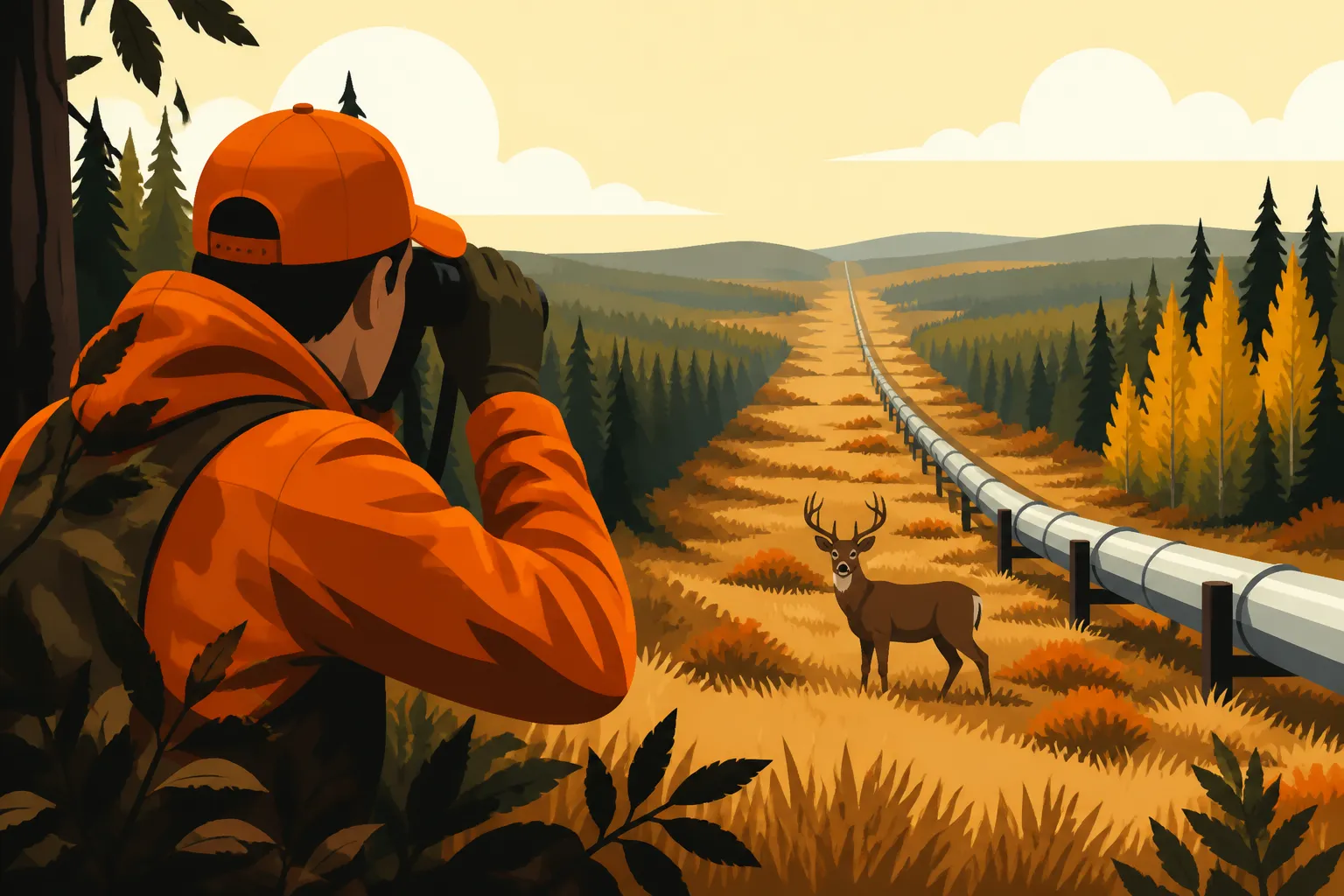
Beyond offering food and cover, pipeline rights-of-way serve as superhighways for game. Animals, much like us, prefer the path of least resistance. Instead of pushing through thick bush or dense timber, they'll often utilize these clearings to move from bedding areas to feeding grounds, or to traverse larger sections of their home range. This is especially true during migration periods or when snow depth increases, making travel through dense woods more difficult. Picture a wide-open pipeline running for miles through the boreal forest; it’s like a beacon guiding animals from one patch of timber to the next. These rights-of-way become natural funnels, concentrating animal movement into predictable patterns, which is exactly what we as hunters are looking for. Knowing where these animals are likely to travel simplifies scouting immensely. If you can identify where a pipeline crosses a creek bottom, a ridge, or a particularly thick patch of bedding cover, you've likely found a choke point where game is regularly passing through.
Scouting and Understanding Pipeline Dynamics
Successfully hunting a pipeline right-of-way isn't just about showing up and walking the line; it requires careful scouting, understanding the specific dynamics of the area, and knowing what to look for. This isn't your typical bush hunting or open prairie hunt; it's a unique blend that demands a specific approach.
Utilizing Digital Tools for Pre-Season Scouting
Before you even step foot in the woods, the best place to start is with digital scouting tools. Platforms like GoHunt are invaluable for identifying pipeline rights-of-way, understanding the terrain they traverse, and finding potential access points. Open up your mapping app and look for those telltale straight lines cutting through the landscape. These apps allow you to zoom in and see the type of vegetation along the right-of-way—is it a wide, heavily mowed strip, or has it grown up with taller shrubs and trees? You can identify pinch points where the pipeline crosses a creek or a ridge, or where it runs close to a particularly dense bedding area. Pay attention to how the pipeline interacts with different habitat types. Does it run through a mixed forest of aspen and spruce? Does it bisect a large, uniform block of timber? These details will give you clues about what kind of game you might find and how they’ll use the area. Additionally, these apps are crucial for determining land ownership, as pipelines can cross both Crown Land and private property. This helps you avoid any surprises and ensure you know Finding Access on Alberta Crown Land or if you need to seek permission.
Reading the Sign and Identifying Key Features
Once you've done your digital homework, it's time to hit the ground. When walking a pipeline right-of-way, you're not just looking for tracks; you're trying to understand the story the animals are telling. Start by looking for rub lines on small trees or shrubs along the edges, especially during the fall. Scrapes are another dead giveaway that deer are using the area heavily. Pay close attention to trails crossing the right-of-way from one patch of timber to another. These aren't just random paths; they are well-worn travel routes that animals prefer. Look for tracks in soft soil, especially after a rain or snow. Droppings can tell you a lot about what species are present and how recently they've been there. Don't overlook old stumps or downed logs on the right-of-way; these can be spots where animals stop to browse or rub. Note any areas where the pipeline itself changes elevation significantly, or where it might have a slight curve. These subtle features can create small pockets of shelter or provide a better vantage point for animals, making them ideal ambush locations. Knowing how to interpret Reading Whitetail Sign in Alberta Aspen Bluffs can be directly applied here, even if you're not specifically in aspen bluffs, as many pipeline edges mimic similar habitat.
| Feature Type | Description | Hunting Implication | Target Species |
|---|---|---|---|
| Wide, Grassy ROW | Open, often mowed, with low vegetation. | Good for glassing at distance, animals may cross quickly. Excellent for browsing. | Deer (Whitetail, Mule Deer), Elk, Moose |
| Brushy, Grown-Up ROW | Taller shrubs, young trees, thicker cover. | Provides more cover for animals to linger, harder to spot. Good bedding. | Whitetail Deer, Black Bear, Moose |
| Creek/River Crossing | Pipeline crosses water, often a natural low point. | Prime funnel point for all game, expect heavy travel. May have dense riparian vegetation. | All Big Game (Deer, Moose, Elk, Bear), Waterfowl |
| Ridge/Hilltop Crossing | Pipeline crests an elevated area, offering visibility. | Animals use ridges for travel, may bed on sunny slopes. Good vantage points for hunters. | Mule Deer, Elk, Whitetail Deer |
| Intersection with Cutline/Road | Where the pipeline meets another linear feature or access road. | High traffic areas, multiple travel corridors converging. Can be busy with human activity. | Whitetail Deer, Moose, Elk (use cautiously due to pressure) |
Effective Hunting Strategies on Pipeline Rights-of-Way
Hunting pipeline rights-of-way requires a blend of patience, strategic thinking, and adapting your approach to the specific species you’re targeting and the conditions of the hunt. It’s not a one-size-fits-all scenario, but some core strategies will consistently pay dividends.
Stand Hunting and Ground Blinds
For species like whitetail deer, especially during the rut, stand hunting or using a ground blind along a pipeline can be incredibly effective. The key is to set up where you've identified a consistent travel pattern or feeding area. Look for spots where the pipeline narrows, crosses a natural funnels like a creek or a low saddle, or where a prominent game trail enters or exits the bush along the edge. Consider Hanging a Stand on an Alberta Bush Edge overlooking the pipeline. If the pipeline itself has some thicker pockets of regrowth, animals might even bed down a short distance into the clearing, especially on sunny days. Ensure your setup provides good visibility up and down the right-of-way while keeping you concealed from approaching game. A tree stand offers a higher vantage point, making it easier to see animals moving along the open strip, while a ground blind tucked into the edge cover can be excellent for ambush, especially if you know deer are using a specific crossing. Remember to pay close attention to wind direction, as the open nature of a pipeline can make swirling winds a real challenge.
Spot-and-Stalk and Still-Hunting
In more open areas, or for species like mule deer or elk that might be grazing further out on the right-of-way, a spot-and-stalk approach can be productive. This involves slowly moving along the pipeline edge, constantly glassing ahead and to both sides, looking for animals. This is particularly effective during the early morning or late evening when animals are most active. The wider, grassier sections of pipelines that traverse Alberta's prairies or parklands lend themselves well to this method. If you spot an animal, use the existing cover along the edges or the terrain features (like dips or small rises) to close the distance. Patience is paramount here; take your time, move slowly, and be prepared to wait out an animal if it's bedded down. When still-hunting, move only a few steps at a time, then pause for several minutes, scanning every possible patch of cover. This methodical approach allows you to pick apart the habitat and often spot animals before they spot you. Remember to incorporate techniques from Spot-and-Stalk Mule Deer in Alberta if you're targeting those prairie giants along the more open sections of pipelines.
Driving and Road Hunting Considerations
While it might be tempting to use a vehicle to cover long stretches of pipeline, especially on accessible Alberta Forestry Road Access and Gates, it's crucial to understand the legalities and ethical implications. In Alberta, the rules regarding hunting from or with a vehicle are strict and designed to promote fair chase. Generally, you cannot hunt big game from a vehicle. While you can often use vehicles to access areas, the actual hunting must be done on foot. Pipelines that are accessible by vehicle may also see more human pressure, making game wary. Always check the specific regulations for the Wildlife Management Unit (WMU) you are hunting in, as rules can vary. However, some pipelines might have maintenance roads running alongside them, which can be useful for initial access or scouting. Just be mindful of vehicle noise, which can spook game far ahead, and adhere strictly to Alberta's Vehicle Rules on Alberta Crown Land. In some remote areas, these roads may be closed seasonally or permanently to motorized traffic to minimize disturbance to wildlife and habitat. Always respect these closures.
Safety and Regulatory Aspects of Pipeline Hunting
Hunting near or on industrial infrastructure like pipelines comes with its own set of rules and safety considerations. Ignoring these can not only be dangerous but can also lead to serious legal consequences and erode the privilege of hunting for everyone.
Understanding Access and Easement Rules
Just because a pipeline is visible on a map doesn't mean you have automatic access. Pipelines often cross both private and public land, and sometimes even within public land, there are specific easements or restricted zones. It's your responsibility as a hunter to know the land ownership and access rules. If a pipeline crosses private land, you absolutely need to obtain permission from the landowner before you hunt. Ignoring this can lead to charges under Alberta's Trespass Act. For pipelines on Crown Land, general access rules apply, but there might be specific conditions related to the pipeline itself. For instance, some companies may have agreements with the province that restrict certain activities or vehicle use directly on their right-of-way for safety or environmental reasons. Always use resources like Alberta's Recreational Access Mapping Tool to cross-reference land ownership and identify any special access conditions. Even on Crown Land, if an active worksite is present, you must keep a safe and respectful distance.
Safety Protocols Near Active Infrastructure
Pipelines, especially those carrying oil or natural gas, are active industrial sites. This means there are inherent risks that hunters must be aware of.
- Signage: Always heed any posted signs, whether they're for danger, private property, or restricted access. These signs are there for a reason.
- Equipment: You might encounter heavy equipment, vehicles, or personnel working on or near the pipeline. Give them a wide berth and assume they don't see you. Your Alberta Blaze Orange Requirements are particularly important here to make you visible to industrial workers and other hunters alike.
- Product Safety: Never tamper with pipeline infrastructure. Avoid any areas that show signs of leaks, spills, or unusual smells. These could indicate dangerous situations. If you suspect an issue, report it immediately to the appropriate pipeline company or emergency services.
- Right-of-Way Use: Stick to the designated right-of-way and avoid venturing off into adjacent areas that might contain buried lines or other unmarked hazards. Be aware that buried pipelines might have cathodic protection systems (small electrical currents) that could interfere with metal detectors if you're shed hunting.
- Communication: Consider carrying a satellite messenger or two-way radio if you're in an area with poor cell service, which is common in many parts of the Alberta bush that pipelines traverse. This ensures you can call for help in an emergency, whether it's related to hunting or an industrial incident.
Ethical Considerations and Hunter Responsibility
Hunting a pipeline right-of-way, like any hunting activity, comes with a responsibility to act ethically and uphold the reputation of hunters. This means not only following all regulations but also practicing good stewardship. Pack out everything you pack in, and if you see litter left by others, consider packing it out as well. Be courteous to other users of the land, whether they are other hunters, hikers, or industrial workers. Understand that pipelines are not solely for hunting; they are part of a larger industrial and ecological landscape. Always ensure you are following all rules for Alberta Hunter Education Requirements and general hunting conduct. When harvesting game, be mindful of the potential for shot deflection in open areas, and ensure you have a safe backdrop for every shot. The more responsibly we act, the better chance we have of maintaining access to these unique hunting opportunities for generations to come.
Disclaimer
Please note that hunting regulations, access rules, and safety protocols can change. It is every hunter's responsibility to consult the most current Alberta hunting regulations and land access maps before heading into the field. The information provided here is for general guidance and educational purposes only.