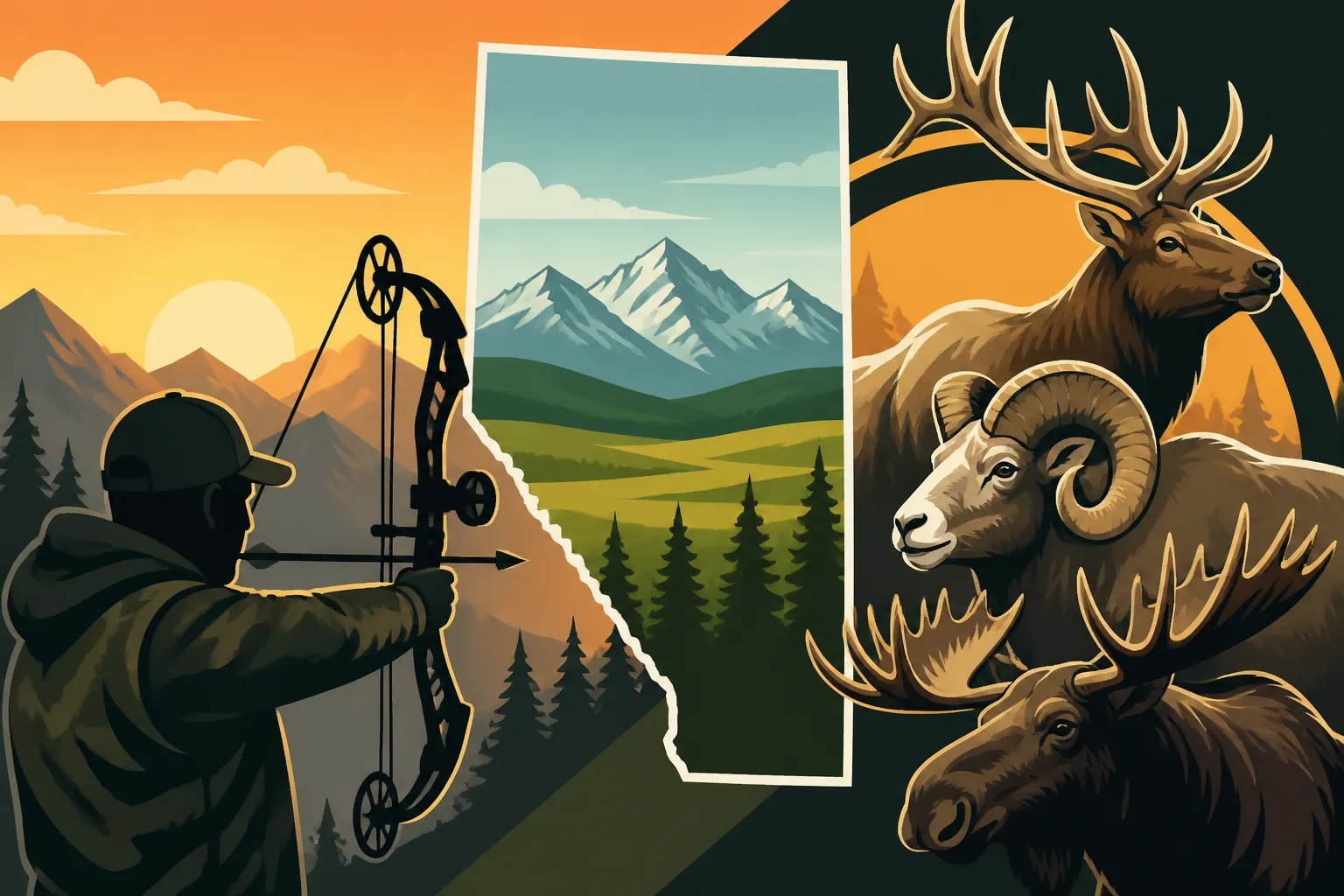
Hunting Alberta’s Draw-Only Species
The dream of drawing a coveted special licence in Alberta is a powerful one, often fuelled by years of applying and the sheer rarity of certain tags. It's frustrating to pour over regulations, scout maps, and apply year after year, only to be met with disappointment, especially when you know the trophy of a lifetime awaits in some remote corner of the province. This guide is here to unravel the complexities of hunting Alberta's draw-only species, offering practical advice and deep insights to help you navigate the application system, prepare for success, and ultimately, put you on the path to that once-in-a-lifetime hunt.
Understanding Alberta's Special Licence Draw System
Alberta's draw system is designed to manage game populations responsibly and distribute limited hunting opportunities fairly among resident hunters. Unlike general tags that can be purchased over the counter, special licences are allocated through a lottery system for species or specific Wildlife Management Units (WMUs) where populations are sensitive, demand is high, or unique management objectives are in place.
The Role of Priority Points in the Draw
At the heart of Alberta's special licence draw system is the priority points system. It's a way for the province to reward persistent hunters, giving those who have applied unsuccessfully for longer a better chance at drawing a tag. When you apply for a special licence and are unsuccessful, you automatically receive a priority point for that species. The more points you accumulate, the better your odds become in subsequent draws. This system can be both a blessing and a curse; it offers hope for eventually drawing a high-demand tag, but it also means patience is paramount. Understanding How Priority Points Build and Reset is crucial for any serious draw hunter. For example, if you apply for an antlered moose tag in WMU 410 and don't get it, you gain a point. Next year, you'll enter the draw with one priority point, increasing your statistical chance compared to a first-time applicant. This cumulative advantage is what keeps many hunters returning to the draw year after year, chasing that elusive dream tag.
It's important to remember that priority points are species-specific, and they reset to zero once you are successful in drawing a special licence for that species, or if you fail to apply for five consecutive years. This means you can be building points for bighorn sheep while simultaneously applying for and potentially drawing an elk tag, without affecting your sheep priority. Managing your points effectively often involves strategic application choices, sometimes opting for a less popular WMU for a better chance at an earlier draw, or consistently building points for a highly coveted tag over many years. Many hunters use tools like GoHunt to track their priority points and historical draw odds, allowing them to make informed decisions about where and when to apply.
Navigating the Application Process and Deadlines
The application process for Alberta's special licences is primarily done online through the AlbertaRELM system. It requires an active Wildlife Identification Number (WIN) card and a valid Wildlife Certificate. Understanding How Alberta's Draw Application Works is the first step. Typically, the application period for special licences opens in the spring, with a firm deadline usually in June. Missing this deadline means waiting another year, so mark your calendar! You can apply for several different draws in a given year, but for most big game species, you're limited to one application per species (e.g., one antlered moose application, one antlered elk application). Some draws, like supplemental antlerless licences, might have different application rules or later dates.
When applying, you'll specify the species, the gender of the animal (antlered or antlerless), and the specific WMU you wish to hunt. This is where strategic thinking comes in. Researching draw odds by WMU for each species is vital. A WMU with excellent trophy potential might require significantly more priority points than a WMU with a healthy, but perhaps less record-breaking, population. For example, a prime bighorn sheep unit in the mountains will likely have astronomical point requirements, whereas an antlerless moose tag in a more remote boreal WMU might be drawn with far fewer points. Carefully consider your goals: are you chasing a record, or simply looking for the experience of a special licence hunt? Party applications are also an option for some species, allowing a group of hunters to pool their priority points, but if successful, all members of the party will have their points reset.
Key Draw-Only Species in Alberta
Alberta is home to a magnificent array of wildlife, but some species and certain populations are managed exclusively through a draw system to maintain their health and offer sustainable hunting opportunities. These are the tags that hunters often dedicate years, sometimes decades, to drawing.
The Allure of Bighorn Sheep
Hunting bighorn sheep in Alberta's mountains is often considered the pinnacle of North American big game hunting. The rugged terrain, the demanding physical challenge, and the elusive nature of these magnificent animals combine to make a successful sheep hunt an unparalleled achievement. Bighorn sheep tags are extremely limited. Alberta residents buy class 1 (trophy) sheep licences without a draw, while class 2 (non-trophy) sheep are allocated through a draw (draw 29). This scarcity is a direct reflection of careful conservation efforts to maintain healthy, huntable populations in their remote mountain habitats. Bighorn Sheep Draw Rules and Limits are very specific, emphasizing ram age and horn development. Only the special WMU draws (410, 437, 444/446, 408 and 438) involve a draw, and those can take many years to succeed in for the most sought-after WMUs like the Ghost Public Land Use Zone or parts of the Livingstone Range.
The WMUs where bighorn sheep reside are characterized by their steep, rocky slopes, alpine meadows, and vast, open basins, making them incredibly challenging to access and hunt. Hunters pursuing these tags must be in peak physical condition, prepared for extreme weather changes, and adept at glassing vast landscapes to locate rams. For many, the hunt itself is as much about the journey and the experience of being in such wild, untamed country as it is about the harvest. Alberta's strong conservation ethic ensures that these draws remain sustainable, preserving the bighorn populations for future generations of hunters and wildlife enthusiasts.
Challenging Mountain Goat Hunts
Mountain goats are another highly coveted draw-only species in Alberta, found in the province's highest, most inaccessible alpine regions. Their dazzling white coats, distinctive black horns, and incredible agility in treacherous terrain make them an iconic symbol of Alberta's mountain wilderness. Mountain goat tags are exceptionally rare and are allocated through a draw system to manage their populations effectively. How the Mountain Goat Draw Works means hunters must be prepared for a physically demanding hunt in some of Alberta's most remote and rugged areas, typically requiring extensive backpacking and technical climbing skills. WMUs such as those west of Rocky Mountain House and in the Crowsnest Pass country offer these unique opportunities.
The draw odds for mountain goats are incredibly low, often requiring many years of accumulated priority points. A successful mountain goat hunt demands not only physical endurance but also keen spotting abilities and a strategic approach to navigating vertical landscapes. Hunters must be prepared for unpredictable mountain weather, including sudden snowfalls even in late summer or early fall. The challenge of a mountain goat hunt is not just in locating the animal, but in executing a safe and ethical stalk and retrieval in an environment where every step carries significant risk. These hunts are truly for the adventurous and well-prepared, offering an ultimate test of a hunter's skills and resilience.
Restricted Moose Opportunities
While general moose licences are available in many parts of Alberta, certain WMUs and specific types of moose (e.g., antlered-only or bull-only) are managed through the special licence draw. This is often in areas where moose populations are particularly sensitive, under management for specific age or sex ratios, or where demand far exceeds the available supply. For example, some WMUs in the northern boreal forest or specific pockets of the foothills might have limited antlered moose draws, offering a higher chance at a mature bull. Understanding Alberta Moose Draw Odds by WMU is essential for a strategic application.
The special moose draws allow for targeted management, ensuring sustainable harvest rates and promoting healthy herd dynamics. Hunters pursuing these special moose tags might find themselves in diverse habitats, from the dense timber and muskeg of the boreal forest to the river valleys and cutlines of the foothills. Unlike the general over-the-counter tags, drawing a special moose licence often signifies an opportunity in a WMU known for larger animals or less hunting pressure. While not as points-heavy as sheep or goats, some premium moose draws can still take several years of applications to be successful, making each tag a hard-earned reward.
Coveted Elk Draws
Elk are abundant in many parts of Alberta, particularly in the foothills and mountain regions, and even in some agricultural areas. However, some specific WMUs and certain types of elk tags, especially for antlered bulls in prime areas, are allocated through a draw system. These draws aim to manage herd size, minimize agricultural damage in certain regions, or provide higher-quality hunting experiences by limiting pressure in specific zones. Knowing Which WMUs Give the Best Elk Odds can significantly influence your draw strategy. WMUs in the foothills, such as those near the Eastern Slopes, often have highly sought-after antlered elk draws, which can take several years of priority points to obtain.
The challenge with elk draws is often balancing the desire for a trophy bull with the reality of draw odds. Applying for an antlered elk tag in a trophy unit like the Kananaskis fringe area might mean accumulating points for a decade, while a draw for an antlerless elk tag in a different WMU, possibly as part of a damage control licence, could be successful with fewer points or even on a first application. These draw-only opportunities offer hunters access to areas where elk are managed for quality, or where hunting pressure needs to be carefully controlled to ensure long-term sustainability. Success in these draws often leads to a challenging but incredibly rewarding hunt, requiring physical fitness, keen scouting, and often, calling prowess.
Pronghorn Draws on the Prairie
Pronghorn, often called "speed goats," are unique to North America and found primarily on Alberta's southern prairies. Their incredible speed and keen eyesight make them a challenging and exciting game animal. Pronghorn hunting in Alberta is entirely draw-only, reflecting the need for careful management of these prairie inhabitants. The draw ensures that harvest levels are sustainable and that opportunities are distributed across various WMUs in their range. Alberta Pronghorn Draw Odds by WMU vary, but generally, these draws can be quite competitive, especially for bucks in prime areas like the Milk River Ridge.
Hunters often spend years building priority points for a chance to pursue these fascinating animals. A successful pronghorn hunt typically involves extensive glassing across vast, open landscapes, followed by strategic spot-and-stalk tactics that test a hunter's patience and ability to use sparse cover. The prairie environment, with its strong winds and wide-open spaces, presents its own unique set of challenges. Drawing a pronghorn tag is a truly special opportunity to experience hunting in Alberta's unique prairie ecosystem, a vastly different landscape from the mountains or boreal forest.
Maximizing Your Odds in the Alberta Draw
Getting drawn for a special licence can feel like winning the lottery, and in many ways, it is. However, there are strategies you can employ to tilt the odds in your favor, transforming a purely random chance into a calculated pursuit. Patience and persistence are key, but smart planning goes a long way.
Strategic Application and WMU Selection
One of the most critical aspects of maximizing your draw odds is strategic WMU selection. This involves a deep dive into historical draw statistics, understanding population trends, and being realistic about your accumulated priority points. Tools like GoHunt or the Alberta government's hunting regulations often provide data on minimum priority points required to draw specific tags in various WMUs. If you have zero points for bighorn sheep, applying for a unit that historically takes 15+ points is a long-shot, unless you're starting your point accumulation. Instead, you might consider applying for species or WMUs that have lower point requirements, at least initially, to gain a hunting opportunity sooner.
Consider applying for antlerless draws or specific species that have less demand, especially if your primary goal is to gain experience with the draw system or secure a meat animal. For instance, some antlerless moose or elk draws can be significantly easier to draw than antlered tags in the same area. Furthermore, don't overlook lesser-known WMUs. While they might not be renowned for record-book animals, they can offer excellent hunting experiences and better draw odds. Sometimes, choosing a WMU bordering a highly desired area can provide similar habitat and opportunities with less competition. Remember, the goal isn't just to draw a tag, but to draw a tag that aligns with your current priority points and hunting objectives.
Understanding Point Creep and Party Applications
"Point creep" is a phenomenon where the number of priority points required to draw a specific tag in a given WMU steadily increases over time. This happens when more hunters accumulate points than there are tags available, pushing the minimum successful point total higher each year. If a WMU required 7 points last year, it might require 8 or 9 next year, meaning your existing points may not hold their value. Staying informed about current trends and projecting future point creep is crucial for long-term draw success. GoHunt often provides detailed analysis of point creep, helping hunters adjust their strategies. This dynamic nature means that consistently applying, even for a few years, is generally better than waiting until you think you have "enough" points, as the target might have moved.
Party applications can be a powerful tool, particularly for hunters who have varying levels of priority points. When applying as a party, the system uses the lowest priority point total among the group for the draw. If successful, everyone in the party draws a tag, and everyone's priority points for that species reset. This is a fantastic way for a hunter with many points to help a friend or family member with fewer points draw a tag. However, it's a strategic decision because the hunter with high points "sacrifices" their accumulated advantage for the group. It's a trade-off: shared experience versus individual long-term point accumulation. Weigh these factors carefully based on your hunting goals and the composition of your hunting party.
Researching WMU Specifics and Success Rates
Beyond draw odds, thorough research into the specific WMU you're targeting is non-negotiable. This includes studying the terrain, understanding the available access, knowing the general population health, and researching historical success rates for the species. An often-drawn WMU might have low success rates due to difficult access or sparse animal populations, while a harder-to-draw unit might boast higher success rates due to excellent habitat and robust populations. Look into Scouting an Alberta WMU Before Season to gain an advantage.
Utilize resources like Alberta Fish and Wildlife's harvest statistics, local hunting forums, and topographical maps. Satellite imagery from platforms like Google Earth or dedicated hunting apps can help you identify potential access points, bedding areas, water sources, and travel corridors. For mountain species like bighorn sheep and mountain goat, understanding the nuances of the terrain and elevation is critical. For moose and elk, knowing where natural burns, cutlines, or logging blocks are located can be a huge asset. The more information you gather, the better equipped you'll be to make an informed decision when applying, and to prepare for the hunt should you be successful.
Preparing for Your Draw-Only Hunt
Drawing a special licence is only half the battle; the real work begins in preparing for the hunt itself. These hunts often take you into Alberta's most remote and rugged areas, demanding meticulous planning, physical readiness, and specialized gear.
Physical Conditioning for Mountain and Backcountry Hunts
For species like bighorn sheep and mountain goat, physical conditioning isn't just recommended; it's a non-negotiable requirement. These hunts often involve covering many miles on foot over steep, uneven, and high-altitude terrain, often while carrying a heavy pack. Neglecting your fitness can not only jeopardize your success but also your safety. Start an intensive training regimen months, if not a year, before your hunt. Focus on cardiovascular endurance (running, hiking with a pack, stair climbing), strength training (legs, core, back), and flexibility. Replicate hunt conditions as much as possible: hike local trails with your fully loaded pack, wear your actual hunting boots, and practice navigating challenging terrain.
Even for less physically demanding draw hunts like some moose or elk opportunities, being in good shape will significantly enhance your experience. Hauling out a quartered moose from deep bush or covering extensive ground for elk can be incredibly arduous. The fitter you are, the more enjoyable and effective your hunt will be, allowing you to focus on the animals and the experience rather than your aching muscles or depleted energy. Consider hiring a personal trainer or joining a hiking group to keep you accountable and build specific strength.
Essential Gear and Logistics for Remote Areas
Hunting draw-only species and sheep often means venturing into remote areas of Alberta where infrastructure is minimal, and self-sufficiency is paramount. Your gear choices will directly impact your comfort, safety, and success. For mountain hunts, a high-quality, lightweight backpacking tent, a warm sleeping bag rated for alpine conditions, and a reliable water filtration system are essential. Backpacking Into Alberta Sheep Country requires durable mountaineering boots, a layered clothing system suitable for rapid temperature changes, and robust optics (spotting scope, binoculars) for glassing vast distances. For those hunting in the deep boreal forest for moose, durable rubber boots, a good quality GPS, and bear spray are crucial.
Beyond personal gear, consider the logistics of your hunt. How will you access the WMU? Will it require a quad, horseback, or extensive hiking? What are your plans for meat care and retrieval once an animal is down, especially in remote areas? Do you have an emergency communication device like a satellite messenger? Plan for food, water, and emergency supplies for several days beyond your anticipated hunt duration. For non-residents, consider Flying to Alberta With a Rifle and ensuring all necessary permits are in order. Every detail, from batteries for your headlamp to emergency fire starters, needs to be accounted for.
Understanding Species-Specific Behaviors and Habitat
To maximize your chances of success, you need an intimate understanding of the species you're hunting. For bighorn sheep and mountain goats, this means knowing their seasonal movements between high alpine summer ranges and lower wintering grounds, their preferred feeding habitats, and how they use the terrain for security. Glassing Alpine Basins for Bighorn Sheep is a primary tactic. For moose, understanding their movements along cutlines, around beaver ponds, and into burned areas is key. Calling a Bull Moose in the Rut can be highly effective during the right time of year. For elk, knowing their patterns from bedding areas to feeding grounds, their response to bugling, and how they use various types of cover (timber, clearcuts) is vital. Bugling to a Foothills Bull Elk is an art form.
Each species has distinct behaviors influenced by factors like weather, time of year, rut cycles, and hunting pressure. Spend time researching, reading scientific papers, watching documentaries, and talking to experienced hunters or outfitters. Knowledge of their diet, breeding habits, and predator avoidance strategies will help you predict their movements and locate them more effectively. This deep understanding, combined with your scouting efforts, forms the backbone of a successful draw-only hunt.
Navigating the Hunt for Specific Draw Species
Once you've drawn that coveted tag, the real adventure begins. Hunting draw-only species in Alberta presents unique challenges and rewards, often requiring specialized tactics tailored to the animal and its environment.
Strategies for Bighorn Sheep and Mountain Goat
Hunting bighorn sheep and mountain goat is often a test of endurance, patience, and meticulous glassing. These hunts are primarily spot-and-stalk affairs, conducted in vast, open mountain landscapes. The key is to find animals from a distance, often miles away, using high-quality optics. A good spotting scope is invaluable for not only locating the animals but also for thoroughly evaluating rams for legal curl or assessing the size of a goat. Spend hours behind the glass, patiently picking apart every rock face, ridge, and basin. Judging a Full-Curl Bighorn Ram from a distance is a skill honed over many hours.
Once an animal is located, the stalk can be incredibly challenging. Mountain terrain is unforgiving, and a successful approach requires careful planning to stay out of sight and wind. Be prepared for multiple failed stalks, as these animals have exceptional eyesight and are always on high alert. The shot can often be at long ranges or at steep angles, demanding proficiency with your rifle. Retrieval is equally demanding; packing out a sheep or goat from steep, broken cliffs can take days and often requires specialized equipment and a strong team. Focus on Hunting Mountain Goat in Steep Rock which requires absolute precision and safety.
Tactics for Draw Moose and Elk
Hunting moose and elk on draw-only tags, especially in specific WMUs, often means targeting areas with good animal numbers and potentially less pressure. For moose, calling can be highly effective, especially during the rut. Calling Moose in Alberta's Boreal Forest involves imitating cow calls, bull grunts, and even raking brush to simulate a bull moving through the forest. Focus on areas of good cover near water sources, cutlines, or recent burns where moose browse. Still-hunting through dense timber, especially after a fresh snowfall, can also be productive. Getting a moose out of the thick boreal forest can be a monumental task, often requiring ATVs or even horses.
Elk hunting, particularly for bulls, often revolves around the rut in September and October. Bugling Elk in Alberta's Foothills can bring a bull charging in, but it can also attract other hunters or push elk further into cover. Spot-and-stalk methods are also effective, especially in more open foothill terrain or clearcuts. Understanding elk bedding and feeding patterns is critical; they often feed in open areas at dawn and dusk, retreating to dense timber during the day. For elk on farmland, special permission is often required, and hunting tactics might involve intercepting them moving between fields and cover. Hunting Elk on Alberta Grain Land can be a distinct challenge. Both species demand careful shot placement and efficient meat care, particularly when faced with fluctuating fall temperatures.
Pursuing Pronghorn on the Prairie
Pronghorn hunting is a true test of patience and stealth on the vast Alberta prairies. These animals possess incredible eyesight, capable of spotting movement at extreme distances, and can quickly cover ground with their legendary speed. The primary tactic is spot-and-stalk. Drive or walk to high vantage points and glass meticulously, often using a tripod-mounted spotting scope to pick out animals from miles away. Once a buck is located and deemed worthy, the challenging part begins.
Stalking a pronghorn requires using every available piece of cover, no matter how small. This often means crawling on your belly for hundreds of yards, using coulees, small rises, or even fence lines to conceal your approach. Stalking Pronghorn Across Open Ground is an art form. Pay close attention to the wind, as their sense of smell is also acute. Be prepared for long shots, as getting within close range can be nearly impossible in truly open country. Practice shooting from various positions, including prone, as you might not have the luxury of a perfect setup. Remember, a successful pronghorn hunt is a game of inches, patience, and adapting to the constantly shifting dynamics of the open prairie.
Post-Harvest Responsibilities and CWD
Harvesting an animal on a special licence is a monumental achievement, but the hunt isn't truly over until all post-harvest responsibilities are fulfilled. These crucial steps ensure legal compliance, contribute to wildlife management data, and protect public health.
Tagging, Reporting, and Carcass Management
Immediately after harvesting any big game animal in Alberta, you must tag it correctly and attach the licence tag to the animal as per regulations. This usually involves securely attaching the tag to the carcass, typically an antler or leg, and cancelling the appropriate portion of the tag. Failure to properly tag an animal can result in significant penalties. You are also legally required to report your harvest to Alberta Fish and Wildlife within a specified timeframe, often online through the AlbertaRELM system. This data is vital for wildlife managers to track harvest rates, monitor populations, and inform future draw allocations.
Carcass management is equally important. In many areas, especially those designated as Chronic Wasting Disease (CWD) zones, there are specific rules about moving and disposing of carcasses. This is critical to prevent the spread of CWD. You'll need to know Moving a Carcass Out of a CWD Zone and which parts can be transported. Often, certain high-risk parts (brain, spinal cord, lymph nodes) must be left at the kill site or disposed of in a designated landfill. For animals taken in non-CWD zones, proper field dressing and quartering are essential for preserving meat quality, especially during warmer early seasons. Knowing how to efficiently quarter an animal in the field and transport it back to camp or your vehicle is a skill every big game hunter needs.
Chronic Wasting Disease CWD Testing Requirements
Chronic Wasting Disease (CWD) is a neurological disease affecting deer, elk, and moose. Alberta has mandatory CWD testing requirements in specific WMUs, particularly for cervids harvested in the province's eastern and southern regions where CWD is more prevalent. If you harvest a deer, elk, or moose in one of Alberta's Mandatory CWD Submission WMUs, you are legally required to submit the head for testing. Information on Where Alberta's CWD Freezers Are and how to submit a sample is available on the Alberta Fish and Wildlife website.
The testing process typically involves removing the animal's head and dropping it off at a designated CWD freezer location. You'll need to fill out a submission form with your licence number and the location of the harvest. Results are usually available online within several weeks. While CWD meat is generally considered unsafe to eat, Alberta Health Services recommends against consuming meat from a CWD-positive animal. Understanding and complying with CWD testing protocols is a critical responsibility for every hunter, contributing to the province's surveillance and management efforts to protect the long-term health of Alberta's deer, elk, and moose populations.
Working with Outfitters and Hunter Hosts for Draw Species
For non-residents, or even residents seeking a specialized hunting experience, understanding the options for guides and hosts is vital, especially for draw-only species. These individuals can significantly enhance your chances of success and provide invaluable local knowledge.
Non-Resident Requirements and Hunter Hosts
If you are a non-resident of Alberta (from outside of Canada), you are required to hunt big game with a licensed outfitter. This is a strict provincial regulation designed to manage non-resident hunting pressure and ensure ethical practices. For non-resident Canadians (from other provinces), the rules are slightly different: you must hunt with an Alberta resident who holds a valid Alberta hunting licence and is eligible to be a "hunter host." This resident hunter host cannot charge a fee for their services. Understanding Alberta's Hunter Host Rule is crucial for Canadians looking to hunt draw-only species in Alberta.
The choice between an outfitter and a hunter host depends on your residency and personal preferences. An outfitter provides a full-service experience, including guiding, accommodations, food, and often assistance with logistics like meat processing and trophy preparation. A hunter host provides guidance and companionship but does not offer commercial services. For highly specialized draw-only hunts like bighorn sheep or mountain goat, an experienced outfitter who operates in those specific WMUs can be an immense advantage, offering knowledge of the terrain, animal patterns, and a higher safety margin in challenging environments.
Choosing the Right Outfitter for Special Species
Selecting the right outfitter for a draw-only species hunt is a critical decision that can make or break your experience. Begin your research long before you apply for your draw, even years in advance. Look for outfitters who specialize in the species you're targeting and who operate primarily in the WMUs you are interested in. Experience with Alberta Mountain Sheep Outfitters or those specializing in specific moose or elk units is key. Ask for references from past clients, and specifically inquire about their success rates for draw-only species. Be wary of any outfitter who "guarantees" a kill, as ethical hunting always involves uncertainty.
Consider what the outfitter's package includes: is it a remote spike camp, a lodge-based hunt, or a horseback pack-in hunt? What is their hunter-to-guide ratio (one-on-one is generally preferred for challenging hunts)? What is their philosophy on ethical hunting, fair chase, and game management? Discuss emergency plans, meat care protocols, and trophy handling. Many reputable outfitters have a long waiting list, especially for highly coveted draw-only tags, so booking well in advance, even before you draw your tag, is often necessary. GoHunt often features reputable outfitters and their specialties, offering a good starting point for your research. Don't be afraid to ask detailed questions and verify their licensing and insurance.
Common Mistakes and How to Avoid Them
Even the most experienced hunters can make mistakes, but when it comes to draw-only species, the stakes are often higher due to the time and effort invested. Avoiding common pitfalls can save you frustration, money, and potentially years of waiting for another opportunity.
Neglecting Draw Research and Point Strategy
One of the most common and costly mistakes is neglecting thorough research into Alberta's draw system and specific WMU statistics. Many hunters simply apply for the same high-demand WMU year after year without understanding point creep, the actual odds, or considering alternative options. This can lead to years of accumulating points without ever drawing a tag, while potentially easier opportunities are missed. Don't just "throw your name in the hat"; develop a calculated strategy. Regularly check the draw results and statistics provided by Alberta Fish and Wildlife. Utilize resources like GoHunt to analyze trends, compare WMU options, and understand the historical point requirements for the tags you're chasing.
Another mistake is mismanaging priority points. Forgetting to apply for a species for five consecutive years will reset your hard-earned points to zero. Be diligent in marking your calendar for application deadlines and ensuring your WIN card and Wildlife Certificate are current. If you're applying as a party, ensure everyone understands that their points will reset if successful. Make informed decisions: is it worth burning your accumulated points for a slightly less desirable tag now, or holding out for that dream tag in a few more years? This strategic thinking, grounded in solid research, is paramount for long-term draw success.
Inadequate Physical and Mental Preparation
Underestimating the physical demands of draw-only hunts, especially for mountain species, is a grave error. Many a dream hunt has been cut short or severely hampered by a lack of physical fitness. The mountains of Alberta are unforgiving, and packing out a heavy animal over steep, rocky terrain is an arduous task. Don't let your once-in-a-lifetime opportunity be ruined by exhaustion or injury. Commit to a rigorous training regimen well in advance. Simulate hunt conditions: hike with a heavy pack, practice steep ascents and descents, and ensure your body is ready for the grind.
Mental preparation is just as crucial. Draw-only hunts can be frustrating, with long days of glassing, challenging stalks, and unpredictable weather. Maintain a positive attitude, be persistent, and embrace the challenges. The mental fortitude to push through discomfort, adapt to changing conditions, and remain optimistic, even when animals are scarce, is a hallmark of successful hunters. Prepare for the possibility of not filling your tag, as success is never guaranteed, and learn to appreciate the experience regardless of the outcome.
Overlooking Regulations and Local Access Rules
Alberta's hunting regulations are comprehensive, and ignorance of the rules is no excuse. Overlooking specific regulations can lead to fines, licence revocation, or even more serious legal consequences. Pay close attention to season dates for your specific WMU and species, legal shooting hours, proof of sex requirements, and blaze orange rules. For draw-only species, ensure you understand the specific tagging and reporting requirements, as well as any CWD submission mandates.
Access rules, particularly on Crown land, grazing leases, and private property, are also critical. While many draw-only hunts occur in vast Crown land areas, some WMUs include a mix of land types. Always verify Finding Access on Alberta Crown Land and if you encounter private land, ensure you have explicit permission from the landowner before entering. Trespassing is a serious offense in Alberta. Familiarize yourself with Public Land Use Zones (PLUZs) and their specific regulations regarding vehicle use, camping, and hunting. A simple oversight can quickly derail a hard-earned hunting opportunity. Always consult the most current Alberta Hunting Regulations Guide, available online or at license vendors.
| Draw-Only Species | Typical WMU Habitat | Average Priority Points (Historical) | Physical Demand | Primary Hunting Method |
|---|---|---|---|---|
| Bighorn Sheep | Rocky Mountains | 10-15+ | Extreme | Spot & Stalk, Backpack |
| Mountain Goat | High Alpine Cliffs | 10-15+ | Extreme | Spot & Stalk, Backpack |
| Antlered Moose | Boreal Forest / Foothills | 3-7 (Varies by WMU) | Moderate-High | Calling, Still Hunting |
| Antlered Elk | Foothills / Parkland | 5-10 (Varies by WMU) | Moderate-High | Calling, Spot & Stalk |
| Pronghorn | Southern Prairie | 2-5 (Varies by WMU) | Moderate | Spot & Stalk |
This table provides a general overview and point requirements can fluctuate significantly based on demand and specific WMU popularity. Always consult current Alberta Fish and Wildlife statistics.
Disclaimer
The information provided in this guide is for general informational purposes only and does not constitute legal advice or a substitute for official Alberta hunting regulations. Hunters are solely responsible for understanding and adhering to all current provincial and federal hunting laws, regulations, and licensing requirements. Always consult the latest Alberta Hunting Regulations Guide and relevant government websites before planning or undertaking any hunting activity. Hunting involves inherent risks; always prioritize safety and ethical practices.