Calling Coyotes in Alberta Stubble
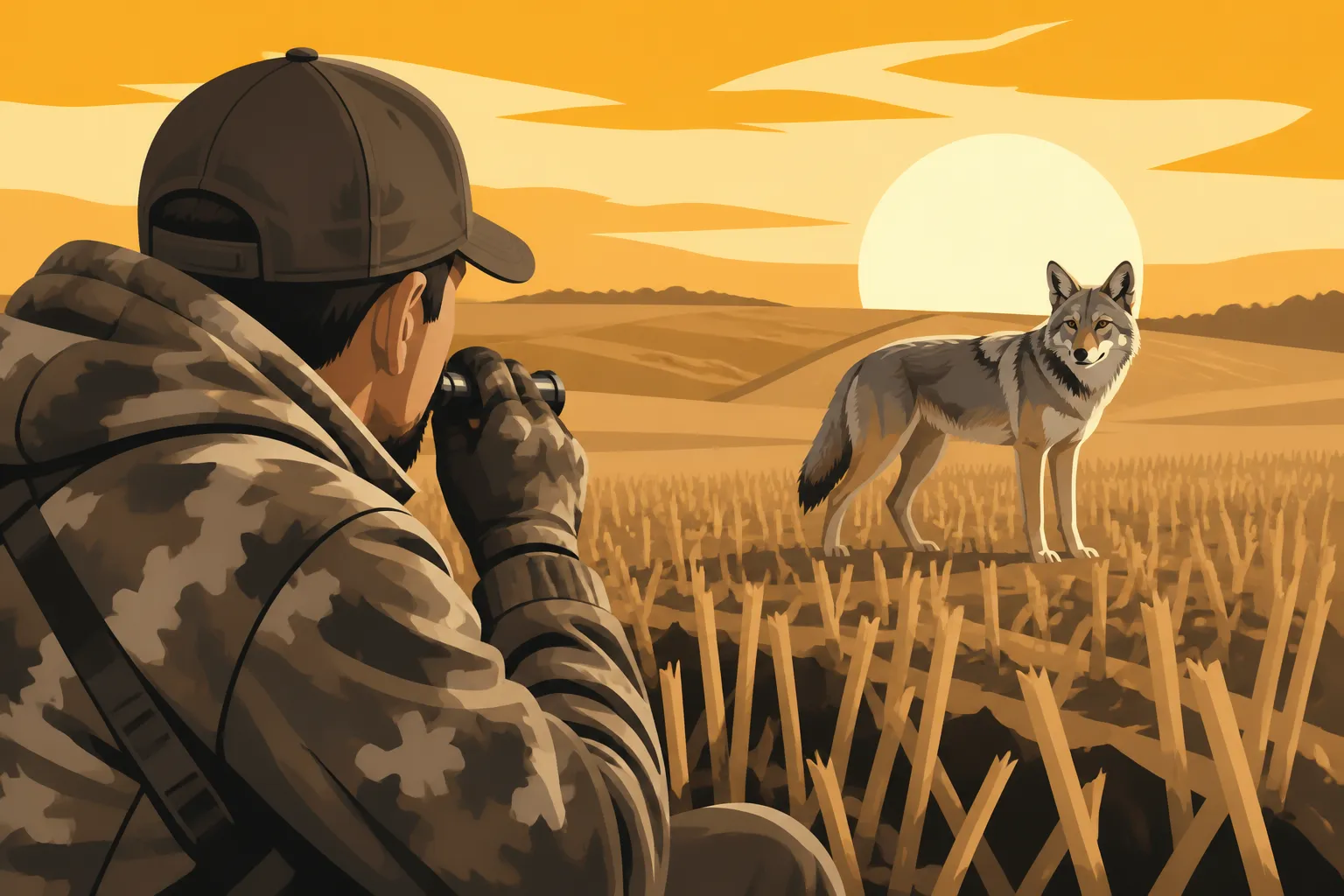
There's nothing quite like the rush of a coyote charging into your call, especially when you're perched on the edge of a vast Alberta stubble field, the wind whipping past your ears. Many hunters get frustrated with coyotes in these open environments, feeling exposed and like the wily canines always have the upper hand. You pour your heart and soul into a setup, only for the coyotes to hang up a quarter-mile out, or simply melt away unseen. This guide is all about turning those frustrations into success, diving deep into the specific strategies and tactics you need to effectively call coyotes in Alberta's challenging stubble country.
Why Stubble Fields are Coyote Havens and Prime Hunting Hotspots
Alberta's agricultural landscape, with its endless stretches of stubble fields, might seem like a barren wasteland to the uninitiated. But for a coyote, these fields are a vibrant, bustling pantry, especially once the harvest is done. Understanding why coyotes gravitate to these areas is the first step in calling them effectively.
The Allure of Abundance: Food and Shelter in the Open
Once the combines have rolled through, leaving behind a sea of golden or brown stubble, these fields become a buffet for small rodents. Mice, voles, and even ground squirrels find ample cover and leftover grain, making them an easy meal for opportunistic coyotes. Think about it: a coyote doesn't have to work as hard to find food here as it might in thick bush. They can silently patrol, listening for the rustle of a vole or catching the scent of a rodent highway beneath the chaff. These fields are literal breadbaskets for their prey, and where the prey goes, the predators follow. During the late fall and into winter, as natural cover diminishes elsewhere, stubble fields continue to offer consistent food sources, drawing coyotes from surrounding areas.
Beyond just food, stubble offers a degree of thermal cover. While it might not seem like much to us, even a few inches of straw can break the wind and help a coyote conserve energy on a frosty morning. They'll often bed down in shallow depressions or find solace along the edges where stubble meets taller vegetation like a shelterbelt between two fields or a willow run. These areas provide just enough concealment to feel secure while still being able to watch for danger or spot their next meal.
Navigating the Open: Coyote Travel and Hunting Lanes
Coyotes are incredibly efficient creatures, and they'll use the easiest paths of travel available. In stubble country, this means field edges, fence lines, and low-lying draws that cut through the landscape. They might follow a tractor path or a slight rise that offers a vantage point. These aren't just random routes; they are calculated hunting lanes and travel corridors.
During the daytime, especially when the sun is bright and predators like great-horned owls are active, coyotes might stick close to the more protective edges of stubble fields, darting out to hunt, then retreating. As dusk approaches or under the cover of night, they become bolder, crisscrossing the fields with more confidence. When you're calling coyotes in Alberta farm country, paying close attention to these subtle topographical features and edge habitats will give you a significant advantage in predicting their approach. Tools like satellite imagery, which you might find on mapping platforms such as GoHunt, can be invaluable for identifying these subtle travel corridors and potential bedding areas before you even set foot in the field.
Mastering Your Setup: Calls, Concealment, and Coyote Cunning
The wide-open nature of stubble fields demands a highly strategic approach to calling. Your setup needs to be almost flawless, accounting for visibility, wind, and the coyotes' natural wariness. This isn't like calling in dense bush where you can hide a multitude of sins.
Choosing and Using Your Calls Wisely
When it comes to calls, you've got a couple of main options: electronic calls and various hand calls. Both have their place, but their deployment in stubble fields requires careful consideration.
Electronic Calls: These are incredibly versatile for stubble hunting. They allow you to place the sound source away from your position, drawing the coyote's attention towards the call and not directly at you. This is a huge advantage in open country. You can set the call 50-100 yards out, increasing the chances the coyote will focus on the sound, giving you more time to get a shot. Modern e-calls, like those from Foxpro or ICOtec, come pre-loaded with a vast array of sounds, from rabbit distress to pup whines, bird distress, and even challenge howls. For stubble, I often lean heavily on rabbit or rodent distress calls initially. If a coyote hangs up, a pup distress or even a few subtle whines can sometimes seal the deal. The ability to adjust volume precisely is also critical when dealing with Alberta's often unpredictable winds.
Hand Calls: Don't underestimate the power of a well-played hand call. They offer unparalleled realism and the ability to instantly change tone and volume. For open stubble, an open-reed call that can generate loud, piercing distress sounds is excellent for getting attention over long distances. Close-reed calls are great for more subtle distress or pup sounds once a coyote is closer. Many experienced callers, myself included, will often start with an e-call to draw attention, then switch to a hand call for the final few hundred yards, making the sound seem more immediate and real to a closing coyote.
Here's a quick comparison:
| Feature | Electronic Calls | Hand Calls |
|---|---|---|
| Placement | Can be placed away from hunter | Sound originates from hunter's position |
| Sound Variety | Vast library of pre-programmed sounds | Limited by skill and specific call type |
| Volume Control | Precise digital control | Manual, dependent on breath and technique |
| Realism | Excellent, especially with quality speakers | Unparalleled when mastered |
| Stealth | Allows hunter to remain stationary/unseen | Requires more hunter movement |
| Cost | Higher initial investment | Generally more affordable |
| Weather | Batteries can be affected by extreme cold | Less sensitive to extreme temperatures |
The Art of Concealment and the Power of Optics
In open stubble, you are a beacon. Even the slightest silhouette can send a wary coyote packing. Your camouflage needs to blend seamlessly with the browns and golds of the field. Full body camo, including a face mask and gloves, is non-negotiable. More importantly, utilize natural breaks in the terrain. A small rise, a shallow ditch, the shadow cast by a distant tree line, or even the subtle curve of a piece of farm equipment can offer precious concealment. If available, a low-profile ground blind can be a game-changer, breaking up your outline and allowing for slight movements without detection.
Optics are your best friends in open country. A good pair of binoculars (10×42 or 12×50) is essential for spotting distant coyotes that might be circling, hesitant to commit. I always bring a spotting scope if I anticipate very long shots or need to confirm an animal's identity at extreme range. In stubble, coyotes often pop up suddenly from a low spot, or appear from behind a distant treeline. Being able to glass constantly and effectively allows you to pick them up before they see you. Remember, a coyote's eyesight is phenomenal, especially for detecting movement.
Setting the Stage: Wind, Sun, and Decoy Placement
Your setup is everything. Always, and I mean always, hunt with the wind in your favor. Coyotes have an incredible sense of smell, and they will circle downwind to scent-check the source of the sound. If your scent cone blows towards their approach, your hunt is over before it begins. Position yourself so the wind is blowing from the target area towards you, or quartering across.
The sun's position is another critical factor. Try to set up with the sun at your back, shining directly into the coyote's eyes. This makes it harder for them to see you and gives you a clear, glare-free view of their approach. Early morning or late afternoon hunts usually offer the best lighting conditions for this strategy.
Decoys, particularly a moving rabbit or bird decoy, can be highly effective in stubble. They provide a visual focal point, diverting the coyote's attention from your position. Place your decoy directly in front of your e-call, or if using a hand call, in a visible spot about 50-75 yards out. A coyote seeing something "dying" or struggling will often commit harder and faster, sometimes ignoring their natural caution. Just like using mapping tools on a GoHunt app to find prime spots, utilizing a decoy correctly can significantly increase your success rate.
Advanced Strategies for Tricky Stubble Coyotes
Even with the perfect gear and a solid understanding of the basics, Alberta coyotes in stubble can be incredibly challenging. They've seen it all, and they've developed a sixth sense for danger. This is where advanced tactics come into play.
Reading the Landscape and Anticipating the Approach
Before you even start calling, take a few minutes to truly read the stubble field and its surroundings. Look for any subtle elevation changes – a shallow depression, a gentle knoll, or a drainage ditch. These are natural travel corridors and places where coyotes might hold up, using the terrain for concealment. Identify potential entry points like breaks in a fence line, a narrow treeline, or where the stubble meets an unharvested section of field.
Consider the time of day and recent weather. After a fresh snowfall, coyotes are often looking for easy meals, and their tracks will tell a story. If it's very cold, they might be more reluctant to travel long distances across exposed ground. Use your binoculars to scan these "hot zones" before you even emit a sound. Often, you'll spot a coyote already on the move, and you can adjust your setup or call sequence accordingly. Think about how a coyote might react to your call – where would you approach from if you were a coyote trying to get a free meal? This mental exercise is crucial for picking the optimal calling location. Scouting an Alberta WMU before season for these subtle features will pay dividends.
The Nuance of Call Sequences and Silent Periods
Don't just blast a single call for 20 minutes straight. Coyotes are smart, and they'll quickly discern if something feels off. Start with a relatively loud series of distress calls (rabbit or mouse) to grab attention, then taper off. Vary the intensity and duration. Think of it like a story: the initial frantic distress, followed by diminishing cries, maybe a few whimpers, then silence.
Crucially, incorporate silent periods into your sequence. After 60-90 seconds of calling, go completely silent for 2-3 minutes. This is often when a wary coyote, already attracted by the sound, will try to pinpoint the source. They might expose themselves more, trying to get a visual. This is your window of opportunity. During these silent lulls, scan every inch of the field with your binoculars. If you spot a coyote, you can then decide to resume calling softly, or remain silent if it's already committed. Sometimes, the most effective call is no call at all. You can even try using a series of grunt calls late in Alberta's rut (though for deer, the principle of reading animal response applies to coyotes too).
Dealing with Large Properties and Access Challenges
Alberta's agricultural landscape often means vast tracts of private land. Gaining access is paramount. Always, always get private land permission in Alberta before stepping onto a field. A friendly knock on the door, explaining your intentions, and offering to help with predator control often goes a long way. Building relationships with landowners is crucial for long-term success.
Once you have permission, you might be faced with properties so large you can't cover them all on foot. This is where mapping tools shine. Use apps like those offered by GoHunt or Alberta's own Recreational Access Mapping Tool to identify key features – shelterbelts, draws, abandoned buildings, or even areas where different crops meet. These tools, along with your own scouting, help you pinpoint the most productive areas. Sometimes, if the property is truly massive, you might need to make multiple setups, working different sections of the field throughout the day, ensuring you're covering potential travel routes and bedding sites. Remember, coyotes can be found anywhere from a frozen slough crossing to the middle of an open stubble field, so flexibility is key.
Year-Round Stubble Calling Considerations
While stubble calling is often associated with fall and winter, coyotes are present in these areas year-round, and your tactics might need to shift with the seasons. Understanding these seasonal nuances can keep you productive.
Fall and Winter: Prime Time for Stubble Action
The post-harvest period, from late fall through winter, is arguably the best time for calling coyotes in stubble. Food sources are abundant, but as snow accumulates and temperatures drop, coyotes become more actively predatory and less cautious. Their needs for calories increase, making them more likely to respond to a distress call.
During late fall, you might find coyotes lingering in fields of swathed grain at dusk, enjoying the easy pickings before heavy snow. As winter deepens, coyotes will stick to routes that offer less resistance, like plowed roads or the tops of snowdrifts, making their movements a bit more predictable. Pay close attention to recent snowfall; fresh tracks can reveal where coyotes are actively hunting. However, be prepared for hunting Alberta winter weather safely, as conditions can change rapidly and extreme cold affects both you and your gear.
Spring and Summer: Different Challenges, Different Rewards
Even though stubble fields might be covered in green growth by spring or summer, coyotes are still around, albeit with different priorities. In spring, you're dealing with denning coyotes, and they'll be fiercely protective of their pups. Pup distress calls can be very effective, often drawing in both the male and female. However, exercise caution and respect during this sensitive time. Avoid disturbing dens, and always be aware of local regulations regarding hunting during breeding and denning seasons.
Summer calling can be productive, especially in early morning or late evening when temperatures are cooler. Coyotes are often focused on raising their young and will respond aggressively to calls that sound like a threat to their pups or an easy meal for themselves. At this time, coyotes might be feasting on young gophers or other small mammals. The taller green growth might provide more concealment for the hunter, but also for the coyote, making visual spotting a bit tougher. This is when patience and strategic placement become even more critical. Understanding what coyotes do to Alberta fawns in spring and early summer also highlights why predator control is important in agricultural and deer-rich areas.
Disclaimer
Hunting and trapping regulations can change frequently. Always consult the most current Alberta hunting regulations and local bylaws before heading out. Ensure you understand and adhere to all licensing requirements, season dates, bag limits, and ethical hunting practices. Safety should always be your top priority.