Grunt Calls Late in Alberta’s Rut
There's nothing quite as frustrating as feeling like the whitetail rut is "over" when your tags are still active and the snow is flying. Many hunters pack it in once the frantic chasing of early November slows, thinking the deer have gone dormant. But the late rut, generally from mid-November well into December here in Alberta, offers unique opportunities if you understand how to adapt your tactics, especially when it comes to using grunt calls. This guide will walk you through the nuances of grunt calling during this often-overlooked phase, helping you understand deer behavior and how to adjust your approach for success.
The Shifting Whitetail Mindset in Late Rut
When those first major snowfalls hit and the mercury drops, it feels like a different world from the chaos of the peak rut. But don't let the calmer atmosphere fool you; whitetail bucks are still on the move, driven by a primal urge that hasn't quite faded. Their priorities shift, though, and understanding this change is critical to effective grunt calling.
Understanding Post-Peak Rut Behavior
After the intense, all-out chasing and fighting of the primary rut, many bucks are exhausted. They've lost significant body weight, and their primary focus for a short period might be to feed and recover. However, not all does breed during the initial window. There are always does that come into estrus later, or "second-cycle" does, approximately 28 days after their first unbred heat. These late-estrus does are the driving force behind the late rut. Bucks, especially mature ones, know this and will continue to cruise, albeit often more subtly, looking for these last receptive females. You might not see the frenzied, wide-open chasing you witnessed during the first half of November, but the search is definitely on. It's a quieter, more calculated hunt for love.
Impact of Hunting Pressure and Cold Weather
By late November and early December, whitetail deer in many of Alberta's popular WMUs have seen their fair share of human activity. Pressure from early archery seasons to the peak of the rifle rut has made them considerably warier. This increased wariness means they're less likely to respond to aggressive, non-stop calling. They've heard it all before, and they've learned to associate certain sounds with danger. Add in the biting cold of Alberta's late season, and deer will prioritize conserving energy. They're not going to run half a mile across an open field to investigate a call unless they're absolutely convinced it's a hot opportunity. This means your calling needs to be much more subtle, realistic, and strategically placed. Knowing how to adapt your approach to the cold and the increased pressure is key to success when Hunting Deep Cold Late in the Season.
The Role of Remaining Estrus Does
The late rut is all about those few, elusive does still cycling. A mature buck knows he has a dwindling window to breed, and if he hasn't locked down a doe or two yet, he's still intensely focused. Younger bucks, especially yearlings, might also be coming into their first estrus cycles, adding to the pool of receptive females. This means while the volume of breeding activity decreases, the intensity for individual bucks finding these does remains high. Your grunt calls during this period should aim to mimic the sounds associated with a buck actively tending a hot doe, or a buck searching for one. It's less about challenging a dominant buck (though that can still work if done right) and more about appealing to his deep-seated desire to find a receptive female before the window closes entirely. Tools like GoHunt can help you identify areas where deer might concentrate during this time, based on historical patterns and habitat features, increasing your chances of finding these late-season hot spots.
Mastering the Grunt Call for Late Season Success
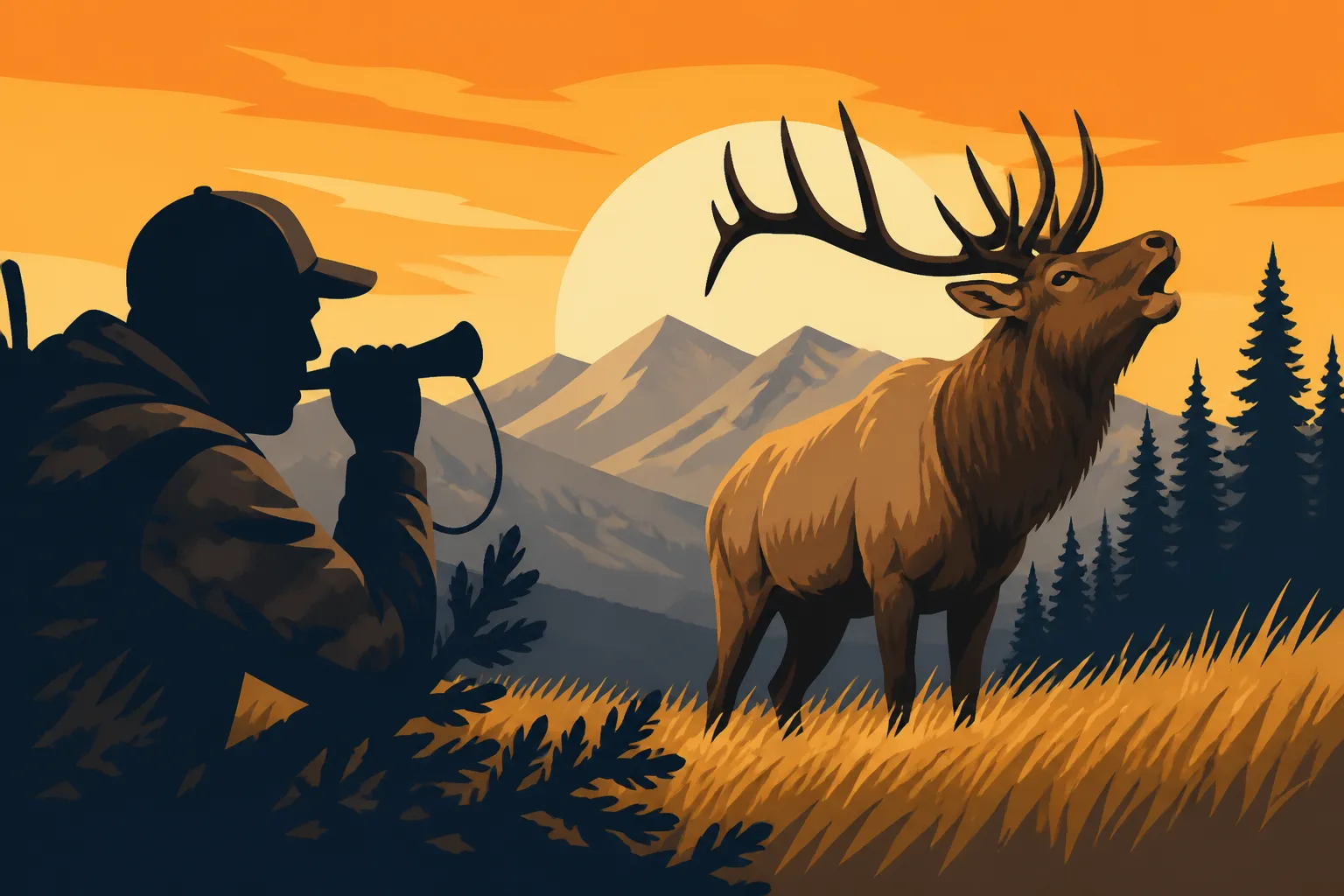
Using a grunt tube in late November isn't just about blowing into it; it's about understanding the specific vocalizations that resonate with a war-weary, late-rut buck. The subtlety and realism of your calls become paramount.
Types of Grunts and Their Efficacy
In the late rut, a variety of grunts can still be effective, but their context changes.
- The Tending Grunt: This is often your most potent weapon. It's a soft, rhythmic grunt made by a buck actively following or tending a hot doe. It's non-aggressive and signals breeding activity. This call plays directly into a late-season buck's desire to find the last receptive does. Mimic a buck that has a doe cornered, almost like he's saying, "She's mine, but there's action here."
- The Social Grunt: A soft, inquisitive grunt that indicates a buck is simply moving through the woods, perhaps looking for company or another doe. This is less aggressive and can pique a curious buck's interest without raising alarm.
- The Basic Buck Grunt: A short, deep "urp" sound. While effective in the peak rut, it needs to be used sparingly and softly in the late season. It implies another buck is in the area but doesn't necessarily challenge him aggressively.
- The Snort-Wheeze: This is an aggressive challenge. While it can work on an older, dominant buck who is still feeling territorial and has energy to spare, it's a high-risk, high-reward call in the late season. A pressured buck might just skirt the area entirely. Use with extreme caution and only if you see a buck acting dominantly.
Here's a quick comparison of common grunt types:
| Grunt Type | Description | Late Rut Efficacy | Ideal Situation |
|---|---|---|---|
| Tending Grunt | Soft, rhythmic grunts of a buck tending a hot doe. | High | Mimicking breeding activity to draw in searching bucks. |
| Social Grunt | Short, inquisitive "urp" indicating presence or curiosity. | Medium-High | Drawing in curious bucks without aggression. |
| Basic Buck Grunt | A simple, deeper "urp" indicating a buck's presence. | Medium | Subtle presence, less challenging. |
| Snort-Wheeze | Explosive, aggressive vocalization signaling a challenge. | Low-Medium | Only for highly aggressive, dominant bucks. High risk. |
| Estrus Bleat (Doe) | Soft, drawn-out bleat of a receptive doe. (Often from a different call) | High | Signifies a receptive doe; often used with grunts. |
Volume and Frequency Adjustments
This is perhaps the biggest departure from peak rut calling. Forget the loud, frequent calling that might have worked earlier in the month. In the late rut, less is almost always more.
- Volume: Keep it soft. Imagine a buck grunting naturally in the woods—it doesn't carry for miles. You want to sound like a deer within his hearing range, not an emergency siren. Use enough volume to carry through the quiet, cold air, but not so much that it sounds unnatural or alarming.
- Frequency: Be patient and wait for a response. A series of 2-3 soft tending grunts, followed by a minute or two of silence, then perhaps another series. If nothing, wait 15-20 minutes before trying again. Blind calling (calling without seeing deer) should be done sparingly, perhaps every 30-45 minutes. If you spot a deer, adjust your frequency to their reaction. Remember, bucks are often recovering, so energy conservation is key, and they're less likely to expend energy investigating a sound if they don't have to.
Situational Calling: Responsive vs. Blind Calling
Understanding when to call, and how, depends heavily on whether you've spotted a buck or are trying to coax one in blindly.
- Responsive Calling: This is your bread and butter in the late rut. If you see a buck cruising, especially if he looks like he's searching, that's your cue. Start with a soft social grunt or a tending grunt. Watch his reaction closely. If he stops, looks your way, or even takes a step in your direction, you've got his attention. Be prepared for him to circle downwind. If he turns and walks away, a very soft, questioning grunt might sometimes stop him, but don't get aggressive. The goal is to make him think he's missing out on something.
- Blind Calling: If you're sitting on a good travel corridor or a likely bedding area, blind calling can be effective, but it needs to be disciplined. Choose locations where you have good visibility and an escape route for deer to approach from without busting you. A series of 2-3 tending grunts every 30-45 minutes, perhaps with a soft estrus bleat, is a good starting point. The idea is to plant the seed of a hot doe in the area, not to scream for attention. Consider the wind carefully when blind calling; you want the sound to carry to potential bedding areas without blowing your scent directly to them. This often means sitting tight and letting the deer come to you, especially in those prime late-season areas like a Hunting a Willow Run in Farm Country.
Strategic Deployment: When and Where to Grunt Call
Location and timing become even more critical during the late rut. You're not just hoping to intercept a buck in full sprint; you're trying to appeal to his very specific, dwindling motivations.
Prime Locations for Late Rut Grunting
Late rut bucks are often found in areas that offer good cover, thermal protection from the cold, and proximity to food sources. They're trying to conserve energy while still searching for does.
- Bedding Areas: Deer will often bed in the thickest cover available, especially on north-facing slopes or in dense conifers that offer protection from chilling winds and snow. Calling near the edges of these bedding areas, especially during midday, can be effective. Bucks will often cruise these edges looking for does ready to come out and feed.
- Food Sources: As winter sets in, food becomes a primary motivator. Standing corn, swathed grain fields, and even willow thickets with browse can draw deer. Setting up on the downwind side of these food sources, especially in the late afternoon, and using soft tending grunts can draw in bucks that are heading to feed or checking for does already there.
- Thermal Cover: Look for areas with dense evergreens, south-facing slopes, or deep coulees that block the wind and capture sunlight. These spots provide thermal refuge, and deer will move through them. A well-placed stand in a sheltered valley or a deep bush pocket can be a goldmine. Using GoHunt to identify these micro-climate areas on a topo map can provide a significant advantage. Don't underestimate the draw of sheltered areas, particularly when Hunting Whitetails at Thirty Below.
Timing Your Calls with Deer Movement
The daily movement patterns of deer shift with the late rut and colder weather. Activity might be slightly prolonged in the mornings and evenings, but midday can also be surprisingly productive as deer move between bedding and feeding areas, or simply relocate for thermal comfort.
- Early Morning: As the sun rises and temperatures begin to climb slightly, deer will move off food sources and back towards bedding. A few soft grunts just after first light can intercept bucks making these movements.
- Midday: Don't dismiss the middle of the day. Bucks are often still cruising or relocating between bedding areas. A well-timed series of soft grunts around 10 AM to 2 PM, particularly near dense cover or transition lines, can catch a buck off guard. This is often when a mature buck, feeling less pressured, might feel secure enough to investigate a potential breeding opportunity.
- Late Afternoon: As evening approaches, deer again start moving towards food sources. Grunt calling during the last 1-2 hours of daylight, mimicking a tending buck, can be very effective as bucks search for those last estrus does before settling in for the night.
Integrating Calls with Decoys and Scents
Grunt calls are powerful on their own, but they become even more convincing when paired with other tools that appeal to a buck's senses of sight and smell.
- Decoys: A single doe decoy, especially a bedded or feeding one, can be incredibly effective when combined with tending grunts. The visual cue of a relaxed doe can make your grunts sound far more convincing. Some hunters even add a small buck decoy, but be cautious with aggressive setups in the late rut. The primary goal is to show a relaxed scene that draws in a searching buck. Always position your decoy to offer a clear shot without getting spooked by direct movement.
- Scents: Estrous doe urine, combined with a dominant buck scent, can heighten the realism. Place scent wicks or drippers downwind of your stand or decoy. The combination of visual, auditory, and olfactory cues can be irresistible to a late-rut buck. Be mindful of scent dispersal in cold air; it doesn't travel as far or as strong as in warmer weather, so keep your scents relatively close to your setup. For more advanced tactics, consider Rattling Volume in Open Parkland, which can complement late-season grunting.
Common Pitfalls and Advanced Tactics for Grunt Calling
While grunt calling in the late rut can be incredibly rewarding, there are common mistakes hunters make. Understanding these and employing advanced tactics can truly elevate your success.
Avoiding Overcalling and Spooking Deer
The number one mistake in the late rut is overcalling. Remember, these bucks are pressured and wary. A buck that hears aggressive, continuous calling will likely assume it's a hunter and skirt the area.
- Be Patient: Let your calls "marinate" in the woods. Give a buck ample time to hear, process, and decide to investigate. He might not come charging in; he might circle widely, approach slowly, or stop just out of sight.
- Read the Deer: If a buck hears your call and stops, looks, or wags his tail, he's interested. If he spooks, flags, or disappears, you've done too much or sounded unnatural. Learn to recognize these subtle cues. A slight head tilt, an ear swivel, or a slow walk can all indicate curiosity. If he locks up and stares directly, ease off the calls.
- Use Cover: Ensure you're well-hidden. A buck approaching a call is looking for the source. If he spots you, the jig is up. Ensure your setup provides excellent concealment and minimizes your silhouette. This is crucial when Hunting a Cutline Intersection for Whitetails, where visibility can be both a blessing and a curse.
Adapting to Specific Alberta Environments
Alberta is diverse, from the wide-open prairie to dense boreal forests and rolling foothills. Your calling strategy needs to adapt to the specific environment you're hunting.
- Prairie/Parkland: In more open country, sound travels further, but so does your scent. Keep calls very soft and use the landscape (coulees, shelterbelts) to your advantage. A buck might hear you from a distance and circle you completely downwind. Be prepared for long-range approaches and adjust your setup accordingly. Hunting a Shelterbelt Between Two Fields can be an excellent late-season spot in these areas.
- Boreal Forest/Foothills: Dense timber absorbs sound, so you might need slightly more volume than in open country, but still be judicious. Focus on calling in areas with good sightlines like clearings, cutlines, or along logging roads. Bucks will often travel these corridors, making them ideal for calling setups. The thick cover also helps mask your movements and scent more effectively. Consider the specific challenges when Hunting Alberta's Aspen Parkland Bluffs, where dense pockets meet open fields.
Reading Deer Responses and Adjusting Your Strategy
The most effective callers are not just good at making sounds, but excellent at listening and observing. Every deer's response is a piece of information.
- No Response: If you get no response after several calling sequences over an extended period, the deer might not be in the area, or they're just not interested. It's time to move to a new spot. Don't cling to a non-productive stand.
- Hesitant Approach: A buck that hangs up out of range or circles extensively is telling you he's curious but cautious. This is where patience is key. A very soft, pleading estrus bleat from a doe call, or a single soft tending grunt, might be enough to tip him over the edge. Avoid more aggressive calls.
- Direct Approach: If a buck comes in hard and fast, he's either very hot or very aggressive. Be ready for the shot. Often, this happens with younger, less experienced bucks, or a truly desperate older buck.
- Changing Calls: If you've been using a tending grunt and a buck seems interested but won't commit, sometimes switching to a soft social grunt or a doe bleat can change his mind. It shows another "deer" in the area, which can increase his comfort level or pique a different curiosity. Understanding Reading Whitetail Sign in Alberta Aspen Bluffs will also help you determine the most active areas for calling.
By honing your understanding of late-rut whitetail behavior, refining your calling techniques, and strategically deploying your grunts, you can unlock incredible opportunities in Alberta's frosty late season. It takes patience, observation, and a willingness to adapt, but the reward of drawing in a mature buck when others have given up is truly unmatched.
Disclaimer
Hunting is a regulated activity. Always consult the most current Alberta hunting regulations and obtain all necessary licenses and permits before heading afield. Safety should always be your top priority.