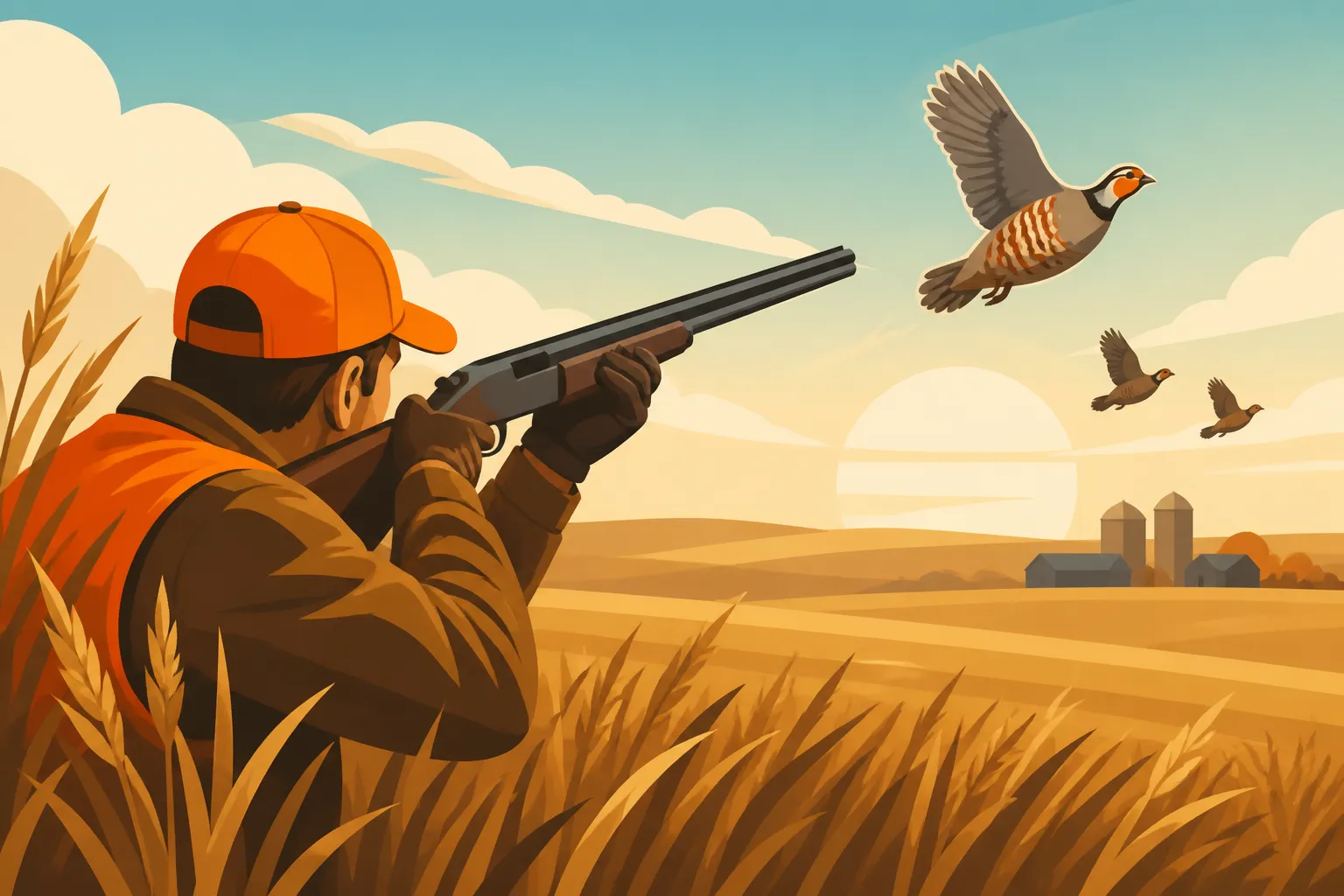
Hunting Hungarian Partridge on Alberta Farms
Hunting Hungarian partridge in Alberta can be one of the most rewarding, yet utterly frustrating, pursuits for an upland bird hunter. These clever little birds, often called "Huns," have a knack for disappearing into the landscape, bursting out unexpectedly, or simply running just out of range. If you've spent more than a few days walking vast fields and only getting a fleeting glimpse of these grey ghosts, you know the challenge. This comprehensive guide will delve into their habits, prime locations, and effective strategies to help you fill your vest on Alberta's farmlands.
Understanding Hungarian Partridge in Alberta Farm Country
Before you can effectively hunt Hungarian partridge, you need to think like one. These birds are masters of their environment, utilizing the unique blend of agricultural fields and natural cover that defines much of Alberta's prime farming regions. They're not just randomly scattered; they have specific preferences that, once understood, can dramatically increase your success rate.
Their Preferred Habitat and Food Sources
Hungarian partridge thrive in open agricultural landscapes, particularly those with a mosaic of cultivated fields, stubble, hay lands, and interspersed grassy edges. They are primarily ground-dwellers and prefer areas where they can feed on waste grain, seeds, and insects while remaining close to escape cover. You'll often find them favouring fields with unharvested crops, dense stubble, or even patches of volunteer grain that provide both food and concealment. Unlike some other upland birds, Huns don't typically dive into thick timber. They prefer the edges, the shelterbelts, and the grassy draws. Think about where deer might bed down for a quick nap; sometimes, Huns will be in similar, slightly less dense spots. They're incredibly hardy, able to withstand bitter cold, but they need access to food that isn't completely buried under snow.
During the fall, their diet shifts heavily towards seeds and grains. Waste wheat, barley, canola, and even some wild weed seeds are high on their menu. A freshly swathed barley field or a field of standing canola can be a magnet for these birds, offering both abundant food and excellent camouflage. As the season progresses and temperatures drop, they'll often concentrate around these reliable food sources, moving as coveys in search of the easiest meals. This understanding of their diet is crucial for scouting, as it directs your focus to the most productive areas.
Seasonal Movements and Behavior
Hungarian partridge behavior changes throughout the hunting season, influenced by weather, food availability, and hunting pressure. Early in the season, when temperatures are mild, Huns might be more spread out across fields, and coveys can be smaller and less tightly knit. They'll often feed in the mornings and late afternoons, spending the midday hours loafing in light cover. This is when they can be particularly challenging to pinpoint, as their range seems vast.
As winter approaches and the days shorten, Huns begin to covey up more tightly, sometimes forming groups of 10-20 or even more birds. This is a survival strategy, as larger groups offer more eyes for spotting predators and more body heat for cold nights. They become more predictable in their movements, often having established feeding and roosting patterns. A covey might feed in a particular stubble field, then retreat to a nearby shelterbelt or dense willow run for protection. Understanding this shift is vital, as a tactic that worked in September might be completely ineffective in November. Pressure from hunters can also make them incredibly wary, causing them to flush at longer distances or run extensively before taking flight. This is where a good scouting tool like GoHunt or a detailed paper map of a WMU becomes invaluable, helping you identify potential refuge areas.
Key Hunting Strategies for Farmland Huns
Hunting Hungarian partridge successfully on Alberta farms requires a blend of patience, persistence, and a tactical approach. These aren't birds you typically "stumble upon" and shoot; they demand a planned effort.
Walking Up Birds in Cover
The most common and often effective strategy for Huns, especially for hunters without dogs, is walking up birds in prime cover. This involves systematically covering areas where you expect birds to be feeding or loafing. Think about it: a small covey of partridge isn't going to spend its entire day in the middle of a barren stubble field. They need protection. Your focus should be on the edges of fields, especially where they meet denser vegetation like shelterbelts, treelines, or even overgrown ditches.
When walking, maintain a slow, deliberate pace. Huns are notorious for holding tight, especially if they feel well-camouflaged. They'll often let you walk right past them before exploding into flight, giving you a heart attack in the process. Walk in a zig-zag pattern or make wide sweeping turns to cover as much ground as possible. Pay particular attention to areas of taller grass, weed patches, or even shallow depressions in the field, as these can offer just enough cover for a covey to hunker down. If you're hunting with a partner, spread out enough to cover a wider swath of ground but stay within earshot and visual range for safety. Remember, these birds often fly low and fast, so be ready for quick shots. Learning to anticipate where birds might flush from is a skill honed over many miles of walking.
Using a Pointing Dog Effectively
If there's one tool that truly elevates Hungarian partridge hunting to an art form, it's a well-trained pointing dog. Dogs with good noses and a strong point can locate coveys that would be completely missed by the human eye, holding them until you walk in for the flush. This is where the magic happens – seeing a dog lock up on point, tail rigid, nose to the wind, is a thrilling experience. A good pointing dog understands the nuances of how birds hold and move, and they'll adjust their approach accordingly.
For Huns, you want a dog that works a reasonable distance out, but not so far that you can't get to the point before the birds get nervous and run or flush wild. A medium-range quartering pattern is ideal. The dog should cover the ground efficiently, checking all the likely cover, such as the edge of a standing canola field or a grassy drainage. When the dog goes on point, approach cautiously from behind, being ready for the flush. Huns, unlike some pheasants, tend to flush as a covey, so you'll often have multiple birds taking to the air at once. This offers exciting, but challenging, shooting opportunities. Training your dog to hold steady to wing and shot is paramount for safety and for maximizing your chances at follow-up birds if the covey splits. Many hunters find specific breeds excel at this, with English Pointers, German Shorthaired Pointers, and Brittanys being popular choices for Alberta's open landscapes. If you're interested in refining this skill, consider exploring resources on "Using a Pointing Dog on Alberta Prairie".
Hunting Shelterbelts and Field Edges
Shelterbelts and field edges are absolute magnets for Hungarian partridge on Alberta farms. These linear strips of trees, shrubs, and dense grass provide crucial cover from predators, strong winds, and winter weather. They also serve as travel corridors and roosting sites. When you're scouting, either physically or using mapping tools like those found on GoHunt, prioritize these features. They often run for hundreds of yards, bordering cultivated fields and offering a distinct change in elevation or vegetation density that Huns find irresistible.
When hunting a shelterbelt, a common strategy is to have one or two hunters walk through the cover while others walk parallel on the field side, anticipating birds flushing out. The birds will often try to run the length of the shelterbelt before flushing, so a slow, methodical push is key. Don't rush it; let the cover be thoroughly worked. If you're hunting alone, walk the edge of the shelterbelt, sometimes weaving in and out slightly, always expecting a flush. Pay attention to any breaks in the cover, fence lines, or small pockets of dense weeds, as these can be natural escape routes or holding areas. Similarly, the edges where a stubble field meets a hay field or pasture can be incredibly productive, as Huns move between feeding grounds and secure loafing cover. These transitions are where opportunities often arise.
Gear and Equipment for Success
Having the right gear won't guarantee a limit of Huns, but it will certainly make your hunt more comfortable, safer, and ultimately more enjoyable. Upland hunting is often about covering ground, so durability and comfort are key.
Shotguns and Ammunition Choices
For Hungarian partridge, a light, fast-swinging shotgun is generally preferred. Huns are quick, often flushing at unexpected angles, so a gun you can shoulder and point naturally is a huge asset. The 12-gauge and 20-gauge are the most popular choices among Alberta upland hunters. A 20-gauge, in particular, offers a nice balance of power and reduced recoil, making it a great option for those long days of walking or for younger hunters. Over/under or side-by-side shotguns are classic choices, but pump-action and semi-automatic models are also perfectly capable. The important thing is comfort and familiarity with your firearm.
Ammunition choice is also critical. For Hungarian partridge, smaller shot sizes are ideal. #6, #7, or even #7.5 lead shot (where legal for upland game) provides a dense pattern that's effective on these relatively small birds without excessive pellet count. You want enough pellets to ensure a clean kill without over-penetrating and ruining meat. Non-toxic shot is not required for upland birds in Alberta, but if you're hunting areas where waterfowl might also be present, or simply prefer to use it, ensure you choose appropriate sizes like steel #4 or #3, or bismuth #5. Always carry a good supply of shells, as Huns often offer multiple shot opportunities in a covey flush, and you'll want to be prepared.
Essential Clothing and Footwear
Alberta weather can be notoriously unpredictable, especially during the fall hunting season. Layering is your best friend. Start with a moisture-wicking base layer, add an insulating mid-layer (fleece or synthetic down), and top it with a durable, windproof, and water-resistant outer shell. Blaze orange is a mandatory safety requirement in Alberta for big game hunting, but it's also highly recommended for upland bird hunting, especially when hunting with partners or in areas with other hunters. A blaze orange vest or hat will make you visible and safe.
Footwear is arguably the most important piece of gear for a Hun hunter. You'll be covering many miles over uneven terrain, through stubble fields, and possibly wet grass. A comfortable, supportive, and waterproof pair of upland hunting boots is non-negotiable. Look for boots with good ankle support, durable outsoles for traction, and a comfortable fit that won't cause blisters. Many hunters prefer boots that come up past the ankle to offer better support and keep out debris. Wool or synthetic blend socks are also crucial to keep your feet dry and prevent chafing. Don't forget a good pair of gloves for warmth and protection from thorns, and a sturdy game vest with large pockets for shells, water, and, hopefully, birds!
Navigating Access and Regulations
Hunting on Alberta's agricultural lands almost always involves private property, which means understanding and respecting access rules is paramount. Moreover, staying within the law ensures a responsible and sustainable hunting future.
Getting Permission on Private Land
This is perhaps the single most important aspect of hunting Hungarian partridge on Alberta farms: getting permission. Unlike Crown land, which is generally open to public access, private land requires explicit permission from the landowner. Trespassing is illegal and gives all hunters a bad name. Before heading out, identify the land you want to hunt using mapping apps or land ownership maps. Websites like GoHunt might offer landownership data, but for Alberta, government-specific mapping tools and the Alberta Land Titles office are the most accurate for finding landowner details.
The best approach is a polite, face-to-face request. Knock on doors, introduce yourself, explain that you're an upland bird hunter, and ask if they would allow you to hunt partridge on their land. Be respectful, offer to share some of your harvest, and always leave the property as you found it. Emphasize that you will close all gates, be careful of livestock, and drive only on designated trails. Many landowners are receptive to hunters who are courteous and demonstrate respect for their property. Building these relationships can open up fantastic hunting opportunities year after year. For a more detailed guide on this crucial step, check out our article on "Asking an Alberta Landowner for Permission".
Understanding Season Dates and Limits
Alberta's hunting regulations are set by Alberta Fish and Wildlife and are updated annually. Before every season, it is your responsibility to review the current hunting regulations available online or at license vendors. This is where you'll find specific season dates for Hungarian partridge, which can vary slightly by Wildlife Management Unit (WMU). Generally, the season for upland birds like Huns opens in September and runs through to December or even January, offering a good window of opportunity.
The daily bag limit for Hungarian partridge in Alberta is usually quite generous, often around 8-10 birds per hunter per day, with a possession limit of twice the daily bag. It's important to understand the difference between bag and possession limits. Bag limit refers to how many birds you can harvest in one calendar day, while possession limit refers to the total number of birds you can have in your possession at any given time, including those at home. Always ensure you have a valid Alberta Wildlife Certificate and a Game Bird Licence before heading out. Information on "The Hungarian Partridge Daily Limit" and broader "Alberta Game Bird Seasons and Limits" can be found in the official regulations.
Here's a simplified table illustrating common season ranges and limits for Hungarian Partridge in Alberta (always check current regulations):
| Category | Typical Range | Notes |
|---|---|---|
| Season Dates | Early September – Late December/Early January | Check specific WMU regulations for exact dates |
| Daily Bag Limit | 8-10 birds per day | Applies to the number of birds harvested in one calendar day |
| Possession Limit | 16-20 birds | Total number of birds a hunter can possess at any given time |
| Required Licences | Wildlife Certificate, Game Bird Licence | Must be purchased annually; physical or digital copy on hand |
| Shot Type | Lead shot permitted | Non-toxic not required for Huns, but consider for mixed bags |
| Blaze Orange | Recommended | Not legally mandatory for birds, but advised for safety |
Reading the Landscape and Bird Sign
Successful Hungarian partridge hunting isn't just about walking fields; it's about interpreting the subtle clues the landscape offers. The more you learn to "read" the ground, the more efficient and productive your hunts will become.
Identifying Prime Hun Holding Cover
Huns are creatures of habit and will often use similar types of cover year after year. As mentioned, field edges and shelterbelts are prime. But look closer. What kind of vegetation makes up that shelterbelt? Is it a thick stand of caragana or willow that provides dense, low cover, or is it sparse poplars with open ground beneath? The denser, lower cover is often more attractive to Huns. Pay attention to how the sun hits certain areas and how that might offer warmth on a cold day, or shade on a mild one. A slight rise in a field, even just a few feet, can offer a vantage point for birds to spot predators and some protection from the wind.
Also, don't overlook "neglected" areas. Old farmsteads, abandoned machinery, clumps of weeds around old corrals, or even uncultivated corners of fields can provide pockets of ideal cover. These spots often hold seeds and offer a safe haven from agricultural activity. Water sources, even small ones like dugouts or drainage puddles, can also attract birds, especially in dry conditions. By using tools like satellite imagery, such as those available through a subscription mapping service or even Google Earth, you can identify these key features before you even step foot on the ground. For a deeper dive into this, consult resources on "Scouting With Satellite Imagery in Alberta".
Interpreting Tracks and Droppings
While Huns are small and their sign can be subtle, learning to identify their tracks and droppings can confirm their presence and give you clues about their recent movements. Partridge tracks are small, typically 1.5 to 2 inches long, with three toes pointing forward and a smaller hind toe. They'll look like miniature chicken tracks. You'll most likely find these in soft dirt along field edges, muddy spots near water, or in light snow. If you see a cluster of tracks heading in a consistent direction, it's a good indicator that a covey has recently moved through that area.
Their droppings are small, cylindrical, and usually dark, resembling tiny pellets or scat from other small ground-dwelling birds. You'll often find them concentrated in areas where birds have roosted or fed for an extended period. Look for them along the base of shelterbelts, under thick shrubs, or in dense grassy patches. Fresh droppings are soft and moist, indicating recent activity, while dry, crumbly droppings suggest older presence. While not always easy to find, spotting fresh sign can be the confirmation you need to focus your efforts in a particular area rather than randomly walking miles of unproductive ground. This attention to detail is part of the experience, just like meticulously scouting for whitetail deer by "Reading Whitetail Sign in Alberta Aspen Bluffs".
Post-Hunt Considerations
Bringing a hunt to a satisfying close involves more than just pulling the trigger. Proper care of your harvested birds ensures the meat is delicious, and responsible practices reflect well on all hunters.
Field Care and Processing
Once you've successfully harvested a Hungarian partridge, proper field care is essential to ensure the quality of the meat. Huns are small, so they cool down relatively quickly, but on warmer days, you'll want to take steps to prevent spoilage. If you're hunting in the early season when temperatures are still mild, immediately gutting the bird can help it cool faster. Remove the entrails and wipe out the cavity with a clean cloth or grass. On colder days, this might not be as critical, but keeping the birds out of direct sunlight and allowing air circulation is always a good idea. Many upland vests have a mesh game bag specifically designed for this purpose.
Once you're back home, it's time for processing. The most common method is breasting out the birds, which means removing just the breast meat. Simply pluck the feathers from the breast, make an incision down the breastbone, and carefully peel the meat away from the rib cage. You can also pluck the entire bird if you want to utilize the legs and thighs, though these are quite small on Huns. Rinse the meat, pat it dry, and then either cook it fresh, vacuum seal and freeze it, or consider brining it for a few hours before cooking to enhance moisture and flavour.
Cooking Your Harvest
Hungarian partridge meat is lean, delicate, and has a mild, slightly gamey flavour that is highly prized by gourmets and hunters alike. Because the meat is so lean, it's important not to overcook it, as it can dry out quickly. Quick cooking methods are often best. Pan-searing the breasts with a little butter and herbs, or grilling them quickly, can yield fantastic results.
You can also incorporate partridge into various recipes. They make excellent additions to stews, pot pies, or even wrapped in bacon and baked. Think about preparing them similar to how you would other small game birds or even chicken, but with a lighter hand on the cooking time. A popular method is to quickly sear the breasts until golden brown, then deglaze the pan with a little white wine or chicken broth to create a delicious sauce. Don't be afraid to experiment with different flavour profiles, from classic rosemary and thyme to more adventurous spices. Enjoying the fruits of your labour in the kitchen is a wonderful way to complete the hunting experience.
Disclaimer
Please remember that hunting regulations, season dates, and access rules can change. Always consult the most current Alberta hunting regulations available from Alberta Environment and Parks or at local license vendors before planning any hunting trip. It is your responsibility to understand and adhere to all applicable laws and regulations.