Calling Wolves Along a Frozen Cutline
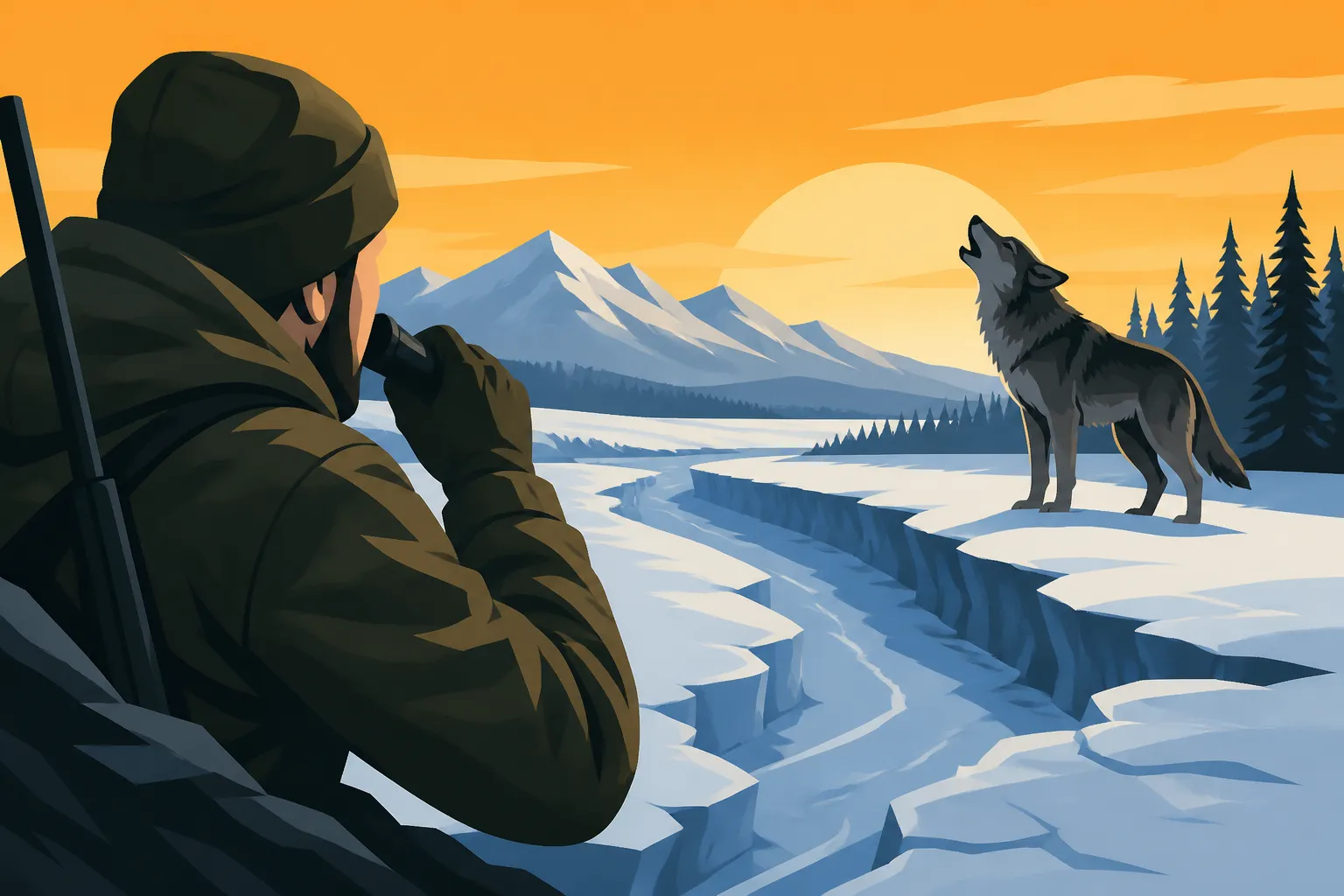
The chilling howls of a wolf pack echoing across a vast, snow-covered landscape are a quintessential sound of the Alberta wilderness. But trying to entice one of these intelligent predators into range, especially along a stark, frozen cutline in the dead of winter, is a challenge that can test the patience and skill of even the most seasoned hunter. This guide is dedicated to dissecting the nuances of calling wolves in these specific, often unforgiving conditions, offering insights to increase your odds of success.
Understanding Winter Wolf Behavior in Alberta
Before you even think about blowing a call, you've got to step into the mind of a winter wolf. These aren't the same animals you might encounter in the lush, abundant seasons of spring or fall. Winter presents a unique set of challenges and opportunities that drastically alter their daily routines and priorities. Understanding these shifts is absolutely critical for anyone hoping to bring a wolf into range.
Wolf Behavior in Deep Winter
When the mercury truly plummets and Alberta's landscape is blanketed in deep snow, wolf behavior changes significantly. They become much more opportunistic, constantly on the move, covering vast territories in search of food. Their metabolism ramps up to handle the extreme cold, meaning they need more calories, more frequently. This makes them incredibly responsive to anything that sounds like an easy meal or a territorial intrusion. In areas like the northern boreal forest or the foothills, where game animals might yard up or be more concentrated, wolves will intensify their patrols. They’re masters of efficiency, using frozen lakes, riverbeds, and, yes, cutlines as travel corridors to conserve energy, especially when the snow gets deep. Think about it: breaking trail in waist-deep snow is exhausting for any animal, so they’ll opt for the path of least resistance whenever possible. This means a well-used cutline becomes their highway.
Dietary Shifts and Scavenging Habits
Winter in Alberta often means a leaner pantry for many animals, and wolves are no exception. While they are still apex predators capable of taking down healthy deer, moose, or elk, they also become prime scavengers. Any animal weakened by the cold, old age, injury, or disease, especially those that might have been hit by vehicles or died of natural causes, becomes a potential meal. This shift is crucial for callers. A distress call mimicking a wounded or dying animal becomes incredibly potent. They're not just looking for a fresh kill; they're keenly attuned to anything that signals an easy meal without a fight. This is why a simple rabbit-in-distress call or the bleat of a fawn can sometimes be more effective than trying to mimic a full-blown elk fight. They might even be actively following a trapper's line, hoping to clean up a carcass or catch a distressed furbearer.
Pack Dynamics and Territory Marking
Wolf packs in Alberta are complex social units, and their dynamics play a huge role in how they respond to calls. In winter, packs often consolidate, meaning you're more likely to encounter multiple animals if you call one in. Their territorial instincts are also heightened. A foreign howl in their territory is a direct challenge, and they'll often respond with their own howls, barks, or even investigate directly to confront the intruder. This is where knowing the local pack's habits can be invaluable. Are they a large, aggressive pack that might rush in? Or a smaller, more cautious group that needs more coaxing? Understanding their general range and movements, perhaps even by observing past tracks, can inform your calling strategy. For more details on these intelligent animals, you might want to read about "Wolf Pack Size in the Boreal" to understand the numbers you might be dealing with.
Reading a Frozen Cutline for Wolf Activity
A frozen cutline isn't just a straight line through the bush; it's a dynamic pathway, a potential hunting ground, and a travel corridor. Learning to read the subtle signs left by wolves on these linear features is paramount to choosing a successful stand location. You can't just pick any spot; you need to find the story the landscape is telling.
Identifying Fresh Tracks and Scat
The beauty of a fresh snowfall followed by a deep freeze is that it often leaves a perfect canvas for tracking. Along a frozen cutline, wolf tracks will stand out. Look for size (wolf tracks are typically larger than a coyote's, often 4-5 inches long, and tend to be in a straighter line, almost like they're walking a tightrope) and depth of print. Fresh tracks, especially those with sharp edges and no snow dusting inside, tell you that a wolf has passed through very recently. Pay attention to the direction of travel – are they heading towards a known deer yard or a beaver pond? Are they coming from a distant ridge? Scat can also provide vital clues. Fresh scat, often tubular and dark, possibly containing hair or bone fragments, indicates recent activity and gives you an idea of their diet. The location of scat can also be a marker; wolves often use prominent points or intersections to deposit their droppings, much like a calling card. Use a tool like GoHunt to mark these findings on your map for future reference; building a history of activity can really pay off.
Locating Crossings and Intersections
Wolves are intelligent and efficient. They won't just walk straight down a cutline for miles without purpose. They're going from point A to point B, often utilizing terrain features, game trails, or other cutlines that intersect their primary travel route. These intersections, especially where two cutlines cross, where a cutline meets a pipeline, or where it drops into a creek bottom, are absolute hotspots. These are natural funnels where animals congregate, and wolves are no different. They represent decision points for the pack, places where they might pause, scent-check, or change direction. A cutline that crosses a major game trail, particularly one leading to a wintering area for deer or moose, is another prime location. Any place where cover meets open ground, or where different habitat types converge, will naturally draw animals, including wolves.
Using Satellite Imagery and Snow Conditions
Modern hunting often starts long before you lace up your boots. Satellite imagery, which platforms like GoHunt provide, is an indispensable tool for pre-scouting. Look for areas where cutlines weave through dense cover, parallel river systems, or lead to open meadows. You can identify potential crossings, bottlenecks, and areas of dense timber where wolves might be bedding during the day. Before you head out, assess the recent snow conditions. Is there a fresh, light dusting that will make tracking easy, or is it a hard, icy crust that might make sound travel difficult? Heavy, wet snow might deter extensive travel, while a firm, frozen base makes for easy going. Pay attention to temperature fluctuations; a warm spell followed by a deep freeze can create an icy crust that makes walking noisy, which means you need to be even more cautious and quiet in your approach. Understanding how the snow affects both your movement and the wolves' travel patterns is key.
Choosing the Right Calls and Techniques
Calling wolves isn't a one-size-fits-all endeavor. Just like calling a whitetail, you need a diverse toolkit and an understanding of when to deploy each strategy. Along a frozen cutline, the acoustics can be vastly different from dense timber, so your approach needs to be adapted.
Distress Calls: Rabbit, Fawn, or Calf
Distress calls are often the bread and butter of wolf calling, especially in winter when hunger is a constant driver. A rabbit-in-distress call is universally recognized by predators as an easy meal. Imagine a rabbit caught in the snow, shrieking for its life – it’s a powerful trigger. Similarly, the bleat of a deer fawn or an elk calf can be irresistible. These sounds often mimic an injured or abandoned young animal, an easy target that requires minimal effort from a hungry wolf. When using these calls, start subtly. Don't blast it at full volume right away. A few short, frantic bursts, followed by silence, allows the sound to carry and gives any nearby wolves time to process. Repeat after 5-10 minutes, varying the intensity. The vast, open nature of a cutline means your sound will travel far, but it can also dissipate quickly, so knowing the wind direction is critical. Remember, the goal is to sound desperate and vulnerable.
Howling Sequences and Barking
Howling is the wolf's primary form of communication, and it can be incredibly effective for enticing a response or drawing them in. A lone howl, mimicking a lost or curious wolf, can sometimes trigger an investigation or a responsive howl from a pack. If you get a response, you can then try a challenge howl, a more aggressive, drawn-out howl that asserts your presence. This can often bring in dominant males looking to defend their territory. Group howls, mimicking a pack, can also work, either by making a lone wolf feel secure enough to approach, or by drawing in a rival pack.
Barks, often a warning or an alarm, are another tool. A short, sharp bark can sometimes mimic a coyote, drawing in curious wolves looking for an easy meal or a rival to chase off. The key with howls and barks is to listen carefully. The way a wolf howls back – its pitch, duration, and whether it’s alone or part of a chorus – can tell you a lot about its intention and proximity. Practicing your howls is important; some hunters prefer open-reed calls for versatility, while others use closed-reed or even electronic versions.
Using Electronic Callers and Decoys
Electronic callers, like those from Foxpro or ICOtec, offer a huge advantage for wolf calling, especially on a cutline. They provide a vast library of realistic sounds – from rabbit distress to various howls and even fighting coyotes – and allow you to control volume and sequence from a distance. The ability to place the caller 50-100 yards away from your position draws the wolf's attention away from you, making it less likely they'll spot your movement. Combine this with a decoy, such as a fluffy coyote or a rabbit, that offers visual stimulation. A moving decoy, even a simple flag tied to a string that you can twitch, can make a huge difference, especially in the open expanses of a cutline where visuals are key. Wolves have exceptional eyesight, and seeing something move in conjunction with a sound can be the final convincing factor. Just remember to check "Wolf Season Dates and Limits" to ensure you're hunting legally and ethically.
| Call Type | Primary Sound Mimicked | Best Situation | Expected Wolf Response | Notes |
|---|---|---|---|---|
| Rabbit Distress | High-pitched screams, squeals | General purpose, hungry wolves, any time of day | Direct investigation, quick approach, intense curiosity | Excellent in cold, high-activity periods. |
| Fawn/Calf Distress | Bleating, crying | Later in winter, areas with ungulates (deer, elk, moose) | Cautious approach, seeking an easy meal, may circle downwind | Can be very effective where wolves target young or weakened prey. |
| Lone Howl | Single, mournful howl | To locate wolves, test for presence, early morning/evening | Responsive howl, curiosity, cautious investigation | Good for initial contact or when seeking a territorial response. |
| Challenge Howl | Aggressive, drawn-out howls | When you know a pack is present, to draw in alphas | Aggressive approach, direct confrontation, territorial defense | Use sparingly, can alert educated wolves to a "fake" challenge. |
| Group Howl | Multiple howls, barking | To sound like a rival pack, stimulate response | Responsive howls, cautious approach, pack consolidation | Can be powerful but might also intimidate smaller packs. |
| Coyote Barks/Distress | Sharp barks, yelps | To mimic a rival predator or easy prey for wolves | Investigation, sometimes aggression towards perceived rival | Wolves may view coyotes as competition or potential food. |
Setting Up for Success Along the Cutline
Once you've done your scouting and have your calls ready, the actual setup on the cutline is critical. Your position, concealment, and readiness are paramount. The open nature of cutlines means wolves can spot you from a long way off, making stealth and smart positioning your best allies.
Strategic Positioning and Wind Direction
This is perhaps the most crucial element of a successful wolf hunt on a cutline. Wolves, like all canids, have an incredible sense of smell. You must, under all circumstances, hunt with the wind in your face or quartering. Never let the wind blow your scent towards where you expect the wolves to come from. Along a cutline, this means understanding the prevailing wind direction and positioning yourself downwind of likely travel routes and intersections. Look for natural breaks in the cutline, a small rise, a cluster of trees, or where the cutline dips slightly into a low spot. Position yourself where you have a good field of view, ideally 100-300 yards in front of you, but also where you have cover behind you. If you anticipate a wolf coming from your right, set up so the wind carries your scent away from that direction. Often, wolves will circle downwind to scent-check the source of a call before committing, so be prepared for them to approach from unexpected angles, often trying to use what little cover the cutline offers. Remember, silence in your approach is key, especially if you're coming in on a quad or side-by-side; park it well off the cutline and walk in. You can also learn more about "Wind in Open Prairie Country" for additional insights, as similar principles apply.
Concealment and Camouflage
On a frozen cutline, natural concealment can be sparse. White camouflage is almost a necessity in a snowy landscape. It's not just about blending in with the trees; it's about disappearing against the snow and sky. Use any available cover to break up your outline: a cluster of small evergreens, a snowdrift, or even the shadows cast by larger trees. A portable blind or white ghillie suit can be incredibly effective. Pay attention to your background; don't position yourself against a dark backdrop if you're wearing white camo, as your outline will pop. If you're wearing full camo, ensure your face and hands are covered, as these are often the first things a wolf's keen eye will pick up. Patience is a virtue, and remaining absolutely still is non-negotiable once you start calling. Even a slight head turn can give you away against the stark winter backdrop.
Shot Placement and Equipment Considerations
When a wolf finally appears, often silently and quickly, you need to be ready. Wolves are tough, resilient animals, and ethical shot placement is critical. Aim for the vitals: a broadside shot to the lung-heart area is ideal. Avoid shoulder shots unless you're absolutely confident in your rifle and marksmanship, as they can be tough to penetrate. Practice shooting in cold weather with your chosen rifle; cold hands, bulky gloves, and stiff clothing can all impact your accuracy. A flat-shooting caliber in the .22-250 to .30-06 range is generally suitable for wolves, providing enough energy for a clean kill at typical calling distances. Ensure your scope is clear and fog-free. Carrying a set of good binoculars is also a must; wolves can appear and disappear quickly, and you'll want to scan the landscape constantly for any sign of movement. Being ready means having your rifle shouldered or in a comfortable rest, safety off, and eye on the target area, long before the wolf is in range. For safety and winter readiness, ensure you have a "Winter Truck Kit for an Alberta Hunt" for any emergencies.
Dealing with Environmental Factors
Alberta winters are legendary for their harshness, and these environmental factors can make or break your wolf hunt on a frozen cutline. Ignoring them is not just a recipe for failure, but potentially for a dangerous situation.
The Impact of Extreme Cold
Hunting in Alberta in deep winter means confronting extreme cold, sometimes well into the -20s or -30s Celsius, or even lower with wind chill. This level of cold doesn't just make you uncomfortable; it affects your gear, your body, and the animals. Batteries in electronic callers drain rapidly. Your rifle action can become sluggish, and your fingers can quickly lose dexterity. Layering is crucial: base layers to wick moisture, insulating layers for warmth, and a windproof, waterproof outer shell. Hand and foot warmers are your friends. Take frequent breaks to move around and prevent hypothermia. The cold also impacts sound travel; in dense, still air, sound can carry incredibly far, but in strong winds, it can be muffled and distorted. Wolves, too, are affected. They might move faster, huddle more, or seek denser cover to escape the wind. Being out in the cold for extended periods without proper preparation is a major risk. For essential tips on staying safe, check out "Hunting Alberta Winter Weather Safely."
Managing Wind and Sound Travel
Wind is a double-edged sword on a frozen cutline. On one hand, it can mask your presence, carrying your scent away and muffling your footsteps. On the other, it can make calling incredibly difficult. High winds can carry your distress calls far off course, or worse, make them sound unnatural and weak. When winds are strong, you'll need to increase the volume of your calls, but be careful not to make them sound too loud or aggressive, which can spook wary wolves. Try to position yourself so the wind doesn't blow directly into your face, causing discomfort and making it hard to hear responses. A crosswind can sometimes be advantageous, carrying your scent away but still allowing your call to project into a likely approach corridor. Pay attention to any shifts in wind direction; winter winds in Alberta can be notoriously fickle, especially in broken terrain. A handheld wind checker can be invaluable for continuous monitoring.
Snow Depth and Mobility Challenges
Snow depth can vary wildly across Alberta's landscape, even along a single cutline. Deep, unconsolidated snow makes travel incredibly difficult, both for you and for the wolves. While wolves are built for snow, breaking trail is energy-intensive, so they'll stick to packed trails, frozen lakes, or indeed, frozen cutlines. If the snow is too deep, you might need snowshoes or even cross-country skis to access your chosen stand without expending too much energy or making excessive noise. For accessing more remote areas or getting a harvested animal out, you might need a machine. Before heading into the field, be sure to review the "Quad and Side-by-Side Rules on Crown Land" so you know where you can legally operate. The deeper the snow, the more difficult it is for wolves to move quickly and quietly, which can sometimes work to your advantage as they might be less likely to sneak in unheard. However, it also means they might be less likely to respond to a call if it means breaking trail for a long distance.
Post-Call Strategy and Recovery
So, you've made your calls, perhaps a wolf has appeared, and the moment of truth has passed. What happens next is just as important as the calling itself, ensuring an ethical and successful conclusion to your hunt.
Patience and Waiting Periods
After a calling sequence, or especially after a shot, patience is paramount. If you've called and haven't seen anything, give it at least 20-30 minutes of silence before moving or leaving the stand. Wolves are incredibly cautious; they might be circling, scent-checking, or simply taking their time to commit. That quiet period might be exactly what's needed for a wary wolf to finally show itself. If you've taken a shot, the waiting period is even more critical. If you're confident it was a good shot and the wolf went down in sight, approach carefully, keeping your rifle ready. If the wolf was hit but ran off, or if you're unsure of the hit, wait even longer – at least 30 minutes, sometimes an hour or more, especially if it's cold. This allows the animal to expire, preventing it from running further or getting up if it was only stunned. A wounded wolf can cover a surprising distance, and waiting increases your chances of a successful recovery.
Tracking Wounded Animals
Tracking a wounded wolf in the snow along a cutline presents its own unique challenges. Start by carefully marking the spot where the wolf was when you shot, and where it was last seen. Look for blood, hair, bone fragments, or disturbed snow. Follow the tracks slowly and methodically, looking for signs of injury: a dragging leg, heavy blood trails, or irregular gait. Wolves are masters of evasion and will often head for the thickest cover they can find. They can also run for surprisingly long distances, especially if not fatally hit. If the blood trail peters out, try expanding your search in concentric circles from the last known blood, or look for sign where the wolf might have paused or bedded down. If snow conditions are poor or darkness is approaching, consider backing out and returning in the morning with fresh eyes and possibly a tracking dog, if legal and available. This is where skills like those used for "Tracking a Cougar in Fresh Snow" can be directly applied.
Meat Care in Alberta's Cold and Warm Swings
Once you’ve successfully harvested a wolf, proper meat care, especially in Alberta's variable winter conditions, is essential. While many hunters are primarily interested in the hide or skull, some choose to utilize the meat. Even if you're not planning to consume the meat, it's a good practice to handle the carcass responsibly. Get the animal field-dressed as quickly as possible. This helps to cool the carcass and prevents spoilage. In deep cold, meat can freeze quickly, which can make skinning difficult later. If you plan to salvage the hide, skin the animal promptly. If the temperature is extremely low, below -10°C, the cold acts as a natural refrigerator, allowing you more time. However, if there's a warm spell or fluctuating temperatures, you'll need to get the carcass cooled and processed quickly. Pack out the meat and hide to a butcher or freezer. Protecting the meat from dirt, snow, and scavengers during transport is also crucial. For more general advice, consult "Meat Care in Alberta's Cold and Warm Swings" to ensure you preserve your harvest properly.
Disclaimer
Please note that hunting regulations, seasons, and access rules in Alberta can change. Always consult the most current Alberta Hunting Regulations Guide published by the provincial government before planning any hunt. This guide is for informational purposes only and does not replace official regulations or professional instruction. Ensure you possess all necessary licenses and permits, and adhere to all safety protocols while hunting.