Judging a Mule Deer Buck at Distance
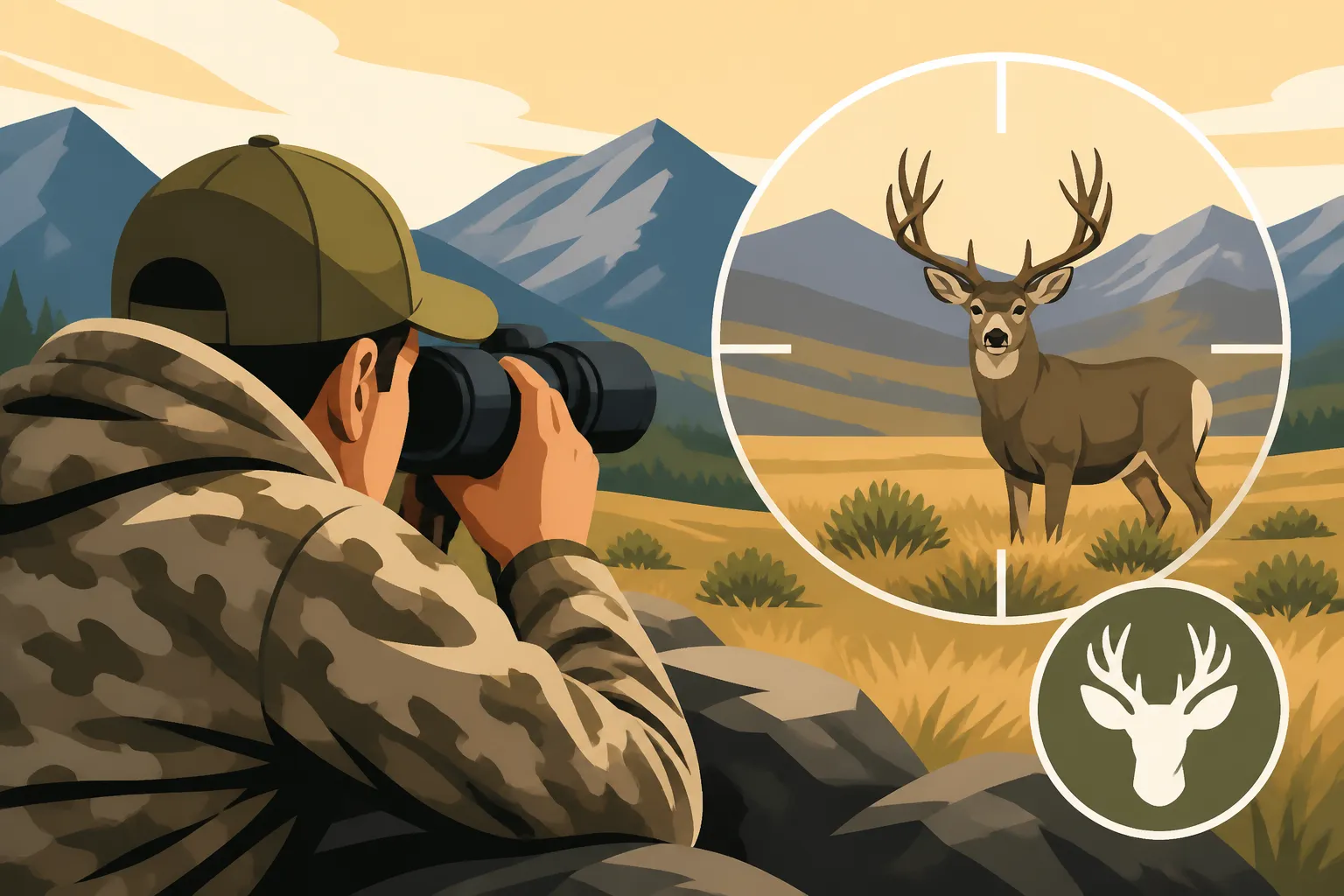
The moment you spot a mule deer buck in the vast expanse of Alberta's landscapes, whether it's across a sweeping prairie coulee or through a thick stand of aspen bluffs, your heart rate instantly quickens. But that initial surge of adrenaline is often quickly followed by a pang of doubt: "Is he the one? Is he legal? Is he mature enough?" Judging a mule deer buck at a distance, especially when you're under pressure or the light isn't perfect, is one of the toughest challenges in hunting. This guide will dive deep into the nuances of assessing mule deer from afar, helping you make confident, ethical decisions in the field.
Why Judging Mule Deer is So Tricky from Afar
It's a frustrating reality that the biggest buck often appears at the furthest, most inconvenient distance, under less-than-ideal conditions. The optical illusions created by distance, the play of light and shadow, and the deer's natural movements can make a real trophy look like a spike, or a legal buck look undersized. You've probably been there, staring intently through your binos, convinced you see something, only for it to shrink or disappear when you get closer. It's not your eyes playing tricks, it's the environment.
The Illusion of Distance and Terrain
Alberta's diverse hunting grounds, from the wide-open prairie badlands to the rolling foothills and dense boreal forest edges, present unique challenges for judging distance and size. In flat, open country, distances can be incredibly deceiving. What looks like 200 yards might easily be 400. This is compounded by the fact that there are often no familiar objects nearby to provide scale. A buck standing alone in a vast field or on a distant ridge can appear much smaller than he truly is, or sometimes, much larger due to atmospheric distortion.
Consider the stark coulees of Southern Alberta. A buck on the opposite side of a deep, shadowed draw can look entirely different than one silhouetted on a sunny ridge. The broken terrain itself can obscure parts of the deer, making it hard to get a full view of its body or antlers. The human eye struggles to accurately gauge both distance and size without consistent reference points, leading to misjudgments that can result in passing on a shooter or, worse, taking an animal that doesn't meet the regulations. Mastering Glassing an Alberta Coulee for Mule Deer can significantly improve your ability to initially locate these animals.
Light Conditions and Their Impact
The time of day and prevailing weather conditions drastically impact your ability to judge a buck. Early morning and late evening, often prime hunting times, bring with them low light or harsh glare. A buck moving through the golden hour light might have its antlers appear massive and dark, while the same buck at midday under a bright, cloudless sky could look washed out and less impressive. The angle of the sun can create long shadows that distort antler configuration, making tines look longer or shorter, and mass appear heavier or lighter.
Think about a foggy morning, where visibility is limited, or a snowy afternoon with harsh, reflective light. These conditions reduce contrast and clarity, making it nearly impossible to count points accurately or assess spread. Rain and snow can also cause your optics to fog or collect moisture, further impeding your view. It's in these moments that patience becomes your most valuable tool, waiting for the light to shift, or for the animal to move into a better viewing position. Often, a buck that looks incredible in direct morning sun against a dark timber background might appear quite average when he steps into an open, washed-out field.
Buck Behavior and Movement
Mule deer are rarely static, especially when they're feeding, traveling, or interacting with other deer. A buck constantly moving, lowering its head to browse, or turning its body to scratch an itch makes consistent observation a real challenge. Their natural curiosity or caution might have them pausing for only a few seconds before disappearing over a rise or into cover. This limited viewing window forces quick decisions, often based on incomplete information.
Furthermore, a buck's posture can dramatically affect its apparent size. A deer standing alert with its head held high will look taller and more impressive than one with its head down feeding. A buck walking directly away or towards you offers only a limited profile, making spread difficult to estimate. When a deer is bedded, you might only see its head and antlers, or just its back, making body size assessment impossible. Understanding Why Mule Deer Prefer Broken Country can help anticipate their movements and where they might seek cover, giving you a better chance to observe them before they vanish.
Key Characteristics to Assess for Mule Deer
To overcome the challenges of distance judging, you need a systematic approach. Instead of just looking for "big antlers," focus on specific, measurable characteristics that, when combined, paint a clearer picture of a buck's age and trophy potential. It's about breaking down the deer into its individual components and evaluating each one.
Antler Configuration and Width
This is often the first thing hunters notice, and for good reason. For mule deer, the distinct deep forking of their antlers is a primary characteristic. You're looking for clean, symmetrical forks, not just single tines. Assess the main beams: do they sweep out wide and then back in, or are they narrow and tight to the head? The overall width is crucial. A common benchmark for a truly wide buck is when its antler tips extend significantly beyond its ear tips. Mule deer ears are typically about 18-20 inches wide, so if the antlers clear that by a noticeable margin, you're looking at a buck in the 24-inch spread range or more.
Don't just count points at first glance; try to discern the actual structure. Are the points sturdy and well-defined, or short and stubby? The brow tines, G1s, are important; are they present and of decent length? Also, be aware of Alberta's regulations, particularly the Alberta's Three-Point Mule Deer Rules in certain zones, which means you need at least three points on one antler, excluding the brow tine, to be a legal buck. This forces a much more careful inspection than just looking for a general "big" rack. Remember that atypical points can add character but might not always contribute to "score" in the traditional sense, so know your personal hunting goals.
Body Size and Proportion
Often overlooked in the excitement, a buck's body can tell you as much, if not more, about its maturity than its antlers alone. Young bucks, even those with decent antlers, tend to have slender bodies, long legs, and a more "rangy" appearance, almost like a racehorse. As mule deer mature, their bodies fill out significantly. Look for a deep, sagging belly, a thick neck that blends smoothly into the shoulders, and a generally blocky, robust appearance. Their legs will appear shorter in proportion to their body.
A mature buck's chest will be deep and barrel-like. In contrast, a 2.5-year-old buck, while perhaps carrying a respectable 4×4 rack, will still have a noticeably more athletic, trim build. When you see a buck whose antlers look "small" on its body, it's often a sign of a truly mature animal with heavy bone structure. Factors like What a Mature Alberta Mule Deer Weighs can give you an idea of the sheer mass these animals can carry. Also, remember that environmental factors like a prolonged drought or a tough winter can impact the overall health and size of deer, sometimes making them appear smaller than their age would suggest.
Mass and Tine Length
Beyond just the number of points and overall width, pay close attention to the sheer mass and length of the tines. Mass refers to the circumference or thickness of the antlers. Look at the bases of the antlers; are they thick and heavy, or spindly? Does the mass carry well out onto the main beams, or do the antlers quickly become thin? Heavy mass indicates an older, more dominant buck. It's a key indicator of age that often translates to higher scores for those interested in that aspect.
Tine length is another critical factor. Are the tines long and symmetrical, or short and broken? Long tines add visual appeal and contribute significantly to overall antler size. Look for consistency in tine length between the two sides. While perfect symmetry is rare, a buck with consistently long, well-defined tines on both sides is usually a mature animal. These finer details require quality optics and a steady hand, so take your time, breathe, and really study the animal.
Tools and Techniques for Better Distance Judging
Successfully judging a mule deer at a distance isn't just about sharp eyesight; it's about employing the right tools and techniques to overcome environmental challenges and human limitations. Investing in good gear and learning how to use it effectively will dramatically increase your confidence and success in the field.
High-Quality Optics are Non-Negotiable
This might sound obvious, but it’s truly the foundation of effective distance judging. Your budget binoculars from the big box store simply won’t cut it when you’re trying to discern fine antler details at 500 yards. You need binoculars (10×42 or 12×50 are popular choices for big game) with excellent light gathering capabilities, sharp edge-to-edge clarity, and robust construction. Brands like Leica, Swarovski, and Zeiss are renowned for their quality, providing crisp, clear images even in challenging low light, which is critical during those golden hours of hunting.
Beyond binoculars, a quality spotting scope is an absolute game-changer, especially in open country like Alberta's prairie and badlands. A 20-60x or 22-65x spotting scope allows you to magnify the image significantly, turning a distant blur into a clear picture where you can count points, assess mass, and study body proportions in detail. Pair it with a sturdy tripod for stability, as even the slightest shake can make detailed observation impossible at high magnifications. Without quality glass, you're essentially guessing, and that's not a recipe for consistent success or ethical hunting.
Using Rangefinders and Spotting Scopes
A laser rangefinder is another indispensable tool. As we discussed, distance estimation is highly prone to error. A good rangefinder takes the guesswork out of it, providing an accurate distance reading with the push of a button. Knowing the exact range to the animal allows you to better judge its size against a known distance. For instance, if you range a buck at 400 yards, and its body still looks massive, you know it's a truly big animal. Some rangefinders also offer angle compensation, which is incredibly useful when hunting in broken terrain where uphill or downhill shots can drastically alter the effective shooting distance.
When using your spotting scope, employ a systematic approach. First, use your binoculars to locate the deer. Once found, get your spotting scope set up and locked onto the animal. Start at a lower magnification to get a general overview, then slowly increase magnification, moving your focus from the deer's body to its antlers. Take your time. Don't rush. Study the body size, then move to the antler width, then the main beams, then each individual tine. Look for any unique characteristics or breaks that might impact legality or trophy status. This is where patience truly pays off.
Digital Scouting and Mapping Tools
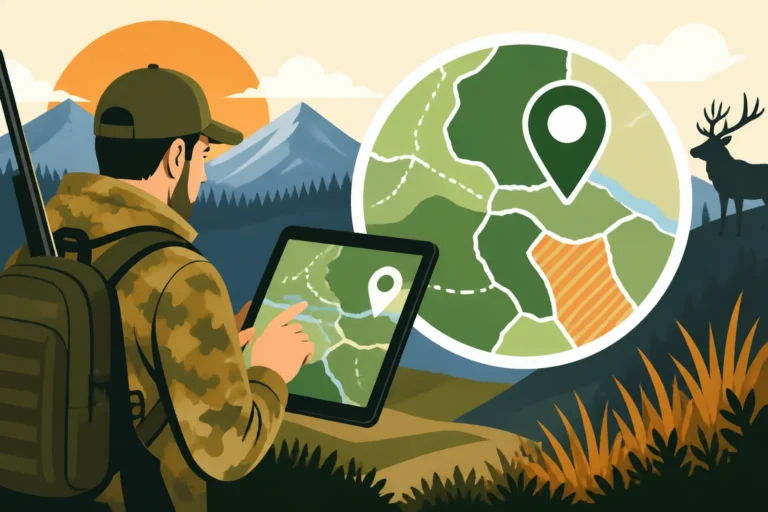
In today's hunting world, digital tools have revolutionized how we prepare and execute hunts. Platforms like GoHunt provide invaluable mapping features that can be used well before you ever set foot in the field. With GoHunt, you can study topography, identify potential bedding and feeding areas, locate water sources, and even pinpoint historical animal movement patterns from the comfort of your home. This pre-scouting helps you understand the general health and potential of the deer in a specific Alberta Wildlife Management Units or Alberta's Parkland Country and Its WMUs, which in turn informs your judging expectations.
Using satellite imagery and topographical maps, you can identify open coulees where a spotting scope will be most effective, or dense timber where you'll need to rely more on close-up assessment. Before even going out, GoHunt can help you find key vantage points from which you'll have the best chance to spot and judge deer at a distance. You can also mark waypoints for promising locations, glassing knobs, or potential stalk routes. This level of preparation means you're not just reacting to a buck you suddenly see; you're actively hunting the terrain with a plan, making it easier to position yourself for optimal viewing and judging opportunities. Using tools like GoHunt, you can plan your approach to a prairie ridge for mule deer with greater confidence.
Real-World Scenarios and Practice Tips
The best way to get better at judging mule deer from a distance is through practice and experience. There's no substitute for time spent behind the glass, observing deer in their natural habitat. Every encounter is a learning opportunity, helping you refine your eye and build confidence.
Judging in Open Prairie Coulees
Hunting in Alberta's prairie and badlands often means long-distance glassing. You might be set up on a high point, scanning distant coulee bottoms or brushy slopes. In these scenarios, the ability to quickly differentiate between a doe, a young buck, and a mature buck is crucial. Start by observing the herd dynamics. Are there other bucks around? How do they compare? A lone buck often tends to be older and more dominant.
When a buck appears, first assess its body. Does it look heavy-bodied, with a thick neck and a deep chest? Or is it lanky and athletic? Next, move to the antlers. Look for the overall width first, comparing it to the ear tips. Then, try to pick out the deep forks characteristic of mule deer. Can you count at least three points on one side, excluding the brow tine, to meet Alberta's regulations? Pay attention to how the buck moves; a mature buck often has a heavier, more deliberate gait. Remember that even in wide open country, you might still need to maneuver for a better angle.
Assessing Bucks in Timbered Foothills
The foothills present an entirely different challenge. Here, mule deer often move through pockets of timber, aspen bluffs, and dense willow thickets. Your viewing windows might be brief and partially obscured. Instead of long-range glassing, you're often looking for glimpses, trying to piece together the puzzle of a buck's antlers as it moves through cover. In these situations, body size becomes even more important, as antlers can be hidden or only partially visible. A massive body appearing through the trees is a strong indicator of a mature buck, even if you can't get a perfect read on its rack.
Focus on the ears and head. If the antlers appear to dwarf the head, it's a good sign. When a buck steps into a small opening, use that brief moment to quickly assess width, main beam configuration, and point count. You might only get a few seconds, so having a mental checklist helps. Don't be afraid to utilize your knowledge of the terrain; if you know there's a small clearing ahead, anticipate the buck moving into it and be ready with your optics. Learning Hunting Mule Deer in the Badlands Coulees or Hunting a Foothills Bench Above a Creek provides specific tactics for these environments.
Learning from Experience and Mistakes
Every hunt, successful or not, offers lessons. Take mental notes or even jot down observations in a small notebook about the bucks you see. What did you think you saw, and what was the reality when you got a closer look or reviewed photos? If you passed on a buck, reflect on why. If you successfully harvested one, analyze your judging process. Did your initial assessment hold up? What could you have done better?
One of the best ways to practice is by observing deer during the off-season, without the pressure of a tag in your pocket. Spend time behind your binoculars and spotting scope, studying every deer you see. Practice ranging them, guessing their age and antler size, then confirming when they get closer or you can study them longer. Watching videos of mule deer, particularly those that offer different angles and distances, can also be a valuable training tool. Websites like GoHunt often have user-submitted photos and videos that can serve as excellent learning material. This continuous learning process, coupled with time in the field, will sharpen your judging skills and build the confidence you need when that big Alberta buck finally steps into view.
| Feature | Young Buck (1.5-2.5 yrs) | Mid-Aged Buck (3.5-4.5 yrs) | Mature Buck (5.5+ yrs) |
|---|---|---|---|
| Body Shape | Lean, lanky, long legs | Filling out, muscular, defined neck | Blocky, thick neck, deep chest, belly |
| Neck | Thin, distinct from shoulder | Thicker, starting to blend | Very thick, blends smoothly into shoulder |
| Antler Width | Often inside ear tips, narrow | May reach or slightly exceed ears | Significantly outside ear tips, wide |
| Antler Mass | Thin, spindly | Developing, moderate mass | Heavy, carries well through beams |
| Forks | May be underdeveloped or short | Well-defined, often good symmetry | Deep, distinct, often very symmetrical |
| Behavior | Skittish, often with does/other young bucks | Confident, but still alert | Dominant, slower movements, often solitary |
Disclaimer
Hunting involves inherent risks and strict adherence to regulations. This guide provides general information for judging mule deer. Always consult the most current Alberta hunting regulations and local laws before heading into the field. Hunter safety and ethical hunting practices are paramount.