Glassing an Alberta Coulee for Mule Deer
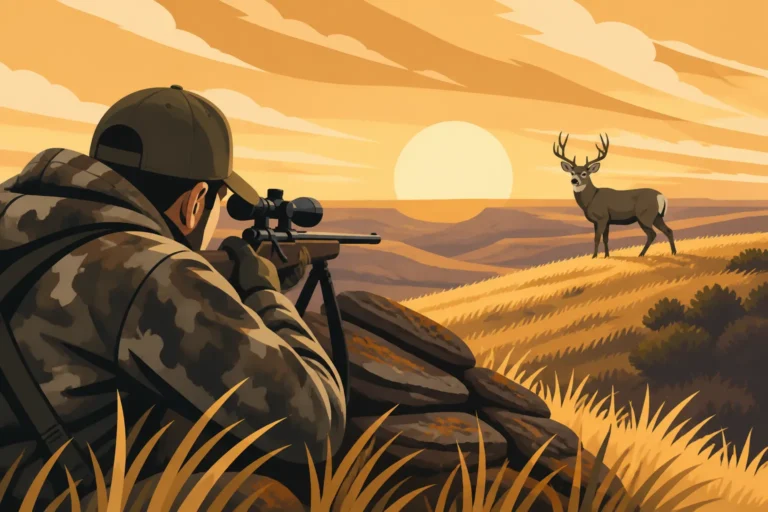
Hunting mule deer in Alberta's vast, broken coulee country can feel like searching for a needle in a haystack. The sheer scale of the landscape, with its endless folds, pockets, and hidden draws, often leaves hunters frustrated, wondering where to even begin their search for that elusive big buck. This guide is dedicated to demystifying the art of glassing these challenging but incredibly rewarding coulee systems, providing practical strategies to help you effectively locate and assess mule deer in their preferred habitat.
Understanding the Coulee Advantage for Mule Deer
Alberta's coulees are more than just topographical features; they are complex ecosystems that offer mule deer everything they need to thrive. These intricate systems provide shelter, food, and security, making them prime hunting grounds if you know how to read them.
The Hidden World Within the Prairie
Imagine miles of seemingly flat or gently rolling prairie, then suddenly, the earth drops away into a labyrinth of steep-sided ravines, carved out by ancient rivers or glacial melt. These are the coulees. They can range from shallow, undulating depressions to deep, multi-layered canyons that completely disappear from view until you're right on their edge. Within these hidden worlds, you’ll find diverse microclimates and vegetation. North-facing slopes often retain more moisture, supporting denser stands of aspen, willow, or chokecherry, providing critical thermal cover and browse. South-facing slopes, exposed to more sun, tend to be drier, dominated by native grasses and scattered shrubs, which can be excellent feeding areas, particularly in the mornings and evenings.
Mule deer are masters of using this varied terrain to their advantage. They will bed down in thick brush on a north slope to stay cool on a sunny day or seek out a sun-drenched southern exposure on a frigid winter morning. Their ability to seemingly vanish in even sparse cover within these draws is legendary, making thorough and patient glassing absolutely essential. You might be looking at a patch of brush you've scanned a dozen times, only for a set of ears to suddenly materialize from what you thought was just deadfall. This is why understanding their habits in these hidden pockets is paramount to success.
Seasonal Movements and Cover Needs
Mule deer movements within coulees are heavily influenced by the season, weather, and hunting pressure. In the early archery seasons, as hunters are Hunting Alberta's September Archery Opener, you'll often find deer higher up on the coulee edges or even out in adjacent stubble fields, feeding actively on green growth before retreating into the draws for midday bedding. As rifle season progresses and hunting pressure mounts, deer will often seek out the deepest, most secluded pockets of cover, often relying on the security of dense timber found within the coulee bottoms or on steep, unaccessible slopes.
Later in the season, when snow begins to accumulate, mule deer will congregate in areas with accessible browse and sufficient cover from the elements. This might mean moving to south-facing slopes that shed snow faster or gravitating towards coulees that offer pockets of thicker timber for thermal protection. During the rut, bucks will cruise these coulee systems, checking scrapes and scent posts, pushing does, and often following the contours of the draws. Understanding these seasonal shifts helps you narrow down where to focus your glassing efforts, rather than simply scanning aimlessly. For deeper insights into their habits, check out our guide on How Mule Deer Use Coulees in Winter.
Mastering the Art of Glassing Coulees
Glassing isn't just looking through binoculars; it's a methodical, disciplined process that requires patience, technique, and a keen eye. When you're trying to locate mule deer in the intricate folds of an Alberta coulee, a haphazard approach simply won't cut it.
Systematic Scanning and Segmenting the Terrain
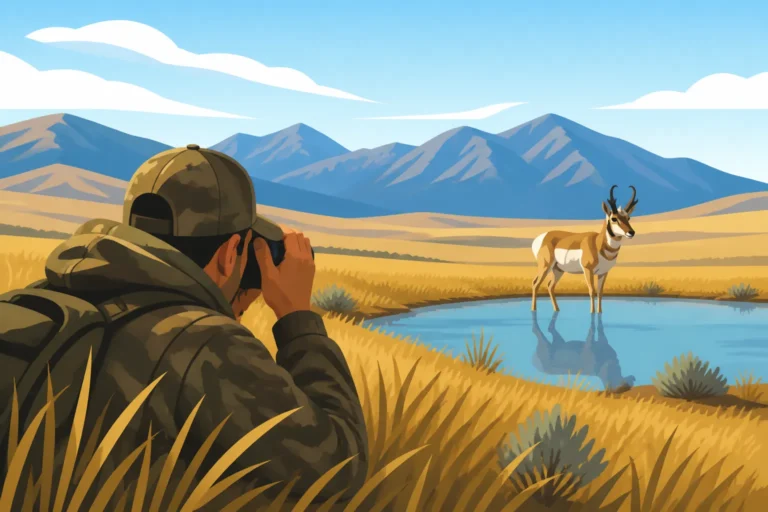
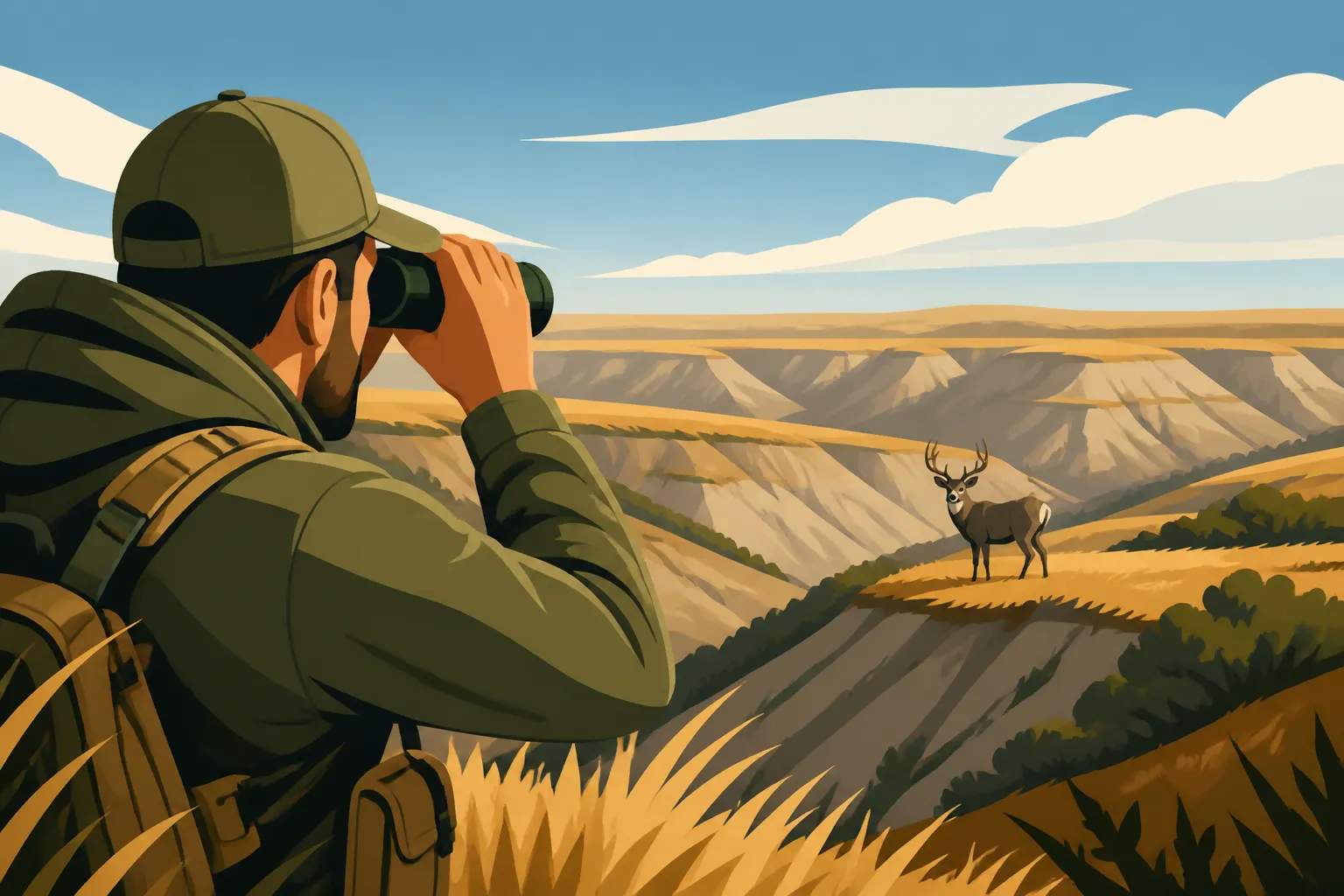
The biggest mistake hunters make is scanning too fast or too broadly. Coulees are designed to hide deer, so you need to break them down into manageable sections. Start by finding a high vantage point that allows you to see into multiple draws or across a large coulee system. Set up your spotting scope or binoculars on a sturdy tripod. Begin at the nearest point of the coulee and work your way across, then down into the depths, and finally back up the far side. Instead of just looking for a whole deer, look for parts of a deer: an antler tip, the horizontal line of a deer's back against a vertical tree trunk, an ear twitch, or even just a patch of hide that looks "out of place" against the natural patterns of the landscape.
Segment the coulee into smaller grids, much like you'd divide a spreadsheet. Start with the closest quarter, systematically scanning every rock, bush, and shadow before moving to the next. Pay extra attention to areas of transition – where fields meet brush, where a small tributary draw feeds into a larger coulee, or where dense timber gives way to open grass. These are often natural travel corridors or bedding areas. Repeat this process for each segment, slowly and meticulously, until you've covered every inch of your chosen area. Remember, the goal isn't just to see the deer, but to find the deer that doesn't want to be seen. This patience is key when Glassing an Alpine Basins for Bighorn Sheep too, a technique that transfers well to coulees.
Optimal Timing and Light Conditions
The time of day and prevailing light conditions dramatically impact the effectiveness of your glassing. Early morning, just as the sun begins to kiss the landscape, and late evening, as the shadows lengthen, are often the most productive times. In the morning, mule deer are typically still active, feeding before bedding down for the day. The rising sun creates long shadows that highlight contours and can silhouette deer against the lighter backdrop. Similarly, in the evening, deer emerge from their bedding areas to feed, and the soft, declining light can reveal animals you might have missed during the harsh midday glare.
Midday glassing, while challenging, can still be fruitful, especially in the cooler months or on overcast days. During the middle of the day, deer are usually bedded, which means you're looking for subtle clues – an ear, a nose, a patch of fur. The quality of light varies with the weather, too. Overcast days can offer softer, more even light that reduces glare and harsh shadows, making it easier to pick out camouflaged animals. However, strong midday sun can sometimes create enough contrast to make a deer stand out if it’s on a shaded slope. Always position yourself so the sun is at your back, if possible, to avoid looking directly into the glare, which severely limits visibility and causes eye strain.
Essential Gear for Effective Coulee Glassing
You can have the best glassing technique in the world, but without the right tools, you'll be fighting an uphill battle. Investing in quality optics and supporting equipment is non-negotiable for serious coulee mule deer hunters.
Optics: Binoculars, Spotting Scopes, and Tripods
At the core of effective coulee glassing are your optics. You'll need a good pair of binoculars, ideally 10x or 12x magnification, for broad scanning and quick target acquisition. Look for binoculars with excellent light gathering capabilities and clear edge-to-edge resolution, as you'll be spending hours peering through them. Brands like Swarovski, Zeiss, Leica, and Vortex offer top-tier performance, but even mid-range options from Maven, Athlon, or Bushnell can be very effective.
For detailed examination of distant slopes and identifying specific features of a deer – like antler configuration or age – a high-quality spotting scope is indispensable. A 60-80mm objective lens with variable magnification (e.g., 20-60x or 25-75x) is a popular choice. The larger objective gathers more light, crucial for low-light conditions. Crucially, both your binoculars and spotting scope should be mounted on a sturdy tripod. Handholding even 10x binoculars for extended periods will lead to fatigue and an unstable image, making it nearly impossible to pick out subtle details. A fluid pan head on your tripod allows for smooth, precise movements, which is vital for systematic scanning. Consider a lightweight carbon fiber tripod if you plan on covering a lot of ground and need to pack it in.
Digital Tools and Planning Ahead
In today's hunting world, digital tools have become just as essential as optics. Mapping applications are invaluable for pre-scouting and in-field navigation. Platforms like GoHunt offer detailed satellite imagery, topographical maps, and public/private land overlays, allowing you to identify potential glassing points, analyze terrain features, and mark likely bedding or feeding areas long before you even set foot in the field. You can use GoHunt to trace coulee systems, identify timber pockets, and even estimate distances, all from the comfort of your home.
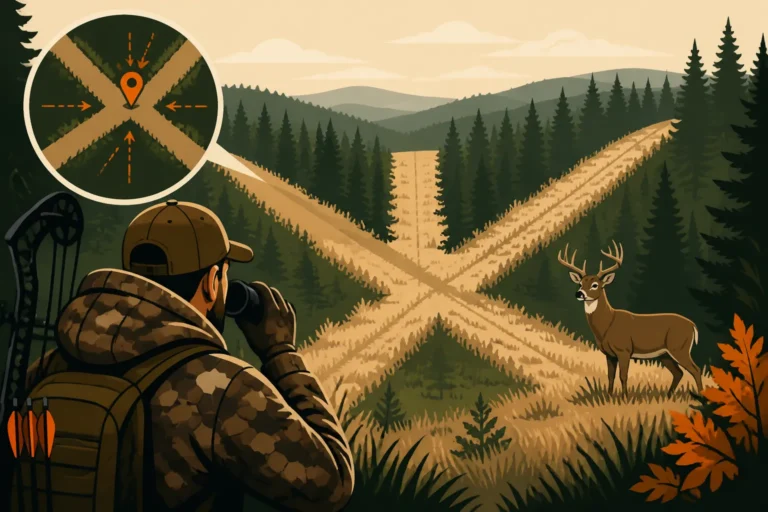
Before your hunt, spend time on GoHunt studying the contours of the land. Look for areas where multiple coulees converge, where a timber patch is situated deep in a draw, or where there are benches or natural shelves that mule deer might use for bedding. Save these waypoints and routes. This digital reconnaissance not only saves you time in the field but also provides a strategic advantage, allowing you to focus your physical scouting on the most promising areas. For further planning, our guide on Scouting With Satellite Imagery in Alberta offers more in-depth advice.
| Optic Type | Typical Magnification | Primary Use | Tripod Recommended | Advantages | Disadvantages |
|---|---|---|---|---|---|
| Binoculars | 8x, 10x, 12x | Broad scanning, close to mid-range observation | Highly Recommended | Wide field of view, good for quick target acquisition, handheld possible for short periods | Limited magnification for detail at long range |
| Spotting Scope | 20-60x, 25-75x | Detailed long-range observation, trophy judging | Essential | High magnification for precise detail, excellent for assessing antlers | Narrow field of view, heavy, always needs tripod |
Strategic Approaches to Mule Deer in Coulees
Effective glassing goes beyond just the mechanics; it's about understanding the animals you're hunting and applying that knowledge to your strategy. Mule deer are creatures of habit, but they're also incredibly adaptive, especially when facing hunting pressure.
Interpreting Subtle Signs from Afar
When you're glassing a distant coulee, you're not always going to see an entire deer standing in the open. More often than not, you'll pick up subtle clues that, to the untrained eye, might look like nothing more than a rock or a shadow. Learn to recognize the color and texture of a mule deer's coat against the surrounding vegetation – it's often a bit grayer or browner than the dry grass and has a distinct texture. Look for horizontal lines in a vertical world; deer backs are often flatter than the undulating terrain. Pay attention to movement, no matter how slight. A flick of an ear, a tail swish to ward off flies, or a shift in weight can all give away a bedded animal.
Also, don't just look for deer; look for their sign. While you won't see tracks from a mile away, you might spot trails winding through brush, especially if they're well-used and have beaten down the vegetation. Look for changes in vegetation patterns that suggest consistent browsing. Sometimes, it’s not the deer itself that catches your eye, but the magpies or ravens circling over a carcass or the fresh digging of a badger that could indicate recent activity. All these small details contribute to building a picture of where deer might be. For more on reading the land, our guide on Reading Whitetail Sign in Alberta Aspen Bluffs offers transferable skills.
When to Stay Put vs. Make a Move
Patience is a virtue in coulee hunting. Once you've established a good glassing position, give it time. Many hunters make the mistake of glassing for 15-20 minutes, seeing nothing, and then moving on. Mule deer are often bedded for hours, and it can take considerable time for them to reveal themselves or for you to pick them out of the camouflage. A productive glassing session might last two to three hours from a single vantage point, systematically working through the coulee. The deer you don't see initially are often the ones you want to find.
However, there's a fine line between patience and stubbornness. If you've thoroughly glassed a system under optimal conditions for a significant amount of time and seen absolutely no sign, it might be time to move. Use your GoHunt app or physical maps to identify your next strategic glassing point – perhaps another coulee system, or a different angle into the same one. Sometimes, a change in perspective is all it takes to reveal an animal. If you've spotted a deer, the decision to stay put and continue observing, or to initiate a stalk, depends on various factors: the deer's location, wind direction, available cover for a stalk, and the remaining daylight. Always prioritize a low-impact approach; sometimes, simply watching a deer from afar will teach you more about its habits than a rushed, unsuccessful stalk. Making the move from spotting to stalking is a critical decision, as discussed in our piece on Stalking Mule Deer in Badlands Breaks.
Disclaimer
The information provided in this guide is for general educational purposes only and is not a substitute for official Alberta hunting regulations. Hunters are responsible for understanding and adhering to all current provincial hunting laws, regulations, and licensing requirements. Always prioritize safety, ethical hunting practices, and respect for wildlife and private property. Conditions in the field can change rapidly, and hunters should be prepared for all eventualities.