How Mule Deer Use Coulees in Winter
Winter in Alberta can be a beautiful, harsh mistress, and for many hunters, it brings a fresh set of challenges, especially when you're after mule deer. These incredible animals have a way of disappearing once the snow flies, and if you don't know where to look, you might spend more time shivering than hunting. This guide is all about understanding one of the mule deer's most crucial winter havens: the coulee. We'll dive deep into why these natural features are so vital and how you can use this knowledge to become a more successful and ethical hunter.
The Indispensable Role of Coulees in Winter for Mule Deer
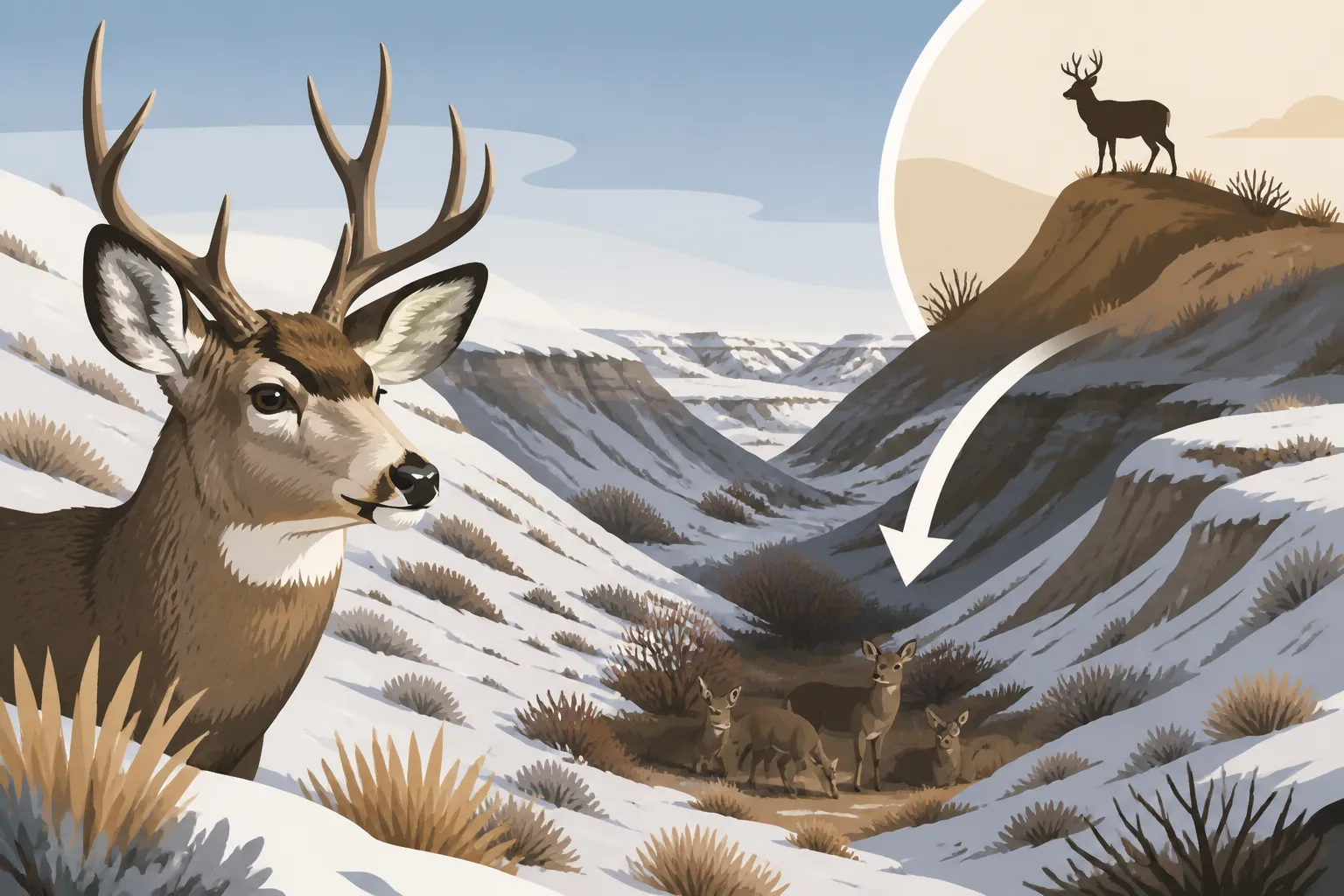
When the biting winds sweep across Alberta's vast prairies and badlands, and snow begins to pile up, mule deer don't just wander aimlessly. They gravitate towards specific features in the landscape that offer them the best chance of survival. Coulees, those deep, often winding ravines and draws that cut through the land, are not just geographical quirks; they are absolute lifelines for mule deer during the cold, unforgiving months.
Providing Critical Shelter from the Elements
Imagine standing out on the open prairie in January with a wind chill that could freeze the snot in your nose. Now imagine a mule deer, who can't just throw on another layer. Coulees, with their steep banks and often thick vegetation, offer immediate and crucial protection from the elements. The banks provide a break from the relentless wind, acting as natural windbreaks that create pockets of calmer air.
Furthermore, the depth of a coulee can mean several degrees warmer air at the bottom compared to the exposed prairie above. This microclimate is a game-changer for deer trying to conserve energy. They will bed down on the leeward side of a hill within the coulee, soaking up any available sunlight and staying out of the direct assault of the wind and drifting snow. This is especially true when it comes to Hunting Alberta Winter Weather Safely; understanding these sheltered spots is key not just for the deer, but for hunter comfort and safety too.
Access to Vital Winter Forage
Winter survival isn't just about staying warm; it's about finding enough to eat when everything is frozen solid or buried under snow. Coulees often retain more moisture and offer a greater diversity of plant life than the surrounding open plains. Shrubs like Saskatoon berry, chokecherry, and various willow species, which provide essential browse, can be more abundant and accessible within these sheltered draws.
The deep snow that accumulates on the prairie might be too much for deer to paw through, but within a coulee, snow can be shallower due to wind scouring or melt faster on sun-exposed slopes. This makes accessing the crucial woody browse and dried forbs far easier. A deer's winter diet is low on nutrients and calories, so every bit of accessible forage helps them maintain critical body condition. Knowing What Whitetails Eat Through Winter (and mule deer are similar in their browse habits) is key to finding them.
Escape Routes and Thermal Regulation
Beyond shelter and food, coulees provide a complex network of terrain that mule deer use for security and movement. The undulating contours of a coulee offer endless nooks and crannies to hide from predators, including hunters. A deer can quickly drop into a draw and vanish from sight, using the terrain to its advantage. This makes Glassing an Alberta Coulee for Mule Deer a unique challenge, requiring patience and a good eye.
During periods of intense cold, deer will seek the deepest parts of the coulee for thermal cover. Conversely, on surprisingly warm winter days, they might move up to the sun-drenched slopes to shed some heat, especially after a period of heavy exertion. This dynamic use of the coulee's various elevations and aspects allows them to regulate their body temperature efficiently, an essential survival mechanism in Alberta's extreme climate.
Reading the Landscape: Identifying Active Winter Coulees
Not all coulees are created equal, especially when it comes to winter mule deer habitat. Some will be bustling with activity, while others will be barren. Knowing how to read the landscape and identify those prime wintering coulees is a skill that comes with experience, but there are definite indicators you can look for.
Identifying Key Features in a Coulee
When you're looking at a coulee, whether it's on a map or from a distance, certain features scream "mule deer winter hangout." The first thing to consider is orientation. South-facing slopes receive the most direct sunlight, meaning less snow cover and potentially more accessible forage. These become preferred bedding areas, especially on cold, clear mornings.
Next, look for complexity. A coulee that has numerous fingers, smaller draws, and points offers more varied cover and escape routes. Thick brush, dense clumps of aspen, or even scattered evergreens within the coulee provide visual obstruction and additional thermal cover. These pockets are where deer will often feel most secure. Topographical maps or digital mapping tools like GoHunt can be invaluable here, helping you identify these micro-features before you even set foot in the field.
Interpreting Deer Sign in Winter Snow
The snow, while a challenge, also acts as a giant ledger, recording every move the deer make. Fresh tracks are your most obvious indicator of recent activity. Look for tracks that show purposeful movement, not just a deer passing through. Multiple sets of tracks, especially if they are converging on specific areas within the coulee, suggest a preferred bedding or feeding zone.
Droppings (feces) are another key indicator. Fresh droppings in various sizes and shapes can tell you about the deer's diet and how long they've been in the area. Look for rub marks on small trees or shrubs, especially if you're targeting bucks. While not as prevalent as during the rut, bucks might still rub to clear velvet or to mark territory. And don't forget scrapes, though again, these are less common in winter. The more sign you find, the more confident you can be that you're in an active winter coulee.
Effective Hunting Strategies for Winter Mule Deer in Coulees
Once you've identified a promising coulee, the real work begins. Hunting mule deer in these winter strongholds requires a different approach than chasing them in the wide-open prairie during archery season. Patience, stealth, and a keen understanding of their winter habits are paramount.
Spot-and-Stalk: The Art of Patience
Spot-and-stalk is arguably the most effective method for Hunting Mule Deer in the Badlands Coulees during winter. The broken terrain offers endless opportunities for deer to disappear, but it also provides concealment for you. Use high vantage points overlooking the coulee system to glass methodically. Take your time, sometimes hours, scanning every shadow, every clump of brush, every rise and fall in the terrain. A quality spotting scope and binoculars are your best friends here.
Once you spot deer, the stalking begins. This is where the coulee's complex topography becomes your ally. Plan your approach carefully, using the natural contours, brush lines, and ridges to mask your movement. Wind direction is critical; always approach from downwind. The dry, crunchy snow of winter can make silent movement a challenge, so take slow, deliberate steps, testing each foot placement before committing. Remember, deer will be extremely wary, especially with fewer leaves on the trees to break up sound.
Driving and Pushing Coulees
In some situations, especially in larger coulee systems with a group of hunters, a well-executed drive can be effective. This involves one or two "pushers" slowly moving through a section of the coulee, while "blockers" are positioned at likely escape routes or pinch points. Communication is key, as is a thorough understanding of the terrain and where the deer are likely to exit.
This method can be particularly productive after a fresh snowfall, when deer might be hunkered down and less likely to move, or when you have multiple coulees running parallel, allowing deer to escape one only to enter another. However, it requires careful planning to ensure safety and ethical hunting practices. Make sure everyone knows their role, shooting lanes, and the exact boundaries of the drive. For a deeper dive, consider articles like Stalking Mule Deer in Badlands Breaks for more technical insights.
| Coulee Feature | Mule Deer Appeal in Winter | Hunting Strategy Consideration |
|---|---|---|
| South-Facing Slope | Maximum sun exposure, less snow, warmer bedding. | Focus glassing here, especially in mornings. Approach from higher, shaded ground. |
| North-Facing Slope | Deeper snow, colder, often denser timber. Used for thermal cover in warmer periods. | Deer less visible. Approach carefully, use wind to your advantage. |
| Thick Brush/Timber | Excellent cover from wind and predators, some browse. | Slow, methodical still-hunting. Expect close-range encounters. |
| Open, Grassy Flats | Possible forage after light snow, good visibility for deer. | Glass from a distance. Deer will be wary. Stalking will be difficult. |
| Pinch Points/Funnels | Natural travel corridors, especially where coulees narrow or meet. | Prime ambush locations for stand hunting or as blocker positions during drives. |
| Overhangs/Cut Banks | Extreme shelter from wind/snow, hidden bedding. | Often overlooked, check these areas carefully with binoculars. |
Challenges and Ethical Considerations in Winter Coulee Hunting
Winter hunting in Alberta's coulees is not without its unique challenges and responsibilities. As hunters, it's our duty to respect the animals and the environment, especially when they are most vulnerable.
Navigating Deep Snow and Icy Conditions
Deep snow can make access to coulees incredibly difficult. Vehicle access might be limited, requiring long hikes in demanding conditions. How Deep Snow Moves Deer Around is a critical consideration, as it also affects your ability to move. Snowshoes or skis can be essential tools for covering ground efficiently and quietly. Ice, especially on slopes, can be a serious hazard for both hunters and deer, leading to slips and falls. Always assess conditions carefully and prioritize safety.
The cold itself is a major factor. Frostbite and hypothermia are real threats, so proper layering, good quality boots, and a well-stocked Winter Truck Kit for an Alberta Hunt are non-negotiable. If you're successful, Meat Care in Alberta's Cold and Warm Swings becomes important too, to ensure the valuable protein doesn't freeze solid before you can process it, or thaw too quickly if conditions change.
Respecting Wintering Deer and Ethical Harvesting
Mule deer are already under significant stress in winter. Their energy reserves are low, and every burst of activity costs them precious calories. This means hunters have an even greater responsibility to make clean, ethical shots and to avoid undue disturbance. Hounding deer or repeatedly spooking them can lead to significant stress and even mortality, especially if they are already on the brink of starvation.
When you locate deer in a coulee, plan your approach to minimize disruption to the entire herd. If you successfully harvest an animal, ensure quick and efficient recovery to prevent any additional suffering. Avoid hunting in areas where deer are clearly concentrated and struggling due to extreme conditions, as this can put unnecessary pressure on an already vulnerable population. Tools like GoHunt can help you understand population dynamics and winter range importance in specific WMUs, fostering more informed and ethical decisions.
Ultimately, hunting mule deer in Alberta's coulees during winter is a profound experience that connects you deeply with the landscape and the resilience of these animals. By understanding their needs and adapting your approach, you'll not only increase your chances of success but also uphold the highest standards of ethical hunting.
Disclaimer
This article is for general informational purposes only and does not constitute professional advice. Laws, prices and regulations vary by location and change over time. Consult a qualified professional for guidance on your specific situation.