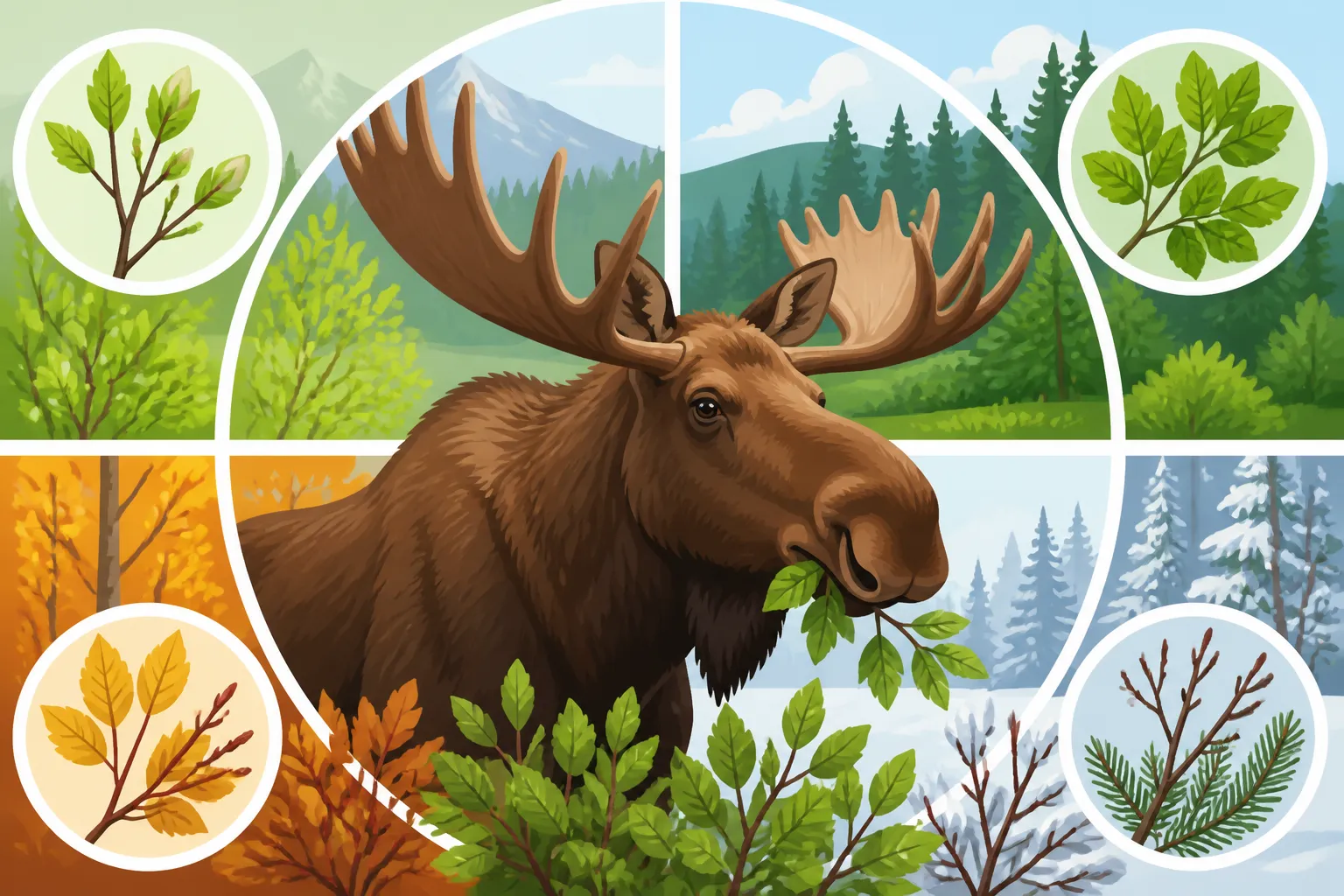
What Moose Eat Through the Year
Understanding what moose eat throughout the year can feel like trying to decipher a secret code whispered across the vast Alberta landscape. As hunters and outdoor enthusiasts, we often focus on prime hunting seasons, but really, a moose's entire year revolves around securing enough calories to survive, grow those massive antlers, and raise their calves. If you've ever scouted a prime moose area only to find it devoid of animals during certain times, it's likely because their dinner menu changed, and they moved right along with it. This guide will take a deep dive into the fascinating, ever-changing diet of Alberta's moose, season by season, helping you understand their movements and preferred habitats based on their nutritional needs.
Spring: The Green Rush and Replenishment
After the long, lean winter months, spring is a time of desperate need and renewed opportunity for moose. They’ve often shed significant body weight, and bulls are about to begin growing a new set of antlers, which demands a huge energy investment. Cows are either pregnant or have just calved, and their caloric requirements skyrocket. It’s all about finding the most nutritious, easily digestible greens as quickly as possible.
New Growth and Tender Shoots
As the snow melts and the ground thaws, moose are like kids in a candy store, eagerly seeking out the first flush of new vegetation. They aren't looking for tough, woody browse from last year; they want the tender, succulent new shoots of willow, aspen, and birch. These young twigs and leaves are packed with protein and highly digestible, exactly what a depleted moose needs to start rebuilding its body condition. You'll often find them working creek bottoms, south-facing slopes, and recent cutblocks where the sun hits first and green-up begins.
Think about those patches of bright green emerging along a Hunting a Cutline for Moose at First Light or near a Hunting Moose Around Alberta Beaver Ponds – those are prime feeding grounds. The new growth offers a much higher nutrient content and less lignin (the indigestible woody part) than mature plants. They'll strip leaves off saplings, browse on emerging forbs, and generally vacuum up anything green and soft they can find. This early feed is crucial for kickstarting the metabolic engine after winter's hardships.
Aquatic Vegetation Emergence
As spring progresses and shallow waters warm, another critical food source emerges: aquatic plants. Moose have an almost insatiable craving for these water-bound delights, and for good reason. Plants like water lilies, pondweed, and horsetails are incredibly rich in minerals, particularly sodium, which is often deficient in their terrestrial diet. You might even see moose completely submerging their heads to get at the roots and stems of these plants.
These aquatic buffet lines often become focal points for moose, drawing them to sloughs, marshes, and slow-moving rivers. Not only do these areas provide essential minerals, but they also offer a cooler environment during warmer spring days, and some refuge from insects once they become active. Observing a moose belly-deep in a pond, dripping wet, is a common spring and early summer sight in many parts of the Moose Across Alberta's Boreal and Foothills region.
Summer: Peak Foraging and Caloric Accumulation
Summer is the time for moose to truly put on weight, build fat reserves, and for bulls, to grow their impressive racks. The abundance of forage means they are almost constantly eating, shifting between different habitat types to maximize their caloric intake. It's a period of intense feeding, focused on quantity and quality.
Lush Browse and Forbs
During the summer, woody browse remains a staple, but the variety and quantity increase dramatically. Moose will continue to strip leaves from deciduous trees and shrubs like willow, aspen, birch, and dogwood. They also incorporate a significant amount of forbs (non-woody flowering plants) into their diet. The dense undergrowth of the boreal forest and foothills, with its mix of palatable plants, becomes a veritable smorgasbord.
They’re incredibly efficient at this. A moose can spend hours browsing, moving through dense thickets, methodically nipping off branches and stripping leaves. This sustained feeding is essential for them to pack on the pounds they'll need for the rut and the upcoming winter. When you’re looking at an area on a mapping tool like GoHunt, pay attention to the transition zones between dense timber and more open, regenerating areas – these often hold a diversity of summer browse.
Continued Aquatic Foraging
The importance of aquatic plants doesn't diminish in the summer; in fact, it often intensifies. As temperatures rise, moose will spend even more time in and around water bodies, partly to escape biting insects and heat, but primarily for the mineral-rich buffet. They are truly adapted to this semi-aquatic lifestyle, capable of holding their breath for extended periods and diving to reach submerged vegetation.
It's not uncommon to find several moose utilizing the same slough or pond, especially during the hottest parts of the day. The sheer volume of plant matter available in productive wetlands allows them to consume massive amounts of highly nutritious food. If you're scouting for moose during the summer, areas with extensive shallow water and emergent vegetation should be at the top of your list.
Occasional Fungi and Berries
While not a primary food source, moose will opportunistically consume mushrooms and berries during the summer and early fall. Fungi can provide a concentrated source of protein and other nutrients, and berries, when abundant, offer quick energy. They aren't going to seek these out exclusively, but if they encounter a patch of wild raspberries or blueberries while browsing, they'll certainly take advantage. This adds a little variety and extra boost to their already robust summer diet.
Fall: Pre-Winter Fuel-Up and Rut Readiness
As the days shorten and temperatures begin to drop, moose enter a critical phase of feeding. The fall is about maximizing energy intake to prepare for the breeding season (the rut) and to lay down sufficient fat reserves for the long winter ahead. The urgency in their feeding becomes palpable, especially for bulls who will soon be expending immense energy during the rut.
Maximizing Woody Browse
With leaves starting to drop and many forbs dying back, moose shift their focus back to woody browse, but with an increased intensity. They'll browse on the twigs and smaller branches of aspen, willow, and birch, essentially cleaning up what's left before winter truly sets in. This is a time when they are trying to cram in as much nutrition as possible, as the quality of forage will soon plummet.
You'll often find moose in areas with a high density of these preferred browse species. Young forest stands, clearcuts that are a few years old, and riparian zones become hotspots. Understanding these transitions can be key to Scouting an Alberta WMU Before Season. They are in a race against time, trying to accumulate enough fat to endure the energetic demands of the rut and the deep cold that follows.
Bark and Conifer Needles (Secondary)
While not a preferred food, as fall turns colder and more palatable options become scarce, moose may begin to browse on the bark of certain trees, like willow, or even consume some conifer needles, such as balsam fir or spruce. These are less digestible and less nutritious than their summer diet, but they offer some sustenance when other options are limited. This type of feeding indicates the transition towards a tougher, more survival-focused diet.
It's a fallback, something they turn to when the prime stuff is gone. The digestive system of a moose is incredibly efficient at breaking down cellulose, but even they have limits. The less digestible the food, the more energy they have to expend just to process it, which isn't ideal when trying to store fat.
Shifting to High-Carbohydrate Foods
In areas where they have access, moose may also seek out late-season patches of forbs or even agricultural crops if available, though this is less common for typical boreal moose. The goal is to ingest as many carbohydrates as possible to create those crucial fat reserves. This period of intense feeding often sees moose moving into different parts of their range, dictated purely by the availability of high-energy foods.
For instance, moose that typically summer in deeper bush might venture closer to agricultural fringes or old logging roads to find pockets of lingering forage that still hold some nutritional value. This is a critical period for all moose, but especially for bulls, who will soon engage in exhausting battles and relentless pursuit of cows during the rut. The energy stored now is what will carry them through that physically demanding time.
Winter: Survival on Scarcity
Winter in Alberta is arguably the hardest time for moose. The landscape transforms into a minimalist pantry, and their diet becomes one of necessity rather than choice. Survival depends on their ability to find enough woody browse to sustain themselves until spring.
Woody Browse Dominance
The winter diet of a moose is almost exclusively woody browse. They rely on the twigs and buds of deciduous trees and shrubs. Willows, particularly diamond willow, often become their lifeline, along with aspen, birch, and dogwood. They’ll stand on their hind legs to reach higher branches, creating distinct browse lines in areas of heavy moose activity.
They are incredibly selective, despite the scarcity. They’ll choose species that offer the best nutritional return, even if it's minimal. This is why you often find them concentrating in areas with dense willow thickets or young regenerating forests. This focus on woody vegetation is crucial, as Where Alberta Whitetails Bed in Deep Snow and other species might be doing, the deep snow can make other food sources completely inaccessible.
Conifer Consumption (Last Resort)
When times are truly tough, and preferred deciduous browse is scarce or completely buried under deep snow, moose will resort to eating conifer needles, predominantly balsam fir, and sometimes spruce or pine. This is considered a "last resort" food because conifers are low in nutrients, high in indigestible compounds, and can be difficult for their digestive systems to process efficiently.
While it provides some bulk and minimal energy, it’s not enough to thrive on. You’ll see evidence of this browsing in areas where deer won’t typically touch conifers, but a desperate moose will. It signifies a difficult winter, and moose relying heavily on conifers are likely losing weight. Hunters looking for signs of a hard winter might note heavily browsed conifer stands.
Winter Strategy: Conserving Energy
Beyond what they eat, how moose eat in winter is equally important. They often reduce their movements, seeking out areas with good thermal cover – dense stands of conifers or mixed woods that block wind and catch snow, insulating them from the bitter cold. This helps conserve precious energy. For a hunter using mapping tools like GoHunt, understanding where these dense cover areas are can give you a better idea of wintering grounds.
They’ll stick to smaller patches of browse, minimizing the energy spent walking. This is why a good Hunting a Frozen Slough Crossing or a small island of timber might show heavy browse pressure, as the moose are trying to get as much food as possible in a confined, sheltered space. Their entire existence in winter is a delicate balance of finding just enough to survive, avoiding predators like wolves, and waiting for the first signs of spring.
Here’s a quick overview of a moose’s seasonal diet in Alberta:
| Season | Primary Food Sources | Key Nutrients/Benefit | Importance |
|---|---|---|---|
| Spring | Tender shoots (willow, aspen, birch), emergent forbs, aquatic plants (water lilies) | Protein, easy digestibility, minerals (sodium) | Rapid weight gain, antler growth, calving energy |
| Summer | Lush woody browse, diverse forbs, abundant aquatic plants, some berries/fungi | High calories, protein, minerals, fat storage | Maximize body condition, fat reserves, antler development |
| Fall | Woody browse (willow, aspen, birch), remaining forbs, some bark (early) | High carbohydrates, fat storage | Fuel for rut, critical pre-winter fat accumulation |
| Winter | Woody browse (willow, aspen, birch, dogwood), conifer needles, bark (last resort) | Survival sustenance, cellulose | Energy conservation, minimal nutrient intake, maintenance |
The Hunter's Takeaway: Reading the Menu to Find the Moose
For hunters, understanding this annual dietary cycle is paramount. It’s not just about knowing what moose can eat, but what they prefer to eat in each season, and why. This knowledge unlocks their movements and helps you predict where they'll be.
In the early archery seasons, knowing that moose are often seeking out Hunting Alberta's September Archery Opener and lush aquatic vegetation means focusing your scouting efforts on river systems, beaver ponds, and large sloughs. As fall deepens and the rut kicks in, their diet still involves heavy browsing, but their focus also shifts to finding mates. This means looking for areas with a high density of suitable browse that also offer good cover, as well as signs like rubbed trees or disturbed ground from Calling a Bull Moose in the Rut.
Throughout the year, their choice of food directly influences their habitat use. A particular area might be a moose hotspot in spring due to new growth, become a summer haven with aquatic plants, and then see reduced activity in winter if the browse quality isn't there, or if deep snow makes it inaccessible. When you are studying maps, perhaps even with a digital tool like GoHunt, think about what kinds of vegetation each patch of forest or wetland offers in different seasons. This will dramatically improve your ability to locate moose, whether you’re scouting, Calling Moose in Alberta's Boreal Forest, or planning a late-season hunt.
Moose are creatures of habit, driven by their stomachs and the changing seasons. By learning to "read their menu" and understanding what moose eat through the year, you’ll gain a profound insight into their world, making your time in the Alberta bush more productive and rewarding.
Disclaimer
This article is for general informational purposes only and does not constitute professional advice. Laws, prices and regulations vary by location and change over time. Consult a qualified professional for guidance on your specific situation.