What a Mature Alberta Mule Deer Weighs
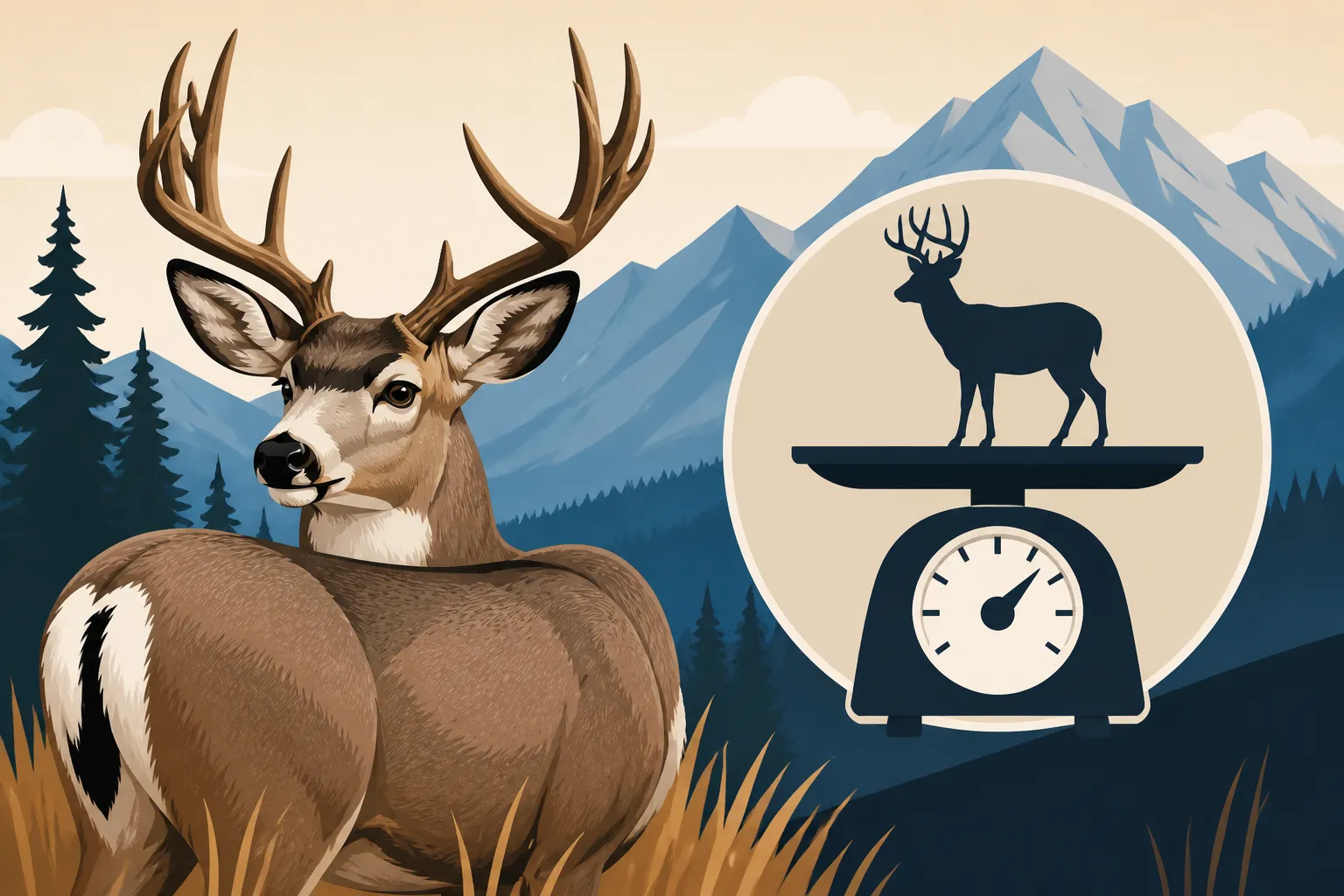
Many hunters, especially those new to pursuing mule deer in Alberta, often wonder just how much a truly mature buck actually weighs. It's a question that goes beyond mere curiosity; understanding the size and mass of these incredible animals is crucial for everything from shot placement to field dressing and packing out your harvest. This guide aims to demystify the real-world weights of Alberta mule deer, helping you appreciate their impressive stature and better prepare for your next hunt.
The Defining Factors Behind a Mule Deer's Weight
When we talk about what a mature Alberta mule deer weighs, it's never a single, cut-and-dry number. These animals are products of their environment, their age, and the specific time of year you encounter them. There are a multitude of variables that contribute to their overall body mass, making each buck a unique specimen. Understanding these factors is key to appreciating the true robustness of a prairie or badlands buck.
Age and Maturity in Mule Deer
Just like us, mule deer grow and put on weight over time. A young yearling buck, perhaps just pushing its first small antlers, will be a fraction of the size of a fully mature, 4.5 to 6.5-year-old animal. While antler size is often what catches our eye, true maturity in a buck is typically marked by its body development. A mature buck will show a deep chest, a thick neck (especially pre-rut), and a full, muscular frame that simply isn't present in younger animals, even if a younger buck has an impressive rack due to good genetics and nutrition.
It's common for hunters to mistake a 2.5-year-old buck with good antler growth for an older animal. However, if you look past the antlers to the body, you'll notice that younger bucks still have that "leggy" appearance. Their chests are shallower, and their necks don't have the same bulk. A truly mature buck fills out its hide, presenting a more blocky, substantial appearance that adds significant pounds to its overall weight. This body maturity is what often differentiates a 200-pound dressed buck from one pushing 250 or even 300 pounds.
Nutrition and Habitat Quality
The old saying "you are what you eat" holds incredibly true for wildlife, especially mule deer. Alberta offers a diverse range of habitats, from the rich agricultural lands of the parkland and prairie regions to the more arid, sparse badlands, and the coniferous fringes of the foothills. Each of these environments offers different nutritional opportunities, directly impacting the average body weight of the deer that live there.
Deer in areas with abundant, high-quality forage – like the irrigated lands of southern Alberta or grain fields bordering Alberta's Parkland Country and Its WMUs – tend to be heavier and healthier. They have access to a consistent diet of protein-rich crops, lush native grasses, and browse. Conversely, deer inhabiting more marginal areas, such as some of the deeper coulees in the Hunting Mule Deer in the Badlands Coulees or areas that have experienced drought, might carry less fat and muscle mass. Their bodies prioritize survival, and growth might be slower, resulting in lighter animals overall. Scouting these areas, perhaps with tools like GoHunt to analyze habitat, can give you a real edge in understanding what to expect.
Seasonal Weight Fluctuations
A mule deer's weight isn't static throughout the year; it fluctuates dramatically with the seasons. In late summer and early fall, leading up to the rut, bucks are at their heaviest. They've spent months gorging on lush feed, building up fat reserves to prepare for the energy-intensive breeding season. Their necks swell, their muscles are at their peak, and they are truly in their prime. This is when you're likely to encounter the heaviest animals.
Once the rut kicks in, typically in November, bucks become singularly focused on breeding. They expend enormous amounts of energy chasing does, fighting rivals, and barely eating. It's not uncommon for a big buck to lose 20-30% of its body weight during this period. By the time late season rolls around, many bucks are gaunt, exhausted, and significantly lighter. Coupled with the stresses of winter and scarcer food, a buck that was a tank in October can look quite thin by December. This is an important consideration when you're anticipating how much meat you'll be packing out after a late-season harvest.
Understanding Average Weights for Alberta Mule Deer
Getting down to brass tacks, what can a hunter realistically expect when they finally put their hands on a mature Alberta mule deer? The numbers can still vary, but there are some good averages and distinctions to understand, particularly between live weight and dressed weight, and how different regions of Alberta contribute to these figures. It’s also important to remember that antlers, while impressive, don't always tell the full story of body size.
Live Weight Versus Dressed Weight
This is perhaps the most critical distinction for any hunter. When you hear about a "300-pound buck," it almost always refers to the live weight of the animal before any processing. Dressed weight, on the other hand, is what you're left with after the internal organs are removed – the heart, lungs, liver, intestines, etc. This is the weight that truly matters for packing out, meat yield, and often for confirming trophy size with official weigh scales at some competitions or processing facilities.
As a general rule of thumb, the dressed weight of a big game animal like a mule deer is usually about 70-75% of its live weight. So, a truly massive 300-pound live weight mule deer buck might have a dressed weight in the range of 210-225 pounds. A more common mature buck in Alberta, perhaps with a live weight of 220-250 pounds, would yield a dressed weight of approximately 150-185 pounds. This dressed weight can still feel incredibly heavy when you're trying to pack it out of a remote coulee or off a prairie ridge.
Regional Differences in Alberta
Alberta's landscape is incredibly diverse, and so are its mule deer.
- Prairie and Parkland: The big, robust bucks often highlighted in hunting magazines frequently come from the agricultural regions of southeastern Alberta. These deer benefit from abundant feed, often gaining significant fat reserves. A mature buck from these areas, particularly in the prime of its life (4.5 to 6.5 years old), can easily push 250-280 pounds live weight, with some exceptional specimens exceeding 300 pounds. These are the bucks that contribute to Alberta's reputation for giant deer. Hunting these areas, which might involve hunting a prairie ridge or Hunting a Standing Canola Field Edge, often means encountering larger-bodied animals.
- Badlands: While the Badlands offer iconic mule deer hunting opportunities, the deer here tend to be slightly leaner on average compared to their agricultural counterparts. The terrain is tougher, and forage, while present, can be less calorically dense. A mature badlands buck might average 200-240 pounds live weight, with fewer animals reaching the extreme upper end of the scale seen in the rich farm country.
- Foothills/Transition Zones: In the transition zones where the prairie meets the foothills, you'll still find good-sized deer, though perhaps not the consistent giants of the deepest agricultural zones. Bucks here might range from 200-250 pounds live weight. Deeper in the actual foothills, where feed might be more browse-dependent and winters harsher, average weights can sometimes be a bit lower, though healthy, mature bucks are certainly still present.
Here's a simplified table illustrating these average weights:
| Age Class/Maturity | Average Live Weight (lbs) | Average Dressed Weight (lbs) | Notes |
|---|---|---|---|
| Yearling (1.5 yrs) | 120 – 150 | 80 – 105 | Still growing, typically "leggy" |
| Young Adult (2.5 yrs) | 160 – 200 | 110 – 140 | Developing body, good antler potential, but not fully mature |
| Mature (3.5 – 6.5 yrs) | 220 – 280 | 150 – 200 | Peak body condition, deep chest, thick neck, prime rut weight |
| Exceptional (>6.5 yrs) | 280 – 320+ | 200 – 230+ | Rare, often older bucks from prime habitat, typically pre-rut |
Note: These are average ranges for healthy bucks prior to the rut. Post-rut and late-season animals will often be significantly lighter.
Antler Size vs. Body Mass
It's a common misconception that a massive rack automatically means a gigantic body. While there's often a correlation – good nutrition typically supports both body and antler growth – it's not a hard and fast rule. You can find a heavy-antlered buck that, when put on the scale, is surprisingly lighter than another buck with a more modest rack but a truly immense body.
Antler growth is heavily influenced by genetics, age, and nutrient availability during the antler growing phase (spring/summer). Body mass is a culmination of sustained nutrition and overall health throughout the year. Sometimes, a younger buck with exceptional genetics and perfect growing conditions can produce a very large rack, but his body hasn't had enough time to fully mature and pack on the deep muscle and fat of an older animal. Conversely, an older, heavy-bodied buck might be past its antler prime, or have a less genetically impressive rack, but still carries immense bulk. When you're trying to gauge a buck's size, try to look at its entire frame, not just the headgear, especially when Judging a Mule Deer Buck at Distance.
Practical Implications for Hunters
Knowing what a mature Alberta mule deer weighs isn't just trivia; it has real, tangible impacts on how you plan and execute your hunt. From what you bring into the field to how you get your hard-earned meat back to camp or the truck, body size is a constant consideration. Being prepared for a heavier animal can make all the difference between a smooth recovery and a tough, drawn-out ordeal.
Field Dressing and Meat Care
Dealing with a 200+ pound animal on the ground is a significant undertaking. The sheer volume of internal organs is substantial, and efficient field dressing is paramount, especially if temperatures are mild. If you're solo, rolling a heavy buck to access its underside can be a real challenge. Many hunters choose to quarter larger animals to make them more manageable, particularly if they're far from vehicle access. This means having the right tools on hand: a sharp knife, a game saw or hatchet, and plenty of game bags. Consider the article Meat Care in Alberta's Cold and Warm Swings for more detail on how to best preserve your harvest.
The size of the carcass also dictates how quickly it needs to be cooled down. Larger animals retain heat longer, increasing the risk of spoilage. This is particularly true if you're hunting in early season when daytime temperatures can still be warm. Prompt field dressing, skinning, and quartering become even more critical for big bucks. Knowing the average dressed weight helps you gauge how much ice you'll need, or how quickly you need to get that meat to a cooler or processor.
Gear Considerations for Big Game Recovery
Packing out a whole deer on your back is a young person's game, and even then, only for smaller animals. With a mature Alberta mule deer, especially one from a more remote WMU that involves Hunting Mule Deer on a Prairie Ridge or deep coulees, you'll almost certainly be quartering. This means you need a pack that can comfortably handle 60-80 pounds per load, and likely multiple trips. A sturdy frame pack designed for backcountry hunting is almost a necessity.
Beyond the pack, consider other recovery aids:
- Game Carts: If the terrain is relatively flat and open, a robust game cart can save your back. However, they are useless in broken badlands or steep foothills.
- ATVs/UTVs: In areas where they are permitted, an ATV or UTV can be a lifesaver for getting heavy animals out. Ensure your machine has enough towing or hauling capacity, and always check the regulations for Quad and Side-by-Side Rules on Crown Land in your specific hunting area.
- Come-alongs/Winches: For getting an animal into the back of a truck or onto a trailer, a come-along or a vehicle-mounted winch can make the job much easier and safer, especially if you're hunting alone.
- Hunting Partners: The best gear you can bring is a strong hunting partner (or two!). Sharing the load, whether literally or by assisting with quartering and getting the animal situated, makes a huge difference.
Judging a Buck in the Field
Learning to accurately estimate a mule deer's body weight and overall size in the field comes with experience. It's a skill that helps you determine if a buck is truly mature and worth pursuing, even beyond its antler configuration. When you're glassing from a distance, don't just focus on the rack. Look at the entire animal:
- Body Depth: How deep is its chest compared to its legs? A mature buck will have a deep, barrel-chested appearance.
- Neck Mass: In the pre-rut and rut, a mature buck's neck will be incredibly thick, often blending almost seamlessly into its shoulders. Younger bucks will have more defined, slender necks.
- Belly Sag: While not always indicative of maturity (could be gut fill), a buck with a significant sag in its belly often signals an older, more robust animal that has packed on condition.
- Overall Proportions: Does the buck look "leggy" or "blocky"? Leggy suggests youth, while blocky points to maturity and heavier body mass.
Using good optics, like those you might research on sites like GoHunt, and spending time observing deer through your binoculars or spotting scope, will sharpen this skill. Pay attention to how a buck carries itself, how it moves, and compare it to other deer in the same group. Over time, you'll develop a keen eye for what a truly heavy, mature Alberta mule deer buck looks like, well before you ever put a tape to its antlers. Remember, Spot-and-Stalk Mule Deer in Alberta often means quick judgments from afar, so practice makes perfect.
Disclaimer
This article is for general informational purposes only and does not constitute professional advice. Laws, prices and regulations vary by location and change over time. Consult a qualified professional for guidance on your specific situation.