Hunting a Frozen Slough Crossing
As winter really sets in across Alberta, and the snow piles up, finding those elusive whitetails can become a real head-scratcher. The open fields are often barren, and the thick bush feels impenetrable. But don't despair! When the mercury drops and the landscape freezes solid, some of the best opportunities emerge: hunting a frozen slough crossing. This guide will walk you through why these icy pathways are magnets for deer and how you can use them to your advantage.
Why Frozen Slough Crossings are Whitetail Hotspots
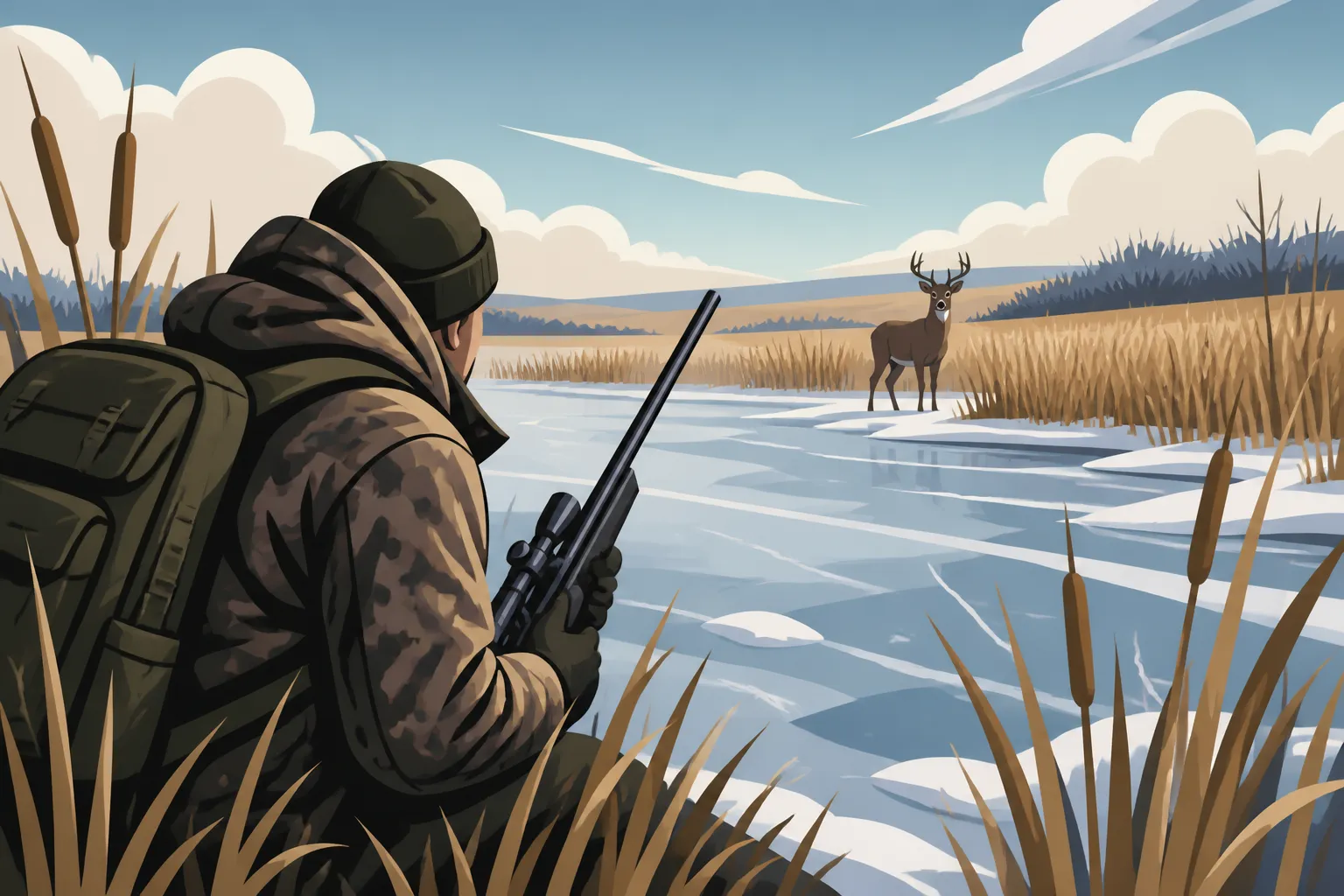
When the ground is covered in a fresh blanket of snow, and the temperatures plummet, a whitetail deer's world changes dramatically. What were once impassable obstacles like ponds, wetlands, or deep sloughs become solid, predictable travel corridors. These frozen crossings aren't just convenient shortcuts; they’re often essential thoroughfares linking bedding areas to feeding grounds, especially when snow accumulation makes movement difficult elsewhere.
The Winter Whitetail Mindset
Whitetails in Alberta's harsh winter conditions are all about energy conservation. Every calorie counts, and every unnecessary step costs them dearly. This means they're going to pick the path of least resistance. Instead of busting through deep drifts in the bush or wading through icy, shallow water, a solid sheet of ice across a slough offers a smooth, easy highway. This fundamental shift in their movement patterns is crucial for hunters to understand. If you've been frustrated by scattered deer sign or patterns that seem to make no sense, it’s often because they've consolidated their travel onto these efficient routes. Knowing this, you can adjust your strategy from broadly covering ground to pinpointing these specific high-traffic zones. You can learn more about Where Alberta Whitetails Bed in Deep Snow to understand their full winter patterns.
Reading the Landscape: How Sloughs Form Crossings
Sloughs, ponds, and even wider wetlands become frozen bridges once the ice is thick enough. Deer will naturally gravitate to the narrowest points, the shallowest sections, or areas where protective cover extends closest to the water's edge on both sides. These "pinch points" force deer into predictable lanes. Imagine a long, winding slough with a narrow section in the middle, or a small island of cover that creates a natural bridge. These are the prime spots. The banks leading up to and away from these crossings often show heavy wear, even through the snow, with clear tracks indicating regular use. While a deer's weight is less of an issue, for a hunter, safety is paramount. Always check ice thickness before venturing out onto any frozen body of water, especially in areas with flowing water or springs, which can create dangerously thin spots.
Scouting for Success on Frozen Sloughs
You can’t just walk up to any frozen slough and expect to hit pay dirt. Effective scouting, both from afar and on the ground, is absolutely critical. This isn't just about finding deer; it's about understanding how they use the specific piece of frozen water you're targeting.
Identifying Prime Crossing Locations
This is where your boots on the ground, combined with modern mapping tools, become your best friends. Start by looking for heavy tracks leading onto and off the ice. Pay attention to the frequency and direction of travel. Are deer using this crossing daily to get from a bedding area in a spruce bluff to a feeding field, or is it a less-used secondary route? Look for other signs of deer activity nearby: frozen rubs on saplings, old scrapes (even if they're covered in snow), or browse lines indicating consistent feeding.
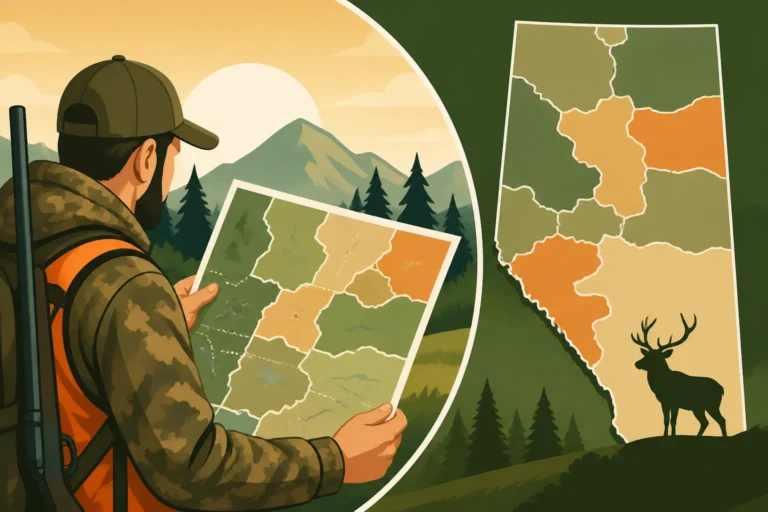
One tool that has completely revolutionized how I scout is a good mapping app like GoHunt. Before I even put on my boots, I’m pouring over satellite imagery. I’ll look for sloughs that connect two distinct types of cover—say, a dense stand of aspen to a cattail marsh, or a willow draw to a standing stubble field. With GoHunt, you can zoom in and identify those natural pinch points, the narrowest parts of the slough, or areas where timber extends close to the water on both sides, creating a perfect funnel. This allows you to prioritize which sloughs to investigate on foot, saving precious time and effort when Scouting an Alberta WMU Before Season.
Understanding Wind and Sun Influence
Deer are masters of using the elements to their advantage, and winter is no different. The wind plays a huge role in how deer will use a frozen slough. They rarely want to cross an open expanse of ice directly into a strong headwind, especially if it means exposing themselves. Often, they'll skirt the edges, use protective banks, or choose a crossing that allows them to move with the wind at their side or back.
The sun's influence, while sometimes subtle, is also worth noting. On extremely cold, sunny days, the sun can sometimes create slightly softer snow or even melt a thin layer of ice on the surface, making it easier or quieter to cross. Conversely, a strong sun can make a wide-open ice crossing feel even more exposed. Consider how these factors impact a deer's comfort and security. You want to position yourself where they feel safest and most likely to appear. Remember, your approach to the stand should always be with the wind in your face to avoid spooking deer with your scent. Staying warm and comfortable while waiting is also key, especially when Hunting Whitetails at Thirty Below.
Effective Hunting Strategies for Frozen Crossings
Once you've identified a promising frozen slough crossing, it's time to think about how you'll hunt it. There are several effective strategies, each with its own advantages depending on the specific location, the number of hunters, and the deer's behavior.
Stand Placement and Setup
For solo hunters or those who prefer a more static approach, setting up a stand is often the most productive method. The key is concealment and positioning. You want your stand to offer a clear shot across the ice, but also to cover the entry and exit points where deer step off the solid ground and onto the frozen surface.
Consider using a portable tree stand or a ground blind. If you're using a tree stand, look for a tree with good natural cover that allows you to break up your silhouette. If it's a ground blind, ensure it's well brushed in with local vegetation. Placing your stand approximately 20-30 yards from the crossing itself often provides an ideal shooting distance. You want to be able to see enough of the slough to detect deer approaching, but not so far back that your shot becomes marginal. Remember that deer might pop out of a Hunting a Shelterbelt Between Two Fields and make a dash across the ice. The ability to quickly and quietly get into your stand without disturbing the area is paramount. A good rule of thumb is to arrive well before first light, or if it's an evening hunt, get in position early and stay until well after dark.
Still-Hunting and Driving Strategies
For hunters who prefer a more active approach or are hunting with partners, still-hunting or carefully executed small drives can be incredibly effective around frozen slough crossings.
Still-Hunting: This involves moving slowly and deliberately through the cover adjacent to the slough, pausing frequently to observe. The goal isn't to blast through the bush, but to carefully pick your way, hoping to intercept deer moving naturally or to gently push them towards a pre-determined crossing. When still-hunting, always move into the wind or with a crosswind, using the frozen slough as a natural boundary or funnel. Pay close attention to subtle movements, the flick of an ear, or the glint of an antler. This method works well for exploring new areas or when deer patterns are less predictable.
Small-Scale Drives: If you're hunting with one or two partners, a small drive can be very productive. The concept is simple: one or two hunters (the "pushers") walk through a block of cover, gently moving deer towards another hunter (the "stander") positioned strategically at a known slough crossing. Communication is vital here, often via two-way radios, to ensure safety and coordinate movements. The pushers should move slowly, stopping and starting, making subtle noises rather than charging through like a freight train. The goal is to move the deer naturally, not to panic them into reckless flight. Ensure all hunters are aware of each other's positions and adhere to strict safety protocols, especially regarding shooting lanes and target identification.
Decoys and Calls
While often associated with rut hunting, don't completely discount the power of a well-placed decoy or subtle calling on a frozen slough crossing, even in the late season. During the bitter cold, deer are often less vocal, but curiosity can still get the better of them.
A single deer decoy, especially a doe, placed near the edge of a frozen crossing can sometimes pique the interest of a passing buck or even a group of does. It provides a visual focal point, making them feel safer as they approach the open ice. Just ensure the decoy is positioned to face downwind, mimicking a natural deer posture, and that it doesn't obstruct your shooting lane.
As for calling, aggressive rut calls like rattling or grunt tubes are usually less effective once the main Hunting the Rut in Early November has passed and temperatures are consistently below freezing. However, softer contact calls, like a quiet doe bleat or a short grunt, can sometimes reassure a cautious deer or draw the attention of one just out of sight. Remember, less is often more in late-season calling.
| Strategy | Best For | Key Considerations | Number of Hunters | Required Equipment |
|---|---|---|---|---|
| Stand Hunting | Predictable deer movement, patient hunters | Concealment, wind direction, early entry/late exit | 1-2 | Tree stand/ground blind, warm clothing, optics |
| Still-Hunting | Scouting new areas, cautious movement | Wind direction, silent approach, keen observation | 1 | Warm clothing, optics, quiet boots |
| Small-Scale Drive | Moving deer from cover to crossing, multiple hunters | Clear communication, safety, gentle pushing | 2-4 | Radios, blaze orange, clear plan |
| Decoys & Subtle Calls | Adding visual/auditory appeal, late season | Realistic setup, minimal calling, strategic placement | 1-2 | Deer decoy, soft calls |
Safety and Ethical Considerations on Ice
Hunting on or around frozen water brings specific safety concerns that must always be at the forefront of your mind. While a deer's lighter weight might allow them to cross thinner ice, a hunter carries more weight and equipment, making ice safety paramount. Ethical considerations also extend to ensuring a clean kill and efficient retrieval in potentially challenging conditions.
Ice Safety Basics
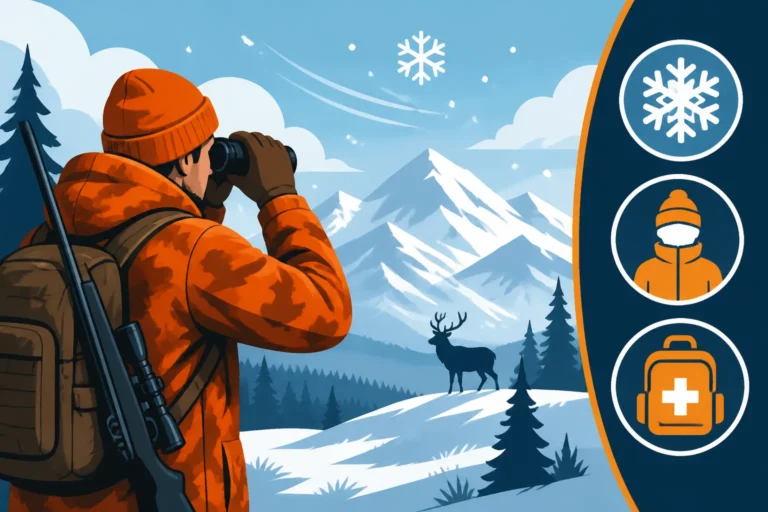
Never assume ice is safe just because it looks frozen. Always carry ice picks, a rope, and a whistle when venturing onto any frozen water body. Understand that moving water, such as creeks flowing into or out of a slough, or areas with bubbling springs, will have significantly weaker ice. Varying snow depths can also conceal thin ice. Before stepping onto the ice, check its thickness with an auger or spud bar. Generally, a minimum of 4 inches of clear, solid ice is recommended for walking. If you're unsure, or if conditions seem borderline, stick to the banks and hunt from solid ground. Your trophy isn't worth a tragic accident. Remember to review Hunting Alberta Winter Weather Safely before any cold-weather hunt.
Shot Placement and Retrieval
Hunting on a frozen slough crossing can present unique challenges for shot placement. The open ice offers no cover for a wounded animal, but it can also be a slick, hard surface. Aim for vital organs to ensure a quick, humane kill. Practice shooting from stable positions that mimic your stand setup. If a deer goes down on the ice, approach with extreme caution. The ice can be slippery, and a wounded animal can still be dangerous.
Retrieving a deer off a frozen slough, especially if it's large, requires planning. If the deer is on solid ice, a sled or game cart can make short work of the haul. However, if the deer breaks through thin ice near the edge, or if it runs into deeper, unstable ice after the shot, retrieval becomes much more complex and potentially dangerous. Always have a plan for how you will retrieve your game, and ensure you have the necessary tools like ropes, a sturdy sled, or even extra hands if necessary. Proper Field Dressing in Alberta's Deep Cold is also important to consider once you've secured your animal.
Hunting frozen slough crossings can be an incredibly rewarding experience, offering unique challenges and opportunities during the late season. By understanding deer behavior, meticulous scouting (perhaps with a tool like GoHunt!), and employing smart hunting strategies, you can turn these icy landscapes into some of your most productive hunting spots.
Disclaimer
Please note that hunting regulations, season dates, and access rules in Alberta can change. Always consult the most current Alberta Hunting Regulations Guide and specific WMU (Wildlife Management Unit) regulations before planning any hunt. Ensure you have all necessary licences and permissions for the land you intend to hunt. Safety should always be your top priority.