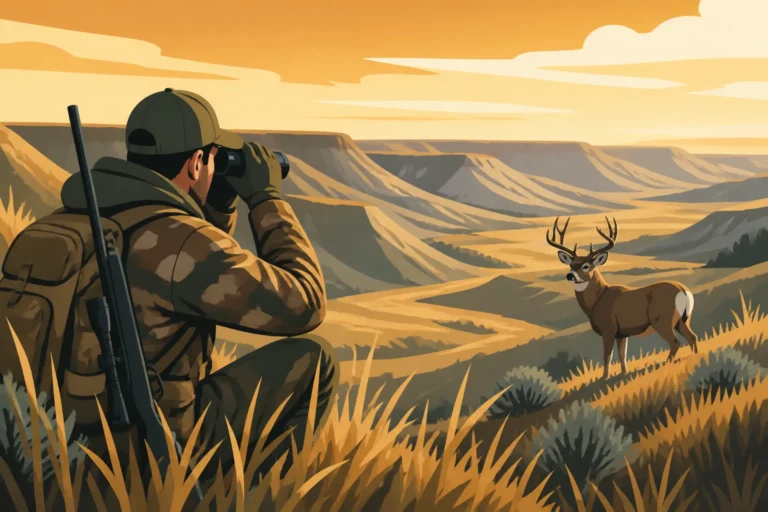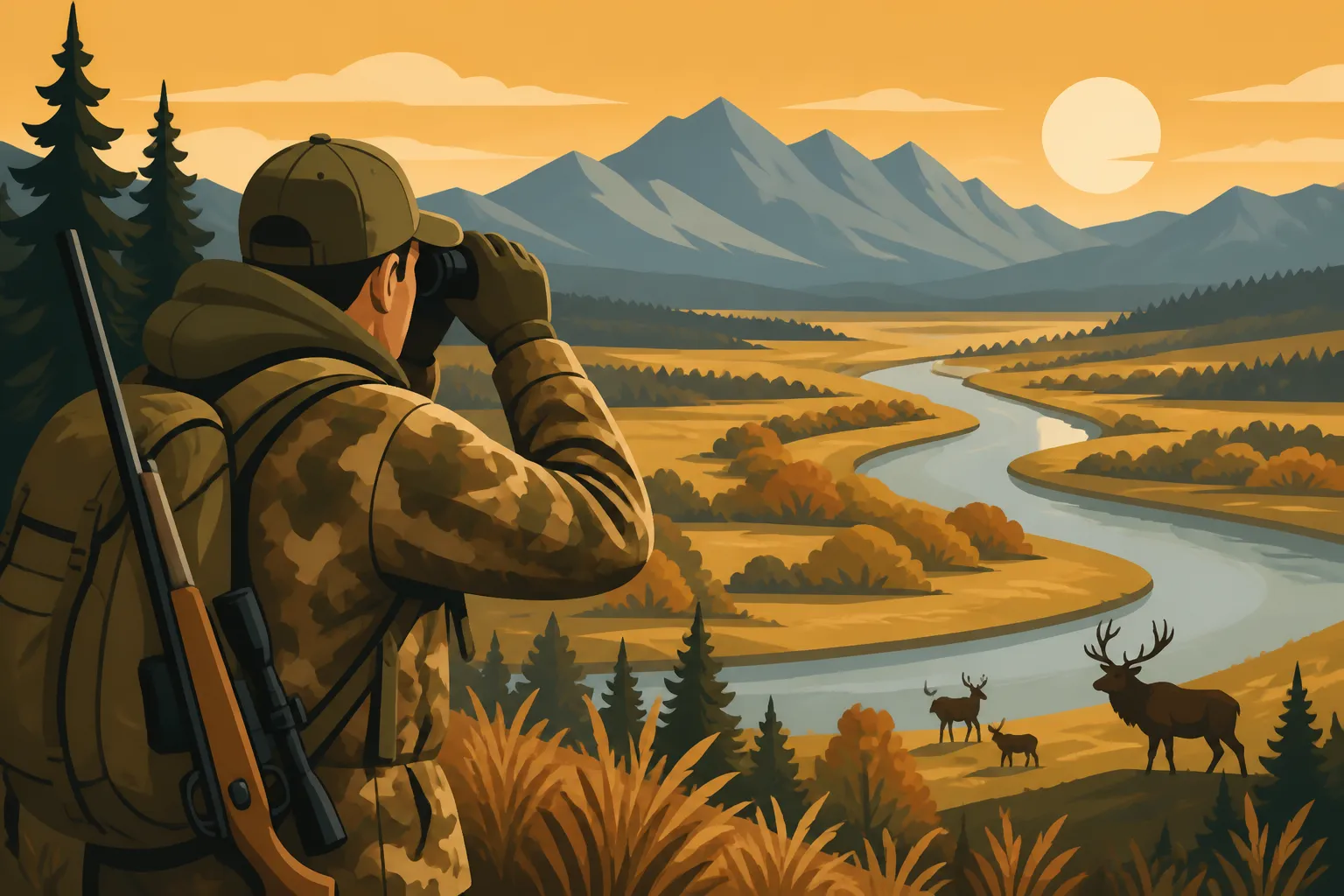
Hunting a River Valley Bottom in Alberta
Hunting the winding, often treacherous river valley bottoms in Alberta presents a unique set of challenges that can leave even seasoned hunters scratching their heads. The dense cover, varied terrain, and unpredictable animal movement in these areas often mean wasted hours and missed opportunities if you don't approach them with a well-thought-out plan. This guide is dedicated to dissecting the intricacies of river bottom hunting, offering practical strategies and insights to help you unlock the potential of these challenging yet incredibly rewarding landscapes.
Understanding the Dynamics of Alberta's River Valley Bottoms
River valleys, whether it's the mighty Athabasca, the sprawling North Saskatchewan, or even smaller creeks feeding into major drainages, are absolute magnets for wildlife in Alberta. But they're also incredibly complex environments, presenting a mix of dense cover, water features, and diverse vegetation that changes dramatically along their length. To truly succeed here, you need to understand why animals use these areas and how the terrain dictates their movements.
Why River Valleys Are Deer Magnets
Think about it: a river valley offers everything a deer, particularly a whitetail, could ever want. It's a natural travel corridor, a superhighway through otherwise open or uniform landscapes. Deer use these corridors for security, especially during daylight hours when they're moving between bedding areas and feeding grounds. The steep banks and thick bush provide incredible thermal cover in winter and shade in the summer, making them ideal sanctuaries.
Moreover, river bottoms typically boast an incredible diversity of forage. From willows and dogwood along the water's edge to aspen and balsam poplar on the benches, and even the occasional standing crop or hayfield bordering the valley rim, the food sources are abundant and varied. Water, of course, is never an issue. This combination of security, forage, and water makes these valleys prime habitat, often holding some of the biggest, most elusive bucks. You'll find deer often hold tight to the thickest cover along the river, using every fold and dip in the terrain to their advantage. This is especially true during peak hunting pressure or when they're escaping the deep cold late in the season. These are the places where deer feel safest, making them challenging but ultimately rewarding to hunt.
Common Challenges in River Bottom Terrain
While river valleys are wildlife havens, they are by no means easy hunting grounds. Access can be a huge hurdle. Many valleys are bordered by private land, requiring diligent effort in Asking a Grazing Leaseholder for Access or simply knocking on doors. Even on Crown Land, the sheer steepness of the banks can make getting in and out a grueling task, especially if you're packing out a big game animal.
The terrain itself is often a tangled mess of thick brush, fallen timber, and often muddy, uneven ground near the water. This dense cover limits visibility, making long-range glassing nearly impossible and forcing you to hunt closer to the animals. Then there's the wind, which can swirl unpredictably in the bottom of a valley, making scent control an absolute nightmare. Furthermore, unexpected water crossings, old beaver ponds, or even quicksand-like mud flats can present significant safety hazards. Getting a moose out with a quad might seem like a good idea, but the terrain in a river valley can quickly turn that into a recovery mission if you're not careful. Hunters must be prepared for everything from loose rock to icy patches, depending on the season, making every step a calculated risk.
Essential Scouting Strategies for River Valleys
Effective scouting is paramount when hunting river valleys. Without it, you're essentially stumbling around in the dark. Because of the complex nature of these areas, a multi-faceted approach combining digital tools with thorough on-the-ground reconnaissance is essential to piece together the puzzle of animal movement and identify prime hunting locations.
Digital Scouting with Satellite Imagery and Mapping Tools
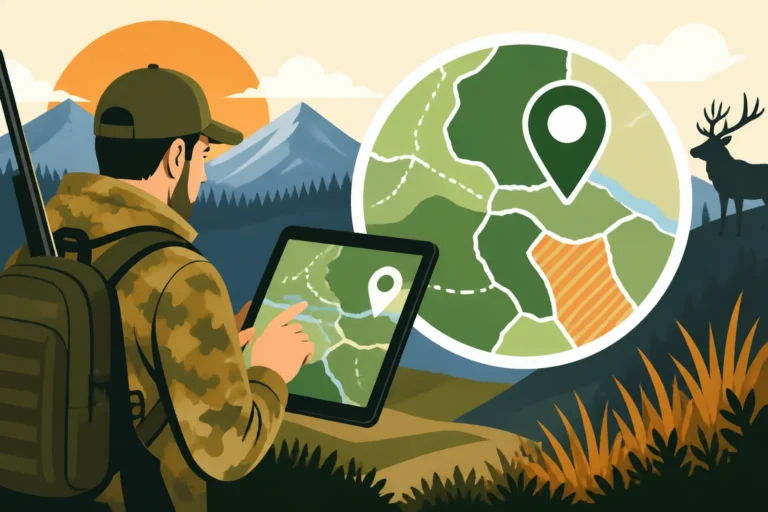
Before you even tie your boots, you should be deep into digital scouting. Tools like GoHunt maps or similar platforms that layer satellite imagery, topographical lines, and land ownership are invaluable. Start by identifying the main river channel and its major tributaries. Look for distinct features: sharp bends, oxbow lakes, islands, and areas where the valley narrows or widens. These are often choke points or natural funnels where deer movement might be concentrated.
Pay close attention to changes in vegetation visible from satellite imagery. Look for darker patches indicating dense timber or willow thickets, which could be prime bedding areas. Conversely, lighter green or yellow areas might signal open fields or benches of aspen bluffs where deer feed or stage before entering fields. Identifying trails from above is tricky, but look for linear breaks in vegetation or areas where multiple lines converge. Using a topographic overlay, pinpoint benches or terraces that run parallel to the river. These are often easier travel routes for deer than the steep valley sides. Mark potential access points, whether it's an old logging road, a cutline, or a natural draw that allows for a less strenuous descent. Don't forget to check Using Alberta's Recreational Access Mapping Tool to ensure you're on public land or have permission for private parcels. This initial digital reconnaissance will give you a solid game plan for your physical scouting efforts.
Boots-on-the-Ground Reconnaissance
Once you've got your digital maps marked up, it's time to hit the ground. Nothing beats boots-on-the-ground scouting for confirming what you saw digitally and discovering details you missed. Start by walking potential access routes, assessing their difficulty and quietness. Once in the valley, focus on finding fresh sign. Look for active trails, fresh rubs, and scrapes, particularly along benches and within dense cover. Pay attention to how deer are using the terrain: are they following the top of a bench, cutting across a specific draw, or crossing the river at a certain point?
During your scouting, think like a deer. Where would you feel safe bedding down? Where would you feed? Where would you cross the river without being exposed? Look for natural funnels like narrow strips of timber between open areas, or saddles along a ridge that deer might use to transition between valley sides. Identifying these key movement patterns is crucial. Also, scout for suitable stand locations. Look for trees that offer good cover and shooting lanes, keeping prevailing wind directions in mind. Pay particular attention to fresh sign around water sources, as deer often stop for a drink. Remember, silent and thorough scouting is key. Don't blow out your hunting area before the season even begins.
Proven Hunting Tactics for Success in River Bottoms
Hunting river valley bottoms requires a blend of patience, stealth, and adaptability. The dense environment means close encounters are likely, so being prepared for quick shots and understanding how to read the immediate landscape is crucial.
Stand Placement and Ambush Points
The art of stand placement in river valleys is all about exploiting those natural travel corridors and bedding areas you identified during scouting. Look for pinch points: areas where the valley narrows, or where dense cover forces deer into a smaller, more predictable travel lane. This could be a narrow shelf along a steep bank, a bottleneck between thickets, or a crossing point on the river. Key ambush points are often found where several game trails converge, or where a major trail crosses an open feeding area at the edge of the timber.
Elevated stands, whether treestands or ground blinds, are incredibly effective in river bottoms for two main reasons. First, they get your scent above the swirling valley winds, a constant battle in these environments. Second, they offer a better vantage point over the thick undergrowth, extending your visibility just enough to identify approaching deer. When setting up, always consider the wind direction. You want the wind blowing your scent away from the anticipated travel route of the deer. Also, think about the angle of the sun at dawn and dusk – you don't want to be silhouetted or have the sun directly in your eyes. A carefully chosen stand location can be a game-changer when Hunting Alberta's September Archery Opener or any season really, where deer are extra wary. Don't forget to practice Hanging a Stand on an Alberta Bush Edge beforehand to ensure you're efficient and quiet when setting up in the field.
Still-Hunting and Stalking Techniques
Sometimes, the best approach in a sprawling river valley isn't to sit and wait, but to go to the deer. Still-hunting and stalking are incredibly effective, especially in areas with very dense cover or during periods when deer are moving irregularly. The key is to move incredibly slowly, pausing often to scan your surroundings, not just ahead, but to your sides and behind you. Use binoculars to pick apart the cover, looking for horizontal lines (a deer's back) in a vertical world, or the flick of an ear.
When still-hunting, always hunt into the wind to keep your scent from spooking deer ahead of you. Move from cover to cover, using natural obstacles like fallen logs, thick brush, or changes in elevation to conceal your movement. If you spot a deer, take your time. Assess its behavior, try to determine its travel direction, and then plan your stalk. In the thick river bottom, close-quarters stalking often involves crawling or taking advantage of noisy events like a gust of wind or a passing train to mask your movements. Remember that Stalking Mule Deer in Badlands Breaks shares many similarities with river bottom stalking – patience and meticulous attention to wind and cover are paramount. The dense foliage and uneven ground demand complete focus and extreme caution with every step.
Calling and Rattling in the River Bottom
Calling and rattling can be surprisingly effective in river valley bottoms, especially during the rut when bucks are actively seeking does and challenging rivals. The acoustics of a valley can carry sound incredibly well, sometimes too well, but it also means your calls can reach deer that might otherwise be out of earshot. For whitetails, grunts, bleats, and rattling antlers can lure curious bucks into shooting range. Start with soft calls and increase the volume if there's no response.
During the pre-rut and rut, aggressive rattling sequences can mimic two bucks fighting, often drawing in bucks looking to assert dominance or investigate a potential rival. However, be mindful of the dense cover; a buck might sneak in without you knowing until it's too late. Combine calling with good stand placement, and always be ready for a shot. For moose, Calling a Bull Moose in the Rut can be deadly effective, as the river bottom habitat often includes the willows and aquatic vegetation they prefer. Similarly, Raking Brush to Bring in a Bull works exceptionally well in these areas, mimicking a bull tearing up the saplings. When using calls, ensure you have good visibility and an escape route if an animal comes in too hot.
| Tactic | Best Conditions | Advantages | Disadvantages | Key Considerations |
|---|---|---|---|---|
| Stand Hunting | Consistent deer movement, known travel routes | Elevated view, controlled scent, can observe over time | Requires advance scouting, fixed location, wind shifts can be problematic | Wind direction, shooting lanes, access/egress, cover for approach |
| Still-Hunting | Dense cover, moderate deer activity, changing winds | Flexible, covers more ground, active hunting | Requires extreme stealth and patience, can bump deer, limited visibility | Hunt into wind, frequent stops, scan constantly, know your shooting limits |
| Stalking | Visible deer, specific target, favorable wind/cover | Highly targeted, exciting, potential for close shots | Very difficult, high chance of being busted, requires exceptional skill | Wind, terrain noise, use cover meticulously, slow movement, escape route |
| Calling | Rutting season, curious deer, moderate cover | Can bring deer to you, mimics natural interactions | Can alert deer, may attract non-target animals, over-calling is detrimental | Understand deer vocalizations, vary call intensity, combine with good cover |
| Rattling | Peak rut, aggressive bucks, thick cover | Can trigger strong territorial responses, draws in dominant bucks | Can alert deer to your exact location, requires good timing and location | Mimic realistic fight, combine with grunts, be ready for immediate response |
Gear and Safety Considerations for River Valley Hunts
Hunting river valleys in Alberta means facing varied and often challenging conditions. Having the right gear and prioritizing safety can make the difference between a successful, enjoyable hunt and a miserable, potentially dangerous experience.
Must-Have Gear for River Bottom Environments
Given the rugged and often wet nature of river valleys, your gear needs to be robust and functional. Waterproof and durable boots are non-negotiable; you'll be crossing wet areas, navigating muddy banks, and potentially wading through shallow water. Look for boots with excellent ankle support and aggressive tread to handle the uneven terrain. Pair them with quality wool socks to prevent blisters and manage moisture. Layering your clothing is also critical, as temperatures can fluctuate wildly, especially from the top of the valley to the bottom, and throughout the day. A good waterproof outer shell is a must to protect against rain, snow, or even dew from dense brush.
A high-quality backpack is essential for carrying your essentials, including extra layers, water, snacks, a first-aid kit, and game bags. Consider a pack that can handle hauling meat, as getting a deer out of a valley can be tough work. A GPS device or a reliable mapping app like GoHunt on your phone (with downloaded offline maps!) is crucial for navigation, as cell service is often spotty or non-existent in deep valleys. Don't forget a headlamp, even if you plan to be out during daylight hours; unforeseen delays or packing out game can leave you in the dark. For added safety, consider carrying a satellite messenger or personal locator beacon, especially if you're hunting alone in remote areas of the Athabasca River corridor or the Peace River breaks. These tools can literally be lifesavers when things go wrong.
Navigating Water and Treacherous Terrain Safely
Safety in a river valley cannot be overstated. The terrain itself poses significant risks. Always be aware of your footing, especially on steep banks, loose scree, or muddy areas near the water. A sturdy hiking stick can be an invaluable tool for balance and testing uncertain ground. If you need to cross water, assess the depth and current carefully. Never attempt to cross fast-moving or deep water if you're unsure. If a crossing is necessary, unbuckle your pack's hip belt and chest strap so you can shed it quickly if you fall. Wearing a PFD (personal flotation device) is a good idea if you anticipate deep or swift water crossings, especially if you're carrying a heavy pack or firearm.
Furthermore, be mindful of wildlife encounters. River bottoms are prime habitat for black bears and even grizzly bears in some areas of Alberta. Always carry bear spray and know how to use it. Make noise as you move to avoid surprising animals, especially in dense cover. It's also wise to inform someone of your hunting plans, including your exact location and expected return time. This provides a crucial safety net. Remember, even a small creek can become a raging torrent after heavy rain or during spring runoff, so keep an eye on weather forecasts and water levels. Understanding Hunting Alberta Winter Weather Safely is also vital, as ice and snow add another layer of danger to an already challenging environment. Always prioritize safety over the hunt – a game animal is never worth an injury or worse.
Disclaimer
Please be aware that hunting regulations and conditions in Alberta can change. Always consult the most current Alberta Hunting Regulations Guide published by Alberta Environment and Parks before heading into the field. This information is for general guidance and educational purposes only.