Why Alberta’s Elk Herd Keeps Growing
For many hunters, the sight of a growing elk herd in Alberta is a truly majestic and exciting prospect. Yet, it also brings a unique set of challenges and questions about what’s driving this expansion and how it impacts both the ecosystem and human communities. This guide dives deep into the fascinating reasons behind Alberta's robust and expanding elk populations, exploring the ecological shifts, management practices, and environmental factors that contribute to their thriving numbers.
Understanding Elk Ecology in Alberta
To really grasp why Alberta's elk herds are flourishing, we need to take a step back and look at their historical presence and their remarkable ability to adapt. Elk, or Cervus canadensis, are iconic North American cervids, and their story in Alberta is one of resilience and, in recent decades, significant recovery.
The Historical Landscape of Elk in Alberta
Historically, elk populations in Alberta ebbed and flowed with human settlement and environmental pressures. Before extensive European settlement, elk roamed widely across the prairies, parklands, and mountains. However, market hunting, habitat loss, and the expansion of agriculture in the late 19th and early 20th centuries significantly reduced their numbers, pushing them largely into the more remote mountain and foothill regions. It was a tough time for these magnificent animals, and for a while, their future looked uncertain in many parts of the province.
Conservation efforts, starting in the mid-20th century, combined with hunting regulations, saw a gradual recovery. The understanding that robust wildlife populations require dedicated management and protected habitat began to take hold. This historical context is crucial because it highlights that the current growth isn't just a natural phenomenon, but a testament to past conservation successes and the elk's inherent ability to bounce back when given the chance. Many long-time hunters can recount stories from their grandparents about how scarce elk once were, making today's thriving herds all the more remarkable.
Elk Adaptability and Diet
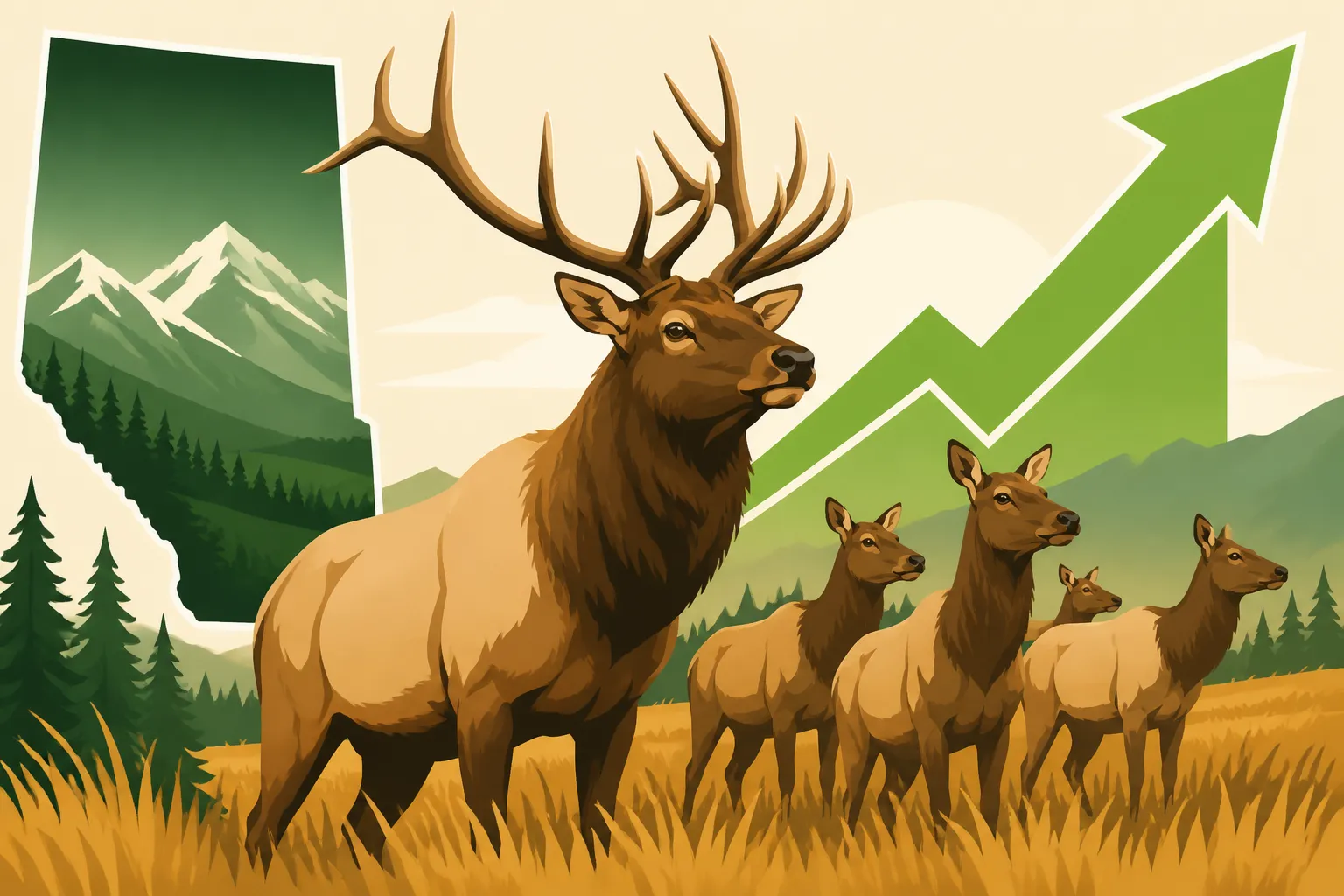
Elk are incredibly adaptable creatures, and this characteristic is a huge part of why they're doing so well in Alberta. They are generalist herbivores, meaning they can thrive on a wide variety of plant life, from grasses and forbs to shrubs and even tree bark. This dietary flexibility allows them to exploit diverse habitats across the province, from the lush valleys of the Elk in Alberta's Mountains and Farmland to the rich agricultural fields. This isn't just about what they can eat, but how efficiently they convert that forage into energy for growth and reproduction.
During the warmer months, elk feast on abundant grasses and tender shoots, building up critical fat reserves. In winter, they switch to browsing on woody vegetation, digging for residual grasses under the snow, and, increasingly, utilizing agricultural crops. Their social structure, living in herds, also provides a measure of protection against predators and allows for efficient foraging, as many eyes and ears are better than one. This adaptability means that as landscapes change, elk are often among the first species to find new opportunities, making the most of whatever resources are available to them.
Key Factors Driving Elk Population Growth
The current surge in Alberta's elk numbers isn't due to a single cause but rather a confluence of several significant factors working in their favor. These elements collectively create a highly conducive environment for elk reproduction, survival, and expansion.
Favorable Habitat and Land Use Changes
Alberta boasts a tremendous diversity of habitats, many of which are proving to be ideal for elk. From the vast forests of the Boreal region to the rolling foothills and the mixed woodlands of the parkland, there's ample cover, water, and forage. Furthermore, changes in land use have inadvertently created new, highly productive elk ranges. For instance, selective logging in the foothills and boreal zones creates early successional habitats with abundant browse and grasses – perfect elk food. New cutlines and seismic lines also offer accessible travel corridors and provide clearings where forage can flourish, often leading to Hunting Moose Along Cutlines and Seismic Lines or elk.
Beyond forestry, the expansion of agriculture into former wilderness areas, while initially detrimental, has created a new, albeit controversial, food source. Vast fields of grain, hay, and silage provide a readily available and highly nutritious buffet for elk, especially during the harsh winter months when natural forage is scarce. This human-modified landscape, combined with protected areas and responsible land management on public lands, means elk have more high-quality habitat than they might have had a century ago. It's a complex interaction, but undoubtedly, the variety and richness of Alberta's lands play a starring role in their success.
Agricultural Impacts and Winter Range
One of the most significant, and often debated, drivers of elk population growth is their increasing reliance on agricultural lands. While hunters might traditionally think of elk in mountain valleys, a substantial portion of Alberta's elk now thrive on the fringes of agricultural areas, particularly during winter. Farm fields offer a bounty of high-energy forage that allows elk to not only survive the cold months but to do so in excellent condition, leading to higher reproductive rates and calf survival. Think of a herd of elk casually grazing in a swathed barley field in late November; it's a scene that was rare decades ago but is now increasingly common.
This abundance of readily available food on private land means elk are expending less energy foraging in deep snow or traveling long distances to find sustenance. It creates a kind of "super-wintering ground" effect. The trade-off, of course, is the conflict it generates with landowners due to crop damage, fence damage, and the potential for disease transmission to livestock. However, from the elk's perspective, these agricultural landscapes offer a consistent, high-calorie food source that significantly boosts their ability to endure winter and enter spring in prime condition, ready to reproduce. The convenience of these food sources reduces winter mortality, which is a key factor in population growth.
Management Strategies and Limited Predation
Alberta's wildlife management strategies have also played a crucial role in the resurgence of elk. Historically, strict hunting regulations, including limited tags and specific season dates, allowed populations to recover from their early 20th-century lows. Even today, while there are general seasons, many of the prime elk hunting opportunities are managed through Alberta's Special Licence Draws, which carefully control harvest pressure to maintain healthy populations. Conservation groups, working alongside provincial agencies, have also been instrumental in habitat enhancement projects and land acquisition.
Furthermore, while predators like wolves and cougars exist in Alberta, their impact on large, healthy elk herds is often not enough to significantly curb population growth across the entire provincial range. In many agricultural and parkland areas where elk are thriving, large predator numbers are generally lower than in remote wilderness zones. This reduced predation pressure, particularly on calves, means more young elk survive to maturity, adding to the overall population. Even in areas with active wolf packs, the sheer volume of available forage, particularly on agricultural lands, often allows elk to out-reproduce natural predation rates, contributing to an upward trend in herd numbers.
| Factor | Contribution to Elk Growth | Potential Drawbacks |
|---|---|---|
| Diverse & Favorable Habitat | Abundant cover, water, and forage across various ecological zones. | Fragmentation from human development. |
| Land Use Changes | Forestry practices create new browse. | Habitat alteration, human disturbance. |
| Agricultural Forage | High-calorie winter food sources (grains, hay) reduce winter mortality. | Crop damage, fence damage, disease risk (CWD, brucellosis) to livestock. |
| Reduced Predation | Lower predator numbers in agricultural/parkland zones; elk out-reproduce predation. | Overgrazing in specific areas, reduced "natural selection" pressure. |
| Effective Management | Controlled hunting seasons and draw systems allow population recovery and sustained growth. | Balancing hunter demand with population targets, managing human-wildlife conflict. |
| Elk Adaptability | Ability to thrive on diverse diets and utilize various landscapes. | Can lead to localized overpopulation if unchecked. |
Challenges and Considerations of a Growing Herd
While a booming elk population is a sign of successful conservation, it's not without its complexities. Managing a rapidly expanding herd brings forth a unique set of challenges that require careful balancing of ecological health, agricultural interests, and hunter opportunities.
Agricultural Damage and Conflict
One of the most pressing issues stemming from a growing elk herd, particularly in the white area (agricultural zones), is the significant damage they inflict on crops and property. Imagine being a farmer, working tirelessly all year to grow your silage, only to have a herd of 50 elk move in overnight and devour a significant portion of your winter feed. It’s a frustrating reality for many Alberta landowners. Elk will feed on standing grain, hay bales, and stored silage, often breaking fences and damaging equipment in the process. This can lead to substantial financial losses and a strained relationship between the agricultural community and wildlife managers.
Efforts are made to mitigate this damage, including damage control permits, scare tactics, and various deterrents, but the sheer number and persistence of elk can make these efforts feel like an uphill battle. The increased conflict on private lands also makes it challenging for hunters to gain access, as landowners, already feeling the burden of elk presence, might be less inclined to allow more people onto their property. Elk on Farmland and the Damage Problem is a serious concern that wildlife agencies are continually working to address, often by trying to direct elk away from prime agricultural fields and towards less sensitive areas.
Disease Transmission and Herd Health
As elk populations grow and concentrate, especially in areas where they mingle with livestock or other deer species, the risk of disease transmission becomes a significant concern. Chronic Wasting Disease (CWD) is a prime example. While Alberta has robust Alberta's CWD Testing Requirements and monitoring programs, denser cervid populations can facilitate the spread of such diseases. CWD is a fatal neurological disease that affects cervids, and a high prevalence in elk herds could have devastating long-term impacts, not just on elk but on mule deer and whitetails as well.
Beyond CWD, other diseases like brucellosis, which can be transmitted to cattle, are a worry in areas where elk and livestock share pastures. While less prevalent in Alberta's elk than in some other regions, it's a constant consideration for wildlife health professionals. Ensuring the overall health and genetic diversity of the herd is paramount, and overpopulation in certain localized areas can lead to nutritional stress, making animals more susceptible to disease. Tools like those offered by GoHunt, which provide data on herd health and CWD zones, can be invaluable for hunters to understand the landscape of these challenges.
Hunter Opportunities and Management Objectives
For hunters, a growing elk herd generally translates to more opportunities, but it also shifts the focus of management. While the goal has always been healthy, sustainable populations, the current trend often means managing down the population in specific areas, especially agricultural zones, to reduce conflict. This can lead to increased tag availability for general seasons or even supplemental antlerless licences in certain WMUs. Hunting remains the primary tool for population control, and as such, understanding Alberta Big Game Season Dates and the nuances of Alberta's Wildlife Management Units becomes critical.
Wildlife managers face the complex task of balancing hunter demand for trophy animals with the need to reduce overall herd numbers in conflict areas. This might mean encouraging the harvest of antlerless animals or increasing pressure in specific "problem" zones. For hunters, this translates into adapting their strategies. It's not just about finding an elk, but understanding where the management objectives are focused and how that influences tag availability and success rates. Resources like GoHunt can help hunters decipher these trends, aiding in scouting and application strategies for special licences. Ultimately, the objective is to maintain a balance where elk thrive without undue burden on other resources or communities, ensuring sustainable hunting opportunities for future generations.
Disclaimer
This article is for general informational purposes only and does not constitute professional advice. Laws, prices and regulations vary by location and change over time. Consult a qualified professional for guidance on your specific situation.