Elk in Alberta’s Mountains and Farmland
Many hunters dream of the majestic elk, but the thought of pursuing these magnificent animals across Alberta's vast and varied terrain can feel overwhelming. From the towering peaks of the Rockies to the productive croplands, understanding where to find them and how to hunt them effectively requires detailed knowledge and a realistic approach. This comprehensive guide will equip you with the insights needed to confidently navigate Alberta's diverse elk country, whether you're drawn to the challenge of the high country or the strategic game of hunting in agricultural areas.
Understanding Alberta's Elk Populations and Range
Alberta's elk herds are a true success story, representing a testament to careful management and the resilience of these incredible animals. To truly understand where and how to hunt them, it's essential to grasp their history, biological characteristics, and seasonal movements.
Historical Context and Current Numbers
Historically, elk populations in Alberta faced significant challenges due to overhunting and habitat loss in the late 19th and early 20th centuries, leading to a drastic decline. Thankfully, through dedicated conservation efforts, reintroductions, and improved habitat management practices, elk have made a remarkable comeback across the province. Today, Alberta boasts a robust and growing elk population, estimated to be well over 30,000 animals, with significant concentrations in specific regions. This resurgence is a source of pride for wildlife enthusiasts and hunters alike, providing ample opportunities while maintaining healthy herd dynamics. The sustained growth of these herds allows for hunting seasons that contribute to management goals, balancing population levels with ecological carrying capacity and agricultural concerns.
The numbers fluctuate slightly year to year based on winter severity, calf recruitment, and hunting pressure, but the general trend has been positive. Areas adjacent to national parks, such as Banff and Jasper, often see higher concentrations of elk as animals move in and out of protected zones where hunting is prohibited. These larger, more established herds then become the source population for expanding into surrounding WMUs. Furthermore, in areas where predator control is in place or predator numbers are naturally lower, elk calf survival rates tend to be higher, contributing to the overall growth. This positive trend ensures that opportunities for hunting remain strong, but also means that understanding specific herd movements and local population pressures is vital for success.
Conservation groups, in partnership with Alberta Environment and Parks (AEP), continue to monitor herd health and distribution, ensuring that management strategies are adaptive and effective. These efforts include habitat enhancement projects, disease monitoring, and working with landowners to mitigate agricultural damage caused by elk. Hunters play a critical role in these conservation efforts, not only through license fees that fund management but also by participating in programs like CWD testing, which helps monitor disease spread. This collaborative approach between government, landowners, and hunters is crucial for the long-term sustainability of Alberta's elk resource.
Elk Subspecies and Characteristics
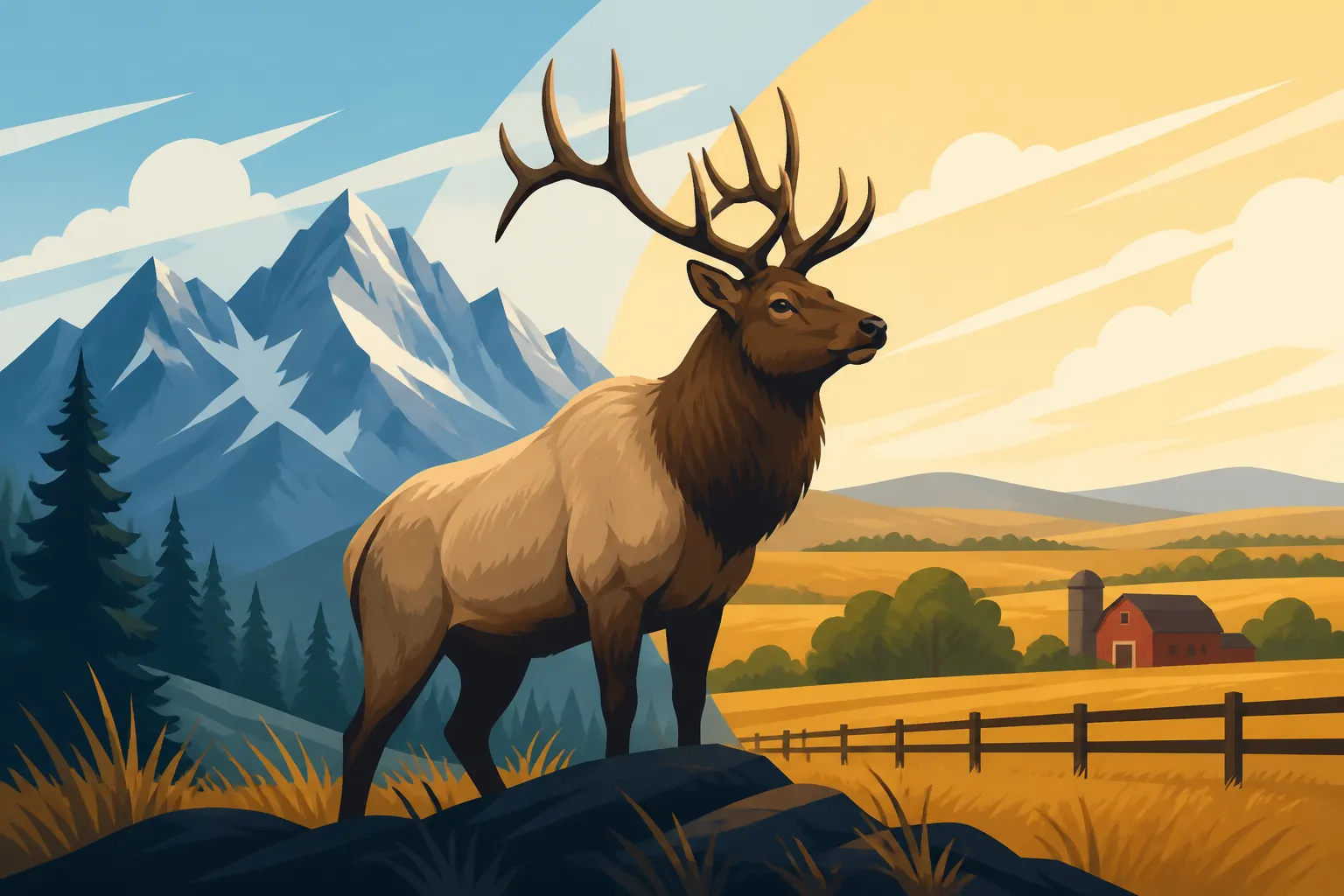
When we talk about elk in Alberta, we're primarily referring to the Rocky Mountain Elk (Cervus canadensis nelsoni), which is the most widespread and commonly hunted subspecies in the province. While some minor interbreeding with the smaller Boreal Elk (Cervus canadensis manitobensis) may occur in transitional zones, the iconic large-bodied, magnificent-antlered animals that draw hunters are overwhelmingly Rocky Mountain Elk. These are impressive animals, with mature bulls often weighing between 700 to 1,000 pounds or more, and standing nearly five feet tall at the shoulder. Cows are smaller, typically weighing 400-600 pounds. Their coats range from a light tan on the body to a darker brown on the head, neck, and legs, with a distinct creamy-white rump patch.
A bull elk's antlers are a sight to behold, growing in impressive racks that can span over four feet and feature multiple tines. The antler growth cycle is fascinating: bulls typically shed their antlers in late winter or early spring (March-April), and new growth begins almost immediately. These new antlers grow rapidly through the summer, covered in a velvety skin rich with blood vessels and nerves. By late August or early September, the velvet is shed, revealing the hard, polished bone underneath, just in time for the rut. Antler size is influenced by age, genetics, and nutrition, with bulls typically reaching their prime antler growth between 6 to 10 years old. Trophy hunters often target these mature bulls, making the draw for specific antlered tags highly competitive.
Elk are known for their strong social structures, often living in herds comprising cows, calves, and young bulls for most of the year. Older, mature bulls tend to be more solitary outside of the breeding season but will join these cow-calf herds during the rut. Their keen senses of smell, hearing, and eyesight make them challenging quarry. They communicate through a variety of vocalizations, including the famous bugle of the bull during the rut, sharp barks of alarm, and soft cow calls. Understanding these vocalizations and how to mimic them is a critical skill for any elk hunter, especially when trying to pinpoint their location in dense timber or draw them closer in open country. The distinctive bugle is not just a challenge but an invitation to engage, a true hallmark of the Alberta elk hunting experience.
Migration Patterns and Seasonal Movements
Elk are incredibly adaptable, but their movements are largely dictated by two main factors: food availability and snow depth. In the mountain and foothill regions, elk often undertake significant seasonal migrations. During the summer months, they can be found at higher elevations, in alpine meadows and subalpine forests, feeding on lush vegetation. As autumn progresses and snow begins to accumulate in the high country, elk typically move down to lower elevations, seeking winter range in valleys, south-facing slopes, and areas with more moderate snow cover. These lower elevations often provide access to browse such as willow, aspen, and various shrubs that remain accessible even under snow.
The timing and extent of these migrations can vary year to year depending on weather patterns. A mild winter might see elk staying higher longer, while an early, heavy snowfall can push them down into their wintering grounds rapidly. This can create distinct "pinch points" or travel corridors that astute hunters learn to identify and capitalize on. River valleys, old logging roads, and natural draws through hilly terrain often serve as these migration routes. Understanding these patterns is key to successful elk hunting, as the animals you find in a particular area during the early archery season might be miles away by the late rifle season.
In farmland and parkland areas, elk migrations are less about elevation change and more about moving between secure cover and food sources. These elk might spend their days bedded in dense bush, river bottom thickets, or deep coulees, moving out into agricultural fields at dusk to feed on crops like barley, wheat, or canola. As winter sets in, they may concentrate in larger bush blocks, especially those with good thermal cover and access to preferred browse. Their movements can also be influenced by hunting pressure; heavily hunted herds become much more nocturnal and wary, making them incredibly challenging to intercept during legal shooting hours. Smart hunters use mapping tools like GoHunt to analyze historical satellite imagery and topographical maps, identifying potential travel routes and bedding areas based on these seasonal shifts.
Prime Elk Habitat: Mountains and Foothills
For many, the dream of elk hunting is synonymous with the grandeur of the mountains. Alberta’s vast western landscape offers incredible opportunities, but success requires understanding the unique challenges and strategies for these rugged environments.
The Rugged Allure of Mountain WMUs
The mountain WMUs (Wildlife Management Units), particularly in the 300 and 400 series along Alberta's western edge, present some of the most breathtaking and challenging elk hunting experiences. Here, the landscape is defined by towering peaks, expansive alpine basins, steep timbered slopes, and deep river valleys. Elk thrive in these dramatic settings, moving between high-elevation summer feeding grounds and lower-elevation winter ranges. The sheer scale of the terrain means that elk are often widely dispersed, making glassing expansive areas and covering significant ground on foot or horseback essential. The rewards for those willing to put in the effort can be truly unforgettable: encounters with mature bulls in stunning, untouched wilderness, often far from the nearest road.
Hunting in these areas is physically demanding. You'll often be gaining thousands of feet in elevation, navigating treacherous scree slopes, and traversing dense subalpine forest. Weather can change in an instant, shifting from warm sunshine to freezing rain or snow within hours, even in early fall. This requires meticulous preparation, including robust gear, a solid understanding of backcountry safety, and a high level of physical fitness. However, the solitude, the pristine views, and the raw challenge of pitting your skills against a mountain bull in his domain make it an incredibly rewarding pursuit. It's an experience that tests your limits and connects you deeply with nature in a way few other hunts can.
While the mountains offer unparalleled wilderness hunting, access can be a significant hurdle. Many areas require extensive hikes, horseback packing, or even bush plane drops to reach remote territories. Hunters often set up spike camps for multi-day excursions, carrying all their necessities on their backs. The reward, however, is often finding unpressured elk that exhibit more natural behavior. These are often the areas where you'll find true trophy-class bulls, having had the chance to mature away from constant human disturbance. The steep terrain provides excellent escape cover and thermal regulation, which the elk use to their advantage, often bedding on benches high up, watching their back trail. This is where patience and persistence truly pay off.
Foothills: The Transition Zone
Moving east from the towering peaks, the foothills offer a slightly gentler, yet still challenging, landscape for elk hunting. This transition zone, encompassing parts of the 200 and 300 series WMUs, is characterized by rolling timbered hills, interspersed with clear-cuts, creek bottoms, and numerous river systems. The vegetation is a mix of aspen, spruce, pine, and willow, providing excellent cover and diverse forage for elk. Unlike the deep backcountry of the mountains, the foothills often have a network of logging roads and seismic lines, which can provide easier access, though many areas still require significant foot travel.
Elk in the foothills utilize this varied landscape strategically. They often bed in dense timber stands during the day, particularly on north-facing slopes for thermal cover, moving into clear-cuts, natural meadows, or along stream beds to feed during dawn and dusk. Their proximity to agricultural lands in some areas means they may venture out of the bush to feed in fields, especially during the fall when crops are ripe. This creates a fascinating blend of wilderness and agricultural hunting scenarios, requiring hunters to be versatile in their approach. Understanding the impact of logging activities is crucial here; new clear-cuts often provide excellent forage in subsequent years, drawing elk in, while old, overgrown clear-cuts can become impenetrable thickets.
Hunting the foothills requires a different set of skills compared to the high mountains. While glassing is still important, still-hunting through timber, tracking, and effective calling become paramount. The rolling terrain means you often can’t see as far, so you rely more on hearing and reading sign. It's a game of patience and stealth, covering ground quietly, stopping frequently to listen and observe. Elk in the foothills are often more accustomed to human activity, making them warier and requiring a more nuanced approach. However, with consistent effort and a good understanding of their habits, the foothills can be incredibly productive, offering a more accessible but equally rewarding elk hunting experience. The mixed public and private land mosaic also means that securing access, especially to pockets of private land with good habitat, can be a major factor in success.
Key Strategies for Mountain and Foothills Elk
Successful elk hunting in Alberta's mountains and foothills hinges on a combination of strategic planning, physical preparation, and adaptable tactics. One of the most critical skills, especially in the vastness of the mountains, is efficient glassing. High-quality binoculars and a spotting scope are indispensable tools. Position yourself on a vantage point at first light, or in the late afternoon, and systematically scan distant basins, clearings, and timber edges for any signs of elk movement. Take your time, break the landscape into grids, and look for subtle clues like the flick of an ear, a patch of light-colored rump, or a distinct silhouette against the skyline. Often, it's not the whole animal you see first, but a small part that gives them away. Once you spot elk, the game becomes a strategic spot-and-stalk, carefully planning your approach to get within shooting range, considering wind direction, terrain, and cover.
For those venturing deep into the backcountry, particularly in the more remote mountain WMUs, backpack hunting tactics are essential. This means carrying everything you need for several days on your back, including lightweight shelter, a robust water filtration system, and dehydrated food. Setting up a spike camp allows you to hunt far from roads, putting you directly into untouched elk country. Another fantastic method for covering vast distances and accessing otherwise unreachable areas is horseback packing. Outfitters specializing in horse hunts can take you deep into Willmore Wilderness Park or other remote regions, dramatically expanding your hunting range and potential for encountering unpressured bulls.
During the archery and early rifle seasons, especially when the rut is in full swing (typically late September into early October), calling can be incredibly effective. Mastering various elk vocalizations, from the challenging bugle to soft cow mews and chirps, can draw curious bulls into range or pinpoint their location. Knowing Bugling Elk in Alberta's Foothills strategies, such as setting up to call with a shooter positioned ahead, can make all the difference. Sometimes, a quiet approach and a subtle cow call are all it takes to bring a bull closer, while at other times, an aggressive bugle challenge is required to elicit a response. Remember, calling is often most effective when combined with good scouting and an understanding of where elk are likely to be bedding or feeding. Always be prepared for a quick shot when calling, as a bull can appear silently and unexpectedly.
Elk in Alberta's Farmland and Parkland
While the mountains hold a classic allure, a significant portion of Alberta's elk population now thrives in the province's agricultural heartland and the parkland transition zone. This presents a unique set of challenges and opportunities for hunters.
The Farmland Dilemma: Opportunity and Access
It might seem counterintuitive, but some of Alberta's largest elk herds, including many of its biggest bulls, now reside on or adjacent to private agricultural lands. Why? Simple: food and relative safety. Farm fields, especially those growing cereal crops like barley, wheat, and oats, offer an incredibly rich and accessible food source that sustains elk through all seasons. The dense pockets of bush, river valleys, and coulees that punctuate these agricultural landscapes provide excellent bedding cover, allowing elk to thrive. This proximity to abundant food resources, combined with often lower hunting pressure in specific private land areas, allows bulls to reach impressive sizes.
However, hunting elk in these areas comes with a significant caveat: access. The vast majority of these productive elk habitats are on private land, which means obtaining permission from landowners is paramount. This can be one of the biggest frustrations for hunters, as successful Getting Private Land Permission in Alberta can be time-consuming and challenging. Landowners are often wary due to past negative experiences with irresponsible hunters or simply overwhelmed by requests. Building trust, being respectful, and offering to help with game damage can go a long way in securing access. Remember, these elk can cause significant damage to crops and fences, leading to substantial financial losses for farmers. Hunters can be part of the solution by helping to manage herd numbers, which often makes landowners more amenable to granting access.
The "game damage" aspect is a real and pressing concern for agricultural producers. Elk can decimate standing crops, flatten swathed fields, and damage bale piles, creating substantial economic hardship. Alberta Environment and Parks has programs in place to assist landowners with wildlife damage, but hunting remains a critical tool for managing these populations. For hunters, this translates into unique opportunities, especially for antlerless tags, which are often offered to help reduce herd numbers in damage-prone areas. Success in these zones often depends more on your interpersonal skills and ability to build relationships than on your physical prowess in the mountains. A simple, polite knock on a door can unlock a fantastic hunting opportunity that others overlook.
Parkland and River Valleys: Unique Challenges
Between the open prairies and the dense boreal forest lies Alberta's parkland, a mosaic of aspen bluffs, wetlands, and cultivated fields. This transition zone, particularly in the 200 series WMUs and river systems that cut through the 100 series, also holds significant elk populations. Elk here behave differently than their mountain counterparts. Instead of sprawling migrations, their movements are more localized, typically revolving around patches of dense cover for bedding and nearby fields for feeding. River valleys, with their steep banks, heavy timber, and often inaccessible stretches, act as natural highways and sanctuaries for elk, providing consistent water sources and escape routes.
Hunting in these parkland and river valley environments presents its own unique set of challenges. Visibility can be limited by the undulating terrain and numerous bush pockets, making long-range glassing difficult. Elk become incredibly adept at using small parcels of cover to disappear, often holding tight in dense thickets or the bottom of deep coulees. They are highly sensitive to pressure and can quickly shift to nocturnal patterns if disturbed. The sheer number of smaller, fragmented parcels of public land, intermixed with private holdings, also complicates access and requires precise navigation using tools like the Alberta Public Land Use Zone (PLUZ) maps or apps like GoHunt that show land ownership.
Successful hunting in these areas requires a deep understanding of local elk behavior and exceptional stealth. Still-hunting through dense bush, carefully approaching bluff edges, and patiently waiting for elk to emerge from cover near fields are common tactics. The wind is always a critical factor, as elk in these areas are hyper-vigilant. Utilizing the natural features of the landscape, like the deep cuts of a river valley or the edge of a large slough, to conceal your approach is paramount. Early morning and late evening hunts, when elk are most active, often yield the best results.
Hunting Strategies for Farmland and Parkland Elk
Hunting elk in Alberta's farmland and parkland demands a different tactical approach compared to mountain hunting. Since much of the prime habitat is on private land, the absolute cornerstone of success is diligent scouting and, perhaps even more importantly, effective relationship-building with landowners. This means hitting the pavement weeks or even months before the season opens, Knocking on Doors in Alberta Farm Country. Introduce yourself, explain your intentions clearly, and always be respectful. Offer to share meat or help with game damage. Persistence and politeness often pay off. Once you gain access, make sure you understand the landowner's specific rules and boundaries, and always follow through on your promises. A good relationship with one landowner can sometimes lead to introductions to others.
Once you have access, hunting strategies shift to ambushing and still-hunting. Elk in these areas often have predictable patterns: they'll bed in thick cover during the day and move to feed in fields at dawn and dusk. Identifying these travel corridors – trails leading from a bush patch to a field, draws, fence lines, or creek bottoms – becomes crucial. Setting up patiently along these routes, often from an elevated position like a treestand on a bush edge or a ground blind well-hidden in natural cover, can be highly effective. The key is to be in position well before first light or several hours before dark and remain absolutely still and quiet.
Utilizing the natural features of the landscape is paramount. River valleys, with their steep, timbered banks, offer excellent concealment and travel routes for elk. Understanding Hunting a River Valley Bottom in Alberta can lead to fantastic opportunities, as elk often use these features to move undetected. Shelterbelts between fields, small bush islands, and wetlands can also hold pockets of elk, especially during periods of high pressure. These areas act as secure cover in an otherwise open landscape. Scouting for fresh sign like tracks, droppings, and rubbed trees will help confirm elk activity and narrow down their preferred travel routes.
For bowhunters, the close quarters often found in dense bush pockets or along field edges in farmland and parkland can be ideal. When Bowhunting Alberta's Early Archery Seasons, the lack of rifle season pressure means elk might be less wary, and the cover allows for closer stalks. However, shot distances can still be challenging, so practice with your bow at various ranges and from different angles, just as you would for a rifle. Being proficient with a rangefinder is also essential, as distances in agricultural settings can be deceivingly far. Remember, even though it's flatter than the mountains, proper wind direction is still critical to avoid spooking game.
Seasons, Licences, and Draw Dynamics
Navigating the regulatory landscape is just as crucial as understanding elk behavior. Alberta's system of general and special licences, coupled with its draw system, requires careful attention to detail.
General and Special Licence Opportunities
Alberta offers a dual system for elk hunting licences: general licences and special licences. General licences, typically available over the counter, often allow for the harvest of antlered elk in specific Wildlife Management Units (WMUs) during both archery and general rifle seasons. These general tags are a great starting point for many hunters, offering flexibility and broad access across certain areas. However, the availability of general antlered elk tags can vary by WMU, so it's vital to consult the current Alberta Guide to Hunting Regulations each year. These general seasons usually align with the rut (for archery) and subsequent periods (for rifle), providing exciting opportunities.
In contrast, special licences are allocated through a provincial draw system and are significantly more specific. They might allow for the harvest of antlered elk in highly sought-after WMUs, antlerless elk in areas where population reduction is a management goal, or even specific early/late season hunts. These tags are designed to manage herd health and distribution, address game damage issues, and provide controlled hunting opportunities in high-demand areas. The Alberta's Special Licence Draws system is highly competitive for prime antlered elk tags, reflecting the quality of Alberta's elk and the passion of its hunters. For anyone serious about elk hunting in Alberta, understanding and participating in these draws is a non-negotiable part of the process.
Antlerless draws, in particular, play a crucial role in Alberta's elk management strategy. In areas where elk populations are robust and sometimes overabundant, particularly on agricultural land where they cause significant crop damage, antlerless tags are offered to help control herd numbers. These tags often have better draw odds and can provide fantastic hunting opportunities, especially for hunters focused on filling their freezer with prime elk meat. Participating in antlerless hunts is not only a practical way to put meat on the table but also an important contribution to wildlife management, helping to mitigate conflicts between elk and agricultural producers. Always remember to check the specific regulations for each WMU, as rules for antlered versus antlerless tags can differ significantly.
Navigating the Alberta Draw System for Elk
The Alberta Special Licence Draw system can seem daunting at first, but it's a critical component for most elk hunting opportunities, especially for sought-after tags. At its heart is the Alberta's Draw Priority Point System. Every time you apply for a special licence and are unsuccessful, you gain a priority point for that species. The more points you accumulate, the better your chances of drawing a tag in subsequent years. This system rewards persistence, but it also means that for highly desirable WMUs or species like trophy elk, it can take several years, or even a decade, to accumulate enough points to be successful.
Successful navigation of the draw requires diligent research and strategic planning. Websites and apps like GoHunt offer invaluable tools for analyzing draw odds, historical data on minimum priority points required for various WMUs, and season dates. You can research which WMUs have the best elk populations, which areas consistently produce larger bulls, and crucially, what the realistic chances are of drawing a tag with your current priority points. This information is vital for making informed decisions about where to apply, balancing the desire for a trophy with the pragmatic goal of drawing any elk tag. Sometimes, applying for a less popular WMU or an antlerless tag, even if it resets your priority, might be the best option for getting out hunting sooner.
The application process for special licences typically opens in the spring (often early May) and closes in late June. It’s imperative to mark these dates on your calendar and apply well in advance to avoid any last-minute issues. You can apply for draws through the AlbertaReLM (AlbertaRELM.com) online system. Remember to thoroughly review your application before submitting it, as errors can lead to disqualification. Once draw results are posted (usually mid-July), successful applicants can then purchase their special licence. Unsuccessful applicants will automatically receive a priority point, setting them up for better odds in the future. It’s a waiting game, but one that can pay off with a truly memorable elk hunting experience.
Understanding Season Dates and Regulations
Understanding the intricate web of Alberta Big Game Season Dates and specific regulations is non-negotiable for a legal and successful elk hunt. Season dates vary considerably across WMUs and by weapon type (archery, rifle, muzzleloader), so consulting the current Alberta Guide to Hunting Regulations is your annual bible. Archery seasons for elk often open in late August or early September, running through the peak of the rut, providing incredible opportunities for close-range encounters with bugling bulls. General rifle seasons typically commence in late September or early October, and some WMUs offer extended late-season opportunities, often into November or even December, when elk might be congregated on winter range.
Beyond just dates, specific regulations can significantly impact your hunt. Many WMUs have antler restrictions, such as "three-point or better" rules, which aim to protect younger bulls and promote herd health. This means you must be able to accurately judge an elk's antlers in the field before taking a shot. Other areas might have antlerless-only seasons or restricted access rules. For example, some WMUs within the eastern slopes have specific rules regarding vehicle access or required possession of an Elk Retention Tag if you are successful in a general archery season. Failing to understand these nuances can lead to severe penalties.
Always double-check the regulations for the specific WMU you intend to hunt. The online Alberta Guide to Hunting Regulations is continuously updated and searchable, making it an invaluable resource. Pay close attention to legal shooting hours, which are typically one-half hour before sunrise to one-half hour after sunset. Ethical considerations extend beyond legal requirements, emphasizing fair chase principles, respect for the animal, and responsible hunting practices. Being a knowledgeable and compliant hunter not only ensures a legal hunt but also upholds the positive image of hunting in Alberta.
Essential Gear and Preparedness for Elk Hunting
Elk hunting in Alberta spans vastly different environments, from rugged mountain peaks to open agricultural fields. Your gear list will need to reflect these changes, ensuring you're prepared for whatever challenge the landscape, weather, and elk throw your way.
Mountain-Specific Gear Considerations
When planning a mountain elk hunt in Alberta, the gear list often looks more like a backcountry expedition than a typical day hunt. A high-quality, comfortable backpack, ideally in the 65-85 liter range, is paramount for carrying essential gear for multi-day trips and for packing out heavy quarters of elk meat. You'll need lightweight, durable shelter, such as a sturdy tent or bivy sack, capable of withstanding unpredictable mountain weather. Water is heavy, so a reliable water filtration system (e.g., Katadyn, Sawyer) is a must, allowing you to replenish supplies from mountain streams. Dehydrated or freeze-dried meals will keep your pack weight down while providing necessary calories.
Layered clothing is critical for the extreme temperature swings found in the mountains. Start with a moisture-wicking base layer, add insulating layers like fleece or puffy jackets, and top it off with a waterproof and windproof outer shell. Conditions can change from warm sunshine to sleet or snow within hours, even in early fall. Sturdy, broken-in mountain hunting boots with good ankle support are indispensable for navigating steep, rocky terrain. Ensure they are waterproof and compatible with gaiters to keep snow and debris out.
Navigation tools are not optional in the vastness of Alberta's mountains. A reliable GPS unit with pre-loaded maps, a satellite messenger (like a Garmin inReach or Zoleo) for emergency communication outside of cell service, and a traditional map and compass (and the knowledge to use them) should all be part of your kit. Quality optics are another non-negotiable item. A good pair of 10×42 or 12×50 binoculars for general glassing and a high-powered spotting scope (20-60x or higher) on a lightweight tripod will save you countless miles by allowing you to identify elk from a distance. Companies like GoHunt often feature comprehensive gear reviews and packing lists tailored for western big game hunting, which can be an excellent resource for making informed gear choices. Don't forget a headlamp, first-aid kit, fire-starting supplies, and bear spray, as you'll be in prime grizzly country.
Farmland and Parkland Gear Adaptations
Hunting elk in Alberta's farmland and parkland often requires a less extensive, but equally strategic, gear setup. While you might not be packing in for multiple days, the need for stealth and adaptability remains. Your backpack can be smaller, perhaps a daypack in the 25-45 liter range, suitable for carrying snacks, water, calls, and field dressing tools. Less emphasis is placed on extensive backcountry survival gear, and more on immediate hunting effectiveness.
In these more open environments, camouflage becomes even more critical. Elk in farmland are often extremely wary due to their proximity to human activity, making concealment paramount. Choose patterns that blend effectively with the local vegetation – whether that's corn stubble, dense brush, or the varied tones of parkland aspen. A good pair of waterproof boots is still necessary, but they can be lighter and more flexible than mountain boots, suitable for walking through fields, muddy creek bottoms, or dense undergrowth. Quiet fabrics that won't rustle as you move are also essential for close-quarters stalking or sitting in a blind.
Vehicle-based hunting can be a component of farmland strategies, allowing you to cover ground efficiently while scouting. However, remember Alberta's regulations regarding hunting from or discharging a firearm from a vehicle. Much of the actual hunting will involve still-hunting on foot or setting up blinds. Consider portable ground blinds or treestands for ambushing elk along travel corridors or field edges. While you might not need a satellite messenger, a fully charged cell phone (though service can be spotty) and a power bank are good ideas. A good rangefinder is always useful in open fields, where distances can be deceiving.
Firearms, Bows, and Ammunition
Selecting the right weapon and ammunition for elk is crucial for an ethical and successful hunt. For rifle hunters, elk are large, tough animals, so you'll want a cartridge that delivers sufficient energy and bullet weight for humane kills. Popular and effective calibers include the .30-06 Springfield, .300 Winchester Magnum, 7mm Remington Magnum, .338 Winchester Magnum, and even .308 Winchester with appropriate bullet construction. The key is bullet construction: choose premium, controlled-expansion bullets (e.g., Nosler AccuBond, Barnes TTSX, Federal Terminal Ascent) that retain weight and penetrate deeply, ensuring they can reach vital organs after punching through tough hide and bone. Practice extensively with your chosen load to ensure accuracy and confidence in shot placement.
For bowhunters, Alberta regulations require a minimum draw weight of 50 pounds for big game. While many bows exceed this, ensure your setup can effectively deliver sufficient energy. Arrow weight and broadhead choice are paramount. Heavy arrows (450+ grains) combined with sharp, fixed-blade broadheads or well-designed mechanical broadheads that offer deep penetration are generally recommended for elk. Broadhead practice with your hunting arrows is non-negotiable to ensure true flight and consistent accuracy. Shot placement is even more critical with archery equipment; aim for the lung cavity, which offers the largest margin for error and typically results in a quick, humane harvest.
Regardless of your chosen weapon, extensive practice at various ranges and under different conditions is essential. Know your ethical maximum range and stick to it. Elk often present limited shot windows, and being able to make a quick, accurate shot when the opportunity arises is critical. This means not just practicing from a bench rest, but also from common hunting positions (standing, kneeling, prone), and under simulated conditions where your heart rate might be elevated. Ethical shot placement, minimizing animal suffering, should always be the top priority.
Field Processing, Meat Care, and Trophy Handling
Harvesting an elk is a monumental achievement, but the work doesn't end when the animal is down. Proper field processing, meat care, and trophy handling are crucial steps to ensure you honor the animal and preserve your valuable harvest.
Quartering an Elk in the Field
Elk are massive animals, and unless you're hunting in a very accessible area with heavy equipment, you're almost certainly going to be quartering your elk in the field. This is not a task for the faint of heart, or the unprepared. The sheer size and weight demand efficient and systematic work. The "gutless method" has become a popular technique for field quartering elk, as it avoids opening the body cavity, reducing mess and potential contamination. This method involves skinning one side, removing the front and hind quarters, backstraps, and tenderloins, then flipping the animal and repeating the process.
Essential tools for field quartering include several sharp knives (a fixed-blade skinning knife, a boning knife, and a small folding knife for detail work), a sharpening stone or ceramic stick, and a pair of game shears or a small bone saw for the pelvis or sternum if you do open the cavity. High-quality game bags are non-negotiable. These breathable cloth bags protect the meat from dirt, insects, and initial bacterial growth while allowing it to cool. Plan to carry at least five large game bags – one for each quarter, plus one for the backstraps, tenderloins, and trim meat. It's often a multi-person job, so bringing a buddy is highly recommended. Being prepared to spend several hours on this task, especially if it's your first elk, is realistic.
The goal is to get the meat off the bone and into game bags as quickly and cleanly as possible to begin the cooling process. If you're backpacking, boning out the meat will significantly reduce the weight you need to carry, though it requires more skill and time. Regardless of the method, cleanliness is paramount. Try to keep dirt, hair, and gut contents off the meat. Having a small spray bottle with water or even some sanitizing wipes can be helpful for cleaning hands and tools periodically. Remember, your hard work here directly impacts the quality of the meat you take home.
Meat Care in Varying Temperatures
Once an elk is down, rapid cooling of the meat is the absolute priority, especially if you're hunting in warmer early-season temperatures. Bacteria thrive in warm conditions, and improper cooling can lead to spoilage. After quartering and placing meat in game bags, get the quarters into the shade and off the ground immediately. If the weather is warm, spreading the quarters out to maximize air circulation is vital. Propping them open with sticks and ensuring no two pieces are touching will aid in cooling. For hunters in remote areas, this might mean hanging quarters from trees overnight, away from scavengers, to allow ambient air to cool them.
As the season progresses, and particularly when Meat Care in Alberta's Cold and Warm Swings comes into play, you might encounter different challenges. While cold weather helps with cooling, extreme cold can freeze the exterior of the meat too quickly, preventing the core from cooling down effectively. Aim for a steady cooling process. In freezing conditions, meat can freeze solid, making it difficult to transport and process later. Conversely, a warm spell after a cold snap can rapidly spoil frozen meat if not managed properly. Transporting the meat out of the field, whether by pack frame, ATV, or vehicle, needs to be done with care to keep it clean and cool. Never transport uncovered meat or throw it into the back of a truck exposed to exhaust fumes or road grime.
Once out of the field, the meat should be immediately transferred to a cooler with ice, a meat locker, or a professional butcher. For transport over longer distances, large coolers filled with ice (ensure ice doesn't directly contact the meat; use game bags or separate compartments) are essential. Ideally, the meat should be processed within a few days of harvest. If you're caping an animal for a trophy, ensure the hide is properly fleshed and salted quickly to prevent hair slippage, which can ruin a cape. Always keep proof of sex with the meat until it's processed, as required by Alberta regulations, to demonstrate compliance with your licence.
Handling Antlers and Capes
If you've harvested a bull elk and plan to preserve the antlers and potentially the cape for taxidermy, proper handling in the field is crucial. For a shoulder mount, the cape needs to be cut generously, ensuring ample hide around the brisket and legs. A common method is to cut a ring around the body just behind the front legs, then make a cut up the back of the neck to the base of the skull, carefully peeling the hide forward. Be extremely cautious around the eyes, ears, and mouth. If you're unsure, take extra hide and consider watching instructional videos or consulting with your taxidermist beforehand. The skull cap, with antlers attached, needs to be separated from the rest of the skull. Ensure you keep the lower jaw and a portion of the tongue with the carcass if your WMU requires CWD testing.
Once the cape is removed, it needs to be cooled and preserved as quickly as possible to prevent hair slippage. In warm weather, this means getting it to a freezer or salting it immediately. If a freezer isn't available, generous amounts of non-iodized salt rubbed into the flesh side of the hide will help draw out moisture and preserve it. Roll it up, flesh side in, and let it sit for a day or two, then unroll, scrape off the old salt, and apply fresh salt. This process should be repeated until the hide is dry. For the antlers, ensure they are kept clean and dry during transport. It's often helpful to tag them with your licence number and contact information.
It's critical to understand the regulations for Transporting Game Meat and Proof of Sex. In Alberta, you must retain proof of sex (e.g., the testicles or a portion of the udder) on the carcass or one piece of meat until the animal is processed and stored for consumption. For antlered animals, the antlers attached to the skull or skull cap often serve as proof of sex, but check specific regulations for any nuances. Additionally, be aware of Alberta's Mandatory CWD Submission WMUs. If you harvested an elk in a designated CWD (Chronic Wasting Disease) surveillance zone, you are often required to submit the head (with brainstem and at least 3 inches of neck) for testing. This is a crucial step in monitoring and managing the disease, so follow instructions carefully.
Respecting the Resource and Ethical Hunting
Hunting is a privilege, not a right, and with that privilege comes a profound responsibility to respect the wildlife, the land, and the public perception of our sport. Ethical conduct and a commitment to conservation are cornerstones of being a responsible hunter in Alberta.
Landowner Relations and Public Perception
In Alberta, especially in the productive farmland and parkland regions, a significant portion of hunting occurs on private land. This makes Alberta Landowner Permission Law and fostering positive landowner relations absolutely critical. A hunter's behaviour on private land directly impacts the opportunities available to all hunters. Always ask for permission before entering private property, even if you are just scouting or retrieving downed game. Respect "No Hunting" or "No Trespassing" signs without question. Leave gates as you found them, don't litter, and avoid driving off established trails unless specifically permitted. Damage to crops, fences, or property can lead to landowners refusing access to all hunters, severely limiting future opportunities.
The public's perception of hunting is heavily influenced by how hunters conduct themselves. We are ambassadors for our sport, and every interaction, every action in the field, contributes to that image. This means adhering to fair chase principles, ensuring quick and humane kills, and respecting wildlife even outside of hunting season. Avoiding public displays of harvested animals, especially in residential areas, can also help mitigate negative perceptions. Being considerate and ethical not only ensures future access but also strengthens the social licence for hunting in general. Hunters who build strong, respectful relationships with landowners often find themselves with more opportunities and a deeper connection to the land and its wildlife.
Wildlife Conservation and Management
Hunters are, and have always been, the backbone of wildlife conservation in North America. Through the purchase of hunting licences and excise taxes on hunting equipment, hunters provide the primary funding for wildlife management, habitat restoration, and conservation research in Alberta. This financial contribution directly supports the healthy elk populations we enjoy today. Beyond financial support, hunters also play a direct role in management by participating in surveys, reporting harvests, and providing crucial data on wildlife populations.
Understanding and supporting Alberta's wildlife management goals for elk is an essential part of responsible hunting. This might involve participating in antlerless hunts in areas with overpopulation, adhering to specific antler restrictions to protect younger bulls, or submitting samples for disease monitoring. For example, participation in CWD testing is not just a regulatory requirement in some WMUs but a vital contribution to understanding and managing the spread of this serious disease in elk, deer, and moose populations. By actively engaging with wildlife management objectives, hunters contribute directly to the long-term health and sustainability of Alberta's elk herds. Organizations like the Alberta Conservation Association (ACA) rely heavily on hunter support and involvement to carry out their vital work.
Safety in Alberta's Elk Country
Hunting in Alberta's diverse elk country means being prepared for various safety considerations. In both mountain and some parkland areas, you are in prime bear country, including both black bears and grizzly bears. Always carry bear spray (and know how to use it!), travel in groups when possible, and make noise when moving through dense cover. Know the difference between a defensive charge and a predatory attack, and react accordingly. Proper food storage in camp is also critical to avoid attracting bears.
Beyond wildlife, preparing for Alberta's extreme and rapidly changing weather conditions is paramount. Especially when Hunting Alberta Winter Weather Safely, temperatures can plummet, and heavy snowfall can make travel treacherous. Dress in layers, carry extra insulation, and be prepared for whiteout conditions or getting stranded. Hypothermia is a real threat. In the mountains, be aware of avalanche risk during late-season hunts and consult avalanche forecasts. Always inform someone of your hunting plans, including your route and expected return time.
A comprehensive first-aid kit is essential, tailored to the remoteness of your hunt. Consider taking a wilderness first-aid course. For remote hunts, a satellite messenger for emergency communication is highly recommended, as cell service is non-existent in much of Alberta's elk habitat. Ensure your firearms are handled safely, always pointed in a safe direction, and unloaded when not in active use. Follow all firearm regulations, including blaze orange requirements in general seasons. Respecting safety protocols not only protects you but also those you share the outdoors with.
Mountain vs. Farmland Elk Hunting: A Comparison
| Feature | Mountain/Foothills Elk Hunting | Farmland/Parkland Elk Hunting |
|---|---|---|
| Landscape | Rugged mountains, steep timber, alpine basins, clear-cuts, river valleys | Cultivated fields, aspen bluffs, coulees, river breaks, wetlands |
| Physical Demand | Very high: strenuous hikes, elevation gain, potential multi-day packs | Moderate to high: walking fields, still-hunting bush, less elevation |
| Access | Often public land (Crown), but remote, may require horses/ATVs | Predominantly private land, requiring landowner permission |
| Elk Behavior | Migratory, often spread out, more natural movement, less human tolerant | Localized movements, nocturnal in pressure, highly wary |
| Key Tactics | Glassing, spot & stalk, bugling, backcountry spike camps | Scouting, landowner relations, ambushing, still-hunting, blinds |
| Trophy Potential | Excellent, but hard-earned; often mature, unpressured bulls | Excellent, due to abundant food; often very large, wary bulls |
| Gear Focus | Lightweight backcountry gear, robust navigation, premium optics | Concealment, quiet fabrics, blinds, rangefinder, landowner courtesy |
| Challenges | Weather, physical exertion, remoteness, packing out meat | Access, wary elk, limited public land, property damage concerns |
Disclaimer
The information provided in this guide is for general informational purposes only and is not a substitute for the official Alberta hunting regulations. Hunting regulations can change frequently. It is the responsibility of every hunter to consult the current Alberta Guide to Hunting Regulations and all applicable provincial and federal laws before hunting. Always prioritize safety, ethical hunting practices, and respect for wildlife and landowners.