Transporting Game Meat and Proof of Sex
You’ve just made a successful shot, the adrenaline is still pumping, and now the real work begins. Hauling that animal out of the bush is one thing, but making sure you comply with all the regulations for transporting the meat and proving the animal's sex can be a whole other headache. It’s easy to get confused with what needs to stay attached and for how long, leading to unnecessary stress or, worse, potential legal trouble. This guide will walk you through Alberta's rules for transporting your game meat safely and legally, focusing on those all-important proof of sex requirements.
Understanding Proof of Sex Requirements in Alberta
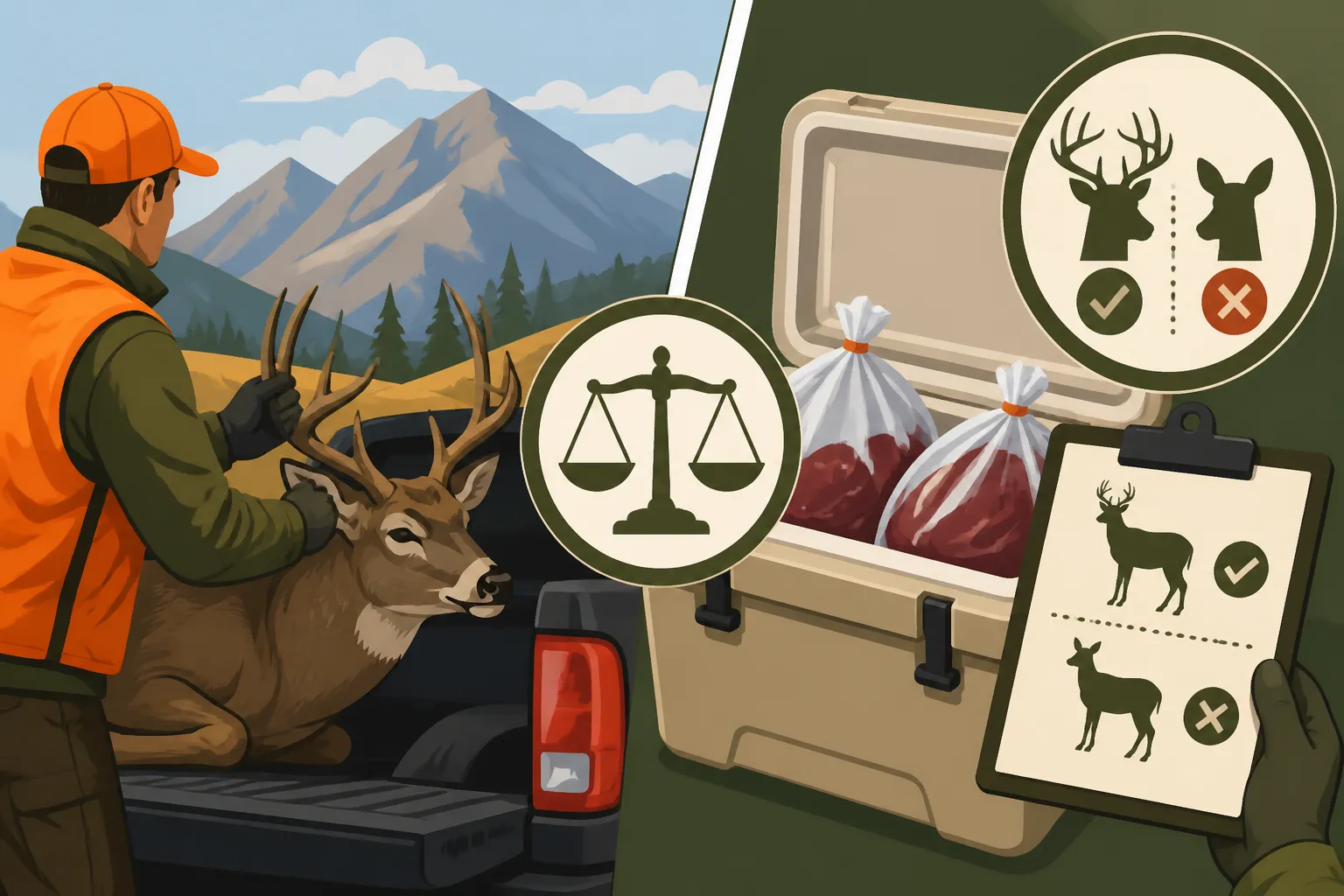
One of the most common points of confusion for hunters in Alberta, especially those new to the province or targeting specific species, revolves around the "proof of sex" regulations. It's not enough to simply have the right tag for an antlered or antlerless animal; you need to ensure that the identifying features remain naturally attached to the carcass during transport. This isn't just bureaucracy; it's a critical measure for wildlife management and enforcement, helping to prevent illegal harvests and ensure compliance with specific season dates and licence types.
Why Proof of Sex Matters for Big Game
The core reason for these rules is conservation. Alberta issues different licences and sets different seasons for antlered (males with antlers meeting a minimum size) and antlerless (females, or males without antlers meeting minimum size) big game animals. For instance, you might have a general season tag for an antlered moose, but an antlerless moose tag is often obtained through Alberta's Special Licence Draws, which are much more limited. Without proof of sex, it would be impossible for Fish and Wildlife officers to verify that you harvested the correct animal based on your licence. This distinction is vital for maintaining healthy herd populations and managing specific age and sex ratios within a Wildlife Management Unit (WMU). Understanding these regulations is key to avoiding penalties and ensuring your hunt is fully compliant.
Specific Requirements for Antlered and Antlerless Animals
The general rule of thumb in Alberta is that the identifying part of the animal must remain naturally attached to the largest portion of the carcass until it reaches your residence or a meat processing plant. This "naturally attached" part is what often trips people up. It means you can't just cut off an antler and toss it in a cooler; it needs to be part of the main carcass.
For antlered big game, such as deer, moose, or elk, the regulations typically require that the head, with antlers still naturally attached, remains with the largest portion of the meat. This allows officers to verify not only the sex but also, if applicable, the minimum antler size (e.g., "3 point or better" mule deer rules). If you harvest a bull moose or an antlered deer, you'll want to keep that head intact with a significant portion of the meat until you're ready for final processing. For specific regulations regarding mule deer, you might want to review Hunting Alberta's Three-Point Mule Deer Rules.
For antlerless big game, the requirements are different but equally important. For deer, moose, and elk, the regulation often states that either the head or the udder (mammary gland) must remain naturally attached to the largest portion of the carcass. The udder is a clear indicator of a female animal. If you harvest an antlerless deer or a cow elk, you need to ensure that one of these identifying features is present with the primary meat package until it's home and being processed. This can be particularly crucial when hunting on Alberta's General Seasons where both antlered and antlerless opportunities exist, but often with different licence requirements.
Here's a quick reference table for common big game species:
| Species | Antlered (Male) Requirement | Antlerless (Female) Requirement |
|---|---|---|
| White-tailed Deer | Head with antlers naturally attached to largest meat portion | Head or udder naturally attached to largest meat portion |
| Mule Deer | Head with antlers naturally attached to largest meat portion | Head or udder naturally attached to largest meat portion |
| Moose | Head with antlers naturally attached to largest meat portion | Head or udder naturally attached to largest meat portion |
| Elk | Head with antlers naturally attached to largest meat portion | Head or udder naturally attached to largest meat portion |
| Black Bear | Skull with sex organs naturally attached to largest meat portion | Skull with sex organs naturally attached to largest meat portion |
| Pronghorn | Head with horns naturally attached to largest meat portion | Head with horns naturally attached to largest meat portion |
| Bighorn Sheep | Head with horns naturally attached to largest meat portion | Head with horns naturally attached to largest meat portion |
| Mountain Goat | Head with horns naturally attached to largest meat portion | Head with horns naturally attached to largest meat portion |
Note: For bears, while not strictly "antlered/antlerless," proof of sex (genitalia) with the skull is required regardless of sex to determine if it's a boar or sow for management purposes.
Field Dressing, Quartering, and Safe Transport of Game
Beyond the legal requirements of proof of sex, safely handling and transporting your game meat is paramount for quality and preventing spoilage. A good field dressing job followed by proper cooling and transport methods ensures that your hard-earned harvest makes it to the table in prime condition.
Best Practices for Field Dressing and Initial Cooling
The moment an animal hits the ground, the clock starts ticking. Rapid cooling is the number one priority to prevent bacterial growth and spoilage. As soon as it's safe, get to your animal and begin field dressing. This involves removing the internal organs to allow the carcass to cool quickly. For large animals like moose or elk, this can be a big job. A clean, sharp knife and a good understanding of anatomy make all the difference. Get those guts out, and if possible, prop the cavity open to allow airflow. In warm weather, even wiping out the cavity with a clean cloth can help cool it down by removing excess moisture.
Once field dressed, the next step is often quartering, especially for larger animals or when you're deep in the backcountry. Quartering means breaking the animal down into manageable pieces (usually four quarters, backstraps, and tenderloins). This not only makes packing out much easier but also speeds up the cooling process significantly. You can hang the quarters in game bags in a shady, breezy spot, away from predators. Quality game bags are crucial here; they protect the meat from flies, dirt, and debris while still allowing it to breathe and cool. For backpack hunters operating in remote areas, proper preparation is key, as seen in challenges like Backpacking Into Alberta Sheep Country.
Practical Tips for Transporting Meat in Different Conditions
Transporting meat back to your vehicle and then home requires careful planning, especially given Alberta's often unpredictable weather.
-
Cold Weather Hunting: If you're Hunting Alberta Winter Weather Safely, you might think the cold is your friend, and it is! But don't let the meat freeze solid too quickly if you still need to age it. Frozen meat cannot age properly. Once quartered and in game bags, transport the meat in a way that continues to allow airflow. Avoid piling quarters in the back of a truck where they can insulate each other and hold heat. Spreading them out on a tarp or in an open cooler can work well. The goal is to keep them cool, but not necessarily frozen, until you're ready for processing. Remember, even in cold weather, direct sun can warm meat surprisingly fast.
-
Warm Weather Hunting: This is where things get tricky, especially during Alberta's early archery seasons or late fall mild spells. Ice is your best friend. After quartering and bagging, get the meat into coolers, ideally on a bed of ice. Block ice lasts longer than cubed ice. Make sure the cooler drains are open so the meat isn't sitting in bloody water. This is vital for maintaining meat quality. Some hunters will even pack large game bags with ice around their meat, especially during a Spring Bear Hunting Alberta's Cutblocks hunt when temperatures can fluctuate. For shorter distances, a well-ventilated truck bed with a tarp over the meat (but not tightly sealed) can work, but always prioritize rapid cooling. Always consider how you will ensure Meat Care in Alberta's Cold and Warm Swings.
-
Vehicle Preparation: Before your hunt, ensure your vehicle is ready for meat transport. Clean tarps, sturdy coolers, and plenty of ice should be on your checklist. Plan your route home, minimizing stops, to keep the meat cool. If you're going to a butcher, call ahead to ensure they can take your animal right away. For those hunting in open country, preparing for scenarios like Getting a Moose Out With a Quad can make the entire process smoother. Companies like GoHunt can offer useful maps and satellite imagery to help you plan extraction routes from various WMUs, ensuring you consider accessibility.
Legal Tagging and Reporting Requirements
Successfully harvesting an animal is just one part of the equation; completing the legal requirements for tagging and reporting your harvest is equally important to ensure a lawful hunt and contribute to wildlife management data.
Attaching Your Tag and What to Do with It
In Alberta, once you've harvested a big game animal, you are legally required to immediately attach your valid licence tag to the animal. The tag must be securely affixed and visible. For most big game, this usually means attaching it to an antler, ear, or leg. The tag should be filled out accurately, including the date and time of kill, and the Wildlife Management Unit (WMU) where the animal was harvested. This immediate action is crucial; delays or failure to tag can result in significant penalties. Remember that the tag is proof that you legally harvested the animal, and it must remain with the specified part of the animal (often the proof of sex part) until it reaches its final destination for processing. You can find detailed rules regarding Alberta Tag Attachment and Cancellation Rules in the regulations.
Hunter Host Rules and Non-Resident Considerations
If you're a non-resident hunter in Alberta, the rules around transporting game meat become even more specific. Non-residents, whether from another Canadian province or a non-resident alien, must hunt with a licensed Alberta outfitter or be accompanied by an eligible Alberta resident Hunter Host. The Hunter Host program allows a non-resident to hunt designated species with an Alberta resident. This host is responsible for ensuring all regulations are followed, including proper tagging and proof of sex.
When leaving Alberta, especially if you're a non-resident alien, you'll need to be aware of federal and international regulations for transporting game meat and trophies. This often involves specific permits, inspections, and potentially CITES documentation for certain species if you plan to take antlers or hides across borders. Always check with border services and relevant wildlife agencies in your home jurisdiction before your hunt to understand what is required to bring your harvest home. This due diligence is critical to avoid issues at border crossings, like Taking Meat and Antlers Home Across the Border. While planning, resources like GoHunt can help non-residents understand the geographical layout of Alberta's hunting areas and associated regulations, making it easier to coordinate with a host or outfitter.
Reporting Your Harvest and CWD Testing
Alberta also requires hunters to report their big game harvest. This is typically done online through the AlbertaRELM system. Reporting your harvest provides valuable data to wildlife biologists, helping them monitor populations and set future seasons and quotas. Ensure you report your harvest within the specified timeframe.
Furthermore, if you hunt in certain WMUs, or if you harvest a deer, moose, or elk, you might be required or strongly encouraged to submit the head for Chronic Wasting Disease (CWD) testing. CWD is a fatal neurological disease that affects cervids. Alberta has designated CWD submission zones, and compliance is vital for monitoring the spread of the disease. If you're hunting in a CWD-positive area, removing the head for testing needs to be done carefully, ensuring the proof of sex (if required) is still discernible or handled according to specific instructions. Make sure you know Which WMUs Require a Deer Head Submission and Where Alberta's CWD Freezers Are before you head out. These requirements are for the long-term health of Alberta's wildlife populations, and every hunter plays a part in this effort.
Disclaimer
The information provided in this guide is for general informational purposes only and is not legal advice. Hunting regulations can change frequently. Always consult the official Alberta Hunting Regulations Guide and relevant federal regulations before hunting or transporting game meat. It is your responsibility to know and understand all applicable laws and regulations.