Taking Meat and Antlers Home Across the Border
You’ve just wrapped up an incredible hunt in Alberta, maybe you dropped that buck of a lifetime or harvested some prime elk meat to fill your freezer. That feeling of accomplishment is incredible, but then a wave of anxiety hits: "How do I get all this home across the border without a hitch?" It's a common worry, and many successful hunters find themselves stressed about the paperwork, the regulations, and what exactly Canadian and US customs officials will expect. This guide is designed to walk you through the often-confusing process of taking your hard-earned wild game meat and impressive trophies from Alberta back to the United States or even another Canadian province, ensuring a smooth and stress-free journey.
Understanding the Rules Before You Go
Before you even step foot in Alberta for your hunt, it's absolutely crucial to have a solid understanding of the regulations governing cross-border transport of game. The worst time to learn about a critical requirement is when you're standing at the border, exhausted but elated, only to be turned away. This isn't just about Canadian laws; you'll also need to comply with specific United States Department of Agriculture (USDA) and US Fish and Wildlife Service (USFWS) rules, which can vary by state, particularly concerning chronic wasting disease (CWD).
The Importance of Proper Field Dressing and Preparation
The journey of your meat and trophy home begins the moment your animal hits the ground. Proper field dressing and immediate care are not just about preserving the quality of your meat; they're foundational to ensuring it can legally cross international borders. Leaving too much tissue on a skull or failing to thoroughly clean meat can lead to issues, especially with CWD regulations. Your diligence in the field directly impacts your success at the border.
Firstly, for meat, the absolute best practice for cross-border transport is to bone it out completely. This means removing all meat from the bone structure. Not only does this significantly reduce weight, making transport easier, but it also minimizes the risk associated with CWD. Many US states and federal regulations explicitly require cervid meat (deer, elk, moose) to be boned out to prevent the spread of CWD. The spinal column, brain, and certain other lymphatic tissues are considered high-risk for CWD transmission, and border agents are often vigilant about their presence. Quick, clean processing, aiming to get the meat cooled as rapidly as possible, is paramount. If you’re not planning to process it yourself, make arrangements with a local Alberta butcher or outfitter who understands these specific export requirements. They can often provide the necessary documentation and ensure the meat is prepared to standard. Remember, proper storage and cooling are critical. For more on this, check out our guide on Meat Care in Alberta's Cold and Warm Swings.
For antlers and skulls, the key is cleanliness. Any brain matter, tissue, or hide still attached to the skull can be a vector for disease. Skulls destined to cross the border must be meticulously cleaned, typically through boiling or pressure washing, to ensure no biological material remains. Similarly, capes (the hide for taxidermy) must be properly fleshed, salted, and dried, or professionally tanned. Failing to do so can result in confiscation or a directive to find a professional taxidermist at the border, which is an inconvenient and costly delay. Even minor oversight can be a major headache. Think of it this way: a border agent's job is to protect against the spread of diseases and pests, and a clean, well-prepared trophy shows you’ve done your part.
Navigating Canadian and US Customs Regulations
Crossing any international border with game involves navigating two sets of rules: those of the exporting country (Canada, specifically Alberta) and those of the importing country (the United States). It’s not enough to satisfy one; you must meet both. Canadian export regulations typically require you to declare your harvest and may require an export permit, especially for certain species or if you're taking a whole animal. The Alberta government’s Fish and Wildlife division provides the necessary forms and permits, and it’s your responsibility to obtain these before attempting to cross.
On the US side, several agencies have a say. The US Customs and Border Protection (CBP) is your first point of contact, ensuring you declare all items. Beyond that, the USDA monitors agricultural products and animal health, specifically looking for disease risks like CWD in cervid meat and trophies. The US Fish and Wildlife Service (USFWS) handles import permits for certain wildlife products, particularly if they fall under the CITES (Convention on International Trade in Endangered Species of Wild Fauna and Flora) agreement, though most common big game species like deer, elk, and moose from Alberta typically don't require CITES permits for personal use. However, always double-check if you're hunting anything less common. Different states also have their own regulations. For instance, states bordering Alberta, like Montana, Idaho, and Washington, often have stringent rules regarding the import of cervid carcasses from CWD-positive areas. These rules generally mandate that only boned-out meat, cleaned skulls, and hides can cross. Being informed about your specific state’s regulations, beyond federal rules, is a non-negotiable step. Resources like the GoHunt app and website are excellent for researching specific state requirements and planning your trip, offering a wealth of information that can save you a lot of hassle at the border. This dual compliance means meticulous planning and documentation are your best friends. Make sure you understand Transporting Game Meat and Proof of Sex thoroughly, as this proof will be essential.
Preparing Your Meat for Cross-Border Travel
Bringing your hard-earned wild game meat home across the border is often the most rewarding part of a successful hunt. But this reward comes with a responsibility: ensuring it’s prepared correctly to comply with all regulations. Without proper preparation, your valuable meat could be confiscated, turning a triumphant return into a frustrating ordeal.
Boning Out and Packaging Requirements
The single most important step for meat destined for cross-border travel, particularly for cervids (deer, elk, moose), is thorough boning out. This isn't just a suggestion; it's a mandatory requirement from the USDA and many individual US states to prevent the spread of Chronic Wasting Disease (CWD). CWD is a neurological disease that affects cervids, and it's most concentrated in the brain, spinal cord, and lymphatic tissues associated with the bone structure. By boning out the meat, you remove these high-risk tissues, dramatically reducing the potential for disease transmission. This means all meat must be removed from the bone, and the bones must be left behind in Canada. This can be done by a professional butcher in Alberta or by you, as long as it's done meticulously.
Once boned out, the meat needs to be properly packaged. Vacuum sealing is the gold standard. It protects the meat from freezer burn, prolongs its freshness, and keeps it clean and compact. If vacuum sealing isn't an option, heavy-duty freezer bags with as much air removed as possible are the next best choice. Label each package clearly with the type of meat (e.g., "Alberta Whitetail Roast," "Elk Steaks") and the date of harvest. This level of organization not only helps you at home but also presents a professional image to border agents, showing you've taken care. Transporting the meat requires durable, well-insulated coolers. For longer drives, or to ensure complete freezing, dry ice can be invaluable. However, remember to handle dry ice with care and ensure proper ventilation in your vehicle. For shorter trips or already-frozen meat, regular ice can suffice, but ensure it's in sealed bags to prevent water from soaking your meat. Being proactive in preparing your carcass can alleviate potential issues, especially if you're hunting in a designated CWD zone. More detailed information on this can be found in our article on Moving a Carcass Out of a CWD Zone.
CWD Testing and Documentation
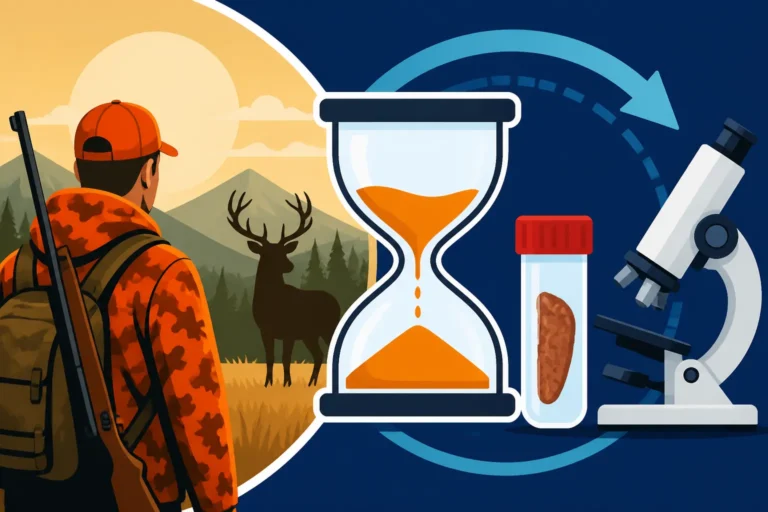
Chronic Wasting Disease is a serious concern for wildlife management agencies in both Canada and the US, and it profoundly impacts cross-border movement of cervid carcasses and meat. Alberta has designated CWD endemic zones where mandatory testing of harvested deer, elk, and moose heads is required. If you hunt in one of these WMUs, submitting the head for testing is not optional, and the results of that test are critical for your border crossing. Even if CWD testing isn't mandatory in your specific WMU, it is highly recommended if you plan to transport cervid meat or trophies across the border. Many US states, especially those neighbouring Alberta, have strict rules regarding the import of cervids harvested in CWD-positive areas or from areas where CWD exists.
It is your responsibility to understand Alberta's CWD testing requirements and to obtain any necessary documentation proving your animal has been tested and the results are negative, or that you've adhered to boned-out meat regulations. Alberta Fish and Wildlife provides information on where to submit heads for testing and how to obtain results. It can take some time to get test results back, so plan accordingly. If you're using an outfitter, they can often assist with the testing process and help ensure you have the proper documentation. Always carry physical copies of your hunting license, tags, CWD test results (if applicable), and any provincial export permits. Some states may even require an interstate transport permit or specific forms from their state wildlife agencies to import game. Using a tool like GoHunt to cross-reference your home state's specific CWD import regulations with Alberta's current CWD zones and testing protocols is an incredibly smart move. It’s also wise to be aware of Which WMUs Require a Deer Head Submission to confirm you’re compliant with local Alberta rules.
Getting Your Antlers and Skulls Across the Border
Beyond the delicious meat, for many hunters, the antlers or skull are a prized memento of their experience. Bringing these trophies home requires just as much, if not more, attention to detail and adherence to regulations as the meat itself. Missteps here can lead to frustrating delays or even the confiscation of your trophy.
Cleaning Skulls and Capes for Export
The primary concern with transporting skulls and capes across international borders is preventing the spread of diseases and pests. This means that all soft tissue must be removed from the skull, and the cape must be thoroughly cleaned and prepared. For skulls, this usually involves a process called "European mount" preparation, where the skull is boiled or macerated to remove all brain matter, muscle tissue, and hide. After cleaning, the skull should be thoroughly dried. Any remaining organic material, especially brain tissue, is considered high-risk for CWD and other pathogens, and border agents will be looking for this. If you’re not comfortable doing this yourself, there are many reputable taxidermists and skull cleaning services in Alberta that can prepare your trophy to international standards.
Capes, intended for shoulder mounts, also require significant preparation. The hide must be properly fleshed (all meat and fat removed), thoroughly salted on the flesh side, and then dried. This process cures the hide, preventing spoilage and eliminating potential insect larvae or pathogens. A dried, salted cape can often cross the border without issue, but an uncured, wet hide will almost certainly be problematic. It's often recommended to have a professional taxidermist in Alberta handle the caping, fleshing, and salting process, as they are experts in preparing hides for cross-border transport and long-term preservation. Some hunters choose to have their entire taxidermy done in Alberta and then arrange for the finished mount to be shipped to them, circumventing some of the raw material export regulations. This is a common practice for international hunters and often worth the investment for peace of mind. While our guide on Skinning a Bear for a Rug focuses on bears, the principles of proper hide care and fleshing apply across all species for export.
Required Documentation for Trophies
Just like with meat, you'll need the right paperwork for your antlers and skulls. The foundation of this documentation will be your Alberta hunting license and your species-specific tag, which must remain attached to the antlers or skull until it reaches its final destination. This tag serves as proof of legal harvest in Alberta. Without it, you're looking at serious issues. Beyond your basic hunting documentation, Alberta Fish and Wildlife may issue a specific export permit for trophies, depending on the species and the form it's in. Always check with the provincial regulations or your outfitter to see if this is required for your specific trophy.
When crossing into the United States, you'll also need to ensure compliance with USFWS regulations. For most common big game species like deer, elk, and moose harvested in Alberta, a CITES permit is generally not required for personal use if you are a US resident. However, it's always best to verify, especially if you plan to hunt less common species or intend to sell or commercialize the trophy. Keep all your permits, licenses, and receipts organized and easily accessible. Having a dedicated folder with all original documents will make the border crossing process much smoother. Remember to be transparent and forthright with border agents about what you are bringing across. They appreciate honesty and preparedness. This level of documentation goes hand-in-hand with ensuring adherence to rules like Alberta Tag Attachment and Cancellation Rules. Many hunters use detailed checklists from hunting resources like GoHunt to ensure they haven't overlooked any necessary paperwork for their specific species and destination state.
The Border Crossing Process
After all the careful preparation, the moment of truth arrives at the border. While it can feel daunting, approaching the border crossing with confidence, honesty, and all your ducks in a row will make the experience as smooth as possible. Remember, border agents are there to enforce laws and protect national interests, so a well-prepared, transparent hunter is their best-case scenario.
Declaring Your Harvest at Customs
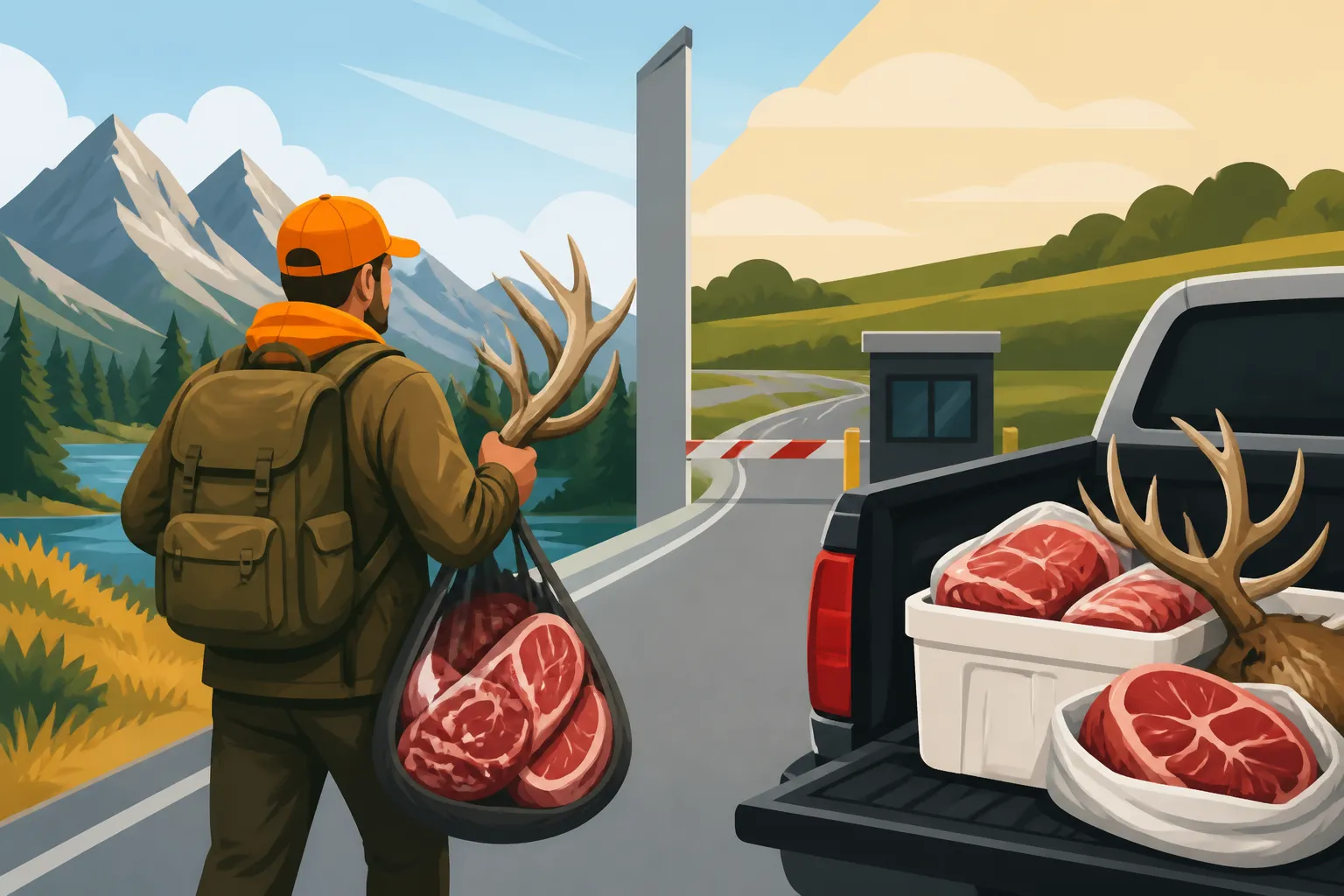
The absolute golden rule when crossing any international border with game meat or trophies is to always declare everything. Do not try to hide anything, even if you're unsure if it's strictly regulated. When the border agent asks if you have anything to declare, clearly state that you are importing legally harvested game meat and/or trophies from Alberta. Be prepared to provide details: the species of animal, the form of the meat (boned-out, packaged, frozen), and the type of trophy (cleaned skull, raw antlers, cured cape).
Have all your documentation ready to present. This includes your Alberta hunting license, your valid tags for the animal(s) harvested, any CWD test results, and any specific export permits from Alberta Fish and Wildlife. If you used an outfitter, any documentation they provided, such as a letter confirming the legal harvest, can also be helpful. Being organized demonstrates that you are a responsible hunter and have nothing to hide. Border agents have seen it all, and they appreciate efficiency. Having your paperwork readily available in a single folder can save significant time and stress. When you're bringing firearms for a hunt, you've likely already gone through a similar declaration process, as outlined in our guide on Transporting Firearms Into Alberta, and the same principles of honesty and thoroughness apply here for your game products.
Potential Inspections and What to Expect
Even with all your documentation in order, be prepared for the possibility of an inspection. This is a routine part of border security, especially when dealing with biological materials. A border agent may ask you to pull your vehicle over for a secondary inspection, which could involve opening coolers, examining meat packaging, or closely inspecting your trophies. They'll be looking to ensure:
- Meat is boned out: For cervids, they will often visually inspect packages or ask if any bones are present.
- Skulls are clean: They'll check for any remaining tissue, brain matter, or hide on the skull plate.
- Capes are properly prepared: They'll look for evidence of proper fleshing, salting, and drying.
- Documentation matches: They'll verify that your tags match the animal and that all necessary permits are present and valid.
This process can take some time, so factor that into your travel plans. Remain polite, cooperative, and answer all questions honestly. If you have done your due diligence in preparing your meat and trophies and have all your paperwork organized, the inspection should go smoothly. Most hunters report that if they are honest and prepared, border crossings with game are uneventful. However, a single piece of bone in cervid meat or an uncleanned skull can lead to confiscation or, in some cases, the requirement to immediately pay for professional processing or cleaning on the Canadian side before reattempting entry, which can be both costly and time-consuming. It’s always better to over-prepare than to risk losing your harvest or facing penalties.
Here's a quick summary table of key requirements:
| Item Type | Key Preparation Requirement | Primary Documentation Needed | Additional Considerations |
|---|---|---|---|
| Cervid Meat | Completely boned out, vacuum-sealed or freezer-bagged | Alberta Hunting License & Tag, CWD Test Results | May require state-specific import permits. No bone, brain, or spinal cord. Dry ice for longer travel. |
| Non-Cervid Meat | Properly field-dressed, chilled, packaged | Alberta Hunting License & Tag | Boning out is recommended for weight/space, but not always legally required for non-cervids. |
| Antlers/Horns | Clean (no tissue, brain matter), attached to skull plate | Alberta Hunting License & Tag, Provincial Export Permit (if applicable) | Skull plate must be fully cleaned. |
| Capes/Hides | Fleshed, salted, thoroughly dried/cured, or professionally tanned | Alberta Hunting License & Tag, Provincial Export Permit (if applicable) | No raw, wet hides. Check for insect larvae. |
| Firearms | Unloaded, securely cased, declared | Canadian Non-Resident Firearm Declaration Form | Must comply with Canadian and US firearm laws. |
Remember, the goal is to make the border agent's job easy. When you present a well-prepared harvest with all supporting documentation, you're sending a clear message that you're a responsible hunter who respects the regulations of both countries. A little extra effort on the front end will pay dividends in peace of mind and a smooth journey home with your trophies and freezer full of game. You put in the hard work on the hunt, so make sure that effort isn't wasted at the border.
Disclaimer
The information provided in this guide is for general informational purposes only and does not constitute legal advice. Hunting regulations, border crossing rules, and CWD protocols are subject to change. It is the sole responsibility of the hunter to verify all current regulations with Alberta Fish and Wildlife, Canada Border Services Agency (CBSA), U.S. Customs and Border Protection (CBP), USDA, US Fish and Wildlife Service (USFWS), and their specific state wildlife agencies before attempting to transport any game meat or trophies across international borders. Failure to comply with regulations can result in confiscation of game, fines, and/or other penalties.