Which WMUs Require a Deer Head Submission
Navigating the ever-evolving landscape of hunting regulations can sometimes feel like trying to hit a moving target, and one of the most critical, yet often confusing, aspects for deer hunters in Alberta is understanding the requirements for Chronic Wasting Disease (CWD) submission. It's a real pain to harvest a beautiful animal, only to realize you've missed a crucial step in the process, or worse, have to backtrack to a drop-off site far from home. This guide is here to demystify which Wildlife Management Units (WMUs) in Alberta mandate deer head submissions, walk you through the why, and explain exactly how to comply.
Understanding Chronic Wasting Disease (CWD) in Alberta
Chronic Wasting Disease is a serious concern for deer populations and, by extension, for hunters. It’s natural to feel a bit overwhelmed by the technical jargon and the constant updates, but grasping the basics of CWD and Alberta’s approach to it will make the submission process much clearer.
What CWD Is and Why It Matters to Hunters
At its core, CWD is a fatal, transmissible neurological disease that affects cervids – that’s deer, elk, moose, and caribou. It’s caused by abnormal proteins called prions, which slowly accumulate in the brain and other tissues. Think of it like a slow, insidious disease that eventually leads to brain damage, emaciation, abnormal behavior, and ultimately, death. Unlike bacterial or viral infections, CWD isn't caused by a living organism, which makes it particularly challenging to manage.
For us hunters, CWD matters deeply for several reasons. Firstly, it’s a threat to the health and sustainability of our wild deer herds. A high prevalence of CWD can lead to declining populations, impacting future hunting opportunities. Secondly, there’s the public health aspect. While there’s no direct scientific evidence showing CWD can spread to humans, health organizations, including Alberta Health Services, strongly advise against consuming meat from CWD-positive animals. This recommendation is a precautionary measure, but it's one we all take seriously. Imagine the gut-wrenching feeling of spending days in the bush, finally taking a nice whitetail, and then finding out it's CWD positive after processing. That's why understanding and participating in testing is so important for peace of mind and ethical hunting.
Alberta's Proactive Approach to CWD Management
Alberta Fish and Wildlife has been at the forefront of CWD monitoring and management for years, recognizing the potential long-term impacts on our wildlife resources. Their approach is multi-faceted, involving surveillance, research, and hunter cooperation. Since CWD was first detected in wild cervids in Alberta in 2005, the province has expanded its surveillance program significantly, particularly focusing on areas where the disease is known to be present or is increasing.
The mandatory deer head submission program for specific WMUs is a cornerstone of this strategy. By requiring hunters to submit deer heads from designated zones, wildlife biologists can gather crucial data on the disease's prevalence, geographical spread, and intensity. This data helps them make informed management decisions, such as adjusting hunting quotas, promoting specific harvest strategies, or targeting public education campaigns. It’s a collective effort, and every hunter who submits a head contributes directly to a healthier future for Alberta’s deer. This comprehensive approach is part of why understanding Alberta's CWD Testing Requirements is so vital for every hunter in the province.
Identifying Mandatory CWD Submission WMUs
Figuring out which WMUs require CWD submission is often where the confusion begins. Regulations can change, and what was mandatory last year might be different this year. It's essential to stay current.
Locating CWD-Mandatory Zones
The primary source for current CWD mandatory submission WMUs is always the official Alberta Hunting Regulations Guide, published annually by Alberta Environment and Protected Areas. You can find this guide online on the provincial government's website. It's usually released in late spring or early summer, well before hunting seasons kick off. Always download the most recent version, as changes can occur.
Beyond the official guide, many hunters find it incredibly helpful to use digital mapping applications. Tools like GoHunt or similar platforms often integrate CWD zone information, allowing you to visually see which WMUs are designated for mandatory submission. This can be particularly useful when you're scouting potential hunting areas or if your chosen WMU borders a CWD-mandatory zone. Always cross-reference what you see on an app with the official regulations to ensure accuracy, as app updates might lag slightly. When you're planning your hunt, especially if you're looking at Scouting With Satellite Imagery in Alberta, make sure to overlay CWD zones with your potential hunting grounds.
Specific WMUs and Deer Species Requiring Submission
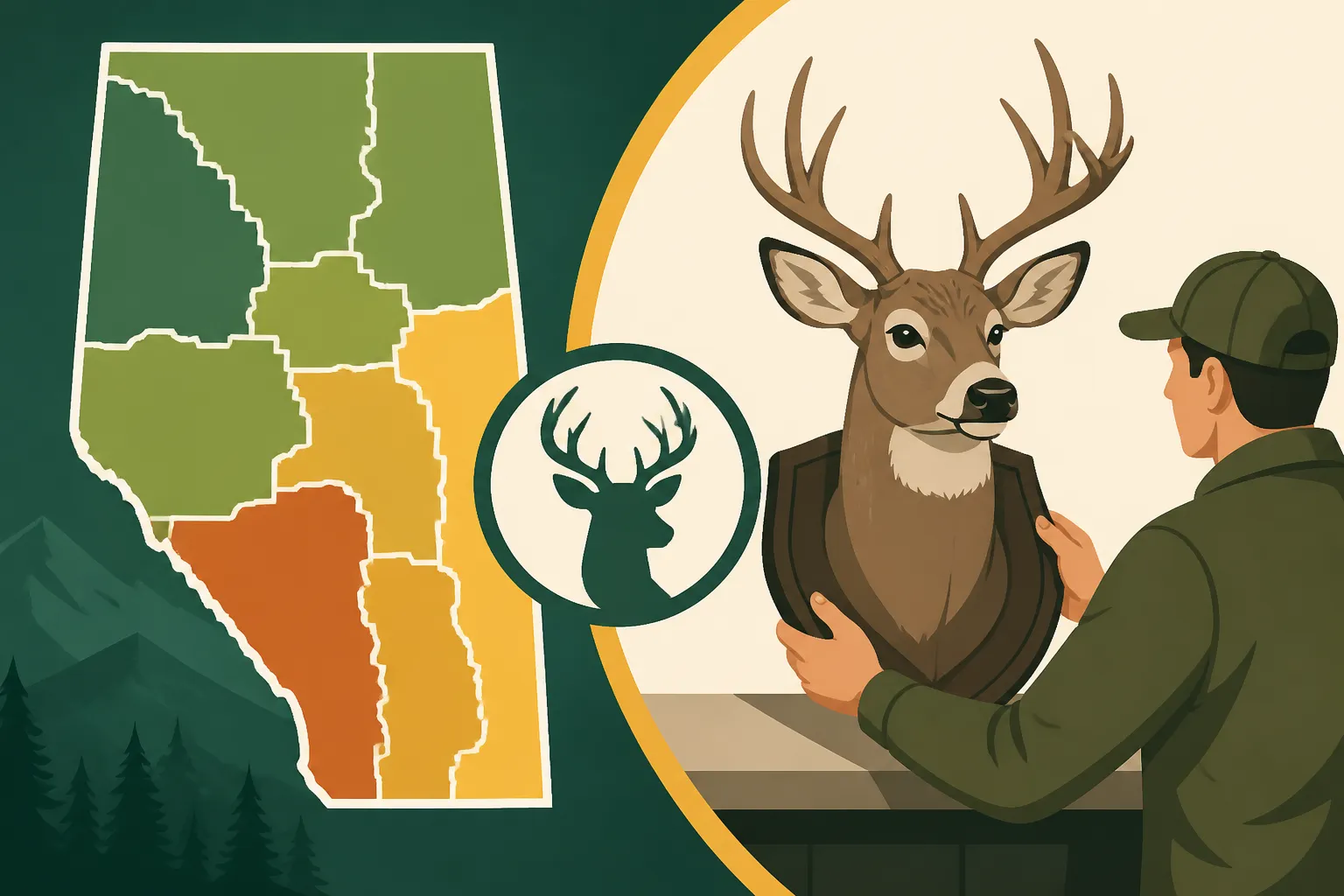
While the exact list can shift each year, generally, WMUs in eastern and central Alberta, particularly those bordering Saskatchewan where CWD is more established, are often designated as mandatory submission zones for deer. This primarily includes whitetail and mule deer, as they are the species most commonly affected and harvested in these areas.
For example, many WMUs along the Saskatchewan border, such as those in the 700 series (like 728, 730, 732) and some in the 200 series (like 200, 202, 204, 206, 208, 210), have been consistent CWD mandatory zones. However, the exact boundaries and which species are included can vary. Sometimes, it's all deer species, other times it might be specific to only whitetail deer or mule deer, or only antlered animals.
Here's a generalized table to illustrate typical CWD zones, but remember, always consult the current Alberta Hunting Regulations Guide for the definitive list and specific species requirements for your chosen WMU.
| WMU Series / Region (General) | Common CWD Status for Deer | Notes |
|---|---|---|
| 200s (Central & East) | Often Mandatory | Varies by specific WMU; check for Whitetail/Mule Deer |
| 700s (Eastern Prairies) | High Probability Mandatory | Strong focus on both deer species due to border proximity |
| 100s (Southern Prairies) | Increasingly Monitored | Some WMUs may become mandatory or have targeted surveillance |
| 300s, 400s (Parkland/Foothills) | Monitored, less common mandatory | Check specific regulations, often targeted surveillance rather than mandatory for all |
| 500s (Boreal Forest) | Generally Voluntary | CWD less prevalent here, but always check for updates |
It’s not just about the numbers on the map. It's about understanding the geographical spread of the disease. The province tends to focus on areas where CWD is detected to prevent its further spread westward into less affected zones, particularly in the foothills and mountains. This means if you're hunting in, say, Alberta Whitetail General Season Dates in a WMU like 202, CWD submission might be mandatory, whereas if you're out Mule Deer General Season Dates in the foothills WMU 404, it might be voluntary.
The Deer Head Submission Process: Step-by-Step
So, you've harvested a deer in a mandatory CWD zone. Now what? The submission process is straightforward, but critical steps ensure your sample is viable for testing and that you comply with regulations.
Preparing Your Deer Head for Submission
Proper preparation of the deer head is key to ensuring the lab can successfully test for CWD. The most important thing is to ensure the lymph nodes at the base of the skull, near the jaw, are intact. This is where the prions are most reliably detected.
- Remove the Head: After field dressing your deer, carefully remove the head. The easiest way is to cut the neck between the first and second cervical vertebrae, leaving at least four inches of neck attached to the head. You don't need to skin the head, but you can remove the hide from the neck if you wish.
- Tag Your Head: This is crucial. Before heading out to hunt, ensure you have your CWD submission tag. These tags are often provided with your hunting license or can be printed from the provincial website. Fill it out completely and accurately, including your WIN card number, species, WMU, and harvest date. Securely attach this tag to the antler or ear of the head. Without proper identification, your sample might not be processed.
- Keep it Cool: CWD samples need to be kept cool, ideally refrigerated or frozen, especially in warmer weather. If you're on a multi-day hunt, plan to get the head to a drop-off freezer as soon as reasonably possible. A cooler with ice works well for temporary storage. You’d be surprised how quickly a sample can degrade if left in the sun, making it unsuitable for testing. This is particularly important for Meat Care in Alberta's Cold and Warm Swings.
Finding and Using CWD Drop-Off Locations
Alberta Fish and Wildlife maintains a network of CWD drop-off freezers across the province, strategically located in areas with mandatory submission requirements. You can find a comprehensive list of these locations on the official Alberta Environment and Protected Areas website. Often, these freezers are at local Fish and Wildlife offices, specific hardware stores, or designated private businesses.
When you arrive at a drop-off location:
- Locate the Freezer: The freezers are usually clearly marked with CWD signage.
- Confirm Your Tag: Double-check that your tag is securely attached and filled out.
- Place Head Inside: Simply place your tagged deer head into the freezer. There's usually a log sheet inside or nearby where you can record your drop-off, which provides an extra layer of tracking.
- Special Considerations: Some WMUs might have specific temporary drop-off points during peak hunting season. Always check the regulations for these specific details. Knowing Where Alberta's CWD Freezers Are before you head out can save you a lot of hassle post-harvest.
What Happens After Submission
Once your deer head is in the freezer, it's collected by Fish and Wildlife staff and sent to a provincial lab for testing. This isn't an instant process, so patience is key.
- Lab Analysis: Technicians will extract the necessary lymph node samples and conduct specialized tests to detect the presence of CWD prions.
- Results Notification: The typical turnaround time for CWD results can vary, but generally, you can expect results within 4-6 weeks. You'll usually be notified by mail or email, depending on the contact information you provided on your tag. You can also often check results online using your WIN card number. Understanding How Long CWD Results Take helps manage expectations.
- Positive Results: If your deer tests positive for CWD, Alberta Fish and Wildlife will contact you directly to discuss the implications and recommendations. This will include advice on proper carcass disposal and a strong recommendation not to consume the meat. This is where knowing What Alberta Does With a Positive CWD Result becomes crucial. It's a tough pill to swallow, but it's vital for herd health. Remember, even if your deer tests positive, you still contributed important data to CWD management, which is a valuable service to the hunting community.
Importance Beyond Compliance: Why Every Hunter Should Consider Testing
While mandatory submission zones are a fact of hunting life in certain areas, the proactive hunter recognizes the broader benefits of CWD testing, even when it's voluntary.
Contributing to Herd Health and Research
Every submitted deer head, whether mandatory or voluntary, provides invaluable data points for wildlife managers and researchers. Think of it as citizen science on a grand scale. Each sample helps to build a clearer picture of CWD distribution, prevalence, and trends across the province. This cumulative data informs critical decisions about where to focus future surveillance, potential management strategies, and how to protect our cherished cervid populations. For instance, data from hunter submissions directly influences reporting like Alberta's CWD Positive Rate Last Season.
By participating, you're not just complying with a rule; you're actively contributing to the long-term health and sustainability of Alberta's deer, elk, and moose. This is the essence of conservation – giving back to the resource that provides us with so much. It's about being good stewards of the land and its wildlife, ensuring that future generations can enjoy the same hunting opportunities we do.
Personal Peace of Mind and Meat Safety
For many hunters, the primary motivation for submitting a deer head, even when not mandated, is personal peace of mind. Knowing that the venison in your freezer is CWD-free allows you to enjoy your harvest without any lingering worry. The thought of potentially consuming meat from a CWD-positive animal is unsettling, and a simple test can alleviate that concern entirely.
Consider the effort and expense that goes into a hunt: the gear, the travel, the time spent scouting and hunting. Adding the small step of CWD testing is a minimal investment for maximum reassurance. While current research suggests a low risk of CWD transmission to humans, erring on the side of caution is always the wisest approach when it comes to food safety. Getting your deer tested is a responsible choice for you and your family, especially if you’re taking your meat home and potentially Moving a Carcass Out of a CWD Zone.
WMU CWD Submission Guidelines (Illustrative Example – Always check current regulations)
| WMU Group | Typical CWD Zone | Likely Submission Status | Species to Monitor |
|---|---|---|---|
| 200 Series | Central Parkland / Eastern Prairie | Mandatory for Deer | Whitetail, Mule Deer |
| 700 Series | Southeastern Prairie | Mandatory for Deer | Whitetail, Mule Deer, Pronghorn (check) |
| 100 Series | Southern Prairie | Targeted Surveillance / Occasional Mandatory | Mule Deer, Whitetail, Pronghorn (check) |
| 300 Series | Foothills Transition | Voluntary / Low Risk Mandatory | Whitetail, Elk |
| 400 Series | Northern Foothills | Voluntary / Low Risk Mandatory | Elk, Moose, Whitetail |
| 500 Series | Boreal Forest | Voluntary / Very Low Risk Mandatory | Moose, Whitetail |
Note: This table is for general understanding only. Specific WMUs and regulations can change annually. Always consult the most current Alberta Hunting Regulations Guide for precise information.
Disclaimer
The information provided in this guide is for general informational purposes only and does not constitute legal advice. Hunting regulations in Alberta are subject to change, and it is the hunter's sole responsibility to consult the most current official Alberta Hunting Regulations Guide and any relevant provincial government resources (e.g., albertarelm.com) before engaging in any hunting activities. Failure to comply with regulations can result in penalties. Always prioritize safety and ethical hunting practices.