Where Alberta’s CWD Freezers Are
It's incredibly frustrating when you've just put in all that effort on a successful hunt, and then you're faced with the next step: dealing with chronic wasting disease (CWD) testing. You want to do your part for wildlife management, but figuring out where to submit your animal's head and the logistics of getting it there can feel like a whole new challenge after a long day in the field. This guide is designed to take the guesswork out of CWD submission, laying out exactly where you can find those critical freezers across Alberta and offering practical advice to make the process as smooth as possible.
Understanding Alberta's CWD Surveillance Program
Chronic Wasting Disease (CWD) is a serious concern for Alberta's wildlife, and as hunters, we play a crucial role in monitoring its spread. It's not just another hoop to jump through; it's a vital part of protecting the health of our deer, elk, and moose populations for generations to come.
Why CWD Testing Matters for Alberta Hunters
CWD is a fatal, neurological disease that affects cervids – that's deer, elk, moose, and caribou. It's caused by abnormal proteins called prions, and it slowly degrades the brain of infected animals, leading to symptoms like emaciation, abnormal behavior, and ultimately, death. The scary part is, it's always fatal, and there's no known cure. While there's no direct evidence of CWD transmitting to humans, health agencies like Health Canada and the World Health Organization recommend against consuming meat from CWD-positive animals.
For us in Alberta, CWD was first detected in a wild mule deer in 2005. Since then, it has steadily spread across the province, particularly in the southern and central regions. The Alberta government's surveillance program, largely supported by hunter submissions, is our best line of defense. By collecting samples, wildlife biologists can track the disease's prevalence and distribution, helping them make informed management decisions. As hunters, participating in this program isn't just a regulatory requirement in certain areas; it's a direct contribution to conservation. Understanding the nuances of Alberta's CWD Testing Requirements is key to compliance and effective wildlife management. It helps ensure that we're all working together to keep our herds healthy.
Preparing Your Sample for Submission
So, you've harvested a deer, elk, or moose, and you know you need to submit a sample for CWD testing. The most important part of this is getting the head ready. The primary sample needed is the obex, a specific part of the brainstem, which is best accessed from the entire head.
First and foremost, make sure your animal has the appropriate tag attached to it, as required by your licence. When you're field dressing, you'll want to remove the head from the carcass. The Alberta Environment and Parks (AEP) requires the entire head, including at least four inches of neck past the skull, to be submitted. This ensures enough tissue for proper sampling. Once the head is removed, you need to securely attach a completed CWD submission form or a clear tag with all the necessary information. This usually includes your WIN (Wildlife Identification Number) card number, the date of harvest, the Wildlife Management Unit (WMU) where the animal was harvested, and the species. Without this critical information, your sample can't be processed, and all your effort will be for naught. Some hunters will place the head in a plastic bag to keep it clean and prevent any leakage during transport, which is always a good practice. Remember, accurate information ensures that the data collected is useful for tracking disease trends in specific areas.
Locating CWD Submission Freezers Across Alberta
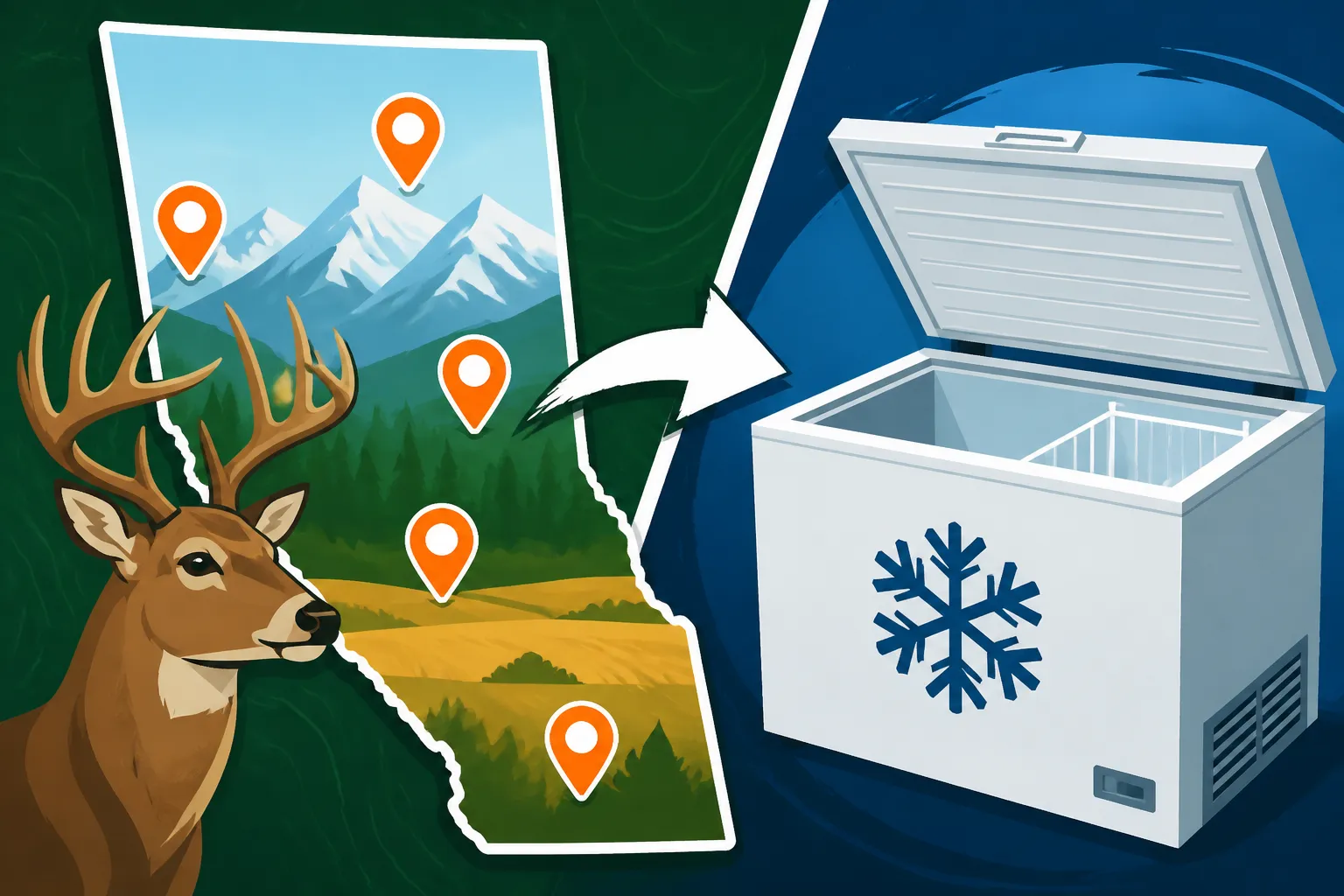
The Alberta government maintains a network of CWD submission freezers strategically placed across the province. These freezers are typically found in rural communities, making it as convenient as possible for hunters to drop off their samples. Knowing these locations beforehand can save you a lot of time and hassle after a successful hunt.
Southern Alberta Submission Sites
Southern Alberta has seen some of the highest CWD prevalence, making submission critical in this region. You'll find freezers dotted throughout the prairie and badlands country, where both white-tailed deer and mule deer are common. For instance, hunters pursuing Mule Deer in Alberta's Open Country or White-Tailed Deer, Alberta's Most Hunted Big Game in WMUs like 102, 104, 106, 110, or 118 will find submission points readily accessible.
Common locations for CWD freezers in southern Alberta include:
- Medicine Hat: Often at local Fish and Wildlife offices or designated private businesses.
- Brooks: Typically at the Fish and Wildlife office or a local general store.
- Bassano: A community drop-off point, often at a local shop.
- Hanna: Another small-town location, usually accessible at a town office or local business.
- Drumheller: Conveniently located for those hunting the badlands.
- Claresholm/Fort Macleod: Often at an agriculture services board office or local business.
- Lethbridge/Taber: Larger centers often have dedicated collection points or sometimes at specific veterinary clinics.
It's always a good idea to confirm the exact address and operating hours before you head out. These locations are updated annually, and sometimes temporary sites are established, so don't just rely on last year's knowledge.
Central Alberta and Parkland Region Freezers
Moving into the central part of the province, the parkland and agricultural zones also have a robust network of CWD freezers. This region is a popular hunting ground, especially during Alberta's general licence seasons. Hunters from Edmonton, Calgary, and Red Deer often venture into these areas.
Submission sites you can expect to find in central Alberta include:
- Red Deer: Often at the AEP office or an accessible public freezer.
- Stettler: A common drop-off for those hunting the surrounding farmlands.
- Wetaskiwin/Camrose: Typically at a local agriculture service board or community store.
- Rocky Mountain House/Sundre: Crucial for hunters coming out of the foothills.
- Wainwright/Provost: Important locations for the eastern central region, particularly given the proximity to high CWD prevalence zones.
- Lloydminster: Located right on the Alberta-Saskatchewan border, serving a large hunting population.
- Vegreville/Vermilion: Key points for hunters in the northeastern parkland.
These freezers are usually well-marked, but access might vary, so it's wise to check the Alberta government's CWD program website for the most current list and any specific instructions for each location. For comprehensive hunting information, including where Alberta's Wildlife Management Units are located, resources are always being updated.
Northern Alberta and Boreal Forest Drop-Offs
While CWD prevalence has historically been lower in northern Alberta, surveillance remains critical, especially with the disease gradually expanding its range. For hunters pursuing Moose Across Alberta's Boreal and Foothills or other big game in the vast northern forests, submission freezers are available, though they might be more spread out.
Key locations for CWD freezers in northern Alberta often include:
- Grande Prairie: A major hub for the Peace Country, with easily accessible submission.
- Peace River: Important for hunters operating in the far northern reaches of the Peace River breaks.
- Slave Lake: Located centrally within the boreal forest for those heading into more remote areas.
- High Level/Fort Vermilion: Critical for hunters in Alberta's far northern WMUs, where access can be challenging.
- Athabasca/Lac La Biche: Serving the eastern boreal forest regions.
- Hinton/Edson: Gateway locations for hunters in the foothills and eastern slopes.
Given the distances involved in northern hunts, it's particularly important to plan your submission route carefully. Knowing where the freezers are located can even influence your return journey from the bush. Tools like GoHunt can be invaluable here, allowing you to overlay WMU boundaries and CWD freezer locations on your maps, helping you plan your drive out more efficiently. This can be especially helpful when you're looking at Scouting With Satellite Imagery in Alberta to identify travel corridors that might lead you past a submission site.
Tips for a Smooth CWD Submission Process
Navigating the CWD submission process can be straightforward with a little preparation. It's not just about knowing where the freezers are; it's also about understanding the logistics and using available resources to your advantage.
Checking Freezer Availability and Access
One of the most common hiccups hunters face is arriving at a CWD freezer only to find it full, locked, or temporarily out of service. While these freezers are generally reliable, issues can arise, especially during peak hunting seasons or in remote locations. Before you commit to driving hours with a deer head in the back of your truck, take a few minutes to confirm the freezer's status.
The Alberta government's website for the CWD surveillance program is your best friend here. They typically provide an interactive map with the most current freezer locations, along with any specific instructions or reported closures. Some locations, especially those at smaller community businesses, might have specific hours of operation or require you to check in with staff before using the freezer. It’s also not uncommon for certain freezers to become temporarily unavailable if they reach capacity, particularly after a busy opening weekend. A quick phone call to the listed contact number (if available) can save you a lot of backtracking. If a freezer is full, you'll generally need to find the next closest one. Don't leave your sample beside a full freezer; it won't be collected or tested, and could even pose a health risk. This kind of planning also ties into practical considerations like Meat Care in Alberta's Cold and Warm Swings, ensuring your harvest is handled properly until it reaches processing.
Utilizing Online Resources and Mapping Tools
In today's digital age, there's no excuse for being unprepared when it comes to CWD submission. The Alberta Environment and Parks (AEP) website is the definitive source for information. They usually provide detailed maps and lists of CWD submission sites, often searchable by WMU or region. This resource also explains what information is required on your submission form and how to properly package your sample.
Beyond government websites, modern mapping applications are incredibly useful. Many hunters already use platforms like GoHunt for their extensive mapping capabilities and property boundary overlays. These apps often allow you to add custom waypoints or layers, meaning you can plot out potential CWD freezer locations as part of your hunt planning. Imagine you're hunting in a WMU that falls under Alberta's Mandatory CWD Submission WMUs; you can use your GoHunt app to not only see property lines and potential animal bedding areas, but also to mark the nearest CWD freezer. This integration allows you to plan your route from the field directly to a submission site, saving time and ensuring your sample gets dropped off promptly. It's especially useful when you're planning a trip to a new area and need to know Reading an Alberta WMU Map Before You Go. Having all this information in one place simplifies the logistics of a successful hunt, from the shot to the submission.
Here's a quick overview of some common CWD freezer locations:
| Region | Typical Locations | Notes |
|---|---|---|
| Southern Alberta | Brooks, Medicine Hat, Bassano, Hanna, Claresholm, Fort Macleod, Lethbridge, Taber | Check for mandatory CWD submission WMUs. |
| Central Alberta | Red Deer, Stettler, Wetaskiwin, Camrose, Rocky Mountain House, Sundre, Wainwright, Provost, Lloydminster, Vegreville, Vermilion | Generally more frequent in agricultural areas. |
| Northern Alberta | Grande Prairie, Peace River, Slave Lake, High Level, Fort Vermilion, Athabasca, Lac La Biche, Hinton, Edson | More dispersed; confirm locations and hours. |
| Northern Alberta (Remote) | Peace River, High Level, Fort Vermilion (if applicable) | Note that remote locations may have irregular or limited access points. |
Please note: The locations provided in the table are illustrative and represent areas where CWD freezers are commonly found. Hunters should always confirm the most up-to-date and specific addresses, along with operating hours and instructions, on the official Alberta Environment and Parks (AEP) website or through relevant Fish and Wildlife offices before traveling to a submission site.
Disclaimer
Please note: The information provided in this guide is for general informational purposes only and is not intended as legal advice. Hunting regulations, CWD submission requirements, and freezer locations in Alberta can change frequently. Hunters are solely responsible for consulting the most current Alberta Hunting Regulations, the Alberta Environment and Parks (AEP) website, and relevant Fish and Wildlife offices for official and up-to-date information before planning and undertaking any hunting activities or CWD sample submissions. Always prioritize safety, ethical hunting practices, and compliance with all applicable laws.