Alberta’s Wildlife Management Units
It can feel like you need a secret decoder ring just to figure out where you can hunt what in Alberta, right? The maze of regulations, different zones for different animals, and the sheer number of maps can be incredibly overwhelming, especially for new hunters or those looking to explore new regions. This comprehensive guide is designed to cut through that confusion, demystifying Alberta's Wildlife Management Units (WMUs) and empowering you to plan your hunts with confidence and clarity.
Understanding the Basics of Alberta's WMUs
Navigating Alberta's hunting landscape starts with a fundamental understanding of its Wildlife Management Units. These aren't just arbitrary lines on a map; they are the backbone of sustainable wildlife conservation and your key to unlocking hunting opportunities across the province. Trying to plan a hunt without grasping WMUs is like trying to bake a cake without knowing the ingredients – you're just guessing.
What Exactly is a WMU?
WMUs, or Wildlife Management Units, are simply specific geographic areas that Alberta's fish and wildlife division has designated for managing game populations. Think of them as individual administrative districts for wildlife. Each WMU has its own set of rules, season dates, and sometimes even specific bag limits or draw opportunities for certain species. They're critical because they allow wildlife managers to fine-tune conservation efforts and hunting pressure based on local conditions, habitat, and animal populations. Without them, it would be a free-for-all, and sustainable hunting wouldn't be possible.
These units aren't just arbitrary lines on a map; they're often delineated by natural features like rivers, mountain ranges, or major highways, making them somewhat intuitive to understand once you get the hang of it. For example, a major river might act as a natural boundary for a deer herd, and thus, it makes sense for that river to also define a WMU edge. This localized approach means that what's legal or available in WMU 210 might be completely different from WMU 344, even if they're not that far apart. It's why "check the regs" is the universal mantra for Alberta hunters – you can't assume what applies in one area will apply in another.
Understanding WMUs is the foundational step for any hunter in Alberta, whether you're chasing the common whitetail or holding out for a draw-only moose tag. They dictate everything from when you can pull the trigger to whether you even have a chance at a tag through the draw system. Ignoring them isn't an option; it's how you stay legal, ethical, and ultimately, successful in the field. Every hunting regulation, every season date, and every draw opportunity is tied directly back to these units, making them the first thing you need to identify when planning any hunt.
The Purpose Behind WMU Boundaries
The primary reason for establishing these detailed WMU boundaries is effective wildlife conservation and management. Alberta is a vast province with incredibly diverse landscapes, from the southern prairies to the dense boreal forest and the rugged Rocky Mountains. Wildlife populations, habitat conditions, and even human-wildlife conflicts vary dramatically across these regions. A blanket approach to hunting seasons and limits just wouldn't work; it would either over-harvest in some areas or under-utilize resources in others, leading to an imbalance that would harm both the wildlife and the hunting tradition.
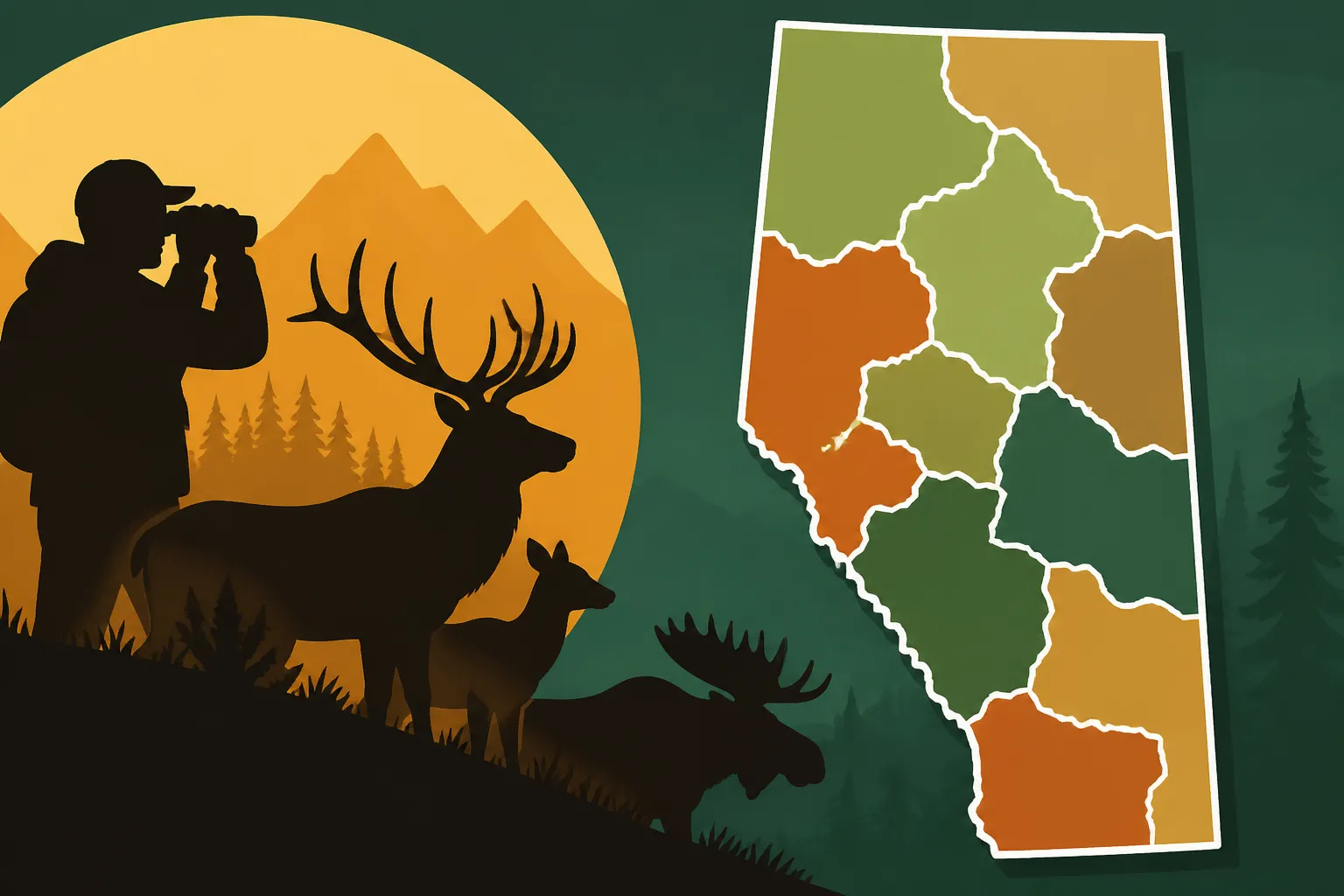
By segmenting the province into its many Alberta's 219 Wildlife Management Units, fisheries and wildlife biologists can monitor specific populations, assess habitat health, and implement targeted strategies. For instance, if a certain WMU experiences a harsh winter, deer populations might decline, leading to reduced tag allocations or shorter seasons in subsequent years to allow for recovery. Conversely, if elk populations are causing agricultural damage in another WMU, managers might increase antlerless tags to help mitigate the issue, showing a direct correlation between WMU management and localized wildlife challenges. This dynamic management ensures healthier herds and balances the needs of wildlife with the interests of hunters, landowners, and the broader ecosystem.
Furthermore, WMUs play a crucial role in managing hunter distribution. Certain popular areas, often those known for producing big bucks or easy access, can become overcrowded, diminishing the quality of the hunting experience and potentially raising safety concerns. By controlling tag numbers and season structures within specific WMUs, the province can spread out hunting pressure, enhance the quality of the hunting experience, and reduce safety concerns. It’s not just about managing animals; it’s about managing people and their impact on the resource, ensuring that hunting remains a sustainable and enjoyable activity for generations to come.
Navigating Alberta's Wildlife Management Unit System
The sheer number of WMUs can seem daunting at first glance. However, there's a logical structure to how they're organized, which can greatly simplify your understanding and make hunt planning far less intimidating. Once you grasp this basic framework, the province starts to make a lot more sense from a hunter's perspective.
The Numerical System and Geographic Groupings
Alberta's WMUs are numbered, and these numbers generally follow a broad geographical pattern that can quickly tell you what region of the province you're looking at. For instance, WMUs in the 100-series (e.g., 102, 116) are typically found in the southeastern prairies, characterized by open grasslands, coulees, and river breaks. As you move north and west into the parkland belt, you'll encounter the 200-series WMUs (e.g., 200, 246), which are a mix of agricultural land and aspen bluffs. The 300-series WMUs (e.g., 304, 346) generally cover the foothills and Rocky Mountains, offering rugged terrain and dense timber. Finally, the 400- and 500-series WMUs (e.g., 404, 520) stretch across the vast boreal forest and northern regions of Alberta.
This numerical grouping isn't just for organization; it directly correlates with the habitat types and, therefore, the dominant game species you're likely to encounter. A 100-series WMU, for example, is where you'd typically focus your efforts for mule deer and pronghorn, whereas a 400-series WMU is prime moose and black bear country. This regionalization helps hunters narrow down their search and understand general patterns of animal distribution. It means that if you're looking for a specific type of hunt, you can immediately eliminate entire swaths of the province just by looking at the WMU numbers.
Familiarizing yourself with this numerical system is a powerful shortcut. When someone mentions WMU 330, you immediately picture dense timber, mountainous terrain, and likely elk or bighorn sheep. It’s a mental map that becomes increasingly clear with experience and is crucial for efficient research, especially when you're delving into Alberta's Special Licence Draws or trying to figure out where your Alberta's Draw Priority Point System might finally pay off.
WMUs in the Green Area vs. White Area
One of the most critical distinctions within Alberta's WMU system is whether a unit falls predominantly within the "Green Area" or the "White Area" of the province. The Green Area is largely comprised of forested Crown land, managed for forestry, recreation, and, of course, wildlife. The White Area, on the other hand, is primarily agricultural land, mostly privately owned, with some scattered parcels of Crown land. Understanding Alberta's Green Area and White Area is vital because it dramatically impacts public access and the hunting experience.
WMU boundaries often span both these areas, creating a mosaic of public and private land. For example, many of the 200-series WMUs in the parkland are a mix of private farms and smaller pockets of Crown land, or sometimes large provincial grazing reserves. Hunting in the Green Area generally means more readily available Public Hunting Land in Alberta, though access might be limited by rugged terrain, forestry gates, or walk-in requirements. Conversely, hunting in the White Area requires extensive effort to obtain Getting Private Land Permission in Alberta, which can be a significant hurdle for many hunters.
The type of land also influences the species and their behavior. Animals in the Green Area often exhibit more natural, less human-influenced patterns, whereas those in the White Area frequently adapt to agricultural cycles and human presence. Being able to visualize these distinctions within a WMU helps you refine your scouting strategy, prepare for access challenges, and ultimately decide if a particular WMU aligns with the type of hunt you're after.
WMUs for Specific Big Game Species
When it comes to big game hunting in Alberta, the WMU isn't just a boundary; it's a predictor of opportunity. Each unit, with its unique blend of habitat and pressures, dictates which species thrive there and what kind of hunting experience you can expect. This specificity is why simply having a general deer tag isn't enough; you need to know which WMU you can use it in.
Whitetail and Mule Deer WMU Considerations
Whitetail deer are Alberta's most widely distributed big game animal, found in nearly every WMU across the province, from the prairie to the boreal forest. However, certain WMUs are renowned for producing trophy-class bucks, while others offer high densities for a meat hunt. The 200-series WMUs in the central parkland and some of the more agricultural 100-series WMUs, for instance, are often considered prime whitetail country, known for growing substantial antlers due to rich agricultural food sources. If you're targeting White-Tailed Deer, Alberta's Most Hunted Big Game, your WMU choice will hinge on whether you prioritize antler size or simply the chance to fill your freezer. Understanding Where Alberta Grows the Biggest Whitetails often leads back to specific WMUs.
Mule deer, on the other hand, are more tied to specific habitat types. They thrive in the broken country of the prairies, the badlands, and the coulees of southern Alberta (primarily 100-series WMUs), as well as in the foothills and mountain regions (300-series). Targeting Mule Deer in Alberta's Open Country means focusing your efforts on these specific WMUs where their preferred habitat exists. The rules for mule deer often differ significantly from whitetails within the same WMU, sometimes even having different season dates or antler point restrictions. This means you really have to pay attention to the species-specific regulations for your chosen WMU, as the difference between a legal whitetail and an illegal mule deer can be a very thin line.
For both species, season dates and limits vary significantly from one WMU to another. You might find an archery-only season for deer in one WMU starting in late August, while a neighboring unit might not open until November for general rifle hunting. This hyper-local management allows for precise control over harvest and reflects the unique pressures and populations within each area, so checking the current Alberta Rifle Season Dates and Archery Season Dates by WMU Group for your chosen WMU is absolutely non-negotiable.
Moose and Elk WMU Hotspots
When it comes to moose, your focus should largely be on the northern 400- and 500-series WMUs, and parts of the 300-series foothills. These units encompass the vast boreal forest, muskegs, and mixed-wood forests that moose call home. Understanding Moose Across Alberta's Boreal and Foothills will guide you to these specific areas where populations are strongest. Moose tags are predominantly allocated through the draw system, making your choice of WMU critical to your draw odds. Some WMUs consistently have better draw success rates, while others are perennial long shots due to high demand and limited tags.
Elk are more widespread than moose, inhabiting the mountains and foothills, but also increasingly moving into the parkland and agricultural areas. The 300-series WMUs are classic elk country, offering stunning landscapes and often significant public land access. However, some 200-series WMUs and even certain 100-series units near river breaks can offer excellent elk hunting opportunities, especially for those willing to pursue them on private land. Alberta's Elk Herds and Their Range are dynamic, and so are the WMU opportunities. Like moose, many elk tags are available through special draws, with varying tag types (antlered, antlerless, or either-sex) and season lengths dictated by the individual WMU's management goals.
For both moose and elk, the WMU is not just where you can hunt, but often where you must apply to hunt. The draw system is tied directly to these units, meaning if you want a moose tag for WMU 520, you apply specifically for that unit. If you're looking to increase your chances, you'll need to research which WMUs have the most tags available or the best odds, using historical draw data as your guide. This WMU-specific draw approach allows managers to precisely control the harvest of these high-value species.
Understanding Draw-Only WMUs for Mountain Species and Pronghorn
For some of Alberta's most coveted big game species, hunting is heavily draw-driven, and success hinges largely on your WMU selection. Species like Bighorn Sheep and Mountain Goat live in the rugged, high-elevation 300-series WMUs of the Rocky Mountains. Mountain goat tags are extremely limited and highly sought after. For sheep, residents buy class 1 (trophy) licences without a draw, and Alberta's Draw Priority Point System applies only in some of the special WMU sheep draws. Your choice of WMU for these species is about more than just draw odds; it’s about the specific quality of the animals, the difficulty of the terrain, and the type of backcountry experience you're hoping for. Reviewing Bighorn Sheep Draw Rules and Limits and understanding the specifics of the WMUs they inhabit is critical for hopeful sheep hunters.
Similarly, pronghorn, Alberta's fastest land animal, are found almost exclusively in the open, southern prairie WMUs, predominantly in the 100-series. These tags are also highly coveted and available only through a draw. The quality of the pronghorn hunting experience, and your ability to locate animals, is directly tied to the specific habitat within your chosen WMU. Flat, wide-open stubble fields versus undulating coulee country can mean vastly different hunting strategies. When applying for Hunting Alberta's Pronghorn Draw, the WMU dictates everything from the topography you'll be scouting to the average size of the bucks found there.
For these draw-only species, WMU choice is not a casual decision; it's a strategic one that can take years of planning and patience. Each WMU will have its own historical draw odds, success rates, and even reputation for producing larger animals. This detailed WMU data is what serious hunters study meticulously, often using tools like GoHunt to analyze trends and make informed decisions on where to put their precious draw application.
WMUs for Game Birds and Predators
While big game hunting often dominates conversations about WMUs, these units are equally important for understanding opportunities for game birds and predators. The same principles of localized management apply, ensuring healthy populations and diverse hunting experiences for these species.
Waterfowl and Upland Bird Zones
Waterfowl hunting in Alberta often operates on broader "zones" (North, Central, South) for ducks and geese, which define the overall season dates. However, even within these zones, WMU specifics can be incredibly useful. For instance, knowing which WMUs contain extensive wetland habitat or productive stubble fields can help pinpoint specific staging areas for geese or prime potholes for ducks. Some WMUs might have more restrictive rules or even be closed to hunting around certain population centers or wildlife refuges, so a thorough check is always required.
For upland birds, WMUs become even more critical because these species are intrinsically tied to specific habitats within smaller areas. Sharp-tailed grouse thrive in native grasslands, Hungarian partridge prefer farm edges and shelterbelts, while ruffed and spruce grouse are found in the forested WMUs. If you're looking for a specific upland bird experience, identifying WMUs with that dominant habitat is key. For example, the 200-series WMUs in the parkland are often excellent for partridge and sharptails, while the 300- and 400-series units in the bush offer great grouse hunting. The bag limits and season lengths for these birds can also vary subtly between WMUs, reflecting local population dynamics.
Predator Hunting Across WMUs
Predator hunting, while often more open and less restrictive than big game, still requires WMU awareness. Coyotes and wolves are present across many WMUs, but the specific rules regarding baiting, night hunting, or calling can differ. For instance, some agricultural WMUs might have more liberal rules for coyote hunting to assist landowners with livestock protection, while highly populated WMUs close to urban centers will have stricter regulations regarding discharge of firearms.
Cougar hunting is a prime example of how WMUs directly dictate predator opportunities. Cougar seasons operate on a quota system that is highly specific to individual WMUs. Once the quota for a particular WMU is met, the season closes immediately for that unit, regardless of the overall provincial season. Hunters pursuing cougars must diligently check the "quota line" daily to ensure their chosen WMU is still open, demonstrating how WMU-specific rules can directly impact a hunt in real-time. This level of granular management ensures that predator populations are maintained at healthy levels, while also providing hunting opportunities where appropriate.
Accessing WMU Information and Maps
Understanding WMUs is one thing, but knowing where to find the most accurate and up-to-date information is another crucial step. In a province with such diverse landscapes and dynamic wildlife populations, relying on outdated or anecdotal information can lead to disappointment or, worse, legal trouble.
Official Alberta Regulations and WMU Maps
The absolute first place any hunter should look for WMU information is the official Alberta Guide to Hunting Regulations. This document is released annually and is the authoritative source for all season dates, bag limits, and specific WMU rules. It's available online through the Alberta government's website and often in print at sporting goods stores. While it can be a lot to digest, every serious hunter should spend time familiarizing themselves with its contents for their chosen WMU.
Accompanying the regulations, you'll find official WMU maps. These maps clearly delineate the boundaries of each unit, often overlaid on topographical features. They are essential for understanding where one WMU ends and another begins, which is critical if you're hunting along a boundary or planning to move between units. These official maps are the foundation for learning Reading an Alberta WMU Map Before You Go. Always ensure you're using the most current version, as boundaries can occasionally be adjusted, or new regulations might change how a particular WMU is managed.
Beyond the main regulations, the Alberta government also publishes detailed information on specific draws, CWD surveillance zones (which are also often WMU-specific), and public land use zones (PLUZs) that fall within certain WMUs. Making a habit of checking these official sources annually is key to staying informed and ensuring a legal and ethical hunt.
Digital Mapping Tools for Hunters
In today's hunting world, digital mapping tools have become indispensable for navigating WMUs. These applications and online platforms take the static government maps and bring them to life with layers of valuable information. Companies like GoHunt offer platforms that overlay WMU boundaries directly onto high-resolution satellite imagery, topographical maps, and often, land ownership information. This means you can see exactly where the WMU line runs in relation to a creek, a field edge, or a road, something that's difficult to ascertain from a paper map alone.
These digital tools are a game-changer for planning and scouting. You can identify potential access points, locate pockets of Public Hunting Land in Alberta or Crown land within a WMU, and even pinpoint ideal areas based on terrain features without ever leaving your home. For example, if you're hunting a WMU that's a mix of private and public land, a platform like GoHunt can instantly show you which quarter sections are Crown land, saving you countless hours of knocking on doors. This is particularly useful for Scouting With Satellite Imagery in Alberta.
Many of these apps also allow you to save offline maps, which is crucial for WMUs in remote areas where cell service is non-existent. You can mark waypoints for blinds, game trails, or potential animal crossings, and then navigate directly to them in the field. The ability to visualize WMU boundaries in real-time on your phone or GPS device eliminates much of the guesswork and anxiety of hunting unfamiliar territory, making your hunt more efficient and safer.
Planning Your Hunt Using WMU Data
The beauty of the WMU system truly comes to light when you start using it to strategically plan your hunts. It's not just about knowing where the lines are; it's about leveraging the information tied to those lines to increase your chances of success.
Researching Draw Odds and Success Rates by WMU
For many of Alberta's highly sought-after species – like moose, elk, bighorn sheep, and pronghorn – tags are often available through a special draw, though residents buy class 1 (trophy) sheep licences without one. This makes WMU selection for your draw application a strategic decision that can significantly impact your hunting future. Hunters often dedicate hours to researching historical draw odds and success rates for various WMUs. This data, typically released by the provincial government, indicates how many applications were received for a particular WMU, how many tags were issued, and what the success rate was for those who drew.
Understanding these statistics is crucial for developing a draw strategy. Do you apply for a WMU with exceptionally low odds but a reputation for huge animals, or do you choose a unit with higher odds, even if the trophy potential might be slightly less? This is where your Alberta's Draw Priority Point System comes into play, as accumulated points can give you a better chance in competitive WMUs. Tools like GoHunt often compile and analyze this data, making it easier for hunters to compare WMUs side-by-side, visualize trends over multiple years, and make an informed decision on where to spend their draw application. This research transforms the draw from a pure gamble into a calculated risk.
It's not just about the draw, either. Even for general tags, looking at historical harvest data by WMU can give you an indication of game density and hunter success. Some WMUs consistently produce high numbers of deer or bears, suggesting good populations and opportunities. While past performance doesn't guarantee future results, it's certainly a strong indicator of where your efforts might be best spent.
Scouting and Familiarizing Yourself with New WMUs
Once you've identified a promising WMU, whether through a successful draw or general tag research, the next step is detailed scouting. Modern technology has revolutionized this process, allowing you to begin your scouting from the comfort of your home. Using satellite imagery through platforms like GoHunt or other mapping apps, you can virtually explore your chosen WMU, identify key habitat features, potential bedding areas, feeding zones, water sources, and travel corridors. This is where Scouting With Satellite Imagery in Alberta truly shines, as you can mark potential hotspots long before you ever set foot in the field.
After initial remote scouting, nothing beats boots-on-the-ground familiarity. Visiting your WMU before the season opens allows you to confirm what you saw on the maps, identify fresh sign, and understand the terrain' firsthand. This is especially important for understanding access – where roads might be impassable, where gates are located, and where Finding Access on Alberta Crown Land is possible versus areas requiring Getting Private Land Permission in Alberta. Even a short reconnaissance trip can give you a massive advantage, helping you identify safe shooting lanes, potential stand locations, or effective glassing points.
The WMU is just the starting point; it's a defined playground. But it's your diligent research, strategic planning, and thorough scouting, amplified by modern tools, that ultimately turn that WMU into a successful hunting ground. Failing to invest this time is often why hunters struggle, even in WMUs with abundant game.
Common WMU Challenges and Misconceptions
While WMUs are designed to simplify wildlife management, they can still present challenges and lead to common misunderstandings for hunters. Being aware of these pitfalls can save you frustration and ensure you stay on the right side of the regulations.
The Fluid Nature of WMU Boundaries and Rules
One of the biggest misconceptions new hunters often have is that WMU boundaries and their associated rules are set in stone. This couldn't be further from the truth. WMU boundaries themselves can occasionally shift, albeit usually with significant public notice, to reflect changes in landscape, population distribution, or management objectives. More commonly, however, the rules governing hunting within a WMU change annually. This includes season opening and closing dates, species-specific bag limits, legal methods of harvest, and even the type of tag required.
For example, a WMU that was open for a general antlered moose tag one year might become draw-only the next, or its Alberta Rifle Season Dates for deer might be shortened or extended based on population surveys. Similarly, Archery Season Dates by WMU Group can see slight tweaks. Relying on last year's regulations or word-of-mouth from a buddy who hunted a specific WMU five years ago is a recipe for disaster. It is absolutely paramount to consult the most current Alberta Guide to Hunting Regulations every single season, for every WMU you intend to hunt. This due diligence is the hunter's responsibility and the best way to avoid unintentional violations.
Dealing with Mixed Public and Private Land Within a WMU
Many WMUs, particularly in the more developed White Area of Alberta, contain a complex patchwork of land ownership: Crown land, provincial grazing leases, private agricultural land, and even land managed by various conservation groups. This mixture often creates significant access challenges, and misunderstanding these dynamics can quickly lead to trespassing issues or missed opportunities. It's not uncommon for a WMU to have excellent game populations, but the majority of the prime habitat lies on private land with restricted access.
Hunters often assume that if they have a tag for a specific WMU, they automatically have a place to hunt. This is a dangerous assumption, especially in areas with a high percentage of private land. Knowing the land status is critical. Digital mapping tools, like those offered by GoHunt, are incredibly useful here, as they can display land ownership layers directly on your map, clearly showing you what's public and what's private. Even then, Asking a Grazing Leaseholder for Access is often necessary for those areas that are technically Crown land but managed under a grazing lease.
The importance of Getting Private Land Permission in Alberta cannot be overstated. Without explicit permission from the landowner, hunting on private property is illegal, regardless of whether you have a valid tag for that WMU. This often means knocking on doors, making phone calls, or sending letters well in advance of the season. Navigating these complex land ownership patterns within a WMU is a skill in itself, requiring respect for private property rights and a proactive approach to securing access.
The Future of WMUs and Conservation
Alberta's Wildlife Management Units are not static constructs; they are living tools that evolve with the landscape and its wildlife. Their design and management are intrinsically linked to the ongoing health of the province's ecosystems and the sustainability of its hunting heritage.
Adapting to Wildlife Population Shifts
Wildlife populations are constantly in flux, influenced by a myriad of factors including habitat changes, disease outbreaks, weather patterns, predation, and human activity. WMUs provide the framework for managers to respond dynamically to these shifts. For instance, if a particular WMU experiences a significant decline in its deer population due to a severe winter kill or a disease like Chronic Wasting Disease (CWD), regulations for that WMU can be swiftly adjusted. This might mean reducing tag numbers, shortening seasons, or even temporarily closing hunting for certain species to allow populations to recover.
Conversely, if game populations are thriving in a particular WMU, managers might increase opportunities, such as issuing more antlerless tags or extending season dates, to keep herds healthy and within ecological carrying capacity. This adaptive management is a continuous process, relying on wildlife surveys, scientific research, and feedback from hunters and landowners. The WMU system's flexibility allows Alberta's wildlife management to be responsive rather than reactive, ensuring that decisions are based on the most current biological data for specific local areas.
WMUs and Sustainable Hunting Practices
Ultimately, the entire system of WMUs underpins ethical and sustainable hunting practices in Alberta. By geographically segmenting the province and tailoring regulations to local conditions, WMUs allow for precise control over harvest levels, ensuring that hunting pressure remains within ecological limits. This prevents overharvesting in vulnerable areas while maximizing opportunities where populations can sustain it. It’s a delicate balance that prioritizes the long-term health of wildlife resources above all else.
Beyond direct harvest control, WMUs also contribute to conservation by facilitating habitat protection, disease monitoring, and research efforts at a local level. When you purchase a hunting licence or apply for a draw in an Alberta WMU, a portion of those funds directly supports these critical conservation initiatives. Therefore, every hunter operating within the WMU system isn't just pursuing game; they are actively participating in a provincial conservation effort that ensures the wild places and wild animals of Alberta will be there for future generations to enjoy. It's a commitment to stewardship, ensuring that the legacy of hunting continues to be a force for good in the natural world.
Disclaimer
The information provided in this guide is for general educational purposes only and is not a substitute for the official Alberta hunting regulations. Always consult the most current Alberta Guide to Hunting Regulations and all applicable provincial and federal laws before planning or undertaking any hunting activity. Regulations are subject to change annually.