Rules for Non-Residents Hunting Alberta
The world of hunting regulations can feel like navigating a dense, fog-filled forest, especially when you're looking to hunt outside your home province or country. For non-residents eyeing Alberta's incredible hunting opportunities, the sheer volume of unique rules, licence categories, and access requirements can be daunting, leading to confusion, frustration, and often, missed chances. This comprehensive guide is designed to cut through that fog, offering clear, detailed explanations for every non-resident hunter planning an adventure in Alberta.
Understanding Alberta's Non-Resident Hunter Categories
One of the first hurdles non-residents encounter when planning a hunt in Alberta is realizing that "non-resident" isn't a single, uniform category. The rules, requirements, and even the types of licences available can vary significantly depending on whether you're a Canadian citizen residing outside Alberta or a citizen of another country. It's not just a minor detail; it fundamentally changes your entire hunting strategy. Getting this wrong from the start can lead to headaches, permit rejections, and even legal issues down the line.
Canadian Non-Residents From Other Provinces
If you're a Canadian citizen or permanent resident who calls another province or territory home, you fall into the "Canadian Non-Resident" category. While you're still a non-resident of Alberta, the regulations you face are generally less restrictive than those for international hunters. You're typically able to purchase most general big game licences, and you have access to the special licence draw system much like Alberta residents do, though often with lower odds for highly sought-after species or WMUs. The primary difference is often related to the cost of licences and, in some cases, specific season dates or limitations not applied to Alberta residents. You're expected to be fully aware of the regulations of both your home province and Alberta. You'll need an Alberta Wildlife Identification Number (WIN) Card, just like any resident, and a Wildlife Certificate. Many Canadian non-residents find success by focusing on general season opportunities for species like white-tailed deer or black bear, which offer more flexibility without the mandatory outfitter requirement.
Non-Resident Aliens from Outside Canada
For those of you joining us from outside Canada, primarily our friends from the United States, you are classified as "Non-Resident Aliens." This category comes with the most stringent set of rules, largely due to Canadian federal firearms regulations and provincial wildlife management strategies. The biggest difference is the mandatory requirement to hunt with an outfitter or be accompanied by an eligible Alberta resident hunter host for most big game species. You cannot simply come to Alberta, buy a general licence, and head out into the bush on your own for deer, moose, or elk. This regulation is firmly in place to manage hunting pressure, ensure ethical practices, and support Alberta's professional outfitting industry. This rule often dictates the entire planning process, from budget to the specific species and areas you can target. It's a significant departure from how many US states operate, and it's essential to understand this before any serious planning begins.
The Hunter Host Requirement
The hunter host rule is a critical piece of the puzzle for Non-Resident Aliens. If you're not going with a licensed outfitter, you must hunt with an eligible Alberta resident who acts as your "hunter host." This isn't just a buddy system; there are specific legal requirements. Your host must be an Alberta resident, at least 18 years old, and they can only host one non-resident alien for big game species per licence year. This means your host can't bring their entire extended family from the US for a mule deer hunt. They must possess the appropriate licence for the same species in the same Wildlife Management Unit (WMU) you are hunting, and they must be physically present and actively participate in the hunt with you. The host is legally responsible for ensuring you comply with all Alberta hunting regulations. This shared responsibility underscores the seriousness of the arrangement and why you need a reliable, knowledgeable host. Understanding the nuances of Hunting Alberta With a Hunter Host is crucial if you choose this route.
Navigating Licensing and Permitting for Non-Residents
Once you've determined your non-resident category, the next step is securing the necessary licences and permits. Alberta's system involves a few key components that work together to track hunters and manage wildlife resources. It's not as simple as walking into a sporting goods store and grabbing a tag off the shelf for every species you want to pursue. There's a specific order of operations and a good deal of foresight required, especially when it comes to coveted draw species.
The Alberta WIN Card and Wildlife Certificate
Every hunter in Alberta, resident or non-resident, starts with two foundational pieces of identification: the Wildlife Identification Number (WIN) Card and the Wildlife Certificate. Think of the WIN Card as your unique hunter ID number. It's a plastic card with a number that stays with you, usually for five years before renewal, and it's mandatory for purchasing any hunting or fishing licence in Alberta. You can't even apply for a draw without one. Getting an Alberta WIN Card is your very first step, and it can be done online through the AlbertaRELM system or at a licence issuer.
Once you have your WIN Card, you'll need an Alberta Wildlife Certificate. This certificate acts as your basic permission to hunt, confirming you've met the minimum qualifications, such as hunter education requirements (more on that below). What the Wildlife Certificate Covers is essentially your general hunting permit, upon which you then add specific tags for the species you wish to pursue. Both the WIN Card and the Wildlife Certificate are annual requirements for active hunters, ensuring that the system can track participants and fund conservation efforts.
Special Licence Draws and General Licences
Alberta operates on a dual system: general licences and special licences. General licences are available "over the counter" (or online) without a draw, often for species like white-tailed deer (for Canadian non-residents) or black bear. However, for most coveted big game animals like moose, elk, bighorn sheep, or mule deer, you'll need to apply through Alberta's Special Licence Draws. This is a lottery system designed to allocate limited tags fairly and manage species populations in specific WMUs.
The draw system can be complex, involving priority points. When Alberta's Draw Applications Open, you submit your application for specific species and WMUs, and if you're unsuccessful, you typically gain a priority point, improving your odds in future years. For non-resident Canadians, you can apply for most draws, but your odds may differ from residents, especially for high-demand areas. For Non-Resident Aliens, draw licences are only accessible through an outfitter who has been allocated tags for those species and WMUs. You cannot apply independently for a draw as a Non-Resident Alien. This means if you're dreaming of a trophy elk or moose hunt, your first call should be to an outfitter. Understanding Alberta's Draw Priority Point System is key for anyone trying to land those harder-to-get tags.
Federal Migratory Bird Permits
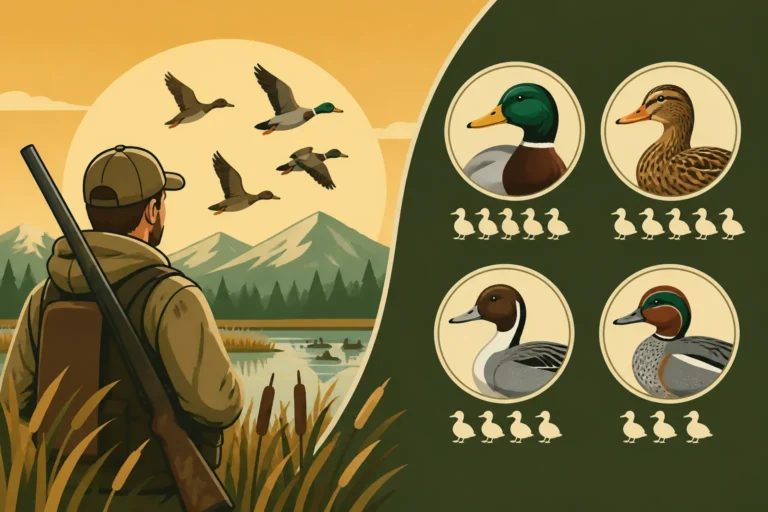
If your hunting aspirations in Alberta extend to waterfowl like ducks and geese, or sandhill cranes, you'll need to add another layer of permitting: federal migratory bird permits. These are separate from provincial big game licences and are required by the Canadian federal government. In addition to your Alberta WIN Card and Wildlife Certificate, you'll need a Federal Migratory Game Bird Hunting Permit and the Canadian Wildlife Habitat Conservation Stamp affixed to it. These permits are typically available at most post offices or online through the Environment and Climate Change Canada website. It's crucial to purchase these well in advance of your hunt and ensure you understand the specific season dates, bag limits, and non-toxic shot requirements for migratory birds in Alberta, as these can vary by region and species.
| Requirement / Category | Canadian Non-Resident | Non-Resident Alien (from outside Canada) |
|---|---|---|
| WIN Card | Required | Required |
| Wildlife Certificate | Required | Required |
| Hunter Host | Not mandatory | Mandatory for big game (unless with outfitter) |
| Outfitter Required | Not mandatory | Mandatory for big game (unless with eligible hunter host) |
| General Licences | Available | Only through outfitter/hunter host for big game |
| Special Draw Licences | Available (with varying odds) | Only through outfitter allocation |
| Firearms Declaration | Not required for domestic transport | Mandatory federal declaration for import |
| Import Trophies/Meat | Relatively straightforward | Requires more documentation and customs checks |
| Hunter Education | Required (or equivalent) | Required (or equivalent) |
The Role of Outfitters and Hunter Hosts in Alberta
The mandatory outfitter or hunter host rule for Non-Resident Aliens is perhaps the most significant difference when comparing hunting in Alberta to many other jurisdictions. It's a system designed to manage access and ensure responsible hunting practices, and understanding its intricacies is absolutely paramount for a successful trip. It's not a suggestion; it's the law.
When an Outfitter is Required
For Non-Resident Aliens pursuing most big game animals in Alberta (think deer, moose, elk, bighorn sheep, black bear, pronghorn, mountain goat, cougar), you must be accompanied by an Alberta licensed outfitter, or an eligible Alberta resident hunter host. There's no getting around this. If you don't have a personal connection to an eligible Alberta resident willing and able to host you, then booking with an outfitter becomes your only legal pathway to hunt these species. Outfitters receive specific allocations of big game licences each year, which means they can purchase tags on your behalf once you book a hunt with them. These allocations are tied to specific WMUs and species, so an outfitter might specialize in, say, Moose Hunting Alberta's Boreal Forest or Mule Deer Hunting Alberta's Prairie and Badlands, meaning you need to find one that aligns with your desired hunt. This system ensures that hunting pressure is managed, and that non-residents have professional guidance, increasing safety and ethical hunting practices. When you're considering a guided hunt, knowing what an Alberta Guided Hunt Costs will be a major factor in your planning.
The Hunter Host Program Explained
If you're fortunate enough to have a close friend or family member who is an eligible Alberta resident hunter, the hunter host program can be a viable alternative to booking an outfitter. However, as mentioned earlier, this isn't a casual arrangement. The host must be an Alberta resident, over 18, and able to physically accompany you throughout your big game hunt. They are limited to hosting one Non-Resident Alien for big game per licence year, emphasizing the personal commitment and responsibility involved. Your host must hold the same species licence for the same WMU you intend to hunt. For instance, if you're coming for a whitetail, your host must also have a valid whitetail tag for that specific WMU. They are legally accountable for your adherence to all provincial hunting regulations, from proper tagging and reporting to adhering to shooting hours and land access rules. This program is fantastic for fostering friendships and family connections through hunting, but both parties need to understand the serious obligations involved.
Choosing a Reputable Outfitter
If you opt for an outfitted hunt, which most Non-Resident Aliens do, the importance of Choosing the Right Alberta Outfitter cannot be overstated. This decision will largely define your hunting experience, success, and overall enjoyment. Start your research early, looking for outfitters with a solid track record, positive client testimonials, and clear communication about what their packages include (and what they don't). Verify their licensing and ensure they have the necessary allocations for the species and WMU you're interested in. Don't be shy about asking for references and actually calling them. A good outfitter will be transparent about their success rates, hunting methods (e.g., Bowhunting Alberta's Early Archery Seasons versus Rifle Hunting Alberta's General Seasons), and what kind of physical conditioning might be required. They should also provide clear information on logistics, such as transportation to and from camp, meat care, and trophy preparation. Trust your gut; if something feels off, it probably is. Platforms like GoHunt can be a valuable resource for researching outfitters and understanding different hunting opportunities, often providing insights into success rates and typical conditions you might encounter.
Firearms and Cross-Border Considerations
Bringing a firearm into a different country is never as simple as tossing it in your truck and hitting the road. For non-residents, particularly Non-Resident Aliens, the process of transporting firearms into Canada and back home requires meticulous attention to detail and adherence to strict federal regulations. Failing to comply can result in confiscation, fines, and even a ban from entering Canada.
Transporting Firearms Into Canada
Canadian law requires non-residents to declare all firearms upon entry into the country. The official document for this is the RCMP Non-Resident Firearm Declaration Form (form CAFC 909 EF). This form needs to be filled out in triplicate but not signed until you are in front of a Canadian Border Services Agency (CBSA) officer. Each non-restricted firearm (most common hunting rifles and shotguns) costs a non-refundable fee to declare, and this declaration acts as a temporary licence for up to 60 days. It's important to understand what constitutes a "non-restricted" firearm in Canada; certain firearms that might be common in the U.S. (e.g., AR-style rifles, handguns) are classified as "restricted" or "prohibited" in Canada and are generally not permitted for non-residents.
Ensure your firearms are transported safely and legally: unloaded, in a locked case, and separate from ammunition. Handguns are generally not allowed for hunting by non-residents, and certain calibres or magazine capacities may also be restricted. Always double-check the latest regulations on the Canadian Border Services Agency website or through the RCMP Canadian Firearms Program before you travel. You can find more specific guidance in our post on Transporting Firearms Into Alberta.
Ammunition Rules and Restrictions
Beyond the firearms themselves, ammunition also has rules. While you can typically bring a reasonable amount for hunting purposes, there are limits. Generally, non-residents are allowed to import up to 200 rounds of ammunition for hunting without an import permit, provided it's for their declared firearms and in non-prohibited calibres. Any more than that might require additional permits.
Furthermore, certain types of ammunition, such as military-grade or armour-piercing rounds, are strictly prohibited. It's always best to bring factory-loaded hunting ammunition rather than reloads, as the latter can sometimes raise questions at the border. Pack your ammunition securely in a separate, locked container, away from your firearms, to comply with transportation regulations. Knowing the specific rules for Bringing a Rifle Across the Border is critical to avoid issues.
Importing Trophies and Meat Back Home
After a successful hunt, the excitement of taking your harvest home can quickly turn into a logistical puzzle. For Non-Resident Aliens, importing meat and trophies (antlers, hides, skulls, capes) back into the United States involves both Canadian export regulations and U.S. import regulations, as well as potential wildlife health checks.
On the Canadian side, you'll need proof of lawful possession, which means your hunting licence and tag must be properly filled out and attached to the animal. For certain species, like bear or cougar, CITES (Convention on International Trade in Endangered Species of Wild Fauna and Flora) permits may be required, which must be obtained before you leave Canada. For meat, ensure it is properly processed and packaged, and understand any restrictions on bone-in meat due to disease concerns like Chronic Wasting Disease (CWD).
On the U.S. side, you'll need to declare all wildlife products to U.S. Customs and Border Protection and potentially the U.S. Fish and Wildlife Service. You'll need documentation proving the legal take. For species that have CITES restrictions, you must have the necessary CITES export permit from Canada and potentially a CITES import permit for the U.S. It's highly recommended to use a reputable Canadian taxidermist or meat processor who is familiar with export requirements, as they can help navigate the paperwork and ensure your trophies and meat are prepared correctly for cross-border transit. Always carry your hunting licence, tags, and any harvest reports with you.
Key Alberta Hunting Regulations for All Hunters
While some rules are specific to non-residents, many fundamental hunting regulations apply to everyone, regardless of their residency status. These are the bedrock principles of ethical and responsible hunting in Alberta, designed to ensure wildlife conservation and public safety. Ignoring these rules, even inadvertently, can lead to severe penalties, including fines, licence suspension, and even jail time.
Blaze Orange Requirements and Safety
Safety is paramount in the field, and Alberta has clear rules about visible apparel. During specific rifle seasons for big game (e.g., Rifle Hunting Alberta's General Seasons), all hunters, including non-residents, must wear blaze orange. This includes a minimum of 400 square inches of blaze orange material on the head and upper body, visible from all sides. This isn't just a suggestion; it's a legal requirement aimed at preventing hunting accidents by making hunters highly visible to one another.
Beyond the legal requirement, general hunting safety principles apply. This includes understanding your target and what is beyond it, always treating every firearm as if it's loaded, keeping your finger off the trigger until ready to shoot, and controlling your muzzle direction. Hunter education is a critical component of safety. Many non-residents will have already completed an approved Hunter Education Course, which satisfies Alberta's Hunter Education Requirements, but ensuring you're up-to-date on provincial regulations is still vital.
Shooting Hours and Prohibited Areas
Hunting in Alberta is restricted to specific shooting hours, typically one-half hour before sunrise to one-half hour after sunset. These hours are critical for ethical hunting, ensuring adequate light for positive target identification and safe shot placement. Hunting outside these hours is strictly prohibited.
Furthermore, there are many prohibited areas where hunting is not allowed or is heavily restricted. This includes most provincial parks, national parks (which are completely off-limits to hunting in Canada), ecological reserves, and certain wildlife sanctuaries. You must also be aware of rules regarding hunting near buildings, roads, and occupied dwellings. Generally, there are minimum distances (often 183 meters or 200 yards) you must maintain from these structures or thoroughfares when discharging a firearm. Always consult your WMU map and the current Alberta Hunting Regulations to identify specific restricted areas within your hunting zone.
Game Wasting and Proof of Sex Rules
Alberta takes game management and ethical harvesting very seriously, which is why there are strict rules against wasting game meat. Once an animal is legally harvested, hunters are legally obligated to retrieve all edible portions of the carcass. This means making every reasonable effort to find a downed animal and properly field dressing and preserving the meat. Leaving edible meat in the field, even if you’re far from your vehicle, is a serious offense. This is especially challenging when hunting in remote areas or during Hunting Alberta Winter Weather Safely, where cold temperatures and difficult terrain can complicate retrieval. Our guide on Meat Care in Alberta's Cold and Warm Swings offers valuable advice for preserving your harvest.
Additionally, for many big game species, proof of sex is required for transport and storage. This usually means leaving an identifiable portion of the animal attached to the carcass (e.g., the scrotum or unskinned portion of the udder for deer, or the head for antlered animals) until the meat is processed or consumed. This allows enforcement officers to verify the legality of your harvest, particularly for species with antler point restrictions or sex-specific tags (e.g., antlered vs. antlerless licences). Always check the current regulations for the specific species you are hunting.
Understanding Alberta's Wildlife Management Units (WMUs)
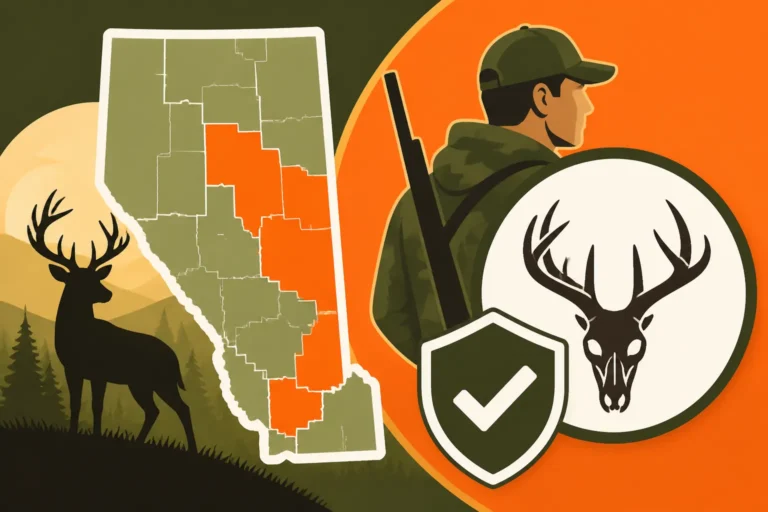
Alberta is divided into numerous Wildlife Management Units (WMUs), each with its own specific regulations, season dates, and sometimes, species availability. For any hunter, resident or non-resident, understanding how these WMUs work is fundamental to planning a legal and successful hunt. It's not enough to simply know "Alberta has whitetails"; you need to know which WMU you can hunt them in, and when.
WMU Structure and How to Interpret Them
Alberta's 219 Wildlife Management Units are numerical designations, often grouped into regional series (e.g., the 100s for prairie, 200s for parkland/foothills, 300s for mountains, and 400s for boreal forest). Each WMU represents a distinct geographical area with its own wildlife populations and management strategies. The regulations pamphlet and the AlbertaRELM website will list specific season dates, bag limits, and legal weapons for each WMU. For example, a particular WMU might have an archery-only season for moose, followed by a rifle season for whitetail. Some WMUs are draw-only for certain species, while others may have general licences available.
To interpret them, you need a good map and the current regulations. Many hunters use digital mapping applications like GoHunt's mapping tools or onX Hunt to overlay WMU boundaries with land ownership layers, giving them a clear picture of where they can hunt and under what rules. Getting an Alberta WMU Map and studying it thoroughly before you ever set foot in the province is a non-negotiable step.
Season Dates and Species Availability by WMU
The hunting seasons in Alberta are highly specific to WMUs and species. For example, early archery seasons in some foothill WMUs might open in late August for elk, while rifle seasons for whitetails in central parkland WMUs might not start until late October. Our post on Alberta Big Game Season Dates offers a great overview, but always drill down to your specific WMU.
For non-residents, this is particularly important because your chosen outfitter will operate within specific WMUs where they hold allocations. If you're planning a trip as a hunter host, you and your host must confirm the availability of licences for your desired species in that WMU during your planned hunting period. Species availability also varies; you won't find bighorn sheep on the prairies, just as you won't find pronghorn in the deep boreal forest. Researching where Alberta's Whitetail Deer live versus where Mule Deer in Alberta's Open Country are found will guide your WMU selection.
Accessing Hunting Land (Crown vs. Private)
Understanding land access is critical, especially in a province like Alberta with its mix of private and public lands. "Crown Land" refers to public land managed by the provincial government, open for recreational use, including hunting, subject to specific rules. This includes large tracts of the Green Area (forested land) and some White Area (settled agricultural land). Within Crown Land, you'll find Public Land Use Zones (PLUZs) with their own specific rules regarding vehicle access, camping, and hunting activities.
Private land, on the other hand, requires explicit permission from the landowner before you can hunt. This is dictated by Alberta Landowner Permission Law. "Posted" land indicates no trespassing, but even unposted private land requires permission. Many non-residents, especially those hunting with outfitters, will primarily hunt on private land where the outfitter has secured access agreements, or on Crown Land accessible within their WMU. If you're hunting with a hunter host, ensure they have a solid understanding of local land access and can secure permission if private land is involved. Using Alberta's Recreational Access Mapping Tool online can help identify land ownership boundaries, which is an invaluable resource for planning your hunt.
Practical Tips for a Successful Non-Resident Hunt
Beyond the rules and regulations, planning a non-resident hunt in Alberta involves a host of practical considerations that can make or break your trip. From logistics to dealing with the unexpected, a well-prepared hunter is a successful hunter.
Planning Your Trip and Logistics
Good planning starts long before you pack your bags. For Non-Resident Aliens, securing an outfitter (or hunter host) and confirming your desired hunt dates needs to happen well in advance, often a year or more out, especially for popular seasons like the rut or for high-demand species. Consider your travel to Alberta – will you fly into Calgary or Edmonton and rent a vehicle, or drive directly? If driving, factor in border crossing times and potential delays.
Beyond the hunt itself, think about accommodation before and after your hunt, especially if your flight schedule doesn't align perfectly with your outfitter's pick-up/drop-off times. Research meat processing and taxidermy options if your outfitter doesn't provide them. What about gratuities for guides and camp staff? Planning for every eventuality, including potential unforeseen costs, will make your trip much smoother.
Scouting and Research Tools
Even if you're hunting with an experienced outfitter, doing your own pre-hunt research can enhance your experience significantly. Online tools are your best friend here. Satellite imagery from Google Earth or dedicated hunting apps can help you understand the terrain, identify potential travel corridors, water sources, and bedding areas in your chosen WMU. Platforms like GoHunt offer a wealth of information on various hunting units, draw odds, and historical harvest data, providing valuable insights into what you can expect.
For those using a hunter host, collaborative scouting is essential. Your host will likely have local knowledge, but combining that with detailed topographical maps and Scouting With Satellite Imagery in Alberta can give you an edge. Pay attention to recent weather patterns, wildfire activity, and any reported disease outbreaks in the region, as these can all influence animal movement and health.
Dealing with Unforeseen Circumstances
Alberta's weather is notoriously unpredictable, especially during hunting seasons. A beautiful fall day can turn into a blizzard overnight, even on the prairies. Prepare for a wide range of conditions, from mild autumn temperatures to deep, bone-chilling cold and heavy snow. Having appropriate gear for Hunting Alberta Winter Weather Safely, including layers, waterproof outerwear, and insulated boots, is essential. Road closures due to snow, mud, or wildfire are also a possibility, so always have a backup travel plan and sufficient supplies if you find yourself isolated.
Mechanical issues with vehicles or ATVs, unexpected injuries, or even lost gear can also throw a wrench into your plans. Carry a comprehensive first-aid kit, communication devices like satellite messengers (as cell service can be spotty), and a well-stocked emergency kit in your vehicle, especially if you're venturing into remote areas. A good outfitter will have robust emergency protocols, but personal preparedness is always key.
Common Pitfalls and How to Avoid Them
Even with the best intentions, non-resident hunters can sometimes fall into common traps due to a lack of familiarity with Alberta's specific rules and conditions. Being aware of these potential pitfalls can help you avoid costly mistakes and ensure a successful, enjoyable hunt.
Misunderstanding Draw Rules
One of the most frequent sources of confusion for non-residents, particularly Canadian non-residents, revolves around the special licence draw system. It’s easy to misunderstand how priority points accrue, when they reset, or the actual odds for certain WMUs and species. For instance, just because you apply doesn't mean you'll draw, especially for highly sought-after tags like those for trophy elk or moose. Minimum Points for a Popular WMU can be quite high, requiring years of applications.
To avoid this pitfall, meticulously study the Alberta Special Licence Draws regulations each year. Pay attention to the application deadlines – they are strict. If you're a Non-Resident Alien, remember you cannot directly participate in the draws; your access to these tags is entirely through an outfitter with an allocation. Confirm with your outfitter well in advance which draw tags they have secured for your hunt. Don't assume anything; verify everything.
Ignoring Land Access Regulations
Another significant pitfall is assuming that all public land is freely accessible, or that private land regulations are universal. Alberta's rules regarding Crown Land, Grazing Leases, and private land permission can be complex. While Crown Land is generally open, some areas might have restricted access for vehicle use (e.g., PLUZs), or require walking in. Grazing leases, although technically Crown Land, are leased to private individuals for cattle grazing and often require permission from the leaseholder before hunting, even if it's not explicitly "private land." Our guide on Asking a Grazing Leaseholder for Access delves into this in detail.
The best way to avoid issues is proactive research. Use the Alberta Recreational Access Tool, consult detailed land ownership maps (like those found on GoHunt or onX), and when in doubt about private land, always knock on the door and ask for permission. Ignorance of land access rules is not an excuse and can lead to trespassing charges, which are taken seriously in Alberta.
Underestimating Alberta's Weather
As mentioned earlier, Alberta's weather is a serious factor. Many non-residents, particularly those from warmer climates, underestimate just how quickly and severely conditions can change, especially during the fall and late season hunts. What starts as a crisp, sunny autumn day can quickly devolve into heavy rain, freezing rain, or a full-blown blizzard, complete with white-out conditions and plummeting temperatures.
This isn't just about comfort; it's about safety. Under-preparedness for extreme cold or sudden snowfalls can lead to hypothermia, frostbite, getting stuck in remote areas, or being unable to retrieve game. Pack layers of clothing made from wool or synthetic materials, never cotton. Invest in quality waterproof outerwear and insulated boots. Carry emergency gear, including extra food, water, a heat source, and robust communication devices. Always check the local forecast immediately before and during your hunt, and be willing to adjust your plans if conditions become unsafe.
Disclaimer
Please remember that hunting regulations in Alberta can change. While every effort has been made to provide accurate and up-to-date information in this guide, it is ultimately your responsibility to consult the current official Alberta Hunting Regulations published by the provincial government, available on the Alberta Environment and Parks website or through the AlbertaRELM portal, before you go hunting. This article is for informational purposes only and does not constitute legal advice.