Using a Pointing Dog on Alberta Prairie
The sprawling expanses of Alberta's prairie country can be both breathtaking and incredibly frustrating for an upland bird hunter. You know the birds are there – the Huns and sharp-tailed grouse scatter signals from every shelterbelt and stubble field – but finding them can feel like searching for a needle in a haystack. This guide is all about transforming that experience, showing you how a well-trained pointing dog becomes your most invaluable hunting partner, turning endless searching into productive, exhilarating hunts.
Why a Pointing Dog is a Game Changer on Alberta Prairie
Hunting upland birds on the vast and often featureless landscapes of the Alberta prairie presents unique challenges. Unlike dense woodlands where birds might be more concentrated or cover offers easier concealment, the prairie forces birds to spread out, often making them incredibly difficult for a human hunter to locate. This is precisely where a pointing dog doesn't just help; it fundamentally changes the hunt, elevating your success rate and enhancing the entire experience.
The Unmatched Advantage in Vast Landscapes
Imagine walking across miles of stubble fields, native grasslands, or the edges of an irrigation canal corridor. While your eyes scan for a tell-tale flush, the sheer scale of the prairie can quickly lead to exhaustion and discouragement. Upland birds like Hungarian partridge and sharp-tailed grouse blend seamlessly into their surroundings, and their scent often dissipates quickly in the open, windy environment. A human hunter, relying solely on sight and the occasional wild flush, will spend an inordinate amount of time covering ground, often passing by birds without ever knowing they were there.
This is the pointing dog's moment to shine. With an olfactory system thousands of times more sensitive than a human's, a well-trained pointer can efficiently quarter a field, systematically sweeping for the faintest whiff of bird scent. They cover significantly more ground with greater purpose, actively seeking out the subtle airborne particles that indicate a bird's presence. When that scent is located, the dog's instinct to point – to freeze rigidly, indicating the exact location of the game – allows the hunter to approach methodically, ready for the flush. This efficiency not only saves the hunter countless steps and energy but dramatically increases the number of bird encounters, turning a grueling hike into a series of anticipation-filled moments. Without a dog, many prime pockets of birds would remain undiscovered, leaving the hunter to wonder what they missed.
Reading the Dog and the Land
The beauty of hunting with a pointing dog isn't just about their ability to find birds; it's about the symbiotic relationship that develops between handler and dog, a silent communication that transcends spoken words. A good handler learns to interpret their dog's subtle cues, understanding that every tail flick, every change in gait, every head turn, and especially the intensity of their point, is a piece of information about the birds they're pursuing. A dog might slow down, raise its head higher, or stiffen its tail as it works into a scent cone, signaling that game is near long before it commits to a full point.
This canine intelligence, however, is best utilized when combined with the hunter's knowledge of the land. Alberta's prairies, though seemingly uniform, are a mosaic of diverse habitats. Understanding where birds prefer to be at different times of the day or in varying weather conditions—whether it's the thermal cover of a deep coulee, the abundant seeds in a swathed grain field, or the protective brush of a shelterbelt—allows you to direct your dog more effectively. For instance, on a hot afternoon, a smart hunter will focus their dog's efforts along the shady banks of a creek or in the taller grass near a slough, knowing birds will seek water and cooler temperatures. In contrast, during cooler mornings, the edges of a stubble field, warmed by the rising sun, might be a better bet. The hunter provides the strategic direction, and the dog executes the tactical search, creating a powerful combination that maximizes every minute spent in the field. This combined effort is what makes a truly successful prairie hunt.
Essential Training for Prairie Pointing Dogs
Bringing a pointing dog into the Alberta prairie environment means you're asking them to perform a highly specialized job in challenging conditions. The success and safety of your hunts hinge almost entirely on the quality of your dog's training. It's not just about getting them to point; it's about instilling a rock-solid foundation of obedience, control, and field sense that can withstand the vastness and unpredictability of open country.
Basic Obedience and Steadiness
Before any fancy pointing or retrieving, a pointing dog absolutely must have impeccable basic obedience. Commands like "sit," "stay," "here" (recall), and "heel" are non-negotiable. Imagine your dog locking up on point a quarter-mile away in dense buckbrush, or chasing a running sharp-tail into another landowner's field. Without a reliable recall, you risk losing your dog, or worse, losing control in a potentially dangerous situation. These commands must be reinforced consistently, both at home and in simulated field conditions, ensuring your dog understands and obeys without hesitation, even with distractions.
Beyond these fundamentals, "whoa" and "steadiness to wing and shot" are the pillars of a good pointing dog. The "whoa" command, often taught by gently stopping the dog with a flank hitch or through specific training tables, means "stop and freeze, no matter what." This is critical for safety, allowing you to walk in, flush the bird, and take the shot without your dog breaking point or getting in the line of fire. Steadiness to wing and shot takes this a step further; the dog must remain "whoa-ed" even when the bird flushes violently and the gun is fired. This prevents the dog from chasing a wild bird or a potentially wounded one, allowing you to reload or mark the fall before sending the dog to retrieve. Training steadiness takes time, patience, and often the use of planted birds or remote bird launchers to create realistic scenarios, but it pays dividends in control, safety, and preventing lost birds on the wide-open prairie.
Developing Range and Scenting Abilities
On the Alberta prairie, a pointing dog needs to cover a lot of ground efficiently. This isn't like hunting a small cover patch; you're often working vast fields or long shelterbelts. Therefore, developing an appropriate "range" and honing their scenting abilities are crucial. You want a dog that quarters naturally – systematically working back and forth across the wind – but also stays within a comfortable gun range, typically within 40-70 yards, depending on cover and personal preference. Training often starts by encouraging them to hunt out in front, using hand signals and verbal cues to guide them. Gradually, you extend their range, always ensuring they check back in with you, maintaining that critical connection.
Scenting conditions on the prairie can vary dramatically. A hot, dry, windy day might make scenting difficult, as odors are quickly dispersed. Conversely, a damp, calm morning can hold scent beautifully. Training should expose your dog to these different conditions. Use scent-laden training dummies or even actual bird wings to help them differentiate and lock onto game scent. Simulated hunting scenarios, perhaps with a partner or using a drone to observe the dog's quartering pattern, can help refine their search. The goal is to build confidence and independence in their search, while still maintaining responsiveness to your commands. Brands like GoHunt often highlight the importance of understanding terrain and wind in their educational content, concepts that are directly applicable to optimizing your dog's search patterns and maximizing their natural scenting gifts across the diverse prairie landscape.
Exposure to Prairie Conditions
The Alberta prairie is a beautiful but sometimes harsh environment. Your pointing dog needs to be conditioned and exposed to these specific conditions to perform effectively and stay safe. This means gradually introducing them to various terrains they'll encounter: the sharp, abrasive stubble of harvested grain fields, the tall, often tangled native grasses, the rocky bottom of a coulee, and the dense, thorny brush of a willow run. Early and consistent exposure helps build tough paw pads and familiarizes them with different footing, preventing injuries and allowing them to focus on hunting.
Beyond the terrain, weather is a significant factor. Alberta's prairies can swing from scorching summer heat to bitterly cold winds in the fall. Conditioning your dog for endurance in these temperatures is vital. On warm days, frequent water breaks are non-negotiable, and knowing the signs of heat exhaustion in dogs is a must. In colder weather, ensuring your dog has adequate protection and doesn't get chilled is equally important. Furthermore, the prairie is rife with potential hazards like burrs, foxtails, and cactus in certain areas. Investing in a protective vest for your dog, especially early in the season, can prevent painful embedded burrs or cuts. Regular checks of their paws and coats during and after hunts are essential. Exposing them to these elements, always within safe limits, prepares them physically and mentally for the demands of a full day of Hunting a Native Grassland Pasture or working Hunting a Shelterbelt Between Two Fields.
Key Prairie Species for Pointing Dogs
The Alberta prairie is home to a couple of truly fantastic upland game bird species that are perfectly suited for hunting with a pointing dog. These birds offer distinct challenges and rewards, and a good dog significantly enhances the experience of pursuing both Hungarian partridge and sharp-tailed grouse across the vast landscape. Understanding their habits and preferred habitats will help you and your canine partner be more successful.
Hungarian Partridge (Huns)
Hungarian Partridge, or "Huns" as they are affectionately known, are perhaps the quintessential pointing dog bird on the Alberta prairie. These small, greyish-brown birds are known for holding tight in dense cover and exploding into the air in a sudden, noisy covey flush. Their habitat preference often includes agricultural fields, particularly stubble fields, the edges of irrigation canals, and especially shelterbelts and fence lines that offer both cover and food. You might also find them in brushy draws or along the edges of standing crops like canola or wheat.
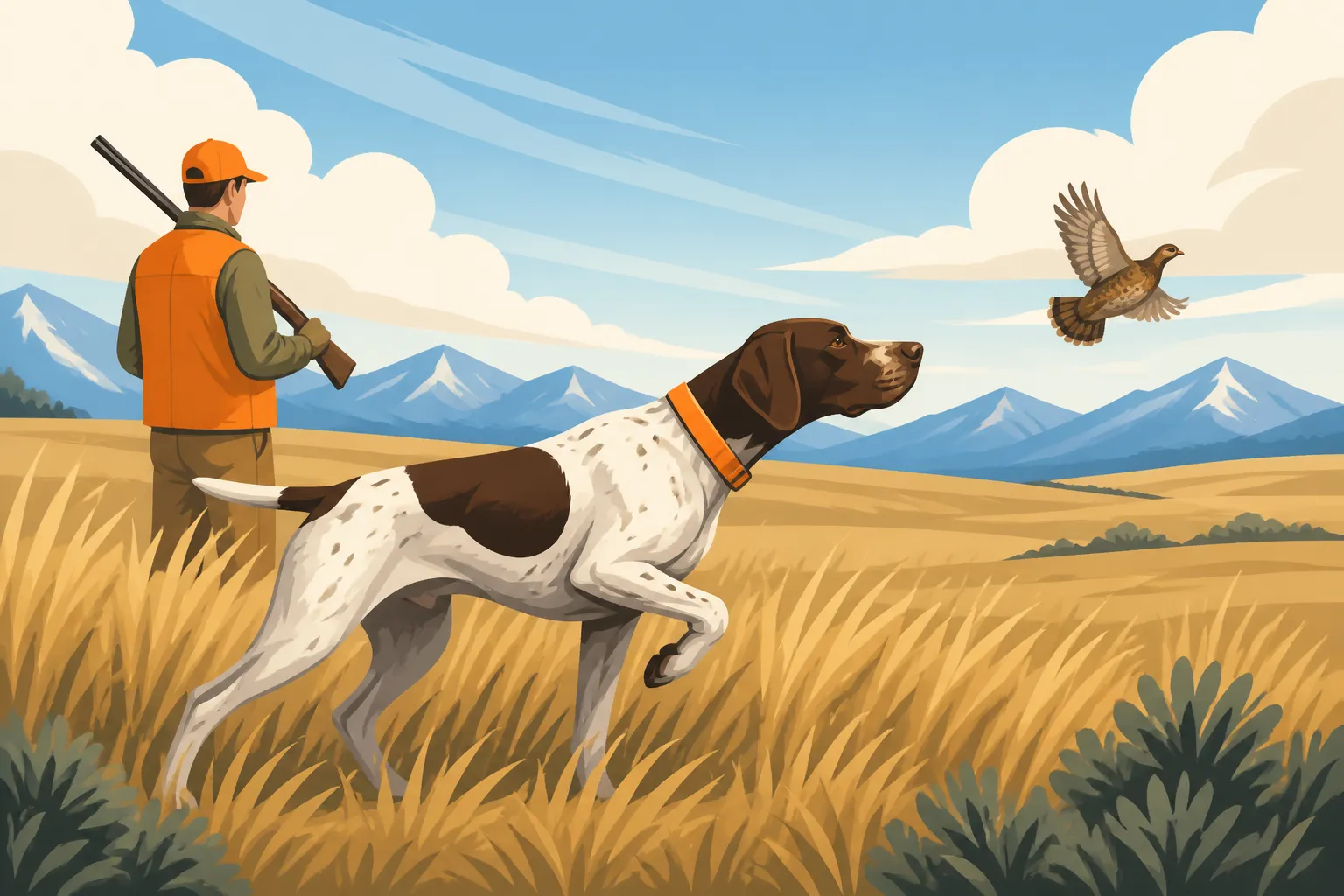
A pointing dog truly shines when hunting Huns. Their tendency to hold tight, often hunkering down rather than running, allows a dog to lock onto their scent with intense focus. The dog will often work into the scent cone, slow down, and then freeze into a solid point, giving the hunter ample time to walk in and prepare for the covey rise. Without a dog, Huns are notoriously difficult to "walk up" as they often flush wild at a distance, or you might walk right past a tightly holding covey. A dog not only pinpoints their location but helps prevent those frustrating wild flushes. Imagine walking the edge of an old farmstead, your dog working the weeds, then suddenly slamming on point beside a tangle of hawthorns. You step in, and a dozen Huns rocket out, providing a thrilling shooting opportunity. This precision is what makes Hunting Hungarian Partridge on Alberta Farms such a rewarding experience with a pointing dog.
Sharp-Tailed Grouse
Sharp-tailed grouse are another magnificent prairie bird that benefit immensely from a pointing dog. These larger grouse species prefer more open, native grassland habitats, often mixed with sagebrush, buckbrush, or rose bushes. They can also be found in areas where grasslands meet aspen bluffs, or along the brushy edges of coulees that cut across the prairie. Unlike Huns, sharp-tails have a reputation for being a bit more "runners" than "holders," especially in very open country or if they feel pressured. However, a good pointing dog can often pin them down.
The challenge with sharp-tails is their ability to run ahead of the dog, or to flush at a greater distance, making them a trickier target. This is where a dog with a strong work ethic, a good nose, and the ability to adjust its pace is invaluable. A dog will often get "birdy," showing signs of scent, and then might creep forward slowly, trying to pin the running bird. When they do finally get a solid point, it's a testament to their skill. The dog’s ability to pinpoint the bird in the often-sparse cover of the native prairie reduces the likelihood of a wild flush and gives the hunter a much better chance at a shot. Hunting sharp-tails with a dog often means navigating Hunting a Prairie Coulee Bottom or working vast stretches of grass. The experience of watching your dog lock up on a sharp-tail amidst the golden waves of prairie grass is truly unforgettable, and it's why Walking Up Sharptails on Alberta Grassland with a trained pointer is such a revered pursuit.
Gear and Considerations for Hunting Alberta Prairie with a Dog
Taking your pointing dog out onto the expansive and varied terrain of Alberta's prairie is an adventure, but it's one that requires careful preparation. Beyond the dog's training, having the right gear and understanding how to manage your dog's safety and performance in the field are paramount. The prairie can be unforgiving, with extreme weather, hidden hazards, and the potential for your dog to range far out of sight.
Dog Gear Essentials for Prairie Hunts
The right gear ensures your dog's safety, comfort, and effectiveness throughout the hunt. First and foremost, a high-quality GPS collar is absolutely critical. On the vast, undulating prairie, a dog can easily disappear over a rise or into a coulee, making a visual impossible. A GPS collar, often integrated with an e-collar, allows you to track your dog's location in real-time, know if they are on point, and provide directional commands or reinforcements at a distance. Systems like the Garmin Alpha series are popular choices for their reliability and range, giving you peace of mind that you can always locate your hunting partner, especially when they lock up on a bird far off.
Beyond tracking, consider protective vests for your dog. The abrasive stubble of harvested fields, the sharp burrs, and thorny bushes found in shelterbelts and coulees can wreak havoc on a dog's chest and belly. A durable, lightweight protective vest can prevent cuts, scrapes, and embedded burrs, saving you and your dog a lot of pain and a trip to the vet. Adequate water is also non-negotiable. Bring a substantial amount of water and a portable bowl, offering your dog frequent breaks, especially on warm days. Lastly, a secure dog crate for transport is essential. Not only does it provide a safe space for your dog during travel, but it also gives them a calm, quiet place to rest between hunts or at camp. When planning your trips, resources like GoHunt can be invaluable for understanding the terrain and scouting potential hunting areas, which in turn helps you anticipate specific gear needs for your dog based on the expected cover and conditions.
Hunter Considerations for Dog Safety and Performance
Your dog's safety and optimal performance are directly tied to your attentiveness as a handler. One of the biggest concerns on the Alberta prairie, particularly during early season hunts in September, is heat. Dogs can overheat rapidly, especially when working hard in direct sun. Be vigilant for signs of heat exhaustion: excessive panting, drooling, weakness, or stumbling. Provide ample water and frequent rest periods in the shade. It’s better to cut a hunt short than to push a dog past its limits. You should also carry a compact dog first-aid kit that includes essentials for cuts, scrapes, burr removal, and pain relief.
Paw care is another crucial aspect. The rough terrain can quickly wear down or cut paw pads. Check your dog's paws regularly throughout the hunt for cuts, cracks, or embedded burrs. Booties can offer protection if paws become tender, but it's best to condition them gradually over time. Understanding your dog's physical limits and managing the hunt duration accordingly is also important. Some dogs will hunt until they drop, so it's up to you to call for breaks and know when they've had enough. This proactive approach to care, much like preparing for Hunting Alberta Winter Weather Safely for yourself, ensures your dog remains healthy, happy, and ready for many seasons of productive hunting.
Accessing Prairie Habitat
Finding huntable ground on the Alberta prairie can be as challenging as finding the birds themselves. Much of the prairie is privately owned farmland or grazing leases. Respecting private property and obtaining explicit permission from landowners is not just good etiquette; it's the law. Never assume you have permission, even if gates are open or fields appear un-posted. A friendly knock on the door or a phone call can open up incredible hunting opportunities and foster positive hunter-landowner relationships. Many landowners are receptive to hunters who are respectful and ask permission.
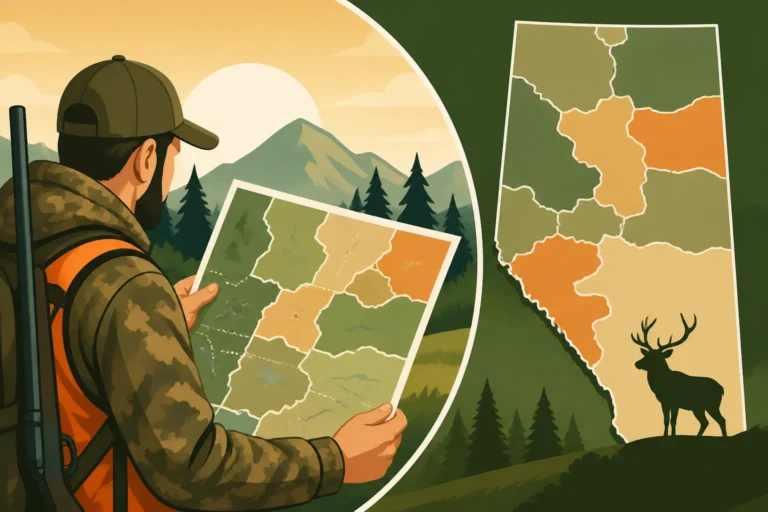
Beyond private land, Alberta offers various public access options. Understanding Reading an Alberta WMU Map Before You Go is essential, as is utilizing resources like Alberta's Recreational Access Mapping Tool. This online tool can help you identify Crown land, including provincial grazing reserves and other public access points, where hunting is permitted. While these areas might see more pressure, they can still hold excellent numbers of birds. Knowing how to navigate these resources, combined with a willingness to knock on doors, will significantly expand your access to prime prairie habitat for you and your pointing dog. Being prepared to Ask a Grazing Leaseholder for Access is a skill every prairie upland hunter should cultivate.
| Feature / Species | Hungarian Partridge (Huns) | Sharp-Tailed Grouse |
|---|---|---|
| Typical Habitat | Stubble fields, shelterbelts, irrigation ditches, brushy draws, fence lines, crop edges. | Native grasslands, sagebrush flats, coulees, mixed aspen parkland edges. |
| Covey Size | Typically 6-20+ birds, often found in tight coveys. | Varies, can be smaller groups (3-8) or larger flocks (10-30+) depending on season. |
| Holding Tendency | Strong holders, will often hunker down tightly, ideal for a solid point. | More prone to running, can be trickier to pin down, may flush wild if not pressured correctly. |
| Dog's Advantage | Excellent for demonstrating a strong, classic point; allows close approach for shots. | Helps pin running birds, extends hunter's effective scouting range in open country, prevents wild flushes. |
| Typical Flush | Explosive, noisy covey flush, often with birds scattering in multiple directions. | Can be a single bird or a small group, sometimes more deliberate flush than Huns. |
| Scenting Challenge | Scent can be strong when covey is tight, but dissipates quickly in wind. | Scent can be lighter and birds may move, requiring dog to work carefully. |
Disclaimer
Hunting is an activity that carries inherent risks. Always prioritize safety, adhere to all local regulations and laws, and ensure you have the necessary licenses and permits. The information provided in this guide is for general informational purposes only and should not replace professional advice or official hunting regulations. Wildlife populations and conditions can change, so always do your own research and scouting before heading afield.