Hunting a Foothills Bench Above a Creek
The frustration of consistently finding game in Alberta's vast and varied foothills can be immense. You spend hours glassing, walking, and listening, only to feel like you're missing the secret spots where deer and elk truly prefer to hang out. This guide is designed to peel back the layers of this complex terrain, focusing specifically on how to effectively hunt those often-overlooked benches perched above active creek beds, which are absolute magnets for big game.
Why Foothills Benches and Creek Corridors Attract Big Game
The foothills region of Alberta is a mosaic of rolling hills, timbered slopes, open clearings, and countless creeks and drainages. It's a challenging landscape, but incredibly rewarding if you know where to look. Benches – those relatively flat, often timbered areas that break up a steep hillside – combined with the natural corridor of a creek, create an irresistible environment for a variety of big game animals.
The Allure of Shelter, Food, Water, and Escape
Imagine you're an elk or a whitetail deer. What do you need to survive and thrive? Shelter from the elements and predators, abundant food sources, readily available water, and a quick escape route when danger looms. Foothills benches above creeks offer this perfect combination. The bench itself often provides denser timber for bedding and security, particularly on north-facing slopes that offer cooler conditions in early season or southern exposures for warmth in late season. The elevation of the bench gives animals a vantage point without fully exposing them on a ridgetop.
Below, the creek offers a constant water source, but more importantly, its banks are often lined with thick willows, alders, and mixed timber – perfect cover for moving undetected. These riparian zones also produce a rich variety of forage, from succulent grasses and forbs in spring and summer to browse species like willow, saskatoon, and dogwood that are critical in fall and winter. The creek bottom itself acts as a natural travel corridor, allowing animals to move up and down drainages with minimal effort, hidden from the higher slopes. When danger approaches, a bench provides the elevation for a quick dash over a ridge, while the creek offers dense cover to melt into. It's a complete package for survival, making these areas prime real estate for game.
Different Types of Benches and Their Appeal
Not all benches are created equal, and understanding their nuances can greatly improve your hunting success. You'll find everything from high, windswept benches that might only be used during mild weather, to low, timbered benches that serve as year-round bedding areas. Some are densely timbered, offering maximum cover, while others are more open, grassy patches that might be used for feeding at dusk or dawn. The "shoulder" of a major ridge, for instance, might feature several smaller benches.
A bench that is heavily timbered, especially with mature conifer or aspen stands, is often preferred for bedding. These spots provide thermal cover, protecting animals from cold winds or intense sun. Conversely, benches with a mix of open areas and scattered timber are excellent feeding zones, offering both browse and a quick retreat into cover. Look for benches that offer a transition zone – where heavy timber meets an open patch, or where a south-facing slope captures the morning sun, providing a warm spot for bedded animals in cooler weather. Pay close attention to how these benches connect to other terrain features, like major ridges, clearcuts, or saddles. These connections are often overlooked travel routes. When you're Hunting an Old Logging Road in the Foothills, remember that these old access points often intersect benches and creek systems, creating superhighways for game.
Mastering Pre-Season Scouting and Planning
Before you even set foot in the field with your hunting gear, the real work begins. Effective scouting and meticulous planning are absolutely paramount when hunting complex foothills terrain. Just showing up on opening day and hoping for the best is a recipe for frustration.
Leveraging Topographical Maps and Satellite Imagery
Start your scouting from the comfort of your home. Topographical maps and satellite imagery are your best friends. Services like GoHunt provide invaluable tools for visualizing the landscape in detail. You can zoom in and identify subtle benches, creek bends, and areas of dense cover that might not be obvious from the ground. Look for contour lines that indicate a flattening or widening of a slope – these are your potential benches. Trace the creek beds and identify areas where they meander, create tight bends, or where tributary creeks flow in, as these are natural funnels.
Use different layers if your mapping system, like GoHunt, offers them. The satellite view helps identify timber density, clearcuts, and open patches, while the topographical view highlights elevation changes and potential travel corridors. Look for pinch points where a bench narrows, or where a steep slope forces animals onto a specific path. Identify potential bedding areas (often thicker timber on a bench) and feeding areas (openings, edges of clearcuts, or areas with specific browse). Mark these points digitally. Understanding Reading an Alberta WMU Map Before You Go is a critical skill here, as WMU boundaries and regulations can influence your planning significantly.
On-the-Ground Scouting for Key Sign
Once you've done your digital homework, it's time to hit the dirt. There's simply no substitute for walking the terrain, boots on the ground. When you're actually out there, things often look different than they do on a screen. Focus your efforts on the benches and creek bottoms you identified digitally. Look for fresh game trails, especially those that parallel the creek or climb up onto a bench. Strong, well-worn trails indicate regular use.
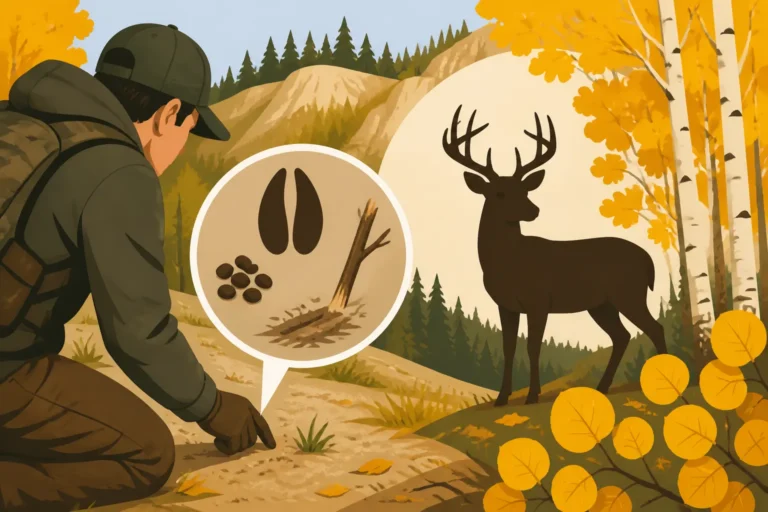
Scan for rubs and scrapes, particularly in the fall. Rubs are where bucks and bulls have scraped their antlers against trees, often indicating travel routes or territorial markers. Scrapes, patches of ground pawed clear with an overhead branch worked, are communication hubs for deer. Fresh droppings and tracks are obvious indicators of recent activity. Pay attention to the age of the sign. Fresh, moist droppings and crisp tracks are gold. Old, sun-baked sign might mean animals were there, but aren't currently. Also, look for natural funnels like saddles between benches, creek crossings, or areas where thick vegetation bottlenecks movement. These are prime ambush locations. Timing your scouting during the pre-season, when leaves are off the trees, can also reveal much about game movement that would be hidden during the peak of summer. It’s all part of Scouting an Alberta WMU Before Season to build a robust mental map of your hunting area.
Timing Your Scouting Trips
The timing of your scouting trips can give you different, but equally valuable, insights. Spring scouting, after snowmelt, is excellent for identifying main travel corridors before new growth obscures them. You'll see last season's rubs and scrapes, giving you an idea of historical activity. Summer scouting, while challenging with dense foliage and bugs, allows you to observe current food sources and determine if benches are providing adequate shade and cover.
However, fall pre-season scouting, ideally a few weeks before opening day, is arguably the most critical. This is when game patterns are beginning to resemble what you'll encounter during the hunting season. You'll find fresh rubs, scrapes, and tracks as animals establish their fall ranges. During the hunting season itself, especially in colder weather, benches and creek bottoms offer critical thermal cover. This is especially true when considering Hunting Alberta Winter Weather Safely, where deer and elk will seek out the most protected areas. A combination of these scouting approaches will give you the most comprehensive understanding of how game uses these specific habitats.
Effective Hunting Strategies for Foothills Benches
Once you've put in the legwork and understand the lay of the land, it's time to adapt your hunting strategies to the unique challenges and opportunities that foothills benches above creeks present. This terrain demands patience, stealth, and sometimes, a little vocal persuasion.
Still-Hunting and Slow-Stalking Tactics
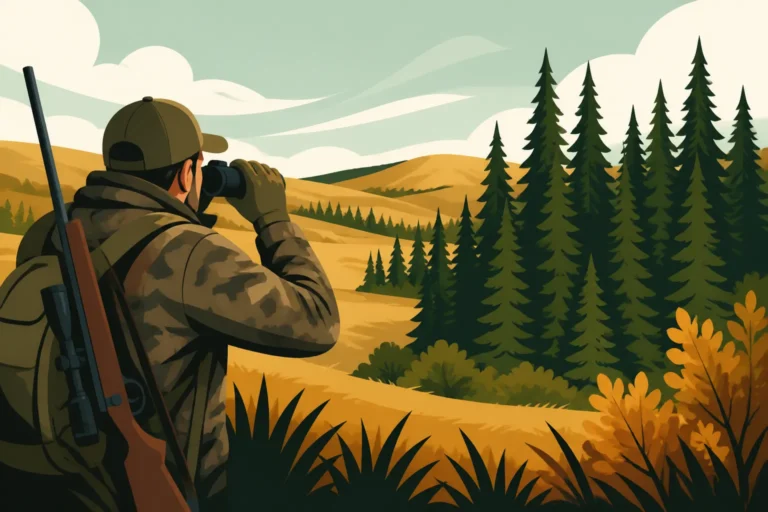
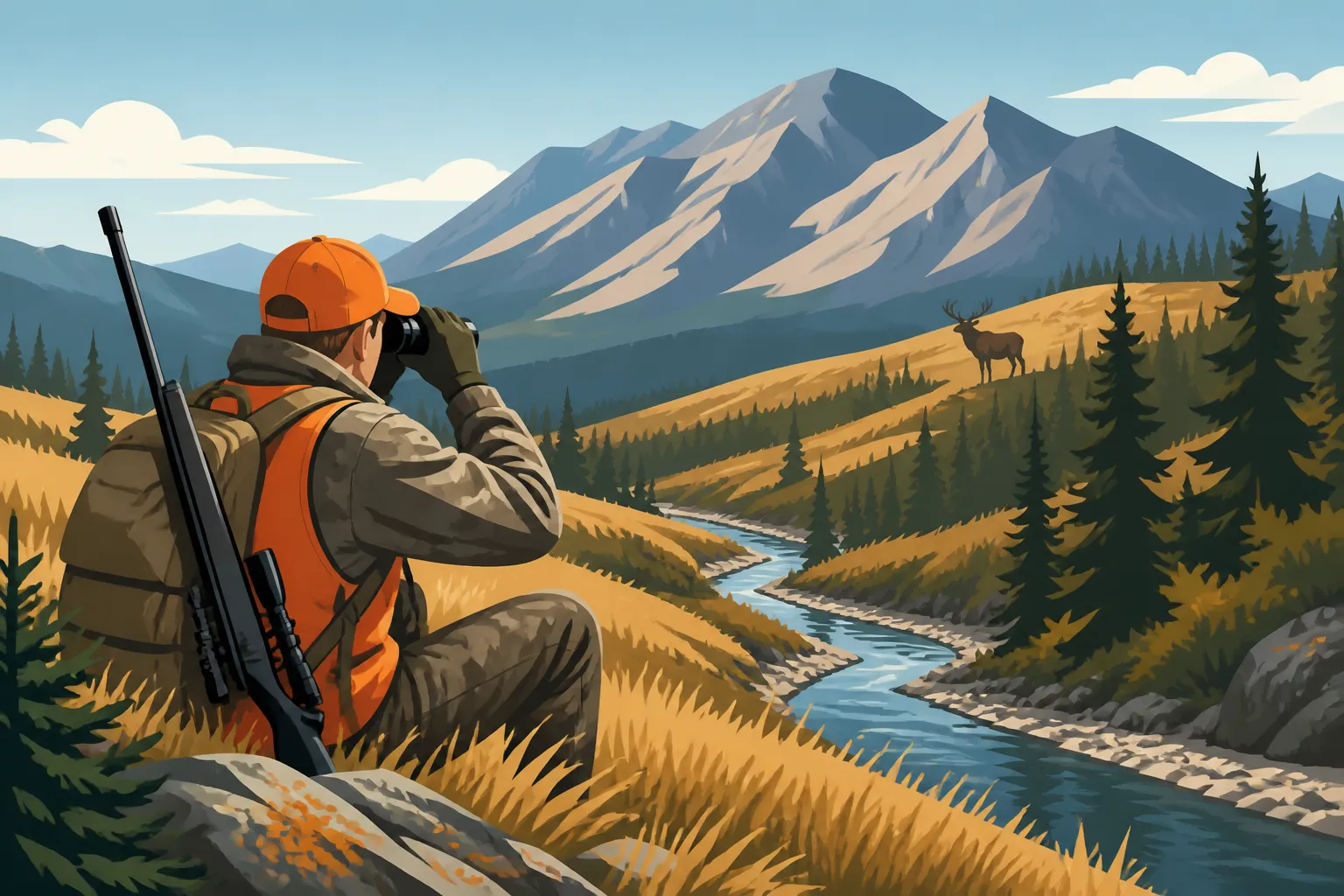
This type of country is tailor-made for still-hunting and slow-stalking. The broken topography and varied vegetation mean you're often looking into pockets and folds in the landscape. Move slowly, deliberately, taking only a few steps, then pausing for several minutes to scan, listen, and glass. Use your binoculars constantly, picking apart every patch of timber, every brush pile, and every shadowed nook on the bench and down into the creek bottom. Look for horizontal lines (a deer's back), a flick of an ear, or an unusual patch of color.
The wind is your absolute master here. Because the terrain is so undulating, wind currents can be fickle and swirling, especially down in the creek beds. Always be aware of the prevailing wind direction and how thermals might be influencing it. In the mornings, air often flows downhill into the creek bottoms; in the evenings, it rises. Try to plan your stalk to keep the wind in your face or quartering to you. If you're on a bench above the creek, animals below you might not smell you if the wind is carrying your scent over them, but be mindful of animals on benches above you. Stealthy movement is key. Wear quiet clothing, take one slow step at a time, and use natural cover to break up your outline. For big game like elk, this slow, deliberate approach is critical for success, particularly when Elk Hunting Alberta's Foothills.
Setting Up Ambushes and Stand Placement
While still-hunting is effective, sometimes the best strategy is to let the animals come to you. Identifying natural funnels or pinch points on a bench or along a creek bed creates ideal ambush sites. Look for heavily used game trails that lead up from the creek to a bench, or trails that follow the bench itself, particularly where it narrows. A saddle connecting two benches or a crossing point on the creek where animals regularly jump across are also prime spots.
When setting up a stand or ground blind, prioritize wind direction and escape routes for yourself. You want to be downwind of where you expect the animals to come from. Consider your entry and exit routes to the stand – can you get in and out without spooking game? On a bench, a treestand can offer a great vantage point, allowing you to see into the creek bottom and across the bench. A ground blind, conversely, allows for more flexibility and can be set up quickly in thick cover. If you're hunting whitetails, understanding Hanging a Stand on an Alberta Bush Edge can be adapted to hanging a stand on the edge of a timbered bench overlooking a feeding area or a trail. For species like White-Tailed Deer, Alberta's Most Hunted Big Game, these subtle tactics can make all the difference.
Calling Strategies
Calling can be incredibly effective in foothills benches, particularly during the rut for elk and deer. The broken terrain can make it hard for animals to pinpoint the exact location of a call, which can work to your advantage by drawing them closer to investigate.
For elk, bugling can be explosive. Locate a bench known for elk activity, especially during the September rut. A few cow calls or a soft chuckle can often pique a bull's curiosity. If you hear a bull bugle, try to get into a good ambush position on the bench, downwind, and then challenge him with your own bugle. The goal is to make him think another bull is moving into his territory or cows. Using a rake to mimic an elk rubbing a tree can add realism. This type of calling is central to Bugling Elk in Alberta's Foothills. For whitetails, rattling and grunt calls can also be highly effective. During the rut, a rattling sequence mimicking two bucks fighting can draw in curious bucks looking for a fight or to check out a breeding opportunity. Follow up with a few soft grunts or snort-wheezes. While Rattling and Calling Whitetails in Farm Country often focuses on open areas, the timbered cover on foothills benches can be excellent for drawing in deer that feel secure enough to investigate. Always be ready for a shot when calling, as animals can come in fast and silently.
Essential Gear and Safety in Foothills Terrain
Hunting foothills benches above creeks means navigating challenging and often remote terrain. Having the right gear and prioritizing safety isn't just a suggestion; it's a non-negotiable part of a successful and responsible hunt.
Optics, Footwear, and Layered Clothing
When hunting these areas, quality optics are paramount. Binoculars (10×42 or 10×50 are common) are your primary scouting tool, allowing you to pick apart distant benches and creek bottoms. A spotting scope can be useful for detailed examination of animals once located, saving you unnecessary hiking. Rangefinders are also essential for accurate shot placement in variable terrain.
Your feet are your vehicle. Invest in high-quality, comfortable, waterproof hiking boots with good ankle support. The uneven ground, steep climbs, and potential for wet creek crossings demand it. Many hunters prefer boots that are stiff enough for side-hilling but flexible enough for comfort over long distances. Break them in well before your hunt!
Layered clothing is critical in Alberta's foothills, where weather can change dramatically in a single day. Start with a moisture-wicking base layer, add insulating mid-layers (fleece or synthetic down), and top it with a waterproof and windproof outer shell. This allows you to adjust to temperature swings, from frosty mornings in the creek bottom to warm afternoons on a sun-exposed bench, and sudden rain or snow showers. Don't forget a warm hat and gloves, even in early fall.
Navigational Tools and Backcountry Safety
Getting lost in the foothills is a real concern, especially when you're focused on tracking game or following an animal. Always carry multiple forms of navigation. A reliable GPS unit or a smartphone with a downloaded offline map application (like GoHunt, which lets you cache maps for areas without cell service) is essential. Mark your truck, significant landmarks, and potential hunting spots as waypoints. A physical compass and map are also crucial as a backup, and you should know how to use them.
Beyond navigation, backcountry safety means being prepared for emergencies. Carry a first-aid kit, a headlamp with extra batteries, fire-starting supplies, a whistle, and enough food and water for longer than you anticipate. Consider carrying a personal locator beacon (PLB) or satellite messenger, especially if you're hunting alone or in remote areas. Cell service can be spotty to non-existent in many foothills valleys and creek bottoms. Always let someone know your hunting plan, including where you're going and when you expect to return. Familiarize yourself with Legal Firearms and Bows for Big Game before heading out.
Weather Challenges and Preparation
The foothills are notorious for unpredictable weather. A clear, crisp morning can quickly turn into a snowy, blustery afternoon. Be prepared for rain, snow, high winds, and rapidly dropping temperatures, even in what might seem like mild hunting seasons. Pay close attention to the forecast, but always pack for the worst-case scenario.
Wet weather can make creek crossings treacherous and steep benches slippery. Consider carrying trekking poles for stability. Deep snow, particularly later in the season, can impact animal movement and your ability to navigate. Animals will often seek out lower, more sheltered benches and valley bottoms in heavy snow. Ensure your gear can handle moisture, and have a plan for keeping yourself and your vital equipment dry. Hunting Alberta Winter Weather Safely provides excellent advice on preparing for the unique challenges of cold-weather hunting in the province. Always have an emergency shelter option, even if it's just a sturdy tarp, in case you get caught out longer than expected.
| Scouting Method | Pros | Cons | Best Use |
|---|---|---|---|
| Satellite Imagery | Covers vast areas quickly, identifies potential hotspots, year-round | Doesn't show fresh sign, ground verification needed | Initial identification of benches, timber, creek lines, access routes |
| Topographical Maps | Reveals elevation changes, terrain features, drainage patterns, escape routes | Less detail on current vegetation, no fresh sign | Understanding contours, identifying saddles, planning routes |
| On-the-Ground | Confirms fresh sign (tracks, rubs, scrapes), reveals micro-terrain | Time-consuming, limited visibility in dense cover, weather-dependent | Verifying satellite finds, locating specific bedding/feeding areas, current activity |
| Game Cameras | Monitors remote spots passively, identifies specific animal patterns/times | Can be stolen, requires regular checks, ethical considerations | Confirming animal presence, travel times, identifying specific animals |
Disclaimer
Hunting is an activity that carries inherent risks. This article is intended for informational purposes only and does not substitute for official hunter education, safety courses, or local regulations. Always prioritize safety, respect wildlife, adhere to all provincial and federal hunting laws, and obtain the necessary licenses and permits before heading into the field. Conditions can change rapidly, and your preparedness is your responsibility.