Hunting Alberta’s November Whitetail Rut
The crisp, biting air of November in Alberta signals one of the most anticipated times for whitetail hunters: the rut. It's a period of intense activity, where the typically reclusive bucks throw caution to the wind in search of does. But let's be honest, hunting the rut isn't always the slam dunk everyone makes it out to be. It can be frustratingly unpredictable, with deer seeming to vanish one day and appear in droves the next. This comprehensive guide is here to help you demystify Alberta's November whitetail rut, offering practical strategies to increase your chances of success during this thrilling time.
Understanding the Alberta Whitetail Rut Cycle
The whitetail rut isn't a single event; it's a dynamic period with distinct phases, each demanding a slightly different approach. Understanding these nuances is crucial for success, especially here in Alberta where conditions can vary widely.
The Biology of the Rut in Alberta
At its core, the rut is about reproduction, driven by hormonal shifts in both bucks and does, largely influenced by the changing length of daylight (photoperiod). As days shorten through late October and into November, a buck's testosterone levels surge, prompting increased aggression and a heightened desire to breed. Does, on the other hand, enter estrus, becoming receptive to breeding for short windows, typically 24-48 hours.
Here in Alberta, we typically talk about three main phases of the rut:
- Pre-Rut: This often kicks off in late October. Bucks are feeling the urge, starting to make rubs and scrapes, but does aren't quite ready. Bucks are often seen cruising more, establishing dominance, but still largely sticking to established patterns and food sources. They're testing the waters, so to speak.
- Peak Rut: This is the breeding frenzy, usually peaking around mid-November. Bucks are actively chasing and breeding does. Their focus shifts from food to finding receptive does, leading to highly erratic and unpredictable movements. This is when you're most likely to see a mature buck during daylight hours, often accompanied by a doe.
- Post-Rut: As late November rolls in, most does have been bred. Bucks are exhausted, often having lost significant body weight. While some might still be seeking unbred does (especially younger ones that come into estrus later), their primary focus quickly reverts to replenishing energy reserves. This means a return to food sources, though they remain wary.
The severity of our Alberta winters can also play a subtle role. In anticipation of deep cold, deer are naturally driven to put on weight. If the pre-rut is mild, they might feed longer, delaying the most intense chasing until the does are absolutely ready.
Peak Rut Timing Across Alberta's WMUs
While mid-November is often cited as the general peak of the whitetail rut across Alberta, it's not a hard-and-fast rule that applies uniformly to every Wildlife Management Unit (WMU). There are definitely regional variations and year-to-year shifts that can influence when you see the most intense activity.
Generally, the breeding peak for whitetails in Alberta falls in the second and third weeks of November. This aligns perfectly with the opening of most general rifle seasons, which is no coincidence – the regulations are often set to capitalize on this natural phenomenon. In the more northern WMUs, or areas that experience consistently colder temperatures earlier in the fall, you might find that the pre-rut activity kicks in a little sooner, potentially pushing the absolute peak forward slightly. Conversely, in some southern regions or during exceptionally mild autumns, the peak breeding might feel like it extends slightly later into the month, as does continue to come into estrus.
For specific WMU insights, it's always wise to consult Alberta Environment and Parks' annual regulations and, if possible, local intel. Hunters in areas like the Peace Country might observe patterns that differ slightly from those in the Parkland or Southern Prairie regions. Many hunters use platforms such as GoHunt to dive into detailed WMU breakdowns, looking for historical data or local reports that might give an edge in predicting the precise timing. Regardless of the exact day, the overall window of November 5th to November 20th typically sees the most significant rut-related buck movement in most of the province. This is your prime opportunity to be in the woods, especially during legal shooting hours.
Scouting and Pre-Rut Strategies for November
You can't just show up on November 10th and expect to capitalize on the rut without some prior legwork. Successful rut hunting in Alberta often hinges on what you do before the peak action starts.
Interpreting Pre-Rut Sign
As October fades into November, bucks transition from their summer patterns to rut-focused behaviour, leaving a trail of clues that are gold for the observant hunter. Your job is to read these signs like a detective. Fresh rubs, those shiny, bark-stripped saplings and trees, tell you a buck is in the area and actively marking his territory. Pay attention to their size; larger rubs often indicate bigger-bodied bucks. Are they clustered in one area? Are they leading somewhere? If you find a line of fresh rubs, you're likely on a buck's travel corridor.
Scrapes are another critical sign. These are patches of ground cleared by bucks, often under an overhanging branch (the "licking branch"), where they deposit urine and scent from their pre-orbital glands. A fresh scrape, with disturbed earth and strong scent, means a buck has recently visited and is advertising his presence. During the pre-rut, bucks will "freshen" scrapes regularly, indicating their increasing readiness. However, as the rut peaks and they find does, scrape activity can actually decrease because they're too busy chasing. So, understanding the timing is key. For a deeper dive into what these markings mean, check out Reading Whitetail Sign in Alberta Aspen Bluffs.
Furthermore, deer travel patterns become more erratic as the rut approaches. Bucks that were once predictable in their movements between bedding and feeding areas will start cruising more widely, checking doe groups. Does, too, might seem a bit more agitated, frequently looking over their shoulders. Using trail cameras, particularly on mock scrapes or key travel corridors, can be invaluable for pinpointing buck activity before the main event. Look for pictures of bucks visiting scrapes or showing interest in doe trails. This intel can help you refine your stand locations and anticipate movements.
Locating Rutting Hotspots
Finding where bucks will be during the rut isn't just about finding bucks; it's about finding does. Bucks will go where the does are, especially where does feel safe. Therefore, your primary scouting focus should be on doe bedding areas and the natural travel routes in and out of them. Think thick cover – willow runs, dense aspen bluffs, conifer thickets, or even brushy pockets within otherwise open agricultural landscapes. Does will often bed in these areas, and bucks will cruise their perimeters, scent-checking for receptive females.
Natural funnels and pinch points become absolute magnets during the rut. These are geographical features that constrict deer movement into a narrow corridor. Examples include:
- Narrow strips of timber between open fields.
- Sections of bush bordered by roads or water.
- Inside corners of field edges where two types of cover meet.
- Creek bottoms and drainages that offer cover and travel routes across otherwise open terrain.
- The narrowest point between two bodies of water or two steep hillsides.
These areas force deer to use predictable routes, increasing your odds of an encounter. Agricultural fields, ubiquitous in much of Alberta's whitetail country, are also key. While deer may not be actively rutting in the middle of a canola field, the edges of these fields, especially where they meet dense cover, serve as staging areas and travel routes for does, and therefore, for bucks. A mature buck might stage on the edge of a standing canola field, scent-checking for does before venturing out, particularly at dusk. For a more detailed look at effective scouting, consider Scouting an Alberta WMU Before Season. Platforms like GoHunt, with their detailed satellite imagery and property line overlays, can be incredibly helpful for identifying these funnels and bedding areas even before you step foot in the woods. They allow you to virtually scout vast areas, highlighting potential hotspots and access points.
Effective Hunting Tactics During the November Rut
Once November hits and the rut starts to ramp up, it's time to adjust your hunting tactics to capitalize on the unpredictable nature of rutting bucks. They're on the move, and you should be too, or at least strategically positioned for their movements.
Calling and Decoying Strategies
During the November rut, vocalizations and visual attractants can be incredibly effective, but timing and technique are everything.
Grunt Calls and Bleats: These are probably the most versatile calls. A deep, guttural grunt can challenge a dominant buck or pique the curiosity of a cruising buck. A doe bleat, especially a "canned heat" estrus bleat, can lure in bucks searching for a receptive female. During the peak rut, when bucks are actively chasing, aggressive grunting sequences can sometimes pull a buck away from a doe he's tending, or draw in a lone buck looking for the action. For a detailed guide on how to use these effectively, read Grunt Calls Late in Alberta's Rut.
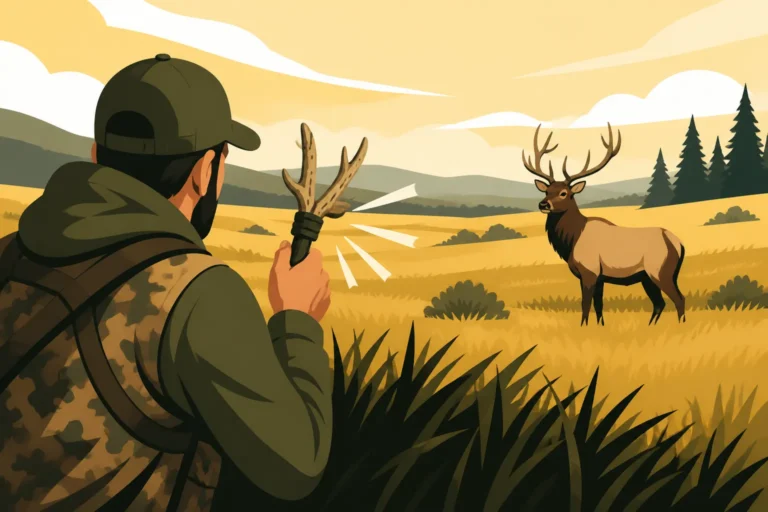
Rattling: Mimicking the sound of two bucks fighting can be a highly potent tactic, particularly during the pre-rut and early peak rut. It signifies a dominance challenge and can draw in curious or aggressive bucks from a considerable distance. In Alberta's more open farm country, you might want to consider Rattling Volume in Open Parkland to ensure your sounds carry. Start with lighter rattling to simulate a sparring match, then escalate to more aggressive, longer sequences to mimic a full-blown fight, especially if you think a dominant buck is within earshot. Always be ready with your bow or rifle when you rattle, as bucks can come in fast and silently.
Decoys: A whitetail buck decoy can be a game-changer, but careful placement is key. A standing buck decoy can challenge an incoming buck, while a doe decoy can bring a buck right into your shooting lane. During the peak rut, a combination of a buck and a doe decoy (with the buck facing away from the doe, as if tending her) can be irresistible. Set your decoy upwind of your position, giving the incoming buck a chance to see and approach it from a natural angle, ideally broadside to you. Always consider the wind direction to avoid having your scent blow towards the approaching deer.
Stand Placement and Still Hunting
Where you choose to set up, or how you move, will greatly influence your success during Alberta's rut.
Strategic Stand Placement: Forget your early-season food plot stands; during the rut, you need to be in areas bucks will cruise while looking for does. This means focusing on:
- Transition Areas: These are the edges where different types of cover meet, like an aspen bluff transitioning to a willow flat, or where dense bush meets open agricultural land. Bucks will often cruise these edges, scent-checking for does.
- Cruising Lanes: Identify trails or natural corridors that bucks will use to travel between known doe bedding areas, especially during the middle of the day when they are most actively searching. A great example of this is Hunting a Cutline Intersection for Whitetails in the northern bush, or a willow run in farm country.
- Pinch Points and Funnels: As discussed earlier, these geographical features concentrate deer movement. Placing a stand overlooking a narrow crossing or a thick bottleneck can be incredibly productive.
- Doe Bedding Area Edges: Positioning yourself downwind of a known doe bedding area can allow you to intercept bucks circling to scent-check for receptive females without disturbing the does directly.
The beauty of the rut is that bucks can be on their feet at any time of day, so extended sits are often rewarded. Consider using a climbing stand or a mobile setup to adapt to changing deer movement or to pursue intel gained from morning sits. For tips on setting up, check out Hanging a Stand on an Alberta Bush Edge.
Still Hunting and Spot-and-Stalk: While stand hunting is popular, still hunting (moving slowly and deliberately through the woods, pausing frequently to observe) can be highly effective, especially in areas with good visibility or where deer densities are high. This tactic allows you to cover ground and actively search for cruising bucks or those tending does. Focus on areas with good cover like river bottoms, creek drainages, or thick timber. For mule deer, Spot-and-Stalk Mule Deer in Alberta is a classic approach, but still hunting can also be adapted for whitetails in suitable terrain. In areas with broken terrain or large coulees, you might even consider a spot-and-stalk approach if you can locate a buck from a distance. The key is extreme patience and using the terrain to your advantage to close the distance undetected.
Gear and Safety Considerations for November Hunting
November in Alberta can be brutally cold and unpredictable. Being adequately prepared with the right gear and knowledge is not just about comfort; it's about safety and ultimately, success.
Essential Gear for Cold Weather
The chill of an Alberta November can quickly turn a productive hunt into a miserable one if you’re not dressed appropriately. Layering is your absolute best friend. Forget bulky single layers; embrace a system that allows you to adjust to changing conditions and activity levels.
- Base Layers: Start with a good quality moisture-wicking base layer against your skin. Merino wool or synthetic materials are excellent choices as they draw sweat away from your body, preventing that clammy, cold feeling.
- Mid-Layers: This is your insulation. Fleece, down, or synthetic puff jackets and pants provide warmth. You might want a heavier mid-layer for periods of low activity and a lighter one for walking.
- Outer Shell: Your outermost layer needs to be windproof and water-resistant (ideally waterproof) to protect against rain, snow, and the biting Alberta wind. Look for quiet fabrics that won't spook game.
- Extremities: These are often the first to get cold. Invest in high-quality, insulated, waterproof boots that are rated for extreme cold. Multiple pairs of gloves or mittens (a thin liner glove, a mid-weight insulating glove, and a heavy-duty outer mitt) are a must. Don't forget a warm toque or balaclava – a significant amount of body heat escapes through your head.
- Other Essentials: A thermos filled with hot coffee, tea, or soup can be a lifesaver on long, cold sits. Hand warmers and foot warmers are inexpensive luxuries that can make a huge difference. A small, lightweight pad to sit on will insulate you from frozen ground or metal stands. And, of course, blaze orange is a legal requirement during general seasons and a vital safety measure for visibility to other hunters. For a more in-depth discussion on staying warm, check out What to Wear on a Late Season Hunt.
Navigating Weather Challenges and Safety
Alberta's November weather is notorious for its dramatic swings. One day you might be enjoying mild, sunny conditions, and the next you could be battling a whiteout blizzard. Being prepared for anything is non-negotiable.
- Sudden Snowstorms and Extreme Cold: Keep a close eye on the weather forecast, but always be ready for unexpected changes. A heavy snowfall can quickly cover trails and obscure landmarks, making navigation difficult. If you're hunting in particularly remote areas, consider packing a GPS device with pre-loaded maps or a reliable mapping app like those offered by GoHunt, ensuring you have offline map access. Understand the challenges of Hunting Whitetails at Thirty Below and plan accordingly. If temperatures plummet, limit your exposure and prioritize shelter.
- Hypothermia and Frostbite Prevention: Know the signs of hypothermia (shivering, confusion, slurred speech) and frostbite (numbness, white or waxy skin). Stay hydrated and fueled, even if you don't feel thirsty or hungry, as your body burns more calories to stay warm. Dress in layers, avoid getting wet, and take breaks to warm up if necessary.
- Survival Kit: Always carry a small survival kit, especially if you're venturing into remote Crown land. This should include fire-starting materials, a whistle, a headlamp, extra batteries, a first-aid kit, high-energy snacks, and emergency shelter (like a space blanket). Tell someone exactly where you're going and when you expect to return.
- Navigation and Access: Familiarize yourself with your chosen WMU's boundaries and access points before you hunt. Know where private land begins and ends, and respect all posted signage. This is especially critical in areas where Crown land is intermingled with private holdings. Always ensure your vehicle is in good working order, with a full tank of gas, and consider carrying a winter survival kit in your truck – extra warm clothes, blankets, a shovel, traction aids, and booster cables are a must. For tips on how to prepare for severe weather, delve into Hunting Alberta Winter Weather Safely.
Post-Rut Considerations and Maximizing Opportunities
Even as the calendar flips towards the end of November, the hunting opportunities for whitetails in Alberta don't vanish. The dynamics simply shift, and a successful hunter knows how to adapt.
The Late November Shift
By late November, the intensity of the breeding frenzy typically winds down. Most does have been bred, and the once-crazed bucks are now physically depleted. They've lost significant body weight, burned through massive amounts of energy, and are often bearing battle scars from their encounters with other bucks. This marks a noticeable shift in their behavior.
Their primary focus transitions from breeding to survival: replenishing lost energy reserves and finding reliable food sources to prepare for the long Alberta winter. While some younger does might still come into estrus, offering a "second rut" possibility, the widespread, frantic chasing often subsides. Bucks become more wary again, less likely to expose themselves carelessly during daylight hours. They’ll still move, but their movements are more purposeful, typically from secure bedding areas directly to high-calorie food sources.
Your tactics should adjust accordingly. Less aggressive calling is generally effective now; instead of rattling intensely, subtle grunts and doe bleats might still draw in a buck checking for a late-estrus doe, but the odds decrease. The emphasis should shift from trying to provoke a challenge to simply being where deer need to be to survive. This often means focusing on the most attractive food sources in an area, whether it's swathed grain fields, standing corn, or natural browse in thick cover. For insights into hunting when the temperatures really drop, consider Hunting Deep Cold Late in the Season.
Field Care and Trophy Management
After the shot, particularly in late November, proper field care of your harvested animal is paramount. The fluctuating temperatures in Alberta during this time can pose unique challenges.
- Prompt Field Dressing: The first and most critical step is to field dress your animal as quickly as possible. Removing the internal organs allows the carcass to cool down efficiently, which is vital for preserving the meat quality. Even if it's cold outside, the internal body heat can quickly spoil meat, especially if it's left intact for too long.
- Importance of Prompt Cooling: While cold weather is generally good for meat, rapid freezing followed by thawing, or warm spells, can compromise quality. If it's warm enough for flies or if the temperatures are borderline, consider skinning the animal promptly to accelerate cooling. If it's truly freezing, be mindful of the outer layer freezing before the inner muscle cools, which can trap heat. Ideally, you want a slow, steady cooling. For detailed advice on this, refer to Meat Care in Alberta's Cold and Warm Swings.
- Meat Care in Fluctuating November Weather: Alberta's weather can shift from -20°C to +5°C within a few days. If you've harvested an animal and temperatures are forecast to rise, you might need to take extra steps like moving the carcass to a shaded, cool spot, or even using snow to cool it down. If you're fortunate enough to have access to a cooler or meat locker, utilize it. Otherwise, plan to get the animal to a butcher as soon as possible.
- Tagging and Reporting Requirements: Don't forget your legal obligations. Immediately after killing your big game animal, you must attach your tag to its ear or antler, as specified by Alberta regulations. Ensure the tag is correctly filled out and securely fastened. You must also validate your special licence (if applicable) and report your harvest online via the AlbertaRELM system within seven days of the kill. Failure to follow these steps can result in significant penalties. If you're pursuing a record book animal, be sure to protect the cape and antlers from damage during extraction and transport.
By understanding these late-season dynamics and prioritizing proper meat care and legal requirements, you can extend your successful rut hunting into the final days of November and ensure your hard-earned harvest is well-preserved.
Alberta Whitetail Rut Phases & Buck Behavior
Here's a quick overview of how buck behavior typically aligns with the rut phases in Alberta:
| Rut Phase | Typical Timing in Alberta | Buck Behavior | Recommended Hunting Tactics |
|---|---|---|---|
| Pre-Rut | Late Oct – Early Nov | Increased rubbing and scraping, cruising, establishing dominance. Still somewhat predictable. | Hunt travel corridors near doe bedding. Light rattling/grunting. Use trail cams to find active areas. |
| Peak Rut | Mid Nov (approx. 5-20th) | Aggressively chasing and breeding does, highly erratic movement, less focused on food. | Focus on doe bedding areas and funnels. Aggressive calling (grunts, bleats, rattling). Decoys can be effective. Long sits. |
| Post-Rut | Late Nov | Exhausted, seeking high-calorie food sources. Less active chasing, wary. | Focus on primary food sources near thick cover. Subtle calling (doe bleats). Still hunting around food. |
Disclaimer
The information provided in this guide is for general informational purposes only and does not constitute legal advice. Hunting regulations in Alberta are subject to change, and it is the hunter's sole responsibility to consult the most current Alberta Guide to Hunting Regulations published by Alberta Environment and Parks before engaging in any hunting activities. Always prioritize safety, ethical hunting practices, and respect for wildlife and private property.