Stalking Pronghorn Across Open Ground
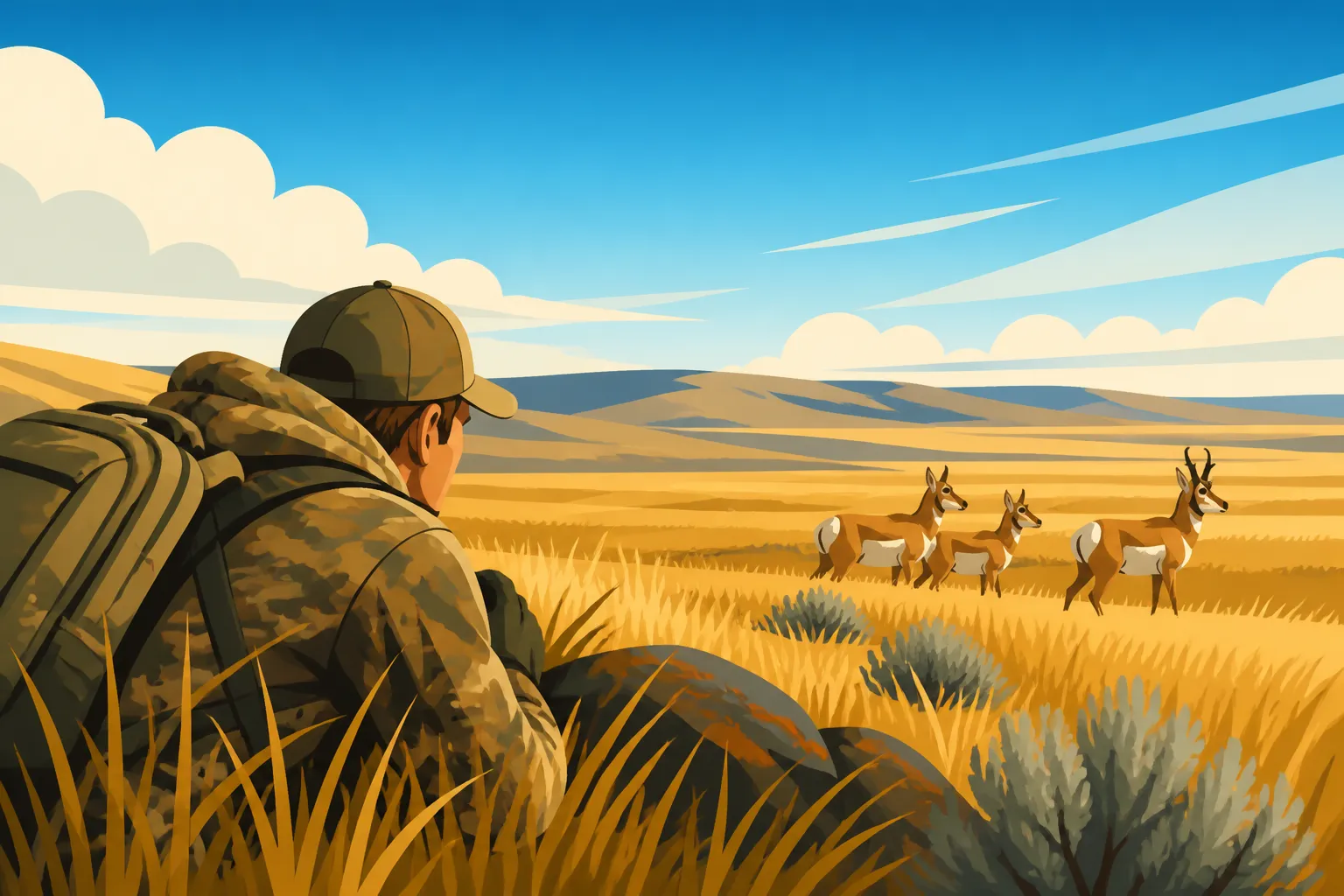
There's nothing quite like the rush of spotting a magnificent pronghorn buck silhouetted against the vast Alberta prairie, is there? But that initial excitement can quickly turn to a frustrating grind when you realize how absolutely exposed that critter is, and how little cover the open ground offers for an approach. Trying to close the distance on a pronghorn is an exercise in humility for many hunters, often ending with a flash of white rump disappearing over the horizon. This guide is here to walk you through the painstaking, yet incredibly rewarding, art of stalking pronghorn across those seemingly endless stretches of prairie, turning those frustrating encounters into successful hunts.
Understanding the Pronghorn's Dominance in Open Country
Before you even think about putting one boot in front of the other, you've got to wrap your head around what makes pronghorn so incredibly tough to stalk. These animals are purpose-built for survival in the wide-open spaces of places like Alberta's southern prairies, and their adaptations make them a formidable challenge. Ignoring these key factors is like trying to sneak up on a security camera in broad daylight – it's just not going to work.
The Pronghorn's Unrivaled Vision
Let's be honest, pronghorn have eyes like absolute hawks, or maybe even better. Their eyes are massive relative to their head size, giving them an incredibly wide field of vision, almost 360 degrees without moving their head much. This means they can spot the slightest flicker of movement or an unnatural shape from incredible distances, often a mile or more away. This isn't just a casual observation; it's a deeply ingrained survival mechanism honed over millennia in predator-rich, treeless environments. They don't have thick timber or dense brush to hide in, so their safety net is their ability to see danger coming from far, far away.
This phenomenal eyesight means your standard deer-stalking tactics are likely useless. You can’t just assume you’re hidden behind a small rise. If a pronghorn has even a slight advantage in elevation, they’re going to be scanning that horizon constantly. Their keen vision is why Glassing Alberta Prairie for Pronghorn is such a critical first step; you need to find them before they find you, often from several miles out. Understanding their line of sight is paramount. They pick up on movement, sure, but they also notice anything out of place – a new boulder that wasn't there five minutes ago, or a dark blob that suddenly appears on a distant ridge. This is where patience truly becomes a virtue.
Built for Speed, Not Stealth
Another major hurdle is that pronghorn are the fastest land animals in North America, reaching speeds up to 98 km/h (60 mph). While this doesn't directly impact your stalk, it absolutely informs their behavior. They don't tend to hold tight or rely on camouflage when threatened; they bolt. And when they bolt, they cover ground faster than you can blink, often putting multiple sections of land between you and them in minutes. This means your first approach needs to be your best approach. You rarely get a second chance once they've spooked.
Their primary defense mechanism is to run, not hide. This means they are often less concerned about "cover" in the traditional sense than deer or elk. They'll bed down in completely open areas, confident that their eyesight will warn them of danger long before it becomes a direct threat, giving them ample time to escape. You'll find them on vast expanses where a whitetail would never dream of bedding. Knowing What a Pronghorn Buck Weighs is interesting, but understanding their flight response is far more practical when planning your approach. The challenge isn't just finding them; it's getting close enough to make a shot before they decide to simply outrun you.
Habitat and Routine: Predictable, Yet Challenging
Pronghorn thrive in the semi-arid grasslands and short-grass prairies of Alberta's south. If you're looking for them, you'll be spending your time in Hunting Alberta's Prairie WMUs where agricultural fields often blend into native grasslands. These landscapes, while open, aren't entirely featureless. There are subtle undulations, coulees, dry creek beds, and occasional shelterbelts or abandoned farmsteads. These slight topographic changes become your best friends, even if they seem insignificant from a distance.
Pronghorn also tend to have fairly predictable routines, especially during the rut, which usually aligns with Alberta's archery and rifle seasons. They'll graze in the mornings and evenings, often bedding down midday. This bedding period is typically your best bet for a stalk. They're relaxed, less likely to be moving, and might be slightly less vigilant. However, even when bedded, their eyes are constantly at work. Their social structure, with a dominant buck often tending a harem of does, means there are many eyes and ears to contend with. A wise hunter will use tools like GoHunt to scout these areas digitally, studying the topography for potential approach routes long before stepping foot in the field. This prior knowledge of the land, whether it's Hunting the Red Deer River Badlands or a flat expanse near Lethbridge, is paramount for success.
Mastering the Art of the Prairie Stalk
So, you've found a buck you want to try for, and you've resigned yourself to the fact that this is going to be slow, painstaking work. Excellent. Now, let's talk tactics. This isn't just walking slowly; it's a calculated, deliberate chess match where every move matters.
Using Topography to Your Advantage
This is the single most important lesson for stalking pronghorn. You cannot walk directly at them, ever. You must use every slight dip, rise, creek bed, or coulee to obscure your approach. Even a foot-high ripple in the land can provide enough cover if you're low enough.
- The Long Way Around: Forget direct lines. Your path will look like a zig-zag on a map. Identify a piece of cover – a small hill, a cut bank, a dry wash – that will take you closer, even if it's a quarter-mile out of your way. Then, reassess from that new point, and find the next piece of cover. This often means walking several miles to cover a few hundred yards as the crow flies.
- Contouring and Backtracking: Sometimes the best approach isn't forward, but around and even back. If a buck is on one side of a ridge and you're on the other, you might need to walk a long way back down the ridge, then circle wide, staying completely out of sight, to come up on his opposite side using a different fold in the land. This is where tools like GoHunt's mapping features really shine, allowing you to visualize elevation changes and potential routes on your phone or GPS device.
- The Crawl and the Creep: When you run out of significant cover, it's time to get low. Very low. Army crawling is not just for the movies; it’s a legitimate pronghorn stalking technique. Your goal is to keep your silhouette below the horizon line as much as possible. This means often crawling on your belly for hundreds of yards. It’s physically demanding, dirty, and slow. But it works. Always maintain a low profile, even when you think you're hidden.
The Unseen Hand: Wind Direction and Scent
While pronghorn vision is their primary defense, don't forget their noses. They might not have the olfactory prowess of an elk or a whitetail, but they can still pick up human scent, especially in flat, open country where the wind carries it unimpeded. Always, always approach with the wind in your favor. This usually means a crosswind, or if possible, a headwind. A tailwind will carry your scent directly to them, ruining your stalk before you even get close.
Understanding Wind in Open Prairie Country is crucial. The wind can be notoriously shifty on the prairie, changing direction or swirling due to thermals or localized topography. Constantly check the wind with a wind checker (a small bottle of powder or thread) throughout your stalk. If the wind shifts unfavorably, you might have to backtrack and restart your approach from a different angle, no matter how frustrating it feels. This often means adding even more mileage and time to an already arduous process.
The Role of Camouflage and Patience
Your clothing matters, not just for concealment but for comfort during those long crawls. Effective camouflage should help you blend into the natural colors of the prairie: tans, browns, greens, and grays. However, simply wearing camo isn't enough; it's how you move while wearing it. Slow, deliberate movements are key. Jerky, quick motions are easily picked up by those incredible eyes. Think in slow motion.
Patience isn't just a virtue; it's a necessity. A successful pronghorn stalk can take hours, sometimes half a day, to cover what might be less than a mile. You will get frustrated. You will get tired. You will question your sanity. But giving up, or rushing, will inevitably lead to failure. Take breaks, reassess, stay hydrated, and keep a positive mindset. Remember that the challenge is part of the allure. This is where knowing How Pronghorn Survive a Prairie Winter can offer insights into their resilience and patience, echoing the qualities you need for a successful hunt.
Here’s a simplified comparison of cover types and their utility in a pronghorn stalk:
| Cover Type | Effectiveness | Notes |
|---|---|---|
| Deep Coulee / Riverbed | Excellent | Offers complete concealment for long distances. Often requires significant detours. |
| Gentle Hill/Rise | Good | Requires staying low (crawling or belly crawling) to remain below the skyline. Best used for short segments. |
| Tall Grass/Brush | Moderate to Good | Can obscure a crawling hunter. Be aware of noise. Not always present in truly open areas. |
| Irrigation Ditch | Moderate | Similar to a small coulee, but often straighter and more predictable. Can be muddy. |
| Fenceline / Shelterbelt | Limited (Linear) | Provides good concealment directly behind it, but usually only in one direction. Fences can be tricky for Why Fences Are Hard on Pronghorn and hinder movement. |
| Standing Crops | Excellent (Seasonal) | Seasonal. Offers incredible concealment, but check local regulations for hunting in or near crops. |
| Isolated Rock/Bush | Minimal (Temporary) | Can offer a momentary break for observation or adjusting, but too small for sustained movement. |
| Open, Flat Ground | None (Unless Belly Crawl) | Avoid at all costs unless you are already within shooting range and absolutely flat on your stomach. |
Critical Gear and Mental Fortitude for Pronghorn Hunting
Successfully stalking pronghorn isn't just about technique; it's also about having the right tools and, perhaps more importantly, the right mental game. The prairie environment can be unforgiving, and a small oversight can derail an entire hunt.
Essential Gear for the Stalker
Your gear choices can significantly impact your success and comfort. This is where investing in quality pays off.
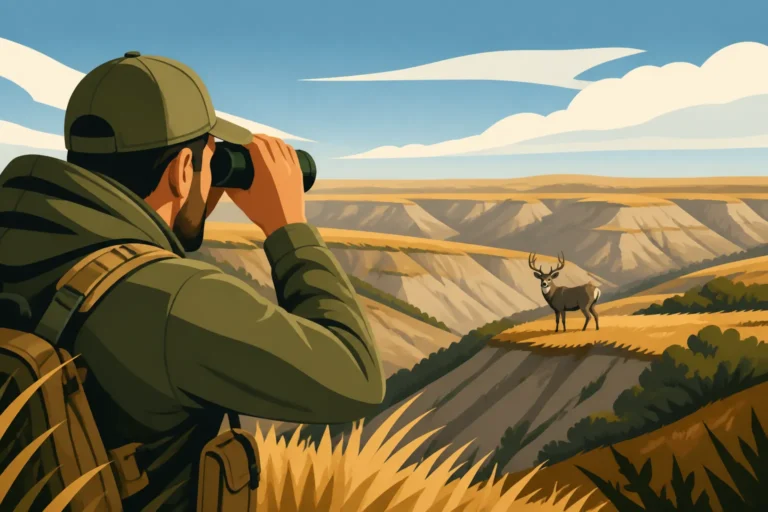
- High-Quality Optics: This cannot be overstated. A good pair of 10×42 or 12×50 binoculars are essential for spotting pronghorn from a distance and assessing their behavior. Even better is a spotting scope (20-60x or higher) on a sturdy tripod. This allows you to evaluate a buck thoroughly without having to move closer, which saves time and effort. Brands like Kowa or Swarovski are often mentioned in GoHunt forums for their exceptional clarity in judging animals at extreme distances, crucial when Judging a Mule Deer Buck at Distance but equally vital for pronghorn. You'll be doing a lot more glassing than walking, especially at first.
- Rangefinder: Absolutely mandatory. Distances on the prairie are incredibly deceiving. A 300-yard shot can look like 150, and 500 yards can seem like 300. A reliable rangefinder with angle compensation will be your best friend when you finally get into a shooting position.
- Comfortable, Durable Clothing: Your outer layers should be quiet and durable enough to withstand crawling through prickly grass, dirt, and potentially over rocks. Kneepads and elbow pads, while perhaps looking a bit tactical, can be a game-changer for comfort during a long crawl, preventing scrapes and bruises that can distract you. Layers are always key, as prairie mornings can be chilly and midday can be surprisingly hot.
- Water and Snacks: Stalking takes time and energy. You'll be out there for hours, possibly in direct sun. Dehydration and hunger will erode your patience and focus. Carry more water than you think you need, and some high-energy snacks.
- Mapping Tools and GPS: Beyond traditional paper maps, digital mapping apps like GoHunt, Gaia GPS, or onX Hunt are invaluable. They allow you to mark pronghorn locations, plan your approach routes using topo lines, and understand property boundaries. Knowing Reading Alberta's Crown Land Layers on onX can open up crucial access points you might otherwise overlook, while Using Alberta's Recreational Access Mapping Tool ensures you're on legal hunting ground.
- Shooting Sticks or Bipod: Once you've completed your stalk, you need a stable shooting platform. The prairie offers very little natural support. Shooting sticks or a bipod will help you get a steady rest for that critical shot, especially if you're out of breath from crawling.
Mental Fortitude: The Unseen Weapon
The physical demands of a pronghorn stalk are one thing, but the mental challenge is another beast entirely. This isn't a passive hunt; it’s an active, taxing endeavor.
- Patience, Patience, Patience: I can't stress this enough. You will spend hours getting into position, only for the animal to stand up and walk away, forcing you to start over or completely rethink your plan. It happens. Don't let it break you. Reset, re-evaluate, and go again.
- Discipline in Movement: Every movement must be calculated. Resist the urge to peek over a ridge too quickly, or to stand up and stretch when you're close. One false move and it's over. Move only when their heads are down, or when they are looking away.
- Resilience to Frustration: Stalking pronghorn is a series of small failures and rare successes. You will probably blow several stalks for every one that gets you into shooting range. Embrace the challenge. Each blown stalk is a lesson learned. Remember that Hunting Alberta's Pronghorn Draw is a hard-won opportunity, so make every moment count, even if it's a learning experience.
- Confidence in Your Shot: After all that effort, when the moment finally comes, you need to be confident in your ability to make the shot. Practice shooting from various positions – prone, kneeling, with sticks – as you might not get a perfect setup in the field. This also ties into Scouting an Alberta WMU Before Season, where understanding the terrain you'll be hunting can help you practice relevant shooting positions.
The reward for a successful pronghorn stalk is immense. It's a testament to your perseverance, skill, and respect for an animal uniquely adapted to its environment. When that buck finally drops, after hours of crawling, sneaking, and strategizing, the satisfaction is unlike any other hunt.
Disclaimer
The information provided in this article is for general guidance and educational purposes only. Hunting regulations and conditions can change rapidly. Always consult the most current Alberta hunting regulations and obtain all necessary licenses and permits before heading into the field. Safety should always be your top priority.