Hunting Alberta’s Prairie WMUs
Hunting Alberta's vast prairie WMUs can feel like stepping into an entirely different world compared to the dense bush or towering mountains. For many hunters, the sheer scale of the landscape, the challenge of finding game in seemingly endless fields, and the often-complex mosaic of private and public land can be incredibly daunting. It's easy to feel overwhelmed, wondering where to even begin looking for that mule deer buck, a flock of geese, or a wily whitetail along a river bottom. This guide is here to demystify the experience, offering practical advice and deep insights into successfully navigating and hunting the unique prairie environments of Alberta.
Understanding Alberta's Prairie Landscape for Hunting
The prairie in Alberta isn't just flat farmland, though that's certainly a part of it. It's a diverse, often subtle landscape that demands a different approach than hunting in the mountains or boreal forest. Forget dense cover; here, your eyes become your best scouting tool, and understanding the nuances of topography, even slight changes, can make all the difference.
The Endless Horizon: What Defines Prairie WMUs
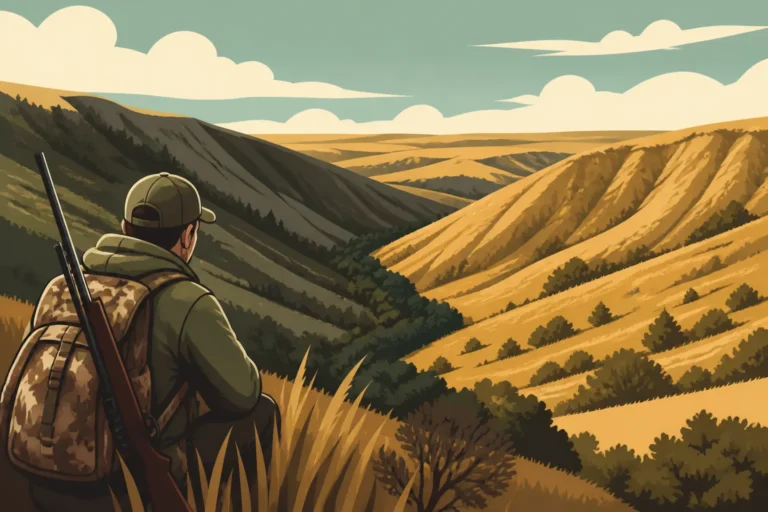
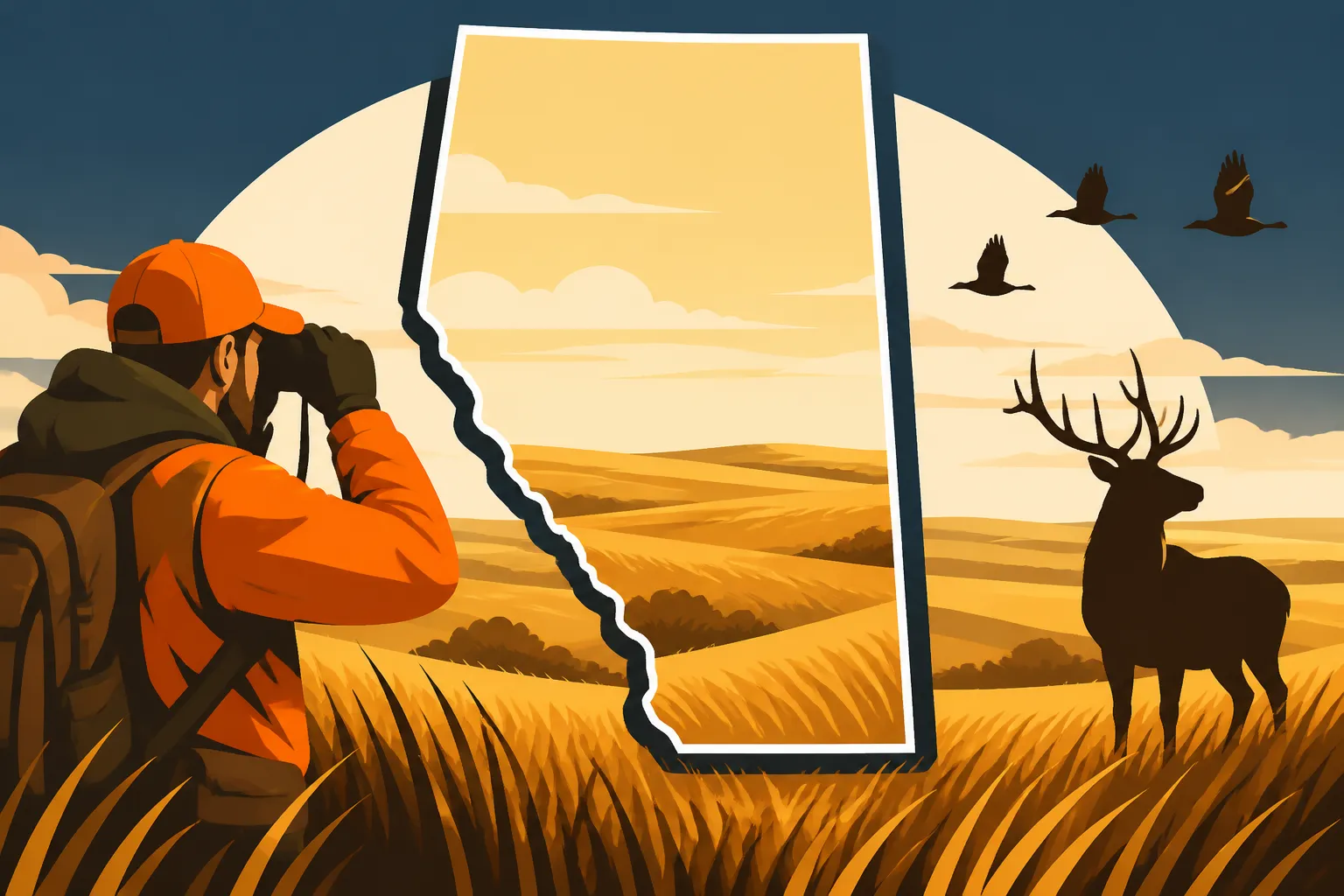
When you picture the prairie, you might envision endless golden fields under a big blue sky. And you wouldn't be wrong. But within that vastness lies a complexity that hunters need to learn to read. Alberta's prairie WMUs stretch across the southern and eastern parts of the province, characterized by large tracts of agricultural land interspersed with native grasslands, coulees, river valleys, and isolated pockets of aspen bluffs or shelterbelts. The term "prairie" itself speaks to the historical dominance of native grasses, but generations of farming have transformed much of it into croplands. This transformation doesn't mean a lack of game; it simply means game animals adapt, utilizing the remaining natural features and often feeding in the cultivated fields.
The feeling of endlessness can be both exhilarating and frustrating. You can often see for miles, which is fantastic for spotting game, but it also means game can see you coming from a mile away. The wind is an ever-present force, often relentless, shaping both the land and the animals that call it home. Learning to use the wind to your advantage, or at least mitigate its impact, is a crucial skill you'll develop out here. The scale requires patience and a good set of binoculars, transforming what might seem like empty space into a dynamic hunting ground. It’s a place where tiny details, like a subtle dip in the land or a lone clump of brush, can provide vital cover or a bedding area.
Beyond Grass: Key Habitat Features to Look For
While grass and crops dominate, the secret to hunting the prairie lies in identifying those "breaks" in the landscape. These are the magnets for wildlife, offering food, water, cover, and travel corridors.
Coulees are perhaps the most iconic and important prairie feature for big game. These are deep, often winding ravines carved into the otherwise flat or gently rolling terrain by water erosion. They can range from shallow ditches to dramatic canyons with steep, timbered sides. Mule deer especially gravitate to coulees, using their steep slopes and brushy bottoms for bedding and escape. Whitetails also use them, particularly where they connect to river systems or contain denser cover. Learning to Hunting a Prairie Coulee Bottom effectively is a game-changer for deer hunters. These topographical features act as natural highways and hiding spots in an otherwise exposed environment, providing thermal cover from brutal winter winds and shade during hot days. A good coulee will often contain a mix of brush, small trees, and even a trickle of water, creating a perfect micro-habitat.
River valleys, like those of the Red Deer, Milk, or Oldman rivers, offer a ribbon of life through the prairie. They typically feature dense timber, brush, and riparian zones that provide essential cover and food for whitetails, moose, and even elk, particularly in the larger systems. These valleys are often a complete contrast to the open fields above, creating distinct ecosystems that hold high concentrations of game. Hunting a River Valley Bottom in Alberta can be an entirely different experience than hunting the adjacent prairie, demanding different strategies and gear. These areas are vital for game survival, offering consistent water sources and a break from human activity, even if only a narrow strip.
Shelterbelts, those lines of trees planted by farmers to protect fields and homesteads from wind, might seem man-made, but they become critical cover for whitetails and pheasants. Similarly, willow runs, slough edges, and even brushy fence lines offer enough concealment for deer to travel and bed. Don't overlook these seemingly minor features; they can hold significant numbers of game, especially during the rut when bucks are on the move. Even a few isolated bluffs of aspen, often found on slightly higher ground, can serve as bedding areas for deer that feed in nearby fields. Hunting a Shelterbelt Between Two Fields requires stealth and an understanding of how deer use these linear features for movement and safety.
Weathering the Open Country: Seasonal Considerations
The prairie weather is famously unpredictable and extreme, swinging from scorching summer days to brutal blizzards in a matter of hours. Being prepared for anything is not just good advice, it's essential for safety and success.
Early archery seasons in September can be hot and dry, making long glassing sessions a sweaty affair. Water sources become key attractants for game. As fall progresses, the temperatures drop, and the wind picks up, making proper layering vital. Hunting Alberta Winter Weather Safely becomes paramount later in the season. The ground can freeze hard, making tracking difficult, but also forcing game to move to specific areas for food and shelter. Snowfall, even a light dusting, can reveal fresh tracks and make spotting game easier against a white backdrop.
Late season hunting, especially in November and December, often means extreme cold and deep snow. Deer will congregate in sheltered areas, particularly those with dense cover in coulees or river bottoms, seeking thermal protection. This can create excellent hunting opportunities if you know where to look. However, the cold also means you need to be acutely aware of Meat Care in Alberta's Cold and Warm Swings. A sudden warm spell can spoil meat quickly, even in late fall. Always plan for rapid field dressing and cooling. Your vehicle's reliability and a comprehensive Winter Truck Kit for an Alberta Hunt become non-negotiable for safety.
Prime Game Species of the Prairie
While the mountains boast sheep and goats, the prairie offers its own suite of incredible big game and birds. Understanding their habits and preferred habitats within this landscape is key to filling your tags.
Whitetails in the River Bottoms and Bluffs
Alberta's prairie whitetails are tough, adaptable animals, often growing to impressive sizes by feeding on the abundant agricultural crops. While you might associate them with dense bush, on the prairie, they master the art of concealment in linear cover. River bottoms, especially those with wide, timbered floodplains, are classic whitetail country. These areas provide everything they need: food from crops, water from the river, and dense cover in the trees and brush. When Hunting a River Valley Bottom in Alberta, focus on pinch points, crossings, and areas where cover meets agricultural fields.
Beyond the river valleys, whitetails will readily use shelterbelts, aspen bluffs, and brushy slough edges, often only a few trees wide, to move between bedding and feeding areas. During the rut, these seemingly small pockets of cover can be absolutely buzzing with activity. Hunting the Rut in Early November on the prairie means watching these linear features closely, as bucks will cruise them looking for does. Don't underestimate the small isolated pockets of cover. A single clump of willows or a small bluff on a quarter section can hold a mature buck. They are masters of using whatever cover is available, no matter how sparse it seems.
Mule Deer in Coulees and Breaks
The prairie is iconic mule deer country. These majestic deer thrive in the broken, rugged terrain of coulees and badlands, using the dramatic elevation changes and sparse cover to their advantage. Unlike whitetails, mule deer are more open-country creatures, and while they will feed in fields, they prefer to bed and seek refuge in the shelter of a coulee or rocky break.
When Glassing an Alberta Coulee for Mule Deer, you're looking for subtle movements, an ear flick, or the distinctive dark face of a buck peeking over a rim. The vastness requires powerful optics and a lot of patience. Once spotted, the real challenge begins: Stalking Mule Deer in Badlands Breaks. The wind, the open ground, and the ever-present risk of being skylined demand meticulous planning and slow, deliberate movement. Mule deer often bed on north-facing slopes to escape the sun or on leeward slopes to avoid the biting prairie wind, always with a vantage point. The Milk River Ridge area and the Red Deer River Badlands are prime examples of this habitat, offering excellent opportunities for the dedicated mule deer hunter.
The Elusive Pronghorn: Masters of the Open Plains
Pronghorn are the true speedsters of the prairie, built for the wide-open spaces. Hunting them is an exercise in patience, long-range glassing, and often, incredible stalks. They are constantly moving, typically in herds, and their eyesight is legendary. Spotting them at a distance is relatively easy; getting within shooting range is another matter entirely.
Pronghorn typically inhabit native grasslands, often near agricultural fields where they can feed. They are wary of anything out of place. Successful pronghorn hunting almost always involves Stalking Pronghorn Across Open Ground. This means using every tiny fold in the terrain, every rise, every clump of sagebrush for cover, sometimes crawling for hundreds of yards. The prairie WMUs in the deep south of Alberta, closer to the US border, are your best bet for these incredible animals, but they require a draw tag. Remember that Hunting Alberta's Pronghorn Draw is highly competitive, so building priority points is key. They often use natural watering holes and even irrigation canals as travel routes and gathering points.
Upland Birds and Waterfowl Opportunities
The prairie isn't just for big game; it's a paradise for bird hunters. The combination of agricultural fields, native grasslands, and abundant wetlands creates ideal habitat for a variety of species.
Hungarian Partridge, or "Huns," are a staple of prairie bird hunting. They congregate in coveys, often found along farm shelterbelts, fencelines, and brushy field edges. Hunting Hungarian Partridge on Alberta Farms is a classic experience, often done by walking them up with a good flushing dog. Sharp-tailed Grouse, or "sharptails," prefer native grasslands and areas of light brush. You'll find them in larger, undisturbed tracts of prairie, and they can offer fast-paced shooting. Walking Up Sharp-Tailed Grouse in Alberta is a rewarding experience, best done slowly and methodically, covering good habitat. Pheasants, while not native, are released in some areas and can be found in similar habitats, especially near denser cover and corn fields. Hunting Alberta's Released Pheasants often occurs around dedicated release sites or areas with robust natural cover.
Waterfowl hunting on the prairie is legendary. Alberta sits directly under a major migratory flyway, and the sheer number of potholes, sloughs, and agricultural fields makes for incredible duck and goose hunting. Geese, particularly Canada Geese and Snow Geese, stage in massive numbers on stubble fields, offering fantastic decoy hunting opportunities. Field Hunting Geese in Alberta Stubble is a bucket-list hunt for many. Ducks, from mallards to pintails, utilize the countless small water bodies, providing excellent jump-shooting or decoy hunting over potholes. Pothole Hunting Ducks on Small Water requires scouting and often early morning dedication. Always remember your Non-Toxic Shot for Alberta Waterfowl.
Navigating Access: Crown Land, Grazing Leases, and Private Permission
This is arguably the most challenging aspect of hunting Alberta's prairie WMUs. Unlike the vast unbroken tracts of Crown land in the boreal forest or mountains, the prairie is a patchwork quilt of private and public lands. Understanding the rules and navigating access is paramount to a legal and successful hunt.
Public Access Points: What "Crown Land" Really Means Here
While Alberta has a significant amount of Crown land, a lot of it in the prairie region is either "unsuitable" for hunting (e.g., small, isolated parcels) or falls under specific use designations like Provincial Grazing Reserves. It's not always a straightforward matter of just showing up and hunting. The concept of What the Prairie Series WMUs Cover is often misunderstood; while they are indeed primarily prairie, the land status within them varies wildly.
The key is to proactively identify genuine Crown land that offers hunting opportunities. Tools like onX Hunt are invaluable here. They allow you to overlay land ownership maps onto satellite imagery, clearly showing public and private boundaries. This takes the guesswork out of finding those small, often overlooked pieces of Crown land that might hold game. You'd be surprised how often a few acres of public ground are nestled amongst private holdings, often along a river or a remote coulee. Knowing Reading Alberta's Crown Land Layers on onX is essential for effective scouting. Always double-check boundaries on the ground, and be mindful of road allowances, which are often public access points but require careful adherence to shooting distance regulations.
Deciphering Grazing Leases: A Hunter's Guide
Alberta has extensive Provincial Grazing Reserves and individual grazing leases on Crown land. These are often excellent wildlife habitat. The good news is that under Alberta's Recreational Access Regulation, you generally have the right to access vacant Public Land that is under a grazing lease for recreational purposes, which includes hunting, provided you don't use motorized vehicles off-road. The tricky part is that if the land is occupied by livestock, you need the leaseholder's permission to access it. This nuance is crucial.
Finding a leaseholder can be a challenge. The Alberta Environment and Parks (AEP) Recreational Access Mapping Tool can help identify lease boundaries and sometimes provide contact information, or at least direct you to the local land office where you can inquire. Be prepared to do some homework. Respect the leaseholder's property and their livestock. Always leave gates as you found them, and avoid disturbing cattle. It’s about building a relationship, not just asserting a right. Many leaseholders are good people who appreciate being asked and having their land respected. Hunting a Provincial Grazing Reserve offers a great opportunity if you do your homework and make contact.
The Art of Knocking on Doors: Private Land Permission
Much of Alberta's prime prairie hunting occurs on private land. This means permission is absolutely mandatory. Hunting without it is trespassing, and Alberta has stringent trespass laws. Asking an Alberta Landowner for Permission is a skill, an art form really, and it's built on respect, honesty, and often, a little bit of luck.
Start early, well before the season. Dress neatly, be polite, and introduce yourself clearly. State your intentions upfront: you're a hunter, you're looking for permission, and you'll respect their land. Offer to share game, help with chores, or provide references. A firm handshake and a genuine conversation go a long way. Many landowners are receptive to respectful hunters, especially those willing to help control problem animals. Some might even grant permission over the phone, but an in-person visit often leaves a better impression. If you get permission, clarify boundaries, where you can drive, and any other specific rules they might have. Remember, a "no" today isn't necessarily a "no" forever. Be gracious regardless of the answer. Knocking on Doors in Alberta Farm Country is a fundamental part of prairie hunting culture.
Key Prairie WMUs and What They Offer
Alberta's prairie is vast, with many WMUs that each offer unique hunting experiences. While all are generally "prairie," they can vary significantly in their topography, dominant game species, and access challenges.
The Milk River Ridge and Southern Draws
The WMUs in the deep south, bordering the United States, often feature unique geography like the Milk River Ridge. This area is known for its rolling native grasslands, coulees, and the Milk River itself, creating prime habitat for mule deer and especially pronghorn. Due to the high quality of game and often limited access, many of these WMUs are draw-only for species like pronghorn and often have stricter regulations for mule deer.
Hunters here will spend countless hours glassing from vantage points, picking apart the distant hillsides and coulee breaks. The region's open nature and specific topography lend themselves to spot-and-stalk tactics. It's a challenging but incredibly rewarding area for those seeking a true prairie hunting experience. Access can be a mix of private land and some Crown land, often necessitating diligent research and permission seeking. Hunting South of the Milk River can be a truly wild experience, offering a glimpse into Alberta's rugged frontier.
The Red Deer River Badlands: A Mule Deer Haven
The badlands surrounding the Red Deer River are a geological marvel and a fantastic mule deer hunting ground. WMUs in this region feature dramatic erosion, steep cliffs, hoodoos, and deep coulees carved by the river. This broken, rugged country provides abundant cover and escape routes for mule deer, making it a challenging but rewarding landscape to hunt.
Unlike the flatter prairie, hunting the badlands often involves navigating very steep terrain, similar to some foothills areas, but without the dense timber. Hunting Mule Deer in the Badlands Coulees is a highly specialized pursuit, requiring good physical fitness and an understanding of how deer use the complex topography. The sheer number of hiding spots means you need to be thorough with your glassing and patient with your movements. Whitetails can also be found in the river bottom itself, especially where there's dense riparian vegetation.
Central and Eastern Prairie: Whitetail and Bird Hotbeds
Moving north and east into WMUs characterized by more extensive agricultural fields and less dramatic breaks, the hunting opportunities shift. Here, whitetails become a dominant species, often found in aspen bluffs, shelterbelts, and along the edges of small river systems or sloughs. These areas are also phenomenal for upland birds like Hungarian Partridge and Sharp-tailed Grouse.
The challenge in these WMUs often lies in finding accessible cover. While vast, many of these areas are intensively farmed private land. Hunters will focus on small pockets of Crown land, often around creeks or utility corridors, and rely heavily on gaining private land access. This is where those relationship-building skills really come into play. Hunting a Standing Canola Field Edge for whitetails or Hunting a Swathed Grain Field at Dusk for ducks and geese are common tactics, requiring permission from the landowner. The abundance of food means game can be well-fed and grow large, but also spread out.
| Game Species | Primary Habitat Features | Common Hunting Method | Key WMUs (Examples) |
|---|---|---|---|
| White-tailed Deer | River bottoms, aspen bluffs, shelterbelts, slough edges | Stand hunting, still hunting, stalking | Central & Eastern Prairie, River Valleys |
| Mule Deer | Deep coulees, badlands, broken hillsides | Spot-and-stalk, glassing from vantage points | Milk River Ridge, Red Deer River Badlands |
| Pronghorn | Open native grasslands, short-grass prairie | Spot-and-stalk (long crawls), ambush near water | Deep Southern Prairie WMUs (Draw) |
| Hungarian Partridge | Farm shelterbelts, field edges, brushy fencelines | Walking them up with or without a dog | Central & Eastern Prairie |
| Sharp-tailed Grouse | Native grasslands, light brush, pastures | Walking them up with a flushing dog | Areas with larger tracts of native grass |
| Waterfowl (Ducks/Geese) | Agricultural fields, potholes, sloughs, larger lakes | Decoying in fields, jump-shooting potholes | Across all prairie WMUs with water/crops |
Effective Hunting Strategies for Open Country
Hunting the prairie requires a shift in mindset and tactics from timber hunting. Your eyes become your most powerful tool, and stealth, combined with an understanding of topography, is paramount.
The Power of Glassing: Spotting Game at a Distance
In a landscape where you can see for miles, your binoculars, spotting scope, and tripod are arguably more important than your rifle or bow. Prairie hunting is often 90% glassing and 10% hunting. You're not just scanning; you're picking apart the landscape, looking for a horizontal line in a vertical world, a twitch of an ear, or an unnatural colour.
Find a good vantage point – a hill, a knoll, or even the roof of your truck – and methodically grid the area. Take your time. Don't rush. Many hunters make the mistake of glassing too quickly. Let your eyes relax, and use your optics to find details that are invisible to the naked eye. Pay close attention to shaded areas in coulees, the edges of bluffs, and where different types of cover meet. Once you spot something, don't immediately assume what it is or how far away it is. Study it carefully. A deer bedded in a coulee can be nearly invisible until you catch a glint of antler or a flicker of movement. Glassing an Alberta Coulee for Mule Deer is a perfect example of how patience with optics pays off.
Master the Stalk: Closing the Distance
Spotting game is only half the battle; closing the distance for a shot is the other, often more difficult, half. The open nature of the prairie means cover is scarce, and animals have an incredible ability to spot movement. A successful stalk is often a long, slow, and arduous process.
Wind direction is your absolute best friend. Always use it to your advantage, keeping it in your face or quartering. Identify natural features that can shield your approach: a rise in the ground, a deep coulee, a fence line, or even a line of tall stubble. Plan your route meticulously, visualizing every step. Sometimes, it means crawling for hundreds of yards, using every available inch of cover. Patience is non-negotiable. If an animal looks up, freeze. Wait until its head is down or it's looking away before moving again. Be prepared to back out and try again later if the conditions aren't right. Stalking Pronghorn Across Open Ground truly tests a hunter's ability to move unseen.
Using Topography to Your Advantage
Even subtle changes in elevation can provide crucial cover on the prairie. A gentle roll in the land, a slight dip, or a low ridge can be enough to break up your silhouette and allow for a closer approach. Always try to stay below the skyline, using the contours of the land to hide your movement.
When navigating coulees, stay low in the bottom or along the slopes, always being mindful of the wind. Animals often bed on the leeward side of hills or in spots that offer them a commanding view of their surroundings. Understanding these patterns allows you to anticipate where game will be and how to approach them effectively. For instance, when Hunting a Prairie Coulee Bottom, you might walk the bottom, using the banks for cover, but you also need to check the rims and sides frequently. Similarly, when hunting a river valley, consider how the river itself, and its associated banks and islands, create natural funnels and hiding spots.
Essential Gear and Preparedness for Prairie Hunts
The gear you bring to the prairie is crucial. It needs to stand up to the elements, aid in spotting game, and ensure your safety and success in this unique environment.
Optics: Your Most Important Tool
As mentioned, optics are paramount. You'll need a good pair of binoculars, at least 10x, but many prairie hunters opt for 12x or 15x. Invest in quality glass, as it will reduce eye strain during long hours of scanning and reveal details lesser optics miss. A spotting scope (20-60x or higher) on a sturdy tripod is almost a necessity for identifying game at extreme distances and judging trophy quality. It saves countless miles of walking by allowing you to confirm if that distant speck is indeed a shooter animal.
Beyond the magnifiers, consider a rangefinder. In the vastness of the prairie, judging distance accurately is incredibly difficult, and a rangefinder ensures ethical shot placement. Even experienced hunters are often surprised by how far or close an animal actually is when standing against a wide-open backdrop. A good quality rangefinder with angle compensation is an essential piece of your kit.
Vehicle and Recovery: Getting In and Out
Your vehicle is more than just transportation on the prairie; it's often your mobile scouting platform, warmth from the wind, and sometimes, your camp. A reliable 4×4 truck or SUV with good ground clearance is highly recommended. Many backroads, especially those to more remote Crown land, can be rough, muddy, or snowy.
Beyond the vehicle itself, consider what you need for recovery. A winch, a tow strap, a shovel, traction boards, and a high-lift jack can be lifesavers if you get stuck, which is a very real possibility on greasy spring roads or snowy winter trails. Always let someone know where you're going and when you expect to return, especially if you're venturing off main roads. Mobile phone service can be spotty to non-existent in many prairie WMUs, so a satellite messenger or two-way satellite communication device like a Garmin inReach is a wise investment for emergencies. Remember, your Winter Truck Kit for an Alberta Hunt checklist should be comprehensive and reviewed before every outing.
Dressing for Success: Layering for Volatile Weather
The prairie winds are legendary, and temperatures can swing wildly from morning to afternoon, or day to day. Proper layering is not just for comfort, it's for safety. Start with a good base layer that wicks moisture. Add insulating layers (fleece, down, synthetic puffies) that can be easily shed or added. Your outer shell should be windproof and waterproof.
Don't forget headwear – a warm toque is essential in cold weather, and a wide-brimmed hat is a must for sun protection during warmer hunts. Gloves are also critical, and it's wise to carry multiple pairs: a thin pair for dexterity, and a heavier, warmer pair for glassing or sitting. Even in mild temperatures, the relentless wind can cut right through you, so a good windproof layer is paramount. Think about how you'll be spending your time: long hours glassing will require more insulation than active stalking.
Respecting the Land and Its Occupants
Hunting on the prairie carries a unique responsibility, especially given the prevalence of private land and working ranches. Your actions reflect on all hunters, and fostering good relationships is essential for the future of hunting access.
The Farmer is Your Friend: Building Relationships
The success of prairie hunting often hinges on the goodwill of landowners. Treat them with the utmost respect. If you gain permission, adhere strictly to any rules they set. Drive slowly on their property, close gates, don't litter, and avoid damaging crops or fences. Offer to share a portion of your harvest as a thank you, or lend a hand if you see them working.
A bad impression from one hunter can shut down access for many. Conversely, a respectful hunter can open doors for others. Make a point of checking in with landowners even if you have permission from a previous year. A phone call or a quick stop to say hello and thank you can go a long way. Asking a Grazing Leaseholder for Access or Knocking on Doors in Alberta Farm Country are interactions that shape public perception of hunters, so always be an ambassador for our sport.
Leave No Trace: Protecting the Prairie Ecosystem
The prairie, despite its agricultural use, is a fragile ecosystem. Practice strict Leave No Trace principles. Pack out everything you pack in, and then some. This includes shell casings, food wrappers, and anything else that doesn't belong. Avoid driving off established roads or trails unless explicitly permitted and conditions allow, as this can damage sensitive native grasslands and cause erosion.
Be mindful of fire danger, especially in dry conditions. The open, windy environment means fires can spread rapidly. Always check local fire bans. When field dressing game, choose a spot away from water sources and roads, and ensure all offal is properly dispersed or buried if possible. This helps prevent attracting unwanted predators near human habitation or creating an unsightly mess. Meat Care in Alberta's Cold and Warm Swings applies to how you handle the carcass, but also how you deal with the remains.
Understanding Local Bylaws and Regulations
Beyond the provincial hunting regulations, many rural municipalities in Alberta have their own bylaws regarding firearm discharge, noise, and vehicle use. It's your responsibility to know and follow these. For instance, there are often minimum distances you must be from dwellings, roads, or other structures when discharging a firearm. Rules on Shooting Across a Road are particularly important in densely sectioned agricultural areas.
Always carry your hunting license, WIN card, and any required tags. Ensure your firearms are transported legally and safely. If you're on a grazing lease, know the specific rules for vehicle use. The last thing you want is a run-in with law enforcement or a landowner because you weren't aware of a local rule. The Alberta Regulations are your primary source, but also check with local municipal offices or online resources for any specific bylaws in the WMU you plan to hunt.
Disclaimer
This article is for general informational purposes only and does not constitute professional advice. Laws, prices and regulations vary by location and change over time. Consult a qualified professional for guidance on your specific situation.