Rules on Shooting Across a Road
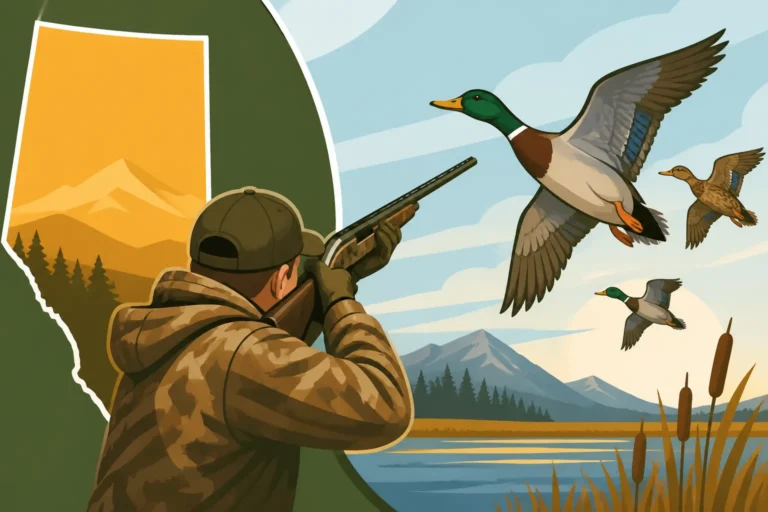
It's happened to every hunter in Alberta at some point: you're out in the field, spotting an animal, and then you realize a public road lies between you and your target, or perhaps your shot would carry across one. That split second of doubt – "Can I shoot that? What are the rules here?" – can be incredibly frustrating and potentially dangerous if you're not absolutely clear on the regulations. This guide is here to clear up all that confusion, walking you through Alberta's specific rules on shooting across roads, ensuring you stay safe, legal, and ethical in the field.
Understanding Alberta's Road Hunting Regulations
Navigating the rules around hunting near roads in Alberta can feel like a minefield, especially with varying interpretations and the sheer number of roads, cutlines, and trails that crisscross our hunting landscapes. The bottom line is, these rules are in place for critical public safety, and understanding them isn't just about avoiding a hefty fine; it's about being a responsible, ethical hunter.
The Basic Rule: Why Shooting Across a Road is Illegal
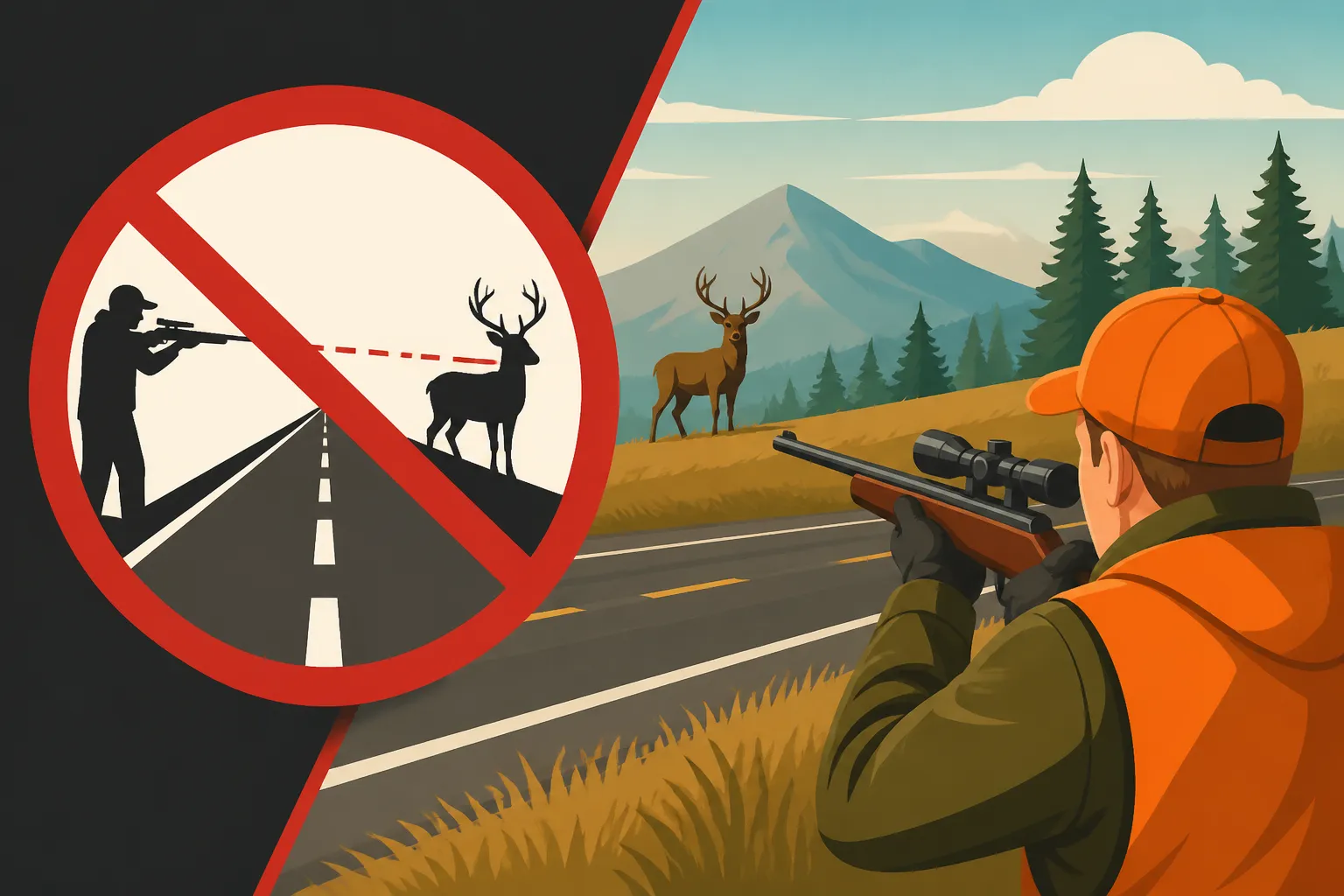
At its core, Alberta's Wildlife Act and the Use of Firearms Regulation are very clear: discharging a firearm or bow across a public road is strictly prohibited. This isn't just a suggestion; it's a legal mandate designed to protect other road users, landowners, and infrastructure from errant shots. Imagine a family driving down a rural road, or a farmer working a field bordering that road – the potential for tragedy from a bullet or arrow travelling across is immense. The rule isn't trying to be difficult; it's trying to save lives and prevent property damage.
What constitutes a "road" in this context? It's broader than just paved highways. It includes provincial highways, municipal roads, and many designated public roadways, even if they're gravel or unimproved tracks that see minimal traffic. If it's officially recognized as a public thoroughfare, the rule applies. This means that even if you're out in what feels like the middle of nowhere, if there's a mapped and maintained road, you cannot shoot across it. Ignoring this fundamental rule carries severe penalties, including significant fines, confiscation of your hunting equipment, and potentially a hunting suspension. These aren't just minor infractions; they're serious violations of public safety.
Defined Safe Zones and Setbacks
Beyond the blanket prohibition on shooting across a road, Alberta's regulations also stipulate specific safe zones and setbacks when hunting near these public arteries. Generally, you cannot discharge a firearm within 183 meters (approximately 200 yards) of certain occupied buildings without the consent of the owner or occupant. While this isn't directly "across a road," it highlights the principle of maintaining safe distances from areas of human activity, which often occur alongside roads.
When it comes to the road itself, the spirit of the law requires you to ensure your projectile will not, under any circumstances, cross the road. This means that even if you're shooting parallel to a road, you need to be absolutely certain of your backdrop and line of sight. If your shot has any chance of ricocheting or carrying over the road, it's a no-go. In wide-open prairie country, this might mean positioning yourself further back from the road's edge to get a clear, safe shot that travels away from the road, not towards it or across it. In densely treed areas, it might be even trickier, as your line of sight could be blocked, making it harder to definitively say your bullet won't cross the path. Always err on the side of extreme caution. The rule isn't about how far your bullet might go, but rather if its trajectory will cross that line.
Navigating Different Land Types and Access Challenges
The challenge with shooting across roads in Alberta often intertwines with the complex tapestry of land ownership and access. Understanding where you are, and what type of land you're hunting, is paramount to staying within the law and ensuring a safe hunt.
Public Roads and Crown Land Access
Alberta boasts a vast amount of Crown land, offering incredible opportunities for hunters. However, even when hunting on public land, the rules about roads apply. You might be deep in a provincial forest, miles from the nearest town, but if a forestry road or a designated public access route runs through it, you cannot shoot across it. This is where Reading an Alberta WMU Map Before You Go and using modern mapping tools become absolutely essential. You need to know precisely where those roads are, even the ones that might seem like mere tracks.
Many hunters rely on digital mapping applications like GoHunt to clearly delineate public land boundaries, private property lines, and, crucially, the network of roads and trails. These tools allow you to zoom in and see exactly where you are relative to any public thoroughfare. It's not enough to guess; you need certainty. A common scenario is hunting along cutlines or seismic lines that crisscross the boreal forest. While these might feel like informal trails, some can be designated public access routes. If a deer steps out on the far side of one of these, you must verify it's not a designated road and that your shot is entirely safe, with no possibility of crossing. Always remember that while Crown land offers open access, it doesn't exempt you from fundamental safety rules. Knowing where your chosen Alberta's Wildlife Management Units are located and their specific regulations is also key.
Private Land and Landowner Permission
Gaining Alberta Landowner Permission Law for private land hunting is a fantastic way to access prime hunting grounds, especially in the White Area of Alberta. However, permission to hunt a landowner's field or pasture does not give you permission to ignore public road safety. Even if a private landowner has given you the green light to hunt on both sides of a public road that bisects their property, you still cannot shoot across that road. The public safety rule always overrides private permission when it comes to publicly accessible roads.
Let's say you're hunting an aspen bluff on one side of a grid road, and a beautiful whitetail buck steps out into a field on the opposite side. You have permission for both fields, but that grid road is a public access route. Taking that shot would be illegal and incredibly dangerous. Your options are to try and move to the other side of the road, if safely possible, or to let the animal walk. It’s a tough decision, especially when that trophy animal is staring back at you, but the potential consequences are simply not worth it. Always have clear communication with landowners about the exact boundaries of your permission, and make it clear you understand and will adhere to all public safety regulations, including those related to roads. Knocking on Doors in Alberta Farm Country isn't just about access; it's about building trust and showing respect for the land and its rules.
Best Practices for Ethical and Safe Hunting Near Roads
When you're hunting in Alberta, especially in areas where roads are prevalent, adopting best practices for safety and ethics isn't just about compliance; it's about upholding the integrity of our sport and ensuring everyone, hunters and non-hunters alike, can coexist safely.
Prioritizing Safety Above All Else
The paramount rule in hunting is to know your target and what's beyond it. This takes on an even greater significance when hunting anywhere near roads. Every time you shoulder your rifle or draw your bow, you must perform a comprehensive risk assessment. Are there vehicles, homes, farm buildings, livestock, or other people within or beyond your potential bullet or arrow path? Is there a crest in the road, or a turn, that could conceal an approaching vehicle? Always assume there could be something, or someone, out of sight.
This means being extra diligent with your observation. Using binoculars or a spotting scope to identify your target and thoroughly scan the surrounding area before even considering a shot is non-negotiable. Never take a snap shot if there's any doubt about your backdrop. The sound of a vehicle approaching on a gravel road, for example, should be an immediate red flag, causing you to hold your shot until the vehicle has passed and your intended shooting lane is undeniably clear. Remember, a bullet can travel a long distance, and once it leaves your barrel, you have no control over it. Even a small error can have life-altering consequences, making it crucial to always err on the side of extreme caution. Don't forget that Alberta Blaze Orange and Safety Rules are also in place to ensure you are visible to other hunters and outdoor enthusiasts, further enhancing safety.
Planning Your Hunt and Scouting Ahead
Proactive planning is your best defense against inadvertently violating road hunting rules or creating an unsafe situation. Before you even set foot in the field, thoroughly scout your chosen hunting area. Utilize online mapping resources, like what GoHunt provides, to identify all roads, trails, and potential public access points. Pay close attention to any areas where a public road might run close to or through prime hunting habitat.
During your physical scouting, walk the terrain. Note where roads are, where property lines run, and where safe shooting lanes exist that direct your shot away from roads and populated areas. This might mean choosing a stand location further back from the road, or identifying a natural funnel where animals might cross safely, allowing for a shot that is completely clear of any public thoroughfare. If you're Scouting With Satellite Imagery in Alberta, identify natural features like creek beds, treelines, or hills that could act as safe backstops, ensuring your shot terminates safely. The goal is to set yourself up for success not just in bagging an animal, but in doing so in the safest, most responsible way possible. Understanding Hunting Alberta Winter Weather Safely also includes being extra cautious about road conditions and visibility during colder months.
Common Misconceptions and Legal Nuances
Even experienced hunters can sometimes fall prey to misconceptions about road hunting rules. The nuances between a "road" and a "track," or how to retrieve game, can be tricky. Getting these details right is crucial for avoiding legal trouble and maintaining a clear conscience.
Understanding "Designated Roads" vs. Tracks
One of the biggest areas of confusion revolves around distinguishing a "designated public road" from a mere track or old trail. In Alberta, a well-maintained gravel road with ditches, road signs, and regular traffic is clearly a public road. However, what about an old oilfield access road that hasn't seen a grader in years, or a barely visible track through a farmer's pasture that leads to a back forty? The official Wildlife Act refers to "public roads," which generally includes provincial highways, municipal roads, and designated public access routes.
The key is often in its legal designation and maintenance. If a road is maintained by the province or a municipality, or if it is clearly signed as a public thoroughfare, the "no shooting across" rule applies. Unmaintained trails, old seismic lines, or private farm tracks that are clearly not for public through-traffic may not fall under this strict definition, but this is a grey area where extreme caution is warranted. Always err on the side of caution. If there's any doubt about whether a track is considered a public road, treat it as one. Better to pass on a questionable shot than face legal consequences for endangering others. Tools like GoHunt can help clarify land ownership and road designations, but when in doubt, consult the official Alberta hunting regulations or contact a Fish and Wildlife officer.
Retrieving Game Across a Road
Let's imagine you’ve made a perfectly legal, safe shot on an animal that was on land you had permission to hunt. But the animal, in its last moments, bolts across a public road onto land you don't have permission for. What do you do then? This is a common and incredibly frustrating scenario, and Alberta's regulations have provisions for it.
First and foremost, you cannot just cross the road and continue tracking or retrieving the animal without addressing the property issue. The Alberta Trespass Act and Hunting still applies. Your first step should be to locate the landowner of the property where the animal expired or ran onto, and immediately seek permission to retrieve your game. Be respectful, explain the situation calmly, and offer to show them where the animal is. Most landowners are reasonable and will grant permission, especially if you've been a responsible hunter.
If the animal ran onto Crown land you have legal access to, or private land for which you already have permission, then retrieving it is generally straightforward, assuming you can do so safely and without violating any other rules. However, the cardinal rule of not shooting across a public road still holds, even in this retrieval scenario. You cannot use the act of retrieval as an excuse to discharge a firearm across a road. If a conservation officer finds you retrieving an animal across a road, they will expect you to have followed all protocols, including obtaining any necessary permissions for the new property. It's a tough situation, but acting responsibly and within the law is always the best path. If you are ever unsure, contacting Alberta's Report a Poacher Line can also be a way to get clarification from enforcement on unusual situations, though it's typically for reporting violations.
Here’s a quick overview of the do's and don'ts when hunting near roads:
| Action | Do's | Don'ts |
|---|---|---|
| Shooting | Always know your target and beyond. | Shoot across any public road, highway, or designated public trail. |
| Ensure your shot path is entirely clear and safe, away from roads. | Take a shot if there's any doubt about your backdrop or road proximity. | |
| Scouting | Use maps (e.g., GoHunt) to identify all roads and property lines. | Assume an unmaintained track isn't a "public road." |
| Plan stand locations that offer clear, safe shots away from roads. | Wait until the hunt to figure out road boundaries. | |
| Access & Permission | Secure permission for private land before entering. | Assume private land permission overrides public road safety rules. |
| Understand access rules for all types of Crown land. | Retrieve game from private land without specific permission. | |
| Safety | Prioritize public safety above all else. | Get careless when identifying your target near roads. |
| Use binoculars to confirm target and clear surroundings. | Shoot from or across a vehicle on a public road. |
Remember, hunting in Alberta is a privilege, and that privilege comes with significant responsibilities. By understanding and adhering to the rules regarding roads, you contribute to a safer, more ethical hunting culture for everyone.
Disclaimer
Please be aware that hunting regulations can change. While this guide provides comprehensive and up-to-date information based on current knowledge, it is always your responsibility to consult the official Alberta Hunting Regulations prior to any hunting activity. This content is for informational purposes only and does not constitute legal advice.