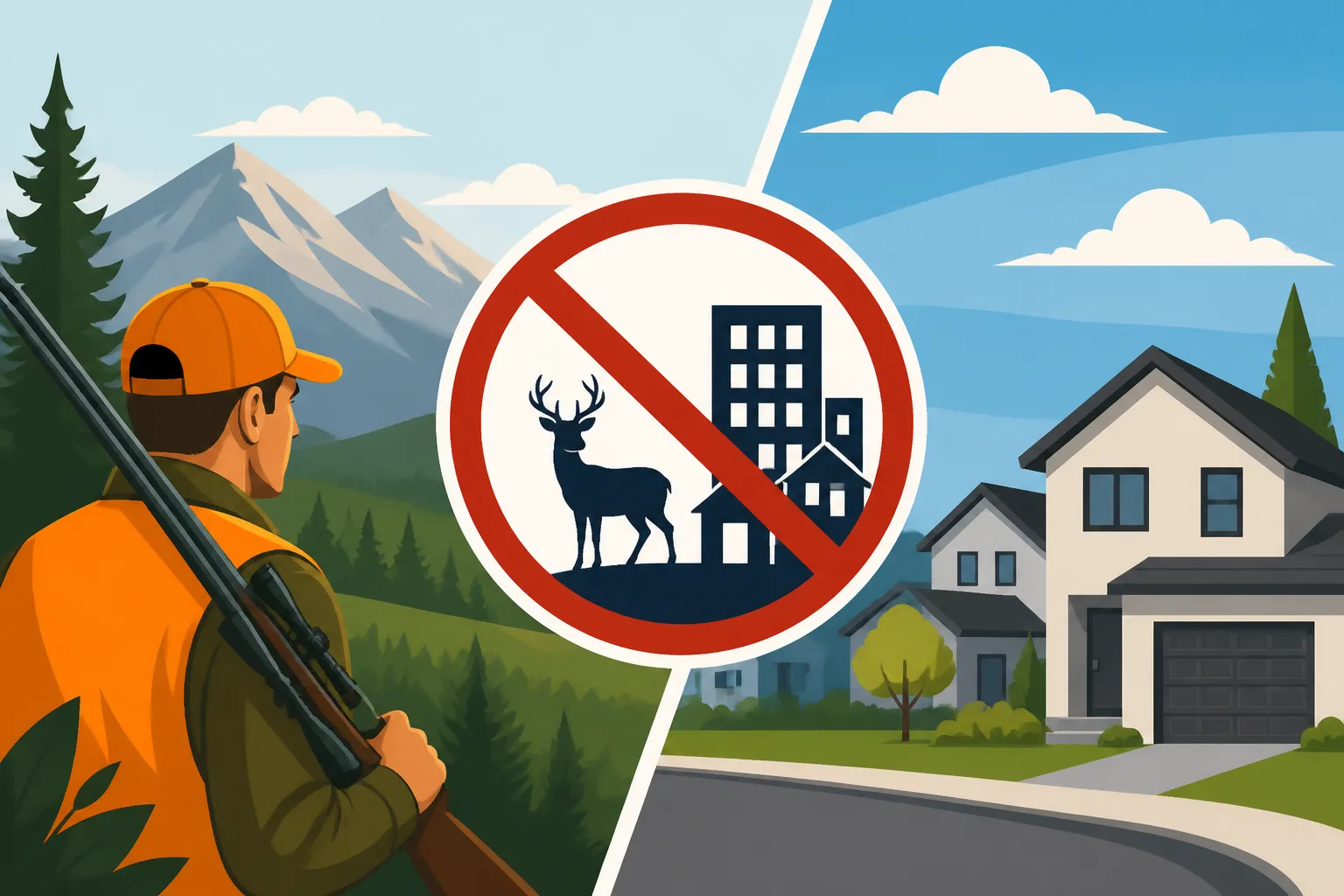
Rules on Hunting Near Buildings
It's a familiar scenario for many Alberta hunters: you're out in the field, diligently scouting or actively pursuing game, when you spot a promising animal. But then you notice it – a distant farmhouse, a cluster of barns, or maybe even an industrial facility. Suddenly, that prime shot becomes a minefield of questions about legality and safety. The rules on hunting near buildings in Alberta can feel like a grey area, leaving hunters second-guessing and often frustrated. This guide is here to untangle those rules, making sure you understand the regulations, respect private property, and maintain a safe, ethical approach to your hunt.
Understanding Alberta's Safety Zones and No-Hunting Areas
Alberta has specific regulations designed to ensure public safety and minimize conflict between hunters and property owners, especially when it comes to human habitation and active farmsteads. These rules are not just suggestions; they are legally binding and come with serious consequences if violated.
The 183-Meter (200-Yard) Rule and Its Intent
One of the most crucial rules hunters need to commit to memory is the 183-meter safety zone. Simply put, you cannot discharge a firearm or bow within 183 meters (200 yards) of an occupied building in Alberta. This isn't just about avoiding a direct shot; it's about the entire footprint of your hunting activity.
The intent behind this rule is crystal clear: public safety. A projectile from a firearm can travel a considerable distance, and even an arrow, while shorter in range, can still cause significant damage or injury. This safety buffer aims to prevent stray bullets from hitting homes, ricocheting off structures, or simply causing undue alarm and stress to people living or working nearby. What constitutes an "occupied building" is also quite broad. It generally includes any structure that is used for human habitation, even if not occupied at the exact moment of the hunt. This means residences, farmhouses, cabins, and even industrial sites or camps where people regularly work or reside. It also extends to buildings where livestock are kept, like barns or active corrals, as these are often integral to someone's livelihood and personal property.
Imagine you're stalking a whitetail buck along a bush edge. You've been careful, checking the wind, moving slowly. Suddenly, the buck steps out into a small clearing, but you notice a quaint little farmhouse nestled among some trees, perhaps 150 meters away, well within the 183-meter zone. Even if your shot would be angled away from the house, the rule states you cannot discharge your weapon within that distance. It requires restraint, even when the adrenaline is pumping. You must either let the animal walk or find a position that puts you legally outside that safety zone, ideally with a safe backdrop that ensures your projectile goes nowhere near the building.
Exceptions and Nuances: Who Can Hunt Closer?
While the 183-meter rule is firm, it does have a significant exception that is vital for hunters to understand. The rule does not apply if you are the owner or occupant of the land, or if you have received permission from the owner or occupant to hunt within that 183-meter zone. This is the critical factor for many hunters who might be hunting on their own property or have secured specific permission from a landowner.
For instance, a farmer might give you explicit permission to hunt deer that are damaging crops right up to their barn, as long as you're doing so safely and responsibly. In this case, their permission overrides the 183-meter legal minimum for that specific property. However, it's crucial that this permission is clear and ideally in writing, particularly if there’s any ambiguity. What if the building appears abandoned? Even if a house looks deserted, if it's still considered a residence or potentially occupied structure, the rule often applies. The key is "occupied" in a general sense, meaning it's a place where people could reasonably be expected to be, or where livestock are kept. This means you can't assume an old, dilapidated cabin is fair game if it's still technically a residential property.
The implication for hunting on Crown land versus private land is also important. If you are on Crown land, but there's a private residence within 183 meters on an adjacent property, you are still bound by the rule. You cannot shoot towards that occupied building, even if you are standing legally on public land. This highlights the need for precise navigation and awareness of your surroundings. Using detailed mapping tools like those offered by GoHunt can be incredibly helpful here, allowing you to see property lines and potential building locations on satellite imagery before you even step foot in the field. This can save you from potential legal trouble and, more importantly, ensure everyone's safety.
Respecting Private Property and Obtaining Permission
Hunting in Alberta, whether for big game or small game, often involves navigating a mosaic of public and private lands. Understanding and respecting property rights, especially around buildings, is paramount for a responsible hunter.
The Critical Role of Landowner Permission
Even if you are beyond the 183-meter safety zone, respecting property boundaries is not just good etiquette; it's the law. The Alberta Trespass Act dictates that you need permission to enter private land for any recreational purpose, including hunting. Failing to secure this permission, regardless of how far you are from a building, can lead to charges and severe penalties.
This means that if you've glassed a magnificent mule deer buck standing on private land, even if it's a quarter-section away from the nearest farmhouse, you still need to obtain explicit permission from the landowner before pursuing it. The process of Getting Private Land Permission in Alberta can be challenging, but it's a cornerstone of ethical hunting. Tips for success often include approaching landowners well in advance of the season, being polite and respectful, offering to share some of your harvest, and always leaving gates as you found them. Show them you're a responsible individual who values their property and their trust. Remember, a "no" today might turn into a "yes" next year if you've built a positive relationship.
Tools like the Alberta Recreational Access Mapping Tool (ARAM) are invaluable for identifying land ownership and helping you find contact information for landowners. Don't underestimate the power of showing up in person, knocking on doors, and introducing yourself. It builds relationships and trust, which are far more valuable than any map.
Navigating "Occupied Buildings" on Crown Land Adjacent to Private Holdings
It's a common misconception that if you're on Crown land, you can hunt without regard for private property boundaries. While you have the right to hunt on legal Crown land, the proximity of occupied buildings on adjacent private land still imposes restrictions. As mentioned earlier, the 183-meter rule applies universally: you cannot discharge a firearm or bow within that distance of an occupied building, even if that building is on private land and you are on Crown land.
This means you need to be acutely aware of your position relative to any private residences, farmsteads, or other occupied structures that might border the Crown land you're hunting. Imagine you're hunting Elk Hunting Alberta's Foothills on a long ridge of public land. You've tracked a herd for miles, and they've moved down into a valley that borders a private ranch. There's a ranch house and a few outbuildings well within your shooting range. Even if you're standing on Crown land, you cannot take a shot that would put a projectile within that 183-meter buffer of those private buildings.
This necessitates meticulous scouting and reliance on detailed mapping software. Apps like GoHunt provide robust land ownership layers that clearly delineate Crown land from private property, and often show building footprints. This allows you to plan your stalk or stand placement with precision, ensuring you're not only within legal limits but also considering the safest possible shot direction and backdrop. Always assume a building is occupied unless you have definitive, confirmed information to the contrary, and never take a chance that could lead to injury, property damage, or legal action.
Practical Considerations for Hunting Near Settlements
Beyond the strict letter of the law, there's an ethical and practical dimension to hunting near buildings and populated areas that every responsible hunter should consider. It's about being a good ambassador for our sport and ensuring the safety and comfort of non-hunting members of the community.
Safety Beyond the Legal Minimum
While the 183-meter rule sets a legal minimum, "legal" doesn't always equate to "safe" or "prudent." A bullet from a high-powered rifle can travel for miles. Even at 200 yards from a building, if your shot misses or ricochets, the projectile could still land in an unintended area. Consider the trajectory of your chosen cartridge, the potential for ricochet off frozen ground, trees, or even unknown obstacles. Your target's backdrop is paramount. Is there a hill that will safely stop a bullet? Or is there a wide-open field that leads to another property, a road, or even a child's playground further down the line?
The sheer noise of a gunshot can also be incredibly startling and distressing to those unfamiliar with hunting, especially when close to their homes. While the regulations don't prohibit noise, being considerate of residents can go a long way in fostering positive public perception of hunting. Imagine a family enjoying a quiet afternoon in their backyard when suddenly a high-powered rifle cracks nearby. Even if legal, it's not a pleasant experience and can fuel negative sentiment towards hunters. We owe it to ourselves and future generations of hunters to always prioritize safety and thoughtful conduct, even beyond the bare minimum required by law.
Avoiding Conflict and Maintaining a Good Reputation
As hunters, we are stewards of the land and ambassadors for our tradition. Every interaction, every decision we make in the field, contributes to the public's perception of hunting. Hunting too close to residences, even if technically legal, can create anxiety, fear, and resentment among non-hunters. This can lead to complaints to local authorities, increased scrutiny, and potentially tighter regulations in the future.
Consider situations that might cause alarm: parking your truck with rifles visible near a residential street, field dressing an animal where it can be seen from a farmhouse, or leaving spent casings littered on the ground. These actions, while not necessarily illegal, can be interpreted negatively and contribute to a poor image of hunters. Always aim to be discreet, respectful, and tidy. When you're out Hunting Alberta Winter Weather Safely or any other time, remember that you represent all hunters.
If you find yourself in a situation where you believe someone is hunting inappropriately close to buildings or engaging in unsafe practices, remember Alberta's "Report a Poacher" line. It's not just for poaching; it's for any wildlife violation, including unsafe hunting practices. Reporting ensures that those who disregard the rules are held accountable, protecting the reputation of ethical hunters. By adhering to both the letter and the spirit of the law, we help maintain access to hunting lands and ensure the longevity of our cherished tradition. You can find precise wording and additional details in Alberta's annual hunting regulations guide, which is essential reading for every hunter.
Specific Building Types and What They Mean for Hunters
The term "occupied building" might seem straightforward, but in Alberta's diverse landscapes, it can apply to a variety of structures. Understanding these distinctions is key to staying legal and safe.
Farm Buildings, Barns, and Livestock Pens
In agricultural areas, you'll encounter numerous structures that are integral to farming operations. The question often arises: are these considered "occupied buildings" for the purpose of the 183-meter rule? Generally, yes. Buildings such as barns, machine sheds, livestock pens, feed storage facilities, and even actively used greenhouses are typically considered to be "occupied" if they are part of an active farming operation or if people or animals are regularly present in or around them.
For example, a large barn that houses cattle, even if no one is inside at the exact moment you're contemplating a shot, is absolutely an occupied building. Livestock represent significant assets and the livelihood of farmers. Shooting near them, or potentially injuring them, is a serious offence. A small, dilapidated shed in the corner of a field that hasn't been used in decades might be a different story, but it's always best to err on the side of caution. If there's any doubt about whether a structure is truly abandoned and unused, treat it as "occupied." When you're Hunting Hungarian Partridge on Alberta Farms, you'll encounter many such structures, and vigilance is critical. Always clarify with the landowner if you have permission to hunt on their property, and discuss any specific areas they want you to avoid near their operations.
Camps, Outbuildings, and Remote Structures
Beyond the farm, Alberta's vast wilderness contains various other structures that fall under the "occupied building" umbrella. Remote hunting camps, isolated cabins, or even temporary work camps in the boreal forest or foothills can be considered occupied if they are intended for human habitation, even if used seasonally or intermittently. The key is their purpose and potential for occupation.
Consider an oil and gas facility, a remote pump jack, or a temporary construction site. These are workplaces where people are regularly present. Shooting near them not only poses a safety risk but could also lead to severe legal and financial repercussions. The same applies to private recreational cabins that might only be used on weekends or during hunting season. They are still considered occupied buildings. When you're Hunting Moose Along Cutlines and Seismic Lines in northern Alberta, you might encounter old trappers' cabins, forestry camps, or even active industrial sites. Your mapping tools, like GoHunt, are essential for identifying these structures and ensuring you maintain the required distance. If there's an active camp or facility, always respect the safety zone.
| Building Type | Status for 183-meter Rule | Key Consideration |
|---|---|---|
| Residences/Farmhouses | Occupied | Always treat as occupied. Requires 183m distance or landowner permission. |
| Active Barns/Livestock Pens | Occupied | Treat as occupied due to presence of animals and human activity. |
| Machine Sheds/Workshops | Often Occupied | If actively used for farming/maintenance, treat as occupied. |
| Remote Cabins/Hunting Camps | Often Occupied | If used seasonally or intermittently for human habitation, treat as occupied. |
| Industrial/Oil & Gas Sites | Occupied | Active workplaces with human presence; always respect safety zone. |
| Dilapidated/Abandoned Sheds | Potentially Not Occupied | Err on side of caution; if any doubt, treat as occupied. Clarify with landowner. |
Planning Your Hunt to Avoid Issues
Proactive planning is the best way to avoid any legal or ethical missteps when hunting near buildings. A little foresight can save a lot of headaches and ensure a smooth, enjoyable hunt.
Pre-Season Scouting and Map Study
The vast majority of potential conflicts can be avoided by thorough pre-season scouting and map reconnaissance. Before you even set foot in the field, spend time studying your chosen Alberta's Wildlife Management Units on detailed maps. Utilize satellite imagery to identify potential residences, farmsteads, and other structures. Tools like the land ownership layers available through GoHunt are incredibly valuable for this. They allow you to overlay property lines with topographical and satellite views, helping you pinpoint exactly where occupied buildings are located in relation to public or private hunting lands.
This isn't just about identifying danger zones; it's about strategizing your approach. You can plan your access routes, likely travel corridors for game, and potential stand locations well in advance, consciously avoiding areas that might bring you into conflict with the 183-meter rule or private property concerns. If you're Reading an Alberta WMU Map Before You Go, actively look for clusters of buildings, roads that might lead to remote residences, or any signs of human activity that could impact your hunt. Mark these areas on your map or GPS to ensure you give them a wide berth.
Communication and Due Diligence
Even with the best maps, real-world conditions can change, or you might encounter unforeseen circumstances. This is where clear communication and due diligence come into play. If you're hunting private land, ensure your permission from the landowner is explicit, especially if you anticipate hunting anywhere near buildings. Don't be shy about asking specific questions: "Is it okay if I hunt this quarter, even though your neighbour's barn is visible from the north fence line?" Clear communication upfront can prevent misunderstandings later.
Always carry your valid Alberta Hunting Licences and What They Cost and your Alberta's WIN Card and Wildlife Certificate with you. These are not just for wardens; they are proof that you are a legal, licensed hunter. Should a concerned resident approach you, politely present your credentials and explain your actions. Your adherence to Alberta Hunter Education Course Requirements means you're informed, and demonstrating that knowledge respectfully can de-escalate potential conflicts. Remember, it's about being an ethical hunter who respects both the wildlife and the people who share the landscape.
Disclaimer
Please remember that this article provides general information and guidance. Hunting regulations in Alberta can change, and it is the hunter's responsibility to review and understand the most current Alberta Guide to Hunting Regulations, available through Alberta Environment and Protected Areas. Always verify specific rules and boundaries before engaging in any hunting activity.