Why Fences Are Hard on Pronghorn
It's a sight that's as iconic as the Alberta prairie itself: the golden fields stretching to the horizon, dotted with sagebrush and coulees. But for one of our most unique big game species, the pronghorn, this seemingly endless landscape holds a hidden, often deadly, challenge – fences. While these structures are a necessary part of ranching and land management, they pose a significant threat to a creature built for speed and open spaces, not for jumping obstacles. This guide delves into the specific reasons why fences can be so detrimental to pronghorn populations in Alberta and what we can do to help mitigate these impacts.
The Unique Biology and Movement of Alberta Pronghorn
To understand why fences are such a problem, we first need to appreciate the incredible adaptations of the pronghorn itself. Often mistakenly called an "antelope," these animals are in a league of their own, truly embodying the spirit of the open prairie. Their entire existence is geared towards speed and wide-open visibility.
Built for Speed, Not for Jumps
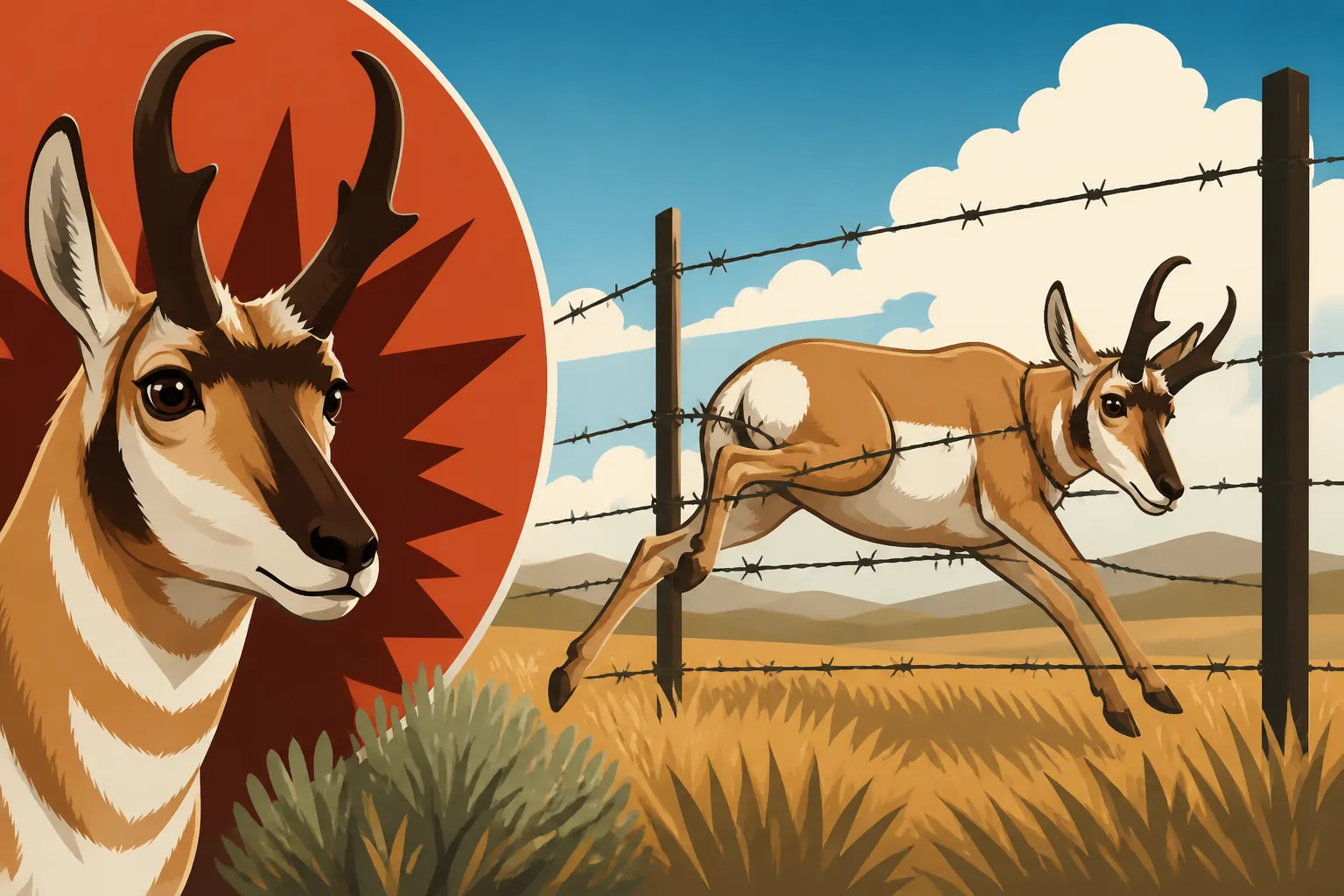
Pronghorn are the fastest land mammals in North America, capable of hitting speeds up to 90 kilometers per hour. This incredible velocity is their primary defense mechanism against predators in a wide-open landscape where cover is scarce. Their legs are long and slender, their hooves designed for running, and their large windpipes and lungs allow for massive oxygen intake during a full-out sprint. However, this physiological design comes with a trade-off. Unlike deer or elk, which are adept at leaping over obstacles, pronghorn are not natural jumpers. Their leg structure isn't built for high clearance, and they prefer to crawl under or go around barriers rather than jump over them. A typical barbed-wire fence, even one that a whitetail could clear with ease, can be an impassable wall for a pronghorn, especially if the bottom wire is too low.
Migration and Range Requirements
Alberta's pronghorn are not sedentary creatures. They often undertake seasonal migrations, moving between summer foraging grounds and more sheltered winter ranges, especially in the southern parts of the province. These movements, while not as epic as those of caribou, can still cover significant distances, driven by the search for food, water, and refuge from harsh winter conditions. Imagine a herd of Pronghorn on Alberta's Southern Prairie following an ancient route, only to find it suddenly blocked by a new line of fence. Their instincts tell them to go forward, but the physical barrier forces them to deviate, sometimes into less suitable habitat, or worse, into a bottleneck where they become vulnerable. Understanding these traditional pathways is crucial, and tools like GoHunt can help researchers and conservationists map these routes to better inform land management decisions.
Social Structure and Herd Movement
Pronghorn are highly social animals, often moving in large herds, particularly outside of the fawning season. This herd behavior offers safety in numbers, with many eyes and ears to detect predators. When a fence line is encountered, the entire herd's movement can be disrupted. Instead of one or two animals finding a way through, dozens, sometimes hundreds, are suddenly forced to find an alternative. This can lead to mass pile-ups along fence lines, especially during deep snow or intense pressure from predators. The stress of being separated from the herd, or the inability to access critical resources together, can have severe consequences for individual animals and the population as a whole.
How Fences Impede Pronghorn Survival
The challenges posed by fences go far beyond simple inconvenience for pronghorn. These man-made structures directly impact their ability to survive, thrive, and maintain healthy populations across their range.
Direct Obstacles and Injury Risks
The most immediate danger fences present is the risk of direct injury. As discussed, pronghorn prefer to go under fences. If the bottom strand of wire is too low – especially if it's barbed wire – they can get tangled, cut, or even break legs trying to force their way through. This is particularly true for fawns, who might not have the strength or coordination to clear even a slightly raised bottom wire. An injured pronghorn is a dead pronghorn in the prairie ecosystem; unable to outrun predators, it quickly succumbs. During deep snowfalls, the problem is compounded. As snow drifts, it can completely bury the bottom wire, making it seem passable. However, the animals can still get entangled if the snow isn't firm enough to support their weight, or if they try to push through unseen wires. It's a cruel trap, often leading to slow, agonizing deaths.
Fragmented Habitat and Genetic Isolation
Beyond direct injury, fences contribute to habitat fragmentation. What was once a contiguous landscape for these wide-ranging animals becomes a checkerboard of accessible and inaccessible areas. This fragmentation can cut off critical winter ranges from summer feeding grounds, limit access to water sources, or isolate smaller populations. For instance, a fence might effectively separate a small herd from a larger, healthier breeding population. Over time, this can lead to genetic isolation, reducing genetic diversity within the smaller, trapped groups. Reduced genetic diversity makes populations more vulnerable to disease and less adaptable to environmental changes, such as shifts in climate or forage availability, ultimately weakening their long-term viability. We see similar concerns with Why Mule Deer Numbers Fell in Some WMUs when natural movement corridors are severed.
Increased Predation and Energy Expenditure
Fences can turn a natural advantage into a disadvantage for pronghorn. Their incredible speed is for escaping predators like coyotes and wolves. If a herd is trying to navigate a maze of fences, their escape route can be blocked, making them easy targets. Imagine a pack of coyotes pursuing a pronghorn herd, driving them towards a formidable fence line. The pronghorn's natural instinct to run is thwarted, leaving them vulnerable as they scramble for a way through or around. Furthermore, navigating around miles of fencing burns precious energy. How Pronghorn Survive a Prairie Winter often depends on conserving every calorie. If they have to expend excessive energy bypassing fences to reach forage or water, especially when conditions are already tough, their chances of survival plummet. This extra energy expenditure can be the difference between making it through a lean winter or succumbing to exhaustion and starvation.
The Cumulative Impact of Alberta's Fencing Landscape
The challenges presented by fences aren't isolated incidents; they're part of a larger, cumulative impact shaped by historical land use, modern agricultural practices, and the relentless march of development across Alberta's southern prairies.
Historical Land Use and Modern Challenges
The prairie landscape of Alberta has been fundamentally altered by human settlement and agricultural development over the past century and a half. What were once boundless expanses of native grassland, traversed freely by vast herds of bison and pronghorn, are now crisscrossed by roads, crop fields, and, of course, countless miles of fencing. Early homesteaders and ranchers needed fences to contain livestock and delineate property lines, a practice that continues today. The sheer density of fencing in some of Alberta's prime pronghorn habitat means that these animals encounter barriers constantly. While efforts are being made to promote pronghorn-friendly fencing, the legacy of conventional fencing remains a formidable challenge. Understanding these historical patterns helps us appreciate the scale of the problem and the complexity of finding solutions that work for both wildlife and landowners. When you're Glassing Alberta Prairie for Pronghorn, you'll quickly notice how much of the landscape is segmented.
Winter Stress and Bottlenecks
Winter is perhaps the toughest time for pronghorn, and fences amplify this stress exponentially. As snow accumulates, especially during heavy snowfalls or sustained cold snaps, pronghorn need to move to areas where forage is still accessible, often south-facing slopes or areas with lighter snow cover. If these critical winter ranges are cut off by fences, herds can become trapped in unsuitable areas, quickly depleting available food. We often see situations where large numbers of pronghorn congregate along a single fence line, unable to pass, forming "bottlenecks." These bottlenecks are not only dangerous due to the risk of entanglement but also because they concentrate animals, increasing competition for resources and making them easier targets for predators. This also makes them particularly susceptible to Alberta's Pronghorn Herd and Winter Kill events, where a harsh winter can decimate populations that cannot access vital forage.
Water Access and Forage Availability
Just like any other animal, pronghorn need consistent access to water and diverse forage to survive. Fences can inadvertently block access to these life-sustaining resources. A fence line might separate a herd from a critical waterhole during a dry spell or cordon off a lush patch of native grasses that offers vital nutrients. During periods of drought, like when What Drought Does to Alberta Game is a real concern, the impact of these barriers is even more pronounced. Animals become desperate, increasing their risk-taking behavior around fences. Furthermore, agricultural practices often involve fencing off crops. While this is necessary for farmers, it can push pronghorn into less productive areas, forcing them to spend more time and energy searching for food, which, as we know, can be particularly detrimental during winter.
Conservation Efforts and Hunter Involvement
The good news is that people are aware of these challenges, and a great deal of effort is being put into finding solutions. Hunters, landowners, and conservation groups are all playing a vital role in making the Alberta prairie more pronghorn-friendly.
Fence Modification and Removal Initiatives
One of the most effective ways to help pronghorn is to modify existing fences or remove unnecessary ones. "Pronghorn-friendly" fences typically have a smooth bottom wire at least 18 inches (about 45 cm) off the ground, allowing pronghorn to crawl underneath safely. The top wire is also often smooth or a barbless variety, and the overall height might be reduced. Many ranchers are proactively converting their fences, sometimes with the assistance of conservation organizations that provide materials and labor. These efforts benefit not just pronghorn but also other wildlife, while still serving the needs of livestock management. It's a win-win, showcasing how collaborative conservation can truly make a difference on the ground.
Mapping Migration Routes with Tools like GoHunt
Understanding exactly where pronghorn move and why they move there is crucial for targeted conservation efforts. Modern technology, including GPS collars and mapping software, is revolutionizing this work. Conservation groups, wildlife biologists, and even observant hunters using platforms like GoHunt can contribute to a better understanding of pronghorn migration corridors. By identifying critical choke points, wintering areas, and seasonal travel routes, efforts to modify or remove fences can be prioritized for maximum impact. Imagine being able to see exactly where pronghorn are consistently encountering barriers and then focusing resources on those specific fence sections. This data-driven approach is invaluable for ensuring conservation dollars are spent effectively. This kind of mapping can also help hunters who are Stalking Pronghorn Across Open Ground better understand natural travel patterns.
The Role of Responsible Land Management
Ultimately, the future of Alberta's pronghorn largely depends on responsible land management practices that consider wildlife needs alongside agricultural and economic interests. This includes proactive engagement with landowners, offering incentives for wildlife-friendly practices, and integrating wildlife corridors into land-use planning. Hunters also have a significant role to play. By supporting conservation organizations, being mindful of their own impact on the land, and engaging in respectful dialogue with landowners when Asking an Alberta Landowner for Permission, they contribute to a larger culture of conservation. The goal is to create a mosaic of working landscapes that can sustain both human livelihoods and healthy wildlife populations, ensuring that the unique prairie ghost, the pronghorn, continues to grace Alberta's fields for generations to come.
Here's a quick look at the characteristics of a pronghorn-friendly fence versus a conventional fence:
| Feature | Conventional Fence | Pronghorn-Friendly Fence |
|---|---|---|
| Bottom Wire | Barbed wire, often close to the ground (6-12 inches) | Smooth wire, at least 18 inches (45 cm) off the ground |
| Top Wire | Barbed wire | Smooth wire, or barbless |
| Overall Height | Often 4-5 strands, 40+ inches tall | Potentially fewer strands, under 40 inches where possible |
| Purpose | Maximize livestock containment, property demarcation | Accommodate wildlife movement while containing livestock |
| Impact | Significant barrier, high injury risk | Reduced barrier, lower injury risk, facilitates movement |
By understanding the specific challenges fences pose and actively participating in solutions, we can all help ensure that Alberta remains a haven for these incredible prairie speedsters.
Disclaimer
This article is for general informational purposes only and does not constitute professional advice. Laws, prices and regulations vary by location and change over time. Consult a qualified professional for guidance on your specific situation.