Where Alberta’s Pronghorn Range Ends
One of the most common head-scratchers for hunters new to the province, or even seasoned veterans targeting a new species, is figuring out exactly where certain animals actually live. For pronghorn, Alberta's unique prairie speedsters, understanding their range isn't just about drawing a line on a map; it's about knowing the subtle shifts in habitat and the environmental pressures that truly define where Alberta's pronghorn range ends. This guide will help you pinpoint those boundaries and understand why they exist, saving you countless hours of scouting in the wrong country.
Understanding Alberta's Pronghorn Habitat and Core Range
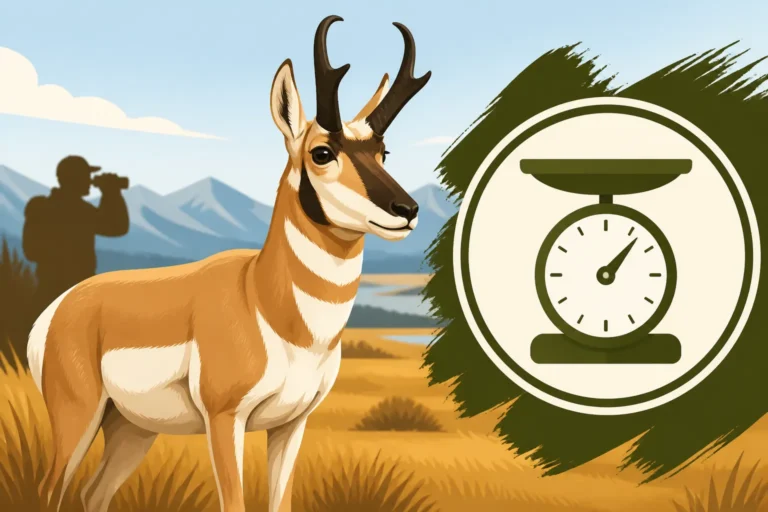
Pronghorn are truly creatures of the open prairie, built for speed and sight across vast, unobstructed landscapes. While they might resemble African antelope, they are North American originals, specifically adapted to the arid and semi-arid grasslands of the continent's interior. In Alberta, this means their presence is highly dependent on specific environmental conditions and habitat types.
The Heart of Pronghorn Country: Southern Prairies
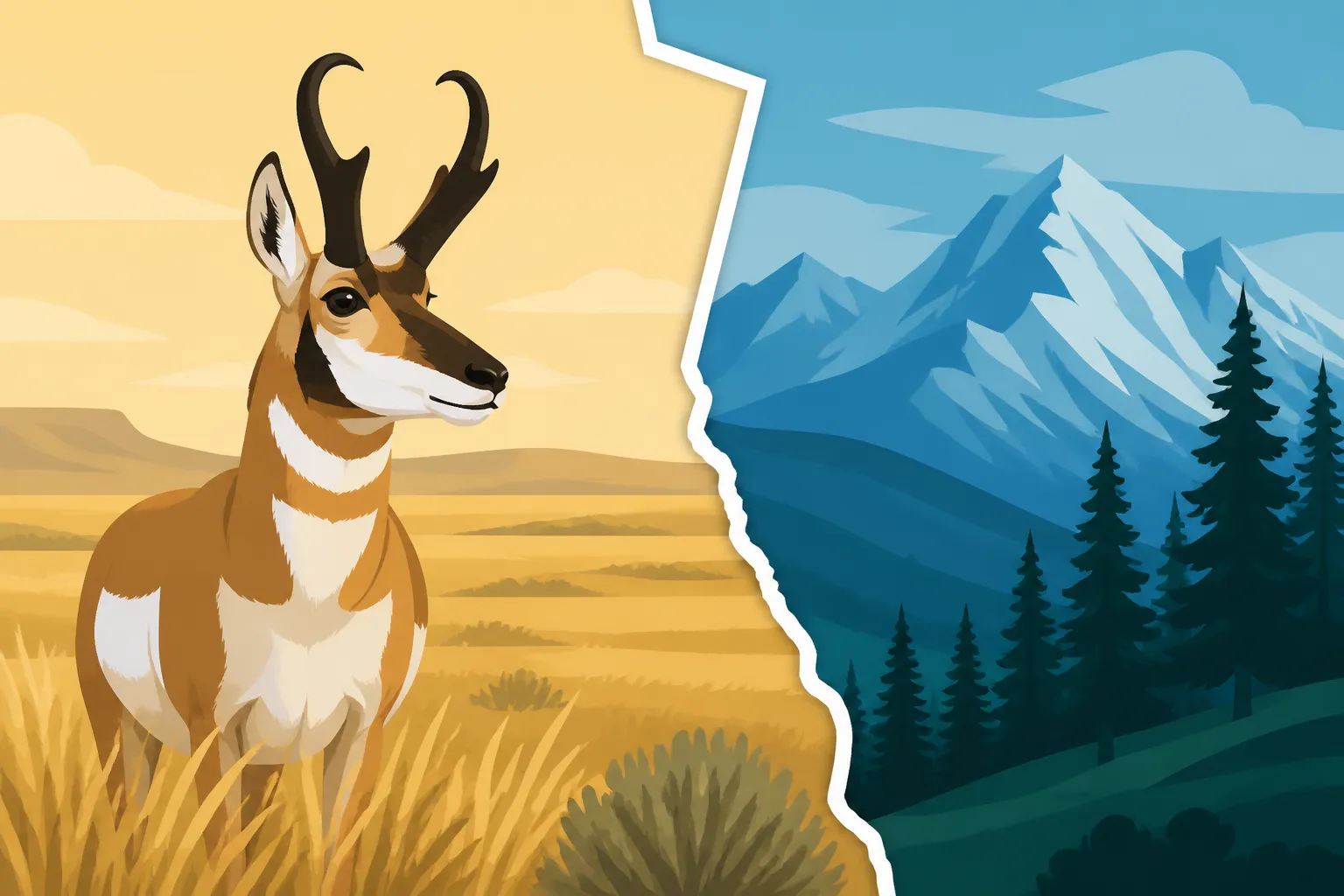
If you're looking for Alberta's pronghorn, your focus needs to be firmly fixed on the southern half of the province's White Area, specifically the expansive prairie regions. This is their historical stronghold and where you'll find the most consistent populations. We're talking about the land south of the Trans-Canada Highway (Highway 1), stretching all the way down to the U.S. border. This region provides the wide-open vistas, short and mixed-grass prairies, and native forbs that pronghorn thrive on.
Within this core, areas like the expansive rangelands around Medicine Hat, Brooks, Lethbridge, and Foremost are prime. These regions often feature vast tracts of native grassland, interspersed with coulees, shallow draws, and minimal tree cover, offering the perfect blend of feeding grounds and escape terrain. The relative lack of dense forest or significant urban development in these areas allows them the space they need to roam and graze without constant obstruction. You'll often find them grazing peacefully in large herds, their distinctive white patches flashing as they move. Pronghorn on Alberta's Southern Prairie delves deeper into what makes this region so ideal for them.
Key Geographical Boundaries of Their Natural Range
While their distribution isn't a hard, straight line, there are general geographical markers that indicate where Alberta's pronghorn range begins to taper off. The most prominent northern boundary is roughly Highway 1, or perhaps just slightly north of it in some areas, generally aligning with the northern extent of the true dry prairie ecosystem. As you move north of this line, the landscape transitions into parkland and eventually boreal forest, neither of which offers the open, grassy habitat pronghorn require.
To the west, their range extends into the foothills, but typically not far into the heavily timbered mountain regions. They prefer the more open, rolling fescue grasslands of the lower foothills, where visibility is still good and dense tree cover is limited. You might find them in the areas bordering the mountains, but once you get into heavily treed river valleys or significant elevation changes with conifer forests, they disappear. Eastward, their range is bounded by the provincial border with Saskatchewan, where similar prairie conditions continue. In essence, the entire southern "triangle" of Alberta, from the Saskatchewan border to the foothills, south to the US border, forms their primary domain.
Factors Defining the Northern Edge
The northern limit of Alberta's pronghorn range isn't just a casual boundary; it's a dynamic line influenced by a host of ecological factors. Primarily, it’s about habitat suitability. Pronghorn are not browsers; they are grazers and prefer forbs and grasses. As you head north, the prairie transitions to more aspen parkland and eventually boreal forest. This change brings denser tree cover, different soil types, and a shift in vegetation, with more shrubs and trees dominating the landscape. This kind of environment reduces visibility, impedes their ability to use their incredible speed as a defense mechanism, and lacks the preferred food sources.
Winter severity also plays a huge role. Pronghorn are highly susceptible to deep snow. Their small hooves aren't designed for pushing through heavy drifts, and deep snow can cut them off from vital forage. While they are resilient, prolonged periods of deep snow can lead to significant winter kill, pushing their populations back south. The northern prairies experience harsher, longer winters with more consistent snow cover compared to the milder, wind-swept southern plains where snow often blows off, exposing feed. Understanding How Pronghorn Survive a Prairie Winter really highlights their reliance on specific conditions.
Specific Wildlife Management Units Where Pronghorn Roam
For hunters, pinpointing specific Wildlife Management Units (WMUs) is crucial for effective planning. Not all WMUs within the general southern prairie will hold pronghorn in huntable numbers, and some will simply not have them at all. This section breaks down where you should be looking, and more importantly, where your efforts would likely be wasted.
Prime Pronghorn WMUs to Focus On
When planning a pronghorn hunt in Alberta, you'll want to concentrate your efforts on the WMUs that are predominantly open prairie. The "Prairie Series" WMUs (100 series) are your bread and butter. Think of units like WMU 102, 104, 106, 108, 110, 112, 114, 116, 118, and stretching into areas like 120 and 122. These are the classic wide-open spaces where pronghorn thrive. They offer the expansive views and native grasslands that these animals need.
Within these WMUs, you'll find varying densities, but generally, the further south and east you go into the driest, most open rangelands, the better your chances. Areas with extensive native grazing leases and less intensive cultivation are often hot spots. Many hunters use tools like GoHunt to scout these areas virtually, looking for those tell-tale open expanses and connectivity of suitable habitat. The Alberta government's regulations typically provide maps and WMU descriptions, so it's always wise to consult those to understand the boundaries precisely.
Transitional Zones and Sporadic Sightings
As you move north from the core prairie WMUs, you'll encounter transitional zones. These might include WMUs like 124, 126, 128, or perhaps the very southern parts of some 130 series units. In these areas, the landscape starts to shift. You might find a mix of open prairie and encroaching parkland, with more aspen bluffs and cultivated fields. Pronghorn can certainly be found here, but their distribution tends to be more localized and less consistent. They might stick to larger patches of unbroken grassland, or follow specific river valleys that offer corridors of open habitat.
Sightings in these transitional zones are often more sporadic. A small herd might take up residence in a particularly open quarter section, but they might not be as widespread across the entire WMU. Success in these areas often comes down to intense scouting and local knowledge. You might need to focus on specific features like a large, uncultivated pasture or a series of interconnected coulees. This is where detailed aerial imagery, perhaps through a platform like GoHunt, combined with ground-truthing, becomes invaluable.
WMUs Where You Won't Find Pronghorn
Just as important as knowing where to look is knowing where not to look. Any WMU that is primarily boreal forest, heavy parkland, or mountain country will not hold pronghorn. This includes virtually all WMUs north of the main prairie zones, and any WMUs deep within the foothills or mountains.
Here's a general breakdown:
| WMU Series | Typical Landscape | Pronghorn Presence | Notes |
|---|---|---|---|
| 100-120s | Dry Prairie, Open Rangeland | High | Core habitat, focus your efforts here. |
| 120s-140s | Transitional Prairie/Parkland | Moderate to Low | Localized herds, significant scouting needed. |
| 150s-160s | Parkland, Aspen Bluffs, River Valleys | Very Low to None | Highly unlikely, rare wanderers. |
| 200s (Foothills) | Rolling Foothills, Conifer/Aspen Forest | Very Low to None | May be on very fringes of open fescue. |
| 300s (Mountains) | Mountains, Heavy Forest | None | Completely unsuitable habitat. |
| 400s (Boreal Forest) | Dense Boreal Forest, Muskeg | None | Completely unsuitable habitat. |
Essentially, if you're looking at a WMU map and it's heavily green (indicating forest or dense parkland), you can safely cross it off your pronghorn list. They simply cannot survive or thrive in those environments. This helps narrow down your search considerably and saves you time and fuel. Alberta's Wildlife Management Units offers more detail on these classifications.
The Influence of Human Activity and Environment on Pronghorn Distribution
Pronghorn are incredibly adaptable, but their existence is always a delicate balance between suitable habitat, environmental pressures, and increasingly, the impacts of human development. Understanding these influences helps explain why their range ends where it does and how it might fluctuate over time.
How Agriculture and Fences Impact Movement
While much of southern Alberta is agricultural, the type of agriculture significantly impacts pronghorn. Vast, unbroken fields of cereal crops, especially those with tall stubble, aren't ideal. Pronghorn prefer shorter grasses and forbs, and tall crops reduce their visibility, which is their primary defense mechanism against predators like coyotes. Intensive cultivation also reduces the diversity of forage they rely on.
Fences are another huge factor. Pronghorn are not jumpers like deer; they prefer to crawl under fences. This means standard barbed-wire fences, especially those with a bottom wire too low, can be significant barriers. Miles upon miles of cross-fencing can fragment their habitat, preventing them from accessing water, food, or escape cover, especially during migration or severe weather events. In some cases, specific programs are in place to modify fences in key pronghorn areas to allow for easier passage. Why Fences Are Hard on Pronghorn explores this in more detail. The continued expansion of cultivated land and the proliferation of restrictive fencing can act as a "soft" boundary, effectively ending their usable range even if the habitat looks superficially suitable.
Winter Kill and Its Effect on Range Contraction
We touched on this earlier, but it bears repeating: winter is often the ultimate determinant of where Alberta's pronghorn range truly ends in any given year. A severe winter, with prolonged deep snow and extreme cold, can decimate pronghorn populations, especially at the fringes of their range. When snow is too deep, they can't access forage, and their energy reserves quickly deplete. Even if they survive, the population density in those northern-most areas might be significantly reduced for several years.
Conversely, a series of mild winters can see pronghorn push slightly further north, exploring new territories where conditions have become temporarily more favorable. However, these expansions are often transient; one harsh winter can send them retreating back to their core strongholds. This dynamic means that the "end" of their range isn't fixed but can contract and expand slightly based on yearly climatic variations. Understanding Alberta's Pronghorn Herd and Winter Kill is essential for predicting these shifts.
Using Scouting and Technology to Pinpoint Localized Range
Given the dynamic nature of pronghorn distribution, especially at the edges of their range, effective scouting and the use of modern technology are paramount. Simply looking at a general map isn't enough; you need to dig deeper. Satellite imagery, which can be accessed through tools like GoHunt's mapping platform, allows you to analyze vast expanses of land from your couch. Look for large tracts of unbroken native grassland, interconnected coulee systems, and areas with minimal dense tree cover or restrictive fencing. Pay attention to how the land transitions from open prairie to more wooded or cultivated areas.
Once you've identified potential areas virtually, ground scouting is the next step. Drive the roads, glass the open fields, and look for signs like tracks, droppings, and the animals themselves. Talking to local landowners or seasoned hunters can also provide invaluable, up-to-the-minute information on localized herds and recent movements. What seems like good habitat on a map might be heavily used cattle pasture or be cut off by new fences, so always verify on the ground. When you're trying to figure out where Alberta's pronghorn range ends, sometimes the most accurate answer comes from your own boots on the ground and your binoculars sweeping the horizon.
Disclaimer
This article is for general informational purposes only and does not constitute professional advice. Laws, prices and regulations vary by location and change over time. Consult a qualified professional for guidance on your specific situation.