Black Bear Hunting in Alberta
The thought of chasing a big black bear through Alberta's vast wilderness is a dream for many, but for those unfamiliar with the unique landscape and regulations, it can feel like a daunting task. From figuring out where bears actually live to understanding the difference between spring and fall seasons, the complexities can easily deter even seasoned hunters. This comprehensive guide is here to demystify black bear hunting in Alberta, offering practical, in-depth advice to help you prepare for a successful and memorable adventure.
Understanding Alberta's Black Bear Landscape
Alberta is home to a robust population of black bears, offering fantastic opportunities for hunters. But to truly understand how to hunt them effectively, you first need to grasp where they live and why their numbers thrive in specific regions. It's not just about dense forests; it's about food, cover, and the cycles of the wild.
Where Black Bears Roam in Alberta
Black bears in Alberta are incredibly adaptable creatures, which is why you can find them in a variety of habitats, though they definitely have their preferences. Their prime real estate is typically found in the vast stretches of the boreal forest, the rugged foothills, and even some pockets of the aspen parkland where timbered areas provide ample cover and food. Think of areas like the Peace Country in northern Alberta, where extensive mixed wood forests blend into agricultural land, creating a rich mosaic of feeding opportunities. The sprawling forested regions west of places like Rocky Mountain House or Grande Prairie are also hotspots, with their intricate network of river valleys, clearcuts, and dense stands of timber.
These bears are constantly on the move, especially during the spring and fall, searching for calories. They'll often frequent areas where new growth provides tender greens in spring, or where berry patches are abundant in late summer and fall. Water sources, like creeks, ponds, and sloughs, are also critical, not just for drinking but often for finding lush vegetation along their edges. Unlike some species that stick to very specific terrain, black bears will utilize everything from deep, dark timber to the edges of open meadows, especially if there's a good escape route nearby. It's this versatility that makes them such an intriguing challenge to hunt, as their presence can be found in a wide range of environments.
Alberta's Black Bear Population and Numbers
Alberta boasts a healthy and thriving black bear population, which is a testament to effective wildlife management and the vast, relatively undisturbed habitats available to them. While exact numbers fluctuate annually based on factors like cub survival rates and food availability, the general trend indicates a stable or increasing population in many areas. This abundance means that hunter success rates for black bear are often quite good, especially for those who put in the effort to scout and prepare.
The sheer density of bears can be attributed to several factors. Firstly, the province's extensive forested areas provide ideal denning sites and thermal cover, allowing bears to comfortably overwinter. Secondly, a diverse food base, ranging from various berries and nuts to grasses, forbs, and even agricultural crops along forest fringes, ensures a steady supply of energy for these omnivores. You'll find that in regions of the boreal forest, bear numbers are particularly high, benefiting from vast, continuous tracts of wilderness. This rich environment, combined with generally conservative hunting quotas and well-managed draw systems, helps maintain a robust population year after year. Hunters often find that even with reasonable pressure, new bears frequently move into areas, offering consistent opportunities.
Alberta Black Bear Seasons and Regulations
Successfully hunting black bears in Alberta means understanding the nuances of the hunting seasons and strictly adhering to the provincial regulations. Alberta offers distinct spring and fall seasons, each with its own characteristics and challenges, and navigating the licensing process is crucial.
Spring and Fall Bear Season Dates
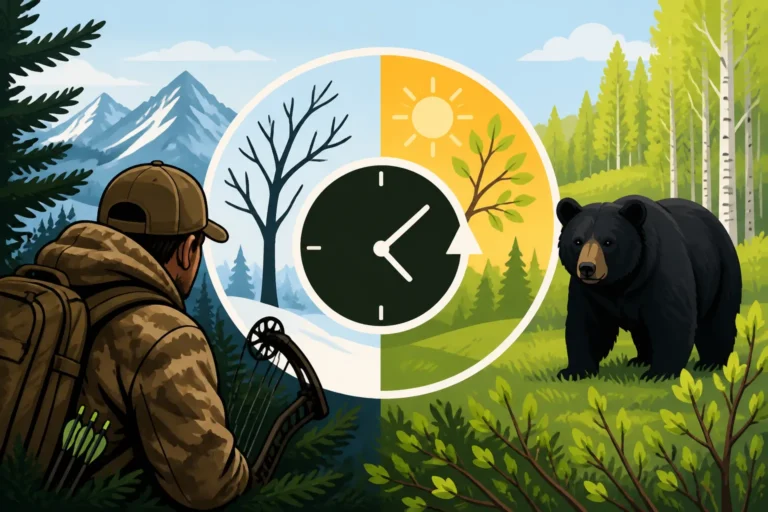
Alberta provides hunters with the unique opportunity to pursue black bears during two distinct periods: the spring and the fall. These seasons offer vastly different experiences, driven by the bears' biological cycles and behavior. The spring bear season typically kicks off around early to mid-May, extending into June, depending on the Wildlife Management Unit (WMU). This is a time of renewal in the bush; bears are emerging from their dens, often a bit leaner, and intensely focused on finding food to replenish their reserves. They'll often be seen in open areas, south-facing slopes, and along cutlines or pipelines where the first green shoots of vegetation are appearing. It's a fantastic time for spot-and-stalk hunting as the lack of thick foliage makes spotting bears easier, and they are generally more visible during daylight hours.
Conversely, the fall bear season usually begins in late August or early September and runs until late October or early November, again varying by WMU. During this period, bears are in full "hyperphagia" mode, meaning they are gorging themselves to build up fat reserves for the coming winter. They are heavily focused on high-calorie foods like berries, nuts, and any available agricultural crops. This makes them often predictable around these food sources, though they can be harder to spot as the forest canopy is typically dense. Regardless of the season you choose, it is absolutely critical to check the specific regulations and season dates for the WMU you intend to hunt. These can change year-to-year, and knowing the precise opening and closing dates for Alberta Spring Bear Season Dates and Fall Bear Season Dates and WMUs is non-negotiable for a legal hunt.
Licence Requirements and CWD
Before you even think about setting foot in bear country, securing the proper licences is paramount. As with all big game hunting in Alberta, you'll need a Wildlife Identification Number (WIN) card, which is your personal ID for all hunting and fishing transactions in the province. Alongside this, a valid Wildlife Certificate is mandatory, which essentially acts as your base hunting licence, supporting wildlife conservation efforts. Then, specifically for black bear, you'll need to purchase a Black Bear Licence. These can generally be purchased over the counter or online through the AlbertaRELM system. Understanding Alberta Hunting Licences and What They Cost will give you a full breakdown of the expenses involved.
While Chronic Wasting Disease (CWD) is a significant concern for deer, moose, and elk populations in Alberta, it's important to clarify that black bears are not susceptible to CWD. Therefore, there are no specific CWD testing requirements for harvested bears. However, as a responsible hunter, being aware of overall wildlife health and reporting any unusual animal behaviour is always encouraged. Additionally, remember that all big game hunters in Alberta are required to have completed the Alberta Conservation and Hunter Education Course, or an approved equivalent from another jurisdiction, ensuring you understand hunting ethics, regulations, and safety protocols. This commitment to education is key to responsible hunting across all species in the province.
Essential Black Bear Hunting Methods in Alberta
When it comes to hunting black bears in Alberta, you have a few primary methods at your disposal, each requiring a different skillset, approach, and patience level. Understanding these techniques and knowing when and where to deploy them will significantly increase your odds of success.
Baiting Black Bear in Alberta
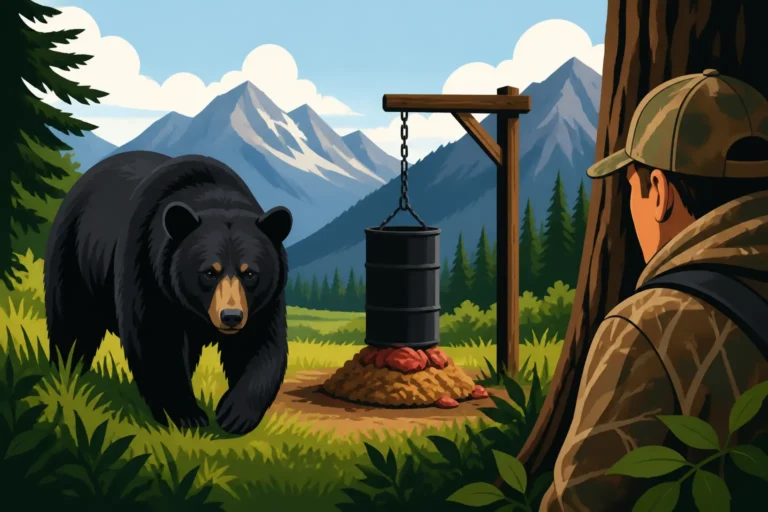
Baiting is arguably one of the most popular and effective methods for hunting black bears in Alberta, largely due to its legality and the control it offers over the hunting scenario. The premise is simple: you establish a consistent food source in a secluded area, attracting bears to a specific location where you can then set up a blind or treestand for a shot. The key to successful baiting lies in meticulous preparation and unwavering consistency. You'll need to find a suitable location – somewhere remote enough to avoid human disturbance, close to dense cover for bears to feel secure, and ideally near a water source. Once chosen, the bait site needs to be actively "worked," meaning you're regularly replenishing the bait to keep bears interested. Common bait choices include sweets like pastries, expired candies, and molasses, often mixed with meat scraps or dog food to create a potent, long-lasting attractant. Scent lures, often petroleum-based and infused with sweet or anise aromas, can be used to draw bears from further distances.
Setting up a bait site isn't just about dumping food; it's about creating an appealing dining experience for a bear. Many hunters will build a log enclosure or secure a barrel to prevent bears from easily walking off with all the bait. Trail cameras are invaluable tools here, allowing you to monitor activity, identify individual bears (including potential sows with cubs, which are off-limits), and understand their visitation patterns. Patience is your best friend when baiting. It can take days, or even weeks, for bears to find and consistently visit a new bait site. Once they do, consistent replenishment is crucial. When it comes time to hunt, safety is paramount. Always approach the bait site cautiously, and have bear spray readily accessible. Ethical shot placement, aiming for the vitals, is critical, as a wounded bear can be a dangerous one. For a comprehensive guide on getting started, check out Setting a Bear Bait Site in Alberta.
Spot-and-Stalk Bear Hunting
For hunters who prefer a more active and immersive experience, spot-and-stalk hunting for black bears in Alberta is incredibly rewarding. This method relies heavily on good optics, stealth, and an intimate understanding of bear habitat and behavior. It's particularly effective in the more open landscapes of the foothills and northern boreal forest, where clearcuts, natural meadows, seismic lines, and pipeline rights-of-way provide visibility. During the spring, as bears emerge from their dens and seek out the first green vegetation, these open areas become prime feeding grounds, making them excellent places to glass.
The strategy involves finding a high vantage point, often early in the morning or late in the evening when bears are most active, and patiently scanning expansive areas with quality binoculars or a spotting scope. Look for any movement, a dark silhouette against the green, or even just a subtle disturbance in the foliage. Once a bear is spotted, the real work begins: the stalk. This demands exceptional stealth, careful use of terrain for cover, and a constant awareness of wind direction to keep your scent from reaching the bear. Mapping tools, such as those offered by GoHunt, can be incredibly useful for identifying potential clearcuts, old logging roads, and other features that might hold bears, as well as for planning your approach and escape routes. You'll want to focus on hunting bear on a green cutline in June when visibility is often good, or systematically working along a Hunting a Pipeline Right-of-Way. It's a challenging method that tests your tracking and woodsmanship skills, but the satisfaction of successfully executing a spot-and-stalk hunt is unparalleled.
Still-Hunting and Calling
While baiting and spot-and-stalk are prominent, still-hunting and calling offer another effective approach to black bear hunting in Alberta. Still-hunting involves moving through bear habitat at an incredibly slow and deliberate pace, pausing frequently to observe, listen, and scan your surroundings. It's not about covering ground quickly; it's about moving like a predator, using the wind to your advantage, and trying to spot a bear before it spots you. Focus on areas with good cover but also pockets of openings, such as aspen bluffs bordering thicker timber, or along the edges of old logging roads where bears might travel. Look for fresh sign like tracks, scat, or overturned logs and rocks, indicating recent feeding activity. The key is to blend into the environment and remain hyper-aware of your senses.
Calling, on the other hand, involves mimicking the distress cries of prey animals, typically a fawn or a rabbit, to pique a bear's curiosity and draw it closer. This method can be incredibly exciting and effective, but it requires courage and careful execution. When calling, always set up with the wind in your face and ensure you have good visibility and a solid backdrop that breaks up your silhouette. Bears are often cautious, so be prepared for them to approach from unexpected angles. It's best to call in short, intermittent bursts, listening intently between sequences. This method can be particularly effective during the spring and early fall when bears are actively foraging. You might find success by still-hunting a well-used game trail that leads to a berry patch or by setting up on an Hunting an Old Logging Road in the Foothills and calling into thick cover. Remember, when calling in a bear, always be prepared for a quick shot and have bear spray ready as a last resort.
Scouting and Accessing Bear Country
Successfully harvesting a black bear in Alberta often comes down to the groundwork laid before the season even begins. Scouting effectively and understanding land access rules are two critical components that can make or break your hunt. It's not enough to simply drive out to a random patch of woods; you need to know where to look and how to get there legally.
Finding Productive Bear Habitat
Effective scouting is the bedrock of any successful black bear hunt. Bears are creatures of opportunity, constantly seeking out food sources, and understanding this drives your scouting efforts. Before you even leave home, leveraging tools like satellite imagery (many hunters use platforms like GoHunt for this) can be incredibly insightful. Look for areas with a mosaic of dense timber and more open features like clearcuts, seismic lines, or old burns. In spring, south-facing slopes and areas with early green-up, often along forest edges or road systems, will be key. As the season progresses into fall, shift your focus to areas with abundant berry bushes (saskatoons, cranberries, blueberries) or stands of acorn-producing oaks, if you're in suitable habitat. These visual cues on a map can help you narrow down vast tracts of wilderness to more manageable, promising sections.
Once you're on the ground, your scouting should focus on finding fresh bear sign. Look for tracks in soft soil near water sources, torn-up stumps and overturned rocks where bears have been foraging for insects, rub marks on trees, and scat. Pay attention to game trails that lead into thick cover or connect different food sources. It's also critical to identify areas that receive less human pressure; bears, especially mature boars, tend to be more active and visible in secluded spots. Consider setting up trail cameras on key travel corridors or at potential bait sites to learn about bear activity patterns, size, and individual characteristics. Remember, Scouting an Alberta WMU Before Season is not just about finding bears; it's about understanding their routines and habits in that specific area. Using tools for Scouting With Satellite Imagery in Alberta can give you an invaluable bird's-eye view, helping you pinpoint these promising locations before you ever step foot in the woods.
Navigating Crown Land and Access Challenges
Alberta offers a wealth of public land opportunities for black bear hunters, but understanding the nuances of land ownership and access is crucial to staying legal and respectful. The vast majority of bear habitat falls within what's known as "Crown Land" or "Green Area," particularly in the northern and western parts of the province. This includes extensive tracts of provincial forest, public land use zones (PLUZs), and other forms of unallocated public land. These areas are generally open for hunting, though specific restrictions might apply within certain PLUZs regarding vehicle use, camping, or designated trails. It's imperative to consult the official Alberta Regulations and WMU maps to understand the specific rules for the area you plan to hunt.
While Crown Land offers broad access, you'll often encounter a mix of private land, especially as you approach agricultural fringes or settled areas. Always know your boundaries. Using a GPS with reliable land ownership maps (like those integrated into GoHunt) is indispensable. If your hunting plans involve any private land, even for access to Crown Land, you must obtain explicit permission from the landowner beforehand. The Trespass Act in Alberta is strictly enforced, and hunting without permission can lead to significant penalties. Furthermore, many Crown Land areas are accessed via forestry roads, seismic lines, or industrial access routes. Be mindful of gates, active logging operations, or oil and gas sites, and respect any signage or temporary closures. Understanding the rules for Hunting Alberta's Crown Land and navigating Alberta's Public Land Use Zones ensures you're a responsible and ethical hunter, maintaining good relations with landowners and land managers alike.
Gear and Shot Placement for Black Bear
Heading into Alberta's bear country requires more than just a licence and a prayer. Having the right gear, understanding the legal requirements for your weapon, and, most critically, knowing precisely where to aim for an ethical, clean kill are non-negotiable aspects of a responsible black bear hunt.
Essential Gear for an Alberta Bear Hunt
A successful and safe black bear hunt in Alberta hinges significantly on being properly equipped. Your choice of weapon is paramount. For rifle hunters, a minimum caliber of .23 and a muzzle energy of 1695 joules (1250 ft-lbs) at 100 yards are generally required for big game. Many hunters opt for popular calibers such as .270, .30-06, .308, or .300 Winchester Magnum, which provide ample power for bears. Ensure your rifle is zeroed, and you are proficient with it, practicing regularly from various positions you might encounter in the field. For archers, a minimum draw weight of 50 lbs and broadheads with at least two cutting edges and a minimum cutting diameter of 7/8 inch are mandated. Fixed-blade broadheads are generally preferred for their penetration and reliability on thick-skinned animals like bears.
Beyond your weapon, good optics are crucial. High-quality binoculars (10×42 or 10×50 are popular) are essential for spotting bears during spot-and-stalk hunts, and a spotting scope can be invaluable for judging a bear's size at a distance. Safety gear should always include bear spray, carried in an easily accessible holster, especially when still-hunting or checking bait sites. A robust first-aid kit, a reliable GPS or mapping app (like GoHunt, which can help navigate complex terrain), and a satellite communication device (like a Garmin inReach or Zoleo) are highly recommended, especially if you're venturing into remote areas with no cell service. Layered clothing, appropriate for the variable Alberta weather, and comfortable, waterproof hiking boots are also vital. Don't forget field dressing essentials: sharp knives, game bags, rubber gloves, and rope to hang meat if needed.
Shot Placement and Ethical Harvesting
Achieving a quick, humane harvest is the ultimate goal for any ethical hunter, and this means understanding precise shot placement for black bears. Unlike deer, where the shoulder can offer a good target, a bear's anatomy is slightly different due to its heavy muscle mass and bone structure. The ideal shot for a black bear is typically the "boiler room" – targeting the lungs and heart. This vital area sits just behind the shoulder, slightly lower and further back than you might instinctively aim for on a deer. A broadside shot aiming about one-third of the way up the body, directly behind the front leg, will typically sever both lungs and potentially hit the heart, leading to a rapid and ethical take down.
Quartering-away shots can also be effective, aiming to exit through the opposite front shoulder. However, avoid quartering-to shots or straight-on frontal shots, as these present a much smaller target area and increase the risk of hitting heavy bone or non-vital organs, leading to a wounded animal. After the shot, patience is critical. Even a well-placed shot might not drop a bear on the spot. Give the bear ample time (at least 30 minutes to an hour) before beginning to track, especially if you didn't see it go down. This allows the bear to expire and reduces the risk of encountering a wounded animal. Thorough tracking, looking for blood, broken branches, and disturbed earth, is essential to recover your animal. Always aim for precision; a bear's thick hide and dense muscle can make a marginal shot a much more difficult recovery scenario.
Post-Harvest Care and Management
Taking down a black bear is an exciting moment, but the work isn't over. Proper post-harvest care is crucial for preserving the meat and hide, and understanding how to effectively judge a bear before the shot is an important ethical consideration in Alberta.
Field Dressing and Meat Care
Once your black bear is on the ground, immediate and thorough field dressing is paramount, especially during the warmer spring season. Bears have a thick layer of fat, and their body heat can quickly spoil the meat if not cooled down promptly. The first step is to quickly eviscerate the bear, removing all internal organs. This allows air to circulate and begins the cooling process. If you plan to salvage the hide for a rug or taxidermy, skinning should ideally begin as soon as possible after field dressing. Make sure to cut the hide cleanly around the paws, head, and tail, being careful not to cut into the hide itself. For detailed instructions, refer to a guide on Skinning a Bear for a Rug.
After field dressing and skinning (if applicable), the carcass needs to be cooled rapidly. If temperatures are cool enough, you can hang the quarters. However, in warmer conditions, you may need to pack the meat in game bags and transport it quickly to a cooler or a meat locker. Ice can be used to further cool the meat during transport. Bears generally yield a good amount of flavorful meat, provided it's handled properly. Fat should be trimmed off as much as possible before freezing or processing, as bear fat can sometimes impart a strong flavor. Properly cared for, bear meat can be a delicious and rewarding part of your harvest. For more tips on managing your game in varying conditions, consider reading about Meat Care in Alberta's Cold and Warm Swings.
Judging a Bear and Understanding Color Phases
One of the most important ethical responsibilities when black bear hunting in Alberta is the ability to accurately judge a bear before you take the shot. This is especially critical during the spring season when sows often have cubs that may not be immediately visible. Taking a sow with cubs is illegal and unethical. Look for signs of a mature boar: a blocky, square head relative to its body, small ears that appear far apart on the head, and a robust, often sway-backed appearance. Sows, conversely, typically have more triangular, pointy heads, larger ears that seem closer together, and a more slender body build. Patience is key; observe the bear for a good amount of time, looking for cubs, before making the decision to shoot. A helpful resource for this is Judging a Boar From a Sow With Cubs.
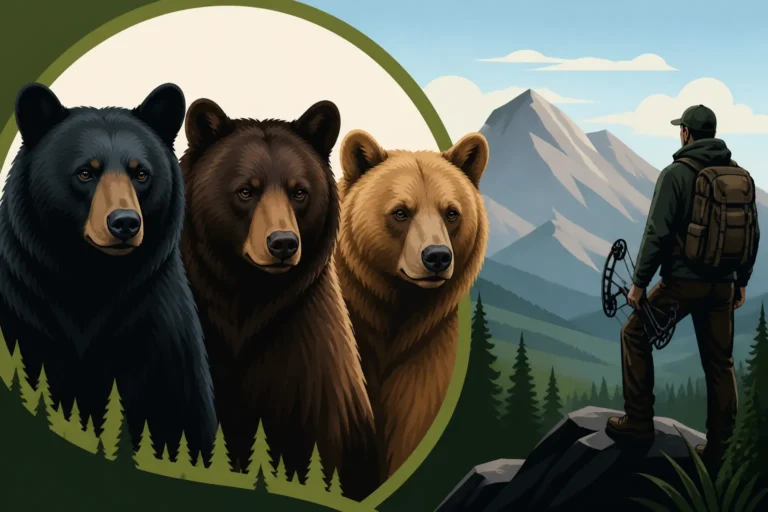
Another fascinating aspect of black bears in Alberta is their incredible range of color phases. Despite their name, black bears are not always black! You can encounter individuals that are brown, cinnamon, blonde, or even a striking reddish hue. It's crucial to understand that these are all color variations of the same species, the American Black Bear (Ursus americanus), and not a grizzly bear (which is a different species altogether). Distinguishing a color-phase black bear from a grizzly involves looking at physical characteristics like the shoulder hump (grizzlies have a prominent one, black bears do not), facial profile (grizzlies have a dished face, black bears are straight), and claw length (grizzlies have long, straight claws; black bears have shorter, more curved claws). Never assume a brown bear is a black bear based on color alone. Learn about Colour Phase Black Bears in Alberta to appreciate the diversity, but always be certain of your target species.
Safety and Responsible Hunting Practices
Hunting black bears in Alberta, like any big game pursuit, comes with inherent risks and responsibilities. Prioritizing safety, both for yourself and others, and adhering to ethical and legal hunting practices, is paramount for a successful and respected hunting tradition.
Bear Safety in the Field
When you venture into Alberta's bear country, you are entering their home turf, and understanding bear behavior is key to staying safe. Black bears, while generally shy, can be unpredictable, especially if surprised, feeling threatened, or protecting cubs or a food source. Always carry bear spray in an easily accessible holster and know how to use it. Make noise as you walk, particularly in dense cover, to avoid surprising a bear. Yell "Hey bear!" or clap your hands frequently. If you're hunting with a partner, try to stay within sight and sound of each other.
In camp, meticulous food management is non-negotiable. Store all food, cooking gear, and scented items (like toiletries) in bear-resistant containers, hung from a tree, or in a locked vehicle, well away from your sleeping area. Never cook or eat where you sleep. Dispose of garbage properly and clean up any food scraps immediately. If you encounter a bear, remain calm. Make yourself look as large as possible, speak in a firm, low voice, and slowly back away. Avoid direct eye contact and never run, as this can trigger a chase response. Knowing these basics and practicing them diligently will significantly reduce the risk of a negative encounter.
Respecting Wildlife and Regulations
Responsible hunting goes far beyond just harvesting an animal; it encompasses a deep respect for wildlife, the environment, and the laws designed to protect both. In Alberta, this means strictly adhering to bag limits (which is typically one black bear per hunter per licence year in most WMUs) and ensuring you have properly reported your harvest as required by regulation. A critical ethical component, as discussed earlier, is to never take a sow with cubs. If you identify cubs, even if they are older and seem independent, resist the urge to shoot and allow the family unit to continue. Your patience contributes directly to the long-term health of the bear population.
Additionally, always practice Leave No Trace principles. Pack out everything you pack in, including spent shell casings, garbage, and any non-biodegradable waste. Ensure your camp is clean, and leave the area better than you found it. Respect private property, adhere to all vehicle restrictions on Crown Land, and be mindful of other users of the outdoors, whether they are hikers, campers, or other hunters. Maintaining a high ethical standard not only ensures the future of hunting but also positively reflects on the entire hunting community. Participation in the Alberta Hunter Education and Conservation Course instills these values and provides the foundational knowledge for ethical and legal hunting practices throughout Alberta.
Alberta Black Bear Hunting Season Comparison
To help you decide whether a spring or fall bear hunt in Alberta is right for you, here's a quick comparison of the two seasons:
| Feature | Spring Bear Season (Typically May-June) | Fall Bear Season (Typically Late Aug-Oct) |
|---|---|---|
| Bear Behavior | Emerging from dens, hungry, actively seeking first green-up and carrion. | Hyperphagia (intense feeding) to build fat for winter, focusing on berries, nuts. |
| Visibility | Easier to spot bears in more open, newly greened areas, less foliage. | More challenging due to dense foliage, bears often in thick cover near food. |
| Weather | Highly variable, can be warm or chilly, muddy conditions. | Generally cooler, potentially wet or snowy later in the season. |
| Methods | Excellent for spot-and-stalk on clearcuts, green-ups; baiting also effective. | Baiting is highly effective; still-hunting around food sources. |
| Hunting Pressure | Can be moderate, especially on accessible trails and roads. | Generally lower in many areas as hunters shift to other big game. |
| Hide Quality | Varies, often excellent hair, but sometimes rub patches from denning. | Typically thick, luxurious hides as bears prepare for winter. |
| Risk of Cubs | Higher chance of sows with young cubs, requiring careful identification. | Cubs are usually larger and more independent, but identification still crucial. |
| Food Sources | Fresh green vegetation, carrion. | Berries (saskatoons, cranberries), hazelnuts, acorns, agricultural crops. |
Disclaimer
Please remember that hunting regulations in Alberta can change. While this guide provides comprehensive information, it is your responsibility as a hunter to consult the official Alberta Hunting Regulations every year before heading into the field. Ensure you have the most current information regarding season dates, bag limits, WMU-specific rules, and licence requirements. Safety should always be your top priority.