Hunting an Irrigation Canal Corridor
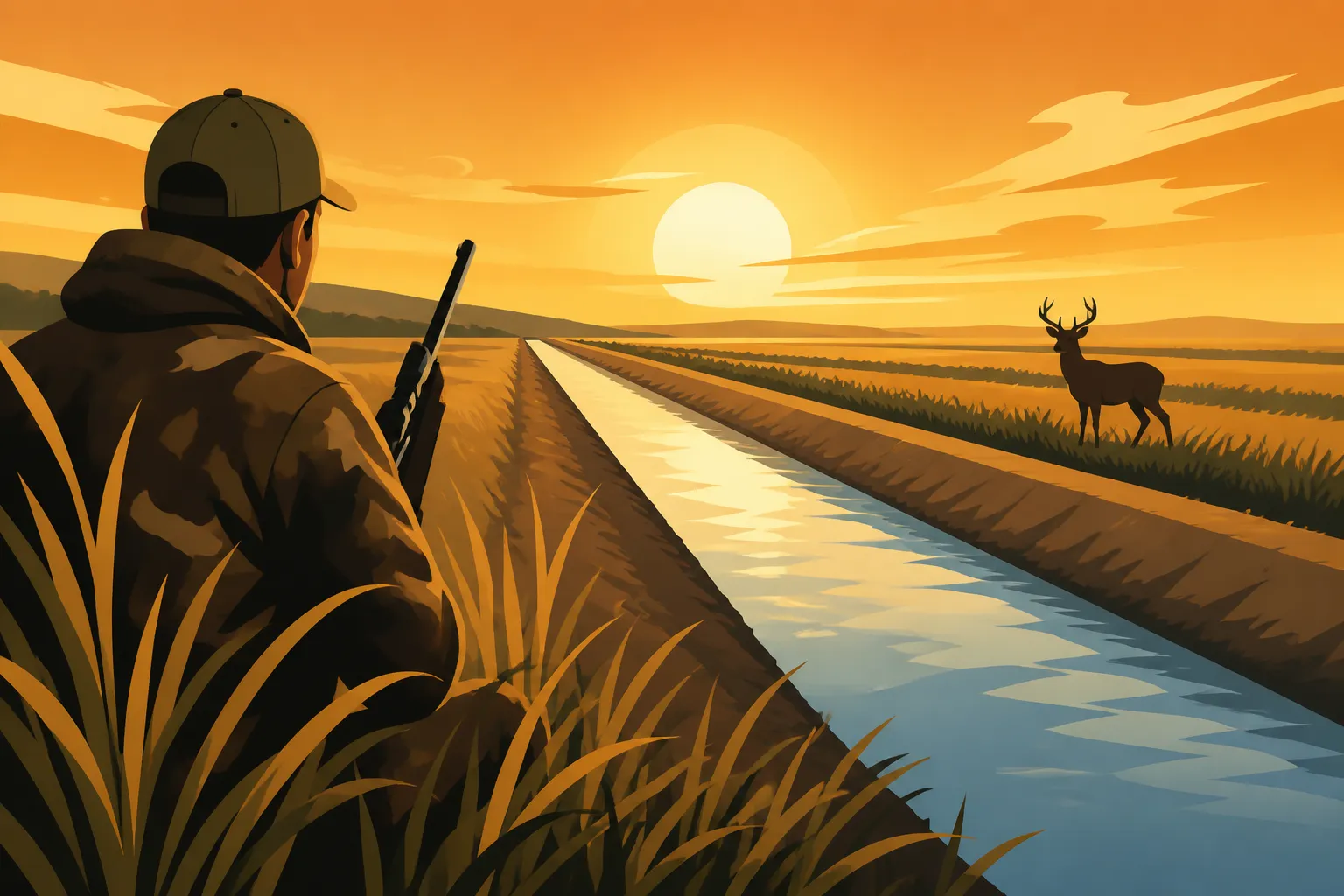
Oh, the humble irrigation canal corridor. It's often overlooked, isn't it? Many hunters drive right past them, seeing nothing but open ground and maybe a trickle of water, dismissing them as too exposed or devoid of real habitat. But I'm here to tell you, that's a mistake. These linear oases, snaking through Alberta's agricultural landscapes, can be absolute magnets for game, offering crucial resources and hidden travel routes. This guide is going to walk you through exactly how to unlock the hunting potential of these unique and often under-pressured zones.
Understanding the Irrigation Canal Ecosystem for Wildlife
When you first look at an irrigation canal, especially in the wide-open prairie or parkland, it might just seem like a ditch. But to a deer, a coyote, or a flock of ducks, it's a lifeline. These corridors concentrate resources in ways that other parts of the landscape simply don't, creating micro-ecosystems that draw in and hold wildlife.
Why Canals Attract and Hold Game
Think about the fundamental needs of any wild animal: food, water, and cover. An irrigation canal, by its very nature, provides at least two of these immediately and often all three. First and foremost, there's the water itself. While many larger rivers and lakes are present, a consistently flowing canal provides reliable, accessible water, especially during dry spells or in areas where natural water sources are scarce. Deer, moose (in northern irrigation districts), and especially waterfowl are drawn to this vital resource.
Beyond the water, these corridors often boast a denser, taller growth of vegetation along their banks than the surrounding cultivated fields or pastures. This can range from thick willow runs and cattails to patches of aspen and poplar bluffs, depending on the region and the canal's age. This denser vegetation offers invaluable thermal cover from harsh winds and sun, bedding areas where animals can feel secure, and crucial visual breaks from predators and human activity. It creates a natural travel lane, a "green highway," where animals can move from feeding areas to bedding grounds, or from one piece of cover to another, without being exposed in open fields. Imagine a whitetail buck moving along a shelterbelt between two fields; an irrigation canal offers a very similar, often less disturbed, travel route. In areas where other cover is sparse, a canal can be the only game in town.
Identifying Key Features Within the Corridor
Not all canal corridors are created equal, and understanding their subtle features is key to successful hunting. You'll encounter a variety of designs, from concrete-lined channels that offer little natural cover right at the edge, to wide, earthen canals with extensive vegetated banks.
Look for areas where the canal bends sharply or where it's fed by smaller ditches or culverts. These can act as natural funnels or ambush points. Pay close attention to any subtle changes in elevation, even small humps or depressions along the banks, as these can provide critical bedding cover or vantage points for animals. Bridges, cattle crossings, or even just shallow sections where the water flow is minimal, often serve as popular crossing points. These are excellent places to focus your scouting efforts. Thickets of brush, small stands of trees, or dense cattail beds immediately adjacent to the canal are prime bedding and staging areas. Don't overlook these smaller pockets of dense cover. Sometimes, the best hunting isn't right on the canal edge itself, but 20-50 yards back in a thicket that the canal enabled to grow. Utilizing satellite imagery, perhaps with a tool like GoHunt, can help you pick out these features before you even set foot on the ground.
Scouting Strategies for Canal Corridor Hunting
Successful hunting along irrigation canal corridors relies heavily on thorough scouting. Because these areas can seem uniform at first glance, it's easy to overlook the subtle clues that indicate prime animal activity. You need to combine modern digital tools with old-fashioned boot leather to truly understand what's happening.
Pre-Season Digital and On-the-Ground Reconnaissance
Before you ever step into the field, grab your phone or tablet and pull up some satellite imagery. This is where tools like GoHunt really shine. Zoom in on the canal corridors you're interested in. You'll immediately start to notice patterns: where the vegetation is densest, where the canal might pass through a stand of timber, or where it runs right beside a crop field. Look for areas where the canal changes direction abruptly, as these often create natural pinch points. Identify any small bluffs, shelterbelts, or patches of brush that are adjacent to or intersect with the canal. These are your starting points. Mark potential bedding areas, crossing points, and areas with thicker cover. This digital scouting saves you countless hours of walking unproductive ground.
Once you have some promising spots identified, it’s time for some boots-on-the-ground scouting, ideally before the season opens. Walk the length of the canal, or at least the sections you've highlighted. This allows you to confirm what you saw on the map and find the fresh sign that tells you animals are actively using the area. Focus on low-impact scouting; try not to disturb the area too much, especially closer to the season. Be mindful of Alberta Landowner Permission Law if the canal crosses private property – getting permission beforehand is non-negotiable and shows respect.
Reading Sign Along the Water's Edge
Reading the sign left by wildlife along a canal corridor is a bit like reading a book. Every track, rub, and browse line tells a story. Look for fresh tracks in the soft earth or mud along the water's edge, particularly at crossing points or where animals come down to drink. Deer, coyotes, and sometimes even moose will leave clear indicators of their travel. Pay attention to the direction of travel – are they moving parallel to the canal, or crossing it? What time of day might they be doing so?
Beyond tracks, keep your eyes peeled for rubs on small trees or brush, indicating a buck has been working the area. While not as common as in thick timber, you might find scrapes in more secluded, brushy pockets along the banks. Browse lines on willows or young saplings show where deer or moose have been feeding. In areas with cattails or other dense marshy vegetation, look for flattened areas that could be bedding sites, especially on the sunny, leeward sides of banks where animals seek shelter from the wind. If you're Reading Whitetail Sign in Alberta Aspen Bluffs, you're looking for similar things, just in a different setting. The key here is freshness of the sign. Faded tracks or old rubs tell you what was there; fresh sign tells you what is there now.
Waterfowl hunters should look for feathers, droppings, and feeding activity in shallow sections or adjacent potholes. Geese and ducks will often use these canals as loafing areas during the day or as staging points before flying out to feed in nearby Field Hunting Geese in Alberta Stubble.
Effective Hunting Tactics for Irrigation Canals
Hunting canal corridors demands a blend of stealth, patience, and adaptability. The linear nature of these features means animals often move predictably along them, but the open surroundings can also make them wary. Your tactics will need to leverage the cover the canal provides while mitigating the lack of overall concealment.
Stand Placement and Ambush Points
When it comes to stand placement, whether it's a tree stand or a ground blind, you need to think about sightlines, wind direction, and animal approach routes. Look for the densest patches of trees or brush along the canal, especially where they intersect with natural crossing points like shallow stretches, bridges, or culverts. A tree stand allows you to get above an animal's line of sight, which is crucial in areas where cover might be limited. Focus on placing your stand on the downwind side of known travel routes. For instance, if you've identified a well-used game trail running parallel to the canal and crossing it at a specific point, set up 20-30 yards downwind from that crossing, allowing animals to move naturally into your shooting lane.
Ground blinds can be very effective, too, especially if you can tuck them into a thick patch of willows or cattails. Natural ground blinds, made from piled brush or even just using the slope of the canal bank for concealment, can also work wonders. Remember, your goal is to break up your outline and blend into the environment. Consider the sun's position throughout the day to avoid backlighting yourself. The early morning or late evening often sees peak activity along these corridors, as animals move between feeding and bedding areas. A well-placed stand overlooking a stretch of canal that runs along a Hunting a Standing Canola Field Edge can be absolutely deadly.
Still-Hunting and Stalking the Edges
Still-hunting is a highly effective tactic along canal corridors, particularly if there's enough intermittent cover to allow for slow, deliberate movement. This isn't about rushing; it's about moving five steps, stopping, and glassing for ten minutes. Use your binoculars to pick apart every shadow, every clump of brush, and every irregularity along the opposite bank or further down the corridor.
Walk slowly, staying just inside the thickest cover along the canal bank, using the vegetation to break up your outline. Pay attention to the wind – always try to keep it in your face or quartering. The sounds of flowing water can sometimes help mask your footsteps, but don't rely on it too much. Focus on sections of the canal where there are abrupt changes in vegetation or terrain, as these are natural places for animals to pause or bed. If you're Stalking Mule Deer in Badlands Breaks, you're practicing a very similar patient, slow approach that works here too. This method requires intense focus and the ability to detect subtle movements or shapes that don't belong.
Waterfowl Considerations Along Canals
For waterfowl hunters, irrigation canals present some unique opportunities. Ducks and geese will often use these waterways, especially smaller, quieter sections, for resting, feeding, and staging. Jump shooting can be very productive along brushy, winding sections of a canal. Slowly walk the banks, keeping low, and be ready to shoulder your shotgun quickly when birds flush. This is similar to Jump-Shooting an Alberta Prairie Pothole, just on a linear water body.
If you find a wider section of the canal or a nearby flood-irrigated field that attracts birds, setting up a small decoy spread can be highly effective. Mallards and Canada geese are common visitors. Look for areas with minimal current where decoys will sit naturally. Sometimes, the canal acts as a flight corridor for birds moving between larger bodies of water and feeding fields. Identifying these flight paths can lead to excellent pass-shooting opportunities. Remember your Non-Toxic Shot for Alberta Waterfowl requirements!
Gear and Safety Specifics for Canal Hunting
Hunting along irrigation canals, while rewarding, comes with its own set of gear considerations and safety precautions. You're often dealing with a mix of agricultural land, water, and potentially slippery or unstable banks, which requires specific preparation.
Essential Gear for Canal Corridor Success
Given the varied terrain and potential for open exposure, your gear choices are important. Good quality optics are non-negotiable. A pair of 10×42 binoculars will be your best friend for spotting game at a distance or picking out movement in dense cover. A rangefinder is also vital, as shots can sometimes be longer in the more open sections.
Footwear is paramount. You'll likely be traversing uneven ground, potentially muddy banks, and possibly even wading through shallow water if you're retrieving game or scouting. Waterproof, comfortable, and supportive boots with good ankle support are a must. Depending on the season and specific canal, knee-high rubber boots or even chest waders might be necessary, especially for waterfowl hunting or for retrieving animals that have fallen into the water.
Clothing should be chosen based on the unpredictable Alberta weather, but consider lighter, quieter fabrics for still-hunting. Layering is always smart, allowing you to adapt to changing temperatures throughout the day. If you're hunting during big game rifle seasons, remember Alberta's Alberta Blaze Orange Requirements to ensure you're visible to other hunters, especially if the area is publicly accessible. A good backpack with essentials like water, snacks, a first-aid kit, and a knife for field dressing is always necessary. Don't forget a headlamp if you plan to be out around dawn or dusk.
Safety Precautions Around Water and Steep Banks
Hunting near water, especially flowing water, always presents safety challenges. The banks of irrigation canals can be steep, unstable, and incredibly slippery, particularly when wet or frozen. Always exercise extreme caution when walking near the edge. A fall into a canal, especially one with a strong current or cold water, can be very dangerous. If you're solo hunting, consider carrying a rope or a walking stick for added stability.
Be acutely aware of your surroundings, as canal corridors often run adjacent to public roads, residences, or active farm operations. Always know your target and what's beyond it. Never shoot across a road, and ensure you have a safe backstop. Always consult the Rules on Hunting From a Vehicle as well as provincial regulations regarding proximity to buildings and roads. This is especially true when hunting close to populated areas or active farms.
If hunting in late fall or winter, ice can be a significant hazard. Never assume ice on a canal is safe to walk on, even if it looks thick. The current beneath can thin ice unpredictably. Dress in layers to protect against Hunting Alberta Winter Weather Safely and bring extra warm gear. Finally, always let someone know where you're going and when you expect to return. Cell service can be spotty in certain rural areas, so a satellite communication device like an inReach or Spot tracker is a smart investment for solo hunts.
| Feature | Description | Game Attracted | Hunting Strategy | Safety Consideration |
|---|---|---|---|---|
| Thick Willow/Brush | Dense vegetation along banks, offering cover. | Whitetail, Mule Deer, Bear, Waterfowl, Coyotes | Still-hunting, ground blinds, stand placement for ambush. | Limited visibility, potential for close encounters. |
| Crossing Points | Shallow sections, bridges, culverts, cattle trails. | Whitetail, Mule Deer, Moose, Predators | Tree stands, ground blinds, ambushing travel routes. | Animals crossing roads/private land, potential for other users. |
| Pinch Points | Where canal narrows, or passes through dense cover/terrain. | Whitetail, Mule Deer, Moose, Predators | Ambush points, focus for still-hunting. | Animals can appear quickly. |
| Adjacent Crop Fields | Canals often border corn, canola, or stubble fields. | Whitetail, Mule Deer, Waterfowl | Stand placement on canal edge overlooking fields. | Landowner permission, shooting hours, firearm restrictions. |
| Open Water Sections | Wider, less vegetated parts of the canal. | Waterfowl, sometimes deer for water. | Jump shooting, small decoy spreads. | Slippery banks, cold water, visibility to other hunters. |
Disclaimer
Hunting is an activity with inherent risks. This guide provides general information and recommendations. Always refer to the most current Alberta Hunting Regulations, available through Alberta Environment and Parks, and adhere to all local, provincial, and federal laws. Hunter safety education is paramount. Respect private property and always obtain permission before hunting on private land. The author and publisher are not responsible for any accidents, injuries, or legal issues that may arise from the use of this information.