Hunting a High Ridge Above Timberline
There's something truly captivating about the crisp air and expansive views above the timberline, but let's be honest, hunting these high ridges in Alberta is not for the faint of heart. It's a physically grueling, mentally taxing endeavour that can test even the most seasoned hunter. If you've ever dreamt of pursuing big game where the air is thin and the terrain unforgiving, this guide will walk you through the essential strategies, gear, and mindset needed to tackle Alberta's majestic high country successfully and safely.
The Lure and Challenge of Hunting Above Timberline
The call of the high country in Alberta is incredibly strong for many hunters, offering unparalleled solitude, breathtaking scenery, and the chance to pursue some of North America's most iconic and elusive game animals. But let’s not romanticize it too much; the alpine environment is beautiful, yes, but it’s also one of the most demanding places you can choose to hunt. It truly separates those who are prepared from those who quickly realize they've bitten off more than they can chew.
The Harsh Realities of the Alpine Environment
Hunting above timberline means contending with Mother Nature at her most unpredictable and severe. The altitude itself is a challenge, with thinner air meaning every step requires more effort, and even simple tasks can leave you breathless. If you’re not accustomed to it, you might find yourself battling headaches, dizziness, or just a general sense of fatigue that compounds the physical demands of the hunt.
Then there's the weather. Down in the valley, it might be a calm, sunny day, but up on a high ridge, you can be plunged into a whiteout blizzard, a torrential downpour, or an intense electrical storm in a matter of minutes. The wind can be relentless, tearing through layers and making it feel significantly colder than the actual temperature. Sun exposure is also extreme, even on cloudy days, requiring diligent protection. The terrain itself is another beast entirely – steep, often loose and treacherous scree slopes, boulder fields, and jagged rock faces. One wrong step can lead to a serious injury far from any road or help, which is a chilling reality many hunters have faced. It’s a place that demands respect and constant vigilance.
Game Animals That Call the High Country Home
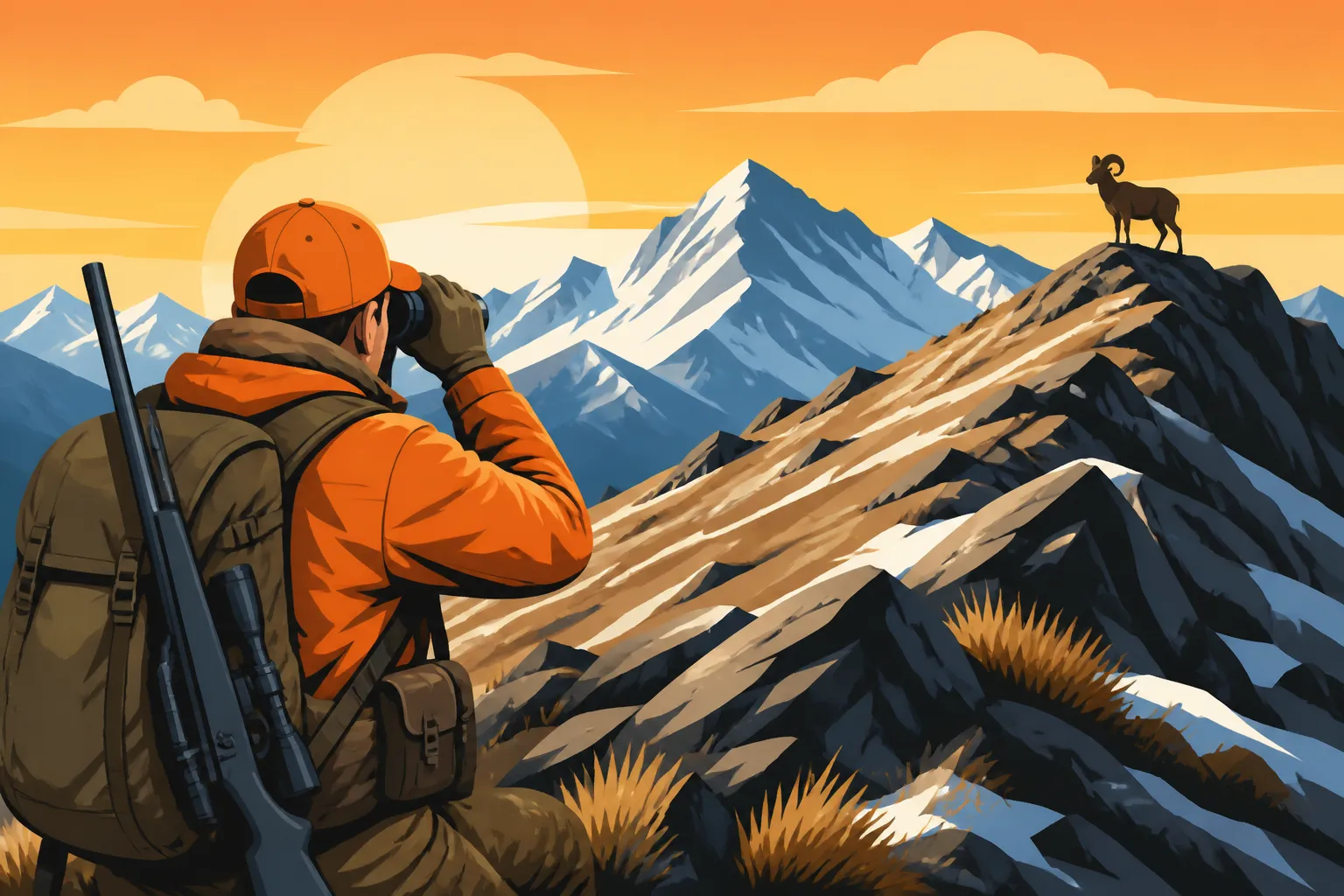
While the high ridges can be an intimidating landscape, they are home to some of Alberta's most sought-after big game. The most prominent residents are undoubtedly the majestic bighorn sheep and the incredibly resilient mountain goats. These animals are purpose-built for this rugged environment, their lives intrinsically tied to the steep cliffs and sparse alpine meadows. To effectively hunt them, you need to understand their patterns, where they feed, where they bed, and their preferred escape routes when pressured. You'll often find them utilizing rocky outcrops for security and feeding in the small pockets of vegetation that thrive in the harsh conditions.
While less common to find them "above" the timberline in a sustained way, elk and mule deer will sometimes venture into the upper reaches, especially during certain times of the year or if pressured from below. A mature bull elk, for instance, might seek refuge in a high basin during the archery season, using the elevation to escape heat and human activity. Similarly, some mule deer, particularly bachelor groups of bucks, will inhabit high, broken country through the summer and into the early fall, valuing the security and expansive views that allow them to spot danger from afar. Understanding when and why these species might be present can open up additional opportunities for those willing to brave the heights. For those thinking of Elk in Alberta's Mountains and Farmland, remember that the mountain herds are a different beast entirely.
Decoding the High Ridge Landscape for Game Sign
Success in the alpine often comes down to an acute ability to read the landscape. Unlike dense forest hunting where fresh tracks might be everywhere, sign above timberline can be subtle and requires careful interpretation. Look for scat in feeding areas – small pockets of alpine grasses, sedges, or willow bushes. Pay attention to rub lines on sparse trees or large rocks, though these are less common above timberline than in lower elevations.
More often, you’ll be looking for well-worn game trails along benches, across scree slopes, or leading to water sources like melting snow patches or small, high-altitude seeps. These trails often indicate consistent movement patterns. Glassing expansive areas for bedding sites on sheltered ledges, under rock overhangs, or on sun-drenched slopes in cooler weather is crucial. Animals here want to conserve energy and find protection from the elements, just like you do. Even the smallest patch of snow or soft earth can reveal tracks, so always be on the lookout. A good mapping tool like onX Hunt can help you identify potential travel corridors, bedding areas, and water sources before you even set foot on the mountain, allowing you to go in with a much better understanding of the topography and where game might concentrate.
Building Your Toolkit: Gear and Physical Preparation
When you're literally putting your life on the line in the high country, your gear isn't just a collection of tools – it's your lifeline. And just as critical as your gear is the condition of your own body and mind. This isn't a casual stroll; it's an expedition, and preparation needs to be treated with that level of seriousness.
The Indispensable Role of Optics in High-Country Hunting
If there's one piece of gear you absolutely cannot skimp on for high-ridge hunting, it's your optics. You'll be covering vast, open landscapes, and your eyes, even good ones, simply won't cut it. High-quality binoculars (10x or 12x are common choices) are your primary scanning tool. They need to be sharp, bright, and comfortable to hold for extended periods. But for detailed identification and evaluating trophy quality, a powerful spotting scope (20-60x or 25-75x) mounted on a sturdy tripod is non-negotiable.
You'll spend hours, often days, behind glass, meticulously picking apart distant slopes, rockslides, and timber pockets. A good tripod is key here; it eliminates shake and allows for steady, fatigue-free glassing. Remember, a cheap scope on a flimsy tripod is practically useless when you're trying to pick out a bedded ram a mile away. Learning to effectively use your glass, breaking down terrain into grids and patiently searching, will be more productive than endlessly hiking. Many experienced hunters find that 90% of their time is spent glassing, and 10% is spent stalking. For understanding where to even begin glassing, consider reading Glassing Alpine Basins for Bighorn Sheep.
Dressing for Success: Layering for Extreme Conditions
Weather on a high ridge can swing wildly from scorching sun to freezing rain and snow in the same day. The only way to combat this effectively is through a comprehensive layering system. Forget bulky, single-purpose garments. Start with a moisture-wicking base layer (merino wool or synthetic) that pulls sweat away from your body, preventing chills when you stop moving.
Next, add an insulating mid-layer – a fleece jacket or a lightweight puffy. This is your core warmth. On top of that, a high-quality outer shell, ideally waterproof and windproof, is essential. This protects you from the elements. You'll also need a warm hat (or two), gloves, and even lightweight sun gloves to protect your hands from sunburn. Being able to add or shed layers quickly as you climb, descend, or the weather changes is critical for maintaining a comfortable body temperature and avoiding hypothermia or overheating. Proper gear can make or break a hunt, especially when you're contending with conditions similar to those described in Hunting Alberta Winter Weather Safely.
Footwear, Packs, and Essential Emergency Items
Your feet are your foundation in the mountains, so your boots are paramount. Invest in sturdy, waterproof, high-ankle support boots that are well broken in. They need to handle sharp rock, mud, and snow, offering excellent traction and protection. Don't cheap out here; blistered feet or a twisted ankle can end your hunt, or worse, put you in a dangerous situation.
A comfortable, durable backpack capable of carrying heavy loads is equally vital. It needs to fit properly and allow you to carry everything from your optics and extra layers to food, water, and eventually, if you're successful, game meat. When you're planning to pack out an animal in this kind of terrain, the pack's capacity and comfort become even more critical. For emergency situations, your pack should always contain a comprehensive first-aid kit, a fire starter, a small emergency shelter (like a lightweight tarp or bivy sack), and a reliable communication device such as a satellite messenger. These aren't optional; they're non-negotiable safety items.
The Foundation: Physical and Mental Readiness
High-ridge hunting is an extreme athletic endeavour. There's no way around it: you need to be in excellent physical condition. This means months of cardiovascular training (hiking with a weighted pack, stair climbing, running) and strength training, especially for your legs and core. Simulating hunt conditions by hiking steep trails with your loaded pack is the best preparation. If you live at lower elevations, try to arrive in Alberta a few days early to acclimatize to the higher altitude if you plan to hunt the true mountains; it can make a real difference in your performance and comfort.
Beyond the physical, mental toughness is crucial. You'll face discomfort, fatigue, bad weather, and likely, disappointment. The ability to push through when your body is screaming at you, to maintain focus after hours of fruitless glassing, and to make sound decisions under pressure is what separates successful mountain hunters. Prepare for the grind, embrace the challenge, and cultivate a resilient mindset. The mountains will test you, and it’s best to be ready for the battle, as detailed in articles like Backpacking Into Alberta Sheep Country.
Mastering the High-Altitude Hunt: Strategies and Tactics
Once you're physically ready and your gear is dialed in, it's time to focus on the actual hunting strategies. The high country demands a unique approach, blending patience, calculated movement, and a deep understanding of animal behavior in this vertical world.
Patience and Precision: The Art of Glassing and Locating Game
We touched on optics, but let's talk about the skill of glassing. It's not just looking through binoculars; it's a systematic approach. Find a vantage point that offers expansive views, ideally with the sun at your back in the morning or to the side in the evening. Set up your spotting scope on a tripod and begin to systematically grid the terrain. Break down distant slopes into small sections and meticulously examine every rock, shadow, and patch of vegetation. Think of it like reading a book, one line at a time.
Animals, especially sheep and goats, can blend in unbelievably well. Often, you won't spot the whole animal, but rather a slight change in texture, a different color, or the outline of an ear or horn. Don't be afraid to sit in one spot for hours, returning to the same areas multiple times throughout the day, as light conditions change and animals move from bedding to feeding. Patience here is paramount. Rushing through your glassing will almost guarantee you miss something important. A helpful tip is to use digital maps like those found on onX Hunt to mark potential game areas, vantage points, and even locations where you've previously seen animals or sign. These tools can help you be more efficient in your search.
Executing the Stalk in Rugged Mountain Terrain
Once you've spotted your target, the real chess match begins. An alpine stalk is arguably one of the most challenging in all of hunting. Your primary goal is to use the terrain to your advantage: ridges, draws, rock formations, and pockets of sparse timber all become your cover. Always, always, always pay attention to the wind. In the mountains, wind can be notoriously fickle, swirling around peaks and through valleys, so a wind checker is your best friend.
Movement must be slow, deliberate, and quiet. Every step matters. Avoid silhouetting yourself against the skyline. When possible, try to approach from above or across, as animals are often less wary of danger from these directions. Climbing directly towards them from below can be incredibly difficult as they have the advantage of elevation and are more tuned to detect threats coming up. Expect to take hours to cover what might look like a short distance on a map. Be prepared to stop, glass, and reassess your approach constantly. Understanding how species like those detailed in Hunting Mountain Goat in Steep Rock use their environment to evade predators is crucial for a successful stalk.
Ethical Considerations and Game Recovery Above the Trees
When you finally get into position, the pressure is immense. This is where patience pays off again. Wait for the best possible shot opportunity. In this unforgiving terrain, a poorly placed shot can lead to a wounded animal that quickly disappears into impossible country, resulting in a lost animal and a heartbreaking, unethical outcome. Aim for vital organs, and be confident in your shot.
After the shot, mark the exact location where the animal was standing and its last known direction of travel. Even if it goes down, the terrain can quickly obscure it. If the animal runs, give it time, but in steep, rocky country, waiting too long can mean it tumbles down a cliff or into a deep chute, making recovery incredibly difficult. Be prepared for a challenging recovery. Quartering an animal on a steep slope, often in bad weather, is physically demanding. You'll need game bags, a sharp knife, and the mental fortitude to finish the job. Remember, proper Meat Care in Alberta's Cold and Warm Swings is vital, especially if you're facing unpredictable temperatures. You might need to make multiple trips to pack out your harvest, so plan accordingly and don't rush the process. Packing Out of Alberta's Mountain WMUs is no small feat.
Safety First: Planning and Risk Mitigation in the Alpine
Even more than success, safety should be your absolute top priority when venturing into Alberta's high country. The consequences of a mistake or an unexpected turn of events can be severe, making thorough planning and a cautious mindset non-negotiable.
Navigating Alberta's Mountain WMUs and Access Rules
Before you even dream of spotting a ram on a distant ridge, you need to understand the specific regulations and access rules for Alberta's mountain Wildlife Management Units (WMUs). These areas are often subject to unique restrictions, draw requirements, and limited access. Mountain goats are draw-only, while bighorn sheep draws apply to resident class 2 (non-trophy) licences (draw 29), a handful of resident WMU-special class 1 draws, and non-resident Canadian class 1 licences (draw 31), so a bit of luck is needed in those draws; residents can buy class 1 (trophy) sheep licences without entering a draw. Familiarize yourself with How the Mountain Goat Draw Works or the draw system for sheep operates.
Many mountain WMUs also fall within Public Land Use Zones (PLUZs) or other special management areas that have specific rules regarding vehicle access, camping, and even the use of certain types of equipment. It's crucial to consult the current Alberta hunting regulations and relevant land-use maps before you go. The last thing you want is to be deep in the backcountry, only to find you're violating an access rule or hunting in an unauthorized area. Understanding Alberta's Mountain WMUs and Their Access is foundational to any successful and legal hunt. For hunters considering their options, resources like GoHunt can provide valuable data on draw success rates and unit profiles, helping you choose WMUs that align with your experience and patience level.
Weather Wisdom and Emergency Preparedness
As mentioned earlier, mountain weather is notoriously fickle. Always check multiple forecasts before your trip, but never rely solely on them. Pack for all four seasons, even in late summer. Snow, freezing rain, and high winds can materialize with alarming speed. Learn to read the sky and recognize the signs of impending bad weather – rapidly building clouds, a sudden drop in temperature, or changes in wind direction.
Have a contingency plan for every scenario. What will you do if a blizzard hits? Where's your closest shelter? How will you get off the mountain safely? Always carry a headlamp, even if you plan to be back before dark. It's easy to get disoriented in bad weather or after a successful kill, and a headlamp can be a literal lifesaver. Being prepared for the worst is not pessimistic; it's prudent and can make the difference between a challenging hunt and a life-threatening ordeal.
The Importance of Communication and Contingency Plans
Never, ever head into the high country without letting someone know your detailed plans. Share your route, your expected return time, and who to contact if you don't check in. This simple step is one of the most important safety precautions you can take. While cell service is practically non-existent above timberline, a satellite communication device (like a satellite messenger or phone) is an absolute must-have. These devices allow you to send emergency messages, update loved ones on your progress, or call for help if things go sideways. They are not cheap, but neither is an emergency rescue.
Consider hunting with a partner if possible. There's safety in numbers, especially when navigating treacherous terrain or packing out a heavy animal. If you choose to hunt solo, be extra cautious, take fewer risks, and ensure your communication plan is iron-tight. Even with all the planning in the world, things can and do go wrong in the mountains. A twisted ankle, a sudden illness, or extreme weather can turn a hunt into a survival situation. Having solid contingency plans – knowing escape routes, identifying emergency shelters, and having reliable communication – will greatly increase your chances of a safe return.
| Gear Category | Key Considerations for High Ridge Hunting | Why It Matters |
|---|---|---|
| Optics | High-power binoculars (10-12x), spotting scope (20-75x), sturdy tripod | Essential for glassing vast terrain, identifying game at extreme distances. |
| Footwear | Waterproof, high-ankle support, stiff sole, well-broken-in boots | Protects feet from sharp rocks, provides ankle stability on uneven ground, prevents blisters. |
| Layering | Moisture-wicking base, insulating mid-layers, waterproof/windproof outer shell | Adapts to rapid weather changes, prevents hypothermia/overheating, manages sweat. |
| Backpack | Durable, comfortable, proper fit, capable of carrying heavy loads and meat | Minimizes fatigue, prevents injury, allows for packing out meat efficiently. |
| Navigation | GPS device, physical map, compass, digital mapping app (e.g., onX Hunt) | Prevents getting lost in vast, featureless terrain or sudden whiteouts. |
| Emergency Kit | First-aid kit, fire starter, emergency shelter, satellite communication device | Critical for survival in case of injury, unexpected overnight stays, or severe weather. |
Disclaimer
This article is for general informational purposes only and does not constitute professional advice. Laws, prices and regulations vary by location and change over time. Consult a qualified professional for guidance on your specific situation.